Can You Stop Using Nasal Steroid Spray? How to Safely Discontinue and Avoid Rebound Symptoms
If you’re ready to stop using a nasal steroid spray (or you’re wondering whether it’s safe), you’re not alone. Many people start an intranasal corticosteroid for seasonal allergies or chronic rhinitis, feel better, and then ask: Can I just stop? Will I get rebound congestion?
Here’s the key point: for many people, stopping is safe; what feels like rebound is often the return of the original symptoms. Think of it like turning off a noise-canceling feature: the world didn’t get louder—you’re just hearing your baseline again.
Quick answer (for featured snippet)
- Many people can stop a nasal steroid spray abruptly, but some should check with a clinician first.
- What you may notice is return of the original allergy/rhinitis symptoms, not true rebound congestion. (GoodRx, 2025; CMAJ, 2021)
- Important distinction: nasal decongestant sprays (Afrin/oxymetazoline) can cause rebound congestion and need a different approach. (CMAJ, 2021)
- If you want a deeper explanation of what people mean by rebound congestion, Sleep and Sinus Centers of Georgia covers it here: https://sleepandsinuscenters.com/blog/do-nasal-sprays-cause-rebound-congestion

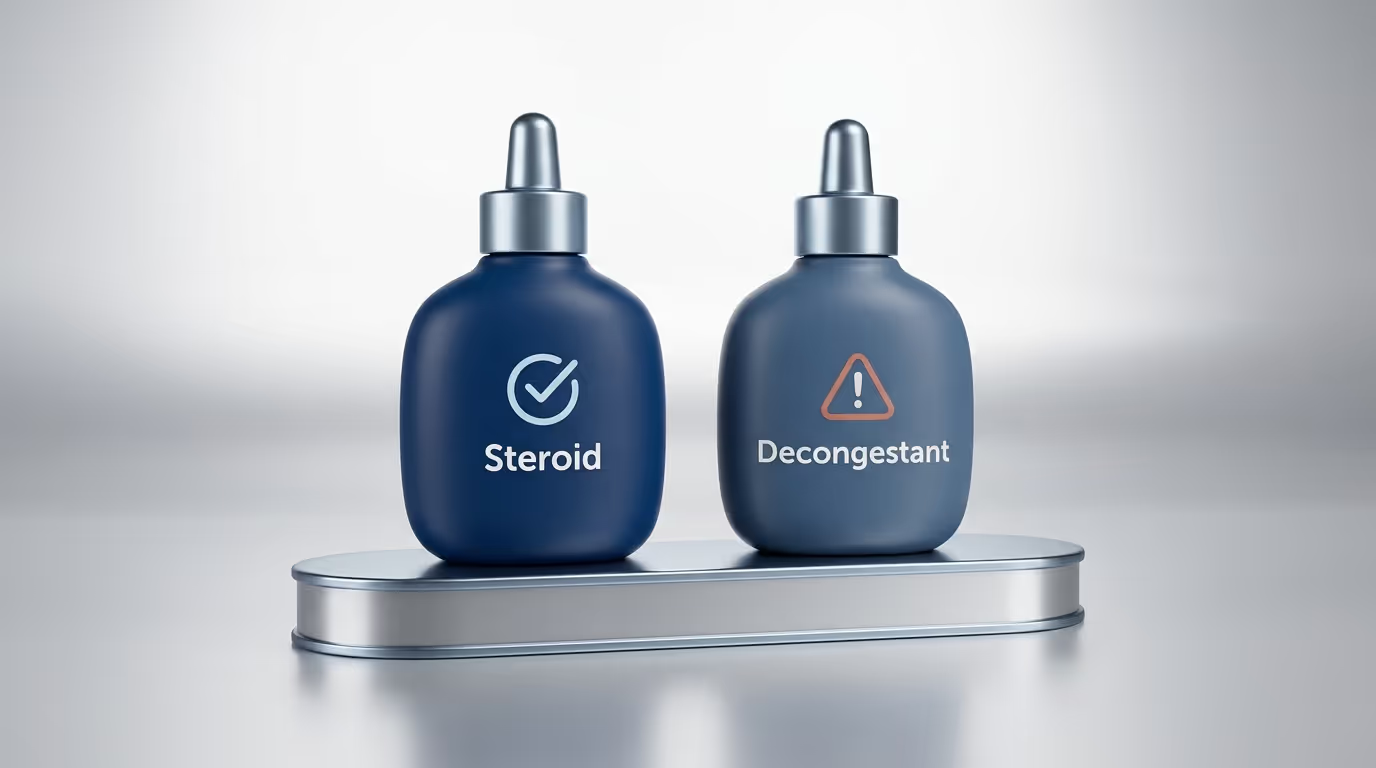
Nasal Steroid Sprays vs. Decongestant Sprays: Don’t Mix These Up
Mix-ups are common because both types are “nasal sprays,” but they work differently—and have different risks when stopping. A quick label check can save a lot of frustration.
What a nasal steroid spray is (examples)
- Fluticasone (Flonase)
- Mometasone (Nasonex)
- Budesonide (Rhinocort)
- Triamcinolone (Nasacort)
How they work and feel:
- Reduce inflammation in the nasal lining over time
- Many people notice gradual improvement over several days, with full benefit sometimes taking 1–2 weeks
- Best used consistently for ongoing control (they are not immediate decongestants)
What a nasal decongestant spray is (examples)
- Oxymetazoline (Afrin)
- Xylometazoline
How they work and feel:
- Shrink blood vessels quickly to open nasal passages
- Relief can be felt within minutes
- Overuse can start a cycle of worsening congestion with overuse (rhinitis medicamentosa)
What “rebound congestion” actually means
- True rebound congestion (rhinitis medicamentosa) is a worsening of congestion after stopping a topical decongestant spray.
- It is typically linked to decongestant sprays, not intranasal steroids. (CMAJ, 2021)
- If you suspect you’re using a decongestant spray and are worried about rebound, this guide may help: https://sleepandsinuscenters.com/blog/afrin-rebound-how-long-does-nasal-congestion-last-after-use
- Technique matters if you restart: step-by-step guidance here: https://sleepandsinuscenters.com/blog/steroid-nasal-spray-technique-step-by-step-guide-for-effective-use
Bottom line: Don’t confuse steroid sprays with decongestant sprays—the stopping strategy and rebound risk are different.
Why People Want to Stop Using a Nasal Steroid Spray
People decide to stop using a nasal steroid spray for lots of reasonable reasons—sometimes it’s “spring is over,” and sometimes it’s about comfort, cost, or wanting fewer daily meds.
Common reasons
- Symptoms improved (end of allergy season, fewer triggers)
- Side effects (dryness, irritation, nosebleeds)
- Preference to reduce daily medications
- Concern about long-term safety
- Pregnancy planning or medication changes (often a reason to check with a clinician)
When stopping might be a bad idea (without a plan)
- Poorly controlled chronic rhinitis
- Recurrent sinus inflammation
- Nasal polyps
- Significant sleep disruption from congestion
Bottom line: If your symptoms are severe or complicated, plan the transition so you don’t trade control for misery.

What Happens When You Stop? (Symptoms You Might Notice)
The most common outcome: your original symptoms return
When people stop using a nasal steroid spray, the most common “new” symptoms are simply the old ones coming back:
- Nasal congestion
- Sneezing
- Runny nose
- Post-nasal drip
- Itchy nose
This can be mistaken for rebound, but it’s usually recurrence of the underlying condition, not medication damage. (GoodRx, 2025)
Timing—how fast can symptoms come back?
- Some people notice changes within a few days
- Others feel fine until exposure ramps up (pollen surge, dusty cleaning day, pet exposure)
- Highly seasonal patterns may not recur until the next trigger window
What is not typical with nasal steroid sprays
- A sudden, dramatic “I can’t breathe through my nose at all” pattern—this is more characteristic of rebound from decongestant sprays. (CMAJ, 2021)
Bottom line: Expect a gradual return of your usual triggers and symptoms rather than a sudden “rebound” event.

Is It Safe to Stop a Nasal Steroid Spray Cold Turkey?
For many people: yes
- Most intranasal steroids act mainly locally in the nose and have low systemic absorption. (JACI, 2001; CMAJ, 2021)
- They generally don’t require a strict taper like oral steroids (e.g., prednisone).
- The main downside of stopping is loss of symptom control—not a dangerous withdrawal effect.
Who should check with a clinician before stopping (taper is rarely needed)
A personalized plan may be considered if you:
- Use very high doses for long periods
- Use multiple steroid medicines or high doses for long periods (for example, inhaled steroids for asthma plus an intranasal steroid)
- Have a history that raises concern for rare systemic steroid effects (JACI, 2001)
Bottom line: Most users can stop without tapering; if you’re on high doses or multiple steroids, ask first.
How to Safely Discontinue (Patient-Friendly Step-by-Step Plan)
This section is educational and meant to help you think through options—not replace personalized care.
Medical disclaimer: This article is for general education and doesn’t replace medical advice. If you’re unsure what product you’re using, have severe symptoms, or take multiple steroid medications, contact your clinician for individualized guidance.
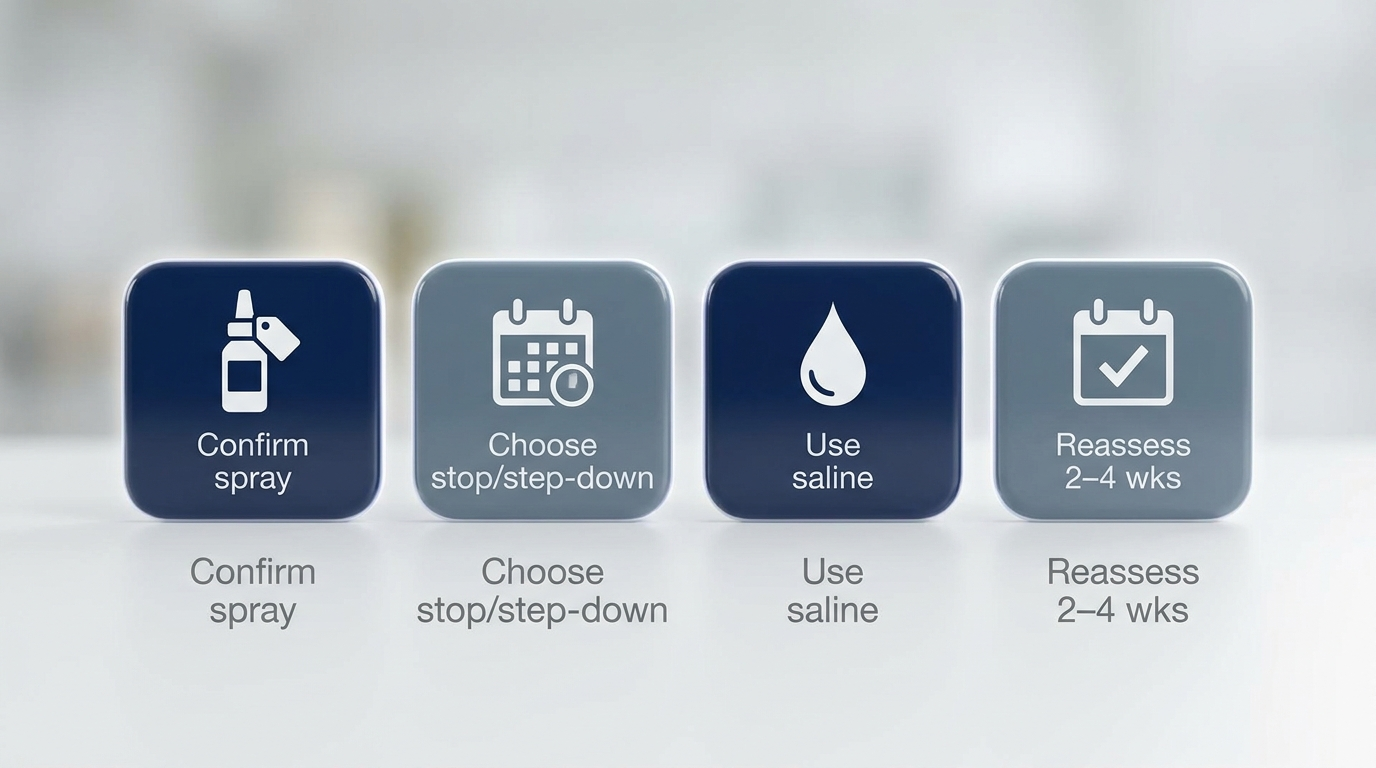
Step 1 — Confirm what spray you’re using
- Look for fluticasone, budesonide, mometasone, triamcinolone (steroids)
- Look for oxymetazoline (decongestant)
- If you’ve been using more than one spray, write them down to avoid mixing categories
Step 2 — Pick the right stopping approach
- Option A: Stop abruptly (appropriate for many typical users)
- Option B: Gradual step-down (may be used in some cases for comfort or on a clinician’s advice)
Examples: reduce to every other day for 1–2 weeks, then stop; or reduce the number of sprays per nostril for a short period before stopping.
Step 3 — Replace with non-rebound supports (to reduce flare-ups)
- Saline spray or saline irrigation to clear irritants and mucus
- Trigger-reduction habits (see Lifestyle Tips below)
- Consider non-steroid treatments if symptoms return (see next section)
Step 4 — Reassess at 2–4 weeks
- If symptoms return quickly, worsen, or interfere with sleep, consider:
- A temporary restart
- Assessing for other diagnoses (nonallergic rhinitis, chronic sinusitis)
- A targeted evaluation (allergy or ENT workup)
Sleep and Sinus Centers of Georgia offers allergy testing if you want clearer answers about triggers: https://sleepandsinuscenters.com/allergy-testing
Bottom line: Confirm your spray type, choose a simple stop or short step-down, use saline, and reassess in a few weeks.

How to Avoid “Rebound Symptoms” (and What People Call Rebound)
With intranasal steroids, the goal isn’t avoiding true rebound—it’s preventing symptom relapse.
Reduce trigger exposure during the transition
- Follow local pollen/mold patterns and limit peak exposure when possible
- Focus on the bedroom: consider HEPA air filtration, wash bedding hot, use dust-mite covers if relevant
Keep the nasal lining comfortable
- Saline spray/rinse can reduce dryness and clear irritants
- If using a humidifier, clean it consistently to avoid mold buildup
Use correct technique (if you restart intermittently)
- Technique affects side effects like irritation and nosebleeds
- Aim the spray slightly away from the septum for comfort and effectiveness
- Step-by-step guidance: https://sleepandsinuscenters.com/blog/steroid-nasal-spray-technique-step-by-step-guide-for-effective-use
Bottom line: Manage triggers and comfort; if you restart, use good technique to minimize irritation.
If Symptoms Come Back—What Are Your Treatment Options?
Non-medication supports
- Saline rinses during flare periods
- Trigger management: dust, pets, smoke, fragrance, mold, temperature changes
Over-the-counter medication options (depending on symptoms)
- Non-sedating oral antihistamines can help sneezing/itching/runny nose
- Antihistamine nasal sprays may offer faster relief for some people
- Important reminder: decongestant sprays should be short-term only (often cited as ≤3 days) because of rebound risk. (CMAJ, 2021)
When prescription help may be needed
- Chronic rhinitis management
- Chronic sinusitis evaluation
- Nasal polyps assessment
- Long-term allergy control strategies (including immunotherapy in appropriate cases)
Bottom line: Start with saline and trigger control; add targeted medications if needed, and seek care if symptoms persist.
When to See a Doctor (Safety & Red Flags)
Call/visit if you have
- Symptoms that disrupt sleep or daily function despite home measures
- Frequent sinus infections, facial pain/pressure, or reduced sense of smell
- Recurrent nosebleeds or significant irritation on sprays
- Multiple steroid therapies and you want a personalized discontinuation plan (JACI, 2001)
Urgent evaluation if
- Severe shortness of breath, wheezing, or signs of a serious allergic reaction
- High fever with significant facial swelling or vision changes
Bottom line: Don’t wait if symptoms are severe, persistent, or worrisome—get tailored guidance.
FAQs (SEO-Focused)
Can you get rebound congestion from Flonase (or other steroid sprays)?
- Typically no. Rebound congestion (rhinitis medicamentosa) is mainly a decongestant-spray issue. (CMAJ, 2021; GoodRx, 2025)
How long do the effects of Flonase last after stopping?
- The anti-inflammatory effect may linger briefly, but symptoms can return as inflammation reactivates—especially when triggers return. (GoodRx, 2025)
Should I taper off a steroid nasal spray?
- Usually not required, but it may be considered in higher-dose, long-term use or with multiple steroid exposures. (JACI, 2001; CMAJ, 2021)
Why am I congested again after stopping?
- Most often, it’s the original allergic or nonallergic rhinitis returning, not rebound damage. (GoodRx, 2025)
Can I use a nasal steroid spray only during allergy season?
- Many people do well with seasonal use—often starting before peak season and stopping when triggers drop—though the best timing depends on your pattern and severity.
Bottom line: Steroid sprays don’t cause classic rebound; plan use around your triggers and severity.
Lifestyle Tips to Reduce the Need for Daily Sprays
Home environment
- Use a HEPA filter in high-symptom rooms
- Reduce dust reservoirs (carpets, heavy drapes) where possible
- Keep indoor humidity low enough to discourage mold growth
Sleep-friendly habits (for nighttime congestion)
- Shower before bed during pollen season
- Consider an evening saline rinse
- Slight head elevation may help some people breathe easier at night
Consider identifying the root cause
- If congestion is frequent or year-round, targeted evaluation can help—through allergy testing, checking for nonallergic triggers, or an ENT assessment for issues such as a deviated septum, turbinate enlargement, or polyps
Bottom line: A few environmental and bedtime tweaks can lower your need for daily sprays.
Conclusion / Takeaway
Most people can safely stop using a nasal steroid spray without tapering. What feels like “rebound” after you stop is usually allergy or rhinitis symptoms returning—not true rhinitis medicamentosa. If symptoms recur quickly, disrupt sleep, or you’re using multiple steroid therapies, a clinician can help tailor the safest, most effective plan. (GoodRx, 2025; CMAJ, 2021; JACI, 2001)
Want a clear plan that fits your symptoms and triggers? Book an appointment with Sleep and Sinus Centers of Georgia: https://www.sleepandsinuscenters.com/
References
- GoodRx. (2025). How long does Flonase stay in your system? https://www.goodrx.com/flonase/how-long-does-flonase-stay-in-your-system
- Journal of Allergy and Clinical Immunology (JACI). (2001). Intranasal corticosteroids and systemic effects (HPA-axis considerations). https://www.jacionline.org/article/S0091-6749(01)03148-7/fulltext
- Canadian Medical Association Journal (CMAJ). (2021). Rhinitis medicamentosa/rebound congestion. https://www.cmaj.ca/content/193/12/e427
- ScienceDirect/PubMed entry mirroring the JACI article: https://www.sciencedirect.com/science/article/abs/pii/S0091674901031487
This article is for educational purposes only and is not medical advice. Please consult a qualified healthcare provider for diagnosis and treatment.
Don’t let allergies slow you down. Schedule a comprehensive ENT and allergy evaluation at Sleep and Sinus Centers of Georgia. We’re here to find your triggers and guide you toward lasting relief.