
Can You Push a Deviated Septum Back Into Place? Treatment Options and What to Know
Getting hit in the nose—or suddenly noticing that breathing feels “blocked” on one side—can make anyone wonder: can you push a deviated septum back into place? It is an understandable thought in the moment, especially if your nose looks different in the mirror or breathing feels worse than it did yesterday.
This article explains why self-manipulating your nose is risky, what symptoms may (and may not) point to a deviated septum, what typically happens after nasal trauma, and which treatment options actually help.
Quick Answer—No, You Should Not Attempt to Push a Deviated Septum Back Yourself
In general, no—you should not try to push a deviated septum back into place on your own. Patient education resources (including the Cleveland Clinic health library) discourage attempting to straighten or manipulate the septum yourself because it can worsen bleeding and swelling—or delay care for an injury that needs prompt treatment. Source: Cleveland Clinic health library: https://my.clevelandclinic.org/health/diseases/16924-deviated-septum
It also helps to know that many septum deviations are structural (involving cartilage and/or bone). In other words, it is not like a “stuck” contact lens you can nudge back into position. These changes usually do not “pop back” with pressure, even if the obstruction feels sudden.

Why DIY “Pushing It Back” Is Risky
Trying to manually reposition your septum (or the outside of your nose) can create problems such as:
- More inflammation, pain, and bleeding, which can worsen nasal obstruction
- A false sense of reassurance, if swelling goes down temporarily but a structural issue remains
- Delayed evaluation for issues that may need urgent attention (for example, a septal hematoma—more on that below)
- Mistaking swelling for displacement: right after an injury, swelling can make the nose look crooked even when underlying structures are not dramatically shifted
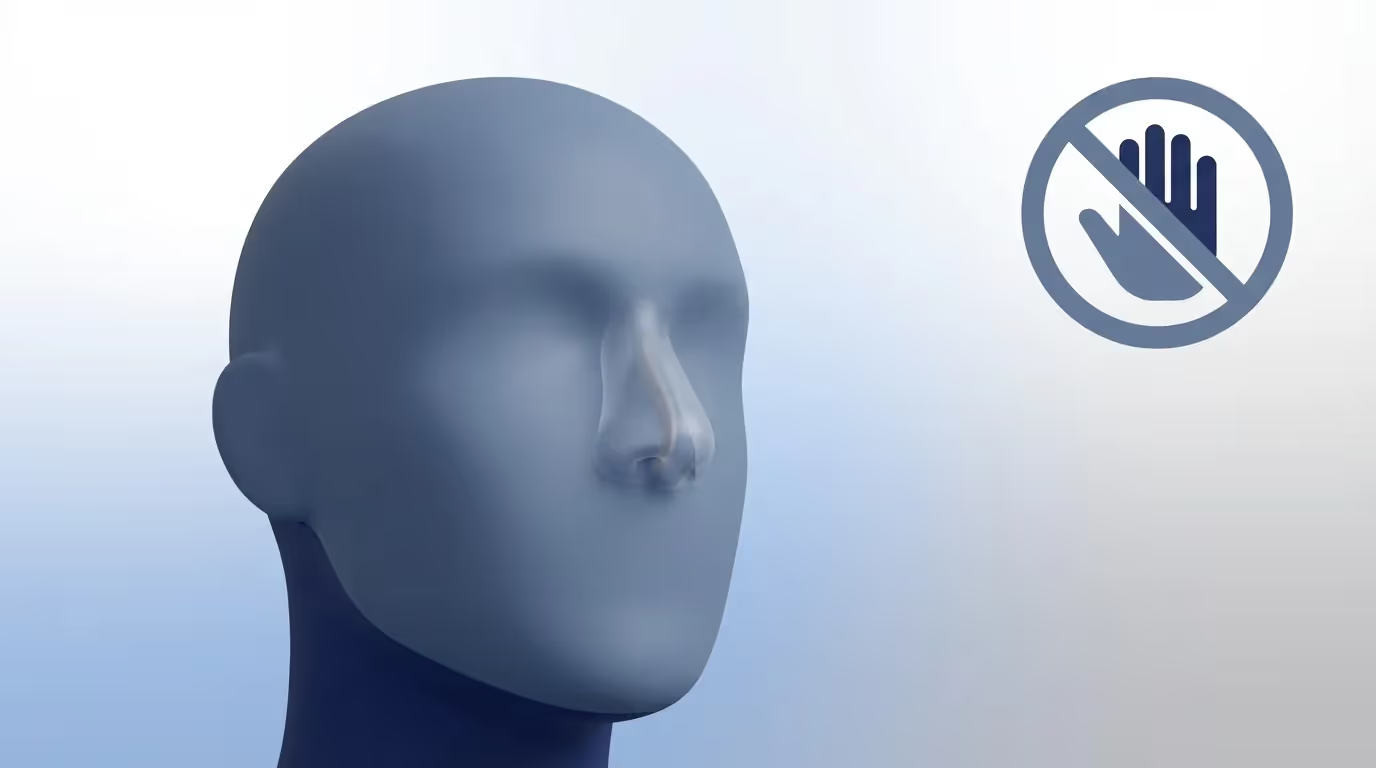
If you have had a recent nasal injury and are wondering if you can push a deviated septum back into place, the safest approach is to avoid self-manipulation and seek prompt medical evaluation, ideally within 48 hours. Bottom line: hands off your nose—prompt evaluation is safer than self-correction.

What a Deviated Septum Is (and What It Is Not)
Your nasal septum is the wall in the middle of your nose that separates the left and right nasal passages. It is made of cartilage in the front and bone in the back. A “deviated” septum simply means that wall is off-center.
Many people have some degree of septal deviation and may never notice it. For a deeper overview of what a deviated septum is, you can read more here: https://sleepandsinuscenters.com/blog/what-is-a-deviated-septum-causes-symptoms-and-when-to-see-a-doctor
It is also easy to confuse a deviated septum with other issues:
- Broken nose (nasal fracture): injury to the nasal bones and/or cartilage
- Nasal valve collapse: weakness or narrowing where airflow is naturally tightest
- Turbinate enlargement: swollen tissues inside the nose that can narrow airflow
These problems can overlap. That is one reason an in-person exam can matter—especially after trauma.
Chronic vs. Acute (Traumatic) Septum Problems
- Chronic deviation: long-standing, often from natural growth or an old injury. Symptoms can be subtle for years, then become more noticeable with allergies, age-related tissue changes, or recurrent inflammation.
- Acute displacement after trauma: a recent injury can shift nasal structures and suddenly change breathing or appearance. In some cases, clinicians can realign displaced structures (but that is different from doing it yourself at home).
Think structure first: chronic deviation is common, while trauma can add sudden changes that need an exam.
Symptoms That Can Suggest a Deviated Septum
A deviated septum can be associated with symptoms such as:
- Nasal blockage (often worse on one side)
- Mouth breathing, snoring, and sleep disruption
- Frequent nosebleeds
- Facial pressure or a “congested” sensation
- Reduced sense of smell (sometimes)
- Recurrent sinus infections (in some patients)
Symptoms alone do not prove the septum is the only issue—but they can be useful clues. For example, some people notice that one nostril is consistently worse in certain sleep positions, while others find that exercise makes the imbalance more obvious.
When Symptoms Are More Likely From Something Else
- Allergies or viral congestion, which can swell nasal tissues unevenly
- Chronic rhinitis (long-term inflammation)
- Enlarged turbinates (internal tissues that can swell and narrow airflow)
- Other structural airflow problems beyond the septum
Symptoms guide next steps, but an exam confirms the cause.
Causes—Why Septums Deviate in the First Place
Common Causes
A septum can deviate because of:
- Natural growth/development differences
- Prior injuries (even if they happened years ago)
- Nasal trauma from sports, falls, or car accidents
Acute Injury: What Can Happen Right After Trauma
Soon after an impact, several things can occur at once:
- Swelling can temporarily worsen breathing and distort appearance
- The septum may shift or become more inflamed
- The nasal bones may also be fractured
Because multiple structures can be involved, it is not always possible to tell what is going on by looking in the mirror. A common scenario is: “My nose looks crooked, but I cannot tell if it is the swelling or the bone.” That uncertainty is exactly why exam and timing matter. After injury, swelling can hide or mimic structural changes—get assessed rather than guessing.
If This Happened After an Injury: What to Do Instead of Pushing It Back
If you have had a recent hit to the nose and you are wondering can you push a deviated septum back into place, it is generally safer to avoid manipulating your nose and focus on supportive care while arranging evaluation.
Educational (non-personalized) steps that are commonly discussed after nasal injuries include:
- Cold compresses and head elevation to help with swelling
- Avoiding forceful nose blowing when there is significant swelling or bleeding
- Using appropriate pain relief per labeled directions and your clinician’s guidance
- Seeking prompt evaluation, especially if breathing is worsening or the nose looks visibly deformed
For more on when to get seen after a suspected fracture, this may help: https://sleepandsinuscenters.com/blog/broken-nose-treatment-when-to-see-an-ent-specialist

Timing Matters—When a Clinician Can Realign a Traumatic Septum
When nasal structures are displaced from trauma, a clinician may consider a closed reduction, a procedure that realigns structures without open surgery. Timing often matters. In many cases, closed reduction is performed around 5–7 days after injury when swelling has improved—but early assessment (often within about 48 hours) can help with planning and determining the best pathway. Delays beyond this window can make closed reduction less effective as bones begin to set (often around 10–14 days, sooner in children), though individual factors vary. Sources: StatPearls (NCBI Bookshelf): https://www.ncbi.nlm.nih.gov/books/NBK555912/ HealthPartners overview: https://www.healthpartners.com/blog/deviated-septum-treatments/ Early evaluation sets the clock for the best chance at a simple, timely correction after trauma.

Red Flag After Trauma—Septal Hematoma (Medical Emergency)
One reason “wait and see” can be risky after nasal trauma is a septal hematoma—a collection of blood between the septal cartilage and its lining. If not treated promptly, it can reduce blood supply to the cartilage and lead to damage and long-term deformity.
People may notice:
- Severe congestion, often on both sides
- Increasing pain/pressure
- A soft, boggy swelling inside the nose
Because this can be urgent, it is typically treated with prompt drainage by a clinician. Sources: AO Foundation surgical reference: https://surgeryreference.aofoundation.org/cmf/trauma/midface/nasal-bone/nasal-septal-hematoma-drainage StatPearls (NCBI Bookshelf): https://www.ncbi.nlm.nih.gov/books/NBK538299/ AAO-HNSF journal discussion: https://aao-hnsfjournals.onlinelibrary.wiley.com/doi/full/10.1002/oto2.174 If you suspect a septal hematoma, seek urgent care—this cannot wait.

Treatment Options (What Actually Helps)
If you are still asking can you push a deviated septum back into place, it may help to reframe the goal: treatment usually focuses on improving airflow and comfort, and that may involve observation, medical symptom control, or procedures.
1) Watchful Waiting (When Symptoms Are Mild)
If breathing is acceptable and complications (like frequent infections or significant nosebleeds) are minimal, no procedure may be needed. Treatment decisions are usually based on symptoms and quality of life, not the fact that a deviation exists.
2) Non-Surgical Symptom Relief (Does Not “Fix” the Septum)
Non-surgical options do not physically straighten the septum, but they may reduce inflammation and help airflow around a narrow area. Depending on the situation, discussions often include:
- Saline spray or irrigation for dryness, crusting, and mucus
- Allergy management when allergies are contributing
- Medication options to reduce nasal inflammation (discussed with a clinician)
These measures can be especially helpful when the “block” is partly tissue swelling layered on top of a narrow passage.
3) Septoplasty (Definitive Fix for Chronic Deviated Septum)
For persistent obstruction or ongoing symptoms, septoplasty is a common definitive treatment. Septoplasty reshapes, repositions, or removes small areas of cartilage/bone inside the nose to improve airflow.
This is often the option considered when the deviation is chronic and symptoms significantly affect day-to-day life. The Cleveland Clinic health library notes that chronic deviation generally is not corrected with manual pressure and that septoplasty (or septorhinoplasty in some cases) is typically the definitive approach. Source: https://my.clevelandclinic.org/health/diseases/16924-deviated-septum
If you are weighing that decision, this guide can help you think through next steps: https://sleepandsinuscenters.com/blog/is-septoplasty-right-for-your-deviated-septum
4) Septorhinoplasty (When Breathing + External Shape Are Both Issues)
Sometimes trauma or anatomy affects both airflow and the external framework/appearance of the nose. In those cases, a combined approach (addressing the septum and the nasal framework) may be discussed.
5) Closed Reduction (For Recent Trauma-Related Displacement)
Closed reduction is a clinician-performed realignment procedure for recently displaced nasal structures. It is most relevant when the issue is acute trauma, not a long-standing deviation. As noted above, it is commonly considered around 5–7 days after injury once swelling improves, with earlier evaluation helping guide timing. Effectiveness decreases as bones set, typically after 10–14 days. Sources: https://www.ncbi.nlm.nih.gov/books/NBK555912/ and https://www.healthpartners.com/blog/deviated-septum-treatments/ For chronic deviation, septoplasty is definitive; for recent trauma, timely closed reduction may help.
What to Expect at an ENT Visit
At Sleep and Sinus Centers of Georgia, an ENT evaluation typically focuses on confirming what is causing obstruction and ruling out urgent concerns—especially after injury.
History + Symptom Review
You may be asked about breathing patterns, snoring/sleep quality, nosebleeds, sinus symptoms, allergy history, and any trauma (including when it happened).
Physical Exam (and Possible Nasal Endoscopy)
A careful internal exam may be done to look for deviation, swelling, bleeding sources, polyps, or signs of septal hematoma.
Imaging—When It Is Needed
Imaging is not always necessary for a routine deviated septum evaluation, but it may be considered in more complex cases or when trauma raises concern for fractures or other injuries. An in-person exam clarifies the cause and directs you to the right treatment path.
Lifestyle Tips to Breathe Easier (While You Are Waiting for Evaluation or Surgery)
At-Home Comfort Measures
General comfort strategies many people use include:
- Humidifier for dryness (with regular cleaning)
- Saline rinses to help clear mucus and reduce crusting
- Sleep positioning, such as elevating the head during congestion
Avoiding Common Triggers That Worsen Nasal Blockage
Reducing irritants may help limit swelling, including:
- Smoke exposure
- Strong fragrances and airborne irritants
- Overuse of topical decongestant sprays (which can worsen congestion when used too frequently)
Small daily habits can reduce swelling and make breathing easier while you plan next steps.
FAQs
Can a deviated septum be fixed without surgery?
Symptoms may improve with non-surgical strategies, but structural correction typically requires septoplasty when symptoms are significant and persistent. Source: https://my.clevelandclinic.org/health/diseases/16924-deviated-septum
If my nose looks crooked after getting hit, should I try to straighten it?
Generally, no. Trying to straighten it yourself can increase bleeding and swelling and may delay evaluation for injuries that need prompt care. Source: https://my.clevelandclinic.org/health/diseases/16924-deviated-septum
How soon should I see a doctor after a nose injury?
Educational resources commonly recommend early evaluation, especially with blocked breathing, visible deformity, or severe pain/swelling. Some pathways emphasize assessment within about 48 hours to help guide next steps. Source: https://www.healthpartners.com/blog/deviated-septum-treatments/
What are signs of a septal hematoma?
Increasing congestion (often both sides), worsening pain/pressure, and a soft internal swelling can be warning signs. Septal hematoma is generally treated as urgent. Sources: https://surgeryreference.aofoundation.org/cmf/trauma/midface/nasal-bone/nasal-septal-hematoma-drainage https://www.ncbi.nlm.nih.gov/books/NBK538299/ https://aao-hnsfjournals.onlinelibrary.wiley.com/doi/full/10.1002/oto2.174
When is closed reduction performed?
Often 5–7 days after injury once swelling decreases, though timing varies based on swelling, age, and injury pattern; it may be less effective after bones begin to set (around 10–14 days). Source: https://www.ncbi.nlm.nih.gov/books/NBK555912/
Will pushing on my nose make the septum worse?
It can. Pressure may worsen inflammation and bleeding and does not address underlying structural deviation. This is a key reason patient education materials caution against self-manipulation. Source: https://my.clevelandclinic.org/health/diseases/16924-deviated-septum
When to Seek Urgent Care vs. Schedule an ENT Appointment
Seek urgent evaluation now if you have:
- Possible septal hematoma symptoms (severe obstruction, increasing pain/pressure, internal swelling)
- Persistent heavy nosebleed
- Severe pain, rapidly worsening swelling, or inability to breathe through the nose after trauma
- A new facial/nasal deformity after injury
Schedule an ENT visit if you have:
- Ongoing one-sided nasal blockage
- Snoring or sleep disruption linked to nasal obstruction
- Frequent nosebleeds or recurrent sinus symptoms
Urgent symptoms need immediate care; persistent symptoms deserve a timely ENT visit.
Next Step: Get the Right Evaluation (Instead of DIY Fixes)
If you suspect a deviated septum—or you were recently hit in the nose—an ENT exam can help clarify what is happening and what options make sense. If you are researching can you push a deviated septum back into place, the safest takeaway is usually: do not try to “push it back” at home—get evaluated.
You can explore deviated septum treatment options at Sleep and Sinus Centers of Georgia here: https://sleepandsinuscenters.com/deviated-septum-relief
Ready to be seen? You can request a visit and book an appointment here: https://sleepandsinuscenters.com/appointments
Medical disclaimer
This article is for general education and is not a substitute for individualized medical advice, diagnosis, or treatment. If you have severe symptoms after nasal injury—especially worsening pain, heavy bleeding, or concern for septal hematoma—seek urgent medical evaluation.
This article is for educational purposes only and is not medical advice. Please consult a qualified healthcare provider for diagnosis and treatment.
Don’t let allergies slow you down. Schedule a comprehensive ENT and allergy evaluation at Sleep and Sinus Centers of Georgia. We’re here to find your triggers and guide you toward lasting relief.