Can Nasal Polyps Be Cancerous? Symptoms, Risk Factors, and When to See a Doctor
Nasal polyps are common, frustrating, and often linked to ongoing sinus inflammation. A question many people understandably ask is: can nasal polyps be cancerous? The reassuring news is that most are not—but certain patterns still deserve timely evaluation.
If you’ve ever felt like you’re always congested, have a reduced sense of smell, or keep cycling through sinus symptoms, you’re not alone. Polyps can develop gradually, and many people only learn they have them after symptoms become hard to ignore.
Below is an educational guide to what nasal polyps are, typical (benign) symptoms, warning signs that warrant a closer look, and how an ENT specialist may evaluate a growth in the nose.
Quick Answer: Are Nasal Polyps Cancerous?
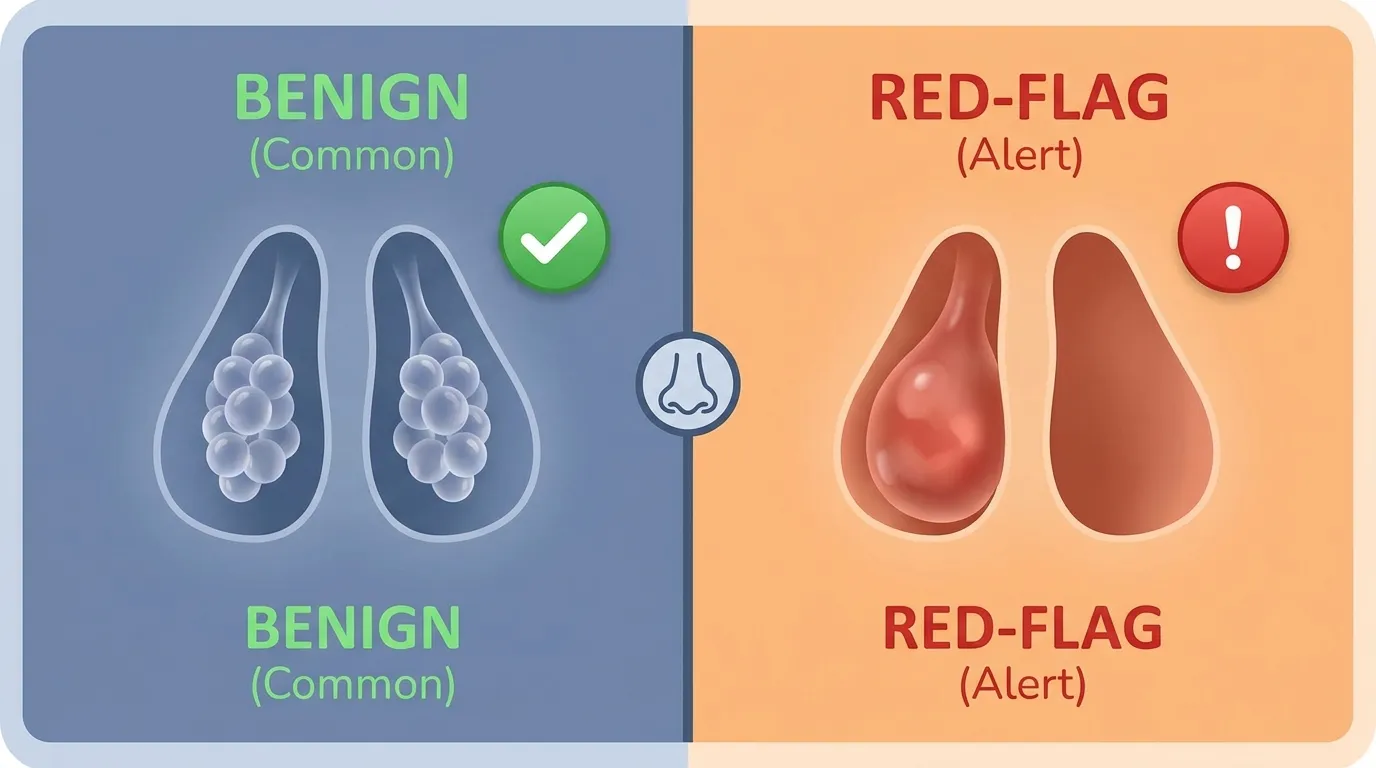
Most nasal polyps are benign (noncancerous) growths related to inflammation of the lining inside the nose or sinus cavities. They often occur on both sides of the nose—especially in people with chronic rhinosinusitis, allergies, and/or asthma. Cancerous causes are uncommon, but they must be ruled out when features are atypical, such as a new, growing, or one-sided (unilateral) mass.
In short: most polyps are noncancerous, but one-sided symptoms or a one-sided mass should be evaluated.

What Are Nasal Polyps (and What Do They Look/Feel Like)?
Nasal polyps are soft, painless, “grape-like” growths that form in the lining of the nose or sinuses. They are strongly associated with chronic inflammation. For more background, see our overview of what nasal polyps are: https://sleepandsinuscenters.com/blog/what-are-nasal-polyps
Where they form:
- Inside the nasal cavity, where they may directly block airflow and contribute to mouth breathing or snoring
- Inside the sinus cavities, where they can disrupt drainage pathways and contribute to congestion, pressure, and recurrent infections
Why many people don’t notice them at first: Small polyps may cause few symptoms. Many people only realize something is wrong when polyps enlarge or occur in clusters—leading to persistent congestion and smell changes.
Think of polyps as inflammation-driven tissue changes that often build gradually over time.
Why Nasal Polyps Are Usually Benign
Chronic inflammation is the typical driver. Most nasal polyps are tied to an inflammation cycle:
1) The nasal/sinus lining becomes inflamed and swollen
2) Drainage and airflow become restricted
3) Ongoing irritation and swelling continue
4) Over time, the lining can form polyp tissue
“Bilateral” polyps are most common. Typical inflammatory polyps often occur on both sides of the nose. When symptoms are fairly symmetrical—both nostrils feel blocked, drainage occurs on both sides, and smell reduction feels generalized—this fits the common benign pattern.
Symmetrical, longstanding congestion usually points to inflammatory polyps rather than cancer.

When a Nasal “Polyp” Might Be Something Else (and Why That Matters)
One-sided (unilateral) growths are more concerning. A growth or blockage that appears mainly on one side deserves careful evaluation. One-sided nasal masses can represent:
- A benign growth that isn’t a typical inflammatory polyp
- Inverted papilloma
- A malignancy (rare, but important to rule out)
Inverted papilloma: benign, but not risk-free. An inverted papilloma is a benign growth that can mimic a polyp by causing blockage and congestion, but it behaves differently than typical inflammatory polyps:
- It is more likely to be one-sided
- It can recur after treatment
- Published medical literature reports that inverted papilloma has a small risk of being associated with, or later developing into, squamous cell carcinoma in a minority of cases. Reported rates vary across studies.
For related context, see early signs of nasal tumors: https://sleepandsinuscenters.com/blog/early-signs-of-nasal-tumors-key-symptoms-to-recognize
Any new, growing, or one-sided nasal mass should be evaluated by an ENT to confirm the diagnosis.
Symptoms of Nasal Polyps (Common, Benign Pattern)
Nose and sinus symptoms—common symptoms include:
- Persistent stuffy nose or chronic congestion
- Runny nose or post-nasal drip
- Facial pressure or fullness
- Reduced sense of smell and/or taste
Sleep-related symptoms—when nasal airflow is chronically blocked, people may also notice:
- Mouth breathing (especially at night)
- Snoring
- Worse perceived sleep quality or waking with a dry mouth
Annoying, persistent congestion and smell changes are common with benign inflammatory polyps.

Red Flags: Symptoms That Should Prompt a Faster Medical Visit
“One-sided” warning signs—consider timely evaluation if you notice:
- Congestion that is mostly on one side
- Drainage that is mostly on one side
- A visible mass in one nostril
Symptoms more suspicious for tumor or complicated disease (can overlap with sinus issues):
- Frequent or unexplained nosebleeds
- Persistent one-sided facial pain
- New or worsening smell loss
- Eye-related symptoms (swelling around the eye, double vision, vision changes)
- Severe headache or neurologic symptoms
Safety note: Severe eye swelling, vision changes, confusion, or neurologic symptoms warrant urgent medical evaluation.
One-sided blockage, bleeding, or a visible mass are key reasons to see an ENT promptly.
Causes & Risk Factors (Why Polyps Form)
Common underlying conditions—polyps are strongly linked to inflammatory conditions, including:
- Chronic rhinosinusitis (long-term sinus inflammation)
- Allergic rhinitis (environmental allergies)
- Asthma (which often overlaps with upper airway inflammation)
Why “inflammation history” matters clinically: Because polyps are inflammation-driven, they can recur if the underlying inflammation remains active. Long-term management focuses on controlling inflammation in addition to addressing blockage.
Polyps are usually part of a bigger inflammation story, not a one-time event.

How Doctors Check Whether a Polyp Could Be Cancerous
ENT exam + nasal endoscopy: An ENT may perform a careful nasal exam and recommend nasal endoscopy, which uses a thin camera (typically in-office) to look deeper into the nasal passages and drainage pathways. For what to expect, see: https://sleepandsinuscenters.com/blog/what-is-nasal-endoscopy----and-is-it-painful
Imaging (CT or MRI) when needed—imaging can help:
- Map sinus anatomy and blockage patterns
- Assess the extent of inflammation/polyps
- Evaluate a unilateral mass more carefully
Biopsy (when it’s recommended)—a biopsy may be considered when a growth is:
- One-sided
- Atypical in appearance
- Rapidly growing
- Associated with bleeding
The goal of evaluation is to confirm what the tissue is so you can get the right treatment plan.

Treatment Options for Nasal Polyps (What Actually Helps)
First-line medical treatments—approaches focus on lowering inflammation:
- Nasal steroid sprays, which may shrink polyps over time and improve congestion
- Saline irrigation, which can clear mucus and help topical medications reach inflamed tissue more effectively
Short-term oral steroids (selected cases): Short courses may reduce inflammation quickly in select scenarios but are not a long-term strategy due to potential side effects.
Surgery (when symptoms persist): If symptoms remain significant despite appropriate medical therapy, endoscopic sinus surgery and/or polypectomy may be considered. Surgery aims to:
- Remove obstructing polyp tissue
- Improve sinus drainage and airflow
- Make topical treatments more effective afterward
When inverted papilloma is suspected or confirmed: Because inverted papilloma can recur and carries a small malignancy risk reported in the medical literature, it typically requires specialist management, complete removal when indicated, and follow-up.
Most people improve with a combination of inflammation control and, when needed, targeted procedures.
Lifestyle & At-Home Tips to Support Symptom Control (Adjuncts)
These strategies don’t replace evaluation or treatment, but they may support symptom control:
Reduce inflammation triggers:
- Identify and manage allergies when relevant
- Avoid irritants such as smoke and strong fragrances
Sinus-friendly habits:
- Use humidification if dry air worsens symptoms (keep devices clean to prevent mold)
- Use consistent saline rinsing; many people rinse before using nasal sprays so medication can coat tissue more effectively
Track patterns that matter to your clinician—helpful notes include:
- One-sided vs. two-sided symptoms
- Bleeding episodes
- Smell changes
- Response (or lack of response) to sprays/irrigation
Small daily habits and careful symptom tracking can meaningfully support medical treatment.
When to See a Doctor (Practical Timeline)
Consider making an appointment soon if:
- Symptoms last more than 10–12 weeks (possible chronic sinusitis/polyps)
- Over-the-counter care isn’t helping
See an ENT promptly if:
- There’s new unilateral blockage or a visible growth
- There are recurrent nosebleeds or worsening one-sided facial pain
For more guidance, see when to see an ENT: https://sleepandsinuscenters.com/blog/when-should-i-see-an-ent
Go urgently/emergently if:
- Vision changes
- Significant swelling around the eye
- Severe headache, confusion, stiff neck, or neurologic symptoms
If symptoms are persistent, atypical, or one-sided, don’t wait—get evaluated.
FAQs
Can nasal polyps turn into cancer? Most nasal polyps are benign and don’t become cancer. The bigger concern is whether a “polyp” is truly a polyp—especially if it’s new, growing, or unilateral—and whether something else needs to be ruled out.
Is one-sided nasal congestion always a tumor? No. Infections, structural issues, and inflammation can cause one-sided symptoms. But a persistent unilateral pattern—especially with a visible mass—should be evaluated to rule out inverted papilloma or, rarely, malignancy.
What’s the difference between a nasal polyp and an inverted papilloma? A nasal polyp is typically inflammation-related and often occurs on both sides. An inverted papilloma is a different type of growth, more often one-sided, with higher recurrence risk and a small reported cancer association in medical literature.
Do nasal polyps cause nosebleeds? Polyps more commonly cause congestion, drainage, and reduced smell. Frequent nosebleeds are a reason to seek evaluation since they can signal irritation, infection, or less common conditions.
Will nasal sprays get rid of polyps? Steroid nasal sprays can help many people by shrinking polyps and controlling symptoms over time, but results vary. Some people need additional therapies or procedures depending on severity and underlying inflammation.
Conclusion: The Bottom Line
Most nasal polyps are benign and treatable, especially when they follow the typical bilateral, inflammation-related pattern. However, a new or one-sided mass is a key red flag—not because cancer is common, but because it’s essential to confirm the diagnosis and rule out less common (and more serious) conditions such as inverted papilloma or, rarely, malignancy. If you’re dealing with persistent congestion, reduced smell, or one-sided nasal symptoms, the next best step is an evaluation so you can stop guessing and start treating the real cause.
Book an appointment: https://www.sleepandsinuscenters.com/
This article is for educational purposes only and is not medical advice. Please consult a qualified healthcare provider for diagnosis and treatment.
Don’t let allergies slow you down. Schedule a comprehensive ENT and allergy evaluation at Sleep and Sinus Centers of Georgia. We’re here to find your triggers and guide you toward lasting relief.