7 Signs You Need a Septoplasty: When to See an ENT Specialist
Introduction — Why a Deviated Septum Can Affect Breathing and Sleep
Inside your nose is a thin wall called the nasal septum that separates the left and right nasal passages. When that wall is off-center or curved, it’s called a deviated septum. Some people are born with it; others develop it after an injury.
Think of the septum like the divider in a two-lane hallway. If the divider bends into one “lane,” you may still get through—but it can feel tight, noisy, and inefficient, especially when tissues swell.
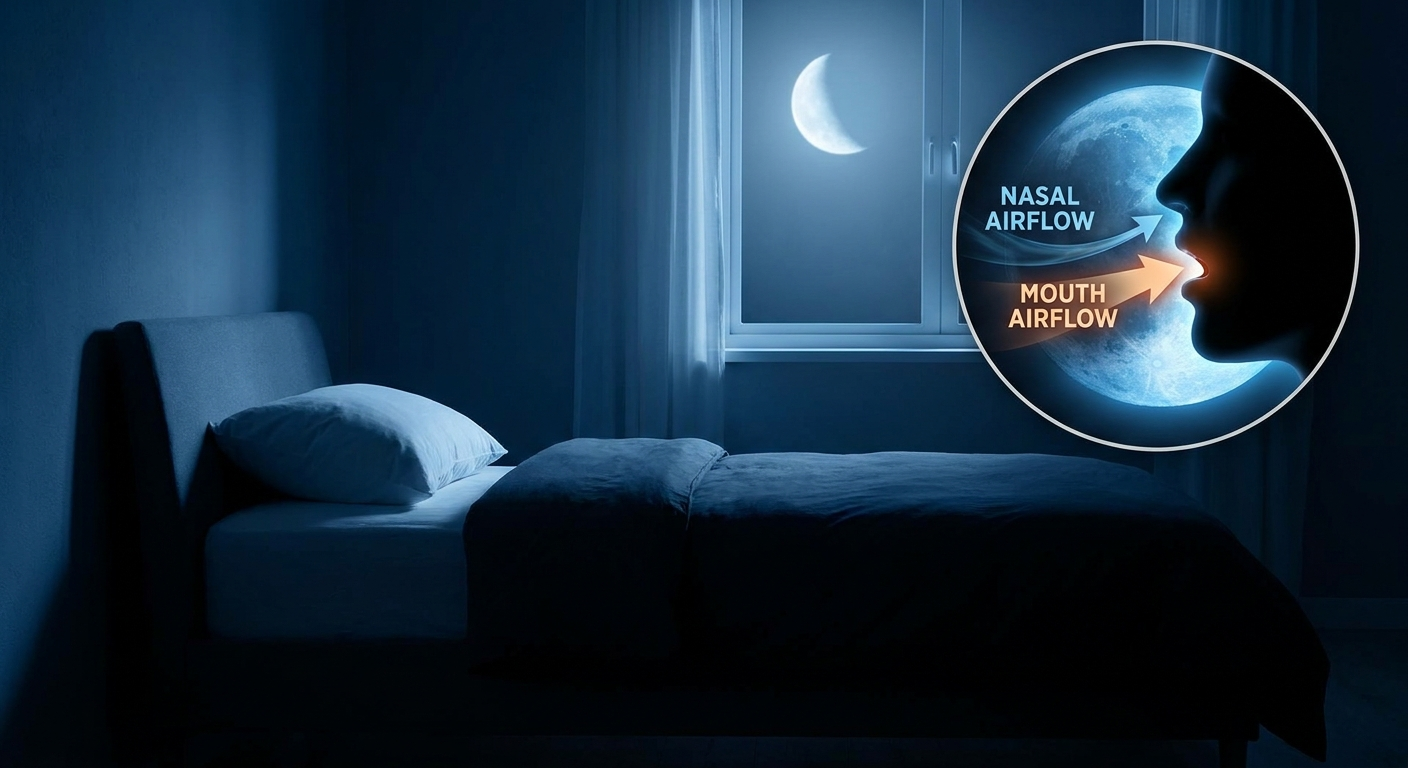
A deviation can narrow one or both sides of the nose, which may reduce airflow and make breathing feel like a struggle—especially at night. Over time, restricted airflow can contribute to things like:
- Daytime mouth breathing (including during exercise)
- Trouble sleeping and snoring
- A general feeling of “never breathing clearly”
One important point: a deviated septum usually needs treatment only if it’s causing symptoms that affect daily life and sleep quality (Mayo Clinic, 2025; Cleveland Clinic, 2025). If you’re exploring patient-focused deviated septum options, it helps to start by identifying signs that warrant an ENT evaluation. For an overview of treatment pathways, see our page on deviated septum relief: https://sleepandsinuscenters.com/deviated-septum-relief.
Bottom line: if nasal blockage or poor sleep is persistent, an ENT assessment can clarify causes and next steps.

What Is Septoplasty (and What Does It Fix)?
Septoplasty is a procedure designed to straighten or reposition the septum to improve nasal airflow. It focuses on the internal structure of the nose (cartilage and/or bone), not the outside shape.
In some cases, an ENT may also address turbinate hypertrophy (the turbinates are normal structures that help filter and humidify air). When turbinates are swollen or enlarged, they can worsen nasal obstruction—like having a narrow hallway with thick curtains making it tighter.
Your ENT will explain whether any additional treatment is relevant for your anatomy and symptoms (Mayo Clinic, 2025; Cleveland Clinic, 2025).
In short: septoplasty targets structure; your ENT will tailor care to your anatomy and symptoms.
Septoplasty vs. balloon-based options—what’s the difference?
Not every deviation is the same, and not every solution is either.
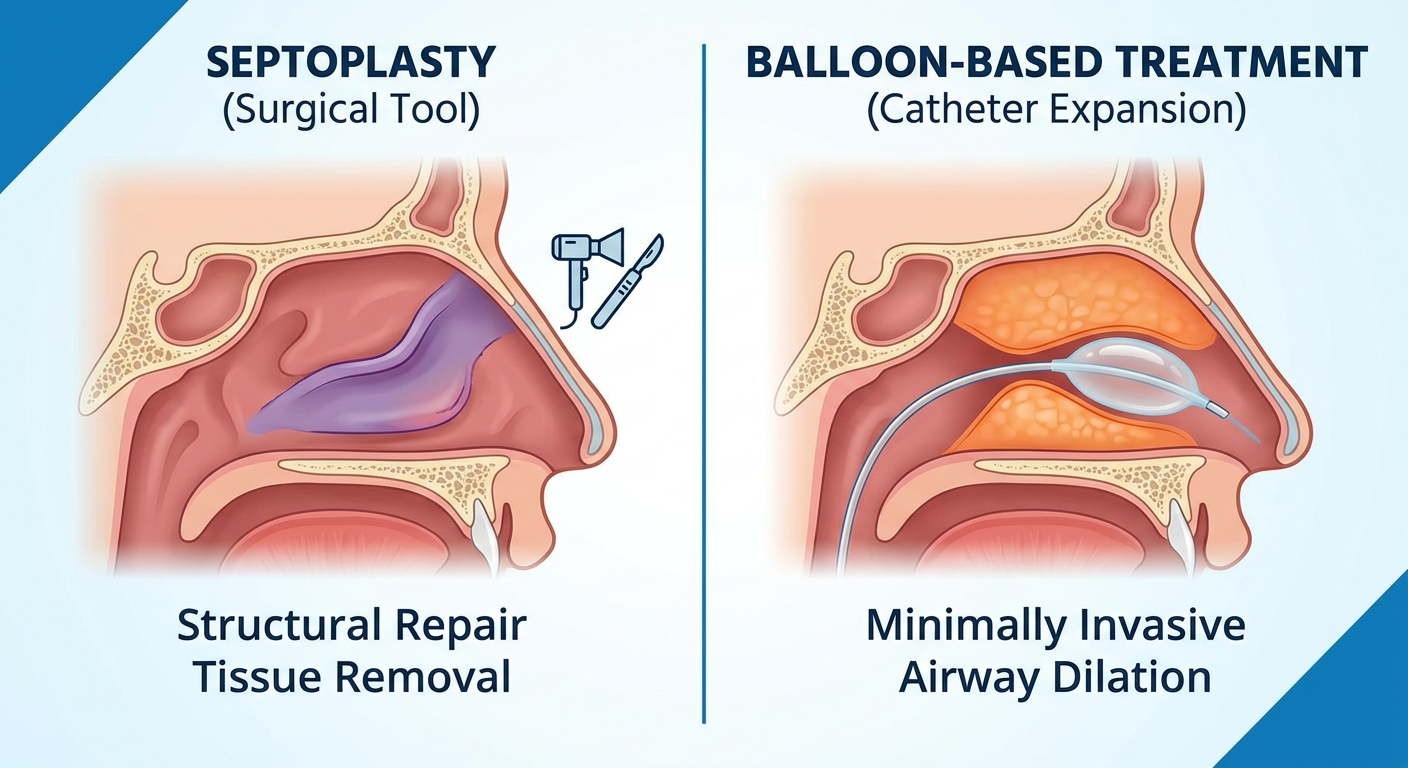
- Traditional septoplasty: typically involves surgical correction of the cartilage and/or bone that’s blocking airflow.
- Balloon-based nasal procedures: some centers use balloon techniques to dilate narrowed areas in select cases. These tools may complement other treatments in carefully chosen patients, but they are not a universal substitute for traditional septoplasty. Candidacy depends on an ENT evaluation and the specific anatomy involved (NSIBR, 2026).
If you’re curious about how a specific balloon-assisted technique may be used at our practice, read more here: https://sleepandsinuscenters.com/blog/balloon-septoplasty-with-clearpath-a-less-invasive-fix-for-a-deviated-septum.
The right approach depends on your unique nasal anatomy—your ENT can help match the tool to the problem.
Causes of a Deviated Septum (and Why Symptoms Can Worsen Over Time)
A deviated septum can happen for a few common reasons:
- Natural anatomy: some people are born with a septum that’s not centered.
- Nasal injury/trauma: sports impacts, falls, or accidents can shift cartilage or bone.
Some people have a mild deviation for years and feel fine—until something changes. Symptoms may become more noticeable when:
- Allergies or frequent colds cause inflammation and swelling, making a narrow nasal passage feel “fully blocked.”
- Normal age-related changes affect nasal tissues and airflow (Cleveland Clinic, 2025; Houston Methodist, 2022).
A common real-life example: someone feels mostly okay during the day, but once they lie down at night, the blocked side becomes more obvious—especially during allergy season or with dry indoor air.
Symptoms often ebb and flow with inflammation; an exam can separate structural from inflammatory causes.

The 7 Signs You Might Need Septoplasty
These signs aren’t a self-diagnosis—they’re signals to discuss with an ENT specialist, especially when symptoms persist or interfere with sleep, exercise, or quality of life.
1) Blockage in one or both nostrils (especially one-sided)
A classic complaint is: “I can’t breathe through one side of my nose.” Some people notice they can switch sides depending on how they sleep, but one side consistently feels worse. If blockage persists despite allergy treatment or nasal sprays, a structural or other nonallergic cause may need evaluation (Mayo Clinic, 2025).
2) Ongoing nasal congestion that doesn’t match allergies or a cold
Allergy congestion often fluctuates with triggers and seasons. A deviated septum may contribute to congestion that feels:
- Chronic or year-round
- Worse at night
- Sometimes more noticeable on one side
Because congestion can have multiple causes (allergies, infection, turbinate hypertrophy, polyps), an ENT exam can help identify the driver instead of leaving you stuck in trial-and-error remedies.
3) Frequent nosebleeds
When airflow is turbulent through a narrowed passage, it can dry and irritate the nasal lining. Over time, that irritation may be linked with more frequent nosebleeds—often noticed in winter when indoor heat dries the air. If nosebleeds are happening often, are heavy, or are difficult to stop, seek evaluation to clarify causes and options.
4) Frequent or recurrent sinus symptoms or infections
In some people, nasal obstruction may contribute to poor sinus ventilation and ongoing sinus symptoms. However, recurrent sinus infections can also have other causes. If symptoms improve with treatment then keep returning, it’s worth assessing whether airflow and drainage issues are part of the picture (Cleveland Clinic, 2025).
5) Snoring or noisy breathing during sleep
Nasal obstruction can worsen snoring by limiting nasal airflow and encouraging mouth breathing at night. If snoring is loud, frequent, or paired with unrefreshing sleep, a clinician may evaluate for broader sleep-breathing issues, including sleep apnea. Septoplasty alone is not a primary treatment for sleep apnea, though improving nasal airflow can help overall breathing comfort (Houston Methodist, 2022). Learn more about evaluation options here: https://sleepandsinuscenters.com/snoring-sleep-apnea-treatment.
6) Facial pain or pressure (especially around the cheeks/behind eyes)
Facial pressure has many potential causes (including migraine, dental issues, or TMJ). When pressure occurs alongside ongoing congestion or recurrent sinus issues, it may suggest an anatomic contributor worth evaluating.
7) Headaches with postnasal drip
Postnasal drip and headaches may occur together in chronic nasal or sinus conditions, but headaches can also have many other causes. An ENT evaluation can help sort out whether symptoms are truly sinus-related (Mayo Clinic, 2025).
If one or more of these symptoms persist, an ENT visit can help determine whether anatomy, inflammation, or both are involved.

When to See an ENT Specialist (Checklist)
You should book an ENT visit if you have…
Consider scheduling an evaluation if you’re dealing with:
- Chronic difficulty breathing through the nose (especially one side)
- Mouth breathing during exercise or reduced exercise tolerance
- Sleep disturbances (waking up, dry mouth, loud snoring)
- Recurrent sinus symptoms or nosebleeds that affect quality of life
- Symptoms that persist despite reasonable medical therapy (saline, steroid sprays, allergy management) (Mayo Clinic, 2025)
For a deeper overview of timing and next steps, see: https://sleepandsinuscenters.com/blog/when-should-i-see-an-ent.
If symptoms limit sleep, exercise, or comfort, it’s reasonable to get them checked.
What to bring to your appointment
A little preparation can make your visit more productive:
- A symptom timeline (how long it’s been happening, what worsens it, seasonality)
- Notes on sleep disruption or a snoring recording (optional)
- A list of treatments tried (saline rinses, antihistamines, nasal sprays, decongestants)
How ENTs Diagnose a Deviated Septum and Related Problems
Nasal exam and history
An ENT will ask about your symptoms and examine the inside of the nose to assess:
- Septal deviation
- Swelling and inflammation
- Turbinate hypertrophy
This is where you can describe day-to-day impact—like needing to breathe through your mouth on a run, waking up with a dry mouth, or feeling “stuffy” much of the time.
Nasal endoscopy (if needed)
Sometimes a nasal endoscopy is used—a small camera that provides a clearer view deeper inside the nasal passages. This can help evaluate inflammation or rule out issues like nasal polyps.
Imaging (CT scan) — when it’s used
A CT scan is more commonly used when sinus disease is suspected or when detailed anatomy is needed for planning treatment (Mayo Clinic, 2025; Cleveland Clinic, 2025).
Diagnosis is a stepwise process—your ENT will tailor tests to your symptoms and exam findings.
Treatment Options Before Septoplasty (and When They Help)
Lifestyle + home care that may reduce symptoms
Conservative steps may help reduce irritation and congestion:
- Saline rinse to clear mucus and irritants
- Humidifier to reduce dryness (often helpful in winter)
- Avoiding smoke and strong irritants when possible
Medications that may be recommended
Depending on symptoms, an ENT may discuss:
- Steroid nasal sprays to reduce inflammation
- Allergy management when allergic rhinitis is present
A common caution: topical decongestant sprays can cause rebound congestion if overused, so it’s best to use them only as directed.
When “medical management” isn’t enough
If the primary issue is structural (the septum physically narrowing airflow), medication may reduce swelling but typically can’t fully correct anatomy. That’s often when discussing septoplasty becomes relevant (Cleveland Clinic, 2025; Mayo Clinic, 2025).
Relief often starts with conservative care, with procedures considered when structure is the main barrier to airflow.
Septoplasty vs Balloon-Based Procedures — What Patients Should Know
Traditional septoplasty (what it typically involves)
Traditional septoplasty is often an outpatient procedure. Afterward, it’s normal to have temporary congestion and swelling while tissues heal, along with follow-up visits to monitor recovery and results.
Balloon-based procedures (who may be a candidate)
Balloon techniques may be an option for select nasal narrowings or combined with other procedures. Potential advantages can include a less invasive approach and shorter downtime for some patients—but they aren’t appropriate for every anatomy or severity level and aren’t a universal replacement for septoplasty (NSIBR, 2026).
Questions to ask your ENT to choose the right option
- Am I a balloon-based candidate, or would traditional septoplasty be more effective for my deviation?
- Do I also have turbinate hypertrophy or sinus issues contributing to obstruction?
- What results should I realistically expect for snoring and sleep disruption?
Your best option is the one that matches your anatomy, goals, and evidence-based outcomes.
Lifestyle Tips for Better Breathing While You Wait for Care
Nighttime tips
- Try side-sleeping or gentle head elevation if it helps you feel less blocked.
- Use a saline rinse before bed to clear mucus.
- Keep bedroom humidity comfortable to reduce dryness.
Exercise tips
- Use a longer warm-up and notice whether nasal breathing becomes difficult early.
- If you’re routinely “pushing through” nasal blockage or breathing discomfort, schedule an evaluation rather than guessing at the cause.
Small daily adjustments can reduce irritation while you and your clinician finalize a plan.
FAQs About Septoplasty (Patient-Friendly)
Do I have to fix a deviated septum?
No. Treatment is usually only considered if symptoms are bothersome or disruptive (Mayo Clinic, 2025; Cleveland Clinic, 2025).
Can a deviated septum cause snoring or sleep disruption?
It can contribute by limiting nasal airflow, but snoring and poor sleep often have multiple contributors. Evaluation may include screening for sleep apnea when appropriate (Houston Methodist, 2022).
How do I know if my congestion is allergies or a deviated septum?
Allergies often fluctuate with seasons and triggers, while septal deviation–related congestion tends to be persistent and may feel one-sided. An ENT exam confirms what’s driving symptoms.
Is a balloon procedure “better” than regular septoplasty?
They’re different tools for different situations. The best option depends on your anatomy, symptom severity, and goals (NSIBR, 2026).
When should I seek urgent care instead of waiting?
Seek urgent evaluation for severe nosebleeds that won’t stop, breathing distress, fever with significant facial swelling, or any vision changes.
Think of procedures as tools—your exam determines which one (if any) fits your situation.
Conclusion — Don’t Ignore Persistent Nasal Blockage
If you’re dealing with one-sided blockage, chronic congestion, frequent nosebleeds, recurrent sinus symptoms, snoring, facial pressure, or headaches with postnasal drip, it may be time to talk with an ENT about what’s causing your symptoms—and whether septoplasty or another approach could help.
When nasal breathing issues affect sleep, exercise, or day-to-day comfort, an evaluation can bring clarity and a plan. To explore options at Sleep and Sinus Centers of Georgia, start here:
- Treatment options for a deviated septum: https://sleepandsinuscenters.com/deviated-septum-relief
- Balloon-assisted approach (practice-specific information): https://sleepandsinuscenters.com/blog/balloon-septoplasty-with-clearpath-a-less-invasive-fix-for-a-deviated-septum
Ready for answers? You can book an appointment through https://www.sleepandsinuscenters.com/ to discuss your symptoms with an ENT specialist and review the options that fit your anatomy and goals.
Persistent nasal blockage deserves a clear diagnosis and a personalized plan.
Sources
- Mayo Clinic. (2025). Deviated septum: Diagnosis & treatment. https://www.mayoclinic.org/diseases-conditions/deviated-septum/diagnosis-treatment/drc-20351716
- Cleveland Clinic. (2025). Deviated septum. https://my.clevelandclinic.org/health/diseases/16924-deviated-septum
- Houston Methodist. (2022). What is a deviated septum—and when is surgery needed? https://www.houstonmethodist.org/blog/articles/2022/sep/what-is-a-deviated-septum-when-is-surgery-needed-to-fix-it/
- NSIBR. (2026). Balloon septoplasty. http://nsibr.com/balloon-septoplasty
- Broward ENT & Aesthetics. (2026). Sleep apnea consequences (sleep disruption context). http://browardentaesthetics.com/when-sleep-apnea-steals-your-zs-the-untold-nightly-consequences
This article is for educational purposes only and is not medical advice. Please consult a qualified healthcare provider for diagnosis and treatment.
Don’t let allergies slow you down. Schedule a comprehensive ENT and allergy evaluation at Sleep and Sinus Centers of Georgia. We’re here to find your triggers and guide you toward lasting relief.