
What Is an Adenoid? Causes and Symptoms of Enlarged Adenoids in Adults
Introduction — Can Adults Really Have Enlarged Adenoids?
Adenoids are usually thought of as a “kid” issue—and most of the time, that’s true. They typically shrink as you get older. But in some cases, enlarged adenoids in adults can happen when the tissue remains larger than expected or becomes enlarged again due to ongoing irritation or inflammation.
Why does this matter? Because adult adenoid enlargement can look and feel like “constant allergies,” “never-ending congestion,” or “chronic sinus problems,” and it may also affect sleep and breathing. Many adults describe it as a nose that “never fully opens,” especially at night, even when they’ve tried the usual over-the-counter options.
It’s also important to get persistent blockage checked in adults, since the list of possible causes is broader than it is in children. In other words: if symptoms are lingering, a targeted exam can save you months of guessing. Sources: Cleveland Clinic (2022); MedlinePlus (2024).
If your congestion or snoring persists despite usual care, a focused exam can help clarify the cause.
What Is an Adenoid?
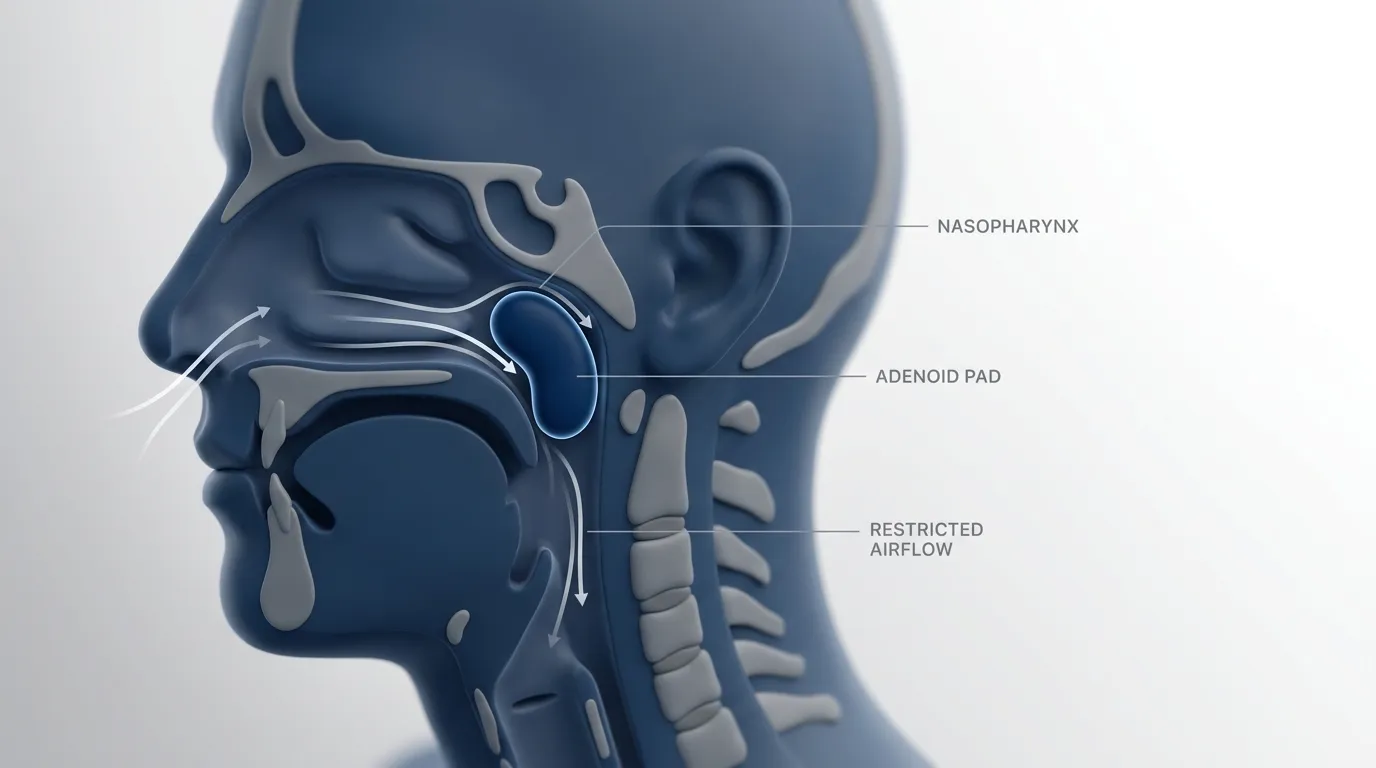
Where are adenoids located?
Adenoids sit high behind the nose, in an area called the nasopharynx (the “back hallway” between the nose and the throat). Unlike tonsils, you generally can’t see adenoids just by opening your mouth.
That’s why people can have significant symptoms—congestion, snoring, mouth breathing—without anything obvious showing up in a mirror. An exam often requires looking behind the nose (typically with a small camera). Sources: Cleveland Clinic (2022); Healthdirect Australia (2024).
What do adenoids do?
Adenoids are made of lymphatic (immune) tissue. In early life, they help the body recognize and respond to germs that enter through the nose—part of the immune “security team” near a main entrance.
As the immune system matures, adenoids usually become less important and tend to shrink, which is why adenoid problems are far more common in children than adults. Sources: MedlinePlus (2024); Healthdirect Australia (2024).
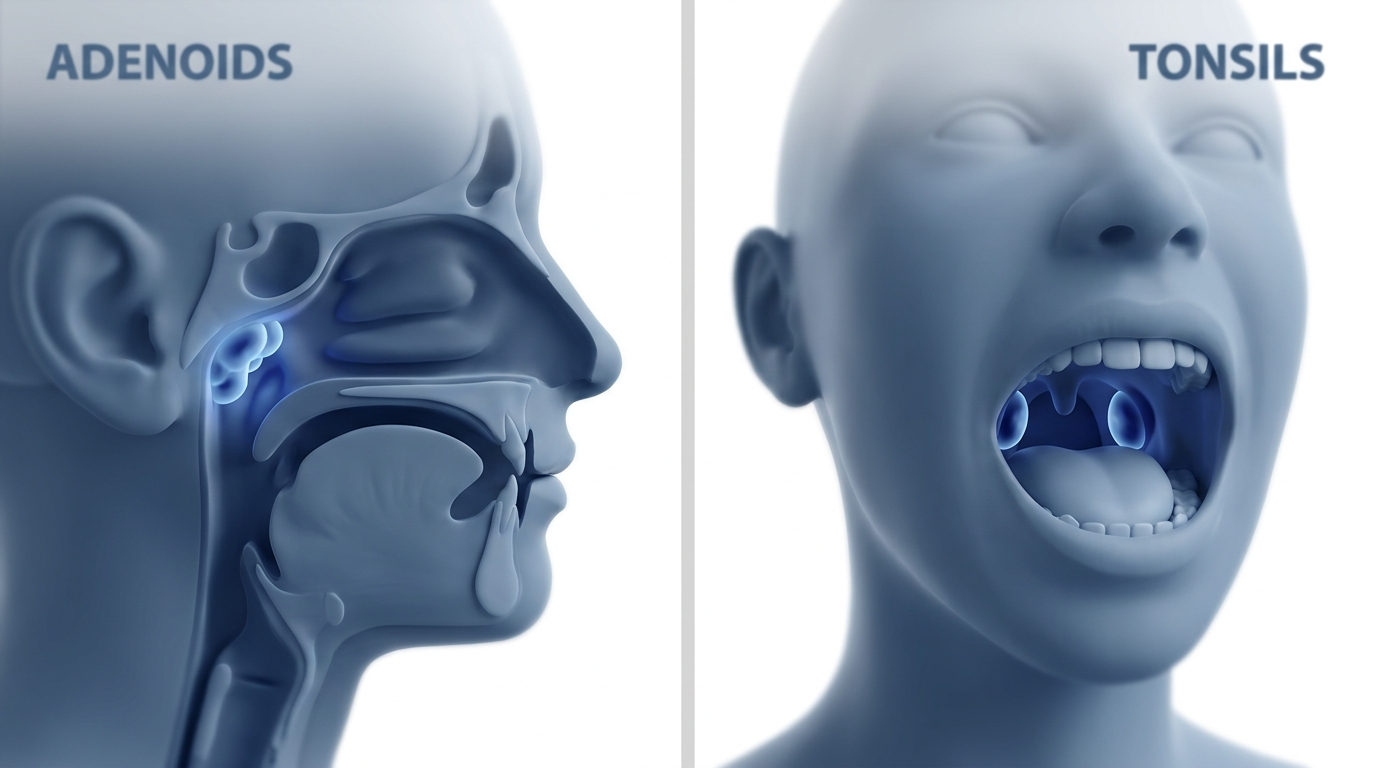
Adenoids vs. tonsils (quick comparison)
• Tonsils: back of the throat, visible when you open your mouth • Adenoids: behind the nose, not visible without special tools. Because both tissues sit near the airway, either can contribute to snoring or sleep-disordered breathing when enlarged; sometimes it’s a combination of nasal and throat-level crowding.
Because adenoids sit out of view, confirming the cause of blockage typically requires a look behind the nose.
Do Adults Have Adenoids?
Normal growth and shrink timeline (why this is usually a childhood issue)
Adenoids tend to be largest around ages 3–5, then begin shrinking around 7–8. In many people, they become very small by adulthood. Sources: Cleveland Clinic (2022); MedlinePlus (2024).
Adult adenoid hypertrophy (uncommon but real)
Even though adenoids typically shrink, adult adenoid hypertrophy can occur. Studies and reviews describe persistent or enlarged adenoid tissue in adults, often associated with chronic inflammation or repeated infections. A practical takeaway: If you can’t breathe through your nose at night despite treatment, it’s worth looking where you can’t see. Sources: NCBI PubMed Central (2012); StatPearls (2024); ENT Health/AAO-HNSF (accessed 2024).
In adults, persistent nasal blockage is a reason to evaluate rather than assume it’s “just allergies.”
Symptoms of Enlarged Adenoids in Adults
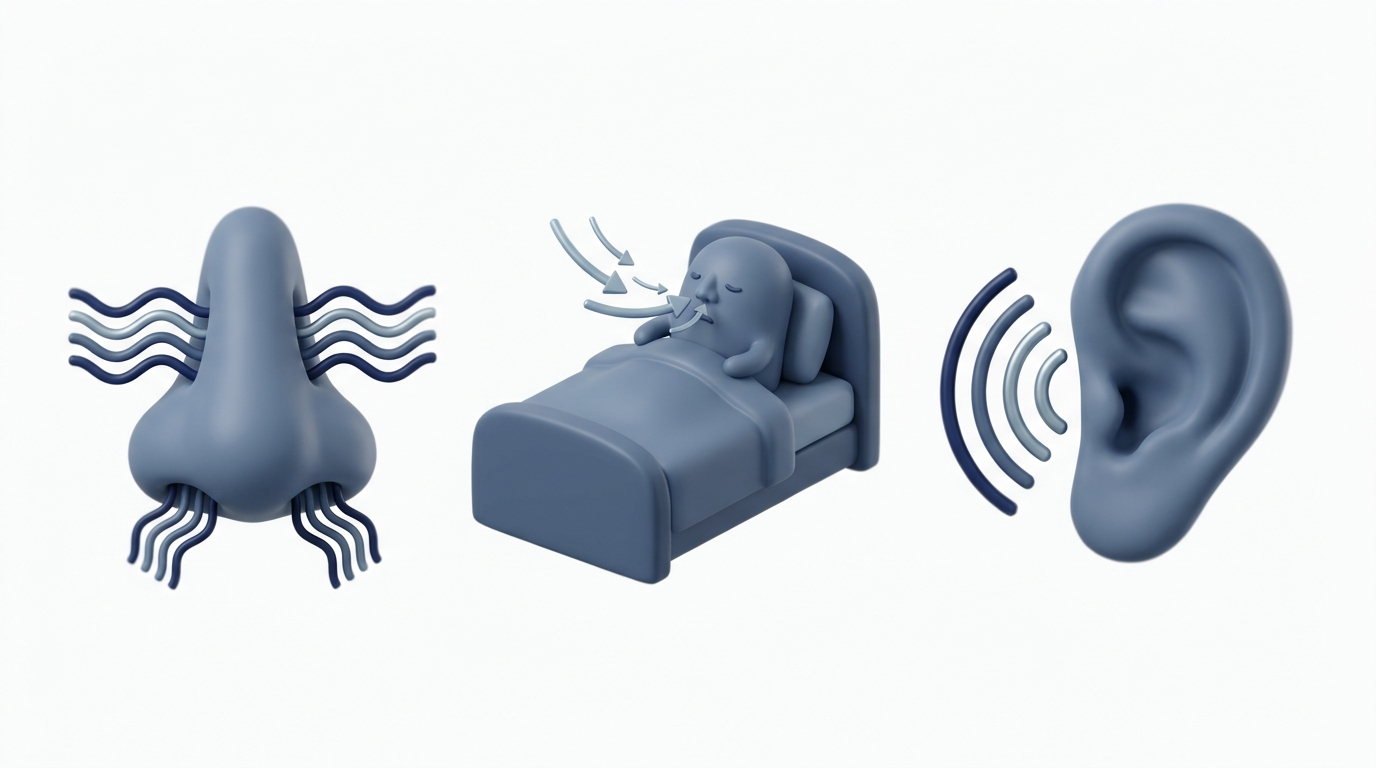
Symptoms are often non-specific, overlapping with allergies, chronic rhinitis, deviated septum, sinusitis, and other causes of adult nasal obstruction—one reason persistent symptoms deserve a closer look.
Nose and breathing symptoms
Common symptoms include: • Chronic nasal congestion or a “blocked” nose • Trouble breathing through the nose, especially at night • Mouth breathing and dry mouth in the morning. A practical example: you may breathe “okay” during the day, but once you lie down, congestion is more noticeable and you wake with a dry throat. Sources: MedlinePlus (2024); Healthdirect Australia (2024).
Sleep-related symptoms (when enlarged adenoids affect airflow)
When airflow is reduced behind the nose, some people notice: • Snoring • Restless sleep or frequent waking • Worsening of sleep-disordered breathing in some cases. Even mild, chronic sleep disruption can show up as headaches, fatigue, or feeling unrefreshed despite enough hours. A full airway evaluation can help. Learn more: https://sleepandsinuscenters.com/snoring-sleep-apnea-treatment Source: Cleveland Clinic (2022).
Throat/voice and postnasal drip symptoms
Because nasal airflow and drainage are affected: • Postnasal drip or mucus sensation in the throat • A more nasal-sounding voice (hyponasal) • Throat clearing or irritation related to drainage (when present).
Ear symptoms (Eustachian tube effects)
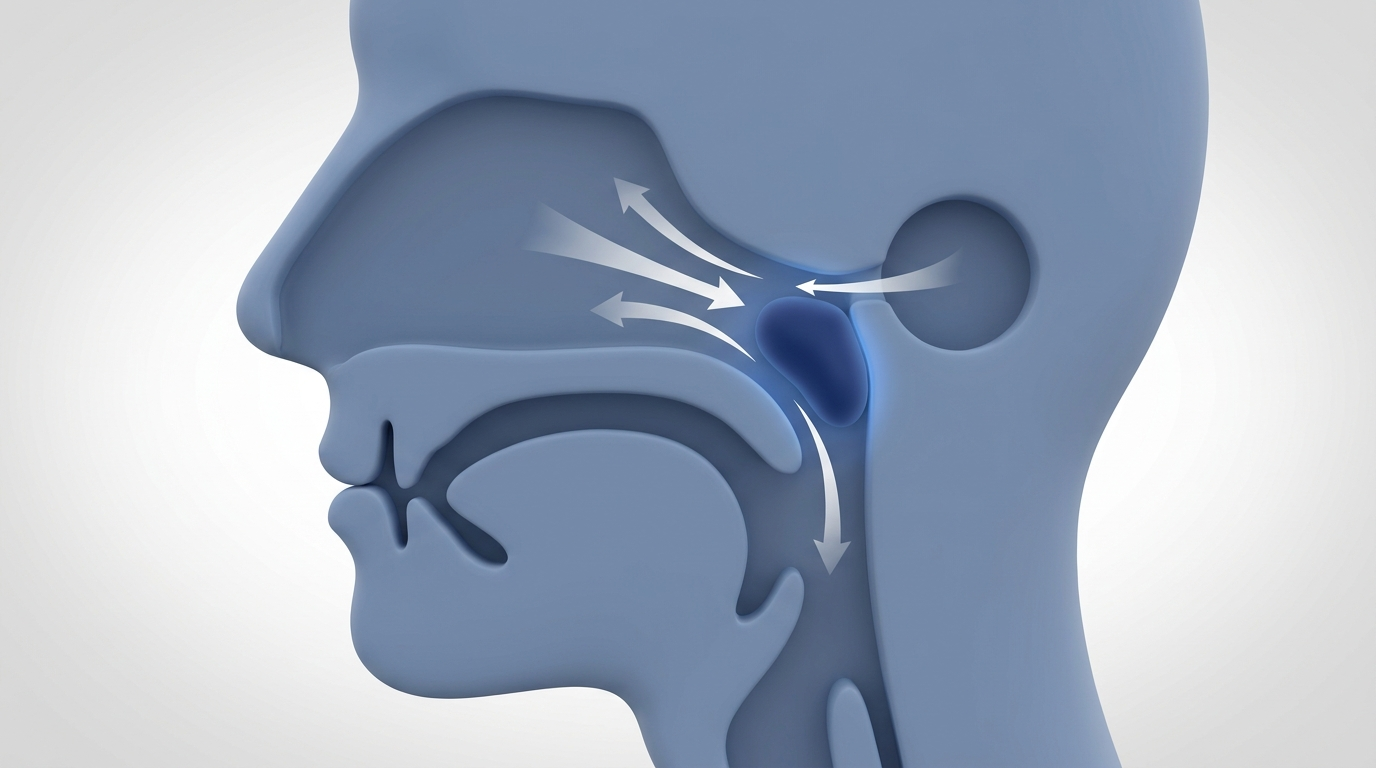
Adenoids sit near the Eustachian tube openings (which help ventilate the middle ear). When enlarged, they may contribute to: • Ear fullness/pressure • Popping or muffled hearing • Recurrent middle-ear fluid/infections in some cases—often worse with altitude changes or colds. Sources: MedlinePlus (2024); Healthdirect Australia (2024).
When symptoms are more concerning (don’t ignore)
Consider earlier ENT evaluation for: • One-sided nasal obstruction that persists • Recurrent nosebleeds • A neck lump, unexplained weight loss, or new persistent one-sided symptoms (including ear symptoms). These are signals to get checked—not diagnoses.
If symptoms are one-sided, new, or progressively worsening, prompt evaluation is especially important.
Causes of Enlarged Adenoids in Adults (and Why It Happens)
Chronic or recurrent infections
Repeated upper respiratory infections can keep lymphatic tissue inflamed, contributing to enlargement or persistent symptoms that never fully clear. Sources: MedlinePlus (2024); NCBI PubMed Central (2012).
Allergies and chronic inflammation
Seasonal or year-round allergies can cause ongoing irritation and swelling in nasal tissues, including the adenoids. If symptoms track with pollen seasons, pets, dust, or indoor triggers, identifying the pattern can help. Allergy testing info: https://sleepandsinuscenters.com/allergy-testing Sources: Cleveland Clinic (2022); StatPearls (2024).
Smoking and pollutant exposure
Smoke and pollutants can irritate the lining of the nose and throat, contributing to chronic inflammation and congestion over time. Practical guidance: https://sleepandsinuscenters.com/blog/sinus-health-in-smokers-what-you-need-to-know Sources: NCBI PubMed Central (2012); Cleveland Clinic (2022).
Less common causes an ENT may consider (adult-specific caution)
In adults, persistent blockage behind the nose can have multiple explanations. Some chronic nasal conditions mimic adenoid symptoms, and other nasopharyngeal growths may look similar without a focused exam—including rare but serious conditions that require prompt evaluation.
Because adult causes of blockage are varied, confirming the diagnosis guides the right treatment plan.
What Can Enlarged Adenoids Lead To? (Complications)
Recurrent or persistent sinus problems
When the back of the nose is obstructed, airflow and drainage can be affected—contributing to sinus pressure, recurring infections, or ongoing inflammation. More on chronic sinusitis: https://sleepandsinuscenters.com/chronic-sinusitis
Sleep disruption and quality-of-life impact
Ongoing nighttime congestion may lead to poorer sleep quality, fatigue, and reduced daytime focus. Sometimes a partner notices louder snoring or pauses in breathing first.
Ongoing mouth breathing effects
• Dry mouth and throat irritation • Worsened snoring • General discomfort on waking; mouth breathing can also become a habit over time.
Reducing obstruction can improve sleep, comfort, and overall quality of life.
How Enlarged Adenoids Are Diagnosed in Adults
Symptom history + focused ENT exam
Typical evaluation covers: • How long symptoms have been present • Triggers (allergy seasons, smoke exposure, workplace irritants) • Frequency of infections • Sleep symptoms (snoring, awakenings, unrefreshed sleep). Bring when symptoms started, what worsens them, and what you’ve tried (and whether it truly helped).
Nasal endoscopy (what it is and why it’s useful)
Because adenoids sit behind the nose, nasal endoscopy—a small camera used to view the nasal passages and nasopharynx—helps confirm whether adenoid tissue appears enlarged and assesses other possible causes. Most describe brief pressure or discomfort rather than pain; it’s done in-office.
When imaging may be used
Imaging (such as CT) may be used when sinus disease or other anatomical factors are suspected.
Testing for contributing conditions
If allergies may be driving inflammation, testing can clarify next steps: https://sleepandsinuscenters.com/allergy-testing Sources: MedlinePlus (2024); Cleveland Clinic (2022).
A targeted exam looks where symptoms start—behind the nose—and helps rule in or out other causes.
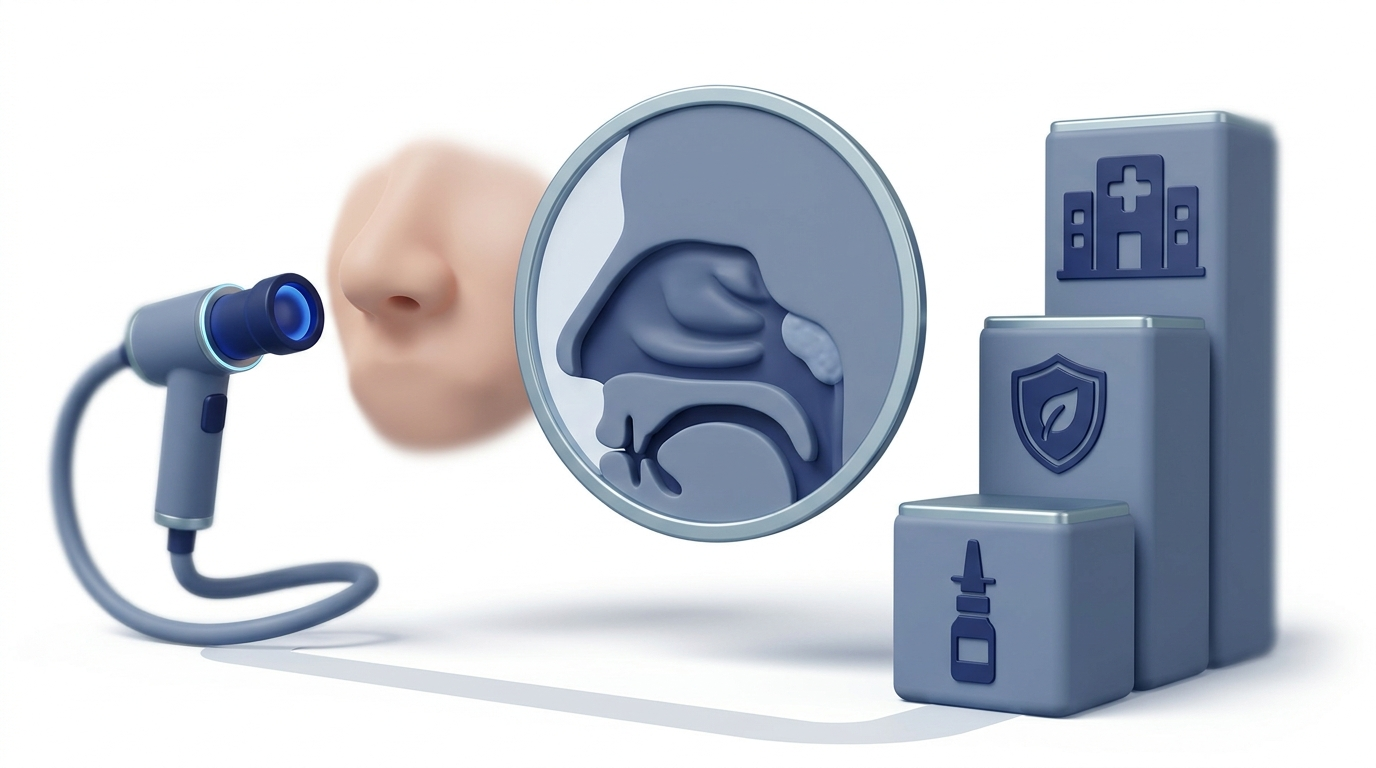
Treatment Options for Enlarged Adenoids in Adults
Treatment is often stepwise: address inflammation and triggers first, then consider procedures when symptoms persist.
Treat the underlying cause (often the biggest “fix”)
Depending on what’s contributing, care may focus on: • Allergy management and trigger reduction • Reducing irritant exposure (smoke, pollutants, workplace irritants) • Managing chronic nasal/sinus inflammation patterns.
Medications (common, conservative approaches)
Common options for inflamed nasal tissues include: • Nasal steroid sprays (when appropriate) • Saline rinses for symptom support • Antibiotics only when a bacterial infection is suspected/confirmed. Goal: reduce swelling and irritation so the airway stays open and drains normally. Sources: MedlinePlus (2024); Healthdirect Australia (2024).
When surgery is considered (adenoidectomy)
In adults, surgery may be considered for persistent obstruction, recurrent infections, significant sleep/breathing impact, or inadequate response to conservative care. Adenoidectomy is often outpatient; recovery varies and may depend on additional procedures. For many adults, quality-of-life impact guides the decision. Sources: Cleveland Clinic (2022); MedlinePlus (2024).
The best plan targets your specific drivers—then escalates thoughtfully if symptoms continue.
Lifestyle Tips to Reduce Symptoms and Flare-Ups
Reduce irritants and inflammation triggers
• Avoid smoking and secondhand smoke when possible • Improve indoor air quality (ventilation, HVAC filters, reducing dust) • Consider workplace exposures (chemicals, dust, fumes) and ways to reduce irritation. Small changes—like upgrading filters or reducing indoor dust reservoirs—can help.
Allergy-smart habits
• Shower after outdoor exposure during high-pollen seasons • Wash bedding regularly in hot water (as fabrics allow) • Manage pet exposure if symptoms correlate. If allergies seem key, consider testing: https://sleepandsinuscenters.com/allergy-testing
Support nasal breathing
• Use saline rinses with sterile/distilled or properly boiled-and-cooled water; clean devices as directed (FDA guidance: https://www.fda.gov/consumers/consumer-updates/rinsing-your-sinuses-neti-pots-safe) • Stay hydrated and avoid overly dry indoor air • Ask your provider about timing nasal hygiene around symptom patterns.
Consistent, safety-minded routines can support clearer breathing over time.
FAQs
Can adenoids grow back in adults?
It’s uncommon, but adenoid tissue can persist into adulthood or appear enlarged again due to chronic inflammation. Because enlarged adenoids in adults are less typical than in children, evaluation helps clarify what’s actually causing the blockage. Sources: NCBI PubMed Central (2012); StatPearls (2024).
What does it feel like to have enlarged adenoids as an adult?
Many describe congestion that doesn’t fully clear, nighttime mouth breathing, snoring, dry mouth on waking, or ear pressure/popping. Some also notice they can’t comfortably breathe through the nose during exercise or while lying flat.
Are enlarged adenoids the same as nasal polyps?
No. They’re different tissues in different locations: adenoids are behind the nose in the nasopharynx, while polyps typically arise from the lining of the nasal/sinus passages. Both can cause obstruction, which is why an exam is important.
Can enlarged adenoids cause snoring or sleep apnea?
They can contribute to airflow blockage in some cases, which may worsen snoring and sleep-disordered breathing. Many adults snore for other reasons too, so a full airway assessment matters.
When should I see an ENT?
Consider an ENT evaluation if nasal obstruction lasts more than several weeks, infections keep returning, sleep is disrupted, or symptoms are one-sided or progressively worsening.
If symptoms affect your sleep, breathing, or day-to-day comfort, it’s reasonable to get checked.
Conclusion + Call to Action
Adenoids are immune tissue behind the nose that usually shrink with age—but enlarged adenoids in adults can happen and may cause ongoing congestion, mouth breathing, snoring, ear pressure, and recurrent sinus symptoms. The good news: many contributing factors (like allergies or chronic irritation) can be identified and addressed, and procedural options exist when needed.
If you’ve had persistent nasal blockage, snoring, or sinus/ear symptoms that aren’t improving, Sleep and Sinus Centers of Georgia can help you take the next step—whether that’s evaluating chronic sinus concerns or discussing a targeted exam. Learn more at https://www.sleepandsinuscenters.com/ and book an appointment here: https://sleepandsinuscenters.com/appointments
Taking the next step toward a clear diagnosis is often the quickest path to feeling better.
Medical disclaimer: This article is for educational purposes only and is not medical advice. Please consult a qualified healthcare provider for diagnosis and treatment.
Sources
Cleveland Clinic. “Adenoids.” (2022) https://my.clevelandclinic.org/health/body/23181-adenoids
MedlinePlus. “Adenoids.” (2024) https://medlineplus.gov/adenoids.html
Healthdirect Australia. “Adenoids.” (2024) https://www.healthdirect.gov.au/adenoids
NCBI PubMed Central. Adult adenoid hypertrophy discussion (2012) https://pmc.ncbi.nlm.nih.gov/articles/PMC3696153/
StatPearls. “Adenoid Hypertrophy.” Updated 2024. https://www.ncbi.nlm.nih.gov/books/NBK536984/
ENT Health (American Academy of Otolaryngology–Head and Neck Surgery Foundation). “Tonsils and Adenoids.” Accessed 2024. https://www.enthealth.org/conditions/tonsils-and-adenoids/
U.S. Food & Drug Administration (FDA). “Rinsing Your Sinuses: Neti Pots Are Safe When Used Properly.” https://www.fda.gov/consumers/consumer-updates/rinsing-your-sinuses-neti-pots-safe
Don’t let allergies slow you down. Schedule a comprehensive ENT and allergy evaluation at Sleep and Sinus Centers of Georgia. We’re here to find your triggers and guide you toward lasting relief.