Teacher Voice Loss: Why Educators Lose Their Voices and How to Protect It
Introduction — Why teacher voice loss is so common (and preventable)
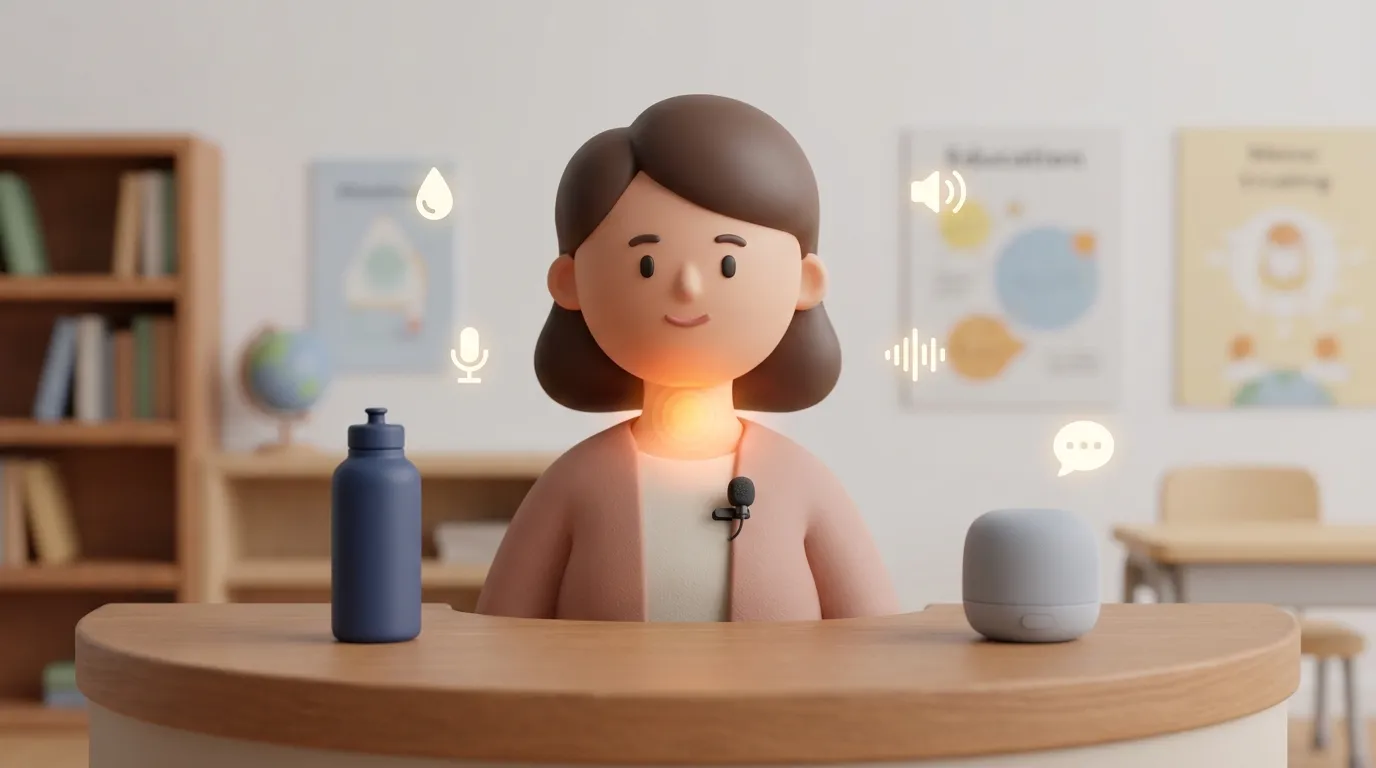
If you’re hoarse by Thursday, you’re not alone. Teacher voice loss is one of the most common “occupational hazards” in education—because teaching demands long hours of speaking, often in noisy rooms, while juggling stress, time pressure, and limited breaks. Several studies and professional guidance suggest educators have higher rates of occupational voice problems than many other professions (ASHA, 2025; PMC, 2018–2025).
A helpful way to think about it: your voice is like a classroom tool you use all day, every day—more like a whiteboard marker than a “special occasion” instrument. If that tool gets used nonstop, in dry air, at high volume, with no chance to reset, wear-and-tear adds up.
The good news: many contributors to teachers losing their voices are modifiable. In this guide, you’ll learn how to spot early symptoms, understand the most common classroom causes, try practical “this week” relief strategies, build long-term protection habits, and recognize when it’s time to seek an evaluation.
Quick “at-a-glance” takeaway box (for busy teachers)

Top 5 causes
1. High classroom noise (you speak louder without realizing it)
2. Long speaking hours with few vocal breaks
3. Classroom management moments that trigger shouting
4. Dry air + not enough hydration during the day
5. Reflux, allergies, post-nasal drip, or illness that inflames the throat
Top 5 protect-your-voice actions
1. Sip water consistently (not just at lunch)
2. Do a 2–5 minute warm-up/cool-down
3. Use a classroom microphone when possible
4. Build micro-breaks (silent work, student-led talk, visuals)
5. Learn efficient technique (voice training/therapy-based strategies)
Bottom line: small, consistent habits across the day can make your voice last through the week.
What does teacher voice loss feel like? (Symptoms to recognize early)
Catching symptoms early can help you respond sooner—before a rough week becomes a recurring pattern of teacher vocal strain. Many teachers notice a “pattern day”: fine in first period, scratchy by lunch, raspy during dismissal, and then wiped out for family time or evening coaching.
Common symptoms
- Hoarseness or a raspy voice (a hoarse voice in teachers is especially common late in the day) (ASHA, 2025)
- Voice “giving out” by afternoon
- Vocal fatigue (a tired, weak, or breathy sound)
- Throat tightness, soreness, or burning
- Needing to clear your throat often
- Reduced volume or a smaller pitch range (harder to “change tone” for engagement)
Signs it may be more than “just overuse”
- Hoarseness lasting more than 2–3 weeks
- Pain with speaking
- Frequent, complete voice loss
- Voice changes along with trouble swallowing or breathing (more urgent evaluation)
- Recurrent episodes that interfere with teaching effectiveness (ASHA, 2025)
One practical “teacher test”: if you’re consistently planning lessons around your voice limits (“I can’t do read-aloud today”), that’s useful information to bring to an evaluation.
Early recognition lets you pivot quickly—protecting both your voice and your teaching time.
Why educators lose their voice — the top causes in real classrooms
High background noise forces louder speaking (the “Lombard effect”)
When a room is loud, people naturally—and often unconsciously—raise their vocal volume. This is known as the Lombard effect and is a major driver of teacher voice loss, especially in lively classrooms, cafeterias, gyms, music rooms, or any space with poor acoustics (PMC, 2018–2025; ScienceDirect, 2024).
A familiar example: you start giving directions while chairs scrape, students pack up, and someone asks a last-minute question. You don’t mean to shout—your brain just tries to “compete” with the noise.
Importantly, “projecting harder” isn’t the same as using healthy technique. True efficiency relies on breath support and resonance—not throat pushing.
Excessive speaking hours with few vocal breaks
A typical day can include instruction, small-group help, hallway duty, after-school tutoring, coaching, meetings, and parent calls. That’s a high vocal load with limited recovery time, which increases the likelihood of dysphonia in teachers (PMC, 2018–2025).
Many educators also talk through their “breaks” (answering quick questions during planning, chatting in the hall, or leading clubs). Even if each moment seems small, your vocal folds don’t distinguish between “instruction” and “just one more thing.”
Classroom management challenges that lead to shouting
Many teachers strain their voice most during:
- Transitions (lining up, packing up, group rotations)
- Calling across the room repeatedly
- Speaking over side conversations
- “One more reminder” delivered louder each time
These moments add intensity (volume) on top of duration (hours), a combination strongly associated with vocal fatigue. If you notice your voice spikes during transitions, you’re not “bad at management”—you’re noticing a predictable vocal-load hotspot you can plan for.
Dry air + dehydration (especially during the school day)
HVAC systems, low humidity, and limited bathroom breaks can reduce hydration. Hydration supports healthy vocal fold tissue function and can influence how comfortable and sustainable your voice feels throughout the day (ASHA, 2025). For a deeper dive, see our guide on hydration and vocal cord health: https://sleepandsinuscenters.com/blog/hydration-and-vocal-cord-health-key-benefits-for-voice-care
A quick analogy: hydrated vocal folds are a bit like well-oiled hinges—movement is easier and less irritating over time. When tissues feel dry, you may “press” more to get the same sound.
Illness, allergies, post-nasal drip, and reflux can worsen strain
When tissues are inflamed—from a cold, allergies, post-nasal drip, or reflux—vocal folds may be more vulnerable to irritation. Throat clearing and coughing can also add mechanical stress, sometimes creating a loop: irritation → throat clearing → more irritation (PMC, 2018–2025).
If you’re hoarse during allergy season or after a reflux flare, it may not be “just teaching”—it may be teaching plus inflammation.
Reducing the need to compete with noise, building breaks, and managing dryness/inflammation can quickly lighten your daily vocal load.
What’s happening physically? (Simple anatomy + why strain causes voice loss)
Vocal folds 101 (quick explanation)
Your voice is created when air from the lungs moves through the larynx (voice box) and sets the vocal folds into vibration. Resonance (how sound “rings” in the throat, mouth, and nose) shapes tone and helps you be heard.
When vocal folds swell or become irritated, they may not vibrate as smoothly—leading to hoarseness, voice cracks, reduced volume, or increased effort. In the classroom, that extra effort often shows up as “pushing”—and pushing tends to create more irritation.
Key physiological risk factors seen in teachers
Studies of occupational voice use describe patterns that commonly show up in educators (PMC, 2018–2025), including:
- Neck muscle tension during phonation (extrinsic laryngeal muscle tension)
- Hyperfunctional dysphonia: “pushing” or over-squeezing the voice to get volume
- Inefficient resonance: relying on the throat rather than efficient resonance strategies
A clinician might describe it like this: “Some teachers aren’t using a stronger voice—they’re using a tighter voice.” The goal is less squeezing and more efficiency.
Common outcomes of repeated strain
Over time, repeated strain can contribute to:
- Acute laryngitis (temporary inflammation)
- Chronic hoarseness and ongoing fatigue
- Voice disorders that may benefit from specialized evaluation and therapy (PMC, 2018–2025; ASHA, 2025)
Understanding how the voice works makes it easier to spot tension and swap in more efficient habits.
Immediate “save my voice” strategies (today + this week)
These are education-focused strategies (not personal medical advice) that many teachers find practical during flare-ups of teacher voice loss. If symptoms are severe, persistent, or concerning, professional evaluation is the safest next step.
Hydration strategy that works in a classroom schedule

Instead of “chugging” water at lunch, many educators do better with consistent sipping:
- Use a marked bottle (time-of-day lines can help)
- Build “sip triggers”: attendance, each transition, independent work time, before/after duty (ASHA, 2025)
Concrete example: take 2–3 sips every time students switch tasks. Over a day, those small sips often add up better than one big “catch-up” drink.
Quick vocal warm-ups and cool-downs (2–5 minutes)
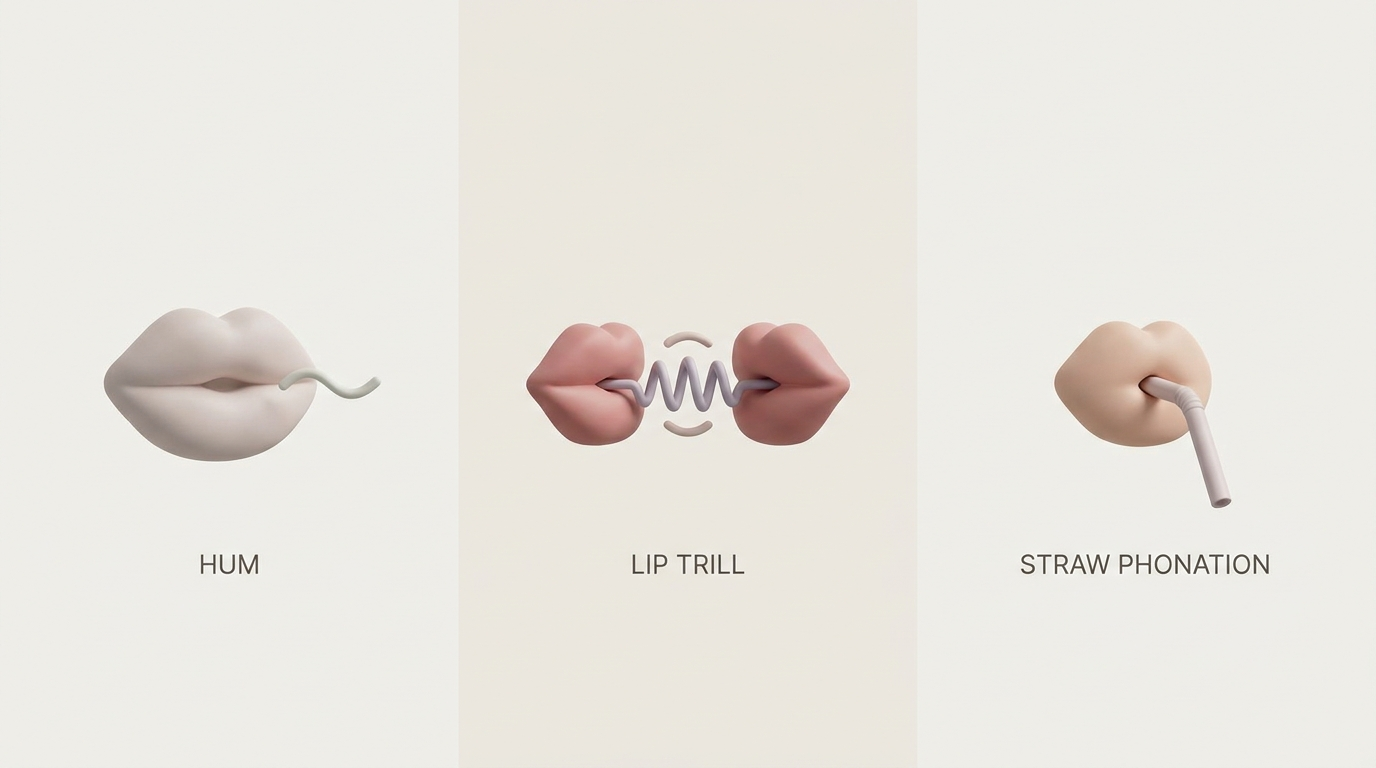
Gentle warm-ups may help reduce effort and improve coordination:
- Easy humming
- Gentle lip trills
- Semi-occluded vocal tract exercises (like light straw phonation, if comfortable)
Avoid “testing” the voice by pushing for loud volume when you already feel hoarse (ASHA, 2025). If you need a script: warm up quietly in the car, cool down with gentle humming after dismissal, and try not to “prove” your voice is back by yelling over the bus line.
Build in micro-breaks for your voice
Try reducing “continuous talk time” with:
- Silent reading or independent practice blocks
- Student-led discussion structures
- Written instructions + timers
- Hand signals and routines for common directions
Even 60–90 seconds of not talking—repeated across the day—can function like “recess” for your vocal folds.
Use amplification (microphones) to reduce vocal load
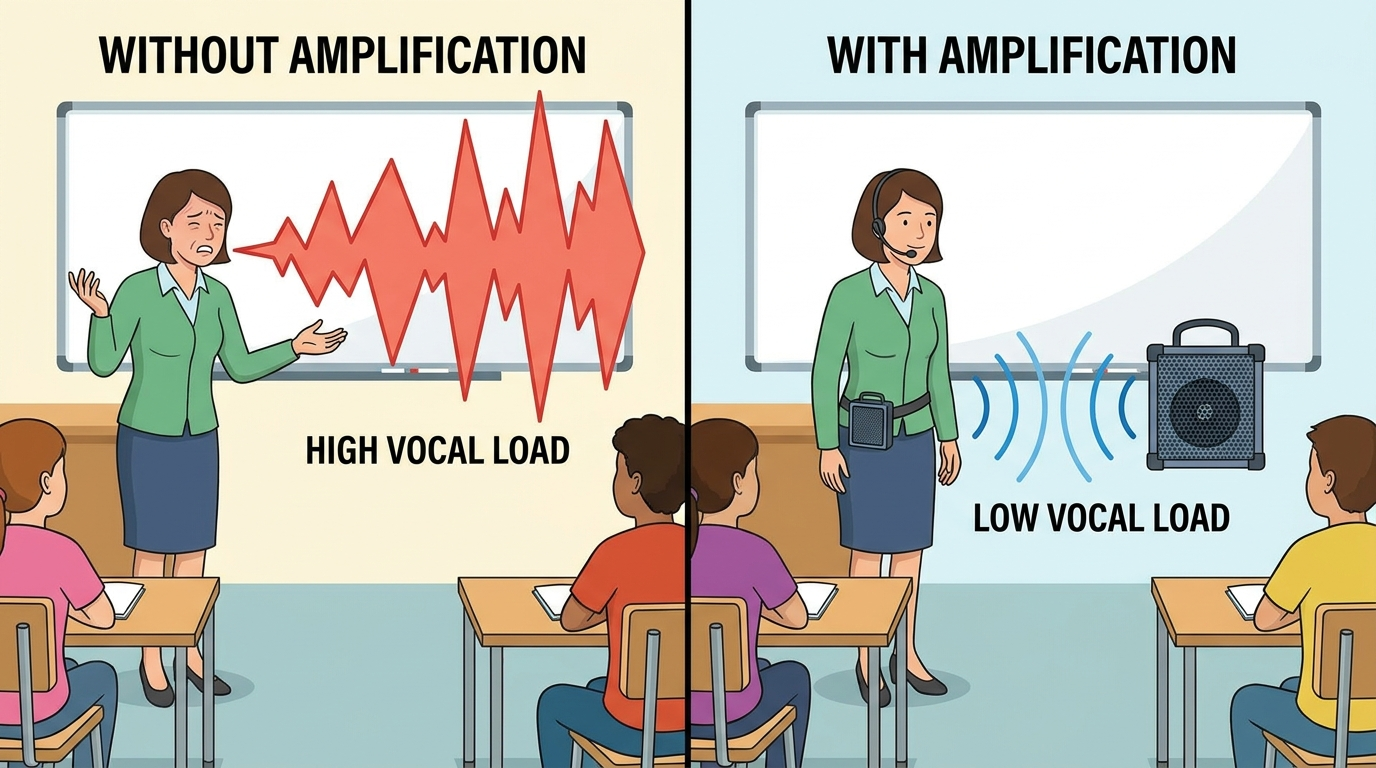
A classroom microphone (lapel mic, headset, or small voice amplifier) can lower the volume you need to produce—especially in large rooms, noisy classes, PE/music settings, or during masked teaching (ASHA, 2025; ScienceDirect, 2024). Many teachers report that amplification can meaningfully reduce daily strain.
If you’ve ever ended the day thinking, “I didn’t yell, but I talked loudly all day,” amplification can reduce that baseline intensity.
What to avoid when you’re hoarse
Common habits can unintentionally worsen fatigue:
- Whispering (often increases strain for many people)
- Yelling across the room
- Constant throat clearing (try swallowing or a sip of water first, when possible)
- Over-relying on “soothing” drops that make it feel easier to push your voice
For more on this, read vocal rest vs. whispering—what’s safer for your voice?: https://sleepandsinuscenters.com/blog/vocal-rest-vs-whispering-which-is-safer-for-your-voice
Small, repeatable changes—sips, quick warm-ups, micro-breaks, and smart amplification—can pay off by day’s end.
Long-term protection for the school year (prevention that lasts)
Professional voice training and vocal awareness
Voice training can help teachers recognize early signs of teacher vocal strain and shift toward more efficient, less fatiguing technique. Some research suggests voice training may improve comfort, efficiency, and classroom communication (The Conversation, 2025; PMC, 2018–2025). If you’re a professional voice user, you may also find our overview helpful: https://sleepandsinuscenters.com/blog/ent-care-for-professional-voice-users/
Think of it as “ergonomics for your voice”: small technique changes that reduce daily wear—without changing your teaching style.
Improve “voice self-efficacy” (confidence + skill using your voice safely)
Small self-checks can change daily habits:
- “Am I pushing from my throat?”
- “Is my jaw/neck tight right now?”
- “Could I use a visual cue instead of repeating directions?”
Tracking patterns helps too: Which class period is hardest? Which activities reliably trigger hoarseness? Many teachers discover it’s not the full day—it’s two predictable bottlenecks (often transitions and high-noise group work).
Singing and structured vocal exercises (when appropriate)
Light, structured vocal exercises can support coordination for some people—especially when guided and kept gentle. The key is avoiding “forcing” volume or singing through strain (PMC, 2018–2025).
If singing is part of your classroom routine, consider it a “technique activity,” not a volume contest—especially when your voice already feels tired.
Classroom environment upgrades that protect your voice
A few changes can reduce the need to speak over noise:
- Add soft surfaces where possible (rugs, felt pads) to reduce echo
- Adjust seating and traffic flow to reduce chatter zones
- Use consistent routines and visual instructions
- Implement a “quiet signal” or call-and-response system
When possible, consider advocating for:
- Access to amplification
- Acoustic improvements
- More manageable class sizes (ScienceDirect, 2024)
Think of prevention as voice ergonomics: improve technique, shape the room, and reduce the need to push.
When to see a specialist (and who to see)
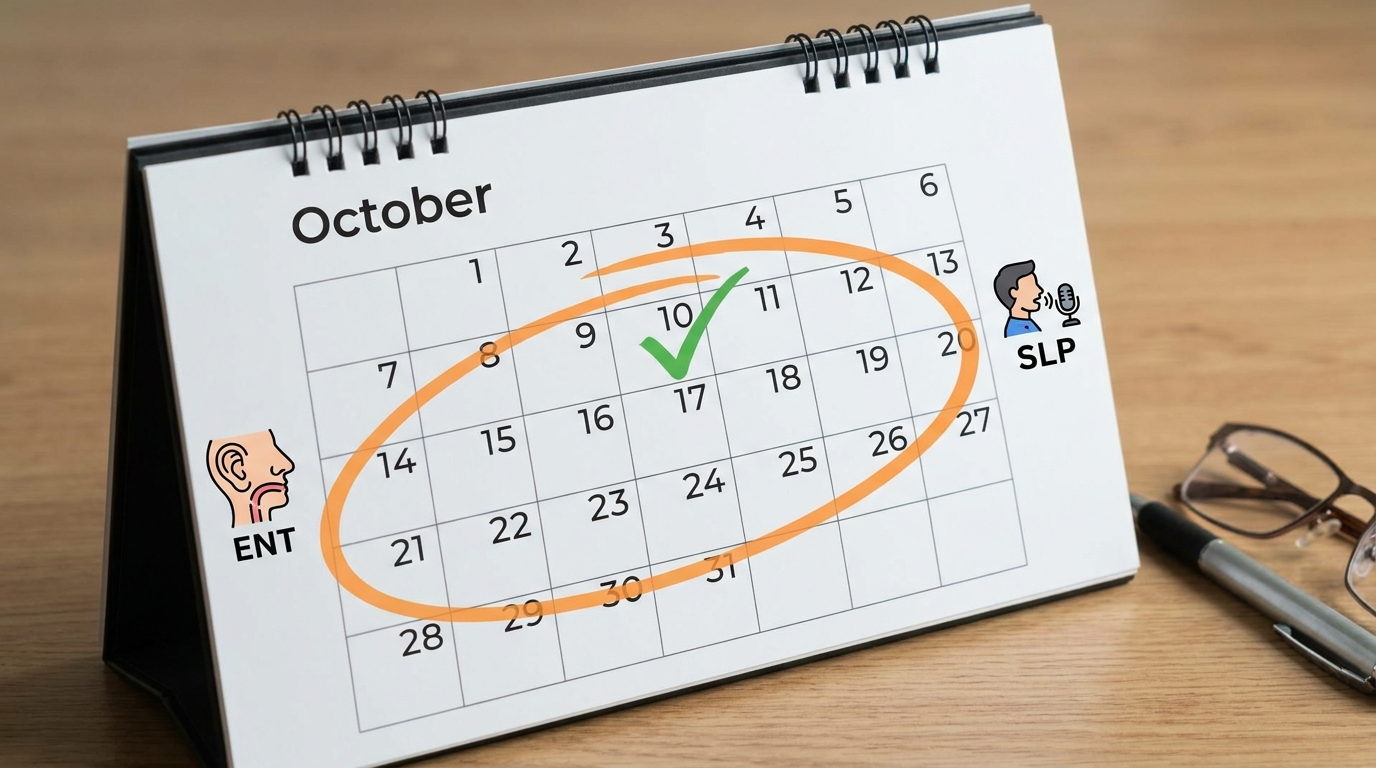
When to see an ENT (Ear, Nose & Throat)
Educationally, many guidelines recommend evaluation when hoarseness lasts more than 2–3 weeks, when voice loss keeps recurring, or when symptoms are severe (ASHA, 2025). For timing guidance, see: https://sleepandsinuscenters.com/blog/hoarse-voice-for-more-than-3-weeks-when-to-see-an-ent-20260707121140
More urgent evaluation is typically suggested for red flags like breathing trouble, coughing up blood (hemoptysis), or unexplained weight loss.
When to see a Speech-Language Pathologist (SLP) / voice therapist
A voice-focused SLP can help with technique, efficiency, and reducing muscle tension patterns that contribute to dysphonia in teachers (ASHA, 2025; PMC, 2018–2025). Many educators benefit from classroom-specific planning: how to teach effectively without relying on sheer volume.
What an evaluation may include
A typical work-up may involve:
- History (schedule, triggers, hydration patterns, reflux/allergies)
- Laryngeal visualization (scope) to assess the vocal folds
- Voice measures and a personalized therapy plan (if needed)
If your voice limits your teaching or recovery is slow, a targeted evaluation can clarify next steps.
Treatment options (what actually helps)
Home care for mild/short-term voice loss
Many people start with:
- Relative voice rest (reducing unnecessary talking rather than total silence)
- Hydration and humidification
- Addressing obvious irritants (dry air, heavy voice use)
A simple “relative rest” swap: replace repeated verbal reminders with a posted checklist, timer, or nonverbal signal for a few days while your voice calms down.
Medical management when contributing conditions exist
If allergies, reflux/LPR, or infection are contributing, clinicians may discuss targeted management. Not all laryngitis requires antibiotics, and treatment depends on the cause (PMC, 2018–2025).
Voice therapy (core treatment for many teacher voice disorders)
Voice therapy for educators commonly targets:
- Reducing hyperfunction (less throat pushing)
- Improving breath support and resonant voice strategies
- Building sustainable classroom habits (ASHA, 2025; The Conversation, 2025)
Workplace accommodations (often overlooked “treatment”)
Practical accommodations can include:
- Amplification devices
- Temporary duty modifications during flare-ups
- Planned vocal breaks during high-demand days
Treatment often blends home care, targeted medical/therapy support, and smart workplace adjustments.
Lifestyle tips for teacher voice care (daily habits)
Hydration + caffeine/alcohol balance
Caffeine affects people differently; some notice more dryness. A practical approach is building a “hydration buffer” earlier in the day so your voice isn’t playing catch-up by last period.
Sleep and recovery for vocal tissue
Fatigue can reduce coordination and increase the likelihood of tension patterns—making teacher voice loss more likely during stressful stretches. If your voice always tanks during grading weeks or conferences, that pattern is worth noting.
Stress and muscle tension connection
Stress often shows up as neck/jaw tension. Between periods, consider short resets:
- Shoulder rolls
- Gentle neck stretches
- Slow nasal breathing before you start speaking again (PMC, 2018–2025)
Daily recovery—hydration, sleep, and brief tension resets—helps your voice stay resilient under pressure.
FAQs (SEO-friendly Q&A)
Why do I lose my voice every year when school starts?
A common pattern is a sudden jump in vocal load combined with new routines, higher noise, and stress—before your voice has had time to adapt (ASHA, 2025; PMC, 2018–2025).
Is whispering better than talking when I’m hoarse?
Often, no. Whispering can increase strain for many people; gentle, easy voice use is frequently less taxing (ASHA, 2025).
How long should hoarseness last after a rough week of teaching?
Mild strain may improve within days, but hoarseness lasting more than 2–3 weeks is commonly recommended for evaluation (ASHA, 2025).
Do microphones really help, or do I just need to “project better”?
Microphones reduce the intensity demand on your voice; technique training improves efficiency. Many teachers do best with both (ASHA, 2025; ScienceDirect, 2024).
What’s the difference between laryngitis and dysphonia?
- Laryngitis: inflammation (often viral or irritant-related)
- Dysphonia: a voice impairment with many possible causes, including muscle tension and overuse (PMC, 2018–2025)
When in doubt, gentle use, hydration, and timely evaluation are safe default steps.
Conclusion — Protecting your voice protects your teaching
Teacher voice loss is common, but it isn’t something you simply have to “push through.” Early symptom awareness, better vocal hygiene for teachers (hydration, warm-ups, breaks), amplification, and skill-building can make a meaningful difference across the school year.
Call to action
If your voice has been hoarse for weeks, keeps giving out, or you’re stuck in a cycle of “lose it, rest, repeat,” consider scheduling an evaluation with Sleep and Sinus Centers of Georgia to understand what’s driving the problem and what support options may help. You can book an appointment at https://www.sleepandsinuscenters.com/
Protecting your voice today helps you teach with clarity, energy, and consistency tomorrow.
References
American Speech-Language-Hearing Association (ASHA). (2025). Protect Your Voice This Back-to-School Season. https://www.asha.org/news/2025/protect-your-voice-this-back-to-school-season/
PubMed Central (PMC). Teacher/occupational voice disorder research and voice physiology/risks (2018–2025).
https://pmc.ncbi.nlm.nih.gov/articles/PMC12294145/
https://pmc.ncbi.nlm.nih.gov/articles/PMC6848564/
https://pmc.ncbi.nlm.nih.gov/articles/PMC6801660/
The Conversation. (2025). How voice training can help teachers improve wellbeing in the classroom. https://theconversation.com/how-voice-training-can-help-teachers-improve-wellbeing-in-the-classroom-249771
ScienceDirect. (2024). Occupational voice demand and intervention research. https://www.sciencedirect.com/science/article/pii/S0892199724003722
This article is for educational purposes only and is not medical advice. Please consult a qualified healthcare provider for diagnosis and treatment.
Don’t let allergies slow you down. Schedule a comprehensive ENT and allergy evaluation at Sleep and Sinus Centers of Georgia. We’re here to find your triggers and guide you toward lasting relief.