Sinus CT Scan Findings for Mold Disease: Symptoms, Diagnosis, and Next Steps
If you’ve had mold exposure and ongoing sinus symptoms, it’s common to wonder what a CT scan can actually show—and what it can’t. Many people search for sinus CT scan findings for mold disease because they want clear, practical answers: Is this “just” sinusitis? Could it be fungal? Is it dangerous? What happens next?
This guide walks through the most common CT patterns linked to fungal sinus conditions (sometimes loosely called “mold disease”), how those findings are interpreted, and what typical next steps look like in an ENT evaluation.
What “mold disease” in the sinuses usually means
Mold exposure vs. fungal sinus infection (an important distinction)
“Mold exposure” can irritate the nose and sinuses, worsen allergies, and contribute to inflammation. Fungal sinusitis, on the other hand, refers to specific conditions where fungus is present in the sinuses and is playing a role in symptoms.
A key takeaway: a CT scan can suggest fungal sinus disease, but it does not confirm systemic illness related to mold exposure. Think of CT like a weather radar: it can show patterns consistent with a “storm system” in the sinuses (blockage, dense material, inflammation), but it can’t always tell you exactly what’s in the clouds without additional evaluation.
“Mold disease” is not a formal medical diagnosis; it’s a lay term people use for sinus conditions possibly related to fungus. Clinicians typically categorize distinct, diagnosable conditions under “fungal sinusitis.”
Types of fungal sinusitis your doctor may be considering
ENTs often group fungal sinusitis into:
Non-invasive (more common)
- Fungal ball (mycetoma/fungus ball)
- Allergic fungal rhinosinusitis (AFRS)
Invasive (less common, potentially urgent—especially in high-risk patients)
- Acute invasive fungal sinusitis (sometimes associated with Mucorales/mucormycosis)
- Chronic invasive fungal sinusitis (rare)
(Background patient overview: Cleveland Clinic; imaging overview: RadioGraphics.) Sources: https://my.clevelandclinic.org/health/diseases/17012-fungal-sinusitis-fungal-sinus-infection, https://pubs.rsna.org/doi/abs/10.1148/rg.275065189
-Italics-: CT highlights sinus patterns, but diagnosis comes from combining imaging with an exam and clinical history.
Symptoms that may prompt a sinus CT after mold exposure
Common symptoms (often overlap with “regular” sinusitis)
Many symptoms that lead to imaging are nonspecific, such as:
- Nasal congestion/obstruction
- Facial pressure or pain, headaches
- Postnasal drip, cough
- Thick drainage, reduced sense of smell
- A chronic pattern (often described as symptoms lasting more than 12 weeks)
In real life, this often looks like: you’ve tried a few “usual” steps (decongestants, allergy medications, possibly antibiotics, rinses), but the cycle keeps repeating—or never fully clears.
Clues that raise suspicion for fungal involvement
Your clinician may be more suspicious of a fungal component when symptoms:
- Keep returning despite typical therapy
- Are one-sided (one nostril/sinus consistently worse)
- Occur with a history of nasal polyps, asthma, or significant environmental allergies (often seen in AFRS)
A practical example: a patient might say, “My left cheek pressure and left-sided blockage keep coming back, even when my allergies are controlled.” That one-sided pattern is one reason an ENT may look more closely for a fungal ball or other focal obstruction.
Red-flag symptoms (seek urgent evaluation)
Some symptom patterns require prompt medical assessment—particularly for people with risk factors such as uncontrolled diabetes, chemotherapy, transplant medications, or chronic steroid use. Red flags can include:
- Fever with severe facial pain/swelling
- Vision changes, eye swelling, double vision
- Black nasal crusting/eschar or rapidly worsening symptoms
- Severe symptoms in immunocompromised patients
Sources: https://clinicalimagingscience.org/sinonasal-fungal-infections-and-complications-a-pictorial-review/, https://jamanetwork.com/journals/jamaotolaryngology/fullarticle/483729
-Italics-: Persistent, one-sided, or severe symptoms—especially with risk factors—warrant ENT evaluation and sometimes urgent care.
Why CT is so useful for suspected fungal sinus disease
What a sinus CT can show (plain language)
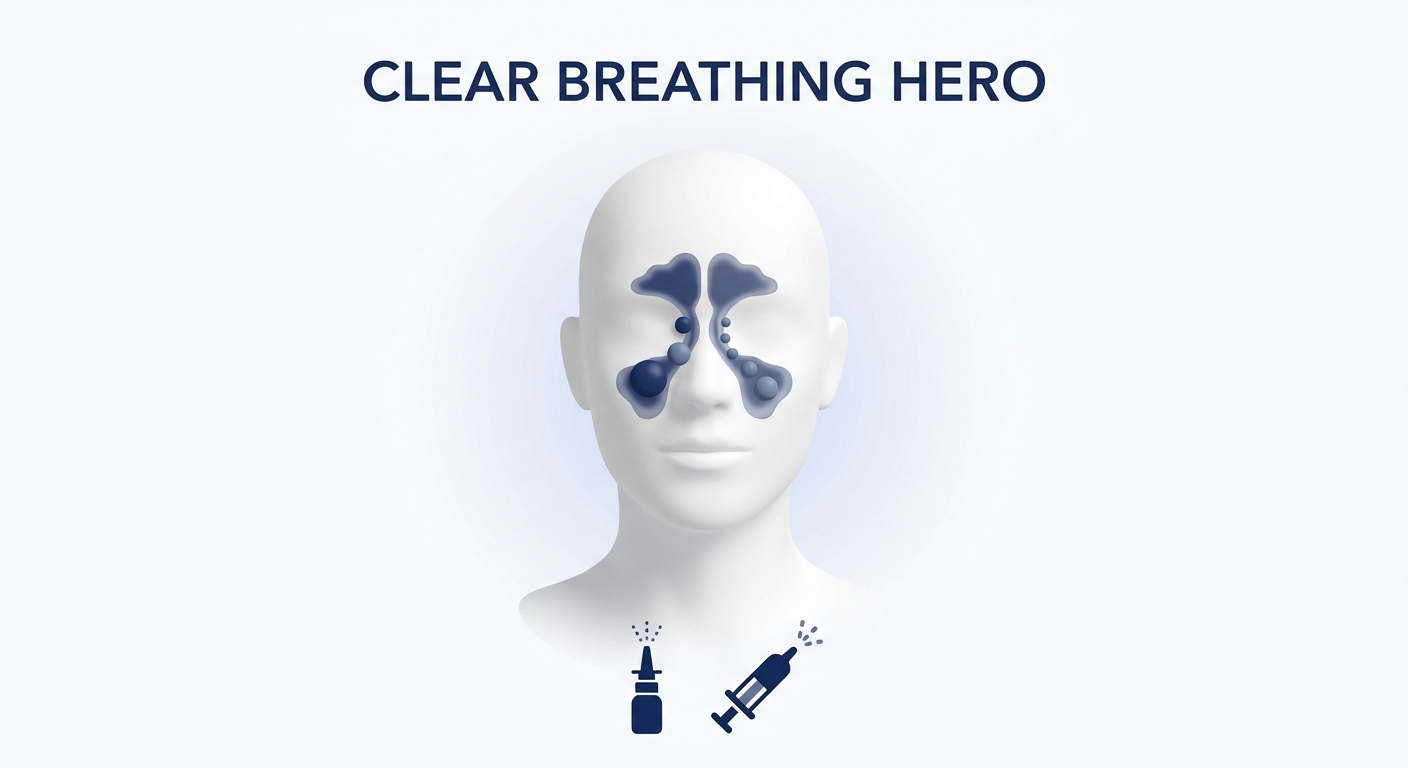
A sinus CT is especially helpful because it can map:
- Which sinuses are involved
- How blocked they are (opacification)
- Swollen lining (mucosal thickening)
- Unusually dense material that may suggest fungal debris
- Bone changes and whether disease appears to extend beyond the sinuses
If you’d like a broader overview of what ENT specialists look for on imaging, see: how sinus CT scans help ENTs diagnose sinus problems: https://sleepandsinuscenters.com/blog/how-sinus-ct-scans-help-ent-diagnosis

CT limitations (setting expectations)
Even when CT strongly suggests a fungal pattern, diagnosis often requires:
- Nasal endoscopy (in-office visualization)
- Sometimes culture and/or biopsy (especially when invasive disease is a concern)
CT is excellent for anatomy and pattern recognition—but allergic disease, chronic bacterial inflammation, old blood, and thick mucus can sometimes resemble fungal debris on imaging. One way clinicians explain it: CT can show that a sinus is “filled” and that the contents look “denser than expected,” but it may not definitively label the contents without direct sampling. Source: https://pubs.rsna.org/doi/abs/10.1148/rg.275065189
-Italics-: CT guides the evaluation, while endoscopy and, if needed, sampling provide confirmation.
Key sinus CT scan findings that can suggest “mold-related” fungal sinusitis
Callout: CT patterns are clues. A radiology report is most useful when your ENT correlates it with symptoms, nasal endoscopy, and (when needed) lab testing.
General CT findings commonly seen in fungal sinusitis
Across different fungal conditions, reports often mention:
- Mucosal thickening
- Sinus opacification (a sinus looks “filled” rather than air-filled)
- Hyperdense material in sinuses (contents look brighter/denser than typical mucus)
These are common reasons patients search for sinus CT scan findings for mold disease—but the pattern and context determine what they most likely mean. For instance, a small amount of mucosal thickening can be seen with everyday allergies, while a fully opacified sinus with dense internal “chunks” raises a different set of possibilities. Source: https://clinicalimagingscience.org/sinonasal-fungal-infections-and-complications-a-pictorial-review/

-Italics-: The overall pattern—not any single CT term—points to the most likely diagnosis.
Non-invasive fungal sinusitis CT patterns (more common, usually less dangerous)

Fungal ball (mycetoma/fungus ball)
A fungal ball (mycetoma) is a non-invasive clump of fungal material sitting within a sinus (commonly the maxillary sinus). Typical CT themes include:
- Often one sinus is involved
- An opacified sinus with hyperdense “clumps” inside
- Sometimes chronic pressure effects on surrounding bone (more slow change than aggressive destruction)
If you picture a sinus like a small air-filled room, a fungal ball is more like a dense “wad” occupying that room—not something that has invaded through the walls. Patients often report stubborn one-sided pressure, congestion, or recurrent infections that don’t respond the way typical sinusitis does. Source: https://pubs.rsna.org/doi/abs/10.1148/rg.275065189
Allergic fungal rhinosinusitis (AFRS)
AFRS is not “fungus eating through tissue.” It’s better understood as an allergic/inflammatory reaction to fungal elements, often in patients with allergies and/or polyps.
CT findings that may be listed include:
- Heterogeneous sinus contents (mixed density rather than uniform mucus)
- The classic double density sign (dense allergic fungal debris within more typical mucus)
- Often multiple sinuses involved; polyps may also be present
A common story ENTs hear is: “I can breathe for a while, then I swell shut again,” especially in patients with significant allergy history. The CT can support that pattern by showing widespread inflammatory blockage and dense debris consistent with AFRS.
For a deeper patient-friendly discussion beyond imaging—especially long-term prevention and recurrence—see: allergic fungal sinusitis (AFRS) treatment options: https://sleepandsinuscenters.com/blog/chronic-allergic-fungal-sinusitis-long-term-ent-health-impact-and-treatment-options Sources: https://radiopaedia.org/articles/allergic-fungal-sinusitis?lang=us, https://jcimcr.org/pdfs/JCIMCR-v3-2145.pdf
-Italics-: Non-invasive conditions like fungal ball and AFRS are common and typically managed without urgency, guided by CT plus an ENT exam.
Invasive fungal sinusitis CT findings (urgent—especially in high-risk patients)
Early CT clue: severe unilateral nasal cavity mucosal thickening
In higher-risk patients, one early imaging clue described in the literature is severe, unilateral mucosal thickening in the nasal cavity. By itself, it isn’t a diagnosis—but combined with symptoms and risk factors, it can raise concern for invasive disease and prompt urgent evaluation. Source: https://jamanetwork.com/journals/jamaotolaryngology/fullarticle/483729

Aggressive CT features that raise concern for invasion
Radiology reports may use wording such as:
- Bone erosion or destruction of sinus walls
- Extension beyond the sinuses, such as into:
- The orbit (eye socket)
- Deep facial spaces
- Areas near the brain (e.g., cavernous sinus region)
These patterns matter because invasive fungal sinusitis can progress quickly in vulnerable patients. In practice, this is when ENT teams move fast—often coordinating urgent scopes, imaging review, and treatment decisions. Source: https://clinicalimagingscience.org/sinonasal-fungal-infections-and-complications-a-pictorial-review/
CT features sometimes mentioned in mucormycosis
Some reports may describe:
- Non-homogeneous enhancement
- Small foci of hyperdensity
- Aggressive tissue changes
It’s worth emphasizing: mucormycosis is a clinical-pathologic diagnosis—CT helps identify concerning patterns and define the extent. Sources: https://pmc.ncbi.nlm.nih.gov/articles/PMC4923677/, https://pubs.rsna.org/doi/abs/10.1148/rg.275065189
-Italics-: Invasive patterns on CT warrant urgent ENT assessment, especially in immunocompromised patients.
How to read your CT report (common terms translated)
- Mucosal thickening: Swollen sinus lining; can be caused by allergies, irritation, infection, or chronic inflammation. It is a non-specific finding and not diagnostic for fungal disease.
- Opacification: A sinus looks “filled” instead of air-filled—often from blocked drainage with fluid/mucus/debris.
- Hyperdense material: Contents look unusually dense; can suggest fungal debris, but thick mucus or old blood can also look dense.
- Bony remodeling: Slower, chronic pressure-related change; can be seen in long-standing blockage.
- Bony erosion/destruction: More concerning; may suggest an aggressive process and needs urgent clinical correlation.
-Italics-: No single CT term confirms fungus; findings gain meaning only in context.
Diagnosis doesn’t stop at CT—what tests come next

ENT nasal endoscopy (what to expect)
Nasal endoscopy is a quick in-office exam that helps an ENT directly evaluate:
- Drainage pathways
- Polyps
- Crusting or abnormal tissue
- Where material is coming from (and sometimes obtain samples)
Many patients describe it as uncomfortable but brief. Clinically, it’s often the “missing puzzle piece” that clarifies whether CT findings represent polyps, thick secretions, fungal debris, or a more concerning tissue change.
Lab and pathology options (when needed)
Depending on the concern, next steps may include:
- Culture or cytology
- Biopsy (especially if invasive fungal sinusitis is suspected)
- Allergy evaluation when AFRS is likely
When MRI may be added
CT is excellent for bone and anatomy. MRI may be added when there’s concern for spread into the orbit/brain or soft-tissue invasion. Source: https://pubs.rsna.org/doi/abs/10.1148/rg.275065189
-Italics-: Endoscopy and, when indicated, sampling or MRI refine what CT suggests and guide treatment.
Treatment options (matched to what CT + exam suggest)
If findings fit chronic inflammation or allergy (no invasive signs)
Common management categories include:
- Nasal saline irrigations and topical nasal steroids (as directed by a clinician)
- Trigger reduction (environmental allergens, irritants)
- Considering allergy work-up and longer-term control strategies
If findings fit AFRS
AFRS often requires a combined approach, such as:
- Procedures to clear allergic fungal debris and improve drainage
- Long-term medical therapy to reduce inflammation and recurrence risk
Sources: https://radiopaedia.org/articles/allergic-fungal-sinusitis?lang=us, https://pubs.rsna.org/doi/abs/10.1148/rg.275065189
If a fungal ball (mycetoma) is suspected
When a fungal ball causes symptoms or persists, the common approach is usually endoscopic removal. Antifungal medication is not always necessary for non-invasive fungal balls, depending on the individual scenario and physician judgment.
If invasive fungal sinusitis is suspected (urgent)
Typical management in the literature involves urgent ENT evaluation, antifungal therapy, and often surgery (debridement), along with addressing underlying risk factors. Sources: https://clinicalimagingscience.org/sinonasal-fungal-infections-and-complications-a-pictorial-review/, https://jamanetwork.com/journals/jamaotolaryngology/fullarticle/483729
-Italics-: Treatment is tailored to the type of disease—ranging from rinses and allergy care to urgent antifungals and surgery for invasive cases.
Lifestyle and home environment tips (especially if mold exposure is part of the story)
Reduce moisture + mold growth drivers at home
Helpful prevention concepts include:
- Fixing leaks and improving ventilation
- Keeping indoor humidity in a healthier range
- Maintaining HVAC systems and replacing filters regularly
For more on the mold/sinus inflammation connection, read: how mold exposure can trigger sinusitis: https://sleepandsinuscenters.com/blog/how-mold-exposure-can-trigger-sinusitis
Symptom-support basics (safe, patient-friendly)
Many clinicians suggest basics such as:
- Saline rinses (using sterile/distilled water or boiled-then-cooled water)
- Avoiding irritants that worsen nasal inflammation (like smoke or strong fragrances)
When “detox” messaging can be misleading
If a CT report suggests fungal disease, the most productive next step is usually clarifying the exact sinus diagnosis (AFRS vs fungal ball vs non-fungal inflammation vs invasive concern) rather than assuming a one-size-fits-all explanation. Be cautious with “detox” claims—many lack scientific support and should not replace evaluation by a qualified clinician.
-Italics-: Focus on an accurate diagnosis and evidence-based care; don’t let generic “detox” advice delay needed medical evaluation.
Next steps after you get a CT report suggesting fungal disease
What to do this week
Educational checklist ideas that can make your ENT visit more productive:
- Schedule an ENT review of the images (not only the written report)
- Bring a symptom timeline and list of treatments already tried
- Note relevant risk factors (allergies/asthma/polyps, diabetes, immune suppression)
Questions to ask your ENT
- “Do my findings look more like AFRS, a fungal ball, or typical chronic sinusitis?”
- “Is there any concern for invasion or bone erosion?”
- “Would endoscopy or a culture/biopsy help confirm the diagnosis?”
- “What’s the plan to reduce recurrence risk?”
Clear call-to-action
If you want an ENT to review your CT and symptoms, you can schedule an ENT appointment with Sleep and Sinus Centers of Georgia: https://sleepandsinuscenters.com/appointments
Note: If you’re ready to move forward, booking sooner (rather than “watching and waiting” for weeks) can help you get clarity on whether your CT findings fit a non-invasive pattern like AFRS/fungal ball—or something that needs faster attention.
-Italics-: A timely review of both your CT images and symptoms helps translate patterns into a clear plan.
FAQs
Can a CT scan prove I have mold illness?
No. CT can show patterns consistent with fungal sinusitis, but diagnosis usually requires clinical correlation and often nasal endoscopy ± lab testing. This is why sinus CT scan findings for mold disease should be seen as “clues,” not final proof.
What is the “double density sign”?
A CT pattern often associated with allergic fungal rhinosinusitis—dense allergic fungal debris layered within more typical mucus/opacification. Source: https://radiopaedia.org/articles/allergic-fungal-sinusitis?lang=us
Does hyperdense material always mean fungus?
Not always. Thick mucus, old blood, or debris can also appear dense on CT. Interpretation depends on the overall pattern and clinical context. Source: https://pubs.rsna.org/doi/abs/10.1148/rg.275065189
When is fungal sinusitis an emergency?
When invasive disease is suspected—especially with immune compromise, facial swelling, fever, or vision changes—urgent evaluation is important. Sources: https://clinicalimagingscience.org/sinonasal-fungal-infections-and-complications-a-pictorial-review/, https://jamanetwork.com/journals/jamaotolaryngology/fullarticle/483729
Will I need surgery?
It depends on the type. AFRS and fungal balls often benefit from removal/clearing plus medical therapy, while non-fungal chronic sinusitis may not. Invasive disease often requires urgent procedural management.
-Italics-: Your exact diagnosis drives whether you need medicines, procedures, or both.
Disclaimer
This article is for educational purposes only and is not medical advice. Please consult a qualified healthcare provider for diagnosis and treatment.
Don’t let allergies slow you down. Schedule a comprehensive ENT and allergy evaluation at Sleep and Sinus Centers of Georgia. We’re here to find your triggers and guide you toward lasting relief.