
Sick Building Syndrome: ENT Symptoms, Causes & Relief
If you’ve ever noticed a dry, burning nose or a scratchy, hoarse throat that predictably flares up in one specific office, classroom, or building—and then eases when you leave—you’re not imagining it. Research on sick building syndrome ENT symptoms commonly shows a pattern: irritation of the nose and throat lining (the mucosa) is one of the commonly reported complaint clusters in Sick Building Syndrome (SBS). In practical terms, your upper airway can behave like “litmus paper” for indoor air—an analogy for how quickly these tissues can react when the environment is irritating.
For related reading, see our post on air quality and sinus health: https://sleepandsinuscenters.com/blog/air-quality-sinus-health
What Is Sick Building Syndrome (SBS)?
A simple definition (patient-friendly): Sick Building Syndrome is a descriptive term for a group of symptoms that occur in a particular building and often improve after leaving it. The key clue is the pattern: the building (or a specific area in it) seems to be linked to symptoms.
A real-life example is a person who feels fine at home but, within an hour of arriving at a specific workspace, develops burning nostrils, a dry throat, and a hoarse voice—then feels noticeably better during lunch outside or on the drive home.
SBS vs. building-related illness
- SBS: symptoms associated with a building exposure pattern, not a single confirmed disease
- Building-related illness: a specific diagnosis tied to the building exposure (for example, certain infections or asthma exacerbations with identifiable triggers)
Why ENT symptoms are so common: The nose and throat lining directly contacts everything in the air you breathe. If you think of the mucosa as the body’s “indoor air filter,” it constantly encounters dry air, particles, and chemical irritants. Reviews and cohort studies often highlight mucosal irritation (irritation of these linings) as a frequent feature in SBS populations.
Sources: https://pmc.ncbi.nlm.nih.gov/articles/PMC2796751/; https://pmc.ncbi.nlm.nih.gov/articles/PMC9518424/
In short: think of SBS as a time-and-place symptom pattern, not a single disease label.

SBS and ENT Symptoms: What the Research Shows
The mucosal irritation pattern (nose + throat): Across SBS studies, a recurring theme is upper airway mucosal symptoms—especially nasal and throat irritation. This is why sick building syndrome ENT symptoms often feel like dryness, burning, stinging, or a persistent irritated sensation rather than a classic cold with fever. People often describe it as the feeling you get after walking through a heavily scented store—except it happens repeatedly in one building.
Source: https://pmc.ncbi.nlm.nih.gov/articles/PMC2796751/
How common are these symptoms? Prevalence varies by study design and population. In one cohort, nasal symptoms were reported in about 25.3% and throat symptoms in about 14.6%. In broader analyses, in some studies, nearly half of participants with SBS reported mucosal symptoms.
Sources: https://pmc.ncbi.nlm.nih.gov/articles/PMC2796751/; https://pmc.ncbi.nlm.nih.gov/articles/PMC9518424/
Note: This suggests ENT irritation isn’t a fringe complaint in SBS—it’s commonly reported in research cohorts.
Why “ear symptoms” are less specific—but still relevant: Ear complaints can occur but are less specific for SBS on their own. Some people report dizziness or balance symptoms and ear pressure/fullness that may overlap with Eustachian tube dysfunction, sometimes influenced by nasal inflammation. These may accompany other sick building syndrome ENT symptoms, especially if timing aligns with building exposure.
Bottom line: dryness, burning, and hoarseness in one building—improving when you leave—often point toward an upper-airway irritation pattern.
Common ENT Symptoms of Sick Building Syndrome (What Patients Notice)
Nose symptoms—many people describe sick building syndrome nose irritation as: burning or stinging; dryness or crusting; congestion or an inflamed feeling; sneezing or runny nose (which can mimic allergies).
Throat and voice symptoms—sick building syndrome sore throat complaints such as: dry throat; hoarseness (especially after time in the building)—often described as hoarseness from indoor air quality; burning/sore throat sensation; frequent throat clearing.
Head/ear-adjacent symptoms that can accompany ENT irritation: lightheadedness or dizziness; headache/pressure sensations; ear fullness/pressure (sometimes linked to nasal swelling).
If symptoms reliably track with one building and improve away from it, that pattern itself is an important clue.
What Causes ENT Irritation in SBS? (Main Triggers)
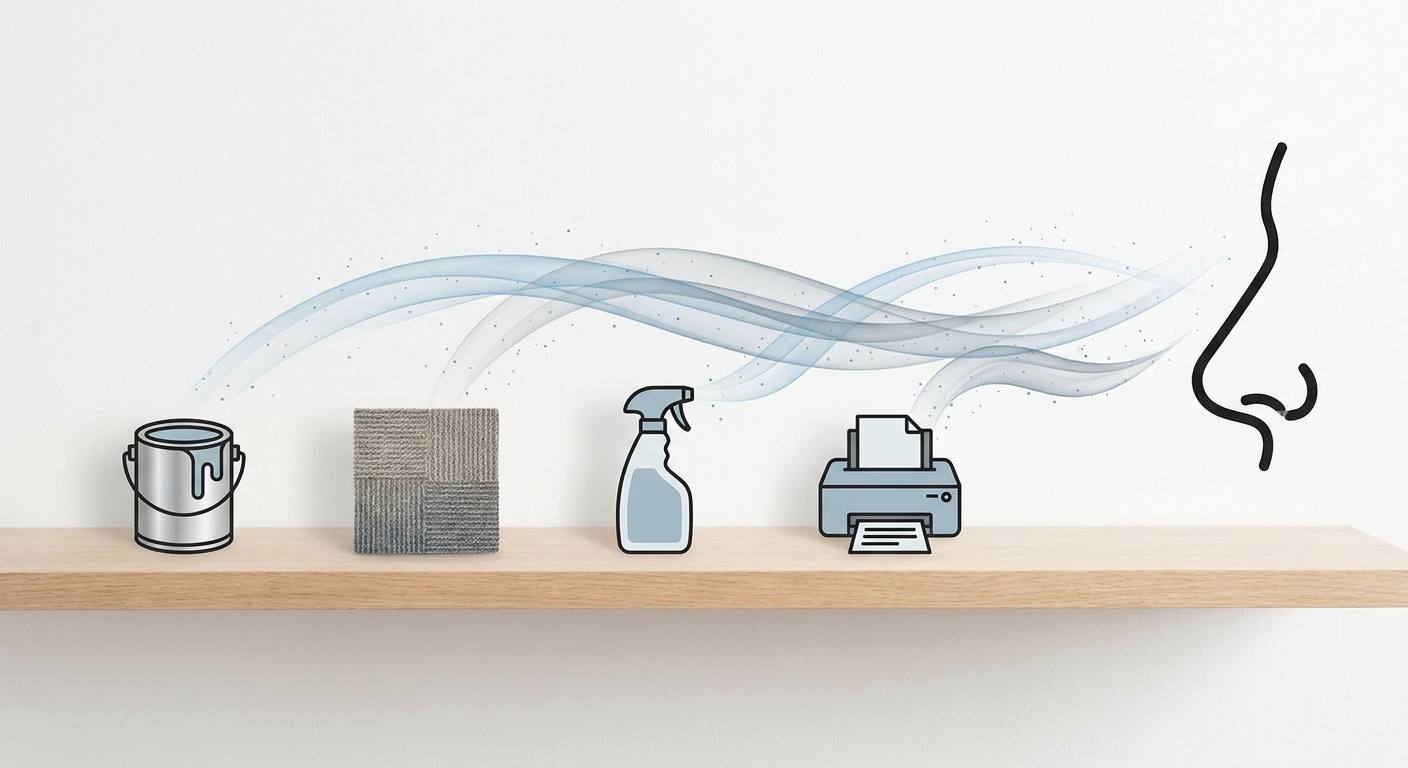
Volatile Organic Compounds (VOCs)—a common discussion point: People searching VOCs indoor air ENT often try to connect exposure with symptoms, and research discussions frequently note VOCs as potential contributors to mucosal irritation. VOC sources can include paints, adhesives, new flooring/carpeting; pressed-wood furniture/cabinets; cleaning products, disinfectants, air fresheners; office equipment emissions.
A practical example: symptoms may spike after a renovation, new carpet installation, or a switch to stronger cleaning products—even if the building looks clean and modern.
EPA overview: https://www.epa.gov/indoor-air-quality-iaq/volatile-organic-compounds-impact-indoor-air-quality
Broader overview: https://sleepandsinuscenters.com/blog/indoor-air-pollutants-and-their-impact-on-ent-health-risks
Poor ventilation (pollutants build up indoors): Modern, tightly sealed buildings can limit outdoor air exchange. If ventilation is inadequate, irritants can accumulate—especially in stuffy zones, conference rooms, or areas with heavy equipment. This helps explain the classic SBS clue: symptoms improving when you leave the building.
Source: https://pmc.ncbi.nlm.nih.gov/articles/PMC2796751/
Low humidity or “dry air” effects: Dry air can make the nose and throat lining feel more irritated—especially for people who talk a lot during the day (teachers, managers, call-center staff). Dryness can magnify that “burning” sensation commonly reported with sick building syndrome ENT symptoms.
Particles and irritants beyond VOCs: Not all triggers are VOCs. Other potential irritants include dust and construction debris; printer/copier particles; fragrances (perfumes, plug-ins). If fragrance exposure seems to be a trigger, see: https://sleepandsinuscenters.com/blog/scented-products-and-sinus-problems
Dampness/mold as a complicating factor: Indoor dampness can worsen respiratory symptoms and is an important building health issue—but SBS is not automatically a “mold problem.” If there’s a musty odor, visible water staining, or symptoms worsen in a specific damp area, it’s worth taking seriously.
Context: https://www.mdpi.com/2075-5309/14/11/3388
VOCs, ventilation, humidity, particles, and dampness can all contribute—often in combination rather than just one cause.

Who Is More Likely to Get SBS-Related ENT Symptoms?
Individual risk factors: Some conditions can make the nose and throat more reactive to indoor air irritants—allergic rhinitis, asthma, chronic sinus issues; reflux/LPR history (may amplify throat symptoms); a more sensitive airway/chemical sensitivities. If symptoms resemble allergies, allergy testing can sometimes help clarify whether allergens are contributing: https://sleepandsinuscenters.com/allergy-testing
Building and workplace risk factors: SBS-type symptom patterns are more likely when there are recent renovations or new furniture (more off-gassing); heavy cleaning chemical use; poor HVAC maintenance, stuffy zones, crowded spaces.
Personal sensitivity and building conditions often intersect to drive symptoms.

How to Tell If Your Symptoms Might Be SBS (Practical Checklist)
Timing pattern: Symptoms start or worsen at work/in a specific building; improve on weekends, vacations, or outdoors.
Symptom cluster: Many SBS cases center on nose + throat irritation—the classic mucosal pattern described in research.
Source: https://pmc.ncbi.nlm.nih.gov/articles/PMC2796751/
Keep a simple “building-symptom diary.” Track: time of day symptoms start; specific locations (conference rooms, copy rooms, certain floors); activities (cleaning days, new carpet, painting nearby); severity (0–10) and what helped (fresh air break, moving rooms). Add a quick line: “What was different today?” Over time, patterns often become clearer.
A short diary can turn vague discomfort into clear, actionable patterns.
When to See an ENT (and What They Can Check)
Reasons an ENT evaluation helps: Sick building syndrome ENT symptoms can mimic other conditions. An ENT can help sort out overlaps such as sinus infection vs. chronic rhinitis; vocal cord irritation/voice disorders (for persistent hoarseness); reflux-related throat inflammation; allergies that may benefit from targeted management/testing. Clinical takeaway: we can’t diagnose a building—but we can evaluate your nose, sinuses, and voice box, and help document patterns that fit irritation versus infection.
What to expect at the visit: A detailed symptom-and-exposure history (timing, building triggers); nasal and throat exam; sometimes nasal endoscopy if indicated. At Sleep and Sinus Centers of Georgia, this kind of exposure-focused history is often an important first step in clarifying whether symptoms fit an SBS pattern or something else.
Red flags that should not be ignored—seek urgent evaluation for shortness of breath, wheezing, chest pain; fever, severe one-sided throat pain, trouble swallowing; severe vertigo, fainting, or neurologic symptoms. If symptoms persist or you notice red flags, get timely medical care.

Treatment Options (Relief + Addressing Sources)
Step 1 — Reduce exposure (often the biggest lever): Increase ventilation where feasible (more outdoor air exchange); avoid newly renovated areas until off-gassing decreases; reduce or eliminate scented products and air fresheners. Even small changes—like relocating away from a copy room or scented area—may help you test whether exposure is a major driver. Many people report improvement when the exposure source is addressed, alongside symptom-relief measures.
Step 2 — Symptom relief for nose irritation: Supportive options people often explore include saline sprays or rinses for dryness/irritation and moisturizing nasal gels (when appropriate). Because personal history matters, discuss options with a clinician rather than assuming a one-size-fits-all approach.
Step 3 — Throat/voice care for hoarseness and burning: Common supportive measures include steady hydration and, when feasible, optimizing indoor humidity in a balanced way; reducing throat clearing (which can further irritate tissues); noting whether symptoms worsen after meals or at night (possible reflux overlap).
Step 4 — Treat overlapping conditions: When SBS overlaps with allergies, chronic rhinitis, or reflux, addressing those contributors may reduce symptom intensity—especially when paired with environmental changes.
Targeting the environment plus symptom relief—and managing any overlapping conditions—offers the best chance for improvement.
Lifestyle & Workplace Tips to Prevent SBS ENT Flare-Ups
Low-VOC and fragrance-minimized routine: Choose unscented personal products when possible; avoid desk air fresheners/candles. Related reading: https://sleepandsinuscenters.com/blog/scented-products-and-sinus-problems
Improve your personal breathing zone: Don’t block air vents; reposition your workspace if you notice a consistent hot spot for symptoms; take short fresh-air breaks if feasible.
Humidity targets: Aim for a comfortable mid-range humidity to reduce dryness, while avoiding over-humidifying if dampness is a concern.
What not to do: Avoid ozone generators marketed as “air cleaners,” as ozone can irritate airways. Small, practical changes to your personal space can make a noticeable difference over time.
FAQs
Can Sick Building Syndrome cause a sore throat and hoarseness? Yes. Throat mucosal irritation and hoarseness are commonly described in SBS research and reports, consistent with the broader mucosal irritation pattern. Source: https://pmc.ncbi.nlm.nih.gov/articles/PMC2796751/
Are VOCs really a big deal indoors? VOCs are recognized indoor air pollutants with common sources in building materials and cleaning products. They’re commonly discussed as potential triggers in SBS contexts because they can irritate the upper airway mucosa. Source: https://www.epa.gov/indoor-air-quality-iaq/volatile-organic-compounds-impact-indoor-air-quality
Why do my symptoms get better when I leave the office? That improvement-away-from-building pattern is a hallmark SBS clue and one reason exposure history is so important. Source: https://pmc.ncbi.nlm.nih.gov/articles/PMC2796751/
Can SBS cause ear problems or dizziness? Ear symptoms are less specific, but dizziness/balance complaints can accompany SBS symptom clusters. Nasal inflammation can also contribute to ear pressure/fullness in some people.
Should I get allergy testing if I suspect SBS? If symptoms mimic allergies or persist across seasons, allergy testing may help clarify whether allergens are contributing—especially since allergy and irritant symptoms can overlap: https://sleepandsinuscenters.com/allergy-testing
Conclusion — Key Takeaways
Many SBS reports describe nose and throat mucosal irritation—dryness, burning, sore throat, and hoarseness. Sources: https://pmc.ncbi.nlm.nih.gov/articles/PMC2796751/; https://pmc.ncbi.nlm.nih.gov/articles/PMC9518424/
VOCs and other indoor air factors (ventilation, humidity, dust, fragrances, dampness) are commonly discussed as potential contributors to sick building syndrome ENT symptoms. Source: https://www.epa.gov/indoor-air-quality-iaq/volatile-organic-compounds-impact-indoor-air-quality
Many people report improvement when the exposure source is addressed, while symptom-focused measures can help reduce discomfort.
If your symptoms follow a clear “worse in one building, better away” pattern—or if hoarseness, burning, or nasal irritation has become a recurring issue—an ENT evaluation can help rule out overlapping conditions and document the pattern in a practical way. To get personalized guidance, you can book an appointment with Sleep and Sinus Centers of Georgia: https://www.sleepandsinuscenters.com/
If a single building reliably triggers your nose or throat, track the pattern and talk with an ENT.
This article is for educational purposes only and is not medical advice. Please consult a qualified healthcare provider for diagnosis and treatment.
Don’t let allergies slow you down. Schedule a comprehensive ENT and allergy evaluation at Sleep and Sinus Centers of Georgia. We’re here to find your triggers and guide you toward lasting relief.