Risks of Repeated Steroid Bursts for Sinus Symptoms: Side Effects and Safer Alternatives
When sinus inflammation is flaring, an oral steroid “burst” can feel like a reset button. Congestion opens, pressure eases, and sleep often improves—sometimes within a day or two. For people with chronic rhinosinusitis with nasal polyps (CRSwNP), the change can be especially dramatic: airflow improves and smell may return quickly.
But if you’re needing that same rescue treatment again and again, it’s worth stepping back and looking at the bigger picture. Repeated steroid bursts for sinus symptoms can create whole-body (systemic) risks that add up over time—because the “dose adds up,” even when each course feels short.
Below is an educational guide to why this happens, what the risks of oral corticosteroids used for sinusitis look like in real life, and which steroid-sparing options may help you get more consistent, long-term control—especially if you have CRSwNP.
Quick take: Why repeated steroid bursts can be risky
The benefit patients feel (fast relief)
Oral corticosteroids (like prednisone) rapidly reduce inflammation. If your nose is swollen shut or polyps are blocking airflow, that anti-inflammatory effect can be immediate and noticeable. A common patient experience sounds like: “By day two, I can finally breathe and sleep.” That relief is real—and it’s why steroid bursts remain a tool in sinus care.

The tradeoff (whole-body side effects)
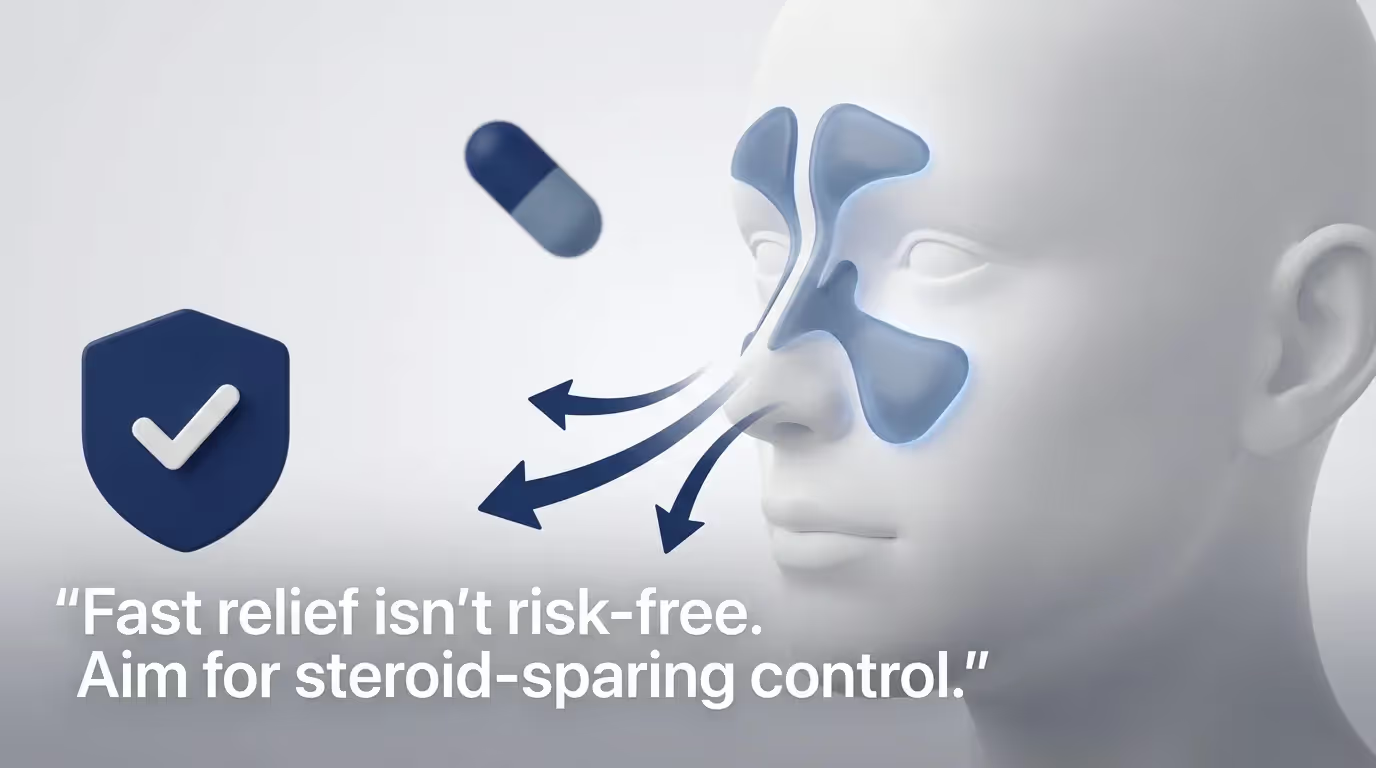
Oral steroids circulate throughout the body, not just the nose and sinuses. That’s why prednisone burst side effects can show up even when you’re taking them for “just” sinus problems. A clinician-friendly way to think about it: a steroid burst is like using a powerful sprinkler system for a small kitchen fire—it may put the fire out fast, but it also soaks the entire house because oral steroids circulate systemically (unlike topical nasal sprays, which are designed to act locally with much lower systemic exposure). Over time, steroid overuse in CRS becomes a concern because risks relate to cumulative exposure, not only a single course.

Who this article is for
This overview is especially relevant if:
- You’ve needed prednisone or a Medrol dose pack more than once per year
- You’ve been told you have chronic rhinosinusitis (CRS) or nasal polyps (CRSwNP)
For a helpful explainer, see Sleep and Sinus Centers of Georgia’s article on nasal polyps: https://sleepandsinuscenters.com/blog/what-are-nasal-polyps
Research reviews emphasize minimizing systemic steroid exposure whenever possible due to cumulative risks. (American Lung Association; Current Opinion in Otolaryngology & Head and Neck Surgery, 2018)
Bottom line: short bursts can help, but repeating them raises whole-body risks that deserve a long-term plan.
What is a “steroid burst” for sinus symptoms?
Definition (short course of oral corticosteroids)
A “burst” typically means a short course of oral steroids—often several days to a couple of weeks—such as:
- Prednisone
- Methylprednisolone (commonly a dose pack)
Even though the course is short, the medication’s effects can be wide-ranging because it affects inflammatory pathways throughout the body.
Why clinicians prescribe them
Oral steroids can quickly reduce inflammation and swelling in the nose and sinuses. They’re often used when symptoms are severe, when nasal polyps are blocking airflow, or when smell loss is significant. A realistic “burst scenario” is someone who can’t tolerate CPAP due to nasal blockage, can’t sleep, and can’t smell—so quick symptom relief becomes urgent.
Oral pills vs steroid shots—what’s the difference?
Some people receive a steroid injection (“shot”) for sinus symptoms. While the delivery method differs, injections can still have systemic effects depending on the medication and dose. If you’re offered a shot, ask which steroid it is, how long it’s expected to act, and what side effects to watch for.
Think of oral pills and many steroid shots as whole-body treatments—fast-acting, but not targeted to just the nose.
Common sinus symptoms that lead to repeat steroid use
Many people end up in a cycle of flare → steroid burst → rebound because symptoms interfere with daily life, including:
- Nasal blockage/congestion that won’t clear
- Facial pressure or fullness
- Reduced smell or taste
- Postnasal drip and cough
- Sleep disruption and fatigue
If this pattern keeps repeating, it’s often a sign there’s a persistent driver that needs a long-term plan—not just another rescue medication.
If you’re in a repeat-burst cycle, it’s a signal to look for the underlying drivers.
Why do sinus symptoms keep coming back? (Common root causes)
Chronic rhinosinusitis (CRS) vs recurrent acute sinusitis
CRS generally means ongoing inflammation lasting 12 weeks or longer, while recurrent acute sinusitis refers to separate infections/episodes with clearer stretches in between. These distinctions matter because the long-term strategy is different: chronic inflammation often needs daily prevention-focused treatment.
Nasal polyps (CRSwNP)
Polyps are noncancerous inflammatory growths. They often respond dramatically to steroids, but may recur because the underlying inflammation is still active—one reason repeated steroid bursts for sinus symptoms are common in CRSwNP. (International Forum of Allergy & Rhinology, 2014; Current Opinion in Otolaryngology & Head and Neck Surgery, 2018) The burst shrinks the swollen tissue, but it may not change the immune pattern that keeps producing swelling.
Allergies and nonallergic rhinitis
Seasonal or year-round allergies, irritant sensitivity, and other rhinitis patterns can keep the nasal lining inflamed, amplifying CRS symptoms. If your symptoms spike with pollen seasons, indoor dust, pets, or strong odors, those triggers may be fueling the cycle.
Structural or drainage issues
A deviated septum or naturally narrow sinus drainage pathways can make inflammation harder to clear and topical medication delivery less effective.
Ongoing irritants and exposures
Smoke, fragrances, pollution, and workplace triggers can repeatedly inflame already-sensitive tissues. (International Forum of Allergy & Rhinology, 2014)
Identifying and treating your root cause(s) is the surest way to need fewer rescue bursts.
The real risks of repeated oral corticosteroids (OCS)
Short-term side effects (can happen even with one burst)
Even a single course can cause:
- Mood changes (irritability, anxiety) and insomnia
- Increased appetite and fluid retention
- Blood pressure elevation
- Blood sugar spikes (especially relevant for diabetes or prediabetes)
Patients often describe this as a trade: “I can breathe, but I’m jittery and can’t sleep.” (American Lung Association)
Long-term and cumulative risks (increase with repeated bursts)
With repeated courses, risks can become more medically significant:
- Bone health: osteopenia/osteoporosis and higher fracture risk
- Adrenal suppression/insufficiency: the body may reduce natural cortisol production
- Metabolic effects: persistent hyperglycemia and weight gain
- Infection risk: increased susceptibility to infections
- Eye complications: cataracts and glaucoma
- Cardiovascular effects: hypertension and related risks
This is why many CRS/CRSwNP reviews emphasize steroid-sparing approaches whenever feasible. (Current Opinion in Otolaryngology & Head and Neck Surgery, 2018; Journal of Clinical Medicine/MDPI, 2018)

The “dose adds up” problem (why bursts aren’t always “small”)
A key concept is cumulative exposure. You may only take steroids “for a few days,” but if that happens several times a year for years, your total dose can become substantial. Some CRS/CRSwNP literature discusses “overexposure” markers around approximately ≥1,000 mg lifetime exposure and ≥1,000 mg per year in certain contexts. These are not strict cutoffs; individual risk varies and depends on factors like age, comorbidities, and bone health. If you’ve had repeated steroid bursts for sinus symptoms, it can be reasonable to ask your clinician: “About how many milligrams have I had this year?” (International Forum of Allergy & Rhinology, 2014; DOI:10.1002/alr.21377; GSK Canada, 2025)
Systemic steroid risks are largely about how much you get over time—not just one short course.
When the risks of steroids may outweigh the benefits (especially in CRSwNP)
Signs you may be relying too much on bursts
Patterns that can signal the need for a prevention-focused plan include:
- Multiple bursts per year
- Symptoms that rebound quickly after stopping
- Side effects accumulating (sleep disruption, mood changes, glucose/BP issues, weight changes)
Discuss these patterns with your healthcare provider so you can pivot from repeat rescue to prevention-focused care.
Steroids vs sinus surgery risk comparison (what studies suggest)
In CRSwNP, research discussions suggest that as systemic steroid exposure increases over time, the balance may shift—meaning for appropriate candidates, ongoing repeated oral steroids may eventually carry more risk than procedural options. This doesn’t mean surgery is right for everyone, but it’s one reason ENT evaluation is often recommended when bursts become frequent. (Current Opinion in Otolaryngology & Head and Neck Surgery, 2018; Journal of Clinical Medicine/MDPI, 2018)
If bursts are frequent, it’s reasonable to ask whether a procedural or biologic option could lower your long‑term risk.
Safer alternatives to repeated steroid bursts (stepwise options)

1) Daily, “local” anti-inflammatory treatments (lower systemic exposure)
Many long-term plans prioritize topical therapy to reduce systemic exposure:
- Intranasal corticosteroid sprays (technique matters)
Learn more: https://sleepandsinuscenters.com/blog/corticosteroid-nasal-sprays-friend-or-foe
- Steroid rinses (prescribed in specific cases; different risk profile than oral steroids)
Read: https://sleepandsinuscenters.com/blog/steroid-rinses-a-modern-approach-to-sinus-relief
- Saline irrigation to reduce mucus burden and improve topical medication delivery
For safety, use distilled, sterile, or previously boiled and cooled water, and follow product instructions.
For many patients, the goal is to make the daily plan strong enough that bursts become rare. (Current Opinion in Otolaryngology & Head and Neck Surgery, 2018)
2) Treat triggers and co-conditions
Reducing flare frequency often means addressing drivers such as:
- Allergy evaluation and treatment (OTC options, prescription sprays, or immunotherapy when indicated)
Consider: https://sleepandsinuscenters.com/allergy-testing
- Asthma/AERD overlap care (when relevant)
- Reflux management (when throat symptoms and cough are part of the picture)
Think of this as lowering the background inflammation so you’re not constantly one trigger away from a flare.
3) Non-steroid symptom relievers (when appropriate)
Depending on symptoms, supportive options may include humidification and other non-steroid measures. It’s also important not to self-extend oral steroid courses beyond what was prescribed—one way steroid overuse in CRS can happen unintentionally.
4) Biologic medications for severe CRSwNP (steroid-sparing strategy)
For severe or difficult-to-control CRSwNP, biologics may be considered to reduce polyp burden and decrease reliance on oral steroids. These treatments require prescription, specialist evaluation, and regular follow-up to assess response and safety.
5) Procedural options when medical therapy isn’t enough
Procedures can be considered when symptoms persist despite appropriate medical therapy:
- Balloon sinuplasty for select patients
Learn more: https://sleepandsinuscenters.com/blog/balloon-sinuplasty-quick-relief-for-chronic-sinusitis
- Endoscopic sinus surgery (ESS), particularly for polyps or significant CRS
Overview: https://sleepandsinuscenters.com/blog/endoscopic-sinus-surgery-what-patients-should-know
A key goal of procedures is often to improve sinus drainage and help topical treatments reach deeper areas more effectively—potentially reducing future reliance on repeated steroid bursts for sinus symptoms. (International Forum of Allergy & Rhinology, 2014; Current Opinion in Otolaryngology & Head and Neck Surgery, 2018)
For a broader overview of options, visit: https://sleepandsinuscenters.com/chronic-sinusitis-treatment
The safer-longer game is strong local therapy, trigger control, and—when needed—specialist treatments that reduce systemic steroid exposure.
Lifestyle tips that support sinus control (and may reduce flare frequency)
Daily nasal hygiene routine
Consistency matters. Saline rinses can help reduce irritants and mucus. Use distilled, sterile, or previously boiled and cooled water to reduce contamination risk.
Indoor air strategies
Many people do better with:
- Moderate indoor humidity
- HEPA filtration
- Avoiding smoke and heavy fragrances
Infection prevention basics
Hand hygiene, addressing possible dental issues when relevant, and prioritizing sleep can all support overall respiratory health.
Track patterns
Noting pollen seasons, mold exposure, workplace triggers, and a medication log can help connect flare patterns with specific drivers—especially if you’re trying to avoid another round of repeated steroid bursts for sinus symptoms.
Small daily habits, done consistently and safely, can meaningfully reduce flare frequency.
When to see an ENT (and what to ask at your visit)
Red flags for urgent evaluation
Seek urgent evaluation for symptoms like:
- Vision changes
- Facial swelling
- Severe headache/neck stiffness
- High fever
- Confusion
Signs you need a deeper workup
Consider an ENT evaluation when you have:
- Symptoms lasting >12 weeks
- Loss of smell
- Recurrent polyps
- Multiple oral steroid bursts
Helpful questions to bring
- “Do I meet criteria for CRSwNP or another inflammatory condition?”
- “What is my estimated cumulative oral steroid dose this year?”
- “What steroid-sparing plan can we use?”
- “Would imaging or nasal endoscopy clarify what’s driving my flares?”
- “Am I a candidate for biologics or a procedure?”
To schedule a visit with Sleep and Sinus Centers of Georgia, book here: https://sleepandsinuscenters.com/appointments
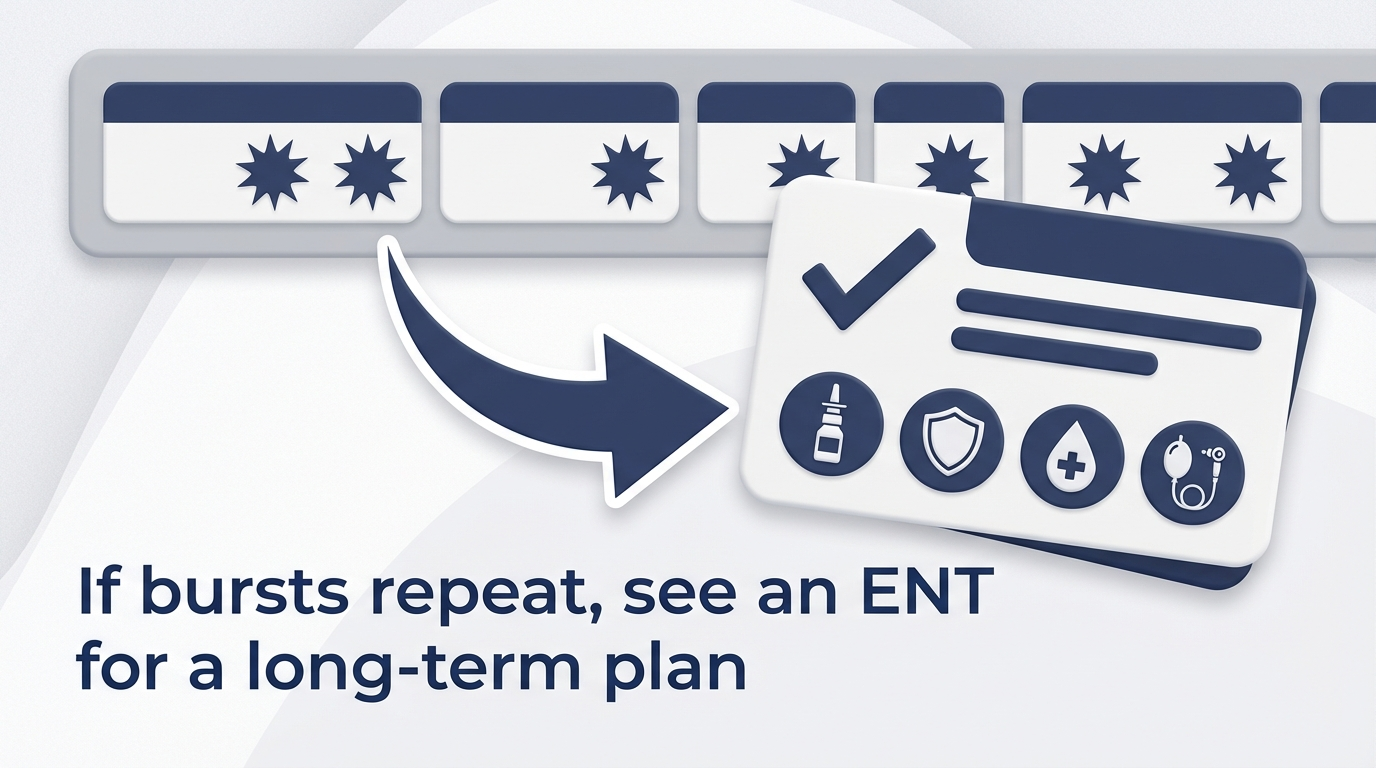
If you’re needing bursts more than occasionally, it’s time for a focused ENT plan.
FAQs
How many steroid bursts per year is too many?
There isn’t one perfect number for everyone, but repeated bursts should prompt a prevention-focused reassessment—discuss this with your healthcare provider. CRS/CRSwNP literature often emphasizes cumulative exposure and discusses “overexposure” markers (such as around ≥1,000 mg/year in certain contexts) as a conversation starter. These are approximate thresholds and not strict cutoffs. (DOI:10.1002/alr.21377; Current Opinion in Otolaryngology & Head and Neck Surgery, 2018)
Are steroid bursts safe if I’m otherwise healthy?
Even otherwise healthy people can experience mood changes, sleep disruption, elevated blood pressure, and blood sugar effects—risks that generally increase with repeat exposure. (American Lung Association)
Can repeated prednisone cause osteoporosis?
Systemic steroids are associated with bone loss risk, particularly with higher cumulative exposure. (Journal of Clinical Medicine/MDPI, 2018)
Do steroid shots for sinus problems carry the same risks as pills?
They can still have systemic effects depending on the drug and dose, so it’s reasonable to ask about expected duration and side effects. (Healthline)
What can I use instead of oral steroids for nasal polyps?
Common alternatives include topical nasal steroids, saline/steroid rinses, biologic medications for certain severe cases (by prescription and specialist evaluation), and surgery when indicated. (Current Opinion in Otolaryngology & Head and Neck Surgery, 2018; GSK Canada, 2025)
When is sinus surgery “safer” than repeated bursts?
For some people with CRSwNP, research discussions suggest the cumulative risk of repeated oral steroids may eventually exceed procedural risks—though the decision depends on severity, anatomy, comorbidities, and prior response to medical therapy. (Current Opinion in Otolaryngology & Head and Neck Surgery, 2018; Journal of Clinical Medicine/MDPI, 2018)
Conclusion: Focus on long-term control, not repeated rescue meds
Oral steroids can be effective short-term relief, but repeated steroid bursts for sinus symptoms can create cumulative, whole-body risks. If you find you’re needing bursts repeatedly, it may be time to discuss a steroid-sparing plan—using topical therapies, trigger control, biologics when appropriate, and procedures for the right candidates.
If you’d like Sleep and Sinus Centers of Georgia to help evaluate what’s driving ongoing symptoms and review options, book an appointment: https://sleepandsinuscenters.com/appointments. You can also explore services at https://www.sleepandsinuscenters.com/.
Sustained control comes from a plan that treats causes, protects the whole body, and makes rescue the exception—not the routine.
References
- American Lung Association. The potential risks of repeated corticosteroid use. https://www.lung.org/blog/corticosteroid-use-risks
- Healthline. Steroid shot for sinus infection: benefits and risks. https://www.healthline.com/health/steroid-shot-for-sinus-infection
- PubMed. (2014). International Forum of Allergy & Rhinology article on systemic corticosteroids in CRS/CRSwNP. https://pubmed.ncbi.nlm.nih.gov/25145900/
- PubMed. (2018). Current Opinion in Otolaryngology & Head and Neck Surgery review on OCS risks in CRS/CRSwNP. https://pubmed.ncbi.nlm.nih.gov/29059082/
- MDPI. (2018). Journal of Clinical Medicine article related to OCS exposure/harms in CRS/CRSwNP. https://www.mdpi.com/2673-351X/3/2/5
- Wiley Online Library. International Forum of Allergy & Rhinology article. DOI:10.1002/alr.21377. https://onlinelibrary.wiley.com/doi/10.1002/alr.21377
- GSK Canada. (2025). Press release on real-world OCS overuse in CRSwNP. https://ca.gsk.com/en-ca/media/press-releases/new-real-world-study-reveals-oral-corticosteroid-overuse-in-patients-with-chronic-rhinosinusitis-with-nasal-polyps/
This article is for educational purposes only and is not medical advice. Please consult a qualified healthcare provider for diagnosis and treatment. Links are provided for information and do not replace professional medical guidance.
Don’t let allergies slow you down. Schedule a comprehensive ENT and allergy evaluation at Sleep and Sinus Centers of Georgia. We’re here to find your triggers and guide you toward lasting relief.