Post-Septorhinoplasty Recovery: Timeline, Tips, and What to Expect
Healing after septorhinoplasty can feel like a mix of “I look better already” and “why am I still so stuffy?” Both reactions are common—and they can even happen on the same day. This guide walks through recovery in a practical, patient-friendly way: what’s normal, what tends to happen when, what helps at home, and which symptoms deserve a prompt call to your surgeon.
Quick take—what most patients can expect
- The first 1–4 weeks are usually the most noticeable for swelling, bruising, and congestion.
- Many patients see most visible swelling improve over weeks, while subtle refinement can continue for 6–18 months (especially at the tip).
- Published studies generally report high satisfaction and meaningful breathing improvement over time. In some reports, average Rhinoplasty Outcome Evaluation (ROE) scores are around 73/100, about 75% of patients report being happy with results, and about 83% would repeat the procedure. [1] In systematic review data, NOSE (Nasal Obstruction Symptom Evaluation) scores improved by roughly 43–50 points by 12 months in some studies. [2]
- Your surgeon’s instructions should always come first, even if your timeline looks different than a friend’s or a checklist online.
In short: outcomes are encouraging in published studies, but your recovery will follow your own surgeon’s plan and your body’s pace.
What is septorhinoplasty (and why recovery can feel different than “just a nose job”)?
Septoplasty vs. rhinoplasty vs. septorhinoplasty
- Septoplasty focuses on straightening the internal septum to improve airflow.
- Rhinoplasty focuses on changing the outer shape (bridge, tip, symmetry).
- Septorhinoplasty combines both function and appearance in one procedure.
Because both the internal lining and the external framework may be adjusted, recovery can include both nasal congestion/crusting symptoms (from internal swelling and healing) and injury-like symptoms (bruising and swelling). Think of it as healing in two places at once: mucosal healing inside and soft-tissue/bony healing outside.
Why recovery symptoms happen
- Swelling: a normal healing response after tissue manipulation.
- Congestion: often driven by internal swelling, crusting, and temporarily altered airflow.
- Bruising: more common when nasal bones are repositioned.
A helpful reminder: early on, your nose is healing—not performing. Congestion in particular often reflects normal biology rather than a poor result.
In a nutshell: you’re healing both inside and out, so expect some combination of congestion, crusting, swelling, and bruising early on.

Normal symptoms after septorhinoplasty (what’s expected)
Common early symptoms (first days to weeks)
- Swelling (tip swelling often lingers longest)
- Bruising under the eyes
- Nasal stuffiness/congestion
- Mild bleeding/oozing in the first day or two
- Pressure, headache, fatigue
- Temporary numbness (tip/upper lip) or temporary changes in smell/taste
Real-world examples patients often mention
- Feeling more blocked at night because swelling is worse when lying down
- Looking much better from the front, but still feeling firm or “full” to the touch
- One side breathing better than the other on a given day—then swapping the next day
Common later symptoms (weeks to months)
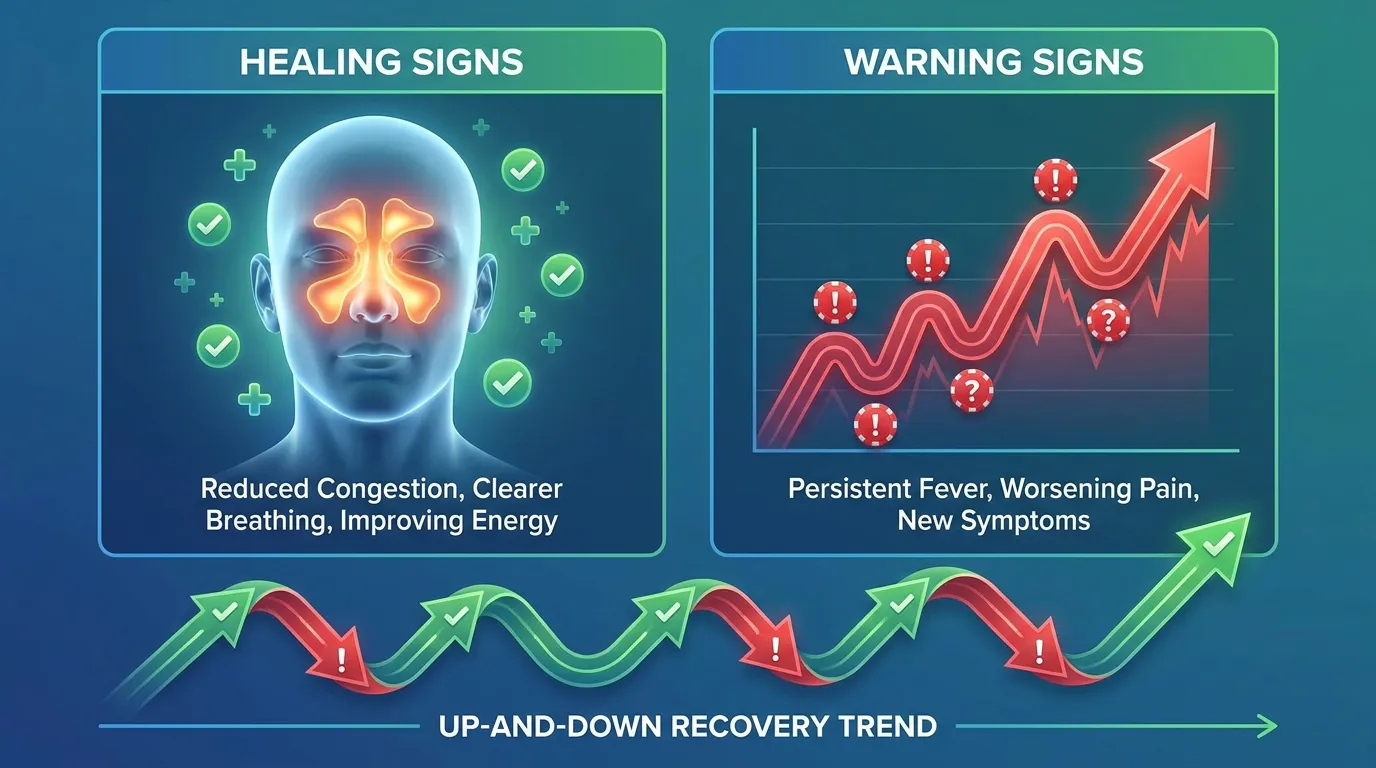
- “Ups and downs” swelling (often worse in the morning, after salty foods, heat, or exertion)
- Intermittent congestion while the internal lining continues to heal
- Subtle asymmetries that gradually improve as swelling resolves
If crusting is a big part of your experience, this may help as general education: nasal crusting after surgery — https://sleepandsinuscenters.com/blog/treating-nasal-crusting-at-home-and-in-the-clinic
Bottom line: if your symptoms look like these lists, they’re often part of normal healing—still, follow your surgeon’s plan and ask when unsure.

Septorhinoplasty recovery timeline (week-by-week and month-by-month)
For broader context on overall healing windows, see: how long does nasal surgery recovery take? — https://sleepandsinuscenters.com/blog/how-long-does-nasal-surgery-recovery-take
Typical timeline (general education—your surgeon’s plan may differ)
- Day 0–2
What you may notice: pressure, congestion, drainage, tiredness
Common focus: rest, head elevation, hydration, soft foods, medication plan as prescribed
- Days 3–7
What you may notice: peak swelling/bruising and stuffiness for many patients
Common focus: gentle care, avoid strain/bending/nose blowing, protect from bumps
- About Week 1
What you may notice: splint/cast removal for many; appearance often improves quickly, swelling remains
Common focus: continue precautions, expect persistent internal congestion/crusting
- Weeks 2–4
What you may notice: more “socially presentable,” still not final
Common focus: gradual return to routine activities if cleared; ask about exercise timing
- Months 2–3
What you may notice: breathing and shape continue improving as internal swelling declines
Common focus: track breathing trends weekly rather than daily
- Months 6–12
What you may notice: refinement stage, especially tip definition and contour
Common focus: be patient with tip swelling (particularly with thicker skin)
- Months 12–18
What you may notice: final subtle contour settling
Common focus: small changes can still occur, even when photos already look good
Short version: think progression, not perfection—most changes trend better over weeks to months.
Day 0–2 (surgery day + first 48 hours)
What you may feel: pressure, congestion, mild drainage, fatigue.
Typical care themes: head elevation, rest, hydration, simple meals, and taking medications as prescribed.
Practical reality: even if your nose looks “fine” under the splint, you may feel wiped out. Many patients benefit from treating these days like a true recovery block—simple meals, a low-stimulation environment, and extra sleep.
Days 3–7 (often peak swelling/congestion)
Swelling and bruising are usually most visible here. Many people also feel the most congested during this window, which can be frustrating if you expected breathing to improve immediately. Most surgeons ask patients to avoid heavy lifting, bending, and nose blowing early on.
Week 1 (splint/cast removal for many patients)
Once external support is removed, the nose may look noticeably improved—but it’s still swollen. Bruising fades, the “big surgery look” calms down, and daily life can feel closer to normal, even though congestion can persist.
Weeks 2–4 (return-to-routine phase)
You may feel comfortable being seen in public, though the look is not final. This is also when questions about activity and gym timing come up—ask your surgeon for personalized guidance.
Months 2–3 (breathing and shape continue to improve)
Internal swelling gradually declines, and airflow often becomes more consistent. In a systematic review, NOSE scores improved substantially by 12 months, with average improvements of roughly 43–50 points in some studies. [2] Day-to-day variability is still common while tissues remodel, so look for weekly trends.
Months 6–12 (refinement stage)
The nose continues to define and sharpen, particularly at the tip. If your bridge looks good early but the tip feels “round,” that can still be normal healing.
Months 12–18 (final subtle settling)
Small changes may continue. This is one reason “final results” can feel delayed even when you already look good in photos.

Breathing improvements—when you’ll notice them (and what the data shows)
Typical patient pattern
- Early weeks: “I feel more blocked than before.” This is often swelling and crusting.
- Later: breathing steadies and improves as swelling decreases.
What studies show
In systematic review data, NOSE scores (a validated nasal obstruction measure) improved markedly by 12 months, with average improvements around 43–50 points in some studies. [2] These are pooled study results and not a guarantee for any individual.
If airflow is your main concern, you may also find this guide helpful: septoplasty recovery week by week — https://sleepandsinuscenters.com/blog/septoplasty-recovery-week-by-week-complete-timelin-20260123051106
Key takeaway: early stuffiness is common; steady improvement over months is the usual pattern.
Appearance changes—swelling stages and what’s “normal”
Why swelling can look uneven
Uneven swelling is common because tissues heal at different rates. Sleeping position, skin thickness, and everyday fluid shifts can change how the nose looks from one day to the next. Angle and lighting can also alter what you see in the mirror.
“Pollybeak,” supratip fullness, and scar tissue (patient-friendly perspective)
Many people worry about a “pollybeak” early on when the area just above the tip looks full. Clinically, this is often early supratip fullness from swelling and healing tissue. Early fullness can mimic problems that may not be present once healing matures, which is why surgeons discourage judging fine details too soon.
Sun protection and skin care (often overlooked)
UV exposure can worsen discoloration and prolong visible redness in healing skin. Gentle cleansing and following incision-care instructions (if an open approach was used) support smoother healing.
Bottom line: don’t judge fine details early—subtle refinement, especially at the tip, can take many months.

At-home recovery tips that actually help
For more general comfort and routine guidance, see: nasal surgery recovery tips — https://sleepandsinuscenters.com/blog/navigating-nasal-surgery-recovery
Congestion relief (safe strategies)
Educational options patients commonly use (only as allowed by their surgeon) include:
- Saline spray or moisturizing gels
- Humidification
- Gentle cleaning as instructed at follow-ups
Some surgeons introduce rinses later; timing varies. If you’re unsure, ask for a clear start date for any rinse or irrigation.
Sleep and swelling control
Head elevation is commonly used in the first week or two. Back-sleeping is often preferred early to reduce pressure and accidental bumps (follow your surgeon’s instructions).
Nutrition and hydration for healing
Prioritize protein and fluids. If prescription pain medicine causes constipation, fiber and hydration strategies can help (ask your care team). Reducing very salty foods may help limit swelling fluctuations.
Activity guidelines (general, patient-friendly)
Walking is often encouraged early. Strenuous workouts and contact sports are typically delayed and phased back slowly. If your heart rate spikes and your nose throbs afterward, that often means you did too much too soon.
Glasses and pressure on the bridge
If you wear glasses, ask about ways to reduce pressure (taping support, cheek supports, or temporary alternatives) and when it’s safe to return to normal wear.
Simple, consistent care usually beats aggressive tactics early on.
Medications and treatments you might be given (and why)
Pain control
Many plans rely on acetaminophen-based options, with stronger medication if needed early on. Some surgeons restrict NSAIDs due to bleeding risk, while others permit them later—protocols vary.
Antibiotics (when used)
Not everyone needs antibiotics. They may be prescribed depending on technique, splints, or surgeon preference.
Topical care
Some patients are given ointments for incision sites (if applicable) and saline sprays or gels for dryness.
Bottom line: take only what your surgeon prescribes and ask when uncertain.

What not to do during recovery (common mistakes)
- Nose blowing too soon: This can trigger bleeding and worsen swelling. Ask your surgeon when it’s safe.
- Returning to intense exercise early: Hard workouts can raise blood pressure, increase swelling, and raise bleeding risk—especially in the first couple of weeks.
- Smoking/vaping and secondhand smoke exposure: These can irritate tissues and slow healing.
- Skipping follow-up visits: Follow-ups help manage crusting, dryness, and any early issues that can affect breathing and comfort.
When in doubt, protect the nose and call your care team.
Possible complications (uncommon, but important to recognize)
Infection (typically low short-term rates)
Warning signs can include fever, worsening pain, increasing redness, or foul drainage.
Septal perforation (a hole in the septum)
Symptoms may include whistling, crusting, bleeding, or persistent dryness.
Persistent obstruction (most common longer-term issue)
This can relate to residual deviation, valve collapse, scar tissue, or turbinate concerns. Some cases improve over time; others warrant reassessment.
Revision surgery (uncommon)
Some patients need revision for persistent symptoms or aesthetic concerns.
About reported rates
In related nasal surgery studies (for example, septoplasty or septoplasty with inferior turbinate reduction), reported complication rates are generally low—for instance, infection around 3.1–3.3%, septal perforation roughly 1.6–2.6%, and revision around 2.5–3% in some series. [3][4] These data help with context, but rates in septorhinoplasty may differ based on procedure details, technique, and patient factors.
Key point: serious problems are uncommon, but fast communication with your surgeon protects your health and your result.
When to call your surgeon urgently (red flags)
Same-day call / urgent evaluation
- Heavy bleeding that doesn’t respond to the instructions you were given
- High fever or rapidly worsening pain/swelling
- Vision changes, severe headache, or neck stiffness
- New asymmetry plus significant pain after trauma
Call within 24–48 hours
- Worsening foul smell/discharge
- Increasing one-sided pain or swelling
- Breathing suddenly much worse after initial improvement
If you think it’s urgent, call—your surgeon would rather hear from you early.
Long-term results: satisfaction, confidence, and quality of life
What studies show about patient satisfaction
Published studies generally report high satisfaction after septorhinoplasty. In some reports, average ROE scores are around 73/100, about 75% of patients report being happy with results, and about 83% say they would repeat the procedure. [1] These findings describe study populations and do not guarantee individual outcomes.
Setting expectations for “final results”
- Take monthly photos (daily photos can make normal fluctuations feel alarming).
- Track “breathing” and “appearance” progress separately, since they often improve on different timelines.
Big picture: measure progress month to month, not day to day, and give both function and appearance time to mature.
FAQs (SEO-friendly)
How long does swelling last after septorhinoplasty?
Many patients see most visible swelling improve over weeks, while subtle refinement can continue for 6–18 months, especially at the tip.
When can I go back to work or school?
Many people return in 1–2 weeks, depending on bruising, energy level, and job demands. Your surgeon may tailor guidance.
When can I exercise again?
Walking is often resumed early, while strenuous exercise timing varies. The safest answer is to follow your surgeon’s clearance.
When can I blow my nose?
It’s typically delayed. Timing varies by surgeon and technique—ask for a specific date or milestone.
Is it normal to feel more congested before breathing improves?
Yes. Early swelling and crusting can cause temporary obstruction, even when long-term breathing is expected to improve. In systematic review data, NOSE scores improved by roughly 43–50 points by 12 months in some studies. [2]
What if I still can’t breathe well months later?
Persistent obstruction can have several causes (residual swelling, scar tissue, turbinates, valve support). A follow-up evaluation can clarify next steps. Revision is uncommon in related nasal surgery literature but sometimes needed in select cases. [4]
Conclusion: your recovery checklist + next steps
- Keep your head elevated as directed.
- Use saline and humidification only as instructed.
- Avoid trauma and exertion until cleared.
- Attend all follow-ups (they matter for comfort and healing).
- Watch for red flags and call promptly if they appear.
If you have ongoing congestion, concerns about swelling, or questions about your recovery timeline, the team at Sleep and Sinus Centers of Georgia can help you understand what’s typical and what deserves a closer look—based on your specific procedure and healing pattern. To get personalized guidance, book an appointment: https://www.sleepandsinuscenters.com/
Small daily habits plus follow-up visits add up to smoother healing.
References
1. Biggs TC, et al. Patient-reported outcome measures in septorhinoplasty surgery (2015). https://pmc.ncbi.nlm.nih.gov/articles/PMC4473903/
2. Floyd EM, et al. Systematic review and meta-analysis evaluating functional rhinoplasty outcomes with the NOSE score (2017). https://aao-hnsfjournals.onlinelibrary.wiley.com/doi/10.1177/0194599817691272
3. Dąbrowska‑Bień J, et al. Complications in septoplasty based on a large group of 5639 patients (2018). https://pmc.ncbi.nlm.nih.gov/articles/PMC5992230/
4. Complication Rates Following Septoplasty With Inferior Turbinate Reduction (Ochsner Journal, 2019). https://www.ochsnerjournal.org/content/19/4/353
“This article is for educational purposes only and is not medical advice. Please consult a qualified healthcare provider for diagnosis and treatment.”
Don’t let allergies slow you down. Schedule a comprehensive ENT and allergy evaluation at Sleep and Sinus Centers of Georgia. We’re here to find your triggers and guide you toward lasting relief.