Probiotics for Allergies: What Research Really Shows
If you’ve seen headlines about probiotics for allergies, you’ve probably noticed the message can feel inconsistent: one article says probiotics help, another says they don’t work. The truth is more nuanced. Probiotic research is highly strain-specific, and results depend on what kind of allergy is being studied, who is taking the probiotic, and how long they take it.
A helpful way to think about it: probiotics is a category, not a single treatment. Saying probiotics help allergies can be a bit like saying dogs are good at herding—some breeds are, many aren’t, and it depends on the job.
Below is a patient-friendly breakdown of what higher-quality research suggests right now—especially for infant prevention, pediatric food allergy tolerance, and allergic rhinitis (hay fever).
Quick takeaways
- Not all probiotics are the same—benefits depend on strain, dose, and allergy type.
- Infant prevention: A recent Cochrane review found little to no difference in preventing asthma, allergic rhinitis, or cow’s milk allergy by age 2 when infants were given probiotics. (Cochrane)
- Pediatric food allergy: Some evidence suggests the strain Lactobacillus rhamnosus GG (LGG) may support tolerance induction in select children when used long-term in certain study protocols (often years), typically under specialist oversight.
- Allergic rhinitis: Trials and reviews suggest probiotics may improve quality of life and some symptoms, but they typically do not lower IgE.
- Probiotics are generally well-tolerated, but they are not a universal allergy solution.
What are probiotics—and why are they being studied for allergies?
Probiotics are live microorganisms (most commonly bacteria) that may provide a health benefit when consumed in adequate amounts. People typically take them as supplements (capsules, powders, drops) or via fermented foods (like yogurt, kefir, kimchi).
One practical point: fermented foods can be a healthy part of your diet, but they usually don’t provide the same strain-and-dose precision used in clinical trials. That’s one reason supplement studies can’t automatically be applied to eat more yogurt headlines.
The gut–immune connection (why this is plausible)
A large portion of the immune system interacts with the GI tract, and researchers are exploring whether changing gut microbial patterns can influence immune training early in life, inflammatory signaling, and immune tolerance (the ability to stay calm around harmless triggers).
This gut–immune link is biologically plausible, but plausible doesn’t always translate into consistent real-world results. Age, diet, antibiotics, infections, and baseline gut bacteria can all affect how a probiotic behaves once it gets into the system.
Strain matters: the most-studied genera
In allergy research, the most frequently studied probiotic groups include species within the genera Lactobacillus and Bifidobacterium. A key point many labels don’t make obvious: Lactobacillus isn’t specific enough. Evidence is tied to the full strain name, such as Lactobacillus rhamnosus GG (LGG)—not just the genus.
Bottom line: Probiotics are diverse, and any potential allergy benefit depends on the exact strain, dose, and how it’s used.

Allergy basics—what “help” would look like
Allergies can show up in different organ systems, and probiotics (if they help at all) are not designed to work like fast-acting symptom medicines. In studies, help might mean a better symptom score or improved day-to-day functioning—not necessarily dramatic, immediate relief.
Common allergy symptoms probiotics are not designed to treat quickly:
- Sneezing, runny/stuffy nose, itchy eyes, post-nasal drip
- Cough and throat irritation (often from drainage)
- Skin flares (itching, rash)
- GI symptoms after an exposure in food allergy (abdominal pain, vomiting)
- Breathing symptoms (wheeze, shortness of breath)
For a clear overview of why these symptoms happen: https://sleepandsinuscenters.com/what-are-allergies
Major allergy categories discussed in probiotic studies:
- Allergic rhinitis (seasonal or year-round)
- Food allergies (especially in children)
- Asthma risk or prevention in infants
- Cow’s milk allergy in early life
Bottom line: Think of probiotics—if they help at all—as slow, background support; not a quick symptom reliever.
Can probiotics prevent allergies in infants?
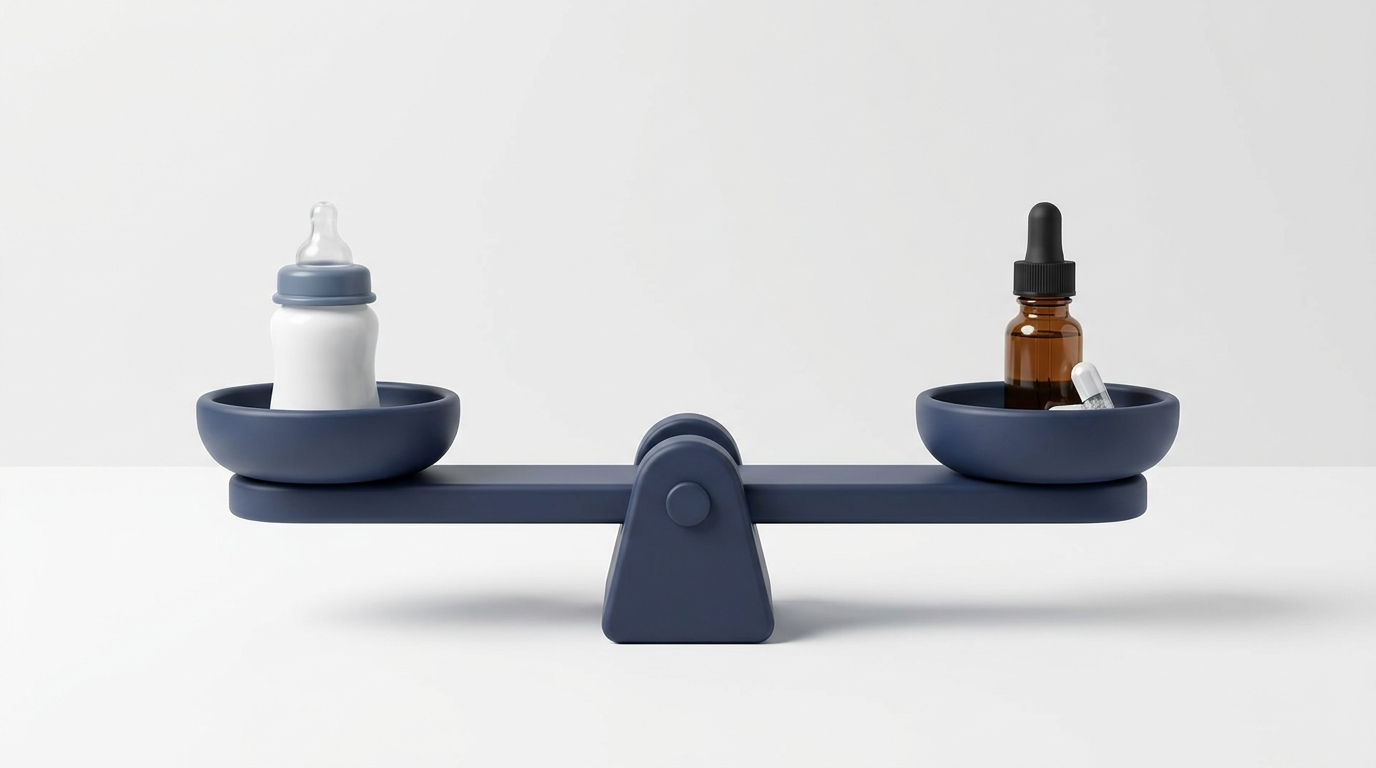
A Cochrane review evaluated whether giving probiotic supplements to infants reduces allergic disease later. The bottom line: probiotics led to little to no difference in prevention of asthma, allergic rhinitis, or cow’s milk allergy by age 2.
This doesn’t mean probiotics are bad, or that they can’t be useful for other goals in selected situations. It does mean that, based on current high-quality evidence, infant probiotic use shouldn’t be portrayed as a reliable way to prevent asthma or allergies.
If you’re a parent deciding what to do with confusing online advice, a reasonable takeaway is: don’t feel guilty if you’re not using probiotics for prevention, and don’t expect them to replace the fundamentals (safe feeding guidance, pediatric follow-up, and allergy evaluation when appropriate).
Cochrane review link: https://www.cochrane.org/evidence/CD006475_does-giving-probiotic-supplement-infants-reduce-allergies
Bottom line: For infant allergy prevention, high-quality evidence shows little to no benefit by age 2.
Probiotics for pediatric food allergies (tolerance induction)
Among the more discussed findings is research on Lactobacillus rhamnosus GG (LGG). Some studies suggest LGG may help support tolerance induction in select children—especially when probiotics are used as part of a longer protocol (often years). Public-facing summaries highlighting newer data: https://www.hcplive.com/view/study-highlights-new-data-probiotics-food-allergy-treatment-children
Interpretation: The research signal isn’t about a quick boost. It’s more like supporting a long training process the immune system may (in some children, in some protocols) go through over time.
Important caveats:
- Probiotics are not a stand-alone fix for food allergy.
- Outcomes vary with the exact strain and dose.
- Duration of use and how tolerance is measured matter.
- Patient selection and specialist oversight are critical.
If you’re considering anything related to tolerance, treat it like a supervised medical plan—not a DIY supplement experiment.
Bottom line: LGG shows promise for pediatric tolerance in some long-term, specialist-guided protocols—this is not a quick or DIY approach.

Probiotics for allergic rhinitis (hay fever)
For allergic rhinitis, some trials and reviews show improvements in quality of life and certain nasal symptom scores. That can look like sleeping a bit better, feeling less worn down during pollen season, or needing fewer tissue-box days—without necessarily changing what you’d see on an allergy blood test.
Across multiple allergic rhinitis studies, probiotics generally do not significantly change total IgE or antigen-specific IgE levels.
Why it feels confusing: different strains, doses, durations, and scoring methods make comparisons hard.
Bottom line: For hay fever, probiotics may improve how you feel, even if standard lab markers like IgE don’t budge.

Why results are mixed (and what to watch for in headlines)
Probiotic is not one treatment: a positive headline often means one strain helped one outcome in one population under specific conditions. Another strain may do nothing.
Outcomes vary: some studies track symptoms, others track IgE, others measure real-world tolerance. A probiotic could help how someone feels without changing IgE.
Duration matters: signals for pediatric tolerance with LGG are most associated with long-term use, not short trials.
Bottom line: Results vary because strains, outcomes, and timelines vary—one study rarely answers every question.
How probiotics fit into an allergy treatment plan
Standard, evidence-based tools typically include:
- Trigger reduction (environmental controls when relevant)
- Over-the-counter and prescription therapies (such as antihistamines and nasal steroid sprays)
- Confirming what you’re actually allergic to
- Longer-term options in appropriate cases (like immunotherapy)
Allergy testing info: https://sleepandsinuscenters.com/allergy-testing
Immunotherapy overview: https://sleepandsinuscenters.com/blog/immunotherapy-for-allergies-is-it-worth-it
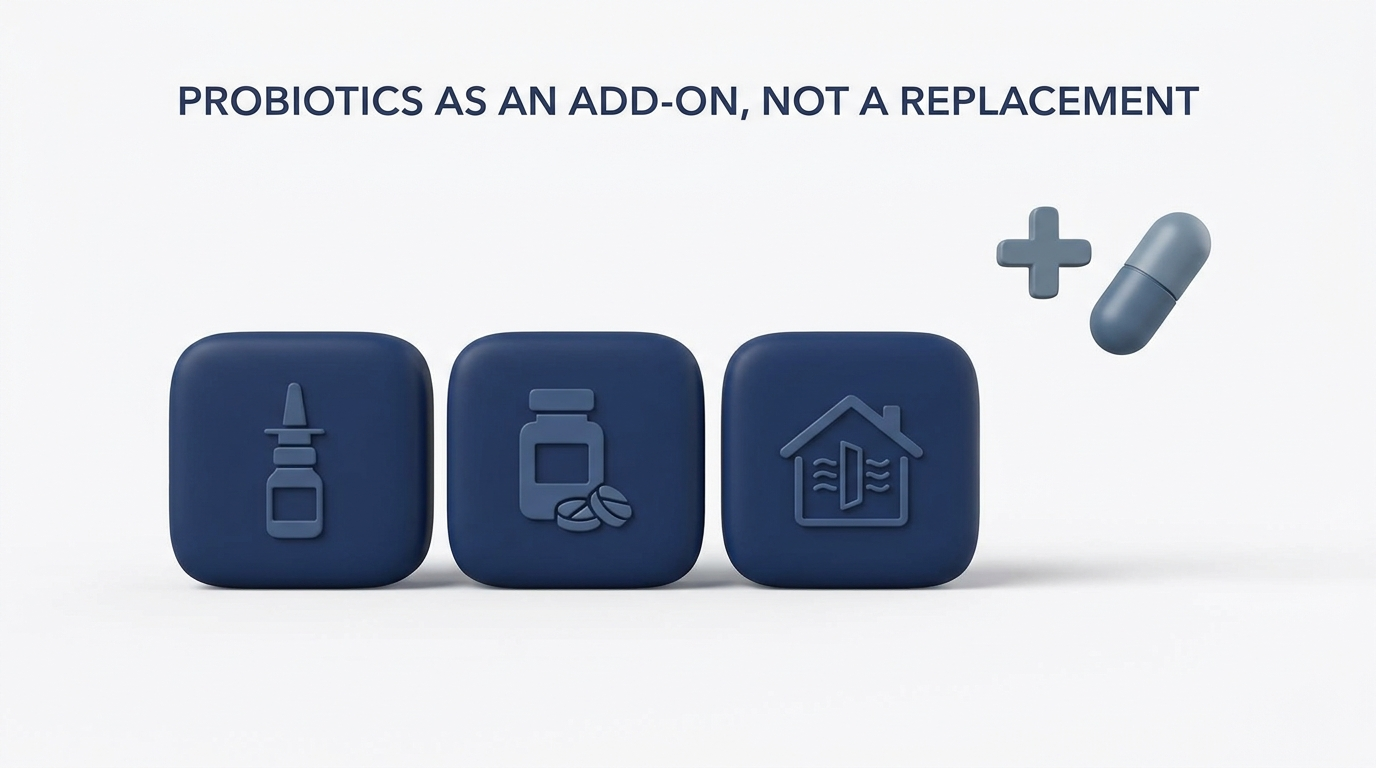
Where probiotics may fit (as an adjunct, not a replacement):
- Selected people with allergic rhinitis who are focused on quality-of-life outcomes
- Selected pediatric food allergy protocols that include LGG and long duration under specialist oversight
Bottom line: Think of probiotics as a possible add-on for select goals—not a substitute for proven allergy care.
Practical guide—if you’re considering probiotics for allergies
Important note: This is general education, not personal medical advice. Discuss any regimen with your healthcare provider, especially for children or those with chronic conditions.
Step 1 — Look for evidence-linked strains (not just 50 billion CFU). Strain identity matters. Seek full names (for example, Lactobacillus rhamnosus GG). Results are not interchangeable across products.
Step 2 — Set realistic goals. Track practical outcomes like symptomatic days, sleep quality, medication use, and missed school/work days.
Step 3 — Consider a reasonable observation window. Rhinitis outcomes often assessed over weeks to a few months; pediatric tolerance protocols are typically much longer and structured.
Step 4 — Food sources vs supplements. Fermented foods support healthy eating patterns but are not strain-controlled; supplements can deliver specific strains and doses, though quality varies.
Bottom line: Choose by strain and goal, measure what matters to you, and coordinate with your clinician—especially for children.
Safety, side effects, and who should avoid probiotics
Typical side effects, when they occur, are temporary GI changes such as gas, bloating, or changes in bowel habits.
Use extra caution if you are immunocompromised, have a central line, have severe chronic illness, or are a premature infant (unless specifically directed in a clinical setting). Ask your clinician before starting.
Bottom line: Most people tolerate probiotics well, but higher-risk groups should check with a clinician first.
Lifestyle tips that support allergy control (with or without probiotics)
Environmental strategies for allergic rhinitis:
- Pollen: Shower after outdoor time, keep windows closed during peak hours, use HVAC filtration as appropriate.
- Dust mite: Use mattress/pillow encasements, wash bedding in hot water, control indoor humidity.
Nutrition basics that support overall immune health:
- Aim for adequate fiber and a variety of plant foods.
- Stay hydrated and keep meals consistent.
- Avoid unnecessary dietary restriction unless medically indicated.
When to see a specialist:
- Symptoms that persist despite typical over-the-counter approaches
- Frequent sinus infections or severe congestion
- Suspected food allergy reactions (hives, swelling, vomiting, wheeze)
Bottom line: Smart environmental habits and targeted medical care do the heavy lifting in allergy control.
FAQs
Do probiotics cure allergies?
No. Evidence remains mixed. Probiotics may help certain outcomes in certain contexts, but they aren’t a universal solution.
Which probiotic is best for allergies?
It depends on the allergy type and the outcome you care about. LGG has a clearer strain-specific signal in pediatric food allergy tolerance protocols when used long-term under specialist guidance.
Do probiotics lower IgE?
In allergic rhinitis research, probiotics generally do not significantly reduce total or antigen-specific IgE, even when symptoms or quality of life improve.
Should I give my baby probiotics to prevent asthma or allergies?
Current evidence suggests little to no difference in preventing asthma, allergic rhinitis, or cow’s milk allergy by age 2.
Can I take probiotics with antihistamines or nasal sprays?
Often considered low risk in studies, but only a clinician who knows your full history can confirm appropriateness.
How long should I try a probiotic before deciding it doesn’t help?
Symptom-focused outcomes are often assessed over 4–8 weeks, though this varies. Your plan and timeline should be clinician-guided.
Conclusion—the bottom line for patients
Research on probiotics for allergies is promising in narrow areas and neutral in others, with outcomes influenced by strain choice, duration, and study design. The clearest don’t overpromise finding is in infant prevention, where high-quality evidence shows little to no benefit by age 2. Meanwhile, Lactobacillus rhamnosus GG (LGG) remains notable in research on pediatric food allergy tolerance induction when used long-term in structured protocols.
If allergy symptoms are ongoing or disruptive, a structured evaluation can clarify triggers and next steps. Appointments: https://www.sleepandsinuscenters.com/
Medical disclaimer
This article is for educational purposes only and is not medical advice. Please consult a qualified healthcare provider for diagnosis and treatment.
References
- Cochrane Library. Does giving probiotic supplement in infants reduce allergies? Cochrane Review CD006475. https://www.cochrane.org/evidence/CD006475_does-giving-probiotic-supplement-infants-reduce-allergies
- World Allergy Organization Journal. Probiotics and allergic diseases review (open access). https://pmc.ncbi.nlm.nih.gov/articles/PMC4725706/
- HCPLive. Study highlights new data on probiotics for food allergy treatment in children. https://www.hcplive.com/view/study-highlights-new-data-probiotics-food-allergy-treatment-children
Don’t let allergies slow you down. Schedule a comprehensive ENT and allergy evaluation at Sleep and Sinus Centers of Georgia. We’re here to find your triggers and guide you toward lasting relief.