How to Prevent Ear Pain on Airplane Descent: Tips to Relieve Pressure
Many travelers know the sudden sharp pain, fullness, or popping that hits during airplane descent. This common discomfort is often called airplane ear. Cabin pressure changes more quickly than the middle ear can keep up, creating a mismatch across the eardrum—much like a suction cup pulling inward on a drumhead. The good news is that many travelers can prevent ear pain on airplane descent or find airplane ear relief with simple, everyday actions. Stay awake, swallow or yawn often, use gentle equalizing techniques, and pay attention to congestion or infection before you fly. If ear pressure problems keep coming back, it may point to Eustachian tube issues that an ENT can evaluate. Readers looking for more on those tubes can review our overview of Eustachian tube dysfunction symptoms, causes, and treatment options.
What Causes Ear Pain on Airplane Descent?
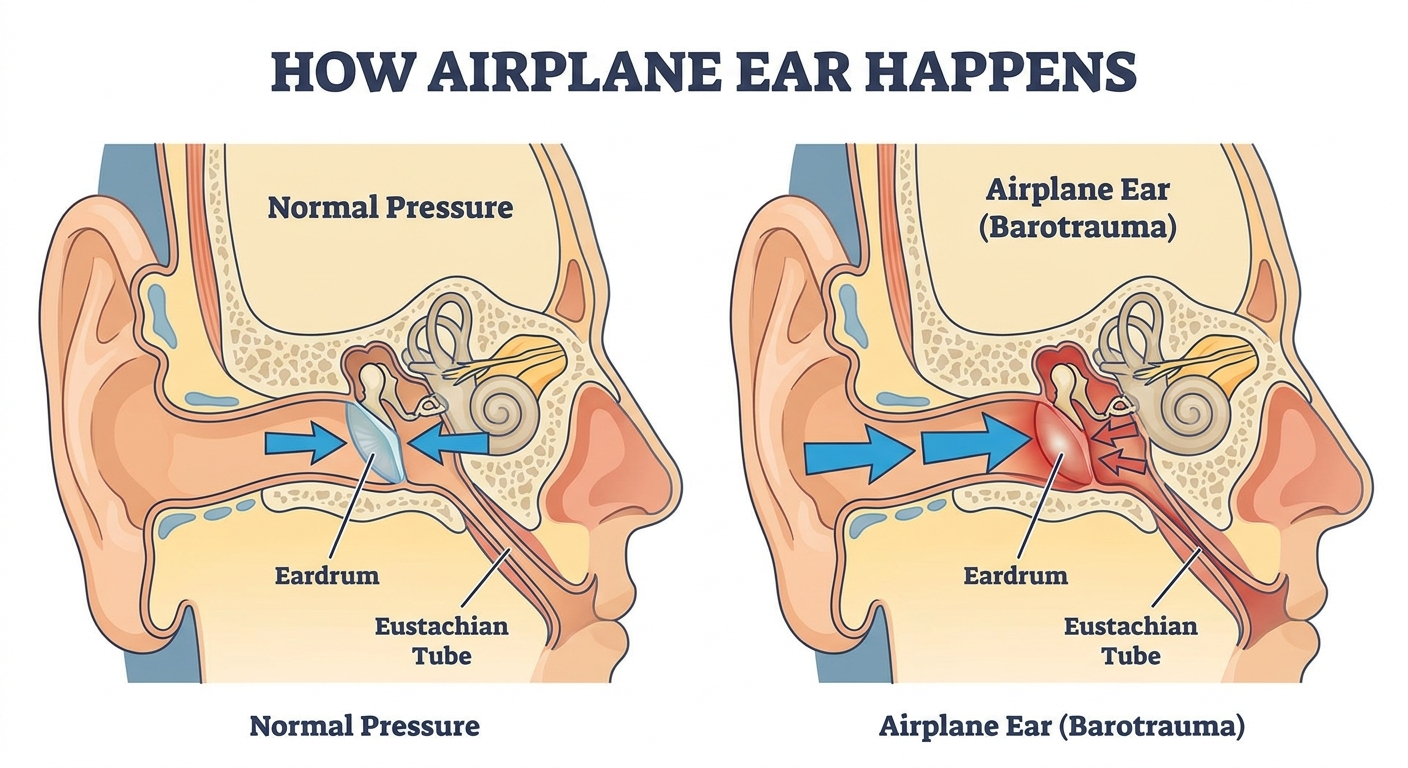
How Airplane Ear (Barotrauma) Happens
Airplane ear, also known as barotrauma, occurs when the pressure inside the middle ear cannot match the changing cabin pressure. During descent the outside pressure rises quickly. If the Eustachian tubes do not open in time, the eardrum is pulled inward, causing pain, fullness, or muffled hearing (Mayo Clinic, 2025; Cleveland Clinic, 2023). Picture the rapid pressure climb as similar to driving down a steep mountain in minutes rather than hours; the middle ear simply needs extra help to catch up.
The Eustachian Tube’s Role
These small tubes connect the middle ear to the back of the nose and throat. They open briefly when you swallow or yawn, letting air in or out so pressure stays equal. Swelling from a cold, allergies, or sinus issues can block them, making it harder to equalize ear pressure while flying. Think of each tube as a tiny, flexible straw: when the lining swells, airflow is restricted just when you need it most.
Who Is at Higher Risk?
People with colds, sinus infections, allergies, or ear infections face higher risk because the tubes may already be swollen or blocked. Sleeping through descent also raises the chance of trouble, since natural swallowing and yawning stop (Bhattacharya et al., 2019; Mayo Clinic, 2025). Ongoing sinus congestion can make airplane barotrauma tips especially useful; our pages on sinus-problem symptoms offer extra background. Even a mild stuffy nose on boarding day can turn a routine landing into an uncomfortable one. Even mild congestion can complicate a flight, so early awareness is key.
Common Symptoms of Airplane Ear
Typical signs include pain or pressure in one or both ears that often feels worse on descent, a sense of fullness, muffled hearing, popping, or mild dizziness. These usually fade once the plane lands and pressure equalizes. Many passengers describe the feeling as similar to water trapped after swimming, except with a sharper ache that builds as altitude drops.
Red-flag symptoms that need prompt attention include severe pain, bleeding or fluid coming from the ear, vertigo, or hearing that stays muffled for more than a few days (Mayo Clinic, 2025; Cleveland Clinic, 2023). Mild airplane ear often settles on its own; lasting or intense symptoms deserve professional evaluation. Recognizing symptoms early allows for timely equalization techniques.
How to Prevent Ear Pain During Descent: Step-by-Step Tips
Simple habits make a big difference. These steps help many travelers equalize ear pressure flying and prevent ear pain on airplane descent. Begin the process before you even feel the first twinge.
Stay Awake as the Plane Descends
Sleeping means you miss the natural swallowing and yawning that open the Eustachian tubes. Set an alert or ask a travel companion to wake you when the plane starts its descent (Mayo Clinic, 2025). A flight attendant can also give you a heads-up if you mention the concern at boarding.
Repeatedly Swallow, Yawn, Chew, or Sip
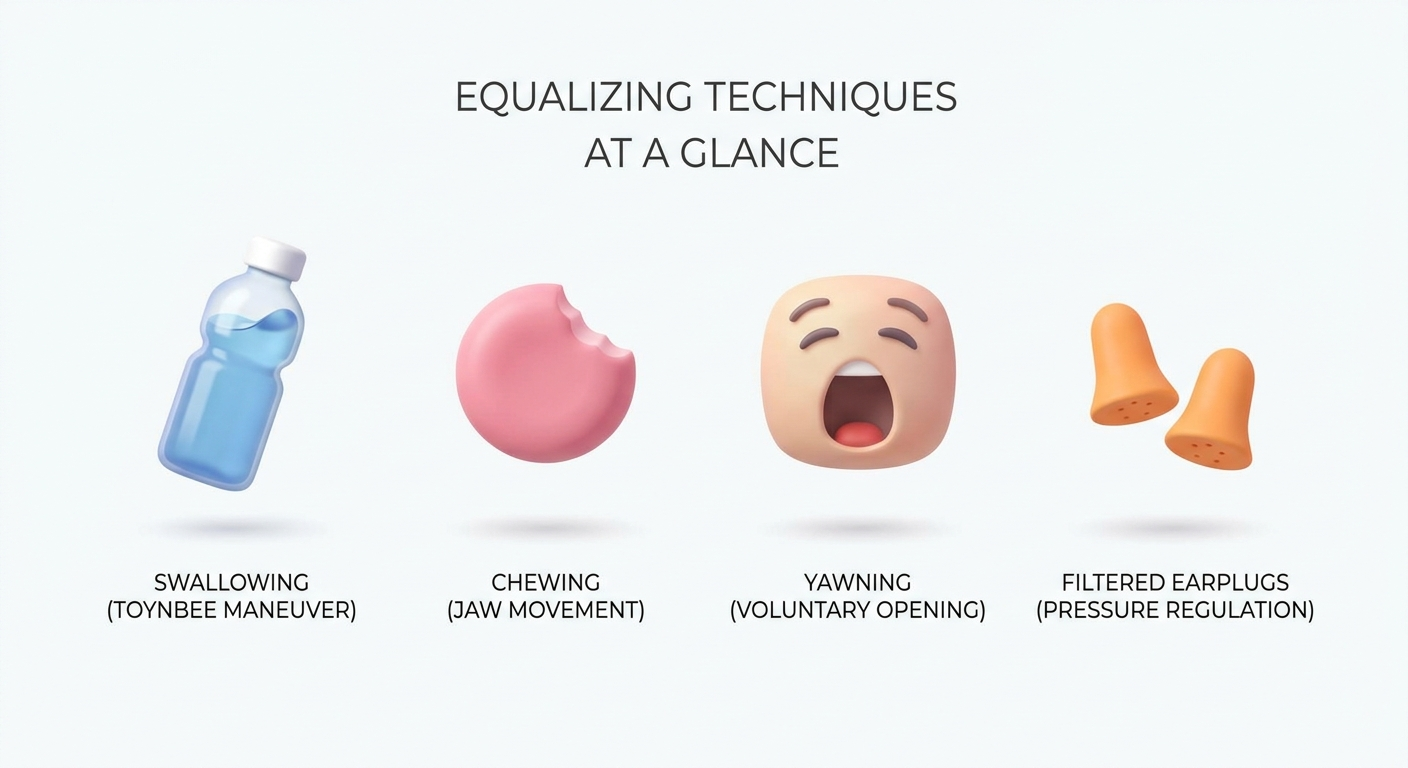
Start these actions before you feel pressure and keep going throughout descent. Chew gum, suck on candy, sip water, or yawn on purpose. Each swallow or yawn briefly opens the tubes and lets pressure catch up. Keep a bottle of water handy and take small sips every couple of minutes once the seat-belt sign comes on for landing.
Try Filtered Earplugs
Special filtered earplugs slow the rate of pressure change and can add comfort. They work best as a helper, not a replacement, for swallowing and yawning (Cleveland Clinic, 2023). Pair them with active swallowing for the most reliable result.
Gentle Valsalva Maneuver for Blocked Ears
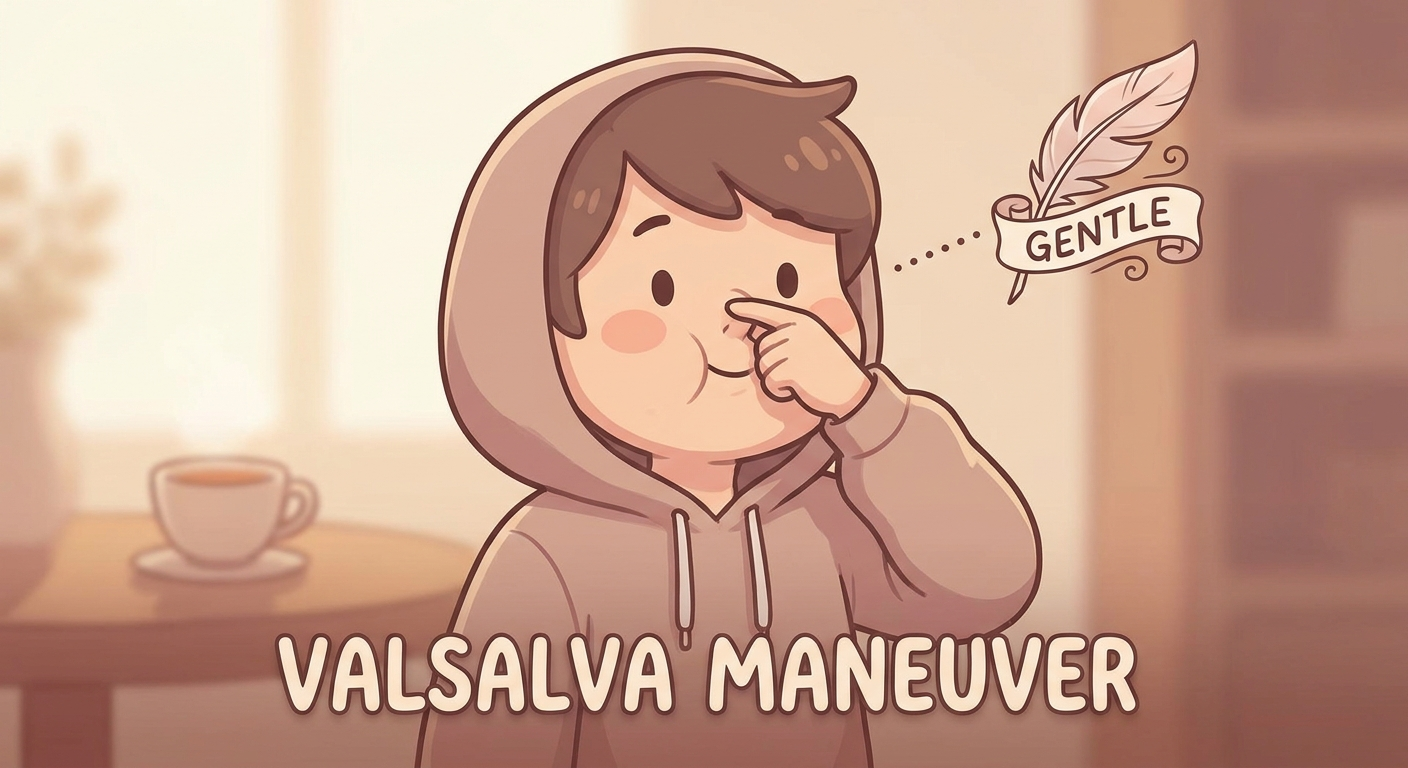
If your ears still feel blocked, try this carefully: close your mouth, pinch your nostrils shut, and blow gently as if blowing your nose. You should feel a slight pop or pressure release. Repeat during descent without forcing. Stop immediately if pain increases. More equalizing ideas appear in our collection of effective airplane-ear prevention hacks for comfortable flights. Treat the maneuver like softly fogging a pair of glasses—never a forceful blast. Consistent use of these simple techniques often prevents discomfort before it starts.
Treating Congestion Before You Fly
Congestion is a major reason the tubes fail to open. Addressing it ahead of time supports airplane ear relief.
Nasal Decongestant Spray
Some travelers use a nasal decongestant spray about 30–60 minutes before takeoff and again before landing, only as recommended by a healthcare provider. Limit use to three or four days to avoid rebound congestion (Mayo Clinic, 2025). A short, targeted course can shrink swollen tissue just enough to let the tubes work.

Oral Decongestants – Use Caution
These medicines are not suitable for everyone. People with heart disease, high blood pressure, heart-rhythm problems, or who are pregnant generally avoid them. They are also not recommended for young children. Always check with a clinician first.
Postpone Flying When Possible
Whenever you can, skip a flight if you have an active cold, sinus infection, heavy nasal congestion, or ear infection. Flying while blocked raises the chance of barotrauma (Cleveland Clinic, 2023; Bhattacharya et al., 2019). Year-round allergy management also helps keep the tubes clearer. A few extra days of rest on the ground often prevent a painful flight. Planning ahead for congestion issues often makes flying more comfortable.
When to Seek Medical Care
See a clinician if pain is severe, an ear bleeds or drains, you have vertigo, or muffled hearing lasts more than a few days. Recurring airplane ear may signal Eustachian tube dysfunction or chronic sinus trouble. An ENT evaluation can uncover the cause and discuss options. Our Eustachian tube dysfunction resource explains when specialized care is often considered. Persistent issues warrant professional assessment to rule out underlying conditions.
Extra Lifestyle and Preparation Tips
Stay well hydrated and skip alcohol or sedatives that make you sleepy on the plane. For children, bottles, pacifiers, or sips of liquid encourage swallowing; always check with a pediatrician before any medicine. Frequent flyers whose tubes repeatedly fail may benefit from an ENT visit to explore longer-term solutions. Additional airplane barotrauma tips and pressure-change strategies are covered in our ear-barotrauma prevention guide. Pack sugar-free gum and a water bottle in your personal item so they are ready the moment descent begins. Simple preparations like packing gum and water can make descent much easier.
FAQs About Airplane Ear Pain
Why is descent worse than takeoff?
Cabin pressure rises faster on the way down than it falls on the way up, so the tubes have less time to equalize. On ascent, air naturally wants to leave the middle ear; on descent you must actively let air in against increasing pressure.
Do earplugs really work?
Filtered plugs can slow pressure change and add comfort, yet they work best together with swallowing and yawning. Many travelers find the combination noticeably more effective than either method alone.
Can I fly with a cold?
It is usually better to postpone travel until congestion clears, because blocked tubes make pain more likely. If you must fly, stay extra diligent with swallowing, yawning, and any clinician-approved decongestant.
How long do symptoms last?
Mild airplane ear often eases within hours to a couple of days after landing. Most people feel better by the time they reach baggage claim.
Is it safe for kids and pregnant travelers?
Swallowing techniques come first. Any medicine should be discussed with a clinician, especially for children or during pregnancy. Infants often do well with a bottle or nursing during descent.
What if I have allergies or sinus issues?
Managing those conditions year-round reduces swelling around the Eustachian tubes and lowers risk. Consistent use of prescribed nasal sprays or antihistamines can keep passages clearer for travel days.
When should I see an ENT?
If problems happen on most flights or symptoms linger, an evaluation can check for underlying tube or sinus issues. An ENT can also discuss whether further testing or longer-term options make sense.
Conclusion
Many travelers can prevent ear pain on airplane descent by staying awake, swallowing or yawning often, using a gentle Valsalva if needed, and treating congestion carefully. Airplane ear is usually short-lived and responds to these simple steps. If ear or sinus trouble keeps returning, an evaluation at Sleep and Sinus Centers of Georgia can help identify the cause and discuss next options. Book an appointment today at https://www.sleepandsinuscenters.com/ or visit our appointments page to find a convenient location and get started.
This article is for educational purposes only and is not medical advice. Please consult a qualified healthcare provider for diagnosis and treatment.
Sources: Mayo Clinic, “Airplane ear—Symptoms & causes” and “Airplane ear—Diagnosis & treatment,” 2025; Cleveland Clinic, “Ear Barotrauma (Airplane Ear): Symptoms and Treatment,” 2023; Bhattacharya et al., “Airplane ear—A neglected yet preventable problem,” 2019.
Don’t let allergies slow you down. Schedule a comprehensive ENT and allergy evaluation at Sleep and Sinus Centers of Georgia. We’re here to find your triggers and guide you toward lasting relief.