How to Clean CPAP Equipment Safely Without Damaging It
A consistent, gentle cleaning routine helps your CPAP feel better to use—and helps your equipment last longer. The goal isn’t to “sterilize” every piece. It’s to remove skin oils, residue, and moisture buildup without harsh chemicals or heat that can wear out cushions, tubing, and seals.
Think of CPAP cleaning like daily face-washing: you’re preventing buildup before it turns into odor, irritation, or leaks. Below is a patient-friendly guide from Sleep and Sinus Centers of Georgia to build a simple routine you can stick with.
Why Safe CPAP Cleaning Matters (and What “Safe” Really Means)
What you’re preventing: germs, odors, skin irritation, and poor seal/leaks
- Odors (musty or “stale air” smells)
- Irritated skin where the mask touches
- Residue that interferes with a good seal (and can increase leaks)
Even when everything looks clean, skin oils can form a thin film on the cushion and make silicone feel slick.
What you’re also preventing: damage to cushions, tubing, and the machine
- Mild soap + warm drinking-quality water
- Thorough rinsing
- Complete air-drying
Clinician rule of thumb: if a product has a strong smell, leaves a coating, or “promises sterilization,” it’s usually not what your mask and hose materials were designed for.
In short: gentle, regular cleaning removes residue that affects comfort and seal, without accelerating wear.
Signs Your CPAP Equipment Needs Cleaning (Symptoms Patients Notice)
Comfort/skin
- New facial irritation, redness, or breakouts
- Soreness where the cushion seals
Smell/taste/breathing
- Musty smell from the hose or mask
- Unpleasant taste or “stale” airflow
- Increased congestion with CPAP (can also relate to allergies, illness, humidity settings, mask fit, and room conditions)
Therapy performance
- More leaks or a poor seal
- Waking up unusually dry
- Humidifier seems less effective
If in doubt, refresh your cleaning routine first; then review fit and settings with your care team if symptoms persist.
What Causes CPAP Equipment to Get Dirty So Quickly?
Normal buildup
- Skin oils/sweat collect where the cushion seals
- Humidity/condensation leave moisture in mask and hose
Water-related (humidifier)
- Standing water encourages biofilm, mineral scale, and odors
Environmental
- Dust, pollen, and pet dander collect around the device and in filters
Moisture, skin oils, and room dust are the big three—control those for a fresher CPAP with less effort.
The Safest CPAP Cleaning Routine (Quick Overview)
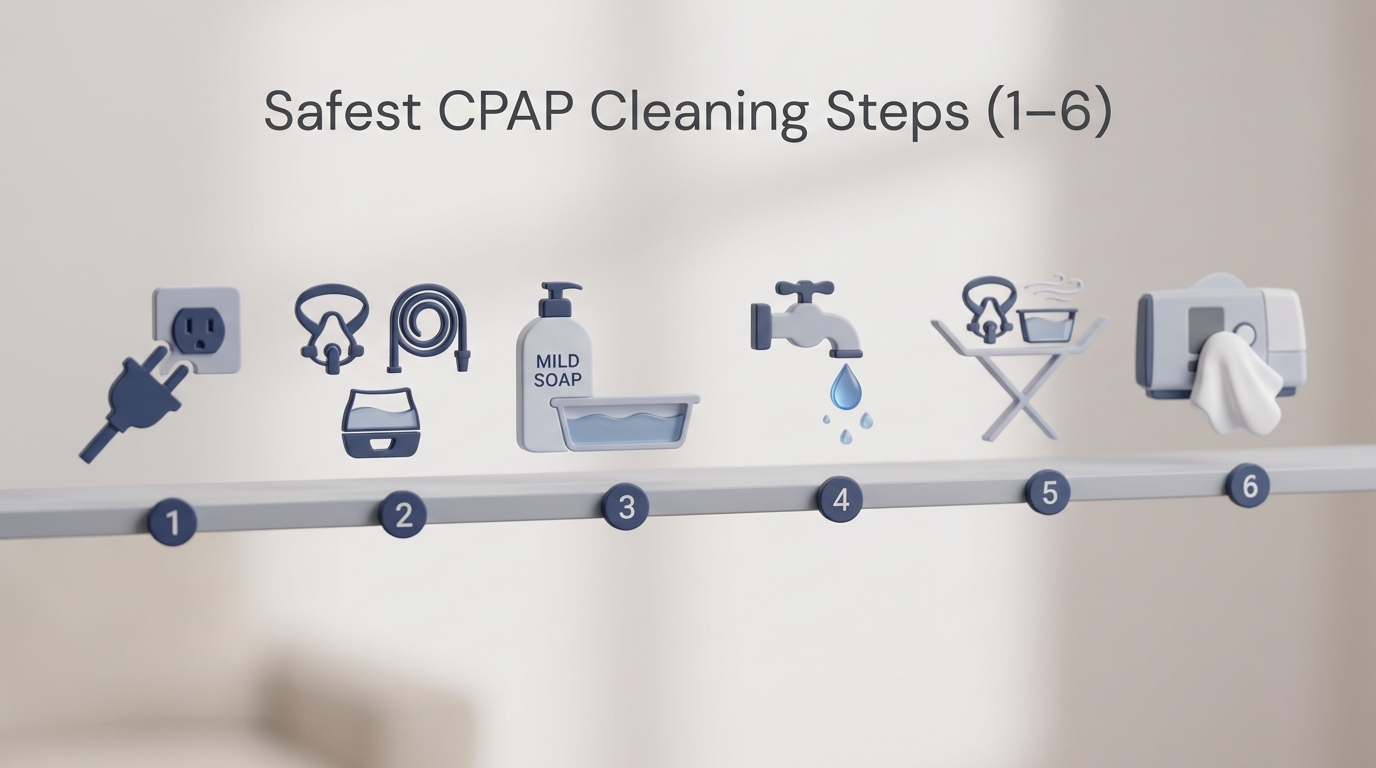
Safest CPAP cleaning steps
1. Turn off and unplug the CPAP.
2. Disconnect removable parts (mask, tubing, humidifier chamber).
3. Wash removable parts with mild soap + warm drinking-quality water.
4. Rinse thoroughly until no soap film remains.
5. Air-dry completely before reassembly.
6. Never immerse the powered CPAP unit—wipe the exterior only.
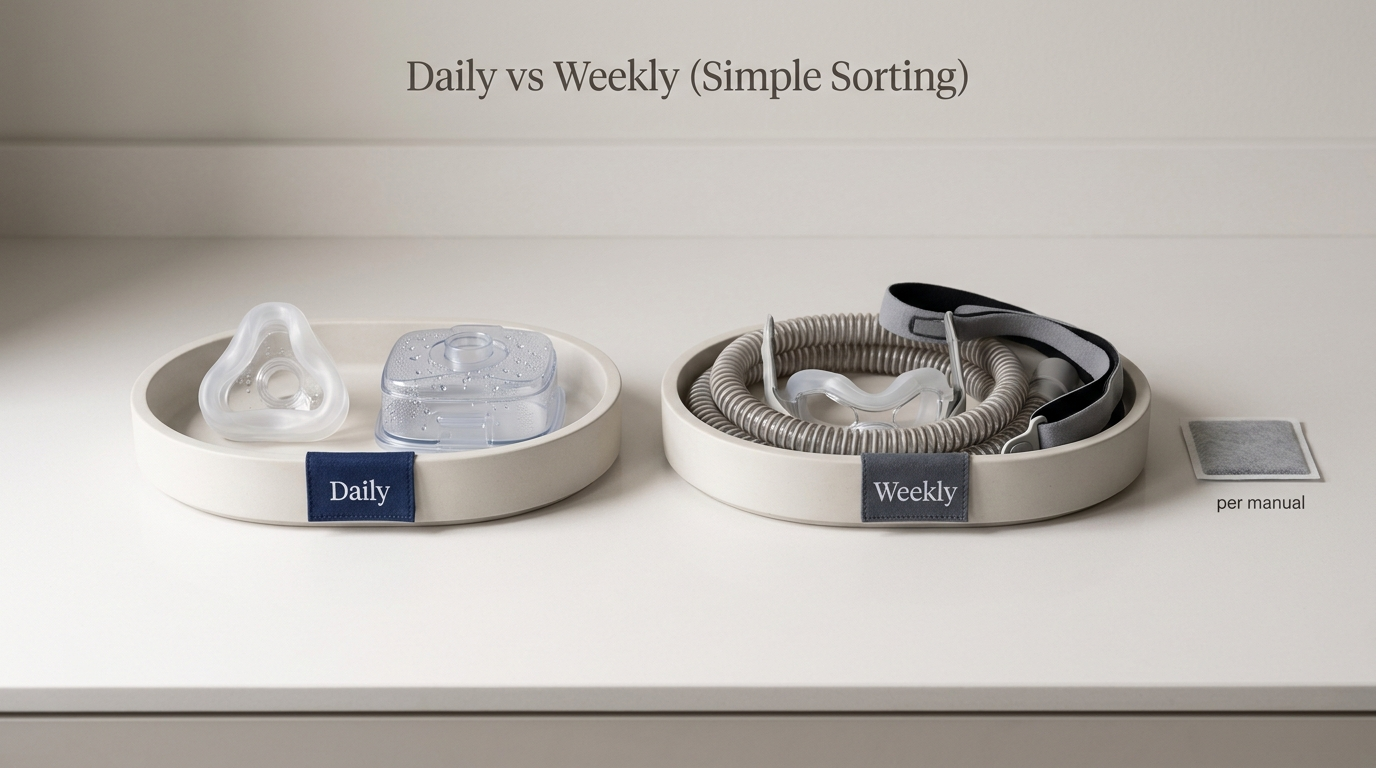
Daily vs weekly schedule
Daily
- Mask cushion (the part that touches your face)
- Empty humidifier tub; rinse and air-dry (wash regularly, often daily per your manual)
Weekly
- Tubing/hose
- Mask frame
- Headgear straps
Filters
- Follow your model’s instructions (some disposable, some reusable)
Keep it simple: quick daily rinse of what touches water and skin; weekly wash of the rest; filters per your manual.
What You’ll Need (Simple Supplies Only)
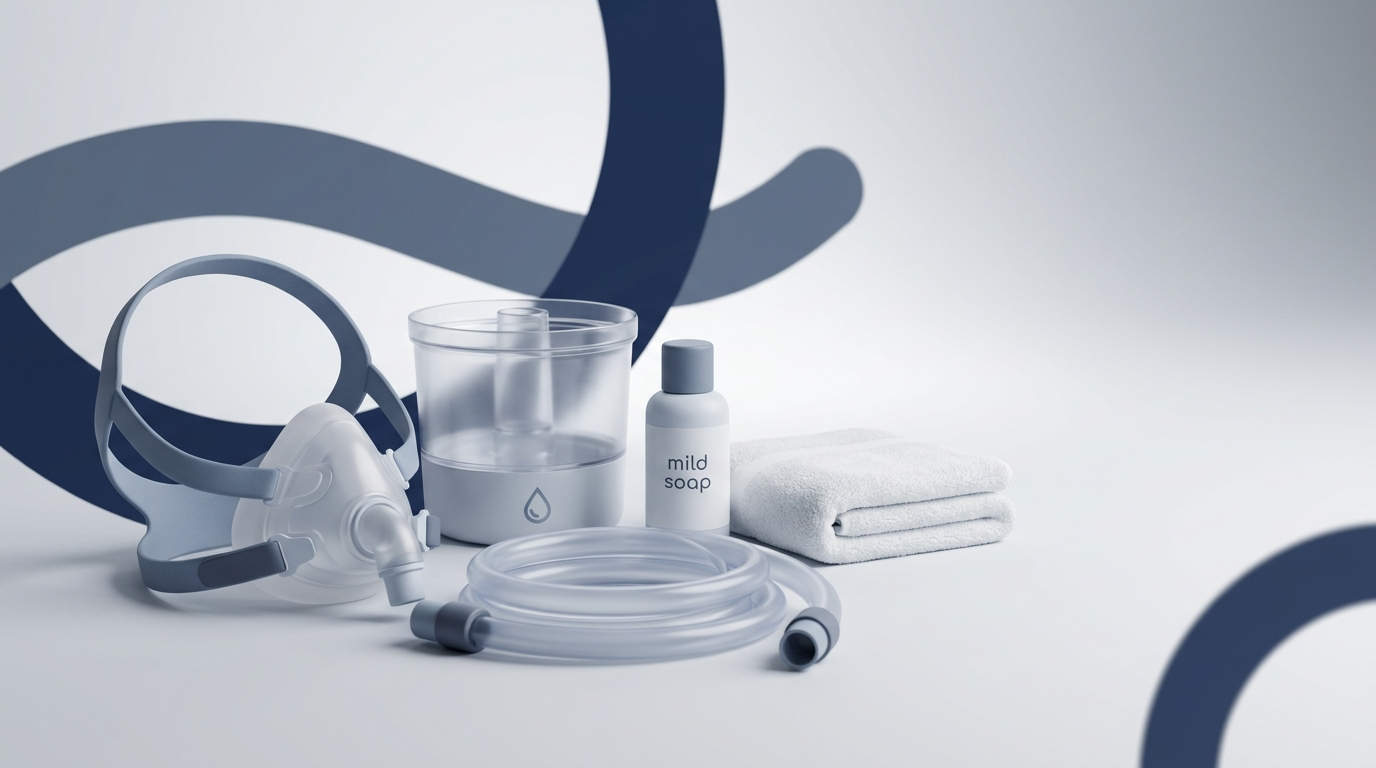
Recommended supplies
- Mild, unscented dish soap (check manufacturer guidance)
- Warm drinking-quality water
- A clean basin/sink or container for CPAP parts
- A clean towel or drying rack (out of direct sunlight)
Optional (only if allowed by manufacturer)
- Diluted vinegar for descaling the humidifier tub only (do not run vinegar through the device)
No harsh chemicals or heat needed—mild soap, warm water, and time to dry do the heavy lifting.
Step-by-Step: How to Clean Each CPAP Part Without Damaging It
Step 1 — Prep safely (before you wash anything)
- Turn the device off and unplug it
- Remove the mask, hose, and humidifier tub
- Keep water away from the air outlet and electrical connections
Step 2 — Clean the CPAP mask cushion (Daily)
1. Wash gently with mild soap and warm water.
2. Focus on the seal area (where skin oils collect).
3. Rinse until it no longer feels slick or soapy.
4. Air-dry away from heat and direct sunlight.
Tip: Avoid abrasives; use more rinse time, not more force.
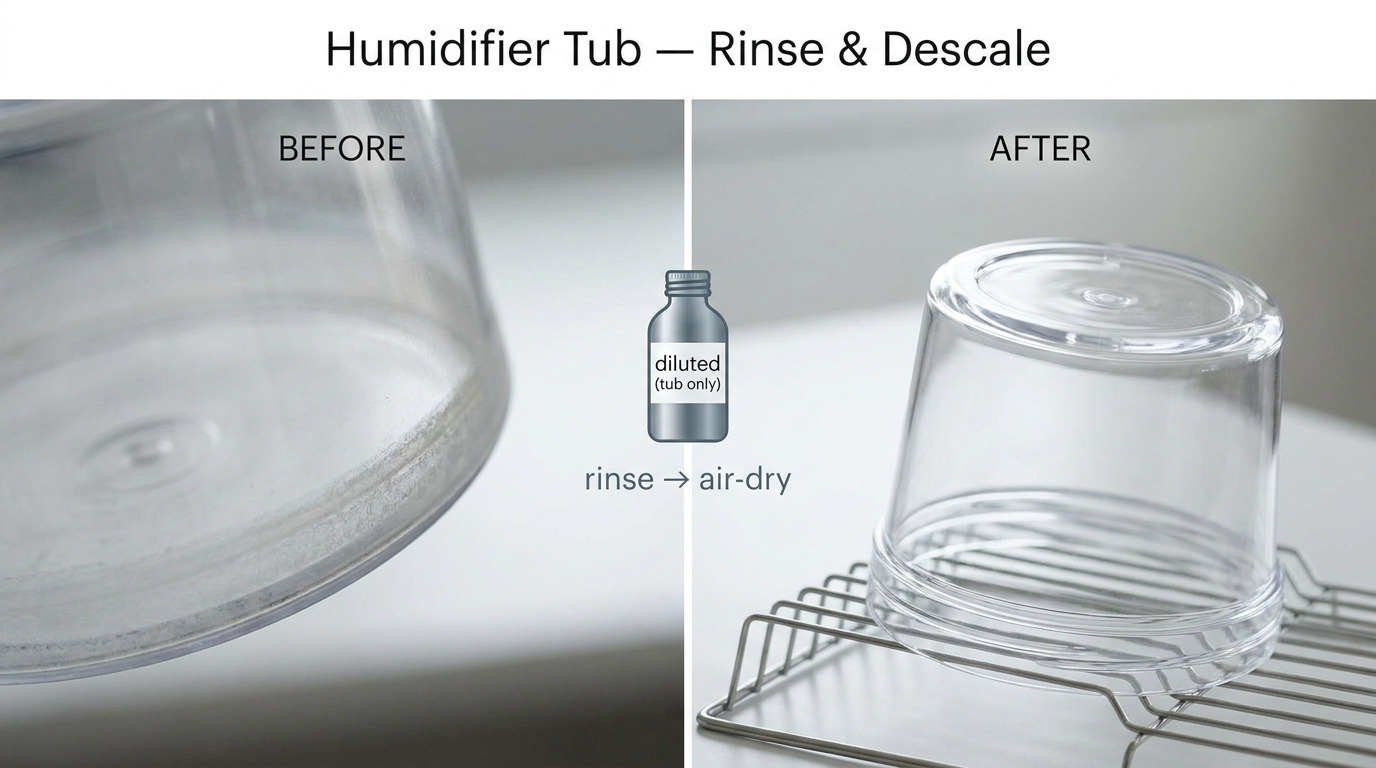
Step 3 — CPAP humidifier chamber cleaning (Daily attention; wash regularly)
- Each morning: empty remaining water, rinse, and leave open to air-dry completely.
- When washing: use mild soap + warm water; rinse very well.
- If you see mineral scale: only use a permitted descaling method (often a brief diluted vinegar soak), then rinse thoroughly and air-dry.
More detail: https://sleepandsinuscenters.com/blog/cpap-water-chamber-cleaning-how-often-to-clean-it-20260720121238
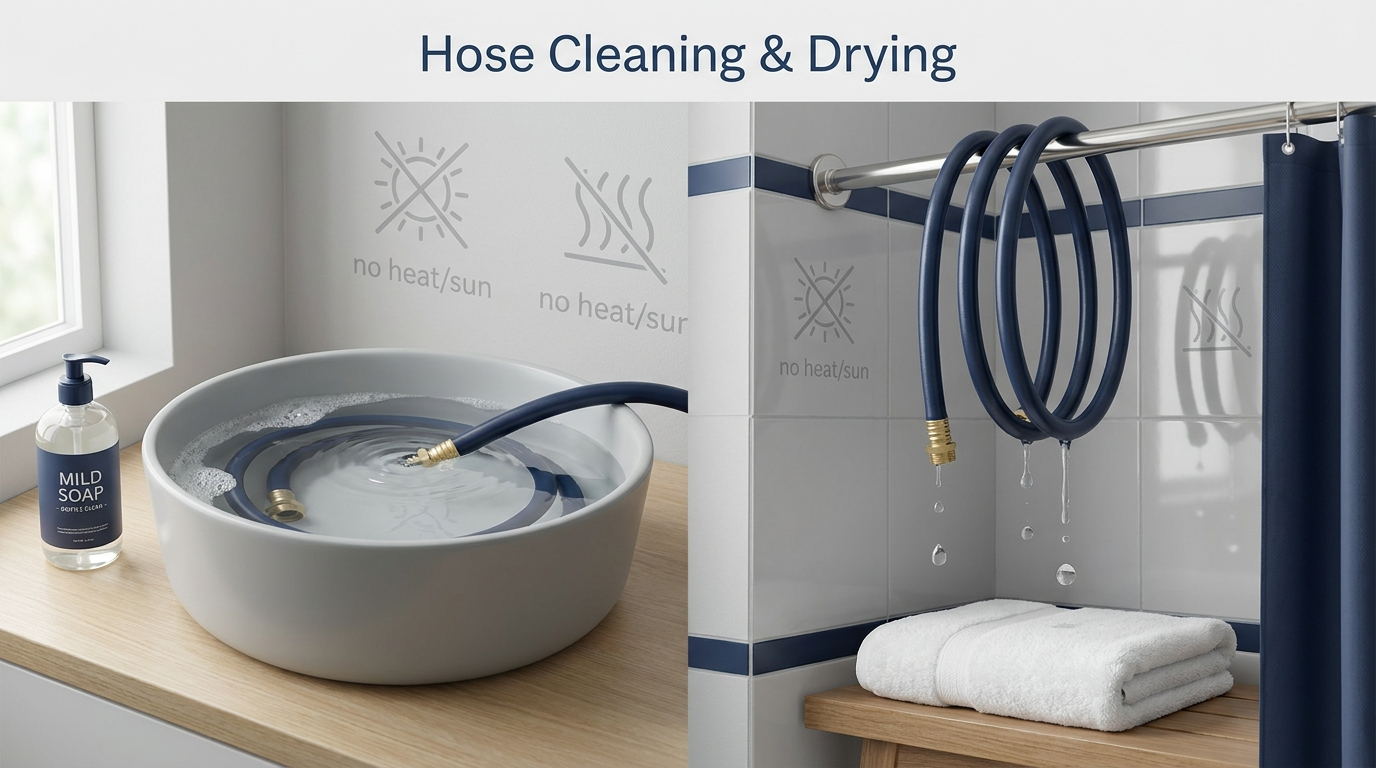
Step 4 — CPAP hose cleaning (Weekly)
1. Fill a basin with warm soapy water.
2. Submerge and swish the hose; let soapy water run through it.
3. Rinse repeatedly until water runs clear and no bubbles remain.
4. Hang to air-dry completely (a shower rod works well).
Step 5 — Clean mask frame + headgear (Weekly)
- Mask frame: wash with mild soap and warm water; rinse; air-dry.
- Headgear straps: hand-wash gently; avoid twisting/wringing; air-dry flat.
Step 6 — CPAP filter cleaning / replacement (Follow your model)
- Disposable filters: replace on schedule or when discolored.
- Reusable filters: rinse and air-dry only if your manual allows.
Step 7 — Clean the CPAP machine (Exterior only)
- Wipe exterior with a slightly damp cloth; keep moisture away from vents/ports.
- Reconnect parts only when fully dry. Never submerge the device.
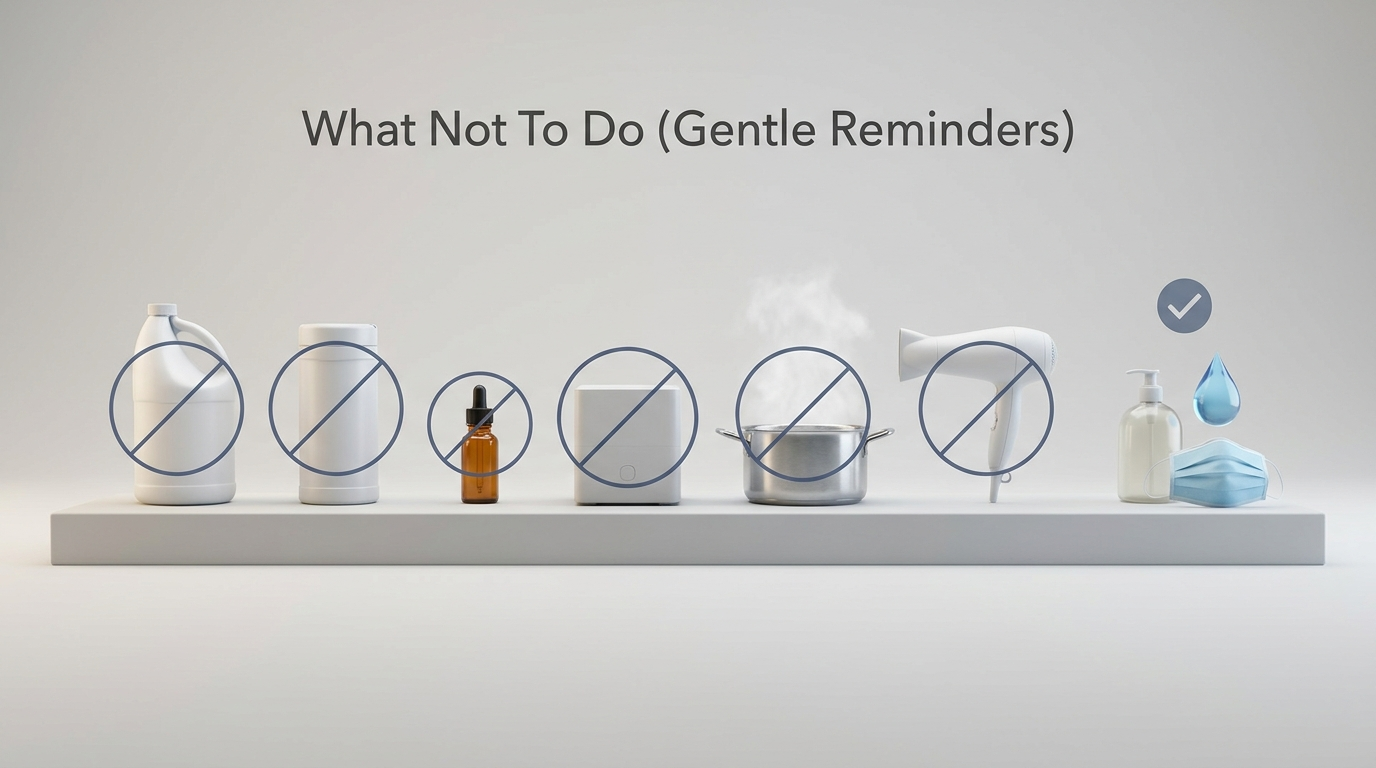
What NOT to Do (Common Mistakes That Damage CPAP Equipment)
Avoid harsh chemicals and residues
- Skip bleach/chlorine, alcohol wipes, antibacterial or scented soaps, essential oils/fragranced sprays.
Avoid heat damage
- Avoid boiling water, dishwashers (unless explicitly allowed), hair dryers, heated drying, or direct sun.
Avoid machine washing
- Unless allowed by your manufacturer, don’t machine-wash CPAP parts or headgear.
Avoid water + electricity risks
- Never immerse the powered unit or rinse it under running water.
When in doubt, less is more: no bleach, no heat, no submerging the device.
Ozone and UV CPAP Cleaners: What Patients Should Know
They are not a substitute for soap-and-water cleaning
- They don’t remove facial oils, film inside the tub, or physical debris.
Safety concerns
- FDA has cautioned many ozone/UV products may lack adequate evidence for safety/effectiveness.
- Ozone may leak into room air, linger in equipment, irritate airways, and accelerate wear.
Learn more: https://sleepandsinuscenters.com/blog/safe-ozone-and-uv-cpap-cleaners-effective-hygiene-for-your-cpap-device
Lifestyle Tips to Keep CPAP Cleaner Longer (Less Work, Better Results)
Daily habits
- Empty humidifier water every morning; leave the chamber open to dry.
- Wash your face before bed to reduce cushion oil buildup.
Bedroom environment
- Place device on a stable, clean surface slightly below mattress height as advised.
- Reduce dust/dander; keep pets off bedding if possible.
Travel
- Pack a small bottle of mild soap and a clean drying towel.
- Let parts dry completely before packing.
Humidifier comfort tips: https://sleepandsinuscenters.com/blog/cpap-humidifier-settings-guide-for-optimal-therapy-comfort
When to Replace Parts Instead of Cleaning (Wear-and-Tear vs “Dirty”)
- Cushion stays greasy/discolored, loses seal, or cracks.
- Tubing becomes stiff, cloudy, or has persistent odor.
- Humidifier tub is cracked or heavily scaled.
- Filters look dirty per the manual or airflow seems reduced.
Replacement timeline: https://sleepandsinuscenters.com/blog/when-to-replace-cpap-supplies-essential-timeline-for-optimal-therapy
Treatments & When to Call for Help (If Symptoms Persist)
If you have respiratory irritation, cough, or worsening congestion
- Confirm cleaning steps and complete drying.
- Re-check humidifier water habits (empty daily; don’t let water stand).
- If symptoms continue, contact Sleep and Sinus Centers of Georgia to review fit, settings, and potential replacements.
If you notice strong odor or visible mold
- Don’t use equipment until it’s properly cleaned and fully dried.
- If odor persists after correct washing or if mold is visible, replace affected parts and contact your supplier/provider.
FAQs
How often should I clean my CPAP mask and hose?
- Cushion and humidifier chamber: often daily. Hose/headgear: typically weekly. Filters: per your model.
Can I use vinegar to clean my CPAP?
- Sometimes—only if your manufacturer allows, usually to descale the humidifier tub. Don’t run vinegar through the machine.
Can I use bleach or alcohol wipes?
- Generally not recommended; they can damage materials and leave residue.
Are ozone or UV CPAP cleaners safe?
- They’re not a replacement for soap-and-water cleaning; the FDA has raised concerns, especially about ozone exposure and equipment degradation. Details: https://sleepandsinuscenters.com/blog/safe-ozone-and-uv-cpap-cleaners-effective-hygiene-for-your-cpap-device
What if I reassemble while parts are still wet?
- Trapped moisture can lead to odor and buildup. Air-dry completely.
Is tap water okay for rinsing?
- Use drinking-quality water for washing/rinsing; follow your device instructions (especially for humidifier use).
Conclusion (Simple Routine, Better Sleep)
Keep it simple: unplug → disconnect parts → mild soap + warm water → rinse well → air-dry fully → wipe the machine exterior only. A small daily/weekly routine improves comfort, reduces odors, and protects supplies from avoidable damage.
If you still have irritation, congestion, leaks, or persistent smells after a consistent routine, Sleep and Sinus Centers of Georgia can help with comfort settings, fit, and replacement timing. Book an appointment: https://www.sleepandsinuscenters.com/
References
- U.S. Food and Drug Administration (FDA). (2024). Do you need a device that claims to clean a CPAP machine? https://www.fda.gov/consumers/consumer-updates/do-you-need-device-claims-clean-cpap-machine
- ResMed. Cleaning CPAP equipment: Everything you need to know. https://www.resmed.com/en-us/sleep-health/resources/cleaning-cpap-equipment/
- Cleveland Clinic. How to clean a CPAP machine. https://health.clevelandclinic.org/how-to-clean-a-cpap-machine
- Sleep Foundation. (2025). How to clean a CPAP machine. https://www.sleepfoundation.org/cpap/how-to-clean-a-cpap-machine
This article is for educational purposes only and is not medical advice. Please consult a qualified healthcare provider for diagnosis and treatment.
Don’t let allergies slow you down. Schedule a comprehensive ENT and allergy evaluation at Sleep and Sinus Centers of Georgia. We’re here to find your triggers and guide you toward lasting relief.