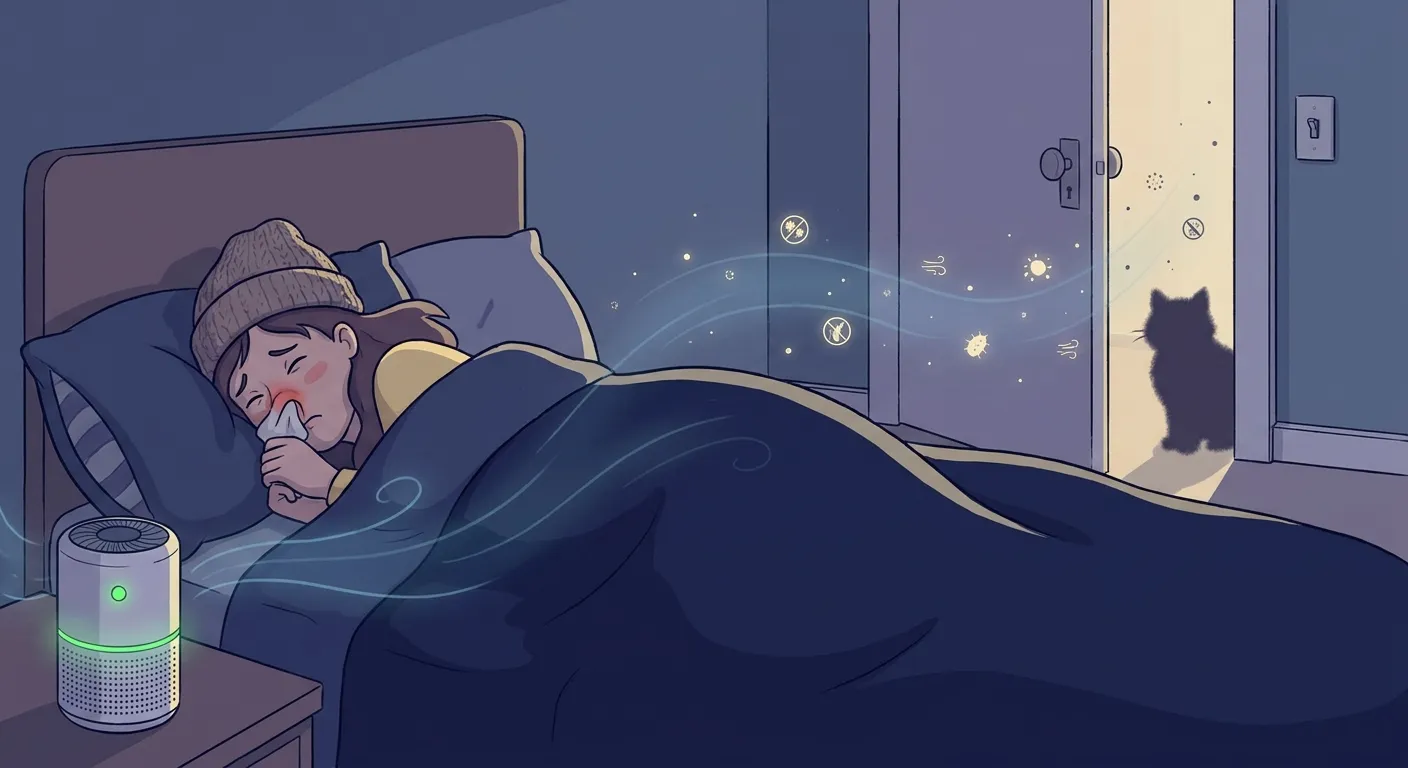
Pet Allergy Symptoms at Night: Why They Get Worse While Sleeping
You may feel fine during the day—then bedtime hits. Within minutes of lying down, your nose stuffs up, your eyes itch, and you’re stuck choosing between mouth breathing or getting up for tissues again.
If that sounds familiar, pet allergy symptoms at night are a common culprit. This post explains what nighttime pet allergies can feel like, why allergies get worse at night, and practical steps to reduce exposure in your bedroom—starting tonight. It’s educational guidance based on well-established allergy principles; if symptoms are frequent, severe, or affecting breathing, getting individualized care is important. (Cleveland Clinic, 2025; Mayo Clinic, 2025; Carolina Asthma & Allergy Center, 2024)
For more background on how pet allergens can affect your upper airway, you may also like our guide to pet allergies and their effects on sinus health: https://sleepandsinuscenters.com/blog/pet-allergies-and-their-effects-on-sinus-health-causes-and-relief-tips
What Pet Allergy Symptoms Feel Like at Night
Nighttime symptoms can look a lot like a cold—except they tend to repeat in a pattern and flare when you’re in your sleep space. Many people describe the experience as: “I can cope during the day, but the moment my head hits the pillow, everything closes up.”
Common nighttime symptoms:
- A stuffy or runny nose, or sneezing fits soon after lying down
- Postnasal drip, scratchy throat, or a cough that disrupts sleep
- Itchy or watery eyes (sometimes worse after contact with bedding)
- Nighttime nasal congestion that makes it feel impossible to breathe through your nose
- Wheezing, chest tightness, or shortness of breath (higher concern—especially if you have asthma)
- Poor sleep quality: frequent waking, dry mouth from mouth breathing, and morning fatigue
These symptoms overlap with allergic rhinitis, which frequently worsens in indoor environments with concentrated allergens. (Cleveland Clinic, 2025; Mayo Clinic, 2025)
What “nighttime-only” can look like in real life:
A common pattern is feeling mostly okay on the couch or around the house, then flaring once you’re in your bedroom. Some people notice symptoms spike when they pull a comforter up toward their face, hug a pillow, or shake out the sheets—because those actions can stir up allergen particles that have settled into fabrics.
Signs your symptoms may be pet-related (not just “dry air” or a cold):
- Symptoms improve when you’re away from home or away from the pet
- Symptoms spike in the bedroom—or after making the bed or changing sheets
- A reliable pattern: worse at night and early morning, better mid-day
That consistent timing is a big hint that your sleeping environment is driving exposure. (Mayo Clinic, 2025; Cleveland Clinic, 2025)
Bottom line: If symptoms cluster in your bedroom and improve away from home or away from your pet, pet allergens are a likely contributor.

Why Pet Allergy Symptoms Get Worse at Night (The 4 Big Reasons)
If you’ve wondered why allergies get worse at night, it’s usually not one single cause—it’s a stack of factors that can all peak at bedtime. Think of it like a “perfect storm”: more exposure, longer exposure time, and a body that may be more reactive overnight.
Four reasons pet allergy symptoms often worsen overnight include:
1) Bedding and pillows trap allergens (a reservoir effect)
2) Circadian rhythms may increase inflammation at night
3) Lying flat can worsen congestion and postnasal drip
4) Bedroom pet access raises the total allergen load
For a broader overview of nighttime flare patterns, read why allergies get worse at night: https://sleepandsinuscenters.com/blog/why-allergies-get-worse-at-night-causes-and-relief-tips
1) Bedding and pillows act like “allergen reservoirs”
Your bed is made of soft, fibrous materials designed to hold warmth—and unfortunately, they also hold allergens. A helpful analogy: bedding can behave a bit like a sponge or lint roller. Once allergens settle in, they’re not always easy to air out without washing and filtration.
Over time, pet allergens in bedding can accumulate in:
- Pillows and pillowcases
- Comforters, blankets, and sheets
- Mattress surfaces (and inside the mattress)
- Nearby fabrics like rugs, curtains, and fabric headboards
Why this matters: your face is inches from these materials for 6–9 hours. Even if exposure during the day is tolerable, that long, close-range contact can make pet allergy symptoms at night feel much more intense. (Cleveland Clinic, 2025; ANCSleep, accessed 2026)
2) Circadian rhythms may increase nighttime inflammation
Your immune system and hormone levels follow a 24-hour cycle. At night, changes in inflammatory signaling and normal hormone patterns (including cortisol rhythms) may shift how strongly your body reacts to allergens. Clinicians often explain it this way: the allergen exposure might be similar, but your “volume knob” for inflammation can be turned up overnight. (Allergy Clinic UK, 2026; Carolina Asthma & Allergy Center, 2024)
3) Lying flat can worsen nasal congestion and breathing
- Nasal tissues may swell more easily
- Drainage can feel heavier, increasing the sensation of postnasal drip
- Mouth breathing becomes more likely, which can dry and irritate the throat
The result is often more coughing, more waking, and more frustration—especially for people already prone to nighttime nasal congestion. (Carolina Asthma & Allergy Center, 2024; Cleveland Clinic, 2025)
4) Pets in (or near) the bedroom raise the total allergen load
Letting pets into the bedroom increases how much allergen gets deposited onto fabric surfaces—especially bedding. Even if a pet isn’t sleeping on the pillow, allergens can transfer via air circulation and movement, clothing and hands after petting, and shared furniture (then carried into the bedroom). (Mayo Clinic, 2025; Cleveland Clinic, 2025)
In short: nighttime symptoms often reflect a combination of higher bedroom allergen reservoirs, normal body rhythms, and sleeping position—rather than a single cause.

Other Nighttime Triggers That Can Combine With Pet Allergens
Dust mites + pet allergens: a common “double hit”
Bedrooms can concentrate multiple allergens at once. Mattresses and pillows may harbor dust mites and also trap pet allergens—making symptoms harder to control and more noticeable at night.
This is one reason some people feel fine in other rooms but react strongly the moment they get into bed. The trigger may not be “one thing,” but a combined load that crosses your personal threshold.
Indoor air issues that amplify symptoms:
- Poor ventilation (stale, allergen-laden air)
- Overdue HVAC filter changes
- High indoor humidity
- Carpeting and upholstered furniture that store allergens
If your symptoms are most intense in one specific room (often the bedroom), it can help to treat that space as your highest-priority allergy trigger area and prioritize it first—rather than trying to overhaul the entire house at once.
Key takeaway: address combined bedroom triggers—like dust mites and stagnant air—alongside pet allergens for the best results.

How to Reduce Pet Allergen Exposure in Your Bedroom (Best Lifestyle Tips)
If pet allergy symptoms at night are disrupting sleep, the most effective strategies usually focus on reducing reservoir buildup and lowering overnight exposure time. The goal isn’t perfection—it’s reducing the allergen burden enough that your nose and airways can calm down.
Make the bedroom a low-allergen zone (most effective step):
- Keep pets out of the bedroom consistently
- Keep the bedroom door closed
- Consider a comfy pet bed outside the room to make the transition easier
Consistency matters. If pets are allowed in “sometimes,” allergens still build up in the same places you breathe from all night. (Mayo Clinic, 2025; Cleveland Clinic, 2025)
Bedding hygiene that actually lowers allergen buildup:
- Wash sheets and pillowcases frequently (use hot water when fabric care allows)
- Use allergen-proof pillow and mattress encasements
- Wash or replace comforters and blankets on a set schedule
- Consider simpler, easier-to-wash bedding (fewer decorative layers can help)
A practical example: if you can only do one thing this week, start with pillowcases. Your nose is closest to them, and swapping or cleaning them is usually easier than tackling a whole comforter.
Cleaning strategies that reduce reservoir allergens:
- Vacuum with HEPA filtration (especially bedroom floors and nearby rugs)
- Damp-dust surfaces instead of dry-dusting (which can re-aerosolize particles)
- Wash pet beds, throws, and soft toys regularly
- Reduce fabric clutter: extra throw blankets, decorative pillows, and upholstered items
You can also reduce allergens at the source with a consistent pet bathing schedule to reduce dander: https://sleepandsinuscenters.com/blog/effective-pet-bathing-schedule-to-reduce-dander-and-allergies
Air filtration and airflow:
- Run a HEPA air purifier in the bedroom and place it where air can circulate (not blocked by furniture). A HEPA purifier may help reduce airborne allergen exposure overnight, but it is not a substitute for medical treatment.
- Keep HVAC filters on an appropriate replacement schedule; consider higher-efficiency options if compatible with your system.
Focus first on the bedroom: limit pet access, upgrade bedding hygiene, and add filtration to reduce the overnight allergen load.

Treatment Options for Nighttime Pet Allergies
Environmental steps reduce exposure; medications may help control the body’s response. The best approach depends on your symptoms and health history.
Over-the-counter (OTC) options to discuss with a clinician or pharmacist:
- Second-generation (less-sedating) antihistamines, often used daily during ongoing exposure
- Nasal steroid sprays, frequently helpful for congestion when used consistently
- Saline rinses before bed to help clear allergens from nasal passages (use sterile, distilled, or previously boiled water, and follow product instructions)
These are widely used options, but individual considerations (other conditions, other meds, side effects) matter. (Cleveland Clinic, 2025; Mayo Clinic, 2025)
Timing medications for nighttime symptoms:
If symptoms predictably flare in the evening, timing may influence results—especially given circadian patterns and how long specific products take to work. Because some medications can cause drowsiness (and a few can cause insomnia), discuss product choice and timing with a qualified professional rather than guessing.
When prescription care or specialty treatment may help:
- Symptoms persist despite strong bedroom control and OTC measures
- Sleep disruption becomes routine
- You have wheezing, nighttime cough, or chest tightness
- Long-term strategies like immunotherapy are being considered (allergy shots or sublingual immunotherapy, where appropriate)
(Cleveland Clinic, 2025; Mayo Clinic, 2025)
Pair exposure reduction with tailored medications—and seek specialty care if symptoms persist or affect breathing.
When to See a Doctor (and When It’s Urgent)
Make an appointment if you have:
- Symptoms most nights per week
- Poor sleep, daytime fatigue, frequent sinus infections, or ongoing congestion
- Symptoms triggered by minimal exposure or multiple indoor allergens
Seek urgent care immediately if you have:
- Trouble breathing, severe wheezing, swelling of the lips or face, or signs of anaphylaxis
- Asthma attacks or worsening nighttime shortness of breath
(Cleveland Clinic, 2025)
Don’t wait on breathing problems—urgent symptoms need immediate care.

FAQs (Use as FAQ Schema Content)
Why do my allergies only get bad when I lay down?
Lying down can increase congestion due to posture-related swelling and drainage changes. At the same time, bedrooms often contain the highest concentration of allergen reservoirs (like pillows and comforters), and circadian rhythms may intensify nighttime inflammation—creating the perfect setup for symptoms. (Carolina Asthma & Allergy Center, 2024; Allergy Clinic UK, 2026)
Can pet allergens stay in bedding even if my pet never sleeps on the bed?
Yes. Allergen proteins from dander, saliva, and urine can transfer from clothing and hands, circulate through indoor air, and settle into fabrics over time. Bedding still becomes a reservoir even without direct pet contact on the mattress. (Cleveland Clinic, 2025; Mayo Clinic, 2025)
How long do pet allergens last in a bedroom?
Pet allergens can persist in soft materials and carpet, so improvement often takes repeated cleaning plus preventing new allergens from entering the room. Many people notice gradual change rather than an overnight reset, especially if the bedroom has lots of fabric surfaces.
Should I get allergy testing to confirm it’s my pet?
Testing can be useful when symptoms are persistent or when multiple triggers are possible (pets, dust mites, pollen). Confirming the trigger helps guide a clearer plan for avoidance and treatment options. (Cleveland Clinic, 2025)
What’s the best immediate step tonight if I’m miserable?
A practical “tonight” checklist:
- Keep the pet out of the bedroom for the night
- Change the pillowcase
- Use a saline rinse before bed (with sterile, distilled, or previously boiled water)
- Elevate your head slightly
- Run a HEPA purifier while you sleep (may help reduce airborne exposure)
Conclusion
If you’re dealing with pet allergy symptoms at night, the pattern usually makes sense once you connect the dots: allergens build up in bedding, immune rhythms may intensify inflammation overnight, lying flat can worsen congestion, and bedroom pet access increases the allergen load.
A stepwise approach often works best—start with bedroom boundaries, improve bedding hygiene, and consider targeted symptom control. If symptoms keep affecting sleep quality or breathing, Sleep and Sinus Centers of Georgia can help guide a personalized evaluation and next steps.
Ready for help? Book an appointment at Sleep and Sinus Centers of Georgia: https://www.sleepandsinuscenters.com/
References
Cleveland Clinic. (2025). Pet Allergies. https://my.clevelandclinic.org/health/diseases/17702-pet-allergies
Mayo Clinic. (2025). Pet allergy: Symptoms & causes. https://www.mayoclinic.org/diseases-conditions/pet-allergy/symptoms-causes/syc-20352192
Carolina Asthma & Allergy Center. (2024). Why are my allergies worse at night? https://www.carolinaasthma.com/blog/why-are-my-allergies-worse-at-night/
Allergy Clinic UK. (2026). Why allergy symptoms worse at night (circadian rhythm). https://allergyclinic.co.uk/blog/why-allergy-symptoms-worse-at-night-circadian-rhythm
ANCSleep. (accessed 2026). Allergies to pet dander and sleep. https://info.ancsleep.com/blog/allergies-to-pet-dander-and-sleep-managing-symptoms-for-better-rest
This article is for educational purposes only and is not medical advice. Please consult a qualified healthcare provider for diagnosis and treatment.
Don’t let allergies slow you down. Schedule a comprehensive ENT and allergy evaluation at Sleep and Sinus Centers of Georgia. We’re here to find your triggers and guide you toward lasting relief.