Perfume and Fragrance Allergy Symptoms: Why Your Nose Reacts to Scents
Introduction — When a “Nice Smell” Doesn’t Feel Nice
Perfume, cologne, air fresheners, scented lotions, and even “clean laundry” smells are pleasant for some people—but for others, they can quickly lead to congestion, burning eyes, headaches, or an itchy rash. If that’s you, you’re not imagining it: many people report reactions to fragranced products, and they can be genuinely disruptive in daily life (stores, workplaces, family gatherings, even your own bathroom).
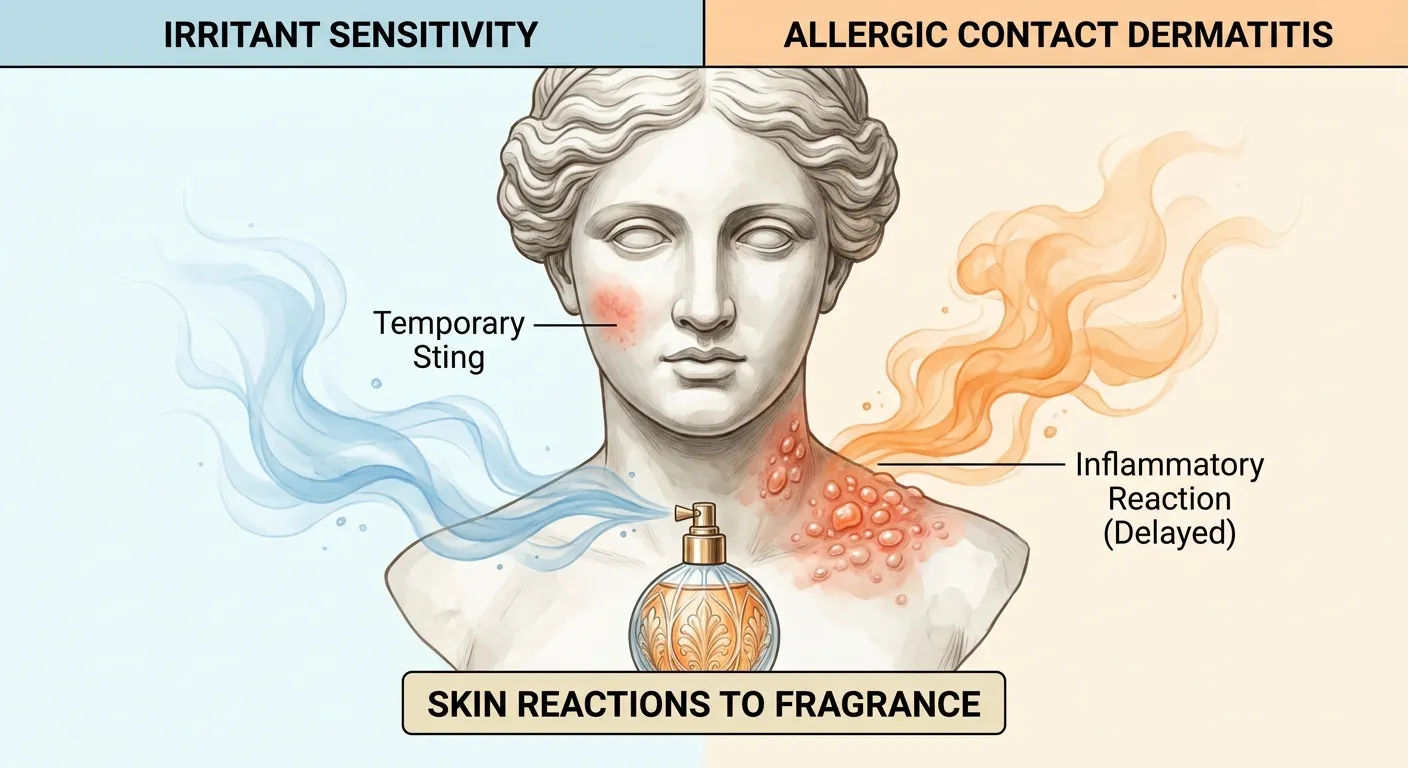
The tricky part is that these reactions don’t all come from the same cause. A “reaction to fragrance” can reflect very different biology depending on whether the main issue is irritant effects on sensitive tissues or an immune response in the skin. Many reactions to scented products are due to either irritation (nonallergic) or allergic contact dermatitis (a delayed skin allergy). Other mechanisms—such as nonallergic rhinitis, asthma triggers, and migraine/headache triggers—can also play a role. [1][3][4]
• In short: nonallergic/irritant sensitivity often affects the nose and eyes quickly, whereas true fragrance allergy most commonly causes allergic contact dermatitis—a delayed skin rash. [1][3]
• For a deeper look at how everyday items can affect the nose and sinuses, see how scented products can worsen sinus symptoms: https://sleepandsinuscenters.com/blog/scented-products-and-sinus-problems
• Related reading on indoor fragrance effects: https://sleepandsinuscenters.com/blog/indoor-fragrances-and-sinus-health-risks-and-impact-explained
Conclusion: Identifying whether your symptoms are irritant-triggered or due to a skin allergy is the key to picking the right next steps.
Fragrance Sensitivity vs. Fragrance Allergy (They’re Not the Same)
What is fragrance sensitivity (irritation)? Fragrance sensitivity typically refers to nonallergic/irritant sensitivity of the delicate lining of the nose, sinuses, eyes, or airways. It can feel like “allergies,” but it isn’t the classic immune allergy many people think of. A helpful analogy: irritation is like getting watery eyes from chopping onions—real symptoms and discomfort, without a true immune allergy. [3][4]
This sensitivity is commonly reported in people who already have:
• Rhinitis or chronic nasal inflammation
• Asthma or reactive airways
• Migraines/headaches triggered by scent
• Sensitive eyes or dry eye symptoms
In these cases, strong scents can act like scent triggers, setting off symptoms quickly during or shortly after exposure—like walking past a candle display, stepping into an elevator where someone just applied cologne, or opening a freshly scented laundry basket. [3][4]
What is a true fragrance allergy? A true fragrance allergy usually refers to allergic contact dermatitis, a delayed immune reaction in the skin (Type IV hypersensitivity). After prior sensitization, symptoms often appear hours to days later and commonly present as an eczema-like rash in specific “contact zones.” Someone may tolerate a product for months or years and then begin reacting once sensitization has developed. [1][5][6][7]
The “hapten” concept (simple explanation). Many fragrance chemicals act as haptens—small molecules that aren’t very “visible” to the immune system on their own. After they bind to proteins in the skin, they can become immunogenic (capable of triggering an immune response). That helps explain why skin exposure from fragranced lotions, deodorants, and perfumes is such a common pathway for allergic reactions. [5][6]
Conclusion: Rapid nose/eye reactions point toward irritant sensitivity; a delayed, recurring rash in contact areas points toward allergic contact dermatitis.

Perfume and Fragrance Symptoms (What People Commonly Notice)
Symptom map (quick guide):
• Nose/sinuses: often sensitivity/irritation
• Eyes: often sensitivity/irritation
• Skin: more typical of true allergy (allergic contact dermatitis)
• Lungs/breathing: can be significant, especially with asthma
Nose and sinus symptoms (common with sensitivity). Many people searching for “perfume and fragrance allergy symptoms” are actually dealing with irritation-based sensitivity. Common nasal and sinus complaints include:
• Sneezing, runny nose, or congestion
• Postnasal drip sensation
• Burning, stinging, or a “raw” feeling in the nose
• Sinus pressure or headache associated with strong smells
Because these symptoms overlap with seasonal allergies and chronic rhinitis, the pattern matters. Irritation-based symptoms often show up consistently in high-scent environments (cleaning aisles, salons, candle stores) and improve once you leave or ventilate the space. [3][4]
Eye symptoms. Fragrance exposure can irritate the eyes, leading to:
• Watery eyes
• Burning or redness
• Eyelid irritation
Some people notice they’re fine outdoors but uncomfortable in enclosed spaces where scents linger (plug-ins, diffusers, sprays). [3][4]
Skin symptoms (most typical for true allergy). Skin findings are often the clearest clue of a true allergy. A perfume-related allergic contact dermatitis rash may look like:
• Itchy, red patches
• Scaling or dry, eczema-like skin
• Swelling or irritation in recurring areas
Common locations include:
• Face and eyelids (from skincare, makeup, or airborne exposure)
• Neck (where perfume is sprayed)
• Hands (from soaps, lotions, cleaning products)
• Armpits (a classic pattern with fragranced deodorants)
When a rash keeps returning to the same contact zones, fragrance allergy moves higher on the list of suspects. [1]
Breathing symptoms (red flags to take seriously). Some people—especially those with asthma or airway hyperreactivity—may experience lower-airway symptoms with scent exposure, such as:
• Cough
• Chest tightness
• Wheezing
• Shortness of breath
Breathing symptoms deserve added attention because they can indicate significant airway reactivity, even if the trigger is “just a smell.” [3][4]
Conclusion: Quick-onset nose/eye symptoms suggest irritant sensitivity; a delayed, localized rash suggests allergic contact dermatitis; breathing symptoms—especially in asthma—should be taken seriously.

Common Triggers and Why They Matter
High-exposure products (top culprits). Fragrance exposure adds up quickly, especially when multiple scented products are used daily. Common culprits include:
• Perfume, cologne, and body sprays
• Scented lotions, soaps, shampoos, conditioners
• Deodorants/antiperspirants
• Makeup, aftershave, facial skincare
• Laundry detergent and dryer sheets
Many people are surprised by how often “background” fragrance (detergent, hair products, hand soap) stacks on top of “obvious” fragrance (perfume). For a deeper look at how everyday items can affect the nose and sinuses, see how scented products can worsen sinus symptoms: https://sleepandsinuscenters.com/blog/scented-products-and-sinus-problems [1][3][4]
“Airborne” scent sources. Not all exposure comes from direct skin contact. Airborne sources can be powerful scent triggers, including:
• Candles, plug-ins, diffusers, and sprays
• Fragranced cleaning products
• Workplace or shared indoor environments
These sources can be especially challenging because they’re harder to control. Even without touching anything, you may still get eye and airway symptoms simply from being in the same room. [3][4]
Why some people react “more” than others. Two people can smell the same product and have totally different experiences. Differences may relate to:
• Baseline inflammation (chronic rhinitis or sinus irritation can lower the threshold for symptoms)
• Sensitive airway nerves/mucosa (more likely with irritant sensitivity)
• Prior sensitization (key for delayed allergic contact dermatitis)
Conclusion: Your total daily scent load and personal susceptibility both shape how strongly you react.

How to Read Labels and Choose Products Smarter
Why labels can help—especially in the EU. Fragrance formulas can contain many ingredients, and “fragrance” on a label may represent a complex mixture. In the EU, certain fragrance allergens must be listed above specific thresholds (for example, 0.001% in leave-on products), though requirements vary by region and product type. This approach can help people identify repeat triggers instead of avoiding all products blindly. [2][5][8]
“Fragrance-free” vs. “unscented.” These terms sound similar but can mean different things:
• Fragrance-free: no fragrance ingredients are added (often a better starting point for suspected fragrance allergy).
• Unscented: may still include masking fragrances to neutralize odors—so reactions can still happen. Product labeling terms are not standardized in the same way everywhere. [2]
Conclusion: Learning to spot allergen labeling and prioritizing “fragrance-free” over “unscented” can reduce unnecessary flares.

How Perfume/Fragrance Reactions Are Diagnosed
When to suspect sensitivity vs. allergy. General patterns that often help clarify the picture:
• Sensitivity/irritation: symptoms occur quickly with exposure; often nasal/eye symptoms without a recurring rash.
• Allergy: after prior sensitization, symptoms often appear hours to days later with an eczema-like rash that recurs in the same areas (eyelids, neck, armpits, hands). [1][3]
If you’re unsure, a “timeline test” can help: write down when symptoms start (minutes vs. next day) and where they happen (eyes/nose vs. a consistent rash location).
Patch testing (key test for true fragrance allergy). Patch testing is a primary tool for diagnosing delayed Type IV hypersensitivity reactions such as fragrance allergic contact dermatitis. It’s different from skin-prick testing (which is used for immediate-type allergies). Patch testing can evaluate fragrance mixes and sometimes specific ingredients, helping you move from broad avoidance to a more precise plan. [1][7]
When respiratory/allergy evaluation helps. If scents reliably worsen asthma, chronic rhinitis, or ongoing nasal symptoms, an evaluation can help clarify whether fragrance is the main trigger or one of several. Learn more about allergy testing: https://sleepandsinuscenters.com/allergy-testing
Conclusion: Timing and location of symptoms guide the diagnosis—patch testing confirms skin allergy, while respiratory evaluations clarify nose and airway triggers.
Treatment Options (Relief Now + Preventing the Next Flare)
First-line strategy: avoidance and substitution. Across both sensitivity and true allergy, the most consistent approach is reducing exposure:
• Choose fragrance-free personal care and cleaning products
• Limit indoor scented products and improve ventilation where possible
Think “reduce the total scent load.” Even swapping just one or two daily-use items (like deodorant and detergent) can meaningfully lower exposure. [1][2][3]
If your main symptoms are nasal/eye irritation. Some people may find the following helpful, used as appropriate and ideally discussed with a clinician:
• Saline rinses for nasal irritation and mucus clearance
• Non-sedating antihistamines for those who also have typical allergic triggers
• Nasal steroid sprays for underlying rhinitis (clinician-guided) [3][4]
If you have a skin rash (contact dermatitis pattern). When the reaction looks like dermatitis, general measures often include:
• Discontinue the suspected product
• Use gentle, fragrance-free skincare and barrier moisturizers
• Discuss anti-inflammatory skin treatments with a clinician
• Consider a patch-test–guided avoidance plan [1][7]
A practical tip: treat your skin like it’s recovering—keep the routine simple, avoid add-on scented products, and give it time to calm down.
When symptoms are severe or involve breathing. People with asthma or significant breathing symptoms should discuss scent-triggered episodes and an action plan with a clinician. Seek urgent care for severe or rapidly worsening breathing symptoms, or facial/lip swelling. [3][4]
Conclusion: Lowering total exposure helps most people; targeted therapies are best chosen with a clinician based on your symptom pattern.

Lifestyle Tips — Living Well With Scent Triggers
Home strategies. Helpful ways to reduce indoor exposure include:
• Removing or limiting diffusers, plug-ins, and scented candles
• Choosing fragrance-free detergents and skipping dryer sheets
• Airing out new textiles or items with strong scents
Related reading: https://sleepandsinuscenters.com/blog/indoor-fragrances-and-sinus-health-risks-and-impact-explained
Workplace and social situations (practical scripts). If scents in shared spaces cause symptoms, many people find it useful to prepare a short, polite request such as:
“Strong fragrances trigger symptoms for me—would you mind going lighter on scented products around our shared space?”
Other strategies include choosing seating near ventilation, taking breaks from high-scent areas, and using unscented personal products to reduce overall exposure in close quarters.
Keep a “scent symptom log.” A simple log can make patterns clearer over time:
• Product used or location (store aisle, coworker’s perfume, laundry detergent)
• Time from exposure to symptoms
• Symptom type (nose/eyes vs. skin), severity, and duration
• Rash location (eyelids, neck, armpits, hands)
This information can help clinicians distinguish irritation from delayed allergy and can make appointments far more productive. [1]
Conclusion: Small environment changes and a simple symptom log can make patterns clearer and flare-ups less frequent.
FAQs
Can perfume cause allergy-like symptoms even if I’m not “allergic”? Yes. Irritation-based fragrance sensitivity can mimic allergy symptoms without a true immune allergy. [3][4]
Why do I react to scents suddenly after years of using them? With true fragrance allergy (allergic contact dermatitis), sensitization can develop over time, leading to delayed reactions after prior tolerance. [1][5]
Do fragrance allergies usually cause sneezing or a rash? Fragrance allergy most commonly causes allergic contact dermatitis, a rash. Sneezing, burning, and watery eyes are more often linked to irritant/nonallergic responses. [1][3]
What’s a good first step if I get underarm rash from fragrance? Many people start with fragrance-free, minimal-ingredient options, and persistent underarm rash may warrant patch testing. [1][2]
How do I know which ingredient is the problem? Patch testing is a key tool for delayed fragrance allergy, and allergen labeling can help when specific ingredients are listed. [1][5]
When to See a Doctor
Consider evaluation if symptoms are persistent or disruptive, including:
• Rash that lasts for weeks or keeps returning
• Worsening nasal obstruction or chronic rhinitis symptoms
• Asthma flares or breathing symptoms triggered by scents
• Unclear triggers despite switching products
If symptoms keep returning—especially if there’s a rash or breathing involvement—an evaluation can help clarify triggers and guide a more personalized plan. If you’d like support, you can book an appointment here: https://www.sleepandsinuscenters.com/
Conclusion: If symptoms disrupt daily life or keep coming back, a focused evaluation can help you create a plan that actually works.
Conclusion — A Clear Next Step
Perfume and fragrance symptoms can come from two different processes: nonallergic/irritant sensitivity (often affecting the nose and eyes) and true, delayed fragrance allergy (usually allergic contact dermatitis). Identifying patterns, reducing exposure, and using labels strategically can make a big difference—especially when paired with testing or treatment as appropriate.
Citations
1. DermNet NZ — Fragrance allergy: https://dermnetnz.org/topics/fragrance-allergy
2. California Dept. of Public Health (CDPH) — Fragrance allergens: https://www.cdph.ca.gov/Programs/CCDPHP/DEODC/OHB/CSCP/Pages/FragranceAllergens.aspx
3. Verywell Health — Fragrance sensitivity: https://www.verywellhealth.com/fragrance-sensitivity-making-sense-of-scents-201234
4. WebMD — Fragrances and reactions: https://www.webmd.com/allergies/fragrances
5. European Commission — Perfume allergies: https://ec.europa.eu/health/scientific_committees/opinions_layman/perfume-allergies/en/index.htm and mechanism: https://ec.europa.eu/health/scientific_committees/opinions_layman/perfume-allergies/en/l-3/3-becoming-allergens.htm
6. PubMed (Karlberg 2013): https://pubmed.ncbi.nlm.nih.gov/24107147/
7. PubMed (Reeder 2020): https://pubmed.ncbi.nlm.nih.gov/32475515/
8. SGS — EU expands fragrance allergen list: https://www.sgs.com/en-hk/news/2023/10/eu-expands-the-list-of-fragrance-allergens-in-cosmetic-products
This article is for educational purposes only and is not medical advice. Please consult a qualified healthcare provider for diagnosis and treatment.
Don’t let allergies slow you down. Schedule a comprehensive ENT and allergy evaluation at Sleep and Sinus Centers of Georgia. We’re here to find your triggers and guide you toward lasting relief.