
Orbital Cellulitis from Sinus Infection: Symptoms, Causes, and Treatment
Introduction — when a sinus infection becomes an eye emergency
Most sinus infections are miserable—congestion, facial pressure, headache—but not dangerous. Orbital cellulitis is different. It’s an infection that spreads into the orbit (the bony eye socket) and can threaten vision and, in rare cases, the brain. That’s why clinicians treat it as an emergency. [1,4]
Bottom line: a combination of proptosis (eye bulging) + painful or restricted eye movement + fever should prompt urgent evaluation. [1,4]
For related guidance on warning signs, see: When to Worry About a Sinus Infection (Red Flags). https://sleepandsinuscenters.com/blog/when-to-worry-about-a-sinus-infection-red-flags-an-20260131121210
If sinus symptoms are joined by eye bulging or pain with eye movement, don’t wait—get urgent care.
What is orbital cellulitis (and why it’s so serious)?
The orbit vs the eyelid — a quick anatomy refresher
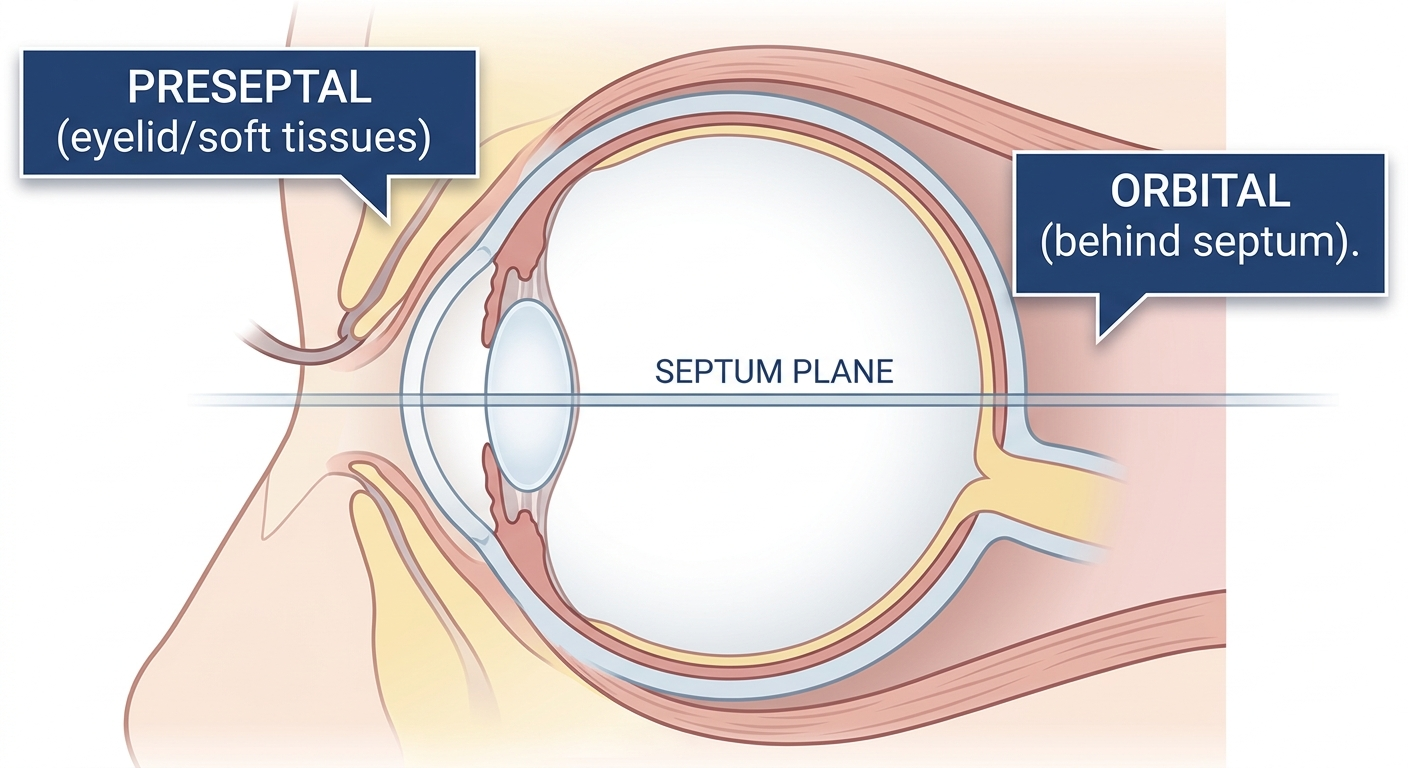
The orbit is the rigid, bony “box” that holds the eye, the muscles that move it, blood vessels, and nerves (including the optic nerve). Because space is tight, swelling or infection inside this compartment can quickly raise pressure, limit eye movement, reduce blood flow, and threaten vision. [1,2] The orbit also has venous connections that can allow infection to spread beyond the eye region. [1,2]
Orbital cellulitis vs preseptal cellulitis (key differences)
A common point of confusion is preseptal vs orbital cellulitis:
- Preseptal cellulitis: infection and inflammation in front of the orbital septum (typically limited to eyelid/soft tissues).
- Orbital cellulitis: infection behind the septum, within the orbit—higher risk and potentially vision-threatening. [1,2,4]
Clues that suggest orbital involvement rather than a superficial eyelid infection:
- Proptosis (the eye appears pushed forward)
- Painful or limited eye movements (ophthalmoplegia)
- Vision changes (blurred vision, decreased acuity, altered color vision)
- Chemosis (swollen, gelatinous-looking conjunctiva) [1,2,4]
In general:
- Preseptal: eyelid swelling/redness, eye movements normal, no proptosis, vision typically unaffected; may be managed outpatient depending on severity.
- Orbital: eyelid swelling plus deeper orbital signs (proptosis, painful/restricted eye movements, possible vision changes); typically requires hospital care and IV antibiotics. [1,4]
Swelling alone can be preseptal—but swelling plus eye movement pain, bulging, or vision changes suggests deeper orbital disease.
Orbital cellulitis symptoms (what patients notice)
Common symptoms
Orbital cellulitis may begin like “sinusitis with a swollen eyelid,” so it’s easy to miss early. Shared sinus and eye symptoms include:
- Fever and feeling unwell
- Marked eyelid swelling and redness (often called “sinus infection eye swelling”)
- Eye pain—especially pain with eye movement
- Headache, facial pain, or sinus pressure [1,3]
A typical scenario: after a cold or sinus congestion, one eyelid becomes puffy and tender; looking left/right or up/down triggers sharp eye pain. That movement pain is a key clue. [1,4]
Red flag symptoms that strongly suggest orbital cellulitis
Features that point to orbital cellulitis from sinus infection rather than a superficial eyelid problem:
- Proptosis (bulging/forward displacement of the eye)
- Double vision or trouble moving the eye normally (restricted eye movement)
- Vision changes (blur, reduced sharpness, altered color vision)
- Severe pain, especially with eye movement
- Chemosis (conjunctival swelling)
- Confusion, severe headache, or stiff neck (possible intracranial spread—rare but serious) [1,2,4]
Symptoms in children vs adults
Orbital cellulitis is more common in children and often follows an upper respiratory infection that progresses to bacterial sinusitis. Kids may show less specific signs—irritability, low energy, refusing to open the eye because it hurts. Because children may not describe double vision or subtle visual changes well, clinicians pay close attention to exam findings and often use imaging when suspicion is high. [1,2,4]
If there’s a swollen eyelid plus eye movement pain, double vision, bulging, or vision changes—assume orbital involvement until proven otherwise.

Causes — how a sinus infection spreads to the eye socket
Primary cause: bacterial rhinosinusitis
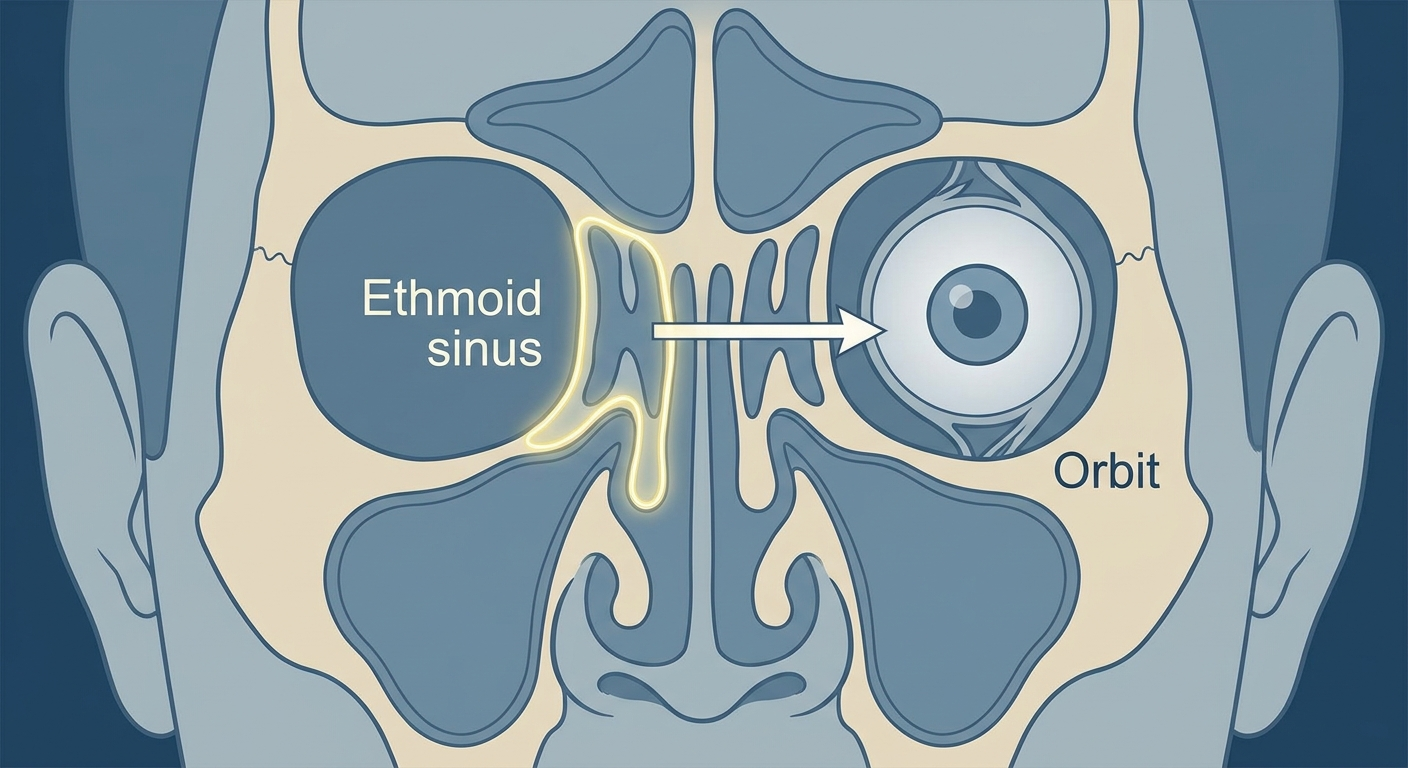
The most common driver of orbital cellulitis is bacterial sinusitis—especially infection of the ethmoid sinuses, which sit beside the orbit and are separated by thin bone. Infection can extend through these boundaries or via venous pathways. [1,2] This explains why “sinus” symptoms (pressure between the eyes, congestion) can quickly evolve into “eye” symptoms (eyelid swelling, painful eye movements).
For a focused ENT perspective on the overlap, see: Can Sinusitis Cause Eye Swelling? https://sleepandsinuscenters.com/blog/can-sinusitis-cause-eye-swelling-ent-perspective
Other possible sources
While sinusitis is most common, orbital infection can also follow:
- Facial or orbital trauma
- Skin infections around the eyelid/face
- Dental infections (including anaerobic bacteria)
- Infection after sinus or orbital procedures [1,4]
Common bacteria (pathogens)
Frequent organisms include gram-positive streptococcal and staphylococcal species. Depending on local patterns and risk factors, clinicians may add coverage for MRSA and/or anaerobes. [1,2,5]
Risk factors
- Recent or recurrent bacterial sinusitis
- Immunocompromised state (e.g., diabetes, immunosuppressive medications)
- Inadequately treated sinus infection
- Chronic sinus disease or anatomic blockage leading to recurrent infections [1,3]
Related reading: Acute vs. Chronic Sinusitis: Key Differences and Treatment Options. https://sleepandsinuscenters.com/blog/acute-vs-chronic-sinusitis-key-differences-and-treatment-options
Because the ethmoid sinuses sit right next to the eye socket, untreated or worsening sinusitis can spread to the orbit.
Diagnosis — what to expect in urgent care/ER
Why you should not “wait it out”
Swelling inside the orbit can quickly endanger vision and, rarely, spread intracranially. The goal is early treatment—before pressure, inflammation, or abscess formation damages the optic nerve. [1,3]
The clinical exam
A focused exam typically includes:
- Visual acuity, color vision, and pupillary responses
- Eyelid swelling and eye position, noting any proptosis
- Eye movements (for pain or limitation)
- Vital signs, fever, and a brief neurologic check [2,4]
Imaging (often the turning point)
- CT of the orbits and sinuses with contrast is commonly used to assess the orbit, evaluate the extent of sinus disease, and detect abscesses (e.g., subperiosteal abscess). [1,2,4]
- MRI may be used when intracranial complications are suspected. [1,2]
Learn more: Sinus CT Scan: What It Shows and How It Helps Diagnose Sinus Issues. https://sleepandsinuscenters.com/blog/sinus-ct-scan-what-it-shows-and-how-it-helps-diagnose-sinus-issues
Lab tests
Depending on severity, clinicians may order:
- CBC and inflammatory markers
- Blood cultures in more severe/systemic illness [1,5]
Who treats orbital cellulitis?
Care is often coordinated among Ophthalmology and ENT, with Infectious Disease input when complications are suspected or antibiotic selection is complex. [1,2]
Imaging plus a targeted eye exam helps distinguish superficial eyelid infection from vision-threatening orbital cellulitis.
Treatment — hospitalization and rapid IV antibiotics
First-line treatment: urgent admission + empiric IV antibiotics
Unlike most sinus infections, orbital cellulitis from sinus infection is typically treated in the hospital with IV antibiotics. Initial (empiric) therapy covers likely organisms—commonly gram-positive bacteria—with MRSA and anaerobic coverage added based on risk and suspected source. [1,4,5,6]
Examples used in hospital protocols include ceftriaxone-based regimens and vancomycin when MRSA coverage is needed. Final choices depend on local resistance patterns, allergies, kidney function, and specialist judgment. [1,5,6]
Monitoring during treatment (what improvement looks like)
Teams track:
- Fever reduction and improved well-being
- Less pain, especially with eye movement
- Improved range of eye movements
- Decreasing swelling/proptosis
- Stable or improving vision
If progress lags, repeat exams—and sometimes repeat imaging—help reassess for abscess or other complications. [1,2]
When surgery may be needed (drainage)
Surgery is considered when imaging shows an abscess (including a subperiosteal abscess), vision is threatened, or improvement on IV antibiotics is inadequate. Procedures can include endoscopic sinus surgery and/or abscess drainage. [1,2,5]
Transition to oral antibiotics and total duration
After clear improvement, many patients transition from IV to oral antibiotics to complete a total course of about 2–3 weeks, individualized to the case. [1,6]
Supportive care
Supportive measures may include pain and fever control, hydration, and sinus care as directed by the treating team. [3,5]
Rapid IV antibiotics—and surgery when needed—are the cornerstone of preventing vision loss and other complications.

Possible complications (why prompt care matters)
Vision-related complications
Inflammation, pressure, or direct infection can damage orbital structures and the optic nerve, risking permanent vision loss if not treated quickly. [1,2]
Intracranial complications
Rare but serious spread can lead to cavernous sinus thrombosis, meningitis, or brain abscess. [1,4]
Early, aggressive treatment is the best protection against vision loss and intracranial spread.
Recovery and follow-up — what patients should plan for
Typical recovery timeline
- First 24–72 hours: clinicians look for a clear response to IV antibiotics (less pain, fever, swelling, and improved eye movement).
- Days to weeks: continued improvement; some residual puffiness may resolve more slowly.
- Follow-up: ophthalmology and ENT follow-up confirm resolution and address underlying sinus disease. [1,3]
When to return immediately after discharge
Return urgently for worsening fever, increasing swelling, new or worsening eye pain, double vision, or any vision changes. Severe headache, vomiting, or confusion also warrant prompt reassessment. [3,4]
Expect steady improvement within the first few days of treatment—and seek prompt reassessment if symptoms worsen.
Prevention & lifestyle tips — reducing sinus infection complications
Treat sinus infections appropriately (and know the warning signs)
Persistent, worsening, or severe sinus symptoms—especially with facial or eyelid swelling, high fever, or eye symptoms—deserve prompt medical evaluation. Avoid using leftover or shared antibiotics, and follow prescribed directions when antibiotics are needed. [1,3]
Helpful guides:
- Can a Sinus Infection Spread? Signs to Watch. https://sleepandsinuscenters.com/blog/can-a-sinus-infection-spread-signs-to-watch
- When to Worry About a Sinus Infection (Red Flags). https://sleepandsinuscenters.com/blog/when-to-worry-about-a-sinus-infection-red-flags-an-20260131121210
Reduce sinus infection risk
- If using saline rinses, use sterile/distilled water or boiled-then-cooled water
- Manage allergies that contribute to congestion
- Avoid smoking and airway irritants
- Stay up to date on vaccines as appropriate for respiratory health [3]
If you’re prone to chronic sinusitis
If infections are frequent or symptoms linger, evaluation for chronic inflammation, allergies, or anatomy can help reduce recurrences and complications. Learn more: Chronic Sinusitis Evaluation and Treatment. https://sleepandsinuscenters.com/chronic-sinusitis [6]
Knowing red flags and treating sinus infections appropriately lowers the chance of dangerous orbital complications.
FAQs (quick answers)
Can a sinus infection cause orbital cellulitis? Yes. Bacterial sinusitis—especially involving the ethmoid sinuses—is the most common source. [1,2]
How can I tell orbital cellulitis from a “regular” swollen eyelid? Proptosis plus painful or restricted eye movement—often with fever—suggests orbital involvement. [1,4]
Is orbital cellulitis contagious? Orbital cellulitis itself isn’t considered contagious, though respiratory infections that precede sinusitis may spread depending on the cause. [3]
What tests are used to diagnose orbital cellulitis? Diagnosis is based on symptoms and exam, often with CT imaging of the orbits and sinuses; labs help assess severity. [1,2]
What antibiotics treat orbital cellulitis? Treatment usually begins with IV antibiotics in the hospital that cover common bacteria (e.g., streptococcal and staphylococcal species), with MRSA or anaerobic coverage added as indicated. Regimens may include options such as ceftriaxone and, when needed, vancomycin. [1,5,6]
When is surgery needed? Surgery is considered when an abscess (including subperiosteal abscess) is present, vision is threatened, or IV antibiotics are not producing adequate improvement. [1,2,5]
Can orbital cellulitis cause blindness? Yes—untreated or delayed treatment can result in permanent vision loss. Prompt evaluation and therapy are critical. [1,4]
Should I go to the ER for eye swelling with a sinus infection? Yes—especially with fever, severe pain, eye bulging (proptosis), restricted eye movement, double vision, or vision changes. For more red flags, see: When to Worry About a Sinus Infection (Red Flags). https://sleepandsinuscenters.com/blog/when-to-worry-about-a-sinus-infection-red-flags-an-20260131121210 [3,4]
If you’re unsure whether eye symptoms are serious, err on the side of urgent evaluation.
When to seek emergency care
Seek urgent evaluation if any of the following occur with eye swelling or suspected sinus infection:
- One eye becomes suddenly much more swollen/red than the other
- Proptosis (bulging eye)
- Pain with eye movement or inability to move the eye normally
- Double vision or vision loss
- High fever, severe headache, or confusion
For a practical checklist of warning signs, see: When to Worry About a Sinus Infection (Red Flags). https://sleepandsinuscenters.com/blog/when-to-worry-about-a-sinus-infection-red-flags-an-20260131121210
Treat new eye bulging, eye movement pain, or vision changes as an emergency.
Conclusion — don’t delay evaluation
Orbital cellulitis from sinus infection is uncommon but serious—especially when symptoms include eye bulging, painful or restricted eye movement, fever, or vision changes. The good news: with rapid hospital treatment (often IV antibiotics and, at times, drainage), most people recover well. [1,3]
If you’re dealing with recurrent sinus infections or need ENT follow-up after complications, Sleep and Sinus Centers of Georgia can help you plan next steps—book an appointment here: https://sleepandsinuscenters.com/appointments
Prompt treatment saves vision.
Medical disclaimer
This article is for general education and is not a substitute for professional medical advice, diagnosis, or treatment. If you think you may have orbital cellulitis—especially with fever, bulging eye, painful or restricted eye movement, or vision changes—seek urgent medical care.
References
1. StatPearls (NCBI Bookshelf). Orbital Cellulitis. 2023. https://www.ncbi.nlm.nih.gov/books/NBK507901/
2. EyeWiki. Orbital Cellulitis. https://eyewiki.org/Orbital_Cellulitis
3. Cleveland Clinic. Orbital Cellulitis. 2025. https://my.clevelandclinic.org/health/diseases/24499-orbital-cellulitis
4. Merck Manual (Professional). Preseptal and Orbital Cellulitis. https://www.merckmanuals.com/professional/eye-disorders/orbital-diseases/preseptal-and-orbital-cellulitis
5. NHS Right Decisions (Scotland). Orbital Cellulitis Guideline. https://www.rightdecisions.scot.nhs.uk/nhsl-guidelines/ophthalmology/orbital-cellulitis-guideline/
6. UpToDate. Orbital cellulitis (topic updated 2026). Subscription resource.
Don’t let allergies slow you down. Schedule a comprehensive ENT and allergy evaluation at Sleep and Sinus Centers of Georgia. We’re here to find your triggers and guide you toward lasting relief.