
Nighttime Mouth Breathing in Toddlers: When It’s Harmless and When to Check In
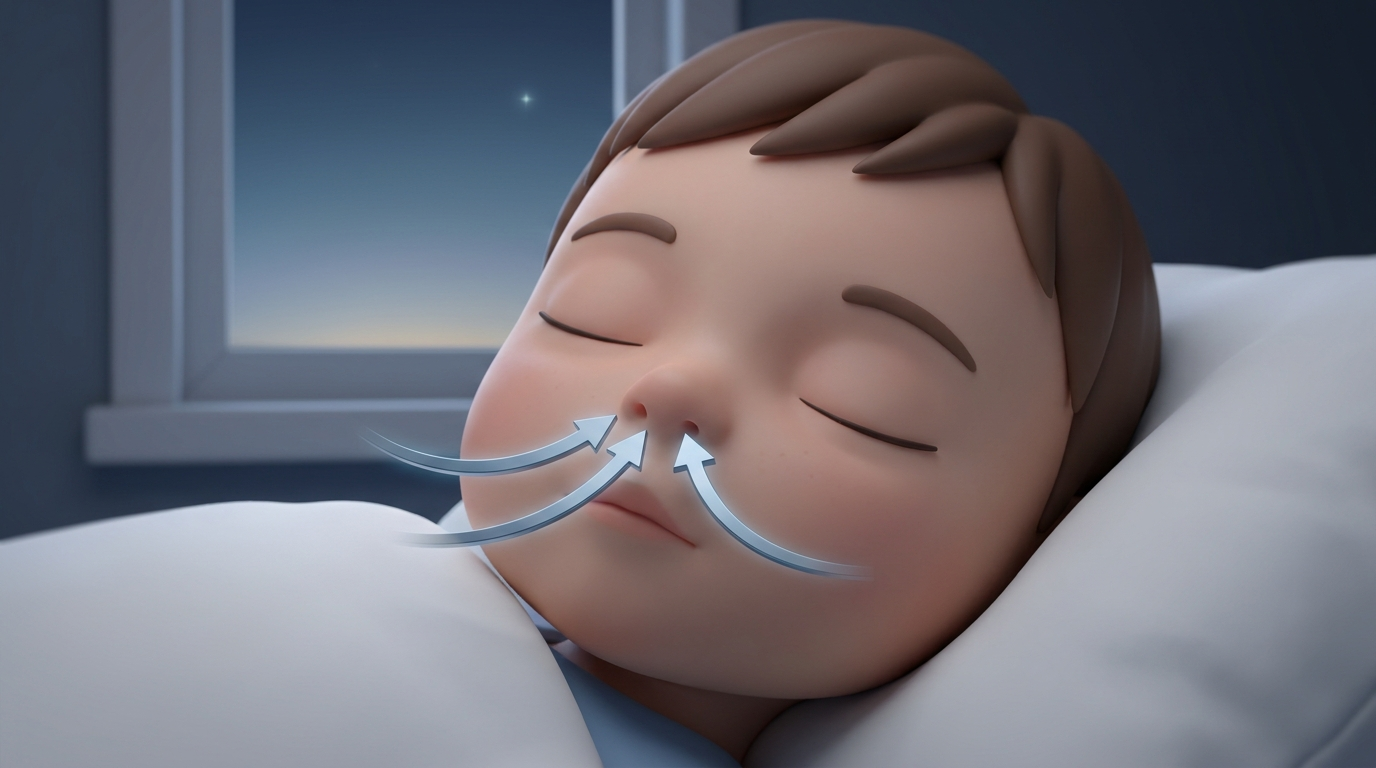
Many parents glance into their toddler’s room at night and notice an open mouth, a little snoring, or restless tossing. Nighttime mouth breathing in toddlers is commonly related to blocked nasal airflow from colds, allergies, or enlarged tonsils and adenoids. Occasional mouth breathing may be harmless—like a few stuffy nights during a cold—but persistent breathing through the mouth during sleep can signal something more. This is especially true when it comes with snoring, gasping, breathing pauses, restless sleep, or daytime changes in behavior and attention. Those patterns can indicate sleep-disordered breathing.
A pediatrician can assess your child and, when needed, refer to an ENT specialist or recommend a sleep study. Management is always cause-specific and may involve treating nasal problems or evaluating the tonsils and adenoids. The goal is simple: help your toddler breathe easily, sleep more soundly, and wake up ready to play.
A quick check with your child’s doctor can distinguish a passing cold from something that needs attention.
Common Causes of Nighttime Mouth Breathing
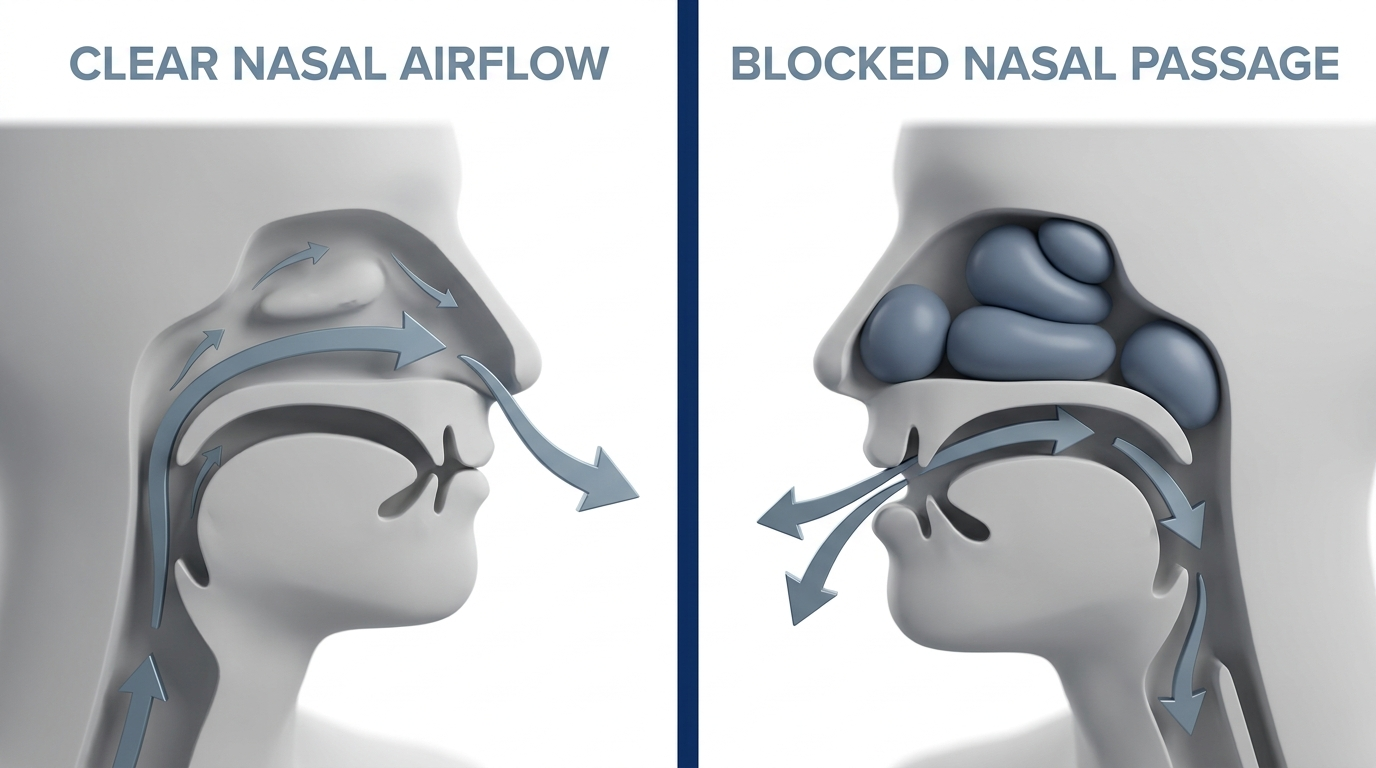
The most frequent reason a toddler switches to mouth breathing at night is simple blockage of the nose. A cold can swell the nasal passages so thoroughly that the child instinctively opens the mouth to get air, much like an adult does when a stuffy nose makes it impossible to inhale through the nostrils. Allergies often act the same way, especially during high-pollen seasons or in a dusty bedroom. Sinus infections add another layer of congestion and pressure.
Enlarged tonsils and adenoids are another very common culprit in this age group. These tissues sit at the back of the throat and nose; when they grow large they act like a soft roadblock, forcing air to take the path of least resistance through the mouth. Structural nasal issues, such as a naturally narrow nasal passage, can contribute as well. Over time some children also develop a habit of mouth breathing even after the original blockage has improved.
A parent might describe it this way: “She only does it when she’s congested, but last month it lasted two full weeks after the cold was gone.” That lingering pattern is worth noting.
Lingering mouth breathing after congestion clears is a signal worth sharing with your pediatrician.

Why Persistent Mouth Breathing Matters
Occasional mouth breathing while a toddler fights a virus is usually temporary and not a cause for alarm. When the habit continues night after night, however, sleep quality can suffer. The child may wake more often, toss and turn, or fail to reach the deeper stages of rest. The next day that can look like extra crankiness, unusual fatigue, or difficulty paying attention during play or story time.
Over longer periods, chronic mouth breathing has also been associated with effects on dental alignment and facial growth because the tongue and jaw rest in a different position. None of these outcomes is inevitable, and many improve once the underlying cause is addressed. Still, they illustrate why regular nighttime mouth breathing deserves a conversation with your child’s doctor rather than a wait-and-see approach.
Imagine trying to drink a thick smoothie through a very narrow straw: you work harder, get less reward, and feel tired sooner. That is a rough analogy for what a toddler’s airway experiences when the nose is blocked and the mouth becomes the only reliable route.
Treating the root cause often restores better sleep and supports healthy growth.

Mouth Breathing and Sleep-Disordered Breathing
Persistent mouth breathing—especially during sleep—can be a visible clue that something is interrupting airflow. Sleep-disordered breathing, including obstructive sleep apnea, becomes more likely when mouth breathing is accompanied by snoring, gasping, actual pauses in breathing, very restless sleep, or unusual daytime sleepiness. Importantly, young children do not always snore; some simply breathe noisily through an open mouth or wake frequently without an obvious sound.
One clinician often tells families, “If your toddler is working hard to breathe at night and then seems foggy or extra irritable during the day, we take that seriously even if the snoring is mild.” A parent might recall, “I thought the open mouth was just how he slept until I noticed he sometimes seemed to stop and then gulp for air.” Those observations help the pediatrician decide whether further evaluation is needed.
Watching for gasping, pauses, or daytime changes helps decide when extra evaluation is needed.

When and How to Seek Evaluation
Regular nighttime mouth breathing should be discussed with a pediatrician. Bring notes about how often it happens, whether snoring or gasping occurs, and any daytime changes you have noticed. The doctor can examine the ears, nose, and throat and decide whether an ENT specialist should take a closer look at the tonsils, adenoids, or nasal passages.
When sleep apnea or significantly enlarged tonsils and adenoids are suspected, a sleep study may be recommended. Treatment is never one-size-fits-all; it depends on the underlying cause. Nasal congestion from allergies or infection can often be improved with appropriate medical care. Enlarged tonsils or adenoids may need surgical evaluation. Structural issues or a lingering habit can be addressed once the airway is clearer.
Early conversation usually leads to straightforward next steps and considerable peace of mind.
Talking with your pediatrician early typically leads to simple, targeted next steps.
If you are concerned about your toddler’s nighttime breathing, the team at Sleep and Sinus Centers is ready to help. Book an appointment at https://www.sleepandsinuscenters.com/ so a specialist can evaluate the cause and discuss options tailored to your child.
This article is for informational purposes only and is not a substitute for professional medical advice, diagnosis, or treatment. Always consult your child’s pediatrician with questions about sleep or breathing.
This article is for educational purposes only and is not medical advice. Please consult a qualified healthcare provider for diagnosis and treatment.
Don’t let allergies slow you down. Schedule a comprehensive ENT and allergy evaluation at Sleep and Sinus Centers of Georgia. We’re here to find your triggers and guide you toward lasting relief.