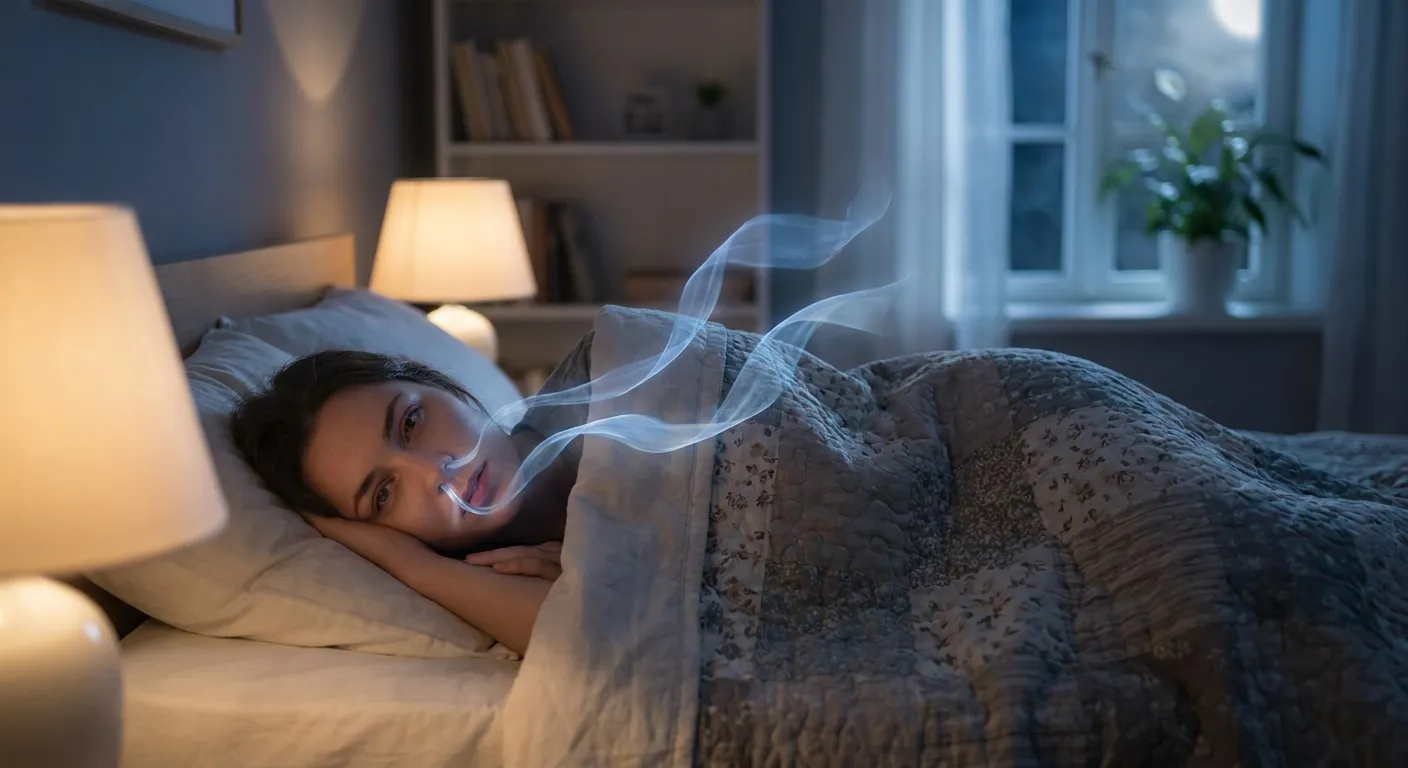
Mouth Breathing During Sleep: Causes and How to Stop It
Waking up with a dry mouth in the morning, a sore throat, or that “I slept but I’m still tired” feeling can be more than just a random bad night. For many people, those symptoms are clues they may be sleeping with their mouth open—often because the nose isn’t moving air well at night.
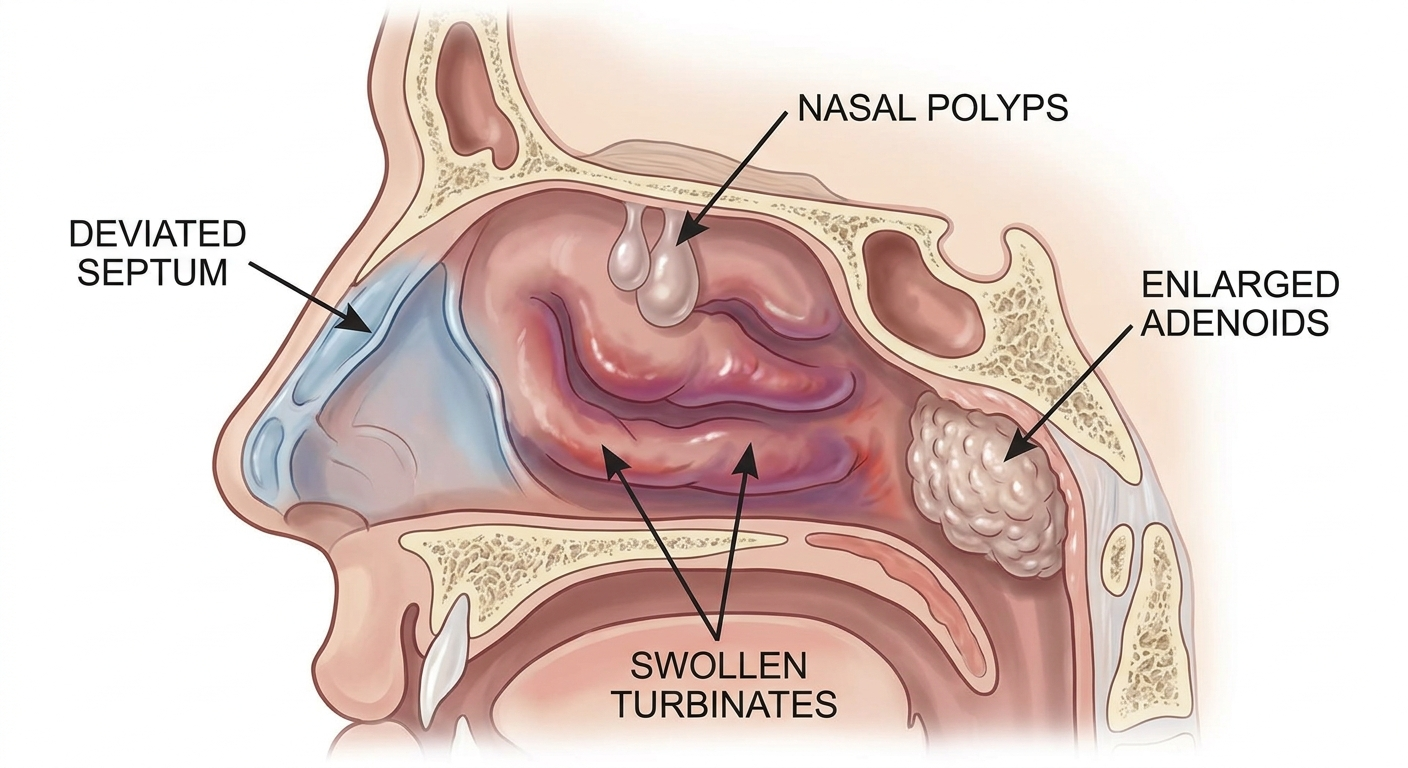
In many cases, mouth breathing during sleep is a “backup” pattern that shows up when nasal airflow is reduced by allergies, inflammation, or structural issues like a deviated septum, nasal polyps, or enlarged tissue (such as enlarged adenoids in children). It can affect sleep quality and oral health, and it may overlap with snoring and sleep apnea concerns. (Cleveland Clinic, 2025; Mayo Clinic, 2024)
This guide covers common symptoms, possible causes, health risks, practical at-home strategies, medical options, and when it’s worth seeing an ENT or sleep specialist.

What Is Mouth Breathing During Sleep (and Why It Happens)
Mouth breathing vs. nose breathing at night
Mouth breathing during sleep means air moves primarily through the mouth rather than the nose. Sometimes it’s habitual; other times it’s the body’s workaround when nasal airflow is limited due to blockage at night. (Cleveland Clinic, 2025)
A helpful way to think of it: your nose is the “main entrance” designed for breathing. When it feels partially closed, your body uses the “side door” (your mouth) so you can still get air—especially when you’re asleep and not consciously adjusting.
Why nose breathing is usually better
- Filters particles and allergens
- Warms and humidifies incoming air
- Supports efficient breathing mechanics and comfort during sleep (Cleveland Clinic, 2025; PubMed Central, 2019)
Occasional mouth breathing with a cold can be normal. But frequent or chronic mouth breathing during sleep is often a sign that something is interfering with nasal airflow and is worth addressing—because the underlying issue (inflammation, obstruction, sleep-disordered breathing) is often treatable. Big picture: making nasal breathing easier usually makes sleep feel better.
Signs and Symptoms You Might Be Mouth Breathing at Night
Morning symptoms
- Dry mouth, thirst, or a sticky feeling
- Bad breath
- A sore throat, hoarseness
- Chapped lips (Cleveland Clinic, 2025; Healthline)
Many patients describe it as: “I wake up and immediately need water,” or “My tongue feels dry no matter how long I slept.” Those patterns don’t prove mouth breathing by themselves, but they’re consistent with it—especially when they happen most mornings.
Nighttime clues
- Snoring
- Waking up repeatedly
- Restless sleep
- Waking up gasping or feeling short of breath (important to evaluate for sleep-disordered breathing)
If you sleep alone, you might not hear your own snoring. A partner’s observation (“You sleep with your mouth open,” “You stop breathing sometimes,” “You snort awake”) can be an important piece of the puzzle.
Daytime effects
- Brain fog
- Headaches
- Chronic fatigue
- Difficulty concentrating (Cleveland Clinic, 2025; PubMed Central, 2019)
People often blame stress or a busy schedule, but if the pattern lines up with nighttime congestion or snoring, it’s worth considering an airway contributor.
Kid-specific signs (parents should watch for)
- A mouth-open resting posture during the day
- Noisy sleep
- Some children may appear hyperactive, irritable, or restless due to poor sleep
- Speech changes or persistent congestion
A common parent report is: “They always seem stuffed up,” or “They sleep with their mouth open even when they aren’t sick.” Since kids’ sleep supports learning, mood, and growth, persistent symptoms deserve attention.
If mornings are dry and cranky and nights are noisy, consider mouth breathing as a clue to dig deeper.

What Causes Mouth Breathing During Sleep?
Most mouth breathing during sleep starts with nasal obstruction—anything that narrows or blocks airflow through the nose. (Cleveland Clinic, 2025)
Allergies (allergic rhinitis) and nighttime congestion
Allergies can cause swelling inside the nose, congestion, and post-nasal drip. Symptoms may be seasonal (pollen) or year-round (dust mites, pets). If you suspect allergies are driving your congestion, learning about allergy testing options can help clarify triggers and next steps. Learn more: https://sleepandsinuscenters.com/allergy-testing (Mayo Clinic, 2024; Cleveland Clinic, 2025)
Chronic rhinosinusitis (ongoing sinus inflammation)
Chronic rhinosinusitis involves persistent inflammation that can narrow nasal passages and contribute to constant congestion, reduced smell, and facial pressure. Learn more: https://sleepandsinuscenters.com/chronic-sinusitis (Cleveland Clinic, 2025)
Many people notice this is worse at night because lying down can make congestion feel more intense, and the body’s natural rhythms can affect nasal swelling.
Nasal polyps
Nasal polyps are soft, noncancerous growths associated with chronic inflammation. They can physically obstruct airflow and contribute to sleeping with the mouth open. Learn more: https://sleepandsinuscenters.com/blog/what-are-nasal-polyps (Cleveland Clinic, 2025; PubMed Central, 2019)
Deviated septum (structural blockage)
A deviated septum can create a one-sided or uneven nasal airway that may feel worse when lying down. It can contribute to nighttime congestion, snoring, and mouth breathing at night. Learn more: https://sleepandsinuscenters.com/deviated-septum-relief (Mayo Clinic, 2024)
A practical clue: if you consistently feel blocked more on one side, or you “can only breathe through one nostril,” anatomy may be playing a role.
Enlarged turbinates or nasal valve issues
Turbinates are structures inside the nose that can enlarge with inflammation. The nasal valve area is also a common bottleneck for airflow. When either is narrowed, breathing through the nose may feel harder—especially during sleep.
Enlarged adenoids/tonsils (more common in children)
In kids, enlarged adenoids (and sometimes tonsils) can reduce nasal airflow and contribute to mouth breathing and noisy sleep. (Cleveland Clinic, 2025)
Obstructive sleep apnea (OSA) and sleep-disordered breathing
Mouth breathing can occur alongside snoring and OSA. If there are symptoms like loud snoring, witnessed pauses, or gasping, it’s important not to dismiss it as “just snoring.” (Cleveland Clinic, 2025)
Habit + oral posture (tongue position)
Even after congestion improves, a low tongue posture and open-mouth resting pattern can reinforce mouth breathing during sleep over time. (PubMed Central, 2019)
Bottom line: most paths lead back to limited nasal airflow—identify the why to fix the how.
Why Mouth Breathing During Sleep Can Be a Problem (Health Risks)
Oral health complications
When the mouth is open, saliva evaporates more easily. Dryness may increase risk of:
- Cavities
- Gum irritation/inflammation
- Bad breath (Cleveland Clinic, 2025; Healthline)
Saliva helps buffer acids and protects teeth and gums. If your mouth is routinely dry overnight, you may notice more morning breath, more sensitivity, or more dental work over time—another reason this pattern is worth addressing.
Sleep quality and oxygen-related issues
Mouth breathing is often linked with fragmented sleep and waking unrefreshed, which can contribute to daytime fatigue and concentration problems. (PubMed Central, 2019)
Even without a formal sleep diagnosis, repeated micro-awakenings (brief arousals you may not remember) can leave you feeling like you never hit deep sleep.
Snoring and sleep apnea risk
Mouth breathing may worsen snoring in some people and can co-exist with OSA—one reason persistent symptoms deserve a closer look. (Cleveland Clinic, 2025)
Risks for children (developmental concerns)
Chronic mouth breathing in children is associated with changes in facial growth patterns and the downstream effects of poor sleep. Early evaluation can matter. (PubMed Central, 2019; Cleveland Clinic, 2025)
Protecting nasal breathing protects sleep, oral health, and daytime performance—especially in kids.

How to Stop Mouth Breathing During Sleep (Step-by-Step Plan)
This section is educational—not a substitute for personal medical care—but it can help you understand common, low-risk approaches clinicians often discuss.
Step 1 — Improve nasal airflow before bed (simple nightly routine)
- Saline rinse or nasal wash to clear mucus/allergens
- Warm shower or gentle steam (if it helps you)
- Hydration throughout the day
- Limiting alcohol close to bedtime (can worsen snoring and airway collapse)
Think of this like clearing a clogged filter before you turn in for the night: the goal is to make nasal breathing the easy, default option.
If nighttime nasal breathing feels consistently difficult, you may find this related guide helpful: https://sleepandsinuscenters.com/blog/cant-breathe-through-nose-at-night
Step 2 — Optimize sleep setup and position
- Sleep on your side (may reduce snoring for some)
- Elevate the head slightly (wedge pillow or extra pillow) to reduce congestion/post-nasal drip
If you’re a back sleeper, even a small positional change can be worth trialing for a week—especially if your partner reports louder snoring on your back.
Step 3 — Try non-prescription breathing aids (when appropriate)
- External nasal strips
- Internal nasal dilators
These can mechanically widen the nasal valve area and may help some people with mild narrowing, but they do not treat underlying obstruction. They generally won’t resolve major structural problems, significant inflammation, or polyps.
A good test mindset: if a strip or dilator helps a little, that suggests airflow limitation is part of the story—but it doesn’t identify why the limitation exists.
Step 4 — Address allergies and inflammation
- Reduce exposure (dust mite covers, washing bedding hot weekly, HEPA filtration, showering before bed during high pollen days)
- Use allergy and anti-inflammatory medications appropriately and consistently (discuss what’s suitable with a clinician)
If you suspect allergies are a key driver, learn more: https://sleepandsinuscenters.com/allergy-testing
Step 5 — Consider myofunctional therapy (retraining the mouth muscles)
Myofunctional therapy focuses on tongue posture, lip seal, and breathing habits. For some habitual mouth breathers (and some people who snore), it may help as part of a broader treatment plan alongside management of nasal obstruction. (PubMed Central, 2019)
Learn more: https://sleepandsinuscenters.com/blog/myofunctional-therapy-basics-essential-guide-for-beginners
This is especially relevant when the nose is capable of breathing, but the mouth has become the default pathway out of habit.
Step 6 — Screen for sleep apnea (don’t miss this)
Consider evaluation if you notice:
- Loud, persistent snoring
- Witnessed breathing pauses
- Choking/gasping awakenings
- High blood pressure
- Significant daytime sleepiness
If these sound familiar, learn more: https://sleepandsinuscenters.com/snoring-sleep-apnea-treatment
Step 7 — When medical procedures or surgery may be needed
- Septoplasty for a deviated septum (Mayo Clinic, 2024). Learn more: https://sleepandsinuscenters.com/deviated-septum-relief
- Medical therapy for inflammation and nasal polyps, and in some cases endoscopic removal (Cleveland Clinic, 2025). Learn more: https://sleepandsinuscenters.com/blog/what-are-nasal-polyps
- Treatment plans for chronic rhinosinusitis that may include medications and, when appropriate, procedures (Cleveland Clinic, 2025). Learn more: https://sleepandsinuscenters.com/chronic-sinusitis
- Adenoidectomy/tonsillectomy in children when enlarged tissue blocks airflow (Cleveland Clinic, 2025)
A note on mouth taping (safety-first)
Mouth taping is a popular trend, but it should not be used unless you can breathe comfortably through your nose and have discussed it with a clinician. It may be risky if you have significant nasal obstruction or possible sleep apnea. (Cleveland Clinic, 2025; Healthline)
Aim to make nasal breathing possible, comfortable, and automatic—gadgets are optional, safety is not.

When to See a Doctor (and What an ENT Can Do)
When to seek evaluation
Consider an evaluation if:
- Mouth breathing happens most nights for more than 2–4 weeks
- Snoring comes with daytime sleepiness, gasping/choking, or witnessed pauses
- You have one-sided blockage, recurrent sinus infections, persistent facial pressure, or suspected polyps
A simple self-check: if you routinely wake up dry and tired and you frequently feel like “my nose doesn’t work at night,” it’s reasonable to get assessed rather than repeatedly guessing at solutions.
What to expect at an ENT visit
At Sleep and Sinus Centers of Georgia, an ENT evaluation may include:
- A symptom and sleep-history review
- A nasal exam
- Sometimes a nasal endoscopy to look for swelling, polyps, or septal deviation (Cleveland Clinic, 2025)
- If indicated, discussion of allergy testing, imaging, and/or referral for sleep testing
If symptoms are persistent, a focused airway exam can shorten the path to better sleep.
FAQs
Is mouth breathing during sleep always bad?
Not always. Temporary mouth breathing during a cold is common. Chronic mouth breathing during sleep can raise oral-health and sleep-quality risks and is worth evaluating. (Cleveland Clinic, 2025)
Why do I wake up with a dry mouth every morning?
Common contributors include mouth breathing, snoring or sleep apnea, certain medications, and dehydration. (Cleveland Clinic, 2025; Healthline)
Can a deviated septum cause mouth breathing at night?
Yes. A deviated septum can restrict airflow and push you toward mouth breathing—especially when lying down. (Mayo Clinic, 2024)
Do nasal strips work for mouth breathing?
They may help some people with mild nasal valve narrowing as temporary symptom relief, but they do not treat the underlying obstruction. (Colorado ENT & Allergy, 2022)
Is mouth breathing a sign of sleep apnea?
It can be associated. If you have loud snoring, witnessed pauses, or gasping, consider screening and learn more: https://sleepandsinuscenters.com/snoring-sleep-apnea-treatment (Cleveland Clinic, 2025)
What about kids who sleep with their mouth open?
In children, enlarged adenoids/tonsils and allergies are common contributors. Early assessment can support healthier sleep and development. (Cleveland Clinic, 2025; PubMed Central, 2019)
Lifestyle Tips to Support Nose Breathing Long-Term
Bedroom environment checklist
- Wash bedding weekly in hot water
- Use dust mite covers
- Keep pets out of the bed (and ideally out of the bedroom)
- Consider a HEPA air filter
Daily nose-health habits
- Saline rinses as needed
- Avoid overusing decongestant sprays (rebound congestion can occur)
- Stay hydrated (Cleveland Clinic, 2025)
Support airway stability
- Weight management if applicable
- Avoid smoking
- Limit alcohol near bedtime (Cleveland Clinic, 2025)
Small daily habits can make nasal breathing easier—and good sleep more repeatable.
Conclusion + Next Step
In many cases, mouth breathing during sleep is a sign that nasal airflow is being restricted—by allergies, chronic rhinosinusitis, nasal polyps, a deviated septum, or enlarged adenoids/tonsils. The good news is that these causes are often identifiable and treatable, and improving nasal breathing can support better sleep and better morning comfort. (Cleveland Clinic, 2025)
If you’ve been mouth breathing at night consistently—or you have snoring, gasping, or ongoing fatigue—consider tracking symptoms for a week (morning dryness, congestion, snoring notes from a partner) and scheduling an evaluation to identify what’s driving the problem. To get started, you can book an appointment through https://www.sleepandsinuscenters.com/.
Better airflow at night can translate into better energy, mood, and focus during the day.
Sources
- Cleveland Clinic. Mouth Breathing (updated 2025). https://my.clevelandclinic.org/health/diseases/22734-mouth-breathing
- Mayo Clinic. Deviated septum—Symptoms & causes (2024). https://www.mayoclinic.org/diseases-conditions/deviated-septum/symptoms-causes/syc-20351710
- Colorado ENT & Allergy (2022). 7 Ways to Stop Mouth Breathing. https://coloradoent.com/blog/7-ways-to-stop-mouth-breathing/
- PubMed Central (2019). Review article on mouth breathing and impacts. https://pmc.ncbi.nlm.nih.gov/articles/PMC6734203/
- Healthline. Mouth Breathing overview. https://www.healthline.com/health/mouth-breathing
This article is for educational purposes only and is not medical advice. Please consult a qualified healthcare provider for diagnosis and treatment.
Don’t let allergies slow you down. Schedule a comprehensive ENT and allergy evaluation at Sleep and Sinus Centers of Georgia. We’re here to find your triggers and guide you toward lasting relief.