Latex Allergy ENT Symptoms: Nasal Signs, Causes, and Treatment
Sneezing, a runny nose, and itchy eyes are easy to blame on pollen or “just allergies.” But if these symptoms flare up at work, during a medical or dental visit, or after contact with certain products, it may be something else: ENT symptoms of latex allergy (ear, nose, and throat symptoms).
Latex allergy can cause nose, eye, and throat reactions that look a lot like allergic rhinitis (hay fever)—and in some people, symptoms can progress to the lower airways. Both Mayo Clinic (2024) and Cleveland Clinic (2024) describe rhinitis-like symptoms as possible signs of latex allergy and note that reactions can become serious. For a quick refresher on how hay-fever-type symptoms typically behave, see our guide on allergic rhinitis (hay fever): https://sleepandsinuscenters.com/blog/what-is-allergic-rhinitis-hay-fever
What Is a Latex Allergy (and Why ENT Symptoms Happen)?
Latex allergy is an immune response to proteins in natural rubber latex. Instead of treating latex proteins as harmless, the immune system flags them as a threat and releases histamine and other mediators—often within minutes—leading to sneezing, itching, watery eyes, and throat irritation.
Latex allergy vs. skin irritation and contact dermatitis (not the same thing)
- IgE-mediated latex allergy (type I): a true allergy to latex proteins. It can cause immediate symptoms and, in some cases, systemic reactions.
- Allergic contact dermatitis (type IV): a delayed skin reaction to chemical additives used in latex products (not the latex proteins themselves). This typically causes an itchy rash hours to days after exposure.
- Irritant contact dermatitis: non-allergic skin irritation (dryness, chapping, burning) from frequent glove use, friction, or moisture.
Understanding the difference matters because ENT symptoms of latex allergy can be an early clue to a true immune reaction rather than simple irritation. In short, latex proteins can trigger the same pathways that cause hay-fever-type nose, eye, and throat symptoms—sometimes within minutes.
How latex proteins become an “airborne” trigger
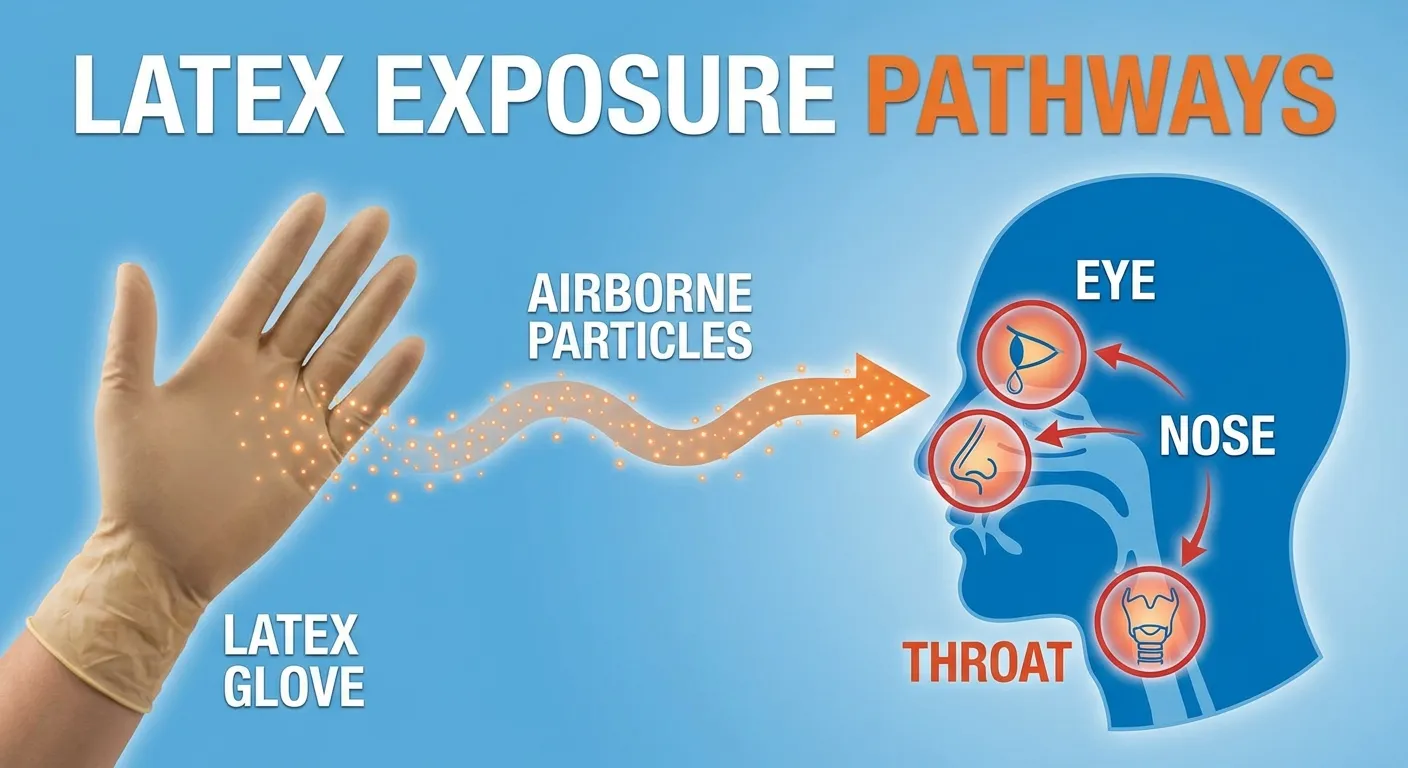
Latex exposure isn’t limited to touch. Latex proteins can become airborne on glove powder or dust particles—classically associated with powdered latex gloves—and be inhaled. When breathed in, these proteins can provoke nasal, eye, and throat symptoms in sensitive individuals (Mayo Clinic; Allergy & Asthma Network). For example, someone may feel fine away from gloves but start sneezing or rubbing itchy eyes after entering a treatment room where gloves are used.
If your symptoms start when gloves are used nearby—even without direct contact—airborne latex proteins may be the reason.

ENT Symptoms of Latex Allergy (Nose, Eyes, Throat)
Patient-friendly note: Symptoms often begin within minutes of exposure, but timing can vary by person, dose of exposure, and whether latex proteins become airborne.
Nasal symptoms (can look like allergic rhinitis)
- Sneezing
- Runny nose (rhinorrhea)
- Nasal itching
- Nasal congestion (in some cases)
- Postnasal drip or a “drip” sensation in the back of the nose/throat
Because this pattern can mimic allergic rhinitis from other triggers (pollen, dust, pets), the context—where and when it happens—matters. Major references (Mayo Clinic; Johns Hopkins Medicine) include nasal symptoms among possible latex allergy reactions.
Common patient observation: “I’m fine at home, but I start sneezing every time I’m in a dental chair,” or “My nose runs when I’m stocking gloves at work.” That repeatable pattern is a practical clue to discuss with a clinician. When rhinitis-like symptoms reliably occur with a specific product or setting, consider latex as a potential trigger.
Eye symptoms that often occur with nasal symptoms
- Redness
- Itching
- Watering/tearing
This allergic conjunctivitis pattern is commonly described in latex allergy summaries (Mayo Clinic; Cleveland Clinic). Everyday example: eyes that suddenly water and sting while blowing up balloons—or while standing near someone else handling latex items. Eye irritation that travels with nasal symptoms around latex exposure strengthens the case for allergy.
Throat and upper-airway symptoms
- Scratchy or irritated throat
- Throat “tickle”
- Frequent throat clearing
- Mild voice changes (from irritation)
Allergy & Asthma Network and Mayo Clinic both describe throat/airway involvement with latex allergy. If latex proteins reach the nose, they can also irritate tissues farther downstream, especially in the presence of postnasal drip or inhaled particles. A scratchy throat that coincides with nasal/eye symptoms in latex environments is a meaningful exposure clue.

When ENT Symptoms Signal a More Serious Respiratory Reaction
Lower-airway symptoms to take seriously
- Wheezing
- Persistent cough
- Shortness of breath or asthma-like symptoms
These can indicate a stronger allergic response and are highlighted by major references (Mayo Clinic; Cleveland Clinic; Allergy & Asthma Network).
Emergency warning signs (call 911 / seek ER)
- Trouble breathing, chest tightness, or severe wheezing
- Swelling of the lips, tongue, or throat
- Dizziness, fainting, or feeling suddenly very unwell
If allergy symptoms are accompanied by shortness of breath, seek urgent medical care, especially if latex exposure is possible. Treat breathing symptoms with urgency, particularly if latex exposure is possible.

Common Latex Exposure Sources (Where ENT Reactions Often Start)
Healthcare and dental settings
- Gloves
- Dental dams
- Tourniquets
- Elastic bandages and certain medical devices
If sneezing, itchy eyes, or throat irritation repeatedly starts in these settings, latex exposure is a reasonable consideration. Practical tip: note when symptoms start—at check-in, during the exam, or afterward—because timing sometimes hints at airborne exposure versus direct contact.
Workplaces with higher latex exposure
- Hospitals and clinics
- Dental offices
- Laboratories
- Some food service and housekeeping roles
Home and everyday items (quick list)
- Household gloves
- Balloons
- Rubber bands
- Some sports/fitness gear
Cleveland Clinic and Johns Hopkins Medicine list common latex sources. Tracking where symptoms start helps pinpoint—and avoid—your most important triggers.

Why It Happens — Causes and Risk Factors
The immune mechanism (simple explanation)
In IgE-mediated latex allergy, latex proteins are recognized as a threat. The body releases histamine and other mediators, which can lead to allergic rhinitis-like symptoms, itchy/red eyes, and throat irritation. For a broader overview, see how allergies work: https://sleepandsinuscenters.com/what-are-allergies
Risk factors that increase the chance of latex allergy
- Frequent latex exposure (often work-related)
- Other atopic conditions (such as allergic rhinitis or asthma)
- Certain medical histories (for example, spina bifida or multiple surgeries early in life)
These patterns are discussed by Mayo Clinic and Cleveland Clinic. Your exposure history and risk factors help clinicians decide which tests and precautions make sense.
Latex Allergy vs. Seasonal Allergies vs. Cold (How to Tell)
Clues it may be latex rather than pollen
- Linked to specific places (clinic, dental office, workplace)
- Triggered by specific products (gloves, balloons, rubber items)
- Repeatable: “Every time I’m around X, I sneeze and my eyes itch”
Quick self-check: If symptoms improve after leaving a particular room or finishing a particular task, that on/off pattern is worth mentioning to an ENT or allergist.
Clues it may be a viral illness instead
- Fever
- Body aches
- Feeling generally unwell
- Thick or discolored mucus along with broader sick symptoms
Clues symptoms may be chronic rhinitis from another trigger
If symptoms persist most days regardless of exposures, another type of rhinitis may be involved. For ongoing nasal symptom strategies, see treating chronic rhinitis: https://sleepandsinuscenters.com/treating-chronic-rhinitis
When symptoms flip on and off with a specific product or place, consider latex as a potential trigger.
Diagnosis — How Clinicians Confirm Latex Allergy
History is key (what your ENT/allergist will ask)
- How quickly symptoms begin after exposure
- Which settings/products seem to trigger them
- Whether symptoms occur with inhalational exposure (for example, near glove use)
- Whether there’s cough, wheeze, or shortness of breath
- Past skin reactions that might suggest irritant or allergic contact dermatitis
Helpful to bring: a short list of situations where symptoms appear (for example, dentist visit, blowing up balloons, cleaning with rubber gloves), plus how quickly symptoms start and how long they last.
Testing options (what patients should expect)
- Skin-prick testing or blood testing for latex-specific IgE (for immediate-type latex allergy)
- Patch testing if allergic contact dermatitis (to additives) is suspected
- Supervised exposure or challenge testing in select cases (performed with caution)
Because provoking an allergic response can be risky, testing should be performed under medical supervision (Mayo Clinic; Cleveland Clinic). To learn what an allergy evaluation may involve, visit allergy testing: https://sleepandsinuscenters.com/allergy-testing
A precise history, paired with the right test, can differentiate latex allergy from look‑alike conditions.
Treatment Options for ENT Symptoms of Latex Allergy
The most effective strategy: latex avoidance
- Substitute non-latex alternatives (often nitrile or vinyl, depending on use)
- Reduce exposure opportunities in higher-risk environments
- Minimizing powdered glove use can help lower airborne spread where applicable (policies vary)
It’s helpful to think of avoidance as turning off the trigger rather than repeatedly trying to quiet symptoms after they start.
Symptom relief medications (patient-friendly overview)
- Antihistamines (for sneezing/itching and watery eyes)
- Nasal sprays commonly used for allergic rhinitis symptoms
- Eye drops for allergic eye symptoms
Mayo Clinic and Cleveland Clinic describe treatment as involving avoidance plus symptom management, tailored to reaction severity. Note: Allergen immunotherapy for latex is not commonly used; current management emphasizes avoidance and treatment of related conditions (such as rhinitis or asthma).
Preparing for severe reactions
- Carrying epinephrine if prescribed and understanding when to use it
- Alerting all healthcare teams to a latex allergy so latex-free or latex-avoidance supplies/protocols can be used when available
These preparedness steps are emphasized in major latex allergy resources (Mayo Clinic; Johns Hopkins Medicine; Allergy & Asthma Network). Avoiding the allergen is the most effective treatment, with medications reserved for symptom control and emergency plans for higher‑risk patients.

Lifestyle & Prevention Tips (Home, Work, Medical Visits)
At medical/dental appointments
- State latex allergy (or possible latex allergy) when scheduling and again at check-in
- Ask about latex-free or latex-avoidance gloves and supplies
- When airborne exposure is a concern, some practices may adjust scheduling or rooming to reduce risk
A helpful script: “I’ve noticed sneezing and itchy eyes around latex—can we use latex-free supplies today?”
At work (especially healthcare)
- Request powder-free, non-latex gloves and latex-avoidance protocols
- Improve ventilation where feasible
- Reduce direct exposure when possible
At home
- Replace household latex items with non-latex alternatives
- Read packaging carefully—latex content is not always obvious
For more on day-to-day symptom control where exposures are mixed, see treating chronic rhinitis: https://sleepandsinuscenters.com/treating-chronic-rhinitis
Small planning steps at home, work, and medical visits can dramatically cut exposure risk.
When to See an ENT or Allergist
Consider scheduling an evaluation if you notice:
- Recurrent rhinitis-like symptoms linked to latex exposure
- Persistent throat irritation or cough that seems exposure-related
- Any wheezing or asthma-like symptoms with suspected latex exposure
If you’re dealing with repeatable hay fever symptoms in clinics, dental offices, or at work—and latex is on your radar—you can learn more about our care options or request an appointment: https://www.sleepandsinuscenters.com/
Early evaluation can reduce future reactions and make visits and workplaces safer.
FAQs
Can a latex allergy cause a runny nose and sneezing?
Yes. Latex allergy can present with allergic rhinitis-like symptoms, including sneezing and a runny nose. (Mayo Clinic, 2024; Johns Hopkins Medicine)
Can airborne latex trigger symptoms without touching latex?
Yes. Latex proteins can become airborne on powder or dust particles and provoke ENT/respiratory symptoms in sensitive individuals. (Allergy & Asthma Network; Mayo Clinic)
Why do I get a scratchy throat around latex gloves?
Throat irritation can occur with latex exposure and may be part of a broader allergic response. (Allergy & Asthma Network)
Can latex allergy lead to asthma or wheezing?
It can. More significant reactions may include coughing, wheezing, or asthma-like symptoms. (Mayo Clinic; Cleveland Clinic)
What should I do before a surgery or dental procedure if I suspect latex allergy?
Let the care team know as early as possible (including when scheduling) and ask about latex-free or latex-avoidance supplies; a formal allergy evaluation can help clarify risk. (Johns Hopkins Medicine; Cleveland Clinic)
Key Takeaways
- ENT symptoms of latex allergy can mimic allergic rhinitis: sneezing, runny nose, and itchy/red eyes. (Mayo Clinic; Johns Hopkins)
- Throat irritation—including a scratchy, irritated sensation—can occur in the right exposure context. (Allergy & Asthma Network)
- Latex proteins can become airborne on glove powder or dust particles and trigger nasal and throat symptoms. (Mayo Clinic; Allergy & Asthma Network)
- Wheezing, persistent cough, or shortness of breath can indicate a more serious reaction and should be taken seriously. (Mayo Clinic; Cleveland Clinic)
References
- Mayo Clinic (2024). Latex allergy: Symptoms & causes. https://www.mayoclinic.org/diseases-conditions/latex-allergy/symptoms-causes/syc-20374287
- Cleveland Clinic (2024). Latex Allergy. https://my.clevelandclinic.org/health/diseases/8623-latex-allergy
- Johns Hopkins Medicine. Latex Allergy. https://www.hopkinsmedicine.org/health/conditions-and-diseases/latex-allergy
- Allergy & Asthma Network. Latex Allergy. https://allergyasthmanetwork.org/allergies/latex-allergy/
“This article is for educational purposes only and is not medical advice. Please consult a qualified healthcare provider for diagnosis and treatment.”
Don’t let allergies slow you down. Schedule a comprehensive ENT and allergy evaluation at Sleep and Sinus Centers of Georgia. We’re here to find your triggers and guide you toward lasting relief.