In-Office vs Hospital Sinus Surgery: Pros & Cons, Costs, and Recovery Time
Choosing sinus surgery isn’t only about what procedure you need—it’s also about where it’s done. The setting affects anesthesia, comfort, costs, recovery time, and what your surgeon can safely address in one session.
In general, sinus procedures fall into two main settings:
- In-office sinus surgery: typically done with local anesthesia (numbing medicine), and often involves balloon sinuplasty or limited endoscopic work.
- Hospital/ambulatory surgery center (OR): typically done under general anesthesia, and can include full functional endoscopic sinus surgery (FESS) with broader access for more extensive disease.
Many patients with limited disease do well with office-based options, but more complex conditions often still require OR-level visualization and tissue removal (AAO-HNS, 2025) (1). Just as important, candidacy should be determined by an experienced ENT surgeon; attempting office surgery in the wrong situation can lead to incomplete treatment or the need to reschedule in the OR.
In this guide, you’ll learn how candidacy is decided, the real-world pros and cons, safety considerations, typical cost drivers, and what recovery commonly looks like for in-office vs hospital sinus surgery.
Bottom line up front: the “right” setting is the one that safely and effectively matches your anatomy, disease extent, and comfort.
When Is Sinus Surgery Even Considered? (Symptoms + Diagnosis)
Common symptoms that may lead to surgery
Sinus surgery is usually discussed when symptoms persist despite appropriate medical care and significantly affect daily life. Common symptoms include:
- Nasal blockage/congestion lasting months
- Facial pressure/pain
- Thick nasal drainage or post-nasal drip
- Reduced smell/taste
- Recurrent sinus infections despite treatment
- Sleep disruption, fatigue, missed work, and reduced quality of life
A useful way to think about it: surgery is rarely about “getting rid of a cold.” It’s more often about improving airflow and drainage when ongoing inflammation keeps the system stuck in a loop.
For a deeper symptom overview, see Sleep and Sinus Centers of Georgia’s guide on symptoms of sinus problems: https://sleepandsinuscenters.com/symptoms-of-sinus-problems
Common causes behind chronic sinus problems (that surgery may address)
Surgery is often aimed at improving drainage and ventilation when ongoing inflammation keeps sinus openings blocked. Common contributors include:
- Chronic rhinosinusitis (CRS) (inflamed sinus lining)
- Narrow/blocked drainage pathways (ostial obstruction)
- Structural factors (deviated septum, turbinate enlargement)
- Allergies and non-allergic rhinitis as ongoing triggers
Simple analogy: if a doorway (your sinus opening) is swollen shut, medication may reduce swelling—but if the doorway is consistently too narrow, surgery can create more reliable “breathing room” for drainage and topical medicines to actually reach the target.
The workup that helps decide office vs OR
The decision for office-based sinus surgery vs OR surgery is driven by the extent and location of disease, anatomy, and safety considerations—not just convenience.
A typical evaluation may include:
- Nasal endoscopy + symptom scoring (often SNOT-22). SNOT-22 is the Sino-Nasal Outcome Test, a questionnaire that measures symptom severity and quality-of-life impact.
- CT imaging to map disease extent and anatomy
- A trial of “maximal medical therapy” when appropriate (saline irrigation, topical nasal steroids, allergy management)
To understand why imaging matters so much, see what a sinus CT scan shows: https://sleepandsinuscenters.com/blog/sinus-ct-scan-what-it-shows-and-how-it-helps-diagnose-sinus-issues
Why this matters: patient selection drives outcomes—limited, focal disease can be a great fit for in-office options, while extensive disease often needs OR-level exposure (1, 3).
In short, persistent symptoms plus objective findings after good medical care are what open the door to surgery—and they also guide whether the office or OR is the safer, more effective setting.

Types of Sinus Procedures (And Where They’re Typically Done)
In-office procedure types
- Balloon sinus dilation (balloon sinuplasty/BSD): a small balloon is used to gently dilate sinus openings, generally with minimal tissue removal. Learn more: https://sleepandsinuscenters.com/balloon-sinuplasty
- Limited endoscopic sinus surgery (limited ESS) under local anesthesia: targeted endoscopic work on select sinuses in an office procedure room. ESS stands for endoscopic sinus surgery—a minimally invasive technique using small cameras and instruments through the nose (3).
Concrete example: someone with mainly one or two narrowed drainage pathways on CT (often without polyps) may be able to treat those specific “pinch points” in the office—especially if they tolerate local anesthesia well.
Hospital/OR procedure types
- Traditional functional endoscopic sinus surgery (FESS): a more comprehensive approach that can involve wider opening of sinus pathways and removal of obstructive/inflamed tissue. For a patient-friendly primer, see Endoscopic Sinus Surgery: What Patients Should Know: https://sleepandsinuscenters.com/blog/endoscopic-sinus-surgery-what-patients-should-know
- Common OR add-ons (when needed):
- Polyp removal
- Extensive ethmoid/frontal work
- Management of fungal disease or bony changes
This is where the balloon sinuplasty vs FESS conversation often becomes clearer: BSD is typically best for selected patterns of blockage, while FESS is designed to treat broader disease when more exposure and tissue work are necessary.
Think of balloon dilation as widening specific doorways, and FESS as the toolset for remodeling a larger, more complicated floor plan.

Who’s a Good Candidate for In-Office Sinus Surgery?
Best-fit patient profile (typical)
In-office procedures are often best suited for patients with:
- Limited or focal ostial disease (often non-polyp CRS) (1, 2)
- Ability to tolerate local anesthesia and remain still during the procedure
- Lower bleeding risk and manageable medical comorbidities after pre-op evaluation
- Comfort with being awake (with numbing medicine and sometimes oral medication, depending on the plan)
A clinician might put it this way: “If we can safely and comfortably treat the specific blocked areas without needing broad tissue removal, the office can be a great fit.” Specifics vary by practice and by individual anatomy and diagnosis.
Cases that are usually not appropriate for balloon-only or limited office approaches
Office-based approaches may not be the right match when disease is extensive or complex, such as:
- Nasal polyps
- Osteitis (inflamed bone), bony erosion, fungal sinus disease
- Multi-sinus disease needing broad exposure and tissue removal
AAO-HNS guidance emphasizes full exposure and removal of diseased tissue for these scenarios, which typically aligns better with OR-based surgery (1).
Practical safety note
Well-run office programs use careful anesthesia planning, preoperative bleeding-risk assessment and medical optimization, continuous monitoring, and clear emergency protocols—plus a defined plan if a case needs to be converted or rescheduled in an OR setting (3). Patients should ask their surgeon about this contingency plan in advance.
Good candidates are carefully selected—by imaging, endoscopy, and medical screening—to prioritize safety, comfort, and complete treatment.
In-Office Sinus Surgery — Pros & Cons
Pros
For the right candidate, in-office vs hospital sinus surgery comparisons often favor the office setting for convenience and recovery:
- Less invasive feel for selected patients (especially balloon dilation) (2)
- Faster recovery for many patients (often earlier return to routine activities) (3)
- Lower facility/anesthesia costs in many cases (coverage varies) (3)
- Potentially shorter scheduling wait times (less OR coordination) (3)
- High patient satisfaction reported in office-based series/reviews (3)
Everyday-life example: for some desk-based workers, the appeal is “less interruption”—a shorter appointment, local anesthesia, and fewer logistics than coordinating a hospital check-in and anesthesia recovery.
Cons/limitations
- Not appropriate for extensive disease (polyps, osteitis, fungal disease, erosion) (1)
- Comfort/anxiety varies—some people strongly prefer not to be awake
- If bleeding, anatomy, or disease extent is greater than expected, the procedure may be paused and rescheduled in the OR; office-based ESS series report this in roughly ~3–7% of cases (3). This reflects caution and a safety-first approach, not failure.
Office procedures can be highly convenient and effective when the anatomic “targets” are limited—but they’re not designed for complex, multi-sinus disease.

Hospital/OR Sinus Surgery — Pros & Cons
Pros
OR-based surgery is often the best option when disease is complex or widespread:
- Best for extensive disease requiring full visualization/exposure (1)
- General anesthesia can be preferable for long or complex procedures, challenging anatomy, or patients who cannot tolerate office-based approaches
- Full resources available to manage complications immediately
If you need broad work across multiple sinuses or significant tissue removal, the OR setting is built for that: more tools, more time, deeper anesthesia, and a controlled environment for complex anatomy.
Cons
- Typically higher facility and anesthesia charges (a major sinus surgery cost driver)
- Longer day-of-surgery experience (pre-op, anesthesia recovery, discharge process)
- Often longer downtime, especially when more extensive surgery is performed
The OR offers the greatest margin for complex work—at the tradeoff of more logistics, higher costs, and a typically longer recovery.
Results That Matter: Symptom Relief, Revisions, and Long-Term Data
Short-term symptom improvement (what research suggests)
A 2022 systematic review/meta-analysis suggests balloon dilation and FESS can produce similar short-term improvement in patient-reported outcomes (like SNOT-22 scores) in appropriately selected patients—often those without polyps (2).
Practical takeaway: when the diagnosis and anatomy fit balloon dilation, it can deliver meaningful relief—but it isn’t meant to replace FESS for every CRS subtype.
Durability and long-term outcomes (what’s still uncertain)
Long-term, high-quality comparative data across different CRS subtypes are still limited (2, 3). This is one reason surgeons emphasize careful matching of the procedure to the pattern of disease and close follow-up.
Revisions and re-treatment rates (why selection matters)
A “revision” means an additional procedure is needed later due to persistent obstruction, recurring inflammation, scarring, or disease progression.
Reported revision rates vary by study and population. Examples include:
- One cohort reporting revisions around ~7.9% for BSD vs ~16.9% for FESS (highly context-dependent) (3)
- Office-based ESS series reporting revisions around ~8–10% (varies by disease and technique) (3)
The key takeaway: revision rates depend heavily on diagnosis (polyps vs no polyps), disease extent, and follow-up care.
When procedure choice fits the disease pattern, both balloon dilation and FESS can provide meaningful relief—selection and aftercare strongly shape long-term success.
Safety and Complications — Comparing Risks
Complication rates (big-picture)
Serious complications are uncommon in both approaches in published series (with variation depending on who was included) (3). One example cohort reported overall complication rates around ~5.3% for BSD vs ~7.4% for FESS (not all complications are severe) (3). Even when rare, serious risks do exist and should be discussed with your surgeon as part of the risk-benefit conversation.
Potential risks to review with your surgeon (both settings)
- Bleeding
- Infection
- Scar tissue/adhesions
- Persistent symptoms or need for additional treatment
- Rare but serious risks: CSF leak, eye/orbit injury, significant hemorrhage
Office-specific safety considerations
For office-based procedures, appropriate monitoring, emergency readiness, and surgeon experience are especially important—along with a clear escalation plan if OR-level resources become necessary. Bleeding risk assessment and optimization of comorbidities help prevent complications and guide setting choice (3).
Safety is excellent in well-selected patients and experienced hands—ask your surgeon to walk you through your personalized risk profile and backup plan.
Cost Comparison — What Patients Are Really Paying For
Typical cost components (both settings)
When comparing in-office vs hospital sinus surgery, costs usually reflect multiple parts:
- Surgeon/professional fees
- Facility fee (office procedure room vs hospital/ASC)
- Anesthesia (local vs general and possible anesthesia professional fees)
- Imaging (CT), endoscopy, pathology (if tissue is removed)
- Post-op visits/debridements and medications
Why in-office can cost less (but not always)
In many cases, in-office procedures have lower facility overhead and less anesthesia-related cost (3). However, insurance coverage, deductibles, and reimbursement models can change out-of-pocket totals.
For a practical insurance-focused breakdown, see: Is balloon sinuplasty covered by insurance? https://sleepandsinuscenters.com/blog/is-balloon-sinuplasty-covered-by-insurance
Indirect costs to include in your budget
- Time off work
- Transportation (especially if sedatives or general anesthesia are used)
- Caregiver help for 24 hours after sedation/OR surgery
“Ask your insurance” checklist (actionable)
- Is balloon dilation covered for my diagnosis?
- Is it billed as office-based surgery or outpatient hospital?
- What are my deductible/coinsurance and out-of-pocket max?
- Do I need prior authorization?
Costs are driven mostly by facility and anesthesia—ask for a transparent estimate that reflects your insurance and the exact setting proposed.

Recovery Time — In-Office vs Hospital (What to Expect)
Individual recovery varies widely based on the procedure type, extent of surgery, and your health history. The points below are general patterns rather than guarantees.
Anesthesia and day-of experience
- In-office (balloon/limited ESS): local anesthesia (sometimes with oral meds); typically a shorter visit with discharge soon after
- Hospital/OR (FESS/complex ESS): usually general anesthesia; longer day with recovery room time
Early symptoms
- Both settings: congestion/pressure, drainage
- OR/general anesthesia cases: grogginess or nausea are possible the same day
Return to routine activities
- In-office: many patients resume desk work sooner; activity limits are individualized (3)
- OR/complex ESS: downtime is often longer, particularly after extensive tissue work
Follow-ups
- In-office: frequency varies by case
- OR/ESS: debridements (endonasal cleaning) are often scheduled; ongoing irrigations and topical therapies are common
Day of procedure
- In-office: expect pressure/congestion, brief observation, then home with instructions
- OR: allow time for pre-op, anesthesia recovery, discharge planning, and ride home
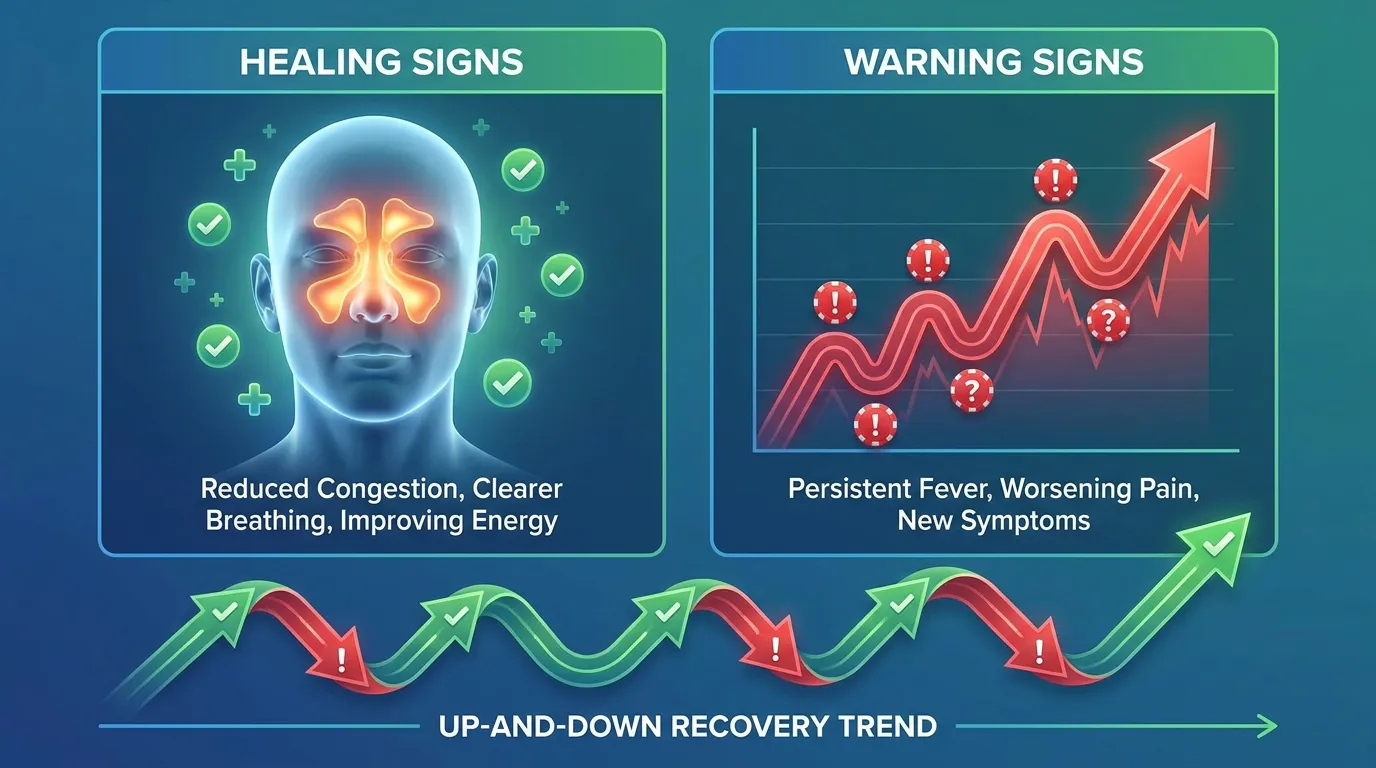
First week (common experiences)
- Congestion, drainage, mild bleeding/crusting
- Saline irrigations are commonly recommended
- Discomfort often managed with non-opioid options (varies)
For a day-by-day example focused on balloon procedures, see the balloon sinuplasty recovery timeline: https://sleepandsinuscenters.com/blog/balloon-sinuplasty-recovery-timeline-day-by-day-he-20260120224024
Recovery is personal and procedure-specific—ask your surgeon for a week-by-week plan tailored to your case and job demands.

Treatments That May Reduce the Need for Surgery (Or Improve Surgical Results)
Medical management options
Common non-surgical strategies include:
- Saline irrigation routine
- Intranasal steroid sprays/rinses
- Allergy evaluation and treatment (when indicated)
- Identifying and treating chronic rhinitis triggers
For more on stepwise care, see Chronic Sinusitis Treatment: https://sleepandsinuscenters.com/chronic-sinusitis-treatment
Lifestyle tips for better sinus outcomes (pre- and post-op)
- Avoid smoking/vaping
- Optimize home humidity (avoid overly dry air)
- Reduce exposure to irritants/allergens when possible
- Adjust sleep positioning if nighttime congestion is worse
Consistent medical therapy and trigger control can lessen symptoms now and support better long-term surgical outcomes if you need an operation later.
Questions to Ask Your ENT (Decision-Making Checklist)
- Based on my CT/endoscopy, is my disease limited or extensive?
- Do I have polyps, osteitis, fungal disease, or bony erosion (which often favors OR surgery)? (1)
- Which sinuses need treatment (maxillary, frontal, ethmoid, sphenoid)?
- What anesthesia is planned, and how will you keep me comfortable if I’m awake?
- What is your revision rate and complication profile for patients like me?
- What’s the plan if an office procedure can’t be completed (convert/abort/reschedule), and how often does that happen in your practice? (3)
- How will recovery look by week 1, week 2, and week 6 for my specific case?
- I’m anxious about anesthesia/being awake—can we talk through options to manage comfort and anxiety?
FAQs
1) Is balloon sinuplasty the same as sinus surgery (FESS)? Not exactly. Balloon sinuplasty primarily dilates natural openings, while FESS typically involves endoscopic removal of obstructive tissue and broader opening of sinus pathways.
2) How do I know if I need in-office vs hospital sinus surgery? CT findings, endoscopy, symptom pattern, and factors like polyps or osteitis often determine candidacy (1, 3). An experienced ENT’s evaluation is essential.
3) Does in-office sinus surgery hurt? Comfort varies. Local anesthesia is used to numb the area, but pressure and awareness can still be part of the experience. Oral anxiolytics may be considered when appropriate.
4) How long is recovery after balloon sinuplasty vs FESS? Many patients recover faster after balloon dilation compared with more extensive OR surgery, but timelines depend on what was treated, overall inflammation, and individual healing (3).
5) Is symptom relief the same for balloon dilation and FESS? In appropriately selected patients (often without polyps), studies show similar short-term symptom improvement (2).
6) Can in-office procedures treat nasal polyps? Polyps often signal more extensive disease that may require OR-based surgery and broader tissue removal (1).
7) What are the most common complications of sinus surgery? Bleeding, infection, scarring/adhesions, and persistent symptoms are commonly discussed; rare serious risks exist as well (3).
8) What happens if the in-office procedure can’t be completed? Some cases are stopped and rescheduled in an OR setting; published office-based ESS series report this at ~3–7% (3). This prioritizes safety.
9) Will I need revision surgery later? Some patients do; rates vary widely by diagnosis and severity (3).
10) How can I keep symptoms from coming back after surgery? Ongoing care often includes saline, topical anti-inflammatory therapy, allergy management when relevant, and trigger control—your ENT can tailor this to your situation.
Conclusion — Choosing the Right Setting Is About the Right Match
The best choice in in-office vs hospital sinus surgery usually comes down to matching the procedure to the pattern and extent of disease:
- Limited disease → office-based balloon dilation or limited ESS can be efficient, convenient, and associated with quicker recovery for well-selected patients (3).
- Extensive disease (polyps/osteitis/erosion/fungal) → OR-based, full-exposure surgery remains the standard approach (1).
If you’re weighing options, the most helpful next step is a structured evaluation (endoscopy and often CT review) and a clear conversation about goals, tradeoffs, and expected recovery.
Ready for a personalized recommendation? You can book an appointment with Sleep and Sinus Centers of Georgia here: https://www.sleepandsinuscenters.com/
To explore related topics:
- Balloon Sinuplasty: https://sleepandsinuscenters.com/balloon-sinuplasty
- Endoscopic Sinus Surgery: What Patients Should Know: https://sleepandsinuscenters.com/blog/endoscopic-sinus-surgery-what-patients-should-know
References
1. AAO-HNS Clinical Practice Guideline: Surgical Management of Chronic Rhinosinusitis (2025). https://aao-hnsfjournals.onlinelibrary.wiley.com/doi/10.1002/ohn.1287
2. Balloon sinus dilation versus functional endoscopic sinus surgery: systematic review and meta-analysis (2022). https://pmc.ncbi.nlm.nih.gov/articles/PMC10559877/
3. Contemporary office-based procedures in rhinology: narrative review (2025). https://pmc.ncbi.nlm.nih.gov/articles/PMC12313725/
This article is for educational purposes only and is not medical advice. Please consult a qualified healthcare provider for diagnosis and treatment.
Don’t let allergies slow you down. Schedule a comprehensive ENT and allergy evaluation at Sleep and Sinus Centers of Georgia. We’re here to find your triggers and guide you toward lasting relief.