How to Treat Mold Sinus Disease Without Surgery: Effective Non-Surgical Options
If you’ve been told (or suspect) that “mold” is behind your chronic congestion, facial pressure, or post-nasal drip, it can be hard to know what that actually means—and what to do next. The good news: many (but not all) people can often treat mold sinus disease without surgery by focusing on the fundamentals—improving drainage, calming inflammation, managing allergy triggers, and reducing ongoing exposure at home.
A helpful way to think about this is “plumbing + lining.” Your sinuses are like small drainage channels. If the lining is swollen (inflammation) or constantly irritated (allergy/exposure), those channels don’t drain well—so mucus sits, pressure builds, and symptoms persist. Non-surgical care aims to restore flow and calm the lining, not just “kill mold.”
If your goal is to treat mold sinus disease without surgery, it usually helps to think “inflammation + allergy + exposure,” not just “kill the mold.” —In short: reduce swelling, improve drainage, identify triggers, and lower exposure to break the cycle.
Quick Takeaways (For Busy Readers)
The most effective non-surgical strategies often include:
- Saline nasal irrigation to flush mucus and irritants and support drainage. (Cleveland Clinic; Banner Health; Medscape)
- Intranasal corticosteroid sprays to reduce swelling, pressure, and (in some cases) shrink polyps. (Cleveland Clinic; Medscape)
- Allergy management (antihistamines, testing, and sometimes immunotherapy) when allergic fungal sinusitis is suspected. (Mayo Clinic; Medscape)
- Mold exposure reduction at home—often essential for lasting symptom improvement. (Mayo Clinic; Cleveland Clinic)
- Antifungals are usually not recommended for non-invasive disease and should only be used under specialist guidance. (Cleveland Clinic; Medscape; PMC)
What “Mold Sinus Disease” Means (And Why It’s Confusing)
Mold exposure vs. fungal infection vs. mold allergy
People often use “mold in my sinuses” to describe several different issues:
- Mold allergy: Your immune system reacts to mold spores, irritating the lining of the nose and sinuses—similar to other allergies. (Mayo Clinic)
- Non-invasive fungal sinusitis: Fungus may be present in the sinuses but does not invade tissue. This includes conditions like allergic fungal rhinosinusitis (AFRS/AFS) and a fungal ball. (Cleveland Clinic; Medscape; PMC)
- Invasive fungal sinusitis: Rare but serious; fungus can invade surrounding tissues. It’s more likely in people with significant immune suppression and is considered urgent. (Cleveland Clinic; Medscape)
Because these categories are different, the “right” treatment can look very different. That’s also why internet advice can feel contradictory—one person may be dealing with allergy-driven inflammation, while another has a true fungal overgrowth pattern that needs a different workup.
Why non-surgical care can still help
Even when mold exposure is involved, non-surgical care may significantly improve symptoms by:
- lowering inflammation,
- improving mucus clearance and drainage,
- calming allergic responses, and
- reducing re-exposure that keeps symptoms cycling. (Cleveland Clinic; Medscape)
—Bottom line: labels vary, but restoring drainage and dialing down inflammation often helps across “mold”-related categories.
Common Symptoms of Mold-Related Sinus Problems
Nasal and sinus symptoms
Common complaints include:
- congestion or a “blocked” nose
- thick drainage or post-nasal drip
- facial pressure/fullness
- reduced smell or taste
- headache, fatigue, or cough (often from drainage)
These are often described as mold allergy sinus symptoms, but they can overlap with viral illness, non-allergic rhinitis, and chronic sinusitis. For example, it’s common to hear, “I’m not sick—I just feel constantly stuffed up,” especially when symptoms linger for weeks.
Clues that point toward an allergy-driven pattern
Symptoms may be more likely allergy-driven when you notice:
- flares in certain environments (home, work, water-damaged buildings)
- seasonal patterns
- itchy eyes, sneezing, or watery runny nose
- a history of asthma, allergies, or nasal polyps (commonly associated with allergic fungal sinusitis). (Medscape)
A practical example: if you feel noticeably worse after time in a musty basement, after running an older HVAC system, or in a damp workplace—and better when you’re away—that pattern can be a useful clue to discuss with your clinician.
Call your clinician urgently if…
Seek urgent evaluation if any of the following occur, especially with suspected fungal disease: vision changes, severe swelling around the eyes, high fever, confusion, severe one-sided facial pain, or if you have immune suppression concerns. (Cleveland Clinic)
—If symptoms cluster with environmental triggers or red flags appear, move quickly to a clinical evaluation.
What Causes Mold Sinus Disease?
Inflammation and blocked drainage
Many “sinus” symptoms are driven by inflammation. When the nasal lining swells, the drainage pathways can narrow, trapping mucus and creating pressure and ongoing irritation. (Cleveland Clinic; Medscape)
If you’ve ever tried to drink a thick smoothie through a pinched straw, you’ve felt the same basic concept: when the pathway is tight, flow slows down. The goal of medical therapy is to “unpinch the straw.”
Allergic fungal sinusitis (AFS/AFRS)
Allergic fungal sinusitis treatment focuses on controlling a strong allergy-type inflammatory response to fungal elements. It’s often associated with chronic symptoms and nasal polyps. (Medscape; PMC)
In other words, the immune system’s reaction can be a bigger driver of symptoms than the presence of fungus alone—so treatment typically targets inflammation and allergy pathways.
Environmental exposure (the “re-trigger” factor)
Damp indoor environments can keep symptoms going. Common contributors include leaks, flooding, humidity, poor ventilation, musty basements, and damp crawl spaces. (Mayo Clinic)
For more background, see our related post on how mold exposure can trigger sinusitis: https://sleepandsinuscenters.com/blog/how-mold-exposure-can-trigger-sinusitis
—In essence: inflamed lining + blocked drainage + repeated exposure adds up to persistent symptoms.
Getting the Right Diagnosis (So You Don’t Overtreat the Wrong Problem)
When to see an ENT or allergy specialist
Consider a specialist evaluation when symptoms are:
- repeatedly lasting longer than ~10 days,
- ongoing for 12+ weeks (often labeled chronic sinusitis),
- frequently recurring,
- associated with nasal polyps, or
- not improving with standard steps. (Cleveland Clinic; Medscape)
Learn more about chronic sinusitis: https://sleepandsinuscenters.com/chronic-sinusitis
This is especially important if you’ve tried “a little of everything” (rinses, sprays, allergy pills) but still feel stuck in the same cycle.
Tests you may need (not scary, often quick)
Depending on your symptoms and history, an evaluation may include:
- a nasal exam (sometimes nasal endoscopy),
- a CT scan for chronic/recurrent symptoms,
- allergy testing to confirm sensitivities and guide a long-term plan, including immunotherapy when appropriate. (Mayo Clinic; Medscape)
Learn more about allergy testing: https://sleepandsinuscenters.com/allergy-testing
—A targeted diagnosis helps you treat the real driver and avoid overtreating the wrong problem.
Effective Non-Surgical Treatments (What Works and Why)
1) Saline Nasal Irrigation (Your Foundation Step)
What it does
Saline nasal irrigation for sinusitis helps rinse out mucus and reduces exposure to irritants and allergens (including mold particles). It supports better drainage and can make other treatments (like sprays) work more effectively. (Cleveland Clinic; Banner Health; Medscape)
This is one of the most practical steps when trying to treat mold sinus disease without surgery—and it’s often the step people don’t do consistently enough to judge.
Best practices (patient-friendly how-to)
Key points for comfort and safety:
- Isotonic saline is often the most comfortable for daily use; hypertonic saline may feel more “drying” for some people.
- Use distilled, sterile, or previously boiled and cooled water—not straight tap water.
- Clean the device after each use and allow it to air-dry.
- Many people use it once daily for maintenance and up to twice daily during flares, depending on clinician guidance.
- Proper water source and device hygiene are essential to prevent infections.
For step-by-step safety reminders, see our neti pot safety tips: https://sleepandsinuscenters.com/blog/neti-pot-safety-tips-essential-steps-for-safe-nasal-irrigation
Who should be cautious
People with frequent nosebleeds, significant ear pressure issues, or those recovering from nasal procedures should review irrigation plans with a clinician first.
—Consistent, safe rinsing improves mucus clearance and helps other therapies work better.

2) Corticosteroids (Especially Nasal Sprays)
Why steroids help in mold-related sinus disease
A corticosteroid nasal spray for sinus inflammation reduces swelling inside the nose, improves airflow, and supports sinus drainage. In some patients, it can also help shrink nasal polyps over time. (Cleveland Clinic; Medscape)
If you’re trying to treat mold sinus disease without surgery, consistent use (as directed) is often more important than switching products frequently.
Nasal spray technique tips (to get results and avoid side effects)
- Aim slightly outward (away from the center wall of the nose).
- Use consistently—these sprays tend to help most when used regularly.
- Expect gradual improvement over days to weeks, not immediate relief. (Medscape)
When your clinician might use oral steroids
For severe inflammation or significant polyps, a clinician may discuss a short course of oral steroids. These can be effective but have potential side effects and should only be used under medical supervision. (Medscape)
—Used correctly, nasal steroids reduce swelling and open drainage pathways over time.

3) Allergy Medications (When Allergy Is Driving the Problem)
Antihistamines
Antihistamines can be helpful when sneezing, itching, and watery drainage suggest a strong allergy component. (Mayo Clinic) If your main symptoms are thick congestion and pressure (rather than itch/sneeze), antihistamines may be less noticeable—another reason a targeted diagnosis can be helpful.
Add-ons your clinician may consider
Depending on your overall pattern (especially if asthma is also present), a clinician may consider:
- leukotriene modifiers for some patients,
- other non-steroid nasal sprays as appropriate.
Allergy testing + immunotherapy (shots or drops)
For persistent, trigger-linked symptoms, mold allergy testing can clarify whether mold sensitivity is truly part of the picture. Results may guide environmental steps and immunotherapy, which aims to reduce reactivity over time. (Mayo Clinic; Medscape)
If allergic fungal sinusitis is suspected, allergy-directed care is often a central part of the long-term plan—not just a “nice to have.” (Medscape; PMC)
Learn more about allergy testing: https://sleepandsinuscenters.com/allergy-testing
—If allergy is a key driver, targeted allergy care can reduce flares and improve long-term control.

4) Mold Exposure Reduction at Home (Often the Missing Piece)
The goal: reduce the “mold burden”
Medications may calm symptoms, but ongoing exposure can continue to trigger inflammation—making it harder to treat mold sinus disease without surgery and maintain progress. (Mayo Clinic)
A patient-friendly way to frame this: if your nose is already irritated, even “small” exposures can keep the cycle going. Reducing exposure doesn’t have to be perfect—it just needs to be meaningful and consistent.
High-impact home steps (action checklist)
- Fix leaks promptly; dry water-damaged areas quickly.
- Keep indoor humidity ideally around 30–50%.
- Use exhaust fans in bathrooms and kitchens.
- Improve ventilation in basements/crawl spaces.
- Consider HEPA filtration in key rooms (often bedroom/living area).
- Avoid disturbing visible mold without appropriate precautions; for larger or persistent problems, professional remediation is preferable.
When to consider professional remediation
Consider expert help when there’s:
- a large area of mold,
- persistent moisture problems,
- HVAC contamination concerns, or
- repeated musty odors despite cleaning and dehumidifying. (Mayo Clinic)
—Reducing indoor moisture and mold sources is essential for lasting improvement.

5) What About Antifungal Medications?
The key point (clear, evidence-aligned)
For most patients with non-invasive disease, antifungals are not routinely recommended as stand-alone therapy, including in many cases labeled as “mold sinus disease.” (Cleveland Clinic; Medscape; PMC) Antifungal medications should only be used under specialist guidance due to potential side effects and their limited role in most non-invasive cases.
When antifungals may be used
For invasive fungal sinusitis (rare, serious), treatment typically requires urgent specialist management and may include antifungals as part of a broader plan. (Cleveland Clinic; Medscape)
—In typical non-invasive cases, focus on irrigation, inflammation control, allergy care, and exposure reduction; reserve antifungals for specialist-directed situations.
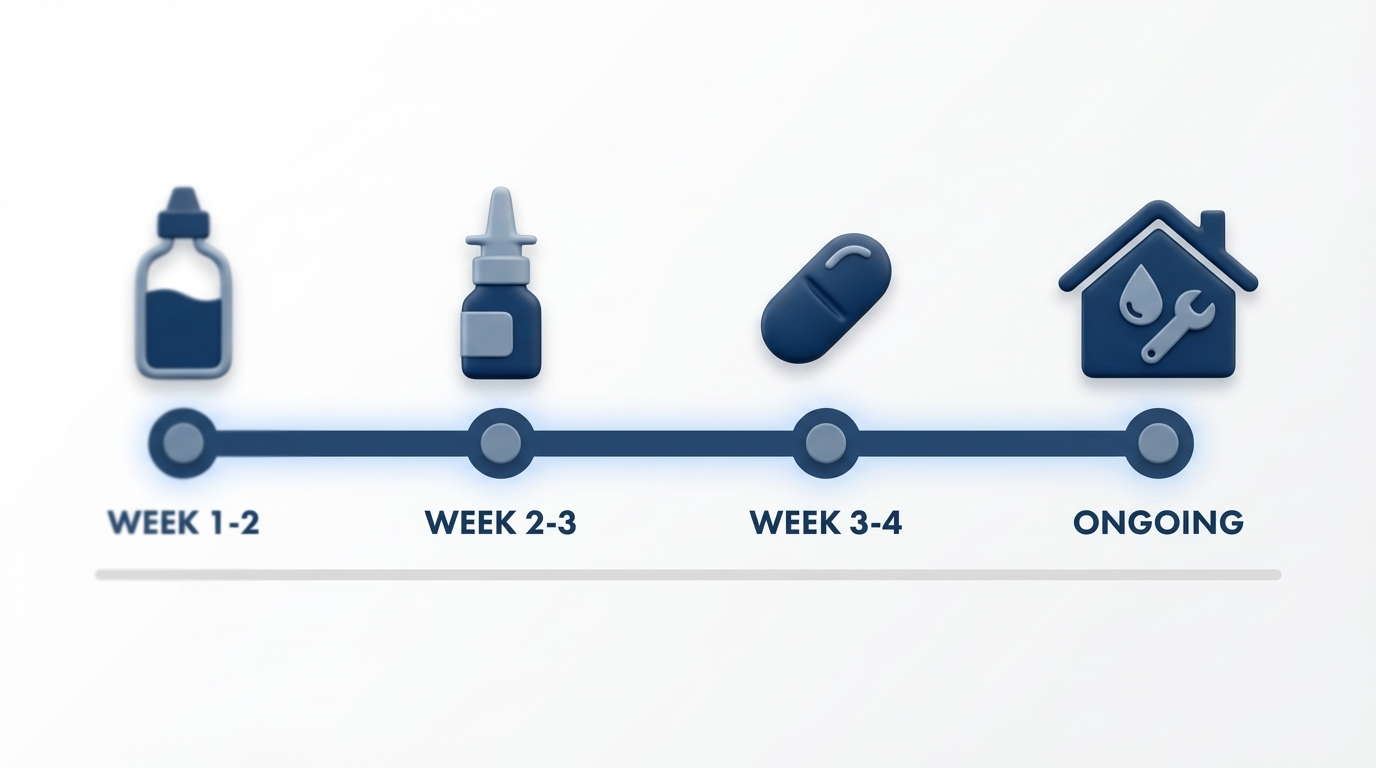
Putting It Together: A Practical 2–4 Week Non-Surgical Plan to Discuss With Your Clinician
This is educational—not a substitute for medical care—but it can help you prepare for a productive visit.
Week 1–2 (calm inflammation + improve drainage)
- Daily saline irrigation.
- Start or continue a nasal steroid spray with consistent technique.
- Consider an antihistamine if allergy symptoms are clear.
Week 3–4 (prevent relapse)
- Continue irrigation + nasal steroid.
- Tighten home moisture/mold controls (humidity, leaks, filters).
- If symptoms persist or are strongly environment-triggered, discuss referral for allergy testing (Mayo Clinic).
—Most people progress fastest with a combined, consistent plan rather than any single step.
When Non-Surgical Care Isn’t Enough (And Why Surgery Might Still Be Discussed)
Signs you may need an ENT re-evaluation
A follow-up may be appropriate if there are:
- persistent symptoms despite consistent treatment,
- significant nasal polyps,
- suspected structural blockage,
- suspected fungal ball, or
- concern for complications. (Cleveland Clinic; Medscape)
Referral to an ENT specialist should be prompt if symptoms worsen or red flags appear.
Reassurance
Seeing an ENT doesn’t automatically mean surgery. Often, it means a more precise diagnosis and a better-targeted medical plan—sometimes with small tweaks (technique, consistency, environmental controls) that make a big difference.
—If progress stalls, a targeted ENT evaluation can clarify the diagnosis and options.
Lifestyle Tips That Support Sinus Healing
Daily habits that reduce irritation
- Stay hydrated.
- Avoid smoke/vaping and secondhand exposure.
- Minimize strong fragrances and harsh cleaning fumes.
- Be cautious with humidifiers: over-humidifying can worsen indoor mold risk.
Sleep and comfort tips
- Slight head elevation may help if post-nasal drip is worse at night.
- Bedroom HEPA filtration + regular bedding cleaning may reduce overall allergen load.
—Small daily choices can lower irritation and support long-term control.
FAQs (Patient-Friendly)
1) Is mold in my sinuses the same as a fungal infection?
Not necessarily. Mold allergy, non-invasive fungal sinusitis, and invasive fungal sinusitis are different categories with different treatment approaches. (Mayo Clinic; Cleveland Clinic)
2) Can saline rinses actually remove mold or allergens?
Saline irrigation can help flush mucus and allergens/irritants from the nasal passages and support drainage. Proper water source and device hygiene are essential. (Cleveland Clinic; Banner Health; Medscape)
3) How long do nasal steroid sprays take to work?
They often help gradually over days to weeks, especially with consistent use and good technique. (Medscape)
4) Do I need antifungal pills for mold sinus disease?
Often, no—antifungals generally aren’t routine for non-invasive disease and should only be used under specialist guidance. They’re more relevant in invasive cases under urgent specialist care. (Cleveland Clinic; Medscape; PMC)
5) Should I get allergy testing if I suspect mold is the trigger?
Testing can confirm mold sensitivity and help guide environmental steps and immunotherapy decisions. (Mayo Clinic; Medscape)
Learn more about allergy testing: https://sleepandsinuscenters.com/allergy-testing
6) What’s the fastest way to reduce mold exposure at home?
Address moisture first: fix leaks, dry damp areas quickly, and keep humidity in a reasonable range. (Mayo Clinic)
7) When should I worry that this is “invasive” fungal sinusitis?
Red flags include vision changes, severe swelling around the eyes, high fever, confusion, or severe one-sided pain—especially with immune suppression. Seek urgent evaluation. (Cleveland Clinic)
Conclusion: Most Effective Non-Surgical Strategy = Treat the Inflammation + Treat the Allergy + Reduce Exposure
For many people, the best way to treat mold sinus disease without surgery is a multi-step plan: regular saline rinsing, consistent anti-inflammatory nasal therapy, allergy-focused care when indicated, and meaningful reduction of indoor mold exposure. When symptoms don’t improve—or when red flags appear—a more detailed evaluation can help clarify what’s really driving the problem and prevent overtreating the wrong condition.
If your symptoms are persistent or keep coming back, consider scheduling an evaluation with Sleep and Sinus Centers of Georgia to discuss diagnosis options and a personalized, non-surgical care plan. To book an appointment, visit: https://www.sleepandsinuscenters.com/
Sources
- Cleveland Clinic: Fungal sinusitis overview/treatment principles — https://my.clevelandclinic.org/health/diseases/17012-fungal-sinusitis-fungal-sinus-infection
- Mayo Clinic: Mold allergy diagnosis/treatment — https://www.mayoclinic.org/diseases-conditions/mold-allergy/diagnosis-treatment/drc-20351525
- Medscape: Fungal sinusitis treatment considerations — https://emedicine.medscape.com/article/863062-treatment
- PMC review: Allergic fungal rhinosinusitis concepts — https://pmc.ncbi.nlm.nih.gov/articles/PMC8005363/
- Banner Health/ENT GA South: Non-surgical chronic sinusitis management — https://www.entgasouth.com/blog/how-to-manage-chronic-sinusitis-without-surgery
- ENT Orlando: Allergic fungal sinusitis management overview — https://www.entorlando.com/blog/1057260-treatment-for-allergic-fungal-sinusitis
This article is for educational purposes only and is not medical advice. Please consult a qualified healthcare provider for diagnosis and treatment.
Don’t let allergies slow you down. Schedule a comprehensive ENT and allergy evaluation at Sleep and Sinus Centers of Georgia. We’re here to find your triggers and guide you toward lasting relief.