
Hoarse Voice for More Than 3 Weeks: When to See an ENT Doctor
A raspy, rough, or weak voice is common after a cold or a busy stretch of talking. Often it improves on its own. But time + symptoms matter—and persistent changes deserve a closer look.
This article is educational and not a substitute for personalized medical care.
Quick answer: Is a hoarse voice for more than 3 weeks serious?
Often, no—many cases are due to benign inflammation, voice strain, reflux irritation, or allergies. Still, duration is an important checkpoint because a lingering voice change can occasionally be a sign that something needs treatment.
Some referral pathways recommend evaluation after about 3 weeks if symptoms are not improving, while other dysphonia guidelines use about 4 weeks for evaluation [1][2]. Think of it like a sprained ankle: soreness for a few days is expected, but pain that doesn’t trend better after a few weeks should be examined—especially if you’re still limping. With hoarseness, the “exam” that matters most is actually looking at the vocal folds.
In this post, you’ll learn what “hoarseness” means, what symptoms to track, red flags to watch for, common hoarse voice causes, what an ENT exam typically includes (especially laryngoscopy), and what next steps may look like.
Conclusion: If your voice change persists beyond about 3–4 weeks, guidelines generally support getting it checked.
What counts as “hoarseness” (dysphonia)?
Hoarseness is also called dysphonia. For a quick baseline definition, see our guide on hoarseness (dysphonia) (https://sleepandsinuscenters.com/blog/what-is-voice-hoarseness).
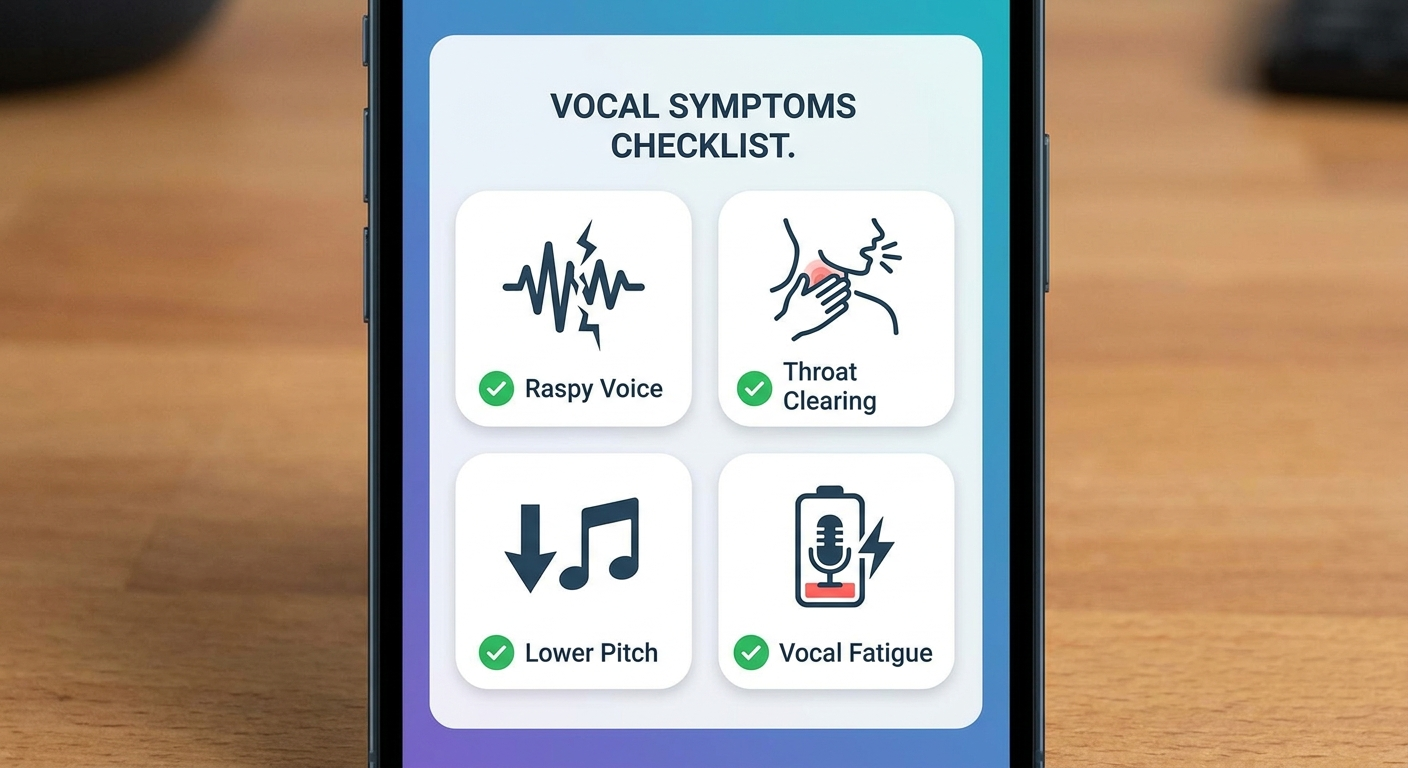
Common ways people describe it
- Raspy, rough, scratchy voice
- Breathy or weak voice (voice “gives out”)
- Lower pitch or reduced range (often obvious for singers)
- Needing to clear the throat often
- Vocal fatigue—talking feels like work
A practical way to picture it: your vocal folds (often called “vocal cords”) function a bit like instrument strings. If they’re swollen, irritated, or not moving symmetrically, the “tone” changes—even if your throat doesn’t feel particularly sore.
Acute vs. persistent hoarseness
- Acute hoarseness: often follows a cold, yelling/cheering, smoke exposure, or a short-term irritant. Many people improve within days to about 2 weeks.
- Persistent hoarseness: when symptoms don’t improve after about 3–4 weeks, it’s generally considered worth evaluating [1][2]. For occupational voice users (teachers, coaches, sales/call-heavy roles, singers), “persistent” can also mean: you can technically talk, but your voice can’t do what you need it to do.
Conclusion: If your voice can’t meet your daily needs and isn’t improving after a few weeks, it’s reasonable to seek evaluation.
Symptoms to track (and write down before your visit)
One of the most helpful things you can do is document what’s been happening—especially if the change has been gradual. A simple timeline is often surprisingly useful during an ENT visit.
Helpful self-check list — Consider noting:
- When the hoarseness started and whether it’s improving or worsening
- Recent upper respiratory infection (cold/flu/COVID), allergies, or sinus symptoms
- Voice overuse (cheering, singing, teaching, work calls, public speaking)
- Reflux-type symptoms (heartburn, sour taste, frequent throat clearing, “lump in throat”)
- Smoking/vaping history and alcohol use
- Recent surgery/intubation or inhaled medications (including inhaled steroids)
Concrete example: “My voice was fine until a cold three weeks ago. The cough is gone, but I still sound gravelly every morning and my voice fades after two Zoom meetings.”
If you can, jot down what makes it better or worse (morning vs. evening, after spicy foods, after long speaking days). Some people also bring a short voice memo recorded on their phone to demonstrate the change.
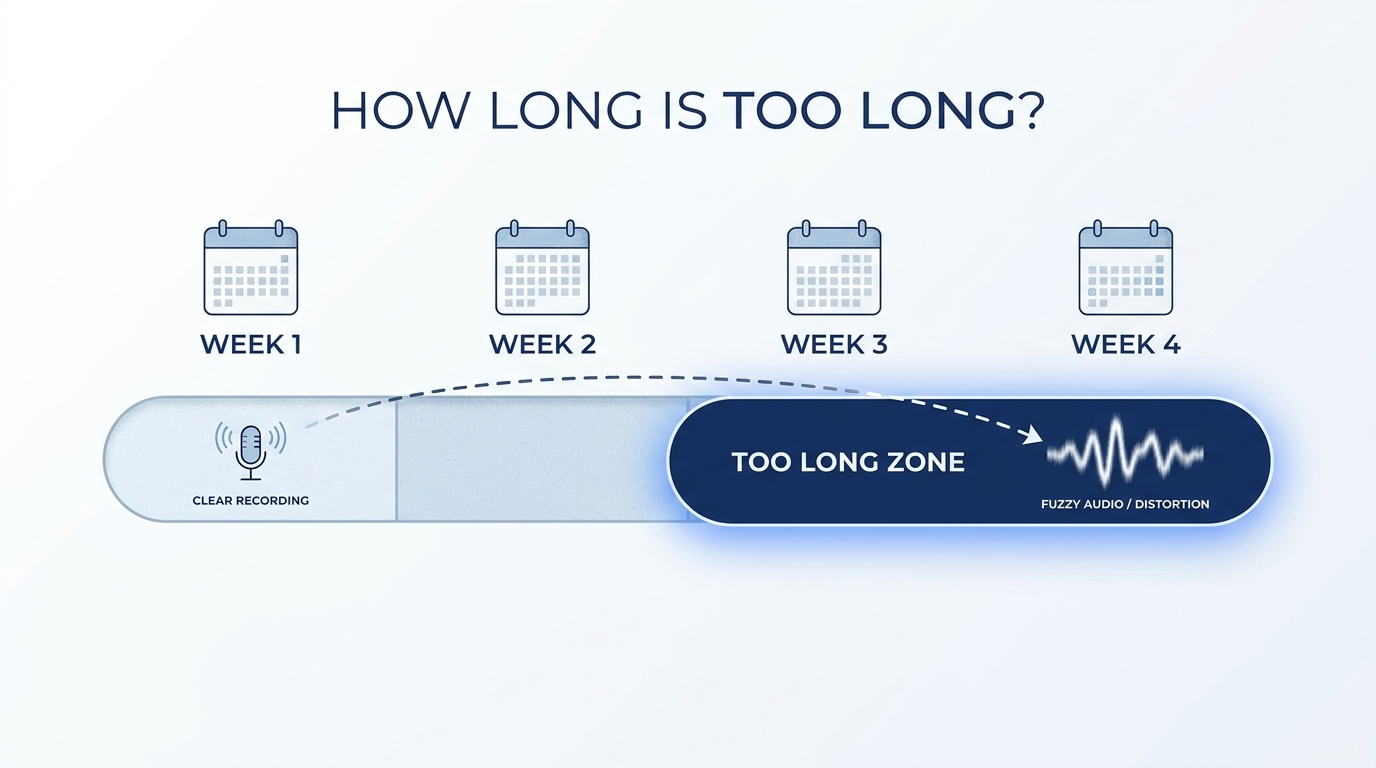
How long is too long?
- 3-week threshold: used in some referral pathways (e.g., NHS Scotland) [2]
- 4-week threshold: supported by major clinical practice guidance for dysphonia evaluation [1]
Practical takeaway: If you’ve reached a hoarse voice for more than 3 weeks and it’s not clearly trending better, many guidelines would consider that a reasonable time to schedule an ENT evaluation.
Conclusion: A brief written timeline often makes your visit faster and more productive.
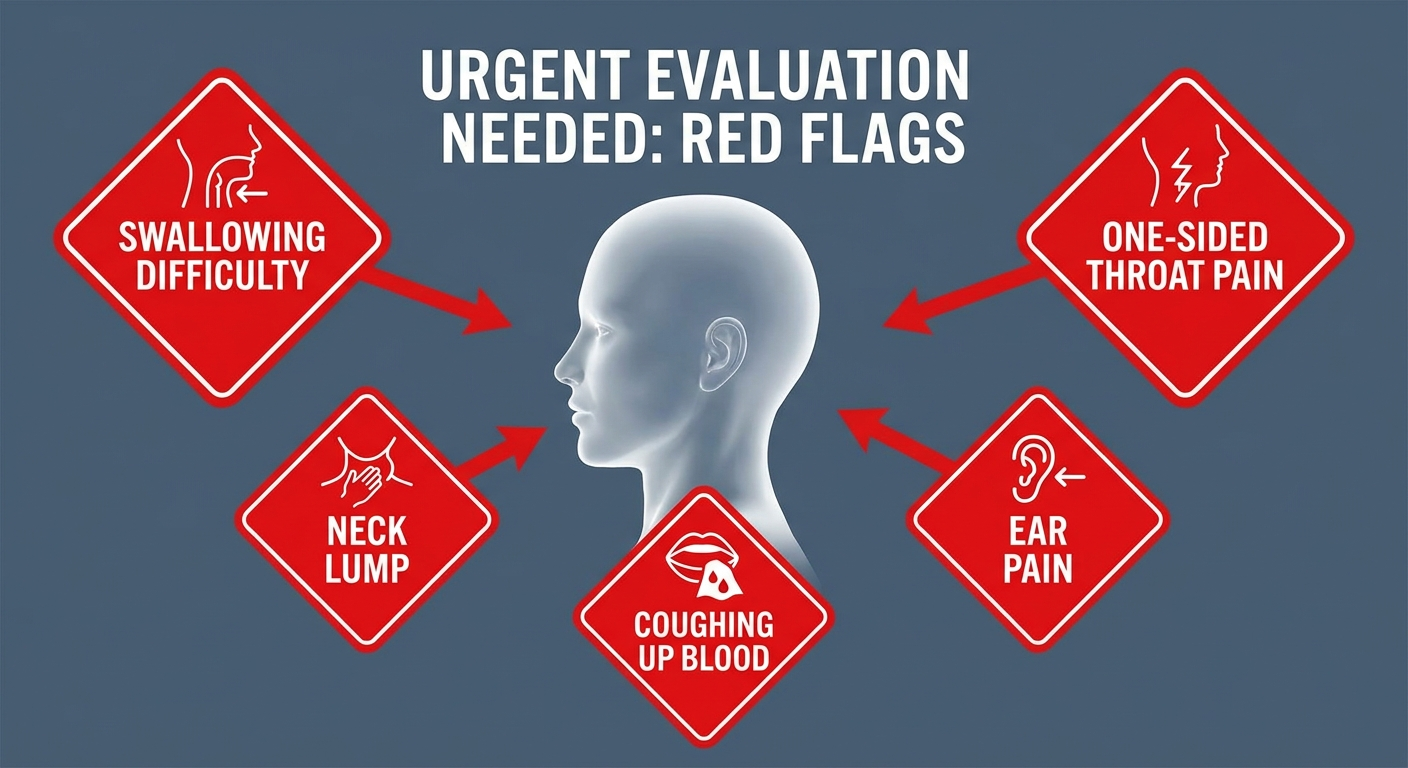
Red flags: When a hoarse voice needs urgent ENT evaluation
Seek prompt medical evaluation if you have any of these symptoms:
- Dysphagia (difficulty swallowing) [2][3]
- Persistent throat pain, especially one-sided [2][3]
- New or persistent neck lump/swelling [2]
- Referred ear pain (otalgia) without an ear infection [2][3]
- Coughing up blood (hemoptysis) [2][3]
- Shortness of breath, noisy breathing (stridor), or rapidly worsening voice
For more detail, see our overview of ENT warning signs of voice changes (https://sleepandsinuscenters.com/blog/early-ent-warning-signs-of-silent-voice-changes).
Higher-risk situations (even if symptoms seem mild)
- Current or past tobacco use
- Heavy alcohol use
- History of head/neck cancer or radiation
- Unintentional weight loss
- Occupational voice users (teachers, coaches, singers, sales and call-heavy roles)
Why it matters: Persistent hoarseness is often benign, but it can sometimes signal a more serious condition. Earlier evaluation may help identify problems when they are more treatable [1].
Conclusion: New red-flag symptoms warrant prompt assessment, regardless of how long you’ve been hoarse.
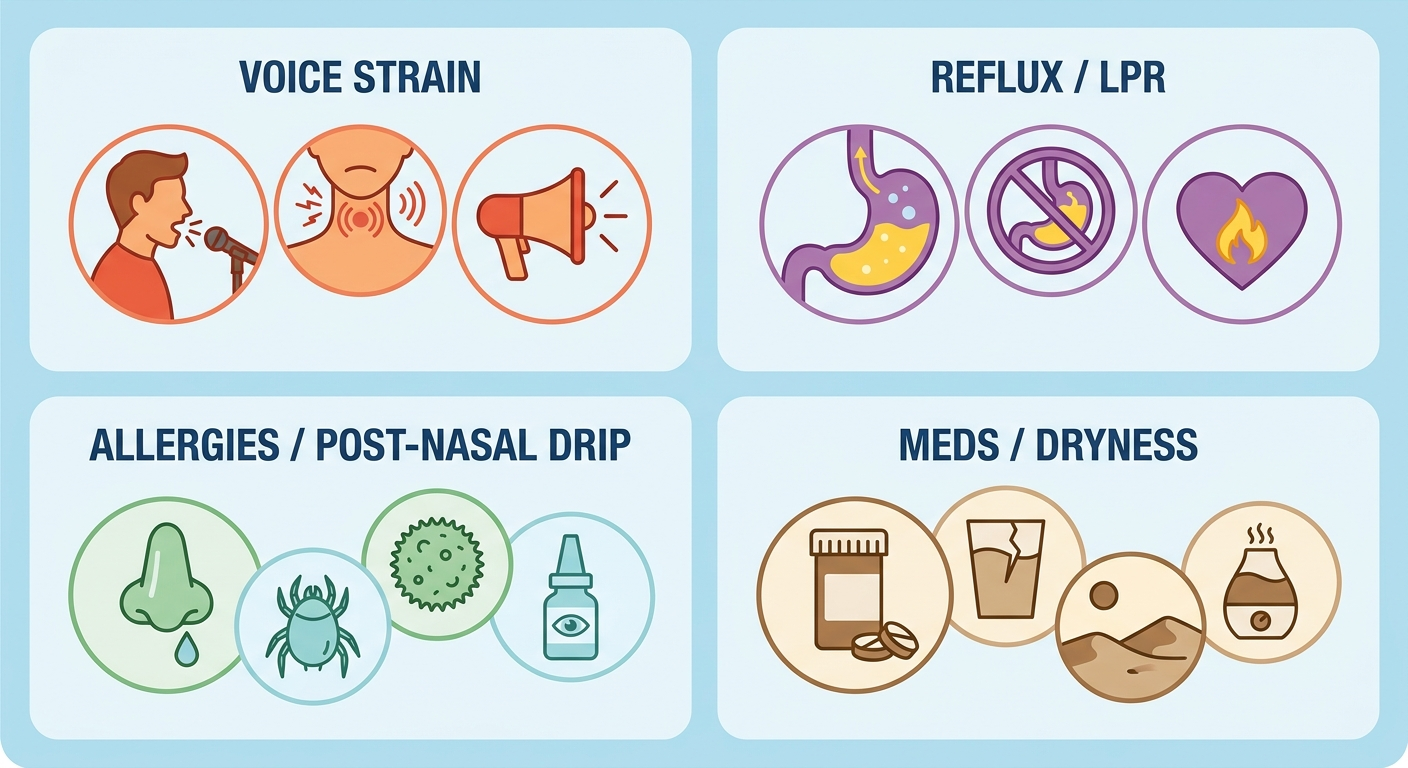
Most common causes of hoarseness lasting weeks (benign and treatable)
This list covers common possibilities—not diagnoses. The same symptom can come from different issues, which is why visualization of the vocal folds is so helpful.
Post-viral laryngitis (lingering inflammation after a cold)
After the congestion and cough fade, the voice can remain raspy due to ongoing irritation and swelling. If it persists beyond the usual window—especially a hoarse voice for more than 3 weeks—evaluation is often recommended [1][2].
Voice overuse or misuse (vocal strain)
Long meetings, cheering, singing, speaking over noise, or poor amplification can strain the voice. Ongoing strain can contribute to swelling and sometimes benign lesions such as nodules or polyps—common vocal fold problems that affect sound production.
Real-life pattern: A coach who’s been projecting over a field for weeks may notice their voice becomes breathy and unreliable by afternoon.
Laryngopharyngeal reflux (LPR) / acid reflux-related irritation
Sometimes reflux affects the throat and voice more than the chest. People may notice morning hoarseness, throat clearing, or a “stuck” sensation without classic heartburn. Learn more about silent reflux (LPR) (https://sleepandsinuscenters.com/blog/silent-laryngopharyngeal-reflux-symptoms-causes-and-treatment-guide) and how it can relate to voice symptoms.
Allergies and post-nasal drip
Allergic inflammation and drainage can trigger coughing and throat clearing, which can perpetuate irritation of the vocal folds. In other words, the drip isn’t the only issue—the repeated clearing can be part of the cycle.
Medication, inhaler effects, or dryness
Some medications can be drying (for example, certain antihistamines and decongestants). Inhaled steroids can sometimes irritate the throat or contribute to oral thrush (yeast overgrowth)—an ENT can evaluate if that’s a concern.
Structural or neurologic causes
Less commonly, hoarseness may come from reduced movement of a vocal fold (weakness/paralysis) or other conditions affecting the nerves controlling the larynx. When this is suspected, an ENT may coordinate additional evaluation.
Conclusion: Most lingering hoarseness has a treatable cause that is best identified by visualizing the vocal folds.
Why guidelines say “don’t wait” after 3–4 weeks
The vocal folds can’t be properly assessed by symptoms alone
Many different conditions feel the same to patients: strain, scratchiness, or a voice that fades. The key difference is what’s happening at the vocal folds—information you can’t reliably get from symptoms alone. That’s the role of laryngoscopy [1][3].
Early evaluation can change outcomes
- Benign conditions: earlier identification can reduce the chance of ongoing irritation and long-term voice issues.
- Serious conditions: if an abnormality is present, finding it sooner may expand treatment options and planning [1].
This is why persistent hoarseness and when to see an ENT are closely linked in guideline recommendations [1][2][3]. For broader timing guidance, you can also read our article on when to see an ENT (https://sleepandsinuscenters.com/blog/when-should-i-see-an-ent).
Conclusion: Looking at the vocal folds is the step that turns guesswork into a plan.
What an ENT doctor will do for hoarseness lasting more than 3 weeks
Medical history + focused head/neck exam
Expect questions about timing, voice demands, reflux symptoms, allergy history, exposures (including smoke/vaping), medications, and associated symptoms like swallowing issues. If you’re a professional voice user, the ENT may ask what “normal” means for you (range, stamina, performance schedule), because your goals can shape the plan.
Laryngoscopy (the key test)
Laryngoscopy is the main way to evaluate the voice box (larynx) and vocal folds. In simple terms: a small camera is used to look at the throat and vocal folds while you breathe and make certain sounds. It’s usually performed in the office and is typically quick; topical numbing may be used. Clinical guidance highlights laryngoscopy as the primary next step when dysphonia doesn’t improve within the recommended timeframe [1][3]. Many patients worry it will be painful. Most describe it as more “weird” than painful—like a strong tickle or pressure—and it’s over fast.
Possible add-ons (as appropriate)
- Videostroboscopy: special lighting to evaluate vocal fold vibration
- Additional testing or imaging if nerve involvement is suspected
- Biopsy only if there is a lesion that appears concerning (this is not routine for every patient)
Conclusion: Seeing the vocal folds guides the next best step for your specific situation.

Treatment options (based on cause)
Treatment depends on what the ENT sees on laryngoscopy [1][3]. Common pathways include:
Conservative care (often first-line for inflammation/irritation)
- Relative voice rest (and why whispering can increase strain for some people)
- Hydration and humidification
- Reducing habitual throat clearing (some people do better substituting sips of water or a gentle swallow)
- If your job requires heavy speaking, “rest” may mean strategically protecting your voice: fewer long calls back-to-back, using a headset, and taking short quiet breaks.
Voice therapy (speech-language pathology)
Voice therapy can be especially helpful for muscle tension dysphonia, benign vocal fold lesions, and safe return-to-voice strategies—often important for professional voice users.
Reflux-focused plan (if LPR is suspected)
Managing reflux-related irritation often involves a combination of habits and, when appropriate, medication—typically with expectations set in weeks, not days. See our guide to LPR symptoms and treatment (https://sleepandsinuscenters.com/blog/silent-laryngopharyngeal-reflux-symptoms-causes-and-treatment-guide).
Treating contributing nasal/allergy issues
Reducing post-nasal drip and nasal inflammation may decrease throat clearing and cough, which can help the vocal folds recover.
Procedures/surgery (when needed)
Some structural problems (like certain polyps/cysts) may benefit from procedures. Vocal fold weakness may be addressed with specialized treatments when appropriate. The “right” option depends on findings, voice needs, and overall health.
Conclusion: The right treatment depends on what is seen, your goals for your voice, and your overall health.
Lifestyle tips to protect your voice while waiting for your appointment
Do’s
- Use voice amplification when speaking to groups
- Consider warm fluids and nighttime humidification if dryness is an issue
- Build in vocal breaks (for example, short periods of silence during long speaking days)
Don’ts
- Avoid smoking or vaping, which can irritate the larynx
- Avoid shouting over background noise when possible
- Limit triggers that worsen dryness or reflux (varies by person)
- Avoid weeks of self-treatment with leftover antibiotics or unprescribed steroids; persistent symptoms usually benefit more from evaluation than guesswork
Conclusion: Protect your voice now, and let the exam define the rest.
Frequently Asked Questions (FAQs)
Q: My voice is hoarse after a cold—how long is normal?
A: Many people improve within 1–2 weeks. If it persists beyond guideline thresholds—especially a hoarse voice for more than 3 weeks—evaluation is commonly recommended [1][2].
Q: Is persistent hoarseness a sign of throat cancer?
A: Often not. But persistent hoarseness is one reason clinicians recommend checking the vocal folds, particularly with red flags or risk factors. Earlier evaluation matters [1].
Q: What red flags mean I should go sooner than 3–4 weeks?
A: Difficulty swallowing, throat pain (especially one-sided), a neck lump, unexplained ear pain, or coughing up blood are important reasons to seek earlier evaluation [2][3]. More details: ENT warning signs of voice changes (https://sleepandsinuscenters.com/blog/early-ent-warning-signs-of-silent-voice-changes).
Q: What is laryngoscopy and does it hurt?
A: Most in-office laryngoscopy exams are brief and well tolerated. Topical numbing may be used to reduce discomfort [1][3].
Q: Should I rest my voice or keep talking?
A: In general, reducing strain is helpful while still communicating as needed. Many clinicians caution that whispering can strain the voice for some people. A tailored plan is easier once the vocal folds have been examined.
Q: Can acid reflux cause hoarseness without heartburn?
A: Yes. LPR may present primarily with throat symptoms and voice changes rather than classic heartburn. See our guide to LPR symptoms and treatment (https://sleepandsinuscenters.com/blog/silent-laryngopharyngeal-reflux-symptoms-causes-and-treatment-guide).
When and how to book an ENT visit (clear next step)
If your hoarseness has persisted for more than 3 weeks without clear improvement, many guidelines recommend evaluation by a clinician, such as an ENT. Go sooner if you have any red flags. For broader timing guidance, see our article on when to see an ENT (https://sleepandsinuscenters.com/blog/when-should-i-see-an-ent).
To make your visit more efficient, bring:
- A current medication list
- A short timeline of symptoms and triggers
- Optional: a brief voice recording showing the change (before/after talking)
If you’d like to be seen by our team, you can book an appointment with Sleep and Sinus Centers of Georgia here: https://sleepandsinuscenters.com/appointments
Learn more about our practice at https://www.sleepandsinuscenters.com/
Conclusion: If symptoms persist, scheduling an exam is a reasonable next step.
References
1. Clinical Practice Guideline: Hoarseness (Dysphonia) (2018). PubMed: https://pubmed.ncbi.nlm.nih.gov/29494321/
2. NHS Scotland Right Decisions – Hoarseness referral guidance: https://rightdecisions.scot.nhs.uk/ggc-primary-care/ear-nose-and-throat-ent/ear-nose-and-throat-ent-referral-guidance/throat-conditions/hoarseness/
3. ENT4GP – Hoarseness: https://ent4gp.com/hoarseness/
This article is for educational purposes only and is not medical advice. Please consult a qualified healthcare provider for diagnosis and treatment.
Don’t let allergies slow you down. Schedule a comprehensive ENT and allergy evaluation at Sleep and Sinus Centers of Georgia. We’re here to find your triggers and guide you toward lasting relief.