
Georgia Grass Pollen Season: Peak Allergy Times and Symptoms Guide
If spring in Georgia leaves you sneezing long after the yellow tree pollen fades, you’re not imagining it. Georgia grass pollen season typically ramps up right as many people expect allergy relief—creating a frustrating “second wave” of symptoms.
Think of it like a relay race: tree pollen runs the first leg, and just when you expect the finish line, grass pollen takes the baton. If you’re sensitive to both, it can feel like one long season instead of two shorter ones.
Below is a patient-friendly guide to timing, common triggers (including concerns about Bermuda grass allergies in Atlanta), symptoms, and practical ways to reduce exposure and feel better—without guessing.
Quick Answer: When Is Grass Pollen Season in Georgia?
In most years, Georgia’s grass pollen season runs from mid-April through June, with a peak in late May. This often overlaps with the tail end of tree pollen season, which is why symptoms can feel unrelenting from early spring into early summer. (Sleep and Sinus Centers, 2026; AAAAI/National Allergy Bureau; MedlinePlus)
Why Grass Pollen Hits Georgia So Hard
Georgia’s climate + lawns = a long exposure window. Georgia’s warm spring temperatures encourage steady grass growth. Add frequent mowing and widespread turf lawns, and you get a long window of repeated exposure—especially in urban and suburban neighborhoods where grass is everywhere. Even small daily exposures add up: walking the dog, sitting at a soccer practice, or commuting with the windows cracked on a pleasant day can all become regular pollen contact points.
The top grass allergens in Georgia (and Atlanta). Many grasses can trigger allergy symptoms, but several are especially common in Georgia landscapes and sports fields. In metro areas, Bermuda grass is often a major culprit due to how widely it’s used in lawns and turf. (UGA Cooperative Extension, 2018; IQAir, 2023; ENT of Georgia, n.d.) Other common grass allergy triggers can include Timothy and Johnson grasses—particularly for people who are sensitized to multiple grass pollens.
For local context on counts and terminology, see Atlanta pollen counts explained: https://sleepandsinuscenters.com/blog/atlanta-pollen-counts-explained-what-you-need-to-know
Bottom line: Georgia’s warm, lawn-heavy environment means grass pollen exposure is frequent and widespread—especially in late spring.

Georgia Grass Pollen Season Month-by-Month (What to Expect)
Mid-April: The start of grass pollen season. Early symptoms can begin in mid-April, especially on warm, breezy days when pollen travels easily. You might notice lighter signs at first—an itchy nose after an evening walk or sneezing when you step outside in the morning. Many people underestimate what’s coming and chalk it up to a lingering cold. (Sleep and Sinus Centers, 2026)
May: Build-up to the toughest weeks. May is often when grass pollen levels climb steadily—turning occasional sniffles into more consistent symptoms. For many Georgians, late May is typically the hardest part of pollen season in Georgia. This is often when people notice the most intense congestion, sneezing, and itchy eyes. (Sleep and Sinus Centers, 2026; AAAAI/NAB)
June: Gradual taper, but symptoms can linger. By June, pollen levels often taper, but symptoms may persist—especially if you’re sensitive, spend time outdoors, or also react to other triggers. Once the nasal lining is irritated and inflamed, it can take time (and consistent treatment) to calm down. (Sleep and Sinus Centers, 2026)
Expect a ramp-up from mid-April, a late-May peak, and a slower June cooldown—though individual experiences vary.
Peak Allergy Times (Daily + Weather Patterns)
Time of day. Grass pollen levels can fluctuate through the day based on location, weather, and grass types. Rather than rely on a single “worst time,” check a local tracker to see what’s happening where you live. The Sleep and Sinus Centers of Georgia Georgia Pollen Tracker can help: https://sleepandsinuscenters.com/georgia-pollen-tracker
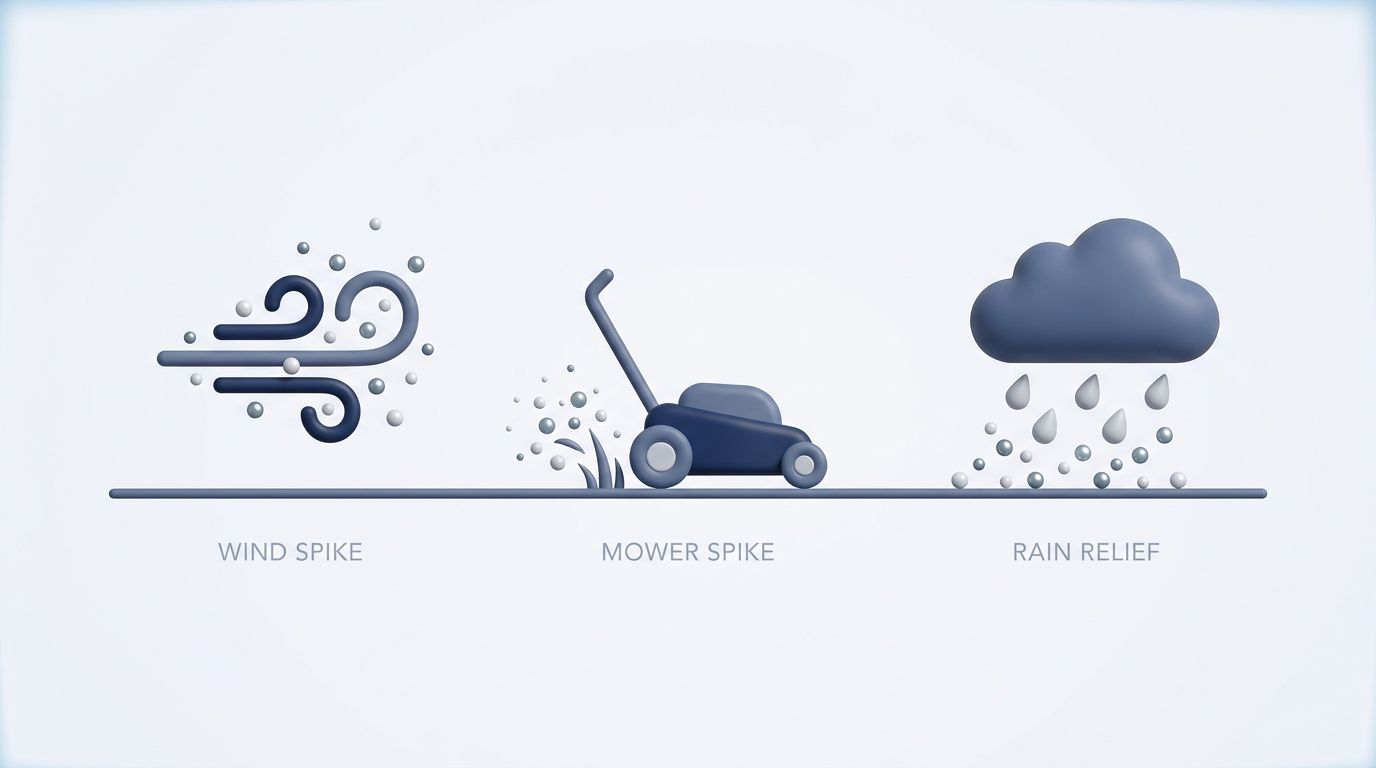
Weather conditions that spike grass pollen exposure:
• Dry, windy days: pollen stays airborne longer and spreads farther.
• After mowing or landscaping: mowing can stir up pollen and plant particles for a brief but intense exposure window. (UGA Cooperative Extension, 2018)
• Rain: rainfall can temporarily reduce airborne pollen, but changing conditions afterward may affect growth and future pollen production.
Why Atlanta may feel especially intense. Metro Atlanta has dense turf coverage in neighborhoods, parks, and sports complexes—plus heat patterns that can extend growth and exposure. Air irritation from traffic and pollution may also make noses and eyes feel more reactive on high pollen days, so symptoms can feel amplified. (IQAir, 2023)
Check a local pollen tool daily and plan higher-exposure activities (like yard work) around friendlier weather windows.

Grass Pollen Allergy Symptoms (What Patients Commonly Notice)
Classic nose symptoms:
• Sneezing
• Runny nose
• Stuffy nose/congestion
• Itchy nose
Eye symptoms:
• Itchy, watery eyes
• Redness
• Swollen or puffy eyelids
Throat and chest symptoms (when to take seriously):
• Post-nasal drip
• Scratchy throat
• Cough
Some people also notice wheezing or chest tightness, especially if they have asthma or reactive airways. Severe or worsening breathing symptoms should be treated as urgent.
It’s not just annoying: fatigue, brain fog, and sleep disruption. Congestion can lead to mouth breathing and restless sleep. Poor sleep quality can show up as daytime fatigue, irritability, and brain fog—one reason seasonal allergies can affect work, school, and overall quality of life.
If symptoms hit your nose, eyes, sleep, or breathing—especially during late May—you may be reacting to grass pollen.
Is It Grass Pollen… or Something Else?
Grass allergies vs. a cold:
• Colds are more likely to come with fever and body aches and often improve within 7–10 days.
• Allergies more often involve itchiness (nose/eyes) and can last as long as exposure continues—often repeating in the same season each year.
• These are general patterns, not a diagnostic test—talk with a clinician if symptoms are unclear.
Grass pollen vs. tree pollen overlap in spring. In Georgia, tree pollen can dominate earlier in spring, and grass pollen often takes over as trees settle down. That overlap is a big reason symptoms can feel unrelenting from early spring through early summer. (Sleep and Sinus Centers, 2026) Related read: Tree pollen vs grass pollen allergies: which pollen is worse? https://sleepandsinuscenters.com/blog/tree-pollen-vs-grass-pollen-allergies-which-pollen-20260708121124
Grass pollen vs. mold (especially after rainy periods). Mold can flare after wet weather and may cause similar nasal and sinus symptoms. If symptoms spike after rain or in damp indoor spaces, mold could be part of the picture. (UGA Cooperative Extension, 2018) More: After rain mold growth in Georgia: https://sleepandsinuscenters.com/blog/after-rain-mold-growth-in-georgia-causes-and-prevention-tips
Timing, triggers, and pattern recognition help clarify whether grass pollen is the main culprit.

Who Is Most at Risk for Bad Grass Pollen Symptoms in Georgia?
People with lawn/landscaping exposure:
• People who mow lawns
• Landscapers and outdoor workers
• Gardeners and frequent park-goers (UGA Cooperative Extension, 2018)
Kids and families in sports-heavy spring schedules. Spring practices and games can mean repeated exposure on fields—right when Georgia’s grass pollen season is climbing toward its peak.
Patients with asthma, chronic sinusitis, or allergic rhinitis. People with underlying airway inflammation may experience more severe symptoms, longer duration, and more disruption to sleep and daily routines.
Frequent outdoor time—especially around mowing or on turf fields—raises exposure and risk of symptoms.

Treatment Options: What Commonly Helps Grass Pollen Allergies
Educational note: medication choices depend on your health history and other medications. A clinician can help you choose appropriate options—especially for children, pregnancy, high blood pressure, glaucoma, or prostate concerns. These are general categories, not personalized recommendations.
First-line OTC options:
• Non-drowsy oral antihistamines (often helpful for sneezing and itching)
• Intranasal steroid sprays (often most helpful for congestion when used consistently)
• Saline rinses or sprays (help rinse pollen out of the nose)
One practical tip: treatments tend to work best as a routine, not a rescue. If symptoms are daily during peak weeks, a consistent plan is usually more effective than switching products frequently.
When symptoms are moderate to severe, a clinician may discuss:
• Prescription nasal sprays
• Updates to an asthma plan if cough/wheeze worsens during the Georgia grass pollen peak
Longer-term relief: allergy testing + immunotherapy. If symptoms return every year, require frequent medication, or disrupt sleep, consider allergy testing to identify specific triggers (like Bermuda grass). Some patients are also candidates for immunotherapy options designed to reduce sensitivity over time.
• Allergy testing: https://sleepandsinuscenters.com/allergy-testing
• Allergy drops vs. allergy shots: https://sleepandsinuscenters.com/allergy-drops-vs-allergy-shots
A steady, preventive routine plus targeted care typically outperforms as-needed fixes during peak weeks.
Lifestyle Tips for Georgia Grass Pollen Season (Practical, Local, Doable)
Reduce exposure at home:
• Keep windows closed on high pollen days; use A/C when possible.
• Shower and change clothes after being outdoors to remove pollen from skin and hair. (UGA Cooperative Extension, 2018)
• Wash bedding regularly during peak weeks.
Yard and lawn strategies (especially for Bermuda grass areas):
• Consider delegating mowing during late-May peak weeks.
• If you must mow, consider a well-fitted mask and eye protection, and plan timing around lower-count days when possible. (UGA Cooperative Extension, 2018)
• Remove shoes at the door and change clothes soon after outdoor work.
Car and commute tips (metro Atlanta-friendly):
• Keep windows up and use recirculation on high pollen days.
• Replace cabin air filters on schedule.
Use local pollen tools to plan your day:
• Daily monitoring helps you decide when to do outdoor chores, exercise outside, or take extra precautions. (IQAir, 2023)
• Start here: Georgia Pollen Tracker https://sleepandsinuscenters.com/georgia-pollen-tracker
Small, consistent exposure-reduction steps add up—especially during late May.
When to See an ENT or Allergy Specialist
Signs you may need medical help (not just DIY):
• Symptoms that return year after year or last multiple seasons
• Frequent sinus infections or persistent facial pressure
• Ongoing congestion despite consistent OTC routines
• Sleep disruption from nasal blockage or snoring
Urgent red flags:
• Significant shortness of breath or wheezing that isn’t improving
• Swelling of the lips, tongue, or face, or other severe reactions
If seasonal allergies repeatedly disrupt sleep or daily life, a tailored evaluation can help you regain control. For broader seasonal context, see Georgia Pollen Calendar 2026: https://sleepandsinuscenters.com/blog/georgia-pollen-calendar-2026-monthly-allergy-forecast-tips
Don’t wait through another rough season—personalized care can make spring and early summer manageable again.
FAQs: Georgia Grass Pollen Season
When does grass pollen peak in Georgia?
Most years, the grass pollen peak occurs in late May. (Sleep and Sinus Centers, 2026; AAAAI/NAB)
What grass causes the most allergies in Atlanta?
Bermuda grass is a leading lawn and turf grass in the region and a common trigger. (UGA Cooperative Extension, 2018; IQAir, 2023; ENT of Georgia, n.d.)
Can you be allergic to Bermuda grass even if you don’t have a lawn?
Yes. Pollen can travel from neighbors’ lawns, parks, roadsides, and sports fields.
How long do grass allergy symptoms last?
Symptoms can last as long as exposure continues—commonly mid-April through June during Georgia’s grass pollen season. (Sleep and Sinus Centers, 2026)
Should I start allergy meds before symptoms begin?
Many people do better with a plan that starts before peak weeks, but timing and product choice are individualized—ask a clinician for guidance.
Key Takeaways + Next Steps
• Timeline: Grass pollen commonly runs mid-April through June, with a late May peak in Georgia. (Sleep and Sinus Centers, 2026; AAAAI/NAB; MedlinePlus)
• Top trigger: Bermuda grass is a frequent issue in lawns and sports turf, especially around metro Atlanta. (UGA Cooperative Extension, 2018; IQAir, 2023)
• Best approach: Track pollen locally, reduce exposure consistently, and use a structured symptom-control routine.
If symptoms recur yearly or disrupt sleep, consider a deeper evaluation and testing. Book an appointment with Sleep & Sinus Centers of Georgia: https://www.sleepandsinuscenters.com/
Plan ahead for late May, use local pollen tools, and build a consistent routine to stay ahead of symptoms.
References
Sleep and Sinus Centers. (2026). Georgia Pollen Calendar 2026: Monthly Allergy Forecast Tips. https://sleepandsinuscenters.com/blog/georgia-pollen-calendar-2026-monthly-allergy-forecast-tips
University of Georgia Cooperative Extension. (2018). Fighting pollen? Fight smarter with these pollen-busting tips. https://fieldreport.caes.uga.edu/fighting-pollen-fight-smarter-with-these-pollen-busting-tips-from-uga-cooperative-extension/
ENT of Georgia. (n.d.). Local spring allergens unique to Georgia and their effects. https://www.entofga.com/blog/local-spring-allergens-unique-to-georgia-and-their-effects/
IQAir. (2023). Atlanta, Georgia pollen data. https://www.iqair.com/pollen/usa/georgia/atlanta
American Academy of Allergy, Asthma & Immunology (AAAAI). National Allergy Bureau Pollen Counts. https://www.aaaai.org/global/nab-pollen-counts
MedlinePlus (U.S. National Library of Medicine). Allergic rhinitis (hay fever). https://medlineplus.gov/ency/article/000813.htm
Disclaimer
This article is for educational purposes only and is not medical advice. Please consult a qualified healthcare provider for diagnosis and treatment.
Don’t let allergies slow you down. Schedule a comprehensive ENT and allergy evaluation at Sleep and Sinus Centers of Georgia. We’re here to find your triggers and guide you toward lasting relief.