Deviated Septum Turbinate Reduction Before and After: Results, Recovery, and What to Expect
If you’ve been living with persistent nasal blockage, you’ve probably searched for “Deviated Septum Turbinate Reduction Before and After” stories—hoping to understand what really changes after surgery, how long recovery takes, and whether the improvement is worth it.
This guide sets realistic expectations using what matters most in daily life: breathing function and quality-of-life scores, not just how the inside of the nose looks on exam. The goal isn’t a “perfect-looking” nasal passage—it’s a nose that works better for sleep, exercise, focus, and comfort.
Quick Answer — What “Before and After” Usually Means
Before surgery (common baseline)
- Chronic nasal congestion or a “stuck” nostril
- Mouth-breathing (especially at night)
- Nighttime blockage that disrupts sleep
- Reduced exercise tolerance (harder to breathe through the nose during activity)
- Symptoms that are worse on one side—or seem to alternate from side to side
After surgery (typical goals)
- Improved airflow and less obstruction, often noticed over weeks and more stable by 3–6 months
- Better day-to-day quality of life measured by validated tools like:
- NOSE score (Nasal Obstruction Symptom Evaluation)
- SNOT-22 (a broader sinonasal quality-of-life questionnaire)
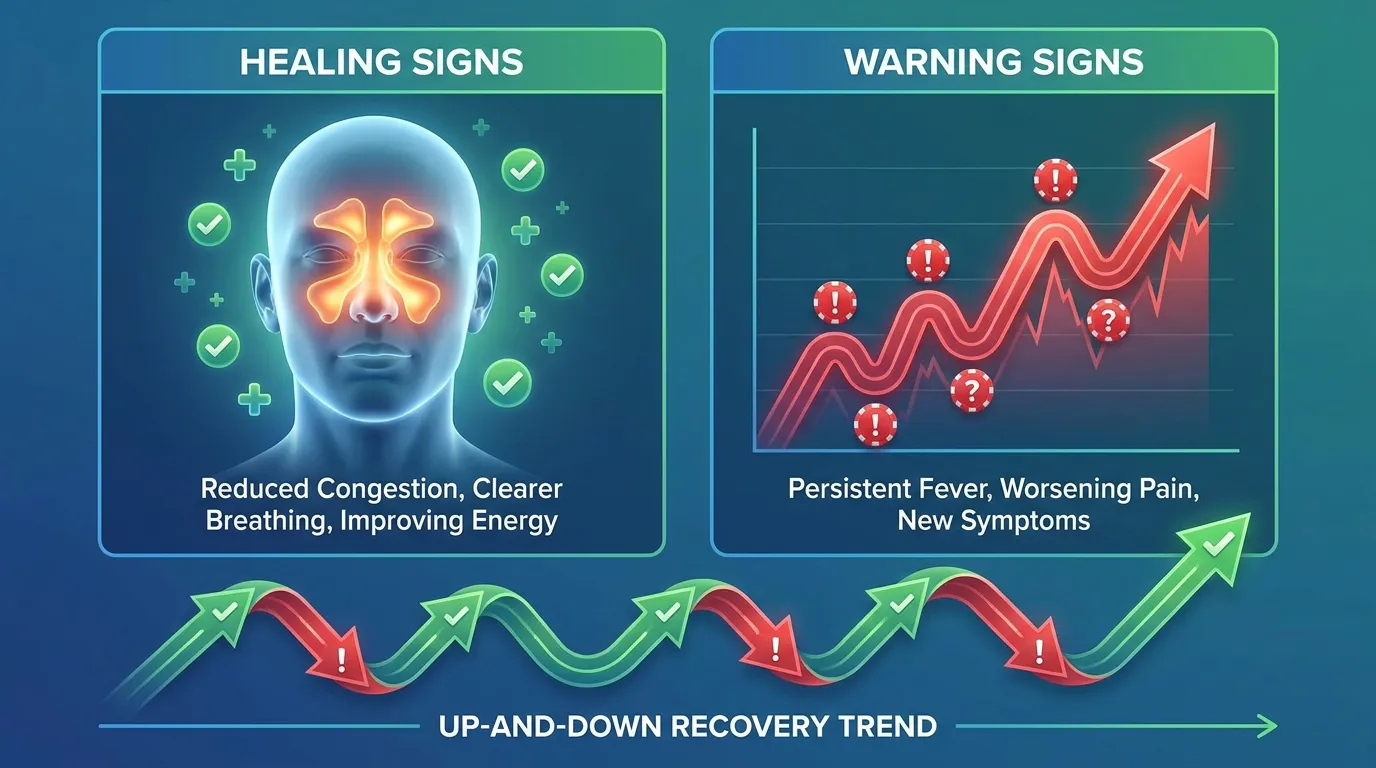
- A key expectation: Early swelling, crusting, and healing can sometimes temporarily worsen nasal breathing before improvements are noticed.
Multiple studies, including randomized and cohort data, show consistent improvement in nasal obstruction and disease-specific quality of life within months after septoplasty with or without turbinate procedures.
Note: In most cases, “after” is best judged at 3–6 months when healing has stabilized and breathing is more consistent.

Understanding the Problem (In Patient-Friendly Terms)
What is a deviated septum?
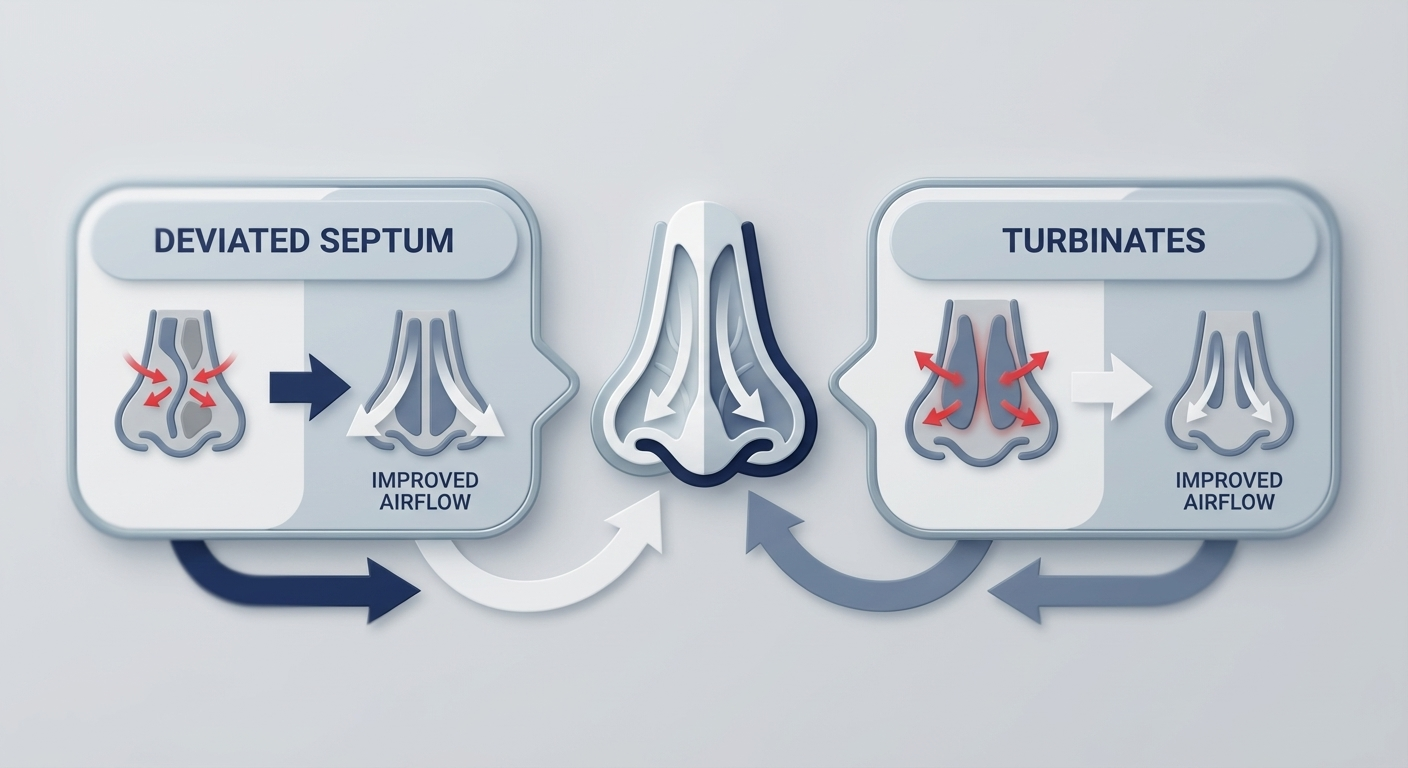
The nasal septum is the internal “wall” that separates the left and right nasal passages. If that wall is shifted (deviated), it can narrow airflow and create a constant sense of blockage—especially when anything else (allergies, a cold, dry air) adds swelling.
For a clear overview of anatomy and treatment options, see our page on deviated septum relief:
- Deviated septum treatment options: https://sleepandsinuscenters.com/deviated-septum-relief
What are turbinates—and why do they get enlarged?
Turbinates are normal structures along the sidewalls of the nose that help warm, humidify, and filter incoming air. The inferior turbinates are the largest and most likely to contribute to obstruction when they become enlarged (hypertrophy) from:
- Allergies or irritant exposure
- Chronic inflammation (rhinitis)
- “Compensation” for a deviated septum (the roomier side may develop enlarged tissue over time)
For a deeper explanation, see our guide to inferior turbinate reduction:
- Turbinate reduction: https://sleepandsinuscenters.com/blog/everything-you-need-to-know-about-turbinate-reduction
Why septoplasty and turbinate reduction are often done together
A deviated septum and enlarged turbinates are a common two-part cause of obstruction. In those cases, doing septoplasty with turbinate reduction can address both the “narrow hallway” (septum) and the “swollen sidewall tissue” (turbinates) to improve overall nasal patency.
Note: When both structure and tissue swelling contribute to blockage, treating both can yield more consistent airflow improvement.
Symptoms That May Improve After Septoplasty + Turbinate Reduction
Breathing and sleep-related symptoms
- Daytime and nighttime nasal obstruction
- Mouth-breathing
- Congestion that worsens snoring or sleep quality (nasal blockage can contribute, even though snoring can have multiple causes)
Sinus and throat symptoms (sometimes overlap)
- The sensation of postnasal drip
- Facial pressure related to airflow and congestion (not necessarily infection)
Quality-of-life impacts
- Less fatigue from poor sleep
- Easier exercise breathing
- Less frustration and distraction from “always feeling blocked”
When symptoms might not fully improve
Not all congestion is structural. Persistent symptoms after surgery can be related to:
- Allergies or nonallergic rhinitis (ongoing inflammation)
- Chronic sinusitis
- Reflux-related irritation
- Structural issues outside the septum/turbinates, such as nasal valve collapse: https://sleepandsinuscenters.com/blog/how-ent-doctors-fix-nasal-valve-collapse
If symptoms persist, it is important to follow up with your healthcare provider for further evaluation.
Note: The closer your symptoms match a structural cause, the more likely surgery will address the main problem; inflammation still needs medical management.
Causes and Contributing Factors (Why You Feel Blocked)
Structural causes
- Deviated septum
- Inferior turbinate hypertrophy
- Nasal valve narrowing/collapse
Inflammatory causes
- Allergic rhinitis
- Nonallergic (vasomotor) rhinitis
- Environmental irritants (smoke, strong fragrances, dust exposure)
Why one side feels worse (the nasal cycle)
The nasal cycle is a normal, periodic alternation of congestion between sides throughout the day. When the anatomy is already tight, that normal cycle can feel exaggerated—one side may feel completely closed at times, especially when lying down due to position-related swelling and airflow changes.
Note: Normal nasal cycling can feel “abnormal” when space is limited by a deviated septum or enlarged turbinates.
Treatments to Try Before Surgery (and When They’re Not Enough)
Typical “medical management” options
- Saline rinses or saline sprays
- Intranasal steroid sprays
- Allergy evaluation and targeted allergy control when relevant
What high-quality research says about surgery vs medical therapy
In the multicenter NAIROS randomized trial (2024), people with symptomatic septal deviation who had septoplasty experienced substantially larger symptom improvements at 6 months compared with a defined medical regimen (saline + intranasal steroid). SNOT-22 scores at 6 months were markedly better in the surgical group (mean about 19.9 vs 39.5 with medical management; difference ≈ -20 points, p < 0.0001). Benefits increased and cost-effectiveness improved over 24–36 months, while early adverse events were more frequent in the surgery group.

Who may be a better surgical candidate
Surgery is more often considered when:
- Symptoms persist despite appropriate medical therapy, and
- Anatomic narrowing is confirmed on exam (often including nasal endoscopy)
If symptoms continue or are severe, your clinician can help determine whether structure, inflammation, or both are the main drivers—and tailor a plan accordingly.
Note: If sprays and rinses fall short and anatomy is the main limiter, septoplasty with or without turbinate reduction can offer greater and more durable relief.
Septoplasty + Turbinate Reduction — What Happens During the Procedure?
Septoplasty (what is corrected)
Septoplasty focuses on straightening or repositioning deviated cartilage and/or bone inside the nose to open airflow. It’s typically a functional (not cosmetic) procedure.
Inferior turbinate reduction (common approaches)
Inferior turbinate reduction aims to reduce obstructing tissue while preserving turbinate function. Surgeons use tissue-sparing methods based on anatomy and goals.
Why technique and patient selection matter
The technique used—and how much tissue is treated—can influence short-term crusting, dryness, and the overall recovery experience. Modern practice often emphasizes preserving turbinate function to balance airflow with comfort.
Note: Thoughtful technique and the right indication help maximize airflow gains while preserving comfort and nasal function.
Before and After Results — What the Evidence Shows (Beyond Photos)
The most reliable “before and after” measures
- NOSE score: Focused on nasal obstruction severity and impact
- SNOT-22: Broader quality-of-life measure that includes sleep and daily function
Expected timing of improvement
Some improvement may be noticed within weeks, but research commonly evaluates outcomes around 3–6 months, when swelling and healing have stabilized.
Does adding turbinate reduction improve outcomes?
Comparative studies often show greater symptom relief when turbinate reduction is added to septoplasty, though the size of benefit varies by technique and study design. A retrospective analysis published in 2023 reported markedly better NOSE outcomes in the combined septoplasty + turbinoplasty group compared with septoplasty alone (in that cohort, the mean postoperative NOSE scores were approximately 11.14 for combined septoplasty + turbinoplasty vs 56.36 for septoplasty alone on a 0–100 scale; lower scores indicate less nasal obstruction; p < 0.001). Because many of these comparisons are cohort studies rather than randomized trials, treat the direction of benefit as more reliable than any single exact number.
“Before and after” photos—helpful, but limited
Photos can illustrate structural change, but they don’t always predict how you’ll feel day to day. For decision-making, symptom scores (NOSE/SNOT-22), a clear diagnosis, and a realistic recovery plan are usually more meaningful than images alone.
Note: The strongest “after” is measured by how you breathe and live, not just how your nose looks on camera.
Recovery Timeline — What to Expect Day 1 Through Month 6

For a deeper, week-by-week view, see our septoplasty recovery timeline:
- Septoplasty recovery week by week: https://sleepandsinuscenters.com/blog/septoplasty-recovery-week-by-week-complete-timelin-20260123051106
First 24–72 hours
- Nasal congestion is common due to swelling
- Mild bleeding/oozing or drainage can occur
- Discomfort is often described as pressure and stuffiness
Week 1
- Blockage may persist (often from swelling and crusting)
- Follow-up visits may include cleaning and, if used, splint removal
- Sleep can be easier with head elevation
Weeks 2–4
- Crusting generally decreases
- Breathing often starts to feel more consistently open
- Many people gradually return to normal routines (timing varies)
Months 2–3
- Ongoing remodeling and healing
- Airflow tends to become more stable
Months 3–6 (“true before vs after” window)
- Many studies assess outcomes here because swelling has largely settled
Note: Plan to judge your true “after” once healing is mature—typically by 3–6 months.
Side Effects, Risks, and Complications (Important for Informed Consent)
Common short-term issues
- Congestion
- Crusting and dryness
- Minor bleeding
- Temporary changes in smell
- Sensitivity or pressure
Less common but important risks
- Infection
- Septal perforation
- Persistent obstruction
- Adhesions/scar tissue (synechiae)
- Need for revision surgery
What research says about adverse events
Randomized evidence (NAIROS 2024) found early adverse events were more common with surgery than with medical therapy—one reason it’s important to match the treatment to the cause of obstruction.
“Empty nose syndrome” concerns (brief, accurate framing)
Concerns often relate to overly aggressive turbinate removal. Modern approaches commonly emphasize tissue preservation and function. Risk depends on technique, extent of reduction, and individual factors.
Note: Knowing the risks—and how your surgeon minimizes them—helps you make an informed, confident decision.
Lifestyle Tips to Maximize Breathing Results After Surgery

Even after septoplasty with turbinate reduction, inflammation can still affect how open the nose feels.
- Saline irrigation can help clear crusting and support healing (follow your clinician’s instructions)
- Allergy control still matters because allergies can re-swell nasal tissues
- Home environment: humidity support, smoke avoidance, and reducing irritants/fragrances may help
- Sleep positioning and exercise: head elevation early on and a gradual return to activity are commonly recommended
These are general tips; always follow your surgeon’s specific post-op instructions for the best results.
Note: Structure can be fixed in the OR; long-term comfort is best when you also manage inflammation and triggers at home.
When to Call Your Surgeon (Red Flags)
Seek urgent care if you have:
- Heavy bleeding that won’t stop
- Fever with worsening symptoms
- Severe headache, neck stiffness, or vision changes
- Shortness of breath
Call the office if:
- Foul-smelling drainage
- Worsening swelling after initial improvement
- New, one-sided severe pain
Note: If symptoms persist or worsen, timely follow-up helps catch and fix problems early.
Frequently Asked Questions (FAQ)
How long until I can breathe normally after septoplasty with turbinate reduction?
Many people feel very congested at first, then notice gradual improvement over weeks. More stable “after” breathing is often clearer by 3–6 months, which aligns with common research follow-up windows.
Is septoplasty better than sprays and rinses?
For appropriately selected patients with symptomatic septal deviation, randomized evidence shows greater symptom improvement with septoplasty than with defined medical management at 6 months—while also showing more short-term side effects in the surgical group.
Do I really need turbinate reduction too?
Not everyone does. If turbinates are enlarged and contributing to obstruction, studies often show added benefit from combining procedures, though results vary by technique and individual anatomy.
Will it change how my nose looks?
Septoplasty is usually internal and functional, so visible change is not the goal. Visible external changes are uncommon and not the primary goal, but slight alterations can occasionally occur depending on anatomy and surgical technique.
Can turbinates grow back after turbinate reduction?
Some rebound swelling or partial regrowth can occur, especially if underlying inflammation (like allergies) persists long-term.
What if I’m still congested months later?
Persistent symptoms can relate to rhinitis/allergies, nasal valve issues, scar tissue, or sinus disease. Follow up with your healthcare provider; in many cases, reassessment using tools like NOSE and SNOT-22 helps clarify what’s driving ongoing symptoms.
Conclusion — Setting Realistic “Before and After” Expectations
A realistic “Deviated Septum Turbinate Reduction Before and After” expectation is less about a dramatic visual and more about measurable improvements in airflow, sleep, and daily function—often tracked with NOSE and SNOT-22 scores.
In general, many people try medical therapy first when appropriate, then consider surgery when anatomy is the main limiting factor and symptoms continue. If you’re exploring next steps, Sleep and Sinus Centers of Georgia can evaluate whether a deviated septum, turbinate hypertrophy, nasal valve narrowing, inflammation, or a combination is contributing to your obstruction—and discuss what recovery and risks typically look like.
Ready to get answers specific to your nose and symptoms? You can book an appointment here:
- https://www.sleepandsinuscenters.com/
Sources
- NAIROS RCT (2024) – Septoplasty vs medical management: https://pmc.ncbi.nlm.nih.gov/articles/PMC11017631/
- Quality of Life and Symptoms Before and After Nasal Septoplasty With or Without Turbinoplasty (2022): https://pmc.ncbi.nlm.nih.gov/articles/PMC10128898/
- Hakami KT et al. Septoplasty Alone vs Septoplasty With Turbinoplasty (Cureus, 2023): https://www.cureus.com/articles/145905-a-comparison-of-symptom-improvement-and-outcomes-after-septoplasty-alone-versus-septoplasty-with-turbinoplasty
- Example clinical “before and after” photo gallery (illustrative, not controlled outcomes): https://todaysface.com/before-after-photos/nose/septoplasty/
This article is for educational purposes only and is not medical advice. Please consult a qualified healthcare provider for diagnosis and treatment.
Don’t let allergies slow you down. Schedule a comprehensive ENT and allergy evaluation at Sleep and Sinus Centers of Georgia. We’re here to find your triggers and guide you toward lasting relief.