Deviated Septum Pictures: Symptoms, Causes, and Treatment Examples
If you’ve been searching for deviated septum pictures, you’re not alone. Images can help explain why breathing feels easier on one side, why congestion seems “stuck,” or why sinus problems keep coming back. Different image types show different things—so it helps to know what you’re looking at and what it can (and can’t) tell you.
Below is a patient-friendly guide to the most common deviated septum image types, how to interpret them, and how they relate to symptoms, diagnosis, and treatment options. For a deeper primer, see our guide on what a deviated septum is: https://sleepandsinuscenters.com/blog/what-is-a-deviated-septum-causes-symptoms-and-when-to-see-a-doctor
What a Deviated Septum Is (and Why Pictures Matter)
Quick anatomy refresher—what the nasal septum does
Your nasal septum is the wall inside the nose that separates the left and right nasal passages. It’s made of cartilage in the front and bone farther back. Ideally, it sits near the midline to help keep airflow relatively balanced. A simple analogy: think of the septum like the divider in a two-lane tunnel. If the divider bows into one lane, that side becomes tighter—especially when traffic (swelling from a cold or allergies) increases.
Deviated septum = common anatomy, sometimes big symptoms
A “deviation” means the septum is shifted off-center or shaped in a way that narrows one side more than the other. Some degree of deviation is extremely common—often cited as affecting a large majority of people (sometimes reported up to approximately 80%). [3][4] Many people never notice it, while others feel significant blockage. That’s why photos can be confusing: two people may have similar-looking deviations but very different day-to-day symptoms. Inflammation, turbinate size, and nasal dryness can change the “real-world” impact. [2][4]
Why people search for “deviated septum pictures”
- Reassurance: “Is this normal anatomy?”
- Symptom explanation: “Why does one side block?” or “Why do I keep getting sinus infections?” [2]
- Clarity on testing and treatment: what an exam, nasal endoscopy, or imaging might show—and what “before/after” treatment can look like. [2]
A common experience is, “I can breathe fine some days and not at all on others.” Pictures explain why symptoms fluctuate—because temporary swelling can “steal” the small amount of open space you still have. *Pictures provide helpful context, but your symptoms and exam findings ultimately guide care.*

Deviated Septum Pictures—The 3 Main Image Types You’ll See Online
1) External/clinical photos (front-of-nose views)
What they can show
- Visible crookedness of the nose (in some people)
- Tip asymmetry or a slightly shifted bridge (sometimes)
What they can’t confirm
- How severe the internal airflow narrowing is
- Whether swelling, allergies, or turbinates are the main driver of blockage
Best use
- Patient education and general “before/after” galleries (especially when cosmetic and functional concerns overlap) [5][6]
You can have a straight-looking nose on the outside and still have significant internal deviation. External photos are helpful context—but rarely the whole story.
2) Nasal endoscopy pictures (inside-the-nose views)
A nasal endoscopy uses a thin camera to look inside the nose in detail.
What they show well
- The septum bowing into one nasal passage
- “Contact points” where tissues touch and narrow space
- Swelling, irritation, or mucus patterns
- Turbinate hypertrophy (enlarged turbinates) that often coexists with a deviation and contributes to obstruction [4]
Best use
- Real-time, detailed evaluation in the office—especially when symptoms don’t match what’s visible from the outside [4]
Learn more: What is nasal endoscopy—and is it painful? https://sleepandsinuscenters.com/blog/what-is-nasal-endoscopy----and-is-it-painful
Endoscopy can clarify whether symptoms stem mostly from swollen lining (rhinitis) or from a structural spur creating a tight contact point. [4]
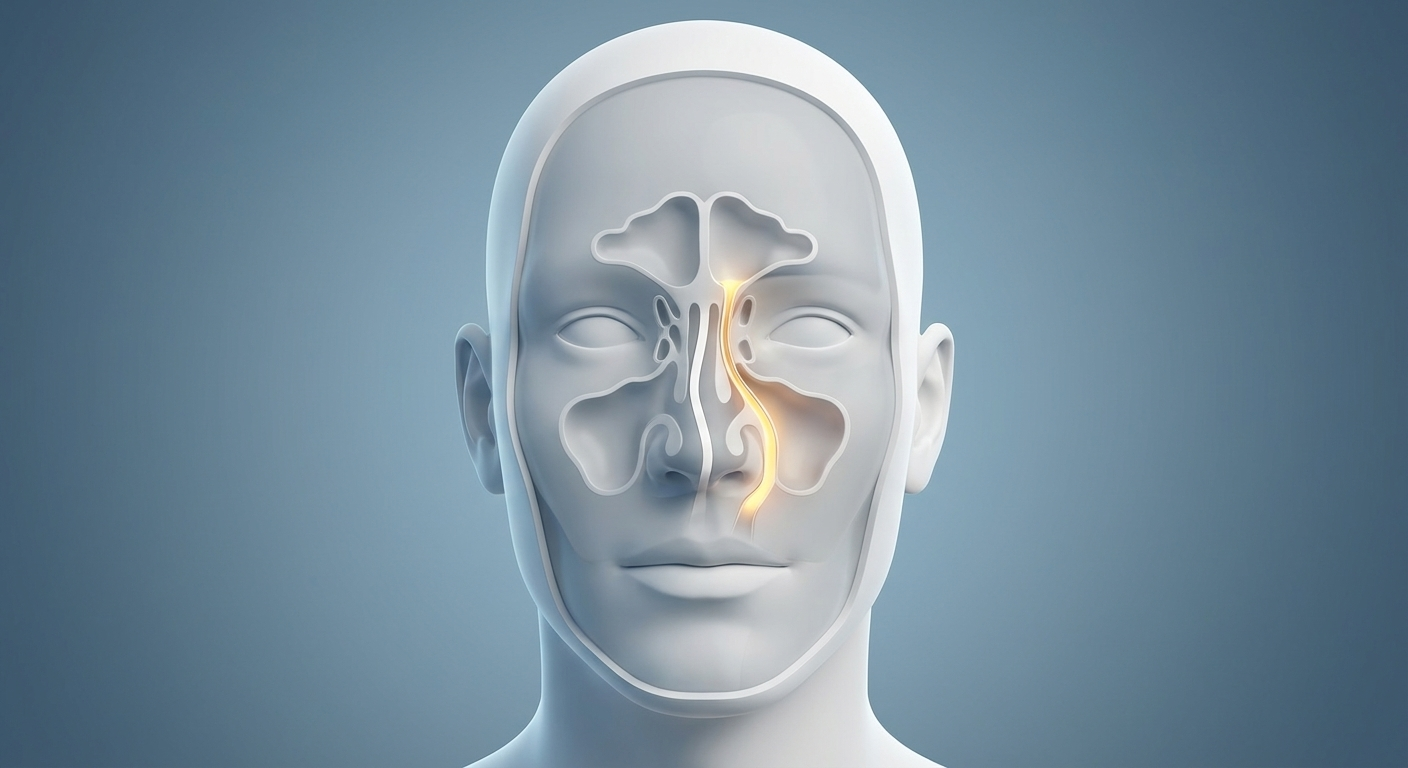
3) CT scan images (deviated septum CT scan)
A deviated septum CT scan (often part of a sinus CT) provides a map of internal anatomy.
What CT shows best
- Bony/cartilaginous displacement and septal spurs
- How narrow the nasal airway space may be
- Sinus anatomy and patterns associated with chronic sinus disease [4]
Best use
- Detailed anatomy and surgical planning, especially when sinus disease is also being evaluated [4]
Related guide: Sinus CT scan—what it shows and how it helps: https://sleepandsinuscenters.com/blog/sinus-ct-scan-what-it-shows-and-how-it-helps-diagnose-sinus-issues
CT is especially helpful when the question is, “Is there a structural bottleneck in the drainage pathways?”—not just “Is the septum off-center?” [4] *Each image type adds a piece of the puzzle—endoscopy shows the living tissues, while CT maps the structure beneath.*

How to Read Deviated Septum Pictures (Patient-Friendly Guide)
Common “shapes” you might hear your ENT mention
- C-shaped deviation: a smooth curve toward one side
- S-shaped deviation: curves in both directions (often narrowing both sides in different areas)
- Septal spur: a pointed projection that can narrow space and sometimes create contact/irritation
If an ENT points out a spur, they may say: “This is a little ridge that crowds the airway.” That often matches what people feel—like airflow “catches” on one side.
What “worse-looking” images don’t always mean
A dramatic-looking deviation doesn’t automatically mean severe symptoms.
- A severe-looking deviation may cause surprisingly mild symptoms.
- A mild deviation can still cause major blockage if inflammation or turbinate hypertrophy is also present. [2][4]
In short, pictures show anatomy; your experience reflects anatomy plus swelling, mucus, and environmental triggers. [2]
Other findings often seen in the same images
- Enlarged turbinates (turbinate hypertrophy) [4]
- Rhinitis/inflammation (allergic or non-allergic)
- Signs of sinus blockage on CT (when sinusitis is part of the picture) [4]
*Images are most useful when interpreted alongside your symptoms, exam, and, when indicated, imaging findings.*

Symptoms of a Deviated Septum (and What Images Often Explain)
Nasal obstruction (often one-sided)
A deviation can reduce airflow space on one side, and many people notice the blockage more during colds, allergy seasons, or dry weather. [2] A common pattern is the “alternating side” experience: one side feels blocked most of the time, but the worse side can switch depending on congestion. Images often show a narrower baseline airway on one side, which becomes more noticeable with swelling. [2] For a broader symptom checklist, see: https://sleepandsinuscenters.com/symptoms-of-sinus-problems
Recurrent sinus infections or chronic sinusitis patterns
A deviated septum doesn’t cause every sinus infection by itself, but CT images may show patterns of inflammation that help connect anatomy with symptoms—especially when drainage pathways are crowded or narrowed. [4] Think of it like plumbing: if a corridor is already tight, a little swelling can make drainage less efficient, which can contribute to persistent symptoms in some people. [4]
Nosebleeds (epistaxis) and crusting
Airflow turbulence and dryness can contribute to irritation and crusting in certain areas, which is why nosebleeds are sometimes discussed among deviated septum symptoms. [2] Images don’t always prove the reason for nosebleeds, but they can reveal irritated areas or tight spots where dryness tends to be worse.
Snoring and sleep disruption
Nasal obstruction can worsen sleep quality or snoring for some people, even though snoring usually has more than one contributing factor. [2] *When symptoms and pictures line up, they can explain not just “what you have,” but why certain times or triggers make breathing harder.*
Causes of a Deviated Septum (Congenital vs. Injury)
Congenital (born with it)
Some people are born with a septum that sits off-center, or it shifts during growth and development. [2][3] Related topic: Is a deviated septum hereditary? https://sleepandsinuscenters.com/blog/is-a-deviated-septum-hereditary-understanding-genetic-causes-and-risks
For many people, there’s no single moment when it “happened.” They may simply realize over time that one nostril never feels as open as the other.
Trauma-related
Injuries—sports impacts, falls, accidents, or an old nasal fracture—can shift cartilage and bone and leave the septum deviated. [2] In these cases, patients often connect the dots retroactively: “Ever since that hit to my nose years ago, breathing hasn’t felt the same.”
Why deviation can seem worse over time
Even if the septum itself hasn’t changed much, symptoms may become more noticeable due to:
- Inflammation (allergies or rhinitis)
- Compensatory turbinate enlargement
- Repeated episodes of congestion (for example, from allergies or colds) [2][4]
*Symptoms can evolve as tissues swell or adapt—even when the septum’s shape stays the same.*
When to See an ENT (and What the Diagnostic Visit Looks Like)
Signs you should get evaluated
People often seek evaluation for:
- Persistent or worsening one-sided nasal blockage
- Recurrent sinus infections despite typical treatments
- Frequent nosebleeds or troublesome crusting
- Poor sleep or snoring plus nasal obstruction [2]
If you’re using sprays frequently, breathing through your mouth at night, or noticing symptoms that keep returning, it’s reasonable to ask for a structural evaluation rather than guessing from photos alone.
Step-by-step: how ENTs diagnose a deviated septum
1) Symptom history (onset, triggers, seasons)
2) A nasal exam using a light/speculum
3) Nasal endoscopy if a deeper view is needed [4]
4) CT imaging if sinus disease is suspected or for surgical planning [4]
A clinician may compare what you feel with what they see—because the “most deviated” area in a picture isn’t always the main functional problem.
Why CT is not always the first step
Often, the physical exam and endoscopy provide enough information. CT is usually reserved for deeper anatomical mapping—especially sinus evaluation. [4] *The goal of the visit is to match your symptoms with targeted testing, not to order every test for everyone.*
Treatment Options (With Examples of What “Before/After” Pictures Typically Show)
Non-surgical treatments (symptom control)
Non-surgical options focus on managing inflammation, mucus, and dryness. Common categories include:
- Saline-based care to support mucus clearance and comfort
- Nasal steroid sprays when inflammation or allergies contribute [2]
- Allergy management when symptoms overlap (because swelling can mimic or worsen obstruction) [2]
- Caution with decongestant sprays: overuse may cause rebound congestion (a “stuck” cycle)
Medication can reduce temporary swelling, but it can’t move cartilage or bone back to center. Pictures often make that distinction easier to understand.

Septoplasty (the main surgical correction)
Septoplasty aims to straighten or reshape the septum to improve airflow. [2]
What “before/after septoplasty” pictures can show
- Improved internal airway space on endoscopic images
- Reduced contact points or spur prominence
What they may not show
- Major external cosmetic changes (unless septoplasty is combined with rhinoplasty)
If you’re considering next steps, this overview can help: Is septoplasty right for your deviated septum? https://sleepandsinuscenters.com/blog/is-septoplasty-right-for-your-deviated-septum
Turbinate reduction (often combined)
Because turbinate hypertrophy is commonly present alongside a deviated septum, turbinate reduction may be performed with septoplasty when turbinates significantly contribute to obstruction. [4] More detail: Turbinate hypertrophy—causes, symptoms, and treatment: https://sleepandsinuscenters.com/blog/nasal-turbinate-hypertrophy-causes-symptoms-and-treatment-guide
*The best outcomes come from treating the right problem—sometimes that’s the septum, sometimes the turbinates, and often a combination of both.*
Lifestyle & Self-Care Tips That Can Help You Breathe Easier
Reduce dryness (especially if you get nosebleeds)
Humidification and moisture-support strategies are commonly discussed for dryness and crusting. If your pictures (or endoscopy) show irritated areas, reducing dryness and friction can help limit crusting and bleeding even when the deviation itself is stable. [2]
Optimize sleep setup
Some people notice less congestion with side-sleeping or gentle head elevation. It can also help to observe patterns: “Do I feel worse in one bedroom, during one season, or after specific exposures?” That context makes your images more meaningful when paired with your symptom history. [2]
Reduce inflammation triggers
Smoke exposure, irritants, and unmanaged allergies can amplify swelling and make a deviation feel worse. *Small daily adjustments can meaningfully improve comfort—especially when paired with the right medical plan.*
FAQs About Deviated Septum Pictures
Can I diagnose myself from deviated septum pictures online?
Online images are useful for education, but they can’t confirm how much airflow limitation you have or whether swelling/turbinates are the main issue. An in-person exam (and sometimes endoscopy) is often needed. [2][4]
If my septum looks deviated, do I automatically need surgery?
No. Deviations are common, and many people don’t need treatment unless symptoms are significant or persistent. [2][3]
What’s the difference between endoscopy images and CT scans?
- Endoscopy: shows mucosa, swelling, mucus, and contact points in real time.
- CT: maps bone/cartilage anatomy and sinus pathways; helpful for anatomy detail and planning. [4]
Do deviated septum pictures always show the cause of my sinus infections?
Not always. Anatomy may contribute, but infections and chronic sinus symptoms can be multifactorial. CT patterns can help, but they’re part of a broader evaluation. [2][4]
Are CT scans necessary—and what about radiation?
CT is often reserved for sinus evaluation and surgical planning, and clinicians weigh benefits and risks (including radiation exposure) based on your situation. [4]
What do “normal” septum pictures look like?
A “normal” septum is generally close to midline with relatively balanced airflow space—though minor asymmetry is common. [3][4] *Use pictures to get oriented—but rely on an exam to get answers.*
Conclusion — What to Do Next
Images—whether clinical photos, endoscopy views, or a deviated septum CT scan—can clarify what’s happening inside the nose. But the next steps usually depend on the full picture: your symptoms, an exam, and sometimes endoscopy or CT, especially when sinus issues are also suspected. [2][4]
If nasal obstruction, recurring sinus problems, or sleep disruption are affecting your day-to-day life, Sleep and Sinus Centers of Georgia can help you understand what your anatomy and testing mean—and what options may fit your goals. To take the next step, book an appointment at https://www.sleepandsinuscenters.com/.
*The right evaluation connects what you feel with what we see—so your treatment plan fits your life.*
Sources
[1] https://www.mayoclinic.org/diseases-conditions/deviated-septum/multimedia/deviated-septum/img-20008046
[2] https://www.mayoclinic.org/diseases-conditions/deviated-septum/symptoms-causes/syc-20351710
[3] https://en.wikipedia.org/wiki/Nasal_septum_deviation
[4] https://radiopaedia.org/articles/deviated-nasal-septum?lang=us
[5] https://www.columbiadoctors.org/health-library/multimedia/deviated-nasal-septum/
[6] https://int.livhospital.com/pictures-deviated-septum-visual-guide/
This article is for educational purposes only and is not medical advice. Please consult a qualified healthcare provider for diagnosis and treatment.
Don’t let allergies slow you down. Schedule a comprehensive ENT and allergy evaluation at Sleep and Sinus Centers of Georgia. We’re here to find your triggers and guide you toward lasting relief.