Deviated Nasal Septum Medical Devices: Top Treatment Options and Benefits
Introduction — Why “Devices” Are Now Part of Deviated Septum Care
When people say they “can’t breathe through their nose,” it’s easy to assume a deviated septum is the whole story. But nasal breathing is often more complex than “straight septum = clear airway.” In many patients, the tightest “pinch point” is actually the nasal valve (the narrowest part of the nasal airway). If the sidewall is weak, that valve area can narrow further during inspiration—sometimes called nasal valve collapse.
That’s why device-based therapies are now part of modern care for nasal airway obstruction (NAO). For selected patients, they may be used:
• as septoplasty alternatives when the septum isn’t the main blocker, or
• in combination with septum/turbinate treatment when multiple factors contribute.
Independent reviews note that nasal obstruction is often multi-factorial and that evidence for many interventions is still evolving—making individualized evaluation important. Review overview: https://pmc.ncbi.nlm.nih.gov/articles/PMC11983596/
If you’re exploring options, Sleep and Sinus Centers of Georgia also provides an overview of deviated septum relief: https://sleepandsinuscenters.com/deviated-septum-relief
Bottom line: nasal obstruction is often more than a “crooked septum,” and the nasal valve may be a key missing piece.
Quick Anatomy Refresher — Deviated Septum vs Nasal Valve Collapse

What the nasal septum does (and what happens when it’s deviated)
The septum is the wall of cartilage and bone dividing the left and right nasal passages. When it’s deviated, one side may be narrower, potentially altering airflow and causing a sensation of obstruction—even when you’re not sick.
A practical way to picture this: if the septum shifts to one side, it’s like moving a wall inward in a hallway. You can still walk through, but it’s tighter, and traffic doesn’t move as smoothly.
What the internal nasal valve is (and why it matters)
The internal nasal valve is the narrowest segment of the nasal airway, so small changes can have an outsized effect on airflow. If the supporting cartilage is weak—or the anatomy is naturally narrow—the valve area can pinch or collapse inward during inhalation.
Think of it like a thin drinking straw: even a slight squeeze makes it dramatically harder to pull air through.
Why symptoms might persist even if the septum is “only mildly” deviated
• turbinate enlargement
• inflammation from allergies or non-allergic rhinitis
• valve weakness or dynamic collapse during breathing
This is one reason device-based options are often discussed in the broader context of NAO—not just septal shape.
Small changes at the nasal valve can matter more than small septal bends for some people.
Symptoms That Suggest Your Deviated Septum May Be Causing Obstruction
Common nasal obstruction symptoms
• Trouble breathing through the nose (one side or both)
• Mouth breathing, especially at night
• Snoring or reduced sleep quality (may be related)
• Exercise intolerance or “air hunger” through the nose
Many people describe this as “I can breathe fine through my mouth, but my nose always feels like it’s not keeping up”—especially during activity or when lying down.

Clues that point toward nasal valve collapse (not just septum)
• Breathing feels worse with deeper inhalation
• The nostril/sidewall seems to pull inward when you breathe in
• Temporary improvement when you gently widen the cheek/sidewall (a classic “support” effect)
If you’ve ever tried an external nasal strip and thought, “That’s the first time in months I felt air move,” it can suggest support at the valve/sidewall matters—even if it doesn’t prove the cause by itself.
If sidewall support briefly improves your airflow, the nasal valve may be part of the problem.
Causes & Risk Factors (What Leads to Deviated Septum + Valve Problems)
Structural causes
• Natural developmental asymmetry / genetics
• Prior nasal injury (sports, falls, accidents)
• Prior nasal surgery (in some cases and depending on the type; many procedures are performed to improve obstruction)
Inflammatory causes that can worsen obstruction
Swelling makes narrow areas even narrower. Common contributors include:
• allergies
• chronic rhinitis
• sinus inflammation
A clinician might summarize it like this: structure sets the “baseline size” of the airway, while inflammation determines how much that baseline gets squeezed on a given day.
Structure sets the baseline; inflammation shifts day-to-day airflow.
Traditional Treatment Path (Context Before Devices)
At-home and medical management first (when appropriate)
Nasal obstruction care often starts with basics such as saline, trigger avoidance, and targeted treatment for inflammation (for example, allergy-focused strategies). This helps separate “swelling-related” blockage from structural blockage.
For example, if symptoms improve significantly with consistent inflammation control, that’s useful information—because it suggests swelling is a major driver, even if a deviation is present.
Septoplasty (the classic surgical option)
Septoplasty is designed to straighten or reposition the septum to improve airflow. It can be highly effective when the septum is the primary obstruction—but some patients still need additional treatment if the nasal valve or turbinates are also limiting airflow.
Post-op supports after septoplasty (brief mention)
After septoplasty, clinicians may use temporary supports such as silicone splints (often called Doyle-type splints), non-absorbable packing, or absorbable packing materials to reduce bleeding, stabilize tissues, and support healing. These supports don’t “fix” the underlying anatomy on their own—they’re more like short-term scaffolding that helps tissues heal in the desired position.
Treat swelling first when appropriate, and reserve procedures for structural limits that remain.
Deviated Nasal Septum Medical Devices — Two Leading FDA-Cleared Options for Nasal Airway Obstruction
For patients whose symptoms relate to the nasal valve area, two device categories are commonly discussed:
• LATERA: a bioabsorbable nasal implant that supports the lateral nasal wall (sidewall) to reduce collapse.
• VivAer: temperature-controlled radiofrequency that treats tissue in targeted areas (often including the internal nasal valve region) to improve airflow.
Both are FDA-cleared for treating nasal airway obstruction (see citations below).
Device Option #1 — Bioabsorbable Lateral Wall Implants (Example: LATERA)

What it is: LATERA is a small implant made of PLLA designed to help support the lateral nasal wall. FDA 510(k): https://www.accessdata.fda.gov/scripts/cdrh/cfdocs/cfpmn/pmn.cfm?ID=K161191; product info: https://www.stryker.com/us/en/ent/products/latera-absorbable-nasal-implant-system.html
How it works (plain language): Think of it as an internal “brace” for a sidewall that bends inward during inspiration. By supporting that area, airflow resistance can drop—especially in people whose obstruction is driven by sidewall weakness rather than septal blockage.
What “bioabsorbable” means: The implant is designed to be absorbed over time, with tissue response/remodeling described over roughly ~18 months in manufacturer materials. https://www.stryker.com/us/en/ent/products/latera-absorbable-nasal-implant-system.html
Evidence snapshot (patient-friendly):
• Studies and reported outcomes commonly use the NOSE score (Nasal Obstruction Symptom Evaluation), a questionnaire that measures symptom severity.
• Manufacturer and published reports note average improvements in symptom scores, although individual results may vary. Manufacturer overview: https://www.stryker.com/us/en/ent/products/latera-absorbable-nasal-implant-system.html
Where it’s done: Depending on patient needs and clinician judgment, it may be performed in an appropriate setting (office vs procedure suite/OR can vary).
Device Option #2 — Temperature-Controlled Radiofrequency (Example: VivAer Stylus)

What it is: VivAer is an FDA-cleared device that delivers controlled radiofrequency energy to targeted nasal tissues, commonly focusing on the internal nasal valve region. FDA 510(k): https://www.accessdata.fda.gov/cdrh_docs/pdf20/K200300.pdf; clinical info: https://vivaer.com/hcp/
How it works (plain language): The treatment applies energy under the nasal lining to change tissue properties in a controlled way—often described as remodeling or stiffening—so the valve area is less likely to narrow during breathing. Many approaches are positioned as an office-based nasal procedure with no external incisions.
Evidence snapshot: Published multicenter data report improvements in symptom scores beyond the early healing period, supporting durability for selected patients; individual results may vary. See FDA and HCP links above.
For the right anatomy, device-based care can target valve-related obstruction with or without septal surgery.
LATERA vs VivAer — Which Device Fits Which Type of Obstruction?

Best-fit scenarios (high-level, patient-friendly)
• LATERA may be considered when lateral wall weakness and dynamic sidewall collapse appear to be major drivers of NAO.
• VivAer may be considered when internal nasal valve narrowing and tissue-related obstruction are dominant, particularly when a minimally invasive approach is a priority.
A clinician might phrase the decision this way: “Are we trying to support a collapsing sidewall, or change the tissue behavior at the valve so it doesn’t narrow as much?”
Side-by-side comparison (key differences)
Primary goal:
• LATERA: Support weak sidewall/lateral cartilage
• VivAer: Remodel or stiffen targeted tissue (often at the internal valve)
Method:
• LATERA: Implant placed beneath tissue
• VivAer: Energy-based treatment (no implant)
Typical setting:
• LATERA: Varies by patient/clinician
• VivAer: Often office-based for selected patients
Recovery expectations:
• LATERA: Temporary tenderness/swelling; localized healing
• VivAer: Temporary tenderness/swelling/crusting/congestion during healing
Notable risks to discuss:
• LATERA: Implant awareness, protrusion/extrusion, infection, possible removal (uncommon but reported)
• VivAer: Procedure-related healing symptoms; risks reviewed during consent
When a device may not be enough:
If there is significant septal deviation (including large spurs) or other structural blockage, a device alone may not address the main airflow limitation. In those situations, septum-focused treatment may be needed, sometimes alongside valve/turbinate management.
For readers exploring less invasive septum-focused approaches, see balloon septoplasty (ClearFIX): https://sleepandsinuscenters.com/blog/balloon-septoplasty-with-clearpath-a-less-invasive-fix-for-a-deviated-septum
Evidence quality note: Reviews emphasize that much of the nasal valve intervention literature includes case series/cohort studies, and more standardized outcomes and comparative trials are still needed. https://pmc.ncbi.nlm.nih.gov/articles/PMC11983596/
Choose “support” when collapse dominates; choose “remodeling” when narrowing dominates.
Benefits Patients Often Care About Most
Breathing and quality-of-life improvements
When the main obstruction point is correctly identified, potential benefits may include:
• reduced “blocked nose” feeling
• more comfortable sleep (less mouth breathing)
• improved exercise tolerance
In day-to-day terms, that can look like waking up with less dry mouth, feeling less “winded” during a walk, or not needing to constantly think about your breathing.
Convenience and “less invasive” appeal (for the right candidate)
Some device-based treatments are designed to be less disruptive than traditional surgery for selected patients—sometimes with quicker return to normal routines compared with formal operative approaches (though healing still takes time).
If you’d like a deeper explainer on energy-based treatment concepts, see radiofrequency ablation for nasal obstruction: https://sleepandsinuscenters.com/blog/radiofrequency-ablation-for-nasal-obstruction
Right diagnosis first; then choose the simplest option that meets your goals.
Risks, Side Effects, and Safety Considerations (Transparent, Non-Alarming)
LATERA-specific risks to discuss
Reported and/or labeled risks include implant awareness, protrusion or extrusion, infection, and the possibility of removal in some cases. FDA: https://www.accessdata.fda.gov/scripts/cdrh/cfdocs/cfpmn/pmn.cfm?ID=K161191; manufacturer: https://www.stryker.com/us/en/ent/products/latera-absorbable-nasal-implant-system.html
VivAer/radiofrequency considerations
Commonly discussed effects include temporary tenderness, swelling, crusting, and congestion during healing. FDA: https://www.accessdata.fda.gov/cdrh_docs/pdf20/K200300.pdf; https://vivaer.com/hcp/
Any procedure should follow a thorough evaluation and informed consent discussion that covers benefits, risks, alternatives, and recovery expectations.
Understand benefits, risks, and alternatives—and proceed after informed consent.
The “Evidence Quality” Reality Check (Why Consultation Matters)
Because study designs and outcome measures vary, the best choice often depends on matching:
• anatomy (septum, valve, turbinates)
• symptom pattern
• goals around invasiveness and recovery
Background review: https://pmc.ncbi.nlm.nih.gov/articles/PMC11983596/
A careful exam that maps your airflow limits leads to better-matched treatment.
What to Expect at an ENT Evaluation (How Doctors Decide)
History and symptom scoring (NOSE score)
The NOSE score is a short questionnaire that helps quantify how severe nasal obstruction feels in daily life. It can also help track improvement over time.
Nasal exam and endoscopy (if needed)
A focused exam looks at the septum, turbinates, nasal valve area, signs of inflammation, and whether collapse occurs dynamically when breathing in.
Imaging (when it’s used)
CT imaging may be more relevant when sinus disease is suspected. For valve-focused obstruction, imaging is not always required.
Objective scoring plus targeted exam help pinpoint the true bottleneck.
Recovery & Aftercare Tips (Patient-Friendly)
General healing timeline (high-level)
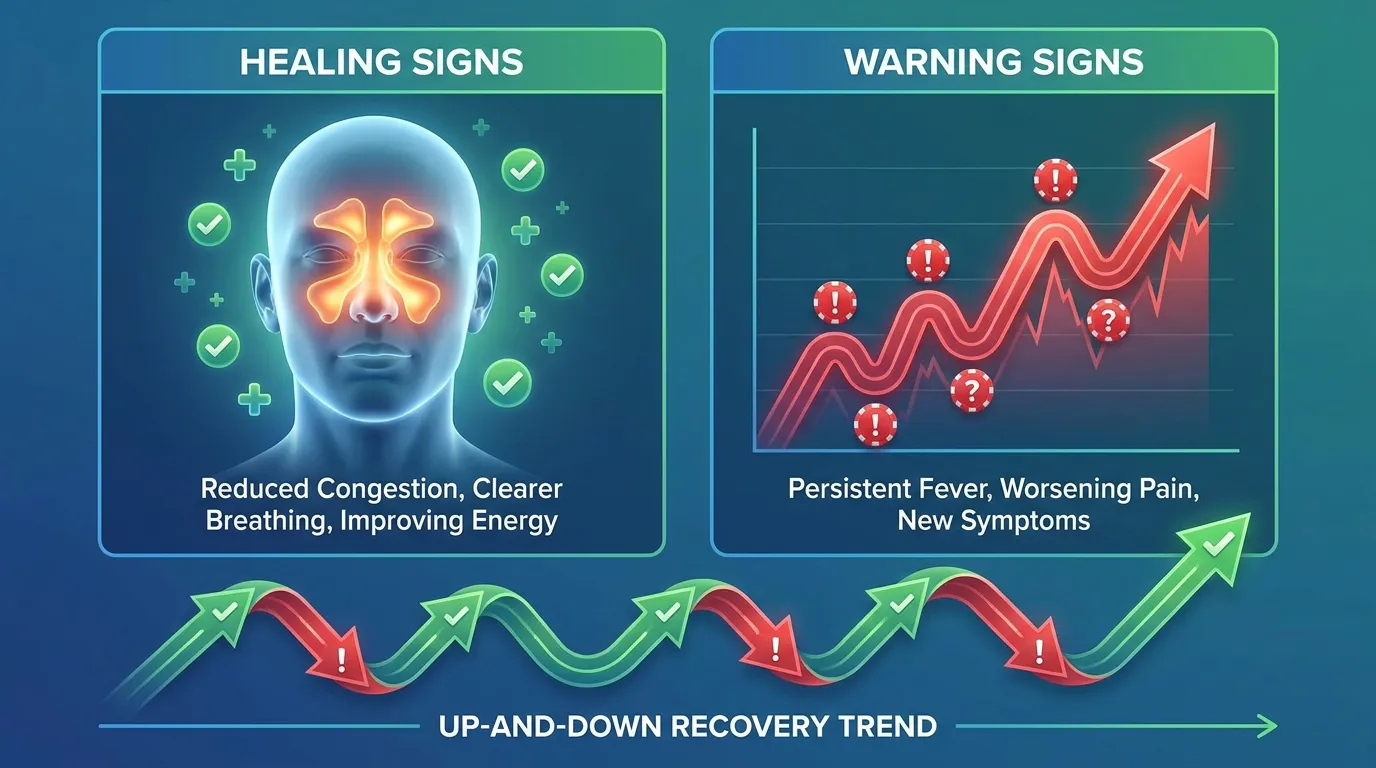
• First days: congestion and swelling are common after many nasal procedures.
• First weeks: breathing often improves gradually as inflammation settles and healing progresses.
Comfort and airway care
Common supportive measures discussed after nasal procedures may include saline sprays/rinses and humidification, along with temporary activity adjustments—based on the care plan provided.
When to call the clinic
Many practices recommend contacting the clinic for concerning symptoms such as fever, worsening pain, spreading redness, persistent bleeding, or anything that feels unexpectedly severe.
Expect short-term congestion; steady, incremental improvement is the goal.
Cost, Insurance, and Practical Planning
Coverage variability
Coverage can vary between septoplasty, implants, and radiofrequency procedures. Prior authorization may be needed. A practical step is asking for:
• the procedure name and billing codes (if available)
• an insurance benefits check before scheduling
Verify coverage and costs before you schedule.
Lifestyle Tips to Reduce Nasal Obstruction Symptoms (With or Without Devices)
Manage inflammation triggers
If swelling is part of the issue, consistent inflammation control can matter—especially with allergies or chronic rhinitis. Smoke and irritant avoidance can also reduce congestion triggers.
Sleep-position and nighttime strategies
Some people notice worse symptoms or snoring when back-sleeping compared with side-sleeping. Bedroom air that’s overly dry can also make nighttime nasal comfort worse.
“Try-at-home” temporary helpers (set expectations)
External nasal strips or internal dilators may temporarily improve airflow for some people, but they don’t correct underlying structural problems. They can, however, provide a “preview” of what added support might feel like—useful information to share during an evaluation.
Daily habits that reduce swelling can enhance any treatment’s impact.
FAQs
Are there medical devices that can help a deviated septum without surgery?
They may help nasal airway obstruction, especially when the nasal valve is a key contributor. However, if the septum itself is the main physical blockage, septum-directed treatment may still be needed.
What’s the difference between LATERA and VivAer?
LATERA is a bioabsorbable implant that supports the lateral nasal wall. VivAer uses temperature-controlled radiofrequency to remodel targeted tissue (often at the internal nasal valve). Both are FDA-cleared for NAO. FDA: https://www.accessdata.fda.gov/scripts/cdrh/cfpmn/pmn.cfm?ID=K161191, https://www.accessdata.fda.gov/cdrh_docs/pdf20/K200300.pdf
How long do results last?
LATERA is designed to be absorbed over time, with remodeling described over ~18 months in manufacturer materials; outcomes have been reported at longer follow-up. Radiofrequency studies also include follow-up beyond early healing for selected patients. Durability varies by anatomy and underlying cause. See: https://www.stryker.com/us/en/ent/products/latera-absorbable-nasal-implant-system.html, https://vivaer.com/hcp/, context: https://pmc.ncbi.nlm.nih.gov/articles/PMC11983596/
What are the most common side effects?
Temporary congestion, swelling, tenderness, and crusting can occur with many nasal procedures. Implants also carry device-specific risks such as awareness or extrusion; radiofrequency treatments often emphasize short-term healing effects. FDA: https://www.accessdata.fda.gov/scripts/cdrh/cfpmn/pmn.cfm?ID=K161191, https://www.accessdata.fda.gov/cdrh_docs/pdf20/K200300.pdf
Can these be combined with septoplasty or turbinate reduction?
Sometimes, yes—when obstruction has multiple causes (septum + valve + turbinates). The best plan depends on what’s actually limiting airflow.
Conclusion — Choosing the Right Option for Your Anatomy and Goals
If you’ve been told you have a deviated septum but still suspect something else is affecting breathing, you’re not alone. Nasal obstruction often involves both the septum and the nasal valve region—one reason device-based therapies have become an important part of today’s treatment landscape.
The most useful next step is an evaluation that pinpoints where airflow is being restricted (septum vs valve vs turbinates) and matches options to your anatomy, symptom pattern, and recovery goals.
The right diagnosis guides the right treatment—often with less intervention than you might expect.
Next step (appointment): To discuss options with Sleep and Sinus Centers of Georgia, you can book an appointment here: https://sleepandsinuscenters.com/appointments (or visit https://www.sleepandsinuscenters.com/ to learn more).
Medical disclaimer: This article is for general education and is not medical advice. A qualified clinician can help determine which treatment—if any—is appropriate for your specific anatomy and symptoms.
Don’t let allergies slow you down. Schedule a comprehensive ENT and allergy evaluation at Sleep and Sinus Centers of Georgia. We’re here to find your triggers and guide you toward lasting relief.