Crackling Sound in Ear When Moving Jaw: Common Causes and Effective Fixes
Hearing a crackling sound in the ear when moving the jaw can be surprising—especially if it shows up while chewing, yawning, or talking. The good news: in many cases, it’s related to common (and treatable) issues like earwax, pressure changes in the middle ear, or jaw-joint irritation.
This guide breaks down what that crackling may mean, how to narrow down the most likely cause, what conservative steps are generally considered reasonable for many people, and when it’s time to schedule an evaluation with Sleep and Sinus Centers of Georgia.
At-a-glance: 5 common causes + 5 generally reasonable first steps
Common causes: earwax shifting, Eustachian tube dysfunction (ETD), TMJ tension/disorder, middle-ear fluid/infection, and other less common ENT conditions.
First steps that may be appropriate for many people (depending on symptoms and medical history): swallow or yawn, gentle chewing if comfortable, nasal saline, wax-softening drops only if appropriate, and TMJ-friendly habits (soft foods plus warm compress).
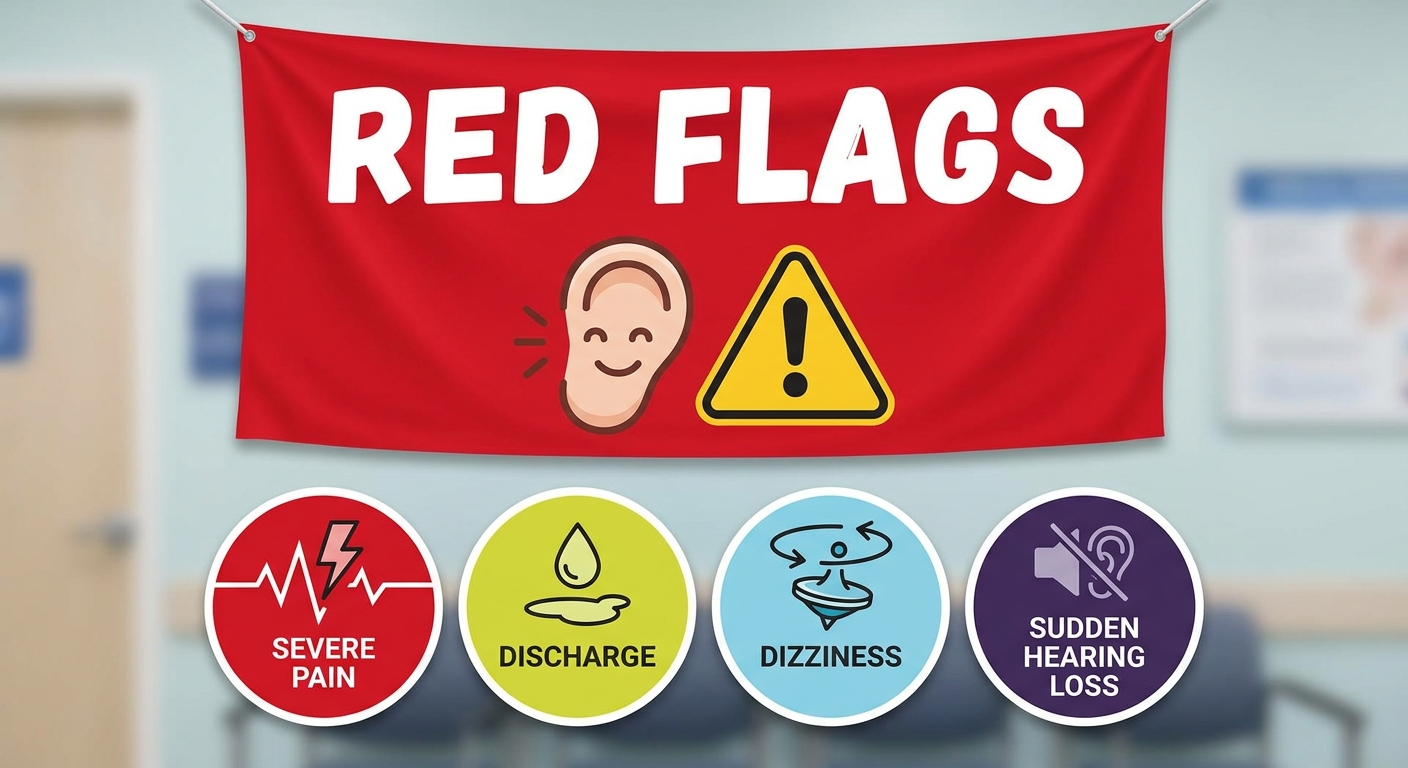
Red flags: sudden hearing loss, severe pain, discharge, or significant dizziness—seek urgent evaluation.
Bottom line: many cases are benign and manageable, but red flags or persistent symptoms deserve prompt care.
Quick Take—Why Your Ear Crackles When You Move Your Jaw
Many cases of a crackling sound in the ear when moving the jaw come from one of these categories:
- Earwax shifting close to the eardrum (very common)
- Eustachian tube dysfunction (ETD), where the Eustachian tube does not open and close normally, making pressure equalization harder (common)
- TMJ (jaw joint) disorders or jaw muscle tension, where jaw mechanics transfer sensations toward the ear (common)
- Middle-ear fluid or infection (less common in adults, but important to recognize)
Think of it this way: your jaw and ear are neighbors, and the middle ear is a pressure-sensitive space. When wax, pressure regulation, or jaw mechanics are slightly off, you may notice it most during movement. If you want a broader overview of ear crackling in general, see our related post: https://sleepandsinuscenters.com/blog/what-is-crackling-noise-in-my-ears
In short, nearby anatomy and pressure changes are the usual drivers of movement-linked crackling.
What “Crackling” Can Sound Like (and What Patients Often Notice)
Common descriptions: crackling, clicking, popping; fizzing or “rice crispy” sounds; intermittent noise that appears mainly with movement.
Common triggers include: chewing or talking; yawning or swallowing; clenching or grinding.
Some people notice it only on one side—like “every time I chew on my left side, my left ear crackles.” Others mainly notice it in quiet rooms, where internal sounds are easier to pick up.
Symptoms that may come with it: ear fullness or pressure; mild, fluctuating muffled hearing; jaw soreness or tightness; headaches (sometimes linked to jaw tension); occasional ringing (tinnitus) sensations.
If you’re not sure what counts as muffled hearing, a simple example is needing to raise the TV volume a notch, then noticing it seems to fluctuate back to normal later.
If crackling clusters with pressure, muffling, or jaw tightness, those clues often point toward the cause.
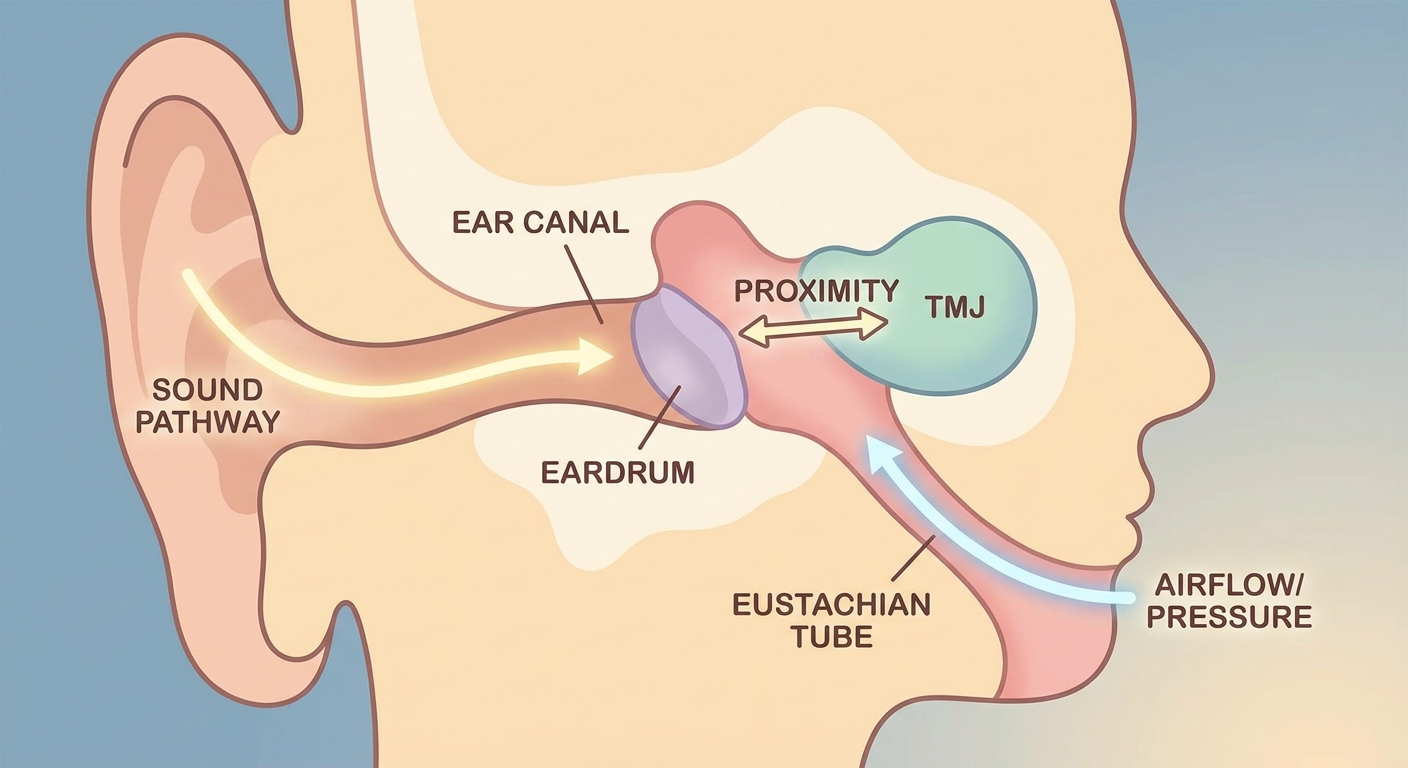
Ear + Jaw Anatomy (Simple Explanation)
Why jaw movement affects the ear: The temporomandibular joint (TMJ)—your jaw hinge—sits very close to the ear canal and middle ear structures. Because of this proximity, jaw motion and muscle tension can create sensations that seem like they’re in the ear, even when the source is the jaw joint or surrounding muscles.
A clinician might explain it like this: the TMJ and ear share tight real estate. When the jaw joint clicks or the muscles tighten, the ear can feel it.
The middle ear pressure system in 30 seconds: Your middle ear is an air-filled space that needs stable pressure to work well. The Eustachian tube helps equalize pressure between the middle ear and the back of the nose/throat. When that equalization is sluggish or inconsistent (such as during congestion), popping or crackling can happen—often noticed during swallowing or jaw movement.
Nearby joints share space, and the middle ear depends on smooth pressure equalization—both explain why movement can reveal crackles.
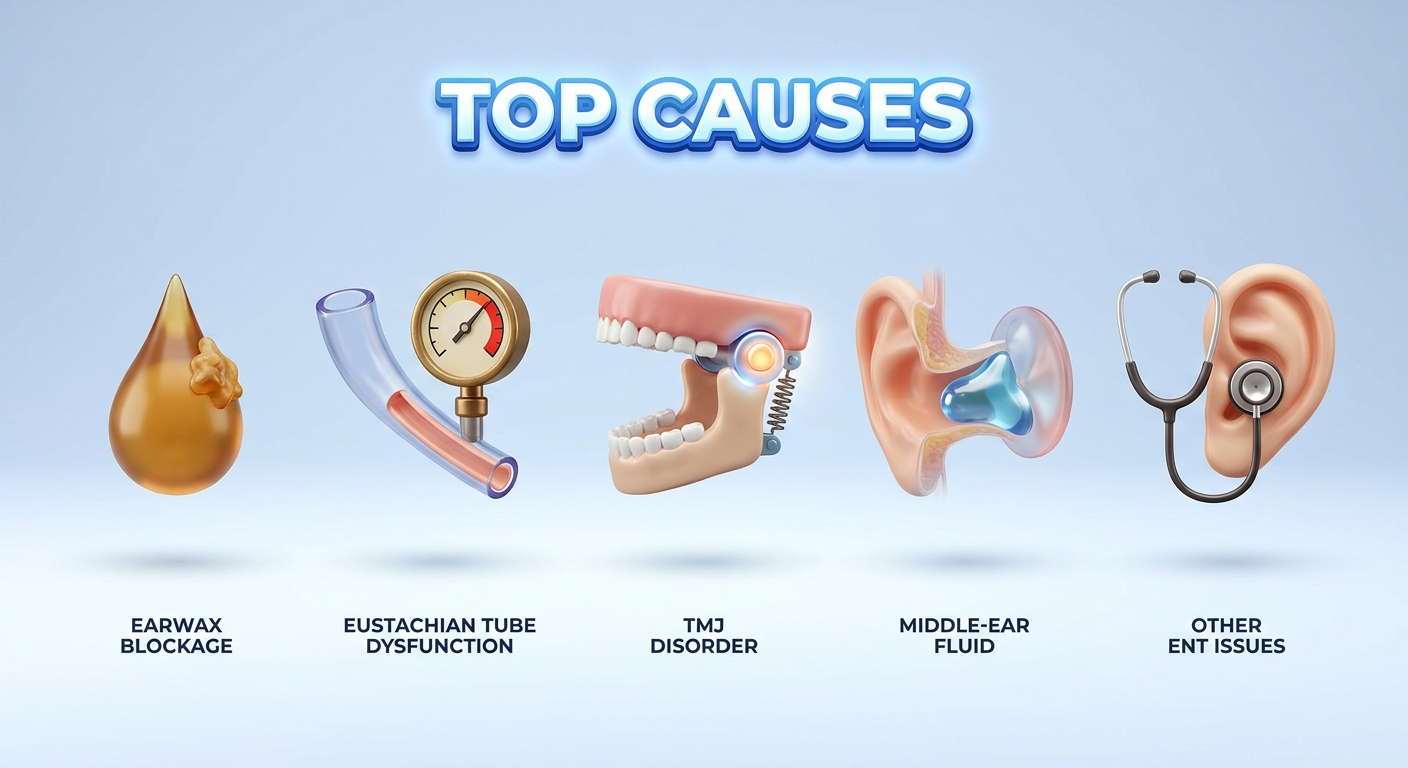
Common Causes of Crackling in the Ear When Moving the Jaw
The most frequent causes include earwax shifting, ETD, TMJ mechanics, middle-ear fluid or infection, and less common ENT conditions.
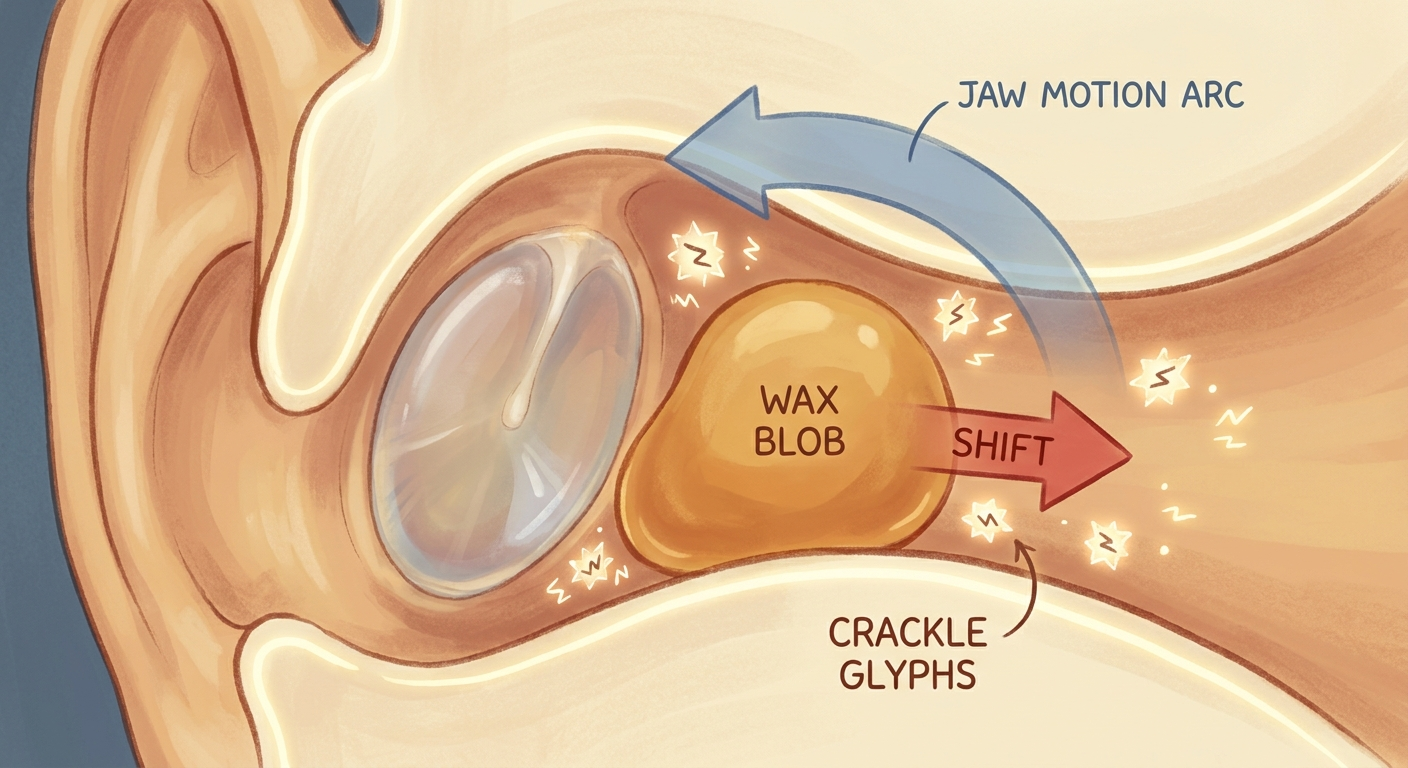
1) Earwax shifting or impacted earwax (very common)
Earwax helps protect and lubricate the ear canal, but problems can occur when wax builds up or sits near the eardrum. With jaw movement, the ear canal shape can subtly change—so wax may shift and create clicking or crackling sensations.
Clues it’s earwax-related: fullness, itching, or a blocked feeling; muffled hearing that improves and worsens; symptoms that seem worse after earbuds, earplugs, or hearing protection use.
A common scenario: symptoms start after weeks of daily earbud use, then you notice a crinkle sound whenever you chew. For a deeper dive, read: https://sleepandsinuscenters.com/blog/earwax-impaction-symptoms-and-effective-removal-tips
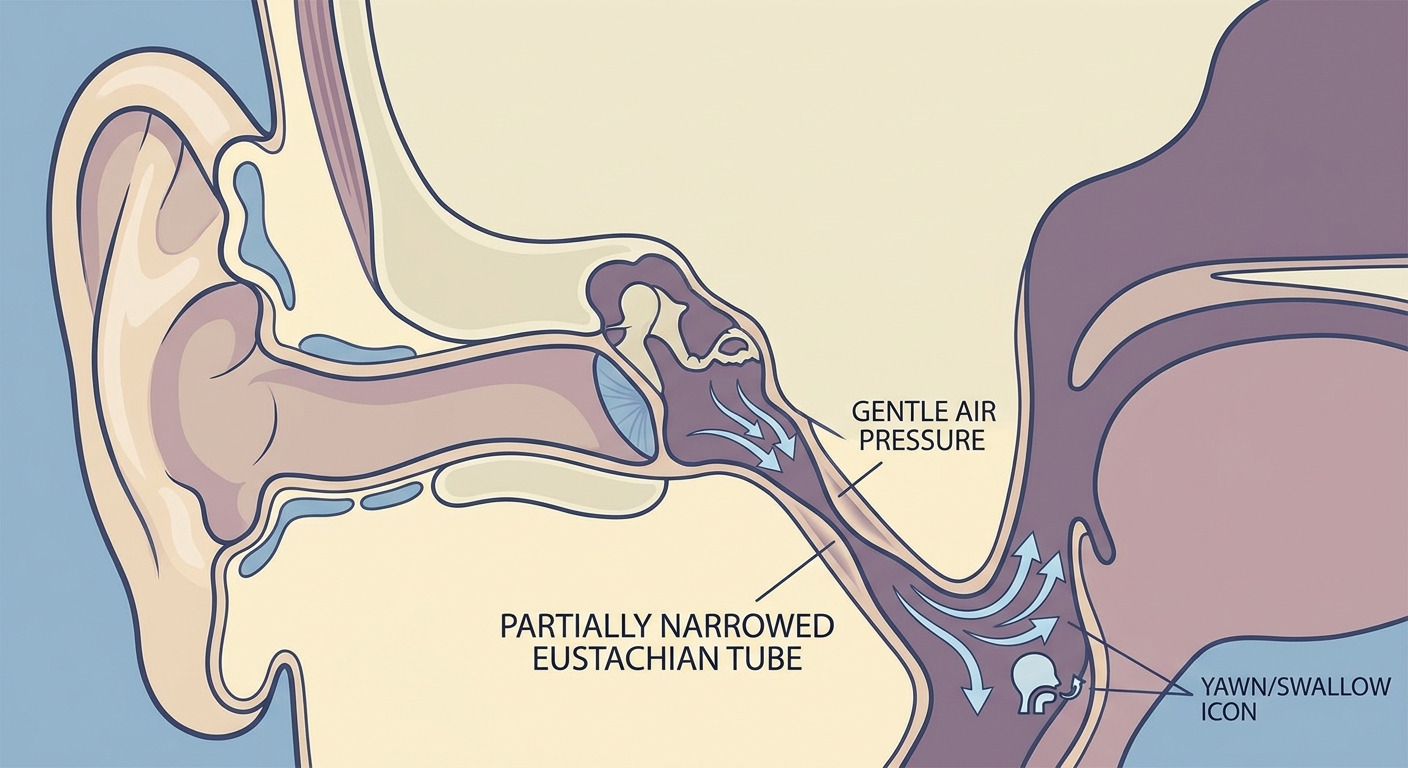
2) Eustachian tube dysfunction (ETD) and pressure changes (very common)
ETD is one of the most common reasons people notice popping or crackling—especially during jaw movement that naturally activates swallowing muscles.
Common triggers include: colds, sinus congestion, allergies; post-nasal drip; altitude changes (flying, mountains).
What’s happening: the Eustachian tube is not opening and closing normally, so pressure equalization is bumpy. Air shifts in the middle ear can create a crackle or pop—many people say it’s most noticeable when they swallow, as if the ear is trying to open. Learn more: https://sleepandsinuscenters.com/blog/eustachian-tube-dysfunction-symptoms-causes-effective-treatment-options
3) TMJ disorder or jaw muscle tension (common)
TMJ issues can produce clicking or popping at the joint. Because the TMJ is so close to the ear, that sound (or vibration) can be perceived as ear crackling.
Clues it may be TMJ-related: jaw pain, facial pain, or temple headaches; clicking at the jaw joint; limited opening or a catching sensation; morning jaw soreness (sometimes linked with nighttime clenching or grinding).
A practical example: if the crackling is strongest while chewing tough foods (bagels, jerky) or after a stressful day of clenching, TMJ mechanics may be playing a bigger role. TMJ problems can also overlap with tinnitus in some individuals, and TMJ-directed care may help reduce ear symptoms for some patients.
4) Middle-ear fluid or infection (less common—but important)
Fluid behind the eardrum or a middle-ear infection can change how sound and pressure are transmitted, sometimes leading to crackling, popping, or muffled hearing.
Symptoms that raise concern include: increasing ear pain; fever; drainage from the ear; worsening hearing rather than fluctuating symptoms.
Because ear infections are treated differently than wax or ETD, don’t assume crackling is just pressure if pain is escalating.
5) Other, less common ENT conditions
If the crackling continues despite conservative steps, an exam may be needed to rule out persistent middle-ear fluid, chronic ear conditions, muscular tension patterns, or other ear, nose, and throat concerns. Most causes are not dangerous—but ongoing symptoms deserve a clear diagnosis so you’re not guessing.
In practice, earwax, ETD, and TMJ lead the list; infections or other ENT issues are less common but important to recognize early.
How to Tell Which Cause Is Most Likely (Simple Self-Check)
Use these patterns as an educational guide (not a diagnosis):
- Mostly pressure/popping: more consistent with ETD—especially if worse with congestion and better after swallowing or yawning.
- Clicking plus jaw discomfort: more consistent with TMJ mechanics or jaw muscle tension.
- Muffled hearing plus fullness/itching: more consistent with earwax.
- Pain plus drainage or dizziness: that combination is more concerning and typically warrants prompt medical evaluation.
If you’re torn between two categories (for example, you have allergies and you clench at night), you’re not alone—overlap is common, and an exam can sort out which factor is primary.
Let patterns guide you, but get checked if symptoms persist or mix with red flags.
Effective Fixes You Can Try at Home (Generally Reasonable for Many People)
Safety note: Avoid inserting objects into the ear canal (including cotton swabs). This can push wax deeper or irritate the ear.
Quick pressure-relief steps (often used for ETD): swallowing or yawning; gentle chewing (for example, gum) if comfortable; saline nasal spray or a nasal rinse to reduce nasal congestion.
If allergies are a major trigger, consistent allergy management (guided by a clinician) can reduce recurrence. Many people improve when they treat the nose side of the problem consistently, not just during flares.
Earwax-safe care (when wax is suspected): consider earwax-softening drops exactly as directed on the label; stop if pain occurs; do not use ear drops if there’s ear drainage, significant pain, suspected infection, a history of eardrum perforation, or ear tubes—unless a clinician says it’s appropriate.
If your ear feels truly blocked, it’s often safer (and faster) to have wax evaluated and removed than to keep trying at-home methods repeatedly.
TMJ self-care (when jaw tightness or clicking is present): soft foods for a few days; minimize hard chewing; avoid gum if it worsens symptoms; warm compresses to jaw muscles (10–15 minutes, once or twice daily); gentle jaw stretching and relaxation exercises; stress reduction and awareness of daytime clenching.
If you’re noticing crackling in the ear when moving the jaw mainly during clenching or chewing, TMJ-focused habits are often worth discussing with a clinician.
Start gently, avoid the ear canal, and match steps to your symptoms and history.
Treatments from a Professional (ENT, Audiology, Dental/TMJ Care)
If earwax is impacted: Professional removal is often the fastest path to relief when wax is truly blocking the canal. It also avoids the risks of digging or pushing wax deeper at home.
If ETD is persistent or recurrent, an ENT evaluation may include: examination of the ear canal and eardrum; assessment of middle-ear pressure when indicated; a plan focused on nasal inflammation, allergies, and middle-ear ventilation.
The aim is to address the underlying inflammation plus pressure cycle—not just the sound itself.
If TMJ is the driver, common options include: a customized night guard (often used for clenching or grinding); physical therapy and guided exercises; posture and behavior adjustments to reduce jaw load.
Reducing strain on the jaw joint often means fewer clicks, less muscle tension, and fewer ear-adjacent sensations.
If infection or fluid is suspected: Treatment depends on the exam findings and symptom severity. Some cases are observed, while others may require medication—your clinician can explain the options.
Targeted treatment follows the exam: fix wax, improve pressure equalization, calm jaw load, or treat infection when present.
When to See a Doctor (and When It’s Urgent)
Seek urgent care or same-day evaluation if you have: sudden hearing loss; severe ear pain; ear drainage or discharge; significant dizziness or vertigo; rapidly worsening symptoms.
Schedule a visit if: crackling lasts more than 1–2 weeks; symptoms keep returning; you suspect TMJ and home measures haven’t helped.
For decision support, see: https://sleepandsinuscenters.com/blog/when-should-i-see-an-ent
If symptoms are severe, sudden, or persistent, don’t wait—get checked.
What to Expect at Your ENT Visit (Helps Reduce Anxiety)
Common evaluations: otoscopy (a close look for wax, irritation, infection, and eardrum appearance); a hearing check if symptoms suggest hearing changes; middle-ear pressure testing when indicated.
Key questions you may be asked: recent cold, allergies, or sinus symptoms; flying, diving, or altitude change; jaw clenching or grinding, dental work, or facial pain; frequent earbud or earplug use.
If it helps, jot down when you notice the crackling (meals, mornings, after flights, during allergy flares). Patterns can be very informative. Many patients find it reassuring that the first steps are straightforward: look, measure, then match the treatment to what we see.
An exam clarifies the cause so treatment can be precise and efficient.
Lifestyle Tips to Prevent Recurrence
Keep nasal inflammation controlled (ETD prevention): saline rinses during allergy or cold season; consistent allergy control strategies if allergies are a known trigger.
Jaw-friendly habits (TMJ prevention): limit gum chewing and hard or crunchy foods if they trigger symptoms; avoid repeatedly testing the click; work on posture and stress reduction to reduce jaw tension.
Ear hygiene best practices: don’t insert objects into the ear canal; address wax buildup early (and safely) before it becomes impacted.
Small, steady habits often prevent repeat episodes.
FAQs
Is crackling in my ear when I move my jaw serious? Usually it’s benign and linked to wax, pressure changes, or TMJ issues. If it persists, keeps returning, or comes with red-flag symptoms, it’s worth an evaluation.
Can earwax really cause crackling when chewing? Yes. Wax near the eardrum can shift slightly with jaw movement and create crackling or clicking sensations.
Why does it get worse when I have a cold or allergies? Congestion and inflammation can interfere with how smoothly the Eustachian tube equalizes pressure, increasing popping or crackling.
How do I know if it’s TMJ or an ear problem? TMJ issues often include jaw pain or tightness and joint clicking. Ear-driven causes more often include fullness, pressure shifts, or wax symptoms. An exam can clarify.
Should I use decongestants or nasal sprays? Saline is often a low-risk first step. Other options depend on your health history and current symptoms, so it’s best discussed with a clinician.
When should I worry about hearing loss? Sudden hearing loss or rapidly worsening hearing changes should be evaluated urgently.
When in doubt, get checked—especially for sudden changes or persistent symptoms.
Ready to get clarity?
You can book an appointment with Sleep and Sinus Centers of Georgia here: https://www.sleepandsinuscenters.com/
References (Patient-Facing Clinical Sources)
WebMD: https://www.webmd.com/a-to-z-guides/what-to-know-crackling-in-your-ear
Healthline: https://www.healthline.com/health/crackling-in-ear
Mayo Clinic (TMJ): https://www.mayoclinic.org/diseases-conditions/tmj/symptoms-causes/syc-20350941
NHS (Earwax buildup): https://www.nhs.uk/conditions/earwax-build-up/
American Tinnitus Association (TMJ treatments): https://www.ata.org/about-tinnitus/therapy-and-treatment-options/tmj-treatments/
Cleveland Clinic (Eustachian Tube Dysfunction): https://my.clevelandclinic.org/health/diseases/22527-eustachian-tube-dysfunction
American Academy of Otolaryngology–Head and Neck Surgery (Earwax): https://www.enthealth.org/conditions/earwax/
This article is for educational purposes only and is not medical advice. Please consult a qualified healthcare provider for diagnosis and treatment.
Don’t let allergies slow you down. Schedule a comprehensive ENT and allergy evaluation at Sleep and Sinus Centers of Georgia. We’re here to find your triggers and guide you toward lasting relief.