CPAP and Dry Eyes: Can Your CPAP Machine Worsen Dry Eye Symptoms?
CPAP and dry eyes often intersect. This guide explains why, what symptoms to watch for, and practical fixes you can discuss with your sleep team and eye care provider.
CPAP Therapy Helps Your Breathing—But What About Your Eyes?
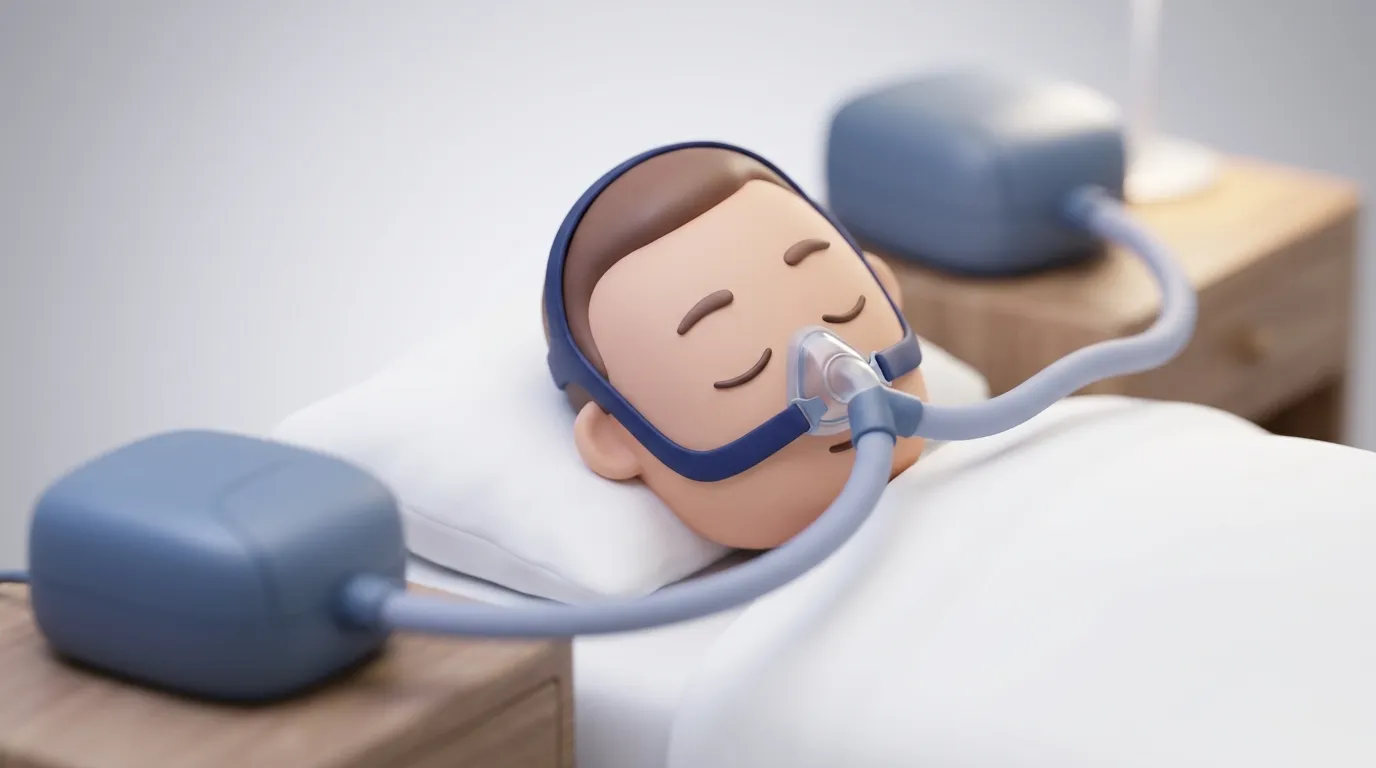
CPAP (continuous positive airway pressure) is a frontline treatment for obstructive sleep apnea (OSA). By delivering steady air pressure through a mask, it helps keep your airway open during sleep—improving breathing, sleep quality, and daytime alertness. [5]
Some CPAP users notice morning eye irritation: burning, gritty, watery, or red eyes. For many, the trigger is a mask leak sending airflow toward the eyes, which speeds up tear evaporation. People with OSA may also have tear film instability or meibomian gland issues that amplify symptoms. [1,2,5]
This article is educational and not medical advice. Seek individualized care, especially for severe or persistent symptoms.
Key Points in 30 Seconds
- CPAP doesn’t usually dry eyes directly—upward mask leaks are the most common culprit. [2,4]
- Symptoms often improve with better mask fit, a stable seal, humidification, and setting review. [2,5]
- If symptoms persist, get an eye evaluation to assess dry eye disease, blepharitis, or MGD. [1,4]
Can a CPAP Machine Really Make Dry Eye Worse?
Yes—most commonly through small leaks that blow air toward the eyes, increasing tear evaporation and irritation.
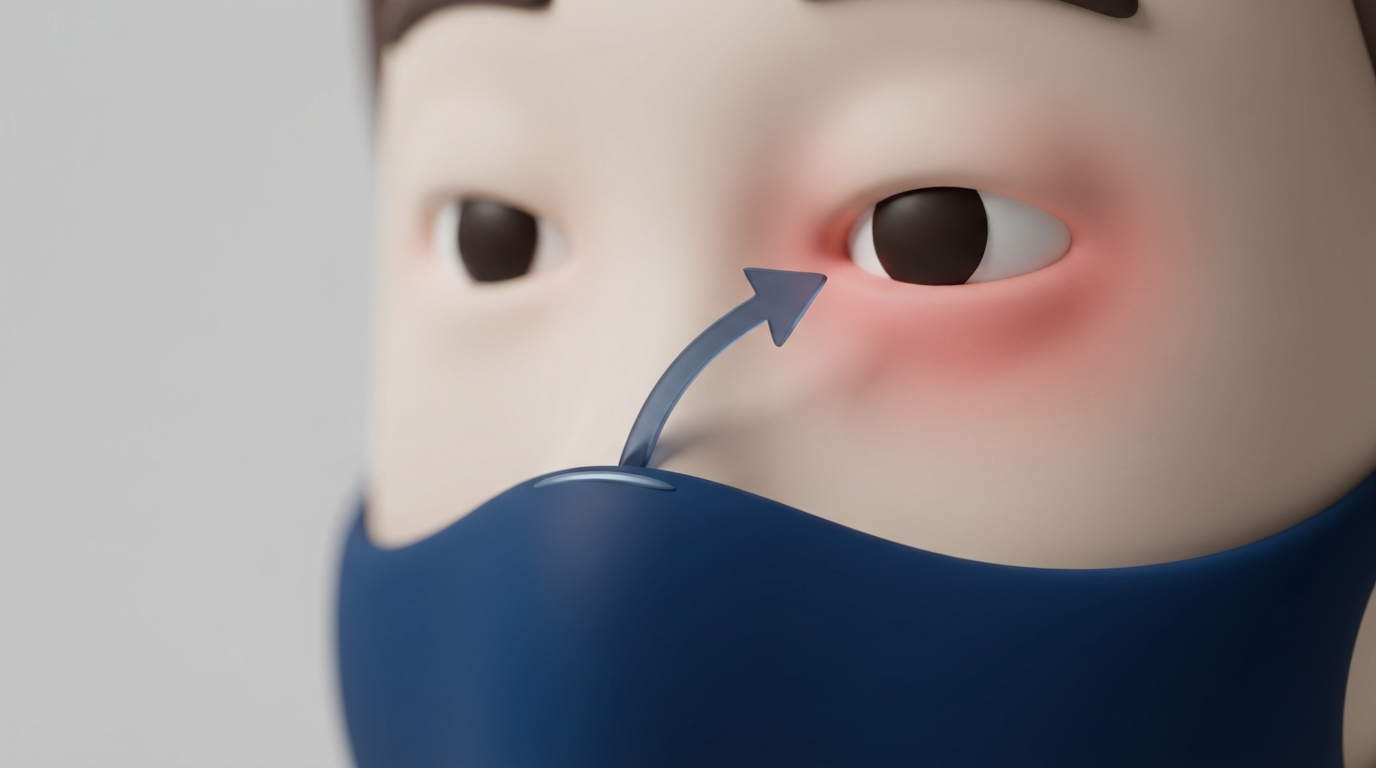
The most common mechanism—mask leak blowing air toward the eyes
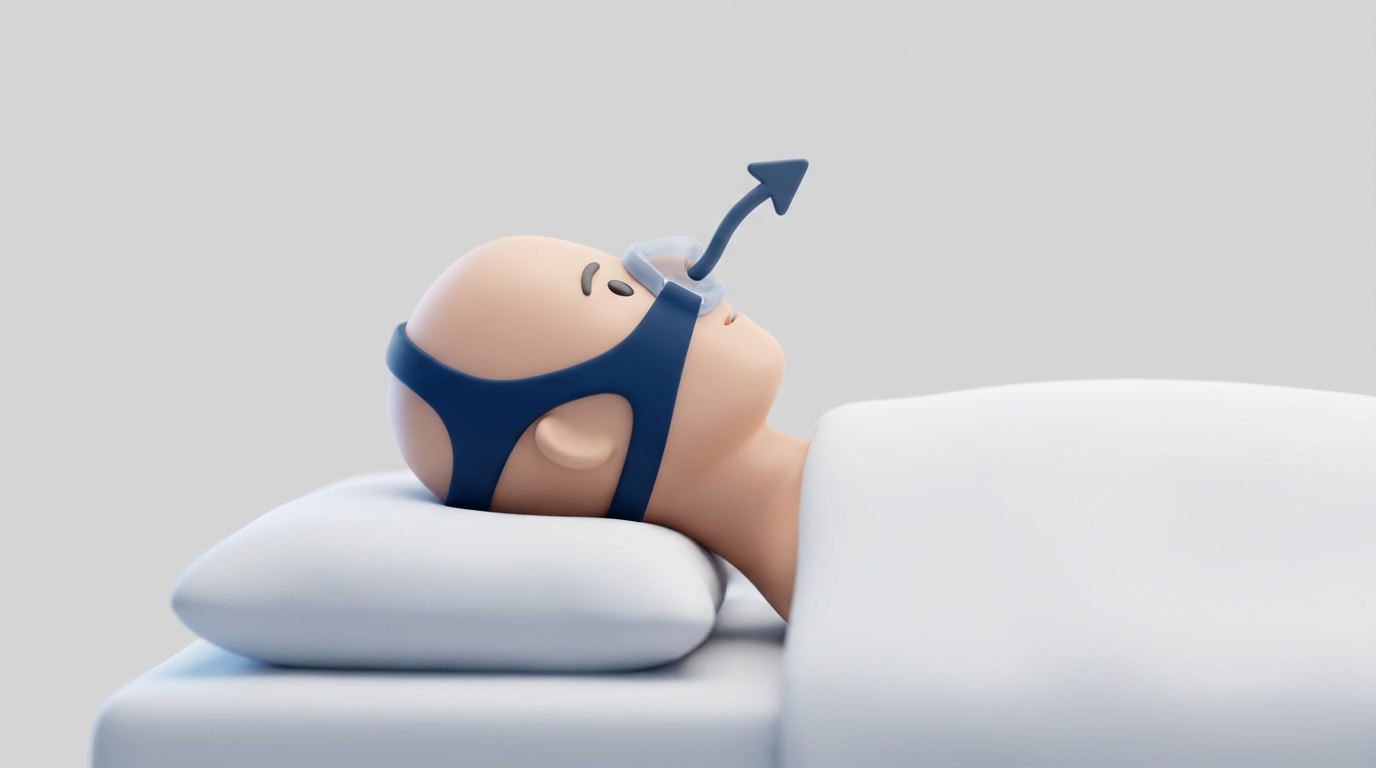
A small gap near the nose bridge or top edge can direct a quiet stream of air upward across the eyes for hours, increasing evaporation. The result: burning, stinging, redness, or a gritty feeling upon waking. [2–4]
Concrete example: side sleepers may notice one eye is worse (e.g., right-side sleeping shifts the mask and the right eye feels more irritated in the morning).
Tear film and meibomian gland effects (what research suggests)
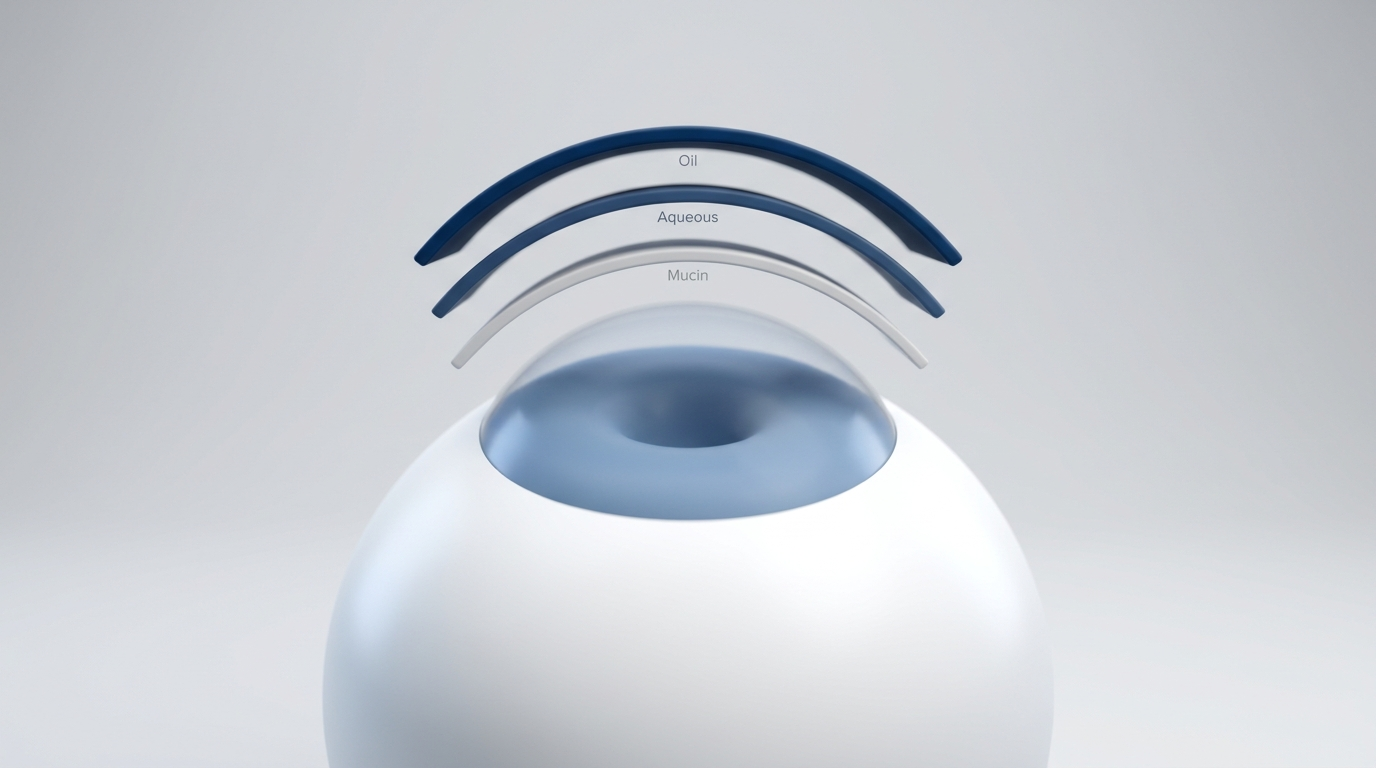
Your tears aren’t just water—the oil layer slows evaporation. Research in OSA and CPAP users reports reduced tear film stability and potential meibomian gland effects, which can speed evaporation and cause dryness or blurry vision on waking. [1]
Why OSA itself can overlap with dry eye symptoms
Sleep quality, inflammation, eyelid health, and tear production can interact. CPAP may unmask an existing issue rather than cause it. [1]
Bottom line: small, upward air leaks are the leading cause; underlying tear-film instability or eyelid issues can compound the problem.
Common Symptoms of CPAP-Associated Dry Eye
Morning dryness and irritation are common in CPAP users with leaks or tear-film instability.
Typical morning symptoms
- Burning or stinging
- Gritty or sandy sensation
- Redness
- Excess tearing (watery yet still dry)
- Puffy lids or mild swelling
- Blurry or fluctuating vision on waking [2,4]
Some feel fine at first, then irritation “kicks in” with blinking; rubbing often worsens redness.
Clues it’s related to CPAP
- Symptoms began with CPAP or worsened after a mask/pressure change
- One eye worse—often the side you sleep on
- Worse after nights with obvious leaks (noisy, fluttery seal)
Do not stop CPAP to “test” this without clinician guidance due to OSA risks. [2,4]
Why Some CPAP Users Get Dry Eyes
Fit, pressure, environment, and baseline eye health intersect to drive symptoms.
Mask fit issues
- Wrong size or style
- Straps too loose (leaks) or too tight (seal distortion)
- Worn cushions/silicone losing grip and flexibility [2,5]
A stable seal is more about correct sizing and positioning than maximum strap tension.
Higher pressure settings or pressure changes
Higher pressures can increase leaks. If pressure was adjusted and eyes worsened, bring that timing to your follow-up. Settings are clinician-directed. [5]
Dry environment and low humidity
Dry bedrooms, AC/heat, or fans toward the face can worsen irritation. Humidification helps comfort but won’t fix a direct leak into the eyes.
Pre-existing dry eye disease or eyelid inflammation
- Contact lenses, allergies
- Blepharitis/MGD, rosacea
- Autoimmune conditions
- Medications that reduce tear quality or quantity [2,5]
Pre-existing dryness can be amplified by even small upward leaks.
How to Fix Dry Eyes Without Quitting CPAP
Keep therapy effective while reducing eye exposure to airflow and supporting the tear film.
Step 1 — Check for leaks (and where the air is going)
- With the machine running, feel near the top edge for airflow
- Review your device’s leak data
- Re-check fit while lying in your usual sleep position [4,5]
Tip: check with mouth closed and then relaxed; jaw changes can shift the seal.
Quick fixes to stop CPAP mask leaks: https://sleepandsinuscenters.com/blog/mask-leak-solutions-quick-fixes-to-stop-air-leaks
Step 2 — Improve the mask seal
- Re-seat the cushion (lift and re-set often seals better)
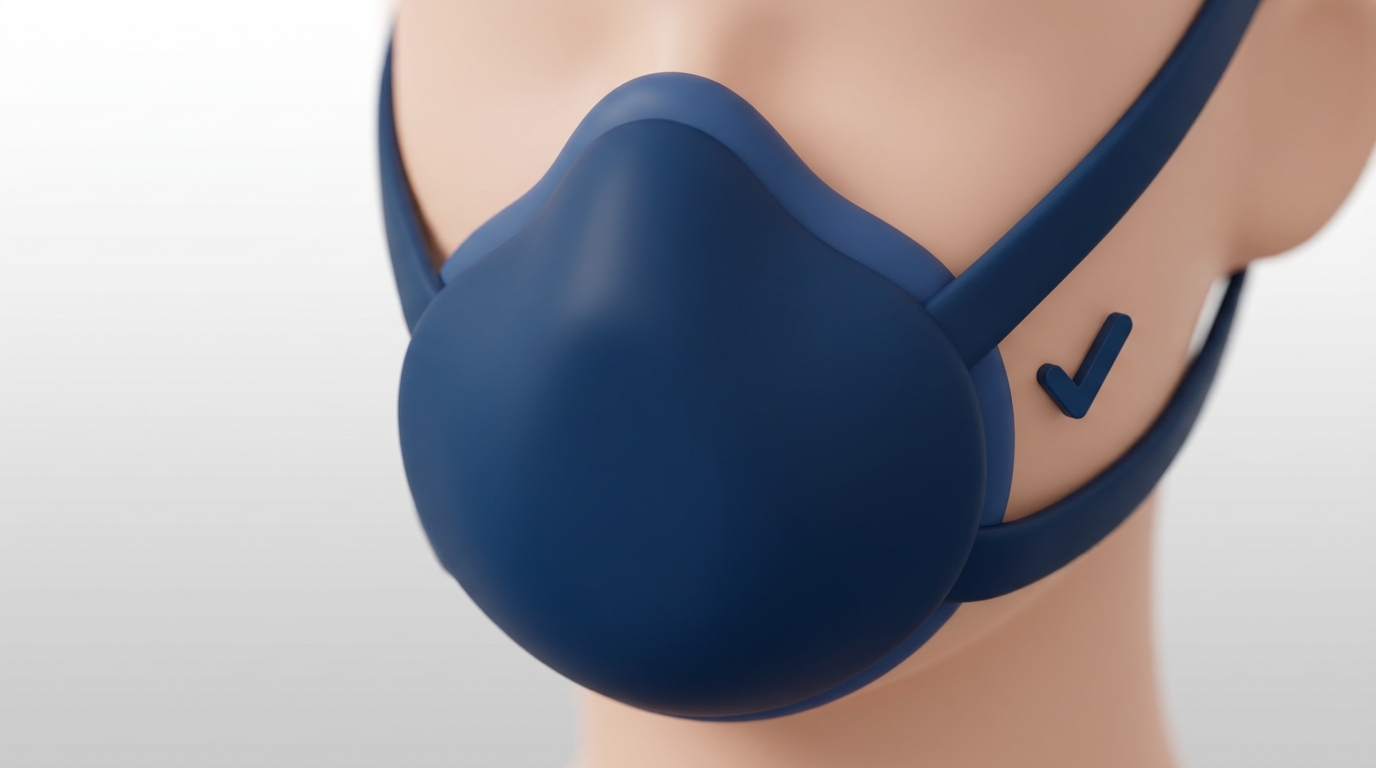
- Adjust straps evenly—avoid over-tightening
- Replace cushions and headgear on schedule [2,5]
If the cushion looks shiny, stiff, or warped, it may not seal reliably. Consider sizing review.
CPAP mask sizing guide: https://sleepandsinuscenters.com/blog/cpap-mask-sizing-guide-find-the-perfect-fit-for-comfortable-sleep
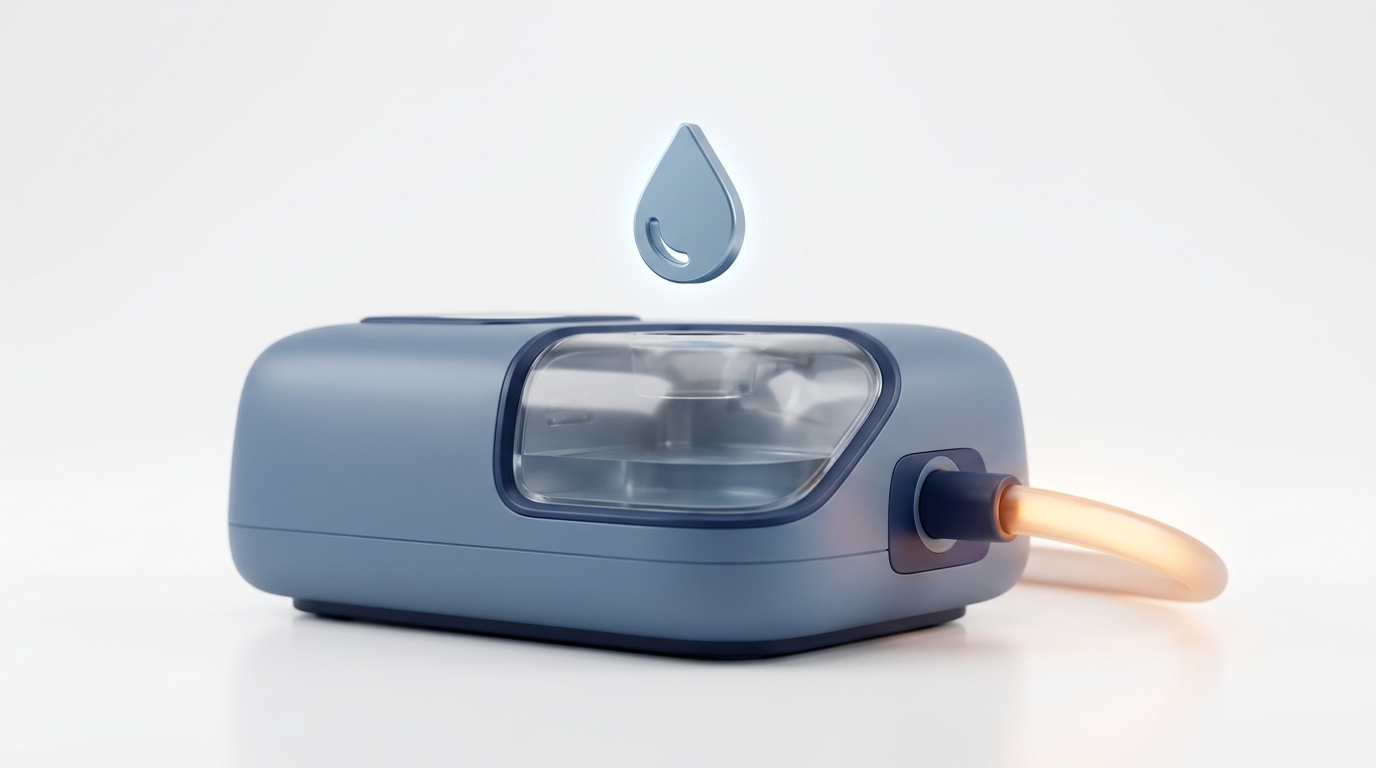
Step 3 — Use humidification (and optimize settings)
Humidification doesn’t fix a direct eye leak but can ease overall airway dryness and comfort. Heated humidifiers and heated tubing can reduce condensation. [2,5]
CPAP humidifier settings guide: https://sleepandsinuscenters.com/blog/cpap-humidifier-settings-guide-for-optimal-therapy-comfort
Humidification helps, but seal improvement remains the priority if airflow reaches the eyes.
Step 4 — Talk to your sleep clinic about pressure settings
If leaks persist—especially after a pressure increase—ask your team to review data, mask options, ramp features, or settings. Avoid changing clinician-set pressures on your own. [5]
Example script: “My leak numbers look higher, and my eyes feel irritated in the morning—can we review mask fit and pressure range together?”
Step 5 — Eye-specific relief (common options to ask about)
- Preservative-free artificial tears (bedtime and morning)
- Lubricating gels/ointments at night (case-by-case)
- Warm compresses and lid hygiene if MGD suspected
- Moisture-chamber eyewear at night in select cases [1,4]
Best results often come from sealing the mask first, then fine-tuning humidity and adding eye-directed care.
Nighttime Habits That Can Reduce Dry Eye Flares
Small environmental tweaks can reduce irritation while you improve mask fit and humidity.
Optimize bedroom humidity
Aim for a comfortable middle range; keep humidifiers clean. If both eyes and nose/mouth are dry on waking, review humidity and leaks together.
Manage allergies and irritants
Reduce dust, smoke, fragrance, and pet dander. Point fans away from your face to limit tear evaporation.
Reduce screen-related dryness before bed
Screen time lowers blink rate. Use brief “full blink” breaks and wind down screens earlier to reduce strain at bedtime.
When Dry Eyes Need Medical Attention
Know when to call your sleep provider or see an eye doctor.
Call your sleep provider if
- You suspect persistent leaks
- You can’t get a stable seal despite re-fitting
- Your therapy data shows frequent or high leaks [5]
See an eye doctor urgently if
- Severe eye pain, major light sensitivity, sudden vision changes
- Thick or pus-like discharge
- Significant swelling or worsening redness
Consider an eye evaluation if
- Symptoms persist for weeks despite mask and humidity adjustments
- You suspect dry eye disease, blepharitis, or MGD [2,5]
If symptoms are severe, worsening, or not improving with leak control and humidity, seek medical help.
CPAP and Dry Eyes FAQs
Q: Can CPAP cause dry eyes even if my mask feels sealed?
A: Yes. Small, upward leaks can be hard to notice. Check for airflow near the eyes and review leak data. [2,4,5]
Q: Why do my eyes water with CPAP if they’re dry?
A: Excess tearing can be a reflex to dryness; it does not always stabilize the tear film. [2,4]
Q: Will a full-face mask help or make it worse?
A: It depends on the seal. The key is preventing airflow toward the eyes. A fitting can identify the best style. [2,5]
Q: Does increasing humidifier settings fix dry eyes?
A: Humidification helps comfort, but a leak aimed at the eyes usually needs seal improvement plus humidity. [2,5]
Q: Should I stop CPAP if my eyes are irritated?
A: Generally no—do not stop without guidance. Address leaks, fit, and comfort settings; seek eye care if symptoms persist. [5]
The Bottom Line
Most CPAP-related eye irritation comes from small leaks that push air toward the eyes, increasing tear evaporation. Fix the seal first, then optimize humidification and add eye-directed care as needed. Track leak data and symptoms, and bring them to follow-up. [2,4,5]
Need Help Getting Comfortable on CPAP?
If you’re struggling with dry eyes or leaks, Sleep and Sinus Centers of Georgia can help with mask fitting and therapy troubleshooting.
Book an appointment: https://www.sleepandsinuscenters.com/
References
1. Wei SY. (2025). CPAP mask usage and ocular surface/meibomian gland/tear film stability in OSA patients. https://pmc.ncbi.nlm.nih.gov/articles/PMC12307564/
2. Healthline. CPAP and dry eyes overview. https://www.healthline.com/health/dry-eye/cpap-dry-eyes
3. Assil Eye Institute. Does CPAP cause dry eyes? https://assileye.com/blog/does-cpap-machine-cause-dry-eyes/
4. Matossian Eye. CPAP mask leak/dry eye prevention tips. https://www.matossianeye.com/the-cpap-trap-how-to-keep-your-mask-from-causing-dry-eye/
5. Mayo Clinic. CPAP basics, comfort issues, troubleshooting. https://www.mayoclinic.org/diseases-conditions/obstructive-sleep-apnea/in-depth/cpap/art-20044164
This article is for educational purposes only and is not medical advice. Please consult a qualified healthcare provider for diagnosis and treatment.
Don’t let allergies slow you down. Schedule a comprehensive ENT and allergy evaluation at Sleep and Sinus Centers of Georgia. We’re here to find your triggers and guide you toward lasting relief.