Chronic Sinus Pain With Clear CT Scan: Causes, Diagnosis, and Treatment
Feeling constant “sinus pressure” or facial pain is frustrating—especially when imaging comes back normal. If you’re dealing with chronic sinus pain with clear CT scan results, you’re not alone—but it’s important to confirm this with your healthcare provider. A normal scan often means the cause isn’t blocked or infected sinuses, and a broader evaluation can be more helpful than repeating the same treatments.
Many patients describe it the same way: “My face hurts, I feel pressure around my eyes, but the scan says everything is fine.” In ENT clinics, that scenario is common—and it’s often solvable once the right source of pain is identified.
Below is a patient-friendly guide to what a normal CT means, the most common “sinus pain” mimics, and how ENTs typically sort it out.
Quick answer: Can sinus pain happen with a normal CT scan?
Yes. A sinus CT (or MRI) is a detailed look at anatomy, but it’s still a snapshot in time. If your symptoms fluctuate—worse for a week, then better for a week—imaging may capture a “quiet” moment. And several conditions that feel exactly like sinus trouble don’t necessarily cause the kind of sinus blockage, fluid, or structural change that stands out on CT.
Sleep & Sinus Centers of Georgia frequently sees patients whose CT is normal even though symptoms persist—often because the source is outside the sinuses (like migraine, rhinitis, TMJ, or dental causes) rather than ongoing sinus obstruction or infection [1]. A clear scan can be reassuring: it lowers the likelihood of major obstruction or active bacterial infection, but it doesn’t rule out every sinus-related issue.
For many people, this information helps the care team focus on other causes that may respond better to targeted care. Bottom line: normal imaging doesn’t negate your symptoms—it redirects the search for the true cause.

What a “clear” sinus CT actually means (and what it doesn’t)
CT scans show structure, not always the cause of pain
CT scans are excellent at identifying anatomy and obstruction—major swelling, polyps, a deviated septum affecting airflow, or fluid levels. But many drivers of facial pain (including headache disorders and nasal lining inflammation without sinus blockage) may not create obvious CT findings. Imaging is important, but it’s not the whole story [4].
A helpful analogy: a CT is like a high-resolution still photo, not a video. It can show what’s there at that moment, but it can’t always explain why something hurts—especially when the pain source is neurologic (migraine) or muscular (TMJ). For a deeper look at how imaging fits into ENT decision-making, see: How sinus CT scans help ENT diagnosis.
Timing matters: symptoms can fluctuate between scans
Some people experience episodes that come and go—often with weather shifts, seasonal triggers, stress, or sleep disruption. If the scan is done between flares, it may look normal. Also, mild swelling can be underestimated and doesn’t always match symptom severity perfectly—another reason clinicians rely on the full clinical picture, not imaging alone [2].
A concrete example: someone may feel intense “sinus pressure” every time they travel or when pollen spikes, but if their CT is scheduled weeks later (when symptoms settle), the scan may not capture the inflammatory moment.
False positives and “incidental findings”
CT scans can also show small changes (like mild mucosal thickening) in people who feel totally fine. That’s why guidelines emphasize that imaging findings must be interpreted alongside symptoms and an exam [2]. In other words: a CT can be “abnormal” without explaining pain—and it can be “normal” even when symptoms are significant.
Clinicians often summarize it this way: “We treat the patient, not the picture.” In practice, a clear CT narrows the possibilities and helps steer care toward the most likely (and treatable) causes.
Symptoms checklist: Is it really sinus-related pain?
Symptoms that commonly get labeled “sinus pain”
- Facial pressure (cheeks/forehead)
- Headache around the eyes
- Nasal congestion
- Postnasal drip sensation
- Ear pressure/fullness
- Fatigue or “brain fog”
If you want a quick self-check starting point, Sleep & Sinus Centers of Georgia offers a sinus symptom quiz.
Symptoms that suggest true chronic rhinosinusitis (CRS)
Chronic rhinosinusitis is usually defined by symptoms lasting more than 12 weeks plus objective evidence on nasal endoscopy or CT. Common features include:
- Nasal obstruction (blocked nose)
- Nasal drainage (front or postnasal)
- Reduced sense of smell
- Facial pressure (may or may not be present)
This “symptoms + objective findings” approach is central to diagnosis [5][2]. Practically, it means facial pain alone—without supportive findings—often points clinicians toward other explanations.
Red flags—get urgent medical care
Seek immediate medical care for:
- Swelling/redness around one eye or vision changes
- Severe headache with fever or neck stiffness
- Neurologic symptoms (confusion, weakness)
- Persistent one-sided symptoms that worsen or recurrent nosebleeds
These can signal complications or a different problem needing prompt care [5]. If any red flag appears, don’t wait—seek urgent evaluation.
Why you can have “sinus pain” with a clear CT (most common causes)
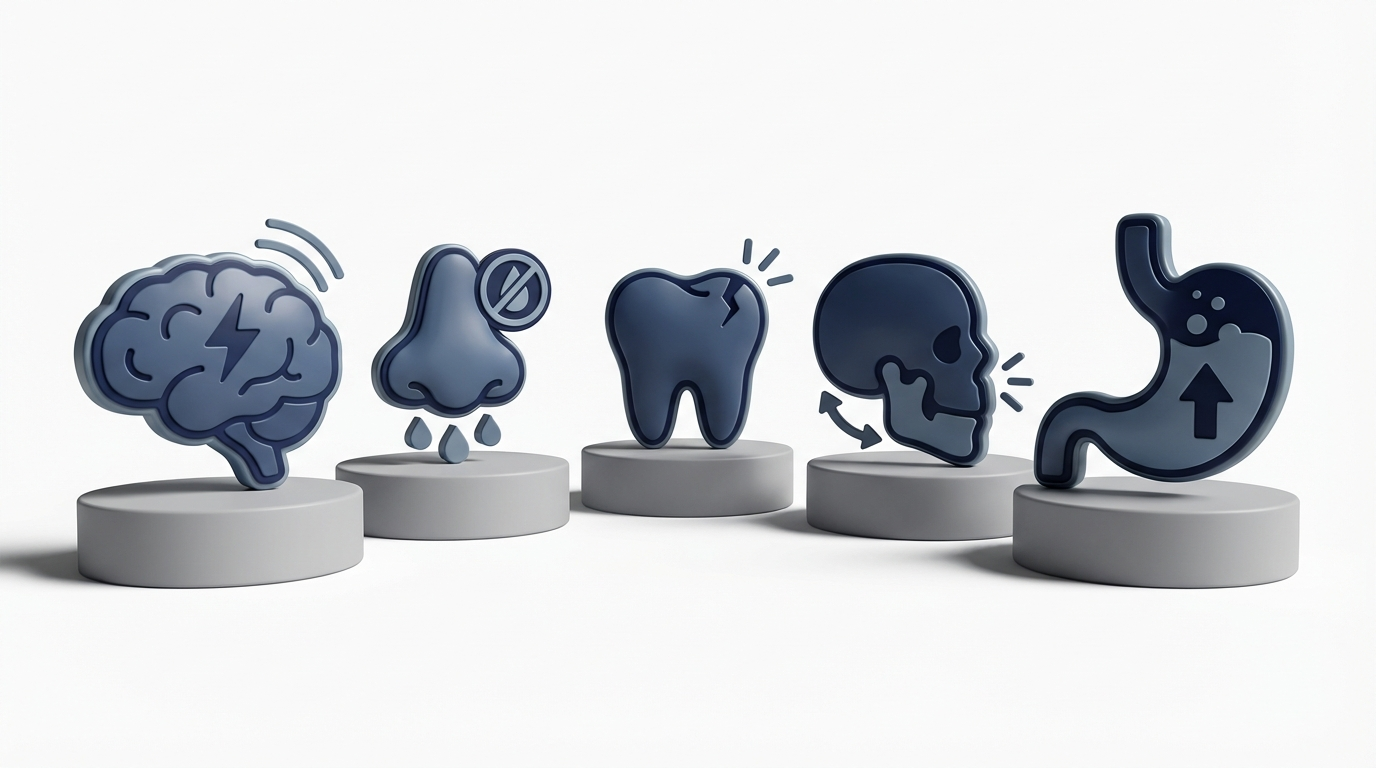
When CT is clear, ENTs often broaden the differential diagnosis. For many patients with chronic sinus pain with clear CT scan results, one of these explanations fits better than chronic sinus blockage.
Migraine and other headache disorders (top mimic)
Migraine is one of the most common reasons people feel “sinus pressure” despite normal sinus imaging. Migraines can cause:
- Forehead/face pressure
- Light or sound sensitivity, nausea
- Watery eyes or nasal congestion (autonomic symptoms that mimic sinus issues)
One reason migraine is confusing: it can create nasal symptoms without a sinus infection. Clues often include episodic attacks, identifiable triggers (sleep changes, hormones, weather), and headache features that don’t follow typical infection patterns [3]. A common patient story is: “Antibiotics never really helped, but I notice it flares after poor sleep or certain weather.” Related read: Migraine vs. sinus headache: key differences.
Allergic rhinitis (hay fever)
Allergic inflammation in the nose can create congestion, pressure, and drip sensations even if the sinuses themselves look clear on CT. Common clues: itching, sneezing, watery runny nose, seasonal patterns, and known triggers [2]. This is primarily a nasal lining problem—so you can feel miserable while the deeper sinuses remain open and “normal” on imaging.
Nonallergic rhinitis (vasomotor, irritant-triggered)
Nonallergic rhinitis can look like allergies but is triggered by irritants or environment changes—strong smells, smoke, temperature shifts, cleaning products. CT may be normal because the issue is mainly the nasal lining, not sinus obstruction [2].
Dental causes (especially upper molars)
Problems in upper teeth or gums can refer pain into the cheek/maxillary region and feel like sinus pain. Clues can include chewing pain, temperature sensitivity, or a specific tooth that feels “off.” Because dental pain can radiate, it may feel like a broad cheek pressure rather than a clearly tooth-centered problem [4].
TMJ disorders and jaw muscle tension
TMJ and jaw muscle strain can cause cheek/temple pain, ear pressure, headaches, jaw clicking, or morning soreness (often related to clenching/grinding). Pain that is worse on waking, after stressful days, or with chewing can suggest a jaw/muscle contributor rather than sinus disease. Helpful comparison: TMJ vs. sinus pain: key differences.
Reflux/LPR (silent reflux)
“Silent reflux” can irritate the throat and upper airway and contribute to chronic throat clearing, hoarseness, and postnasal drip sensations—sometimes without classic heartburn. Mayo Clinic notes that persistent upper airway symptoms often require evaluating related conditions, not only the sinuses [5]. Learn more: Silent GERD and ENT symptoms.
Neuralgias / atypical facial pain (less common, but important)
Some facial pain syndromes cause sharp, electric pains—or persistent burning/aching—without notable nasal symptoms, and CT may be normal. These cases often benefit from coordinated ENT and neurology-style evaluation as part of a broad differential [4]. When CT is clear, thinking beyond the sinuses often reveals a more accurate—and more treatable—diagnosis.
Diagnostic approach when CT is normal (what to do next)
If you have chronic sinus pain with clear CT scan findings, the next best step is a more targeted evaluation rather than repeating imaging.
Step 1 — A targeted symptom history (the “pattern” matters)
Clinicians often focus on timing (daily vs. attacks), triggers, allergy history, reflux symptoms, and dental/TMJ clues. Medication review matters too—some nasal sprays can cause rebound congestion if overused. If possible, bring specifics: where the pain sits (between eyes vs. cheeks vs. temples), when it peaks, and what reliably makes it worse or better.

Step 2 — Focused ENT exam + nasal endoscopy
Nasal endoscopy can identify hidden inflammation, drainage, polyps, septal issues, and signs of chronic rhinitis—providing objective evidence that a CT alone might miss. Mayo Clinic specifically notes endoscopy as part of CRS evaluation [5]. If you’re nervous about it, this walkthrough helps: what a nasal endoscopy is (and whether it hurts).
Step 3 — Consider allergy evaluation
When symptoms suggest allergic triggers, testing may clarify what’s driving congestion and pressure [2]. See: Allergy testing.
Step 4 — Rule out dental and TMJ sources
A dental exam and appropriate imaging (when indicated) can be essential, especially with upper molar symptoms. TMJ screening may be helpful when pain clusters around the jaw/temples or is worse in the morning.
Step 5 — When other testing is appropriate (select cases)
Repeat CT is usually reserved for changing symptoms, post-treatment reassessment, or concern for complications. MRI may be considered when clinicians are evaluating less common non-sinus causes. Imaging choices are individualized and interpreted with the full clinical picture [4][5]. A clear plan after a clear CT focuses on targeted questions, a careful exam, and tests that match your specific pattern of symptoms.

Treatment options (based on the true cause)
Treatment works best when it matches the diagnosis. For many patients with chronic sinus pain with clear CT scan results, the most effective plan isn’t “more antibiotics,” but a targeted approach.
If it’s rhinitis (allergic or nonallergic)
Common foundational options include saline irrigation and intranasal steroid sprays; other therapies may be added based on symptoms (oral antihistamines, antihistamine nasal spray, or ipratropium for runny nose). Mayo Clinic and AAFP discuss nasal steroid/saline strategies as core tools for inflammatory nasal conditions [5][2]. More detail: Treating chronic rhinitis.
If it’s migraine (or another headache disorder)
Managing migraine typically involves identifying patterns/triggers and using migraine-specific approaches rather than infection-focused treatments. Primary care headache guidance emphasizes matching therapy to headache type [3].
If it’s TMJ-related
Conservative strategies may include jaw relaxation, physical therapy–style approaches, and dental evaluation for grinding/clenching patterns.
If it’s dental
Treating the underlying tooth or gum issue may resolve referred facial pain. Odontogenic causes are a recognized contributor to sinonasal complaint patterns [4].
If it’s reflux/LPR
Lifestyle steps (meal timing, avoiding late meals) and, in some cases, medications may be considered as part of an overall plan, depending on the broader symptom picture [5].
When sinus procedures are (and aren’t) appropriate
Procedures such as balloon sinuplasty or endoscopic sinus surgery are generally considered when symptoms align with CRS and there is objective evidence on endoscopy/CT. Surgery is typically reserved for confirmed cases because it’s unlikely to help facial pain when imaging and endoscopy are normal [5][2].
Antibiotics: when they’re appropriate
Antibiotics are used in specific scenarios—ideally after a confirmed or strongly suspected bacterial infection diagnosis. Many chronic or recurrent “sinus” symptoms aren’t caused by bacteria, so antibiotics often don’t help and can cause side effects [2]. The most effective treatment targets the real cause—often outside the sinuses when CT is normal.

Lifestyle tips to reduce “sinus pain” symptoms (regardless of cause)
Daily habits that help many patients
- Consistent saline irrigation (technique and routine matter)
- Hydration and humidification in dry seasons
- Reducing triggers like smoke, fragrances, and dust
Symptom tracking to speed up diagnosis
A simple 2-week log can be useful: pain location/severity/duration, nasal symptoms, sleep, stress, weather shifts, foods, and which treatments helped. Even a short note like “temple pressure + light sensitivity” versus “cheek pain + tooth sensitivity” can meaningfully change the diagnostic direction. Small daily changes and a brief symptom log can accelerate accurate diagnosis and relief.
FAQs (patient-friendly)
If my CT is normal, does that mean it’s not sinus-related?
Not necessarily—but it does lower the likelihood of ongoing sinus blockage or infection and increases the likelihood of “mimics.” CRS diagnosis typically requires symptoms plus objective findings on endoscopy or CT [2][5].
Why do I feel pressure if there’s no blockage?
Pressure can come from inflammation of the nasal lining (rhinitis), migraine-related nerve activity, TMJ muscle tension, dental referral pain, or reflux-related irritation—even when imaging is normal [1][4].
Do I need antibiotics?
Only if there’s a confirmed or strongly suspected bacterial infection. Many chronic “sinus” symptoms are not bacterial, and antibiotics won’t help in those cases [2].
What is nasal endoscopy and is it painful?
It’s a brief in-office look inside the nose using a thin scope to assess inflammation, drainage, polyps, and anatomy. Comfort measures are commonly used, and it can provide objective evidence when CT is clear [5]. Learn more: what a nasal endoscopy is (and whether it hurts).
When should I see an ENT vs a neurologist vs a dentist?
- ENT: persistent symptoms, recurrent infections, smell changes, unclear diagnosis
- Neurology-style evaluation: migraine features or recurring severe headaches
- Dentist: chewing pain, tooth sensitivity, localized upper molar concerns
If you’re unsure where to start, an ENT can help triage and coordinate next steps.
Conclusion: A clear CT is helpful—and it’s a next step, not a dead end
A normal scan is meaningful information. For patients with chronic sinus pain with clear CT scan results, it often points toward treatable non-sinus causes like migraine, rhinitis, TMJ, dental issues, or reflux. The most productive next step is usually a comprehensive ENT evaluation (often including nasal endoscopy) and a whole-face approach to finding the true source of symptoms—rather than cycling through repeated antibiotics.
Want help getting to the bottom of ongoing “sinus pressure” despite normal imaging? You can learn more and book an appointment with an ENT team at Sleep & Sinus Centers of Georgia here: https://www.sleepandsinuscenters.com/
Medical disclaimer
This article is for educational purposes and is not a substitute for professional medical advice, diagnosis, or treatment. If you have severe symptoms or red-flag signs, seek urgent medical care.
This article is for educational purposes only and is not medical advice. Please consult a qualified healthcare provider for diagnosis and treatment.
References
1. Sleep & Sinus Centers of Georgia. Normal Sinus CT Scan but Symptoms Persist: Causes… https://sleepandsinuscenters.com/blog/normal-sinus-ct-scan-but-symptoms-persist-causes-a-20260213021156
2. American Academy of Family Physicians (AAFP). Rhinosinusitis / chronic sinusitis evaluation & management https://www.aafp.org/pubs/afp/issues/2002/1115/p1882.html
3. AAFP. Acute headache / migraine diagnostic guidance https://www.aafp.org/pubs/afp/issues/2017/1015/p500.html
4. Medscape. Rhinosinusitis overview https://emedicine.medscape.com/article/384649-overview
5. Mayo Clinic. Chronic sinusitis: diagnosis & treatment https://www.mayoclinic.org/diseases-conditions/chronic-sinus-sinusitis/diagnosis-treatment/drc-20351667
Don’t let allergies slow you down. Schedule a comprehensive ENT and allergy evaluation at Sleep and Sinus Centers of Georgia. We’re here to find your triggers and guide you toward lasting relief.