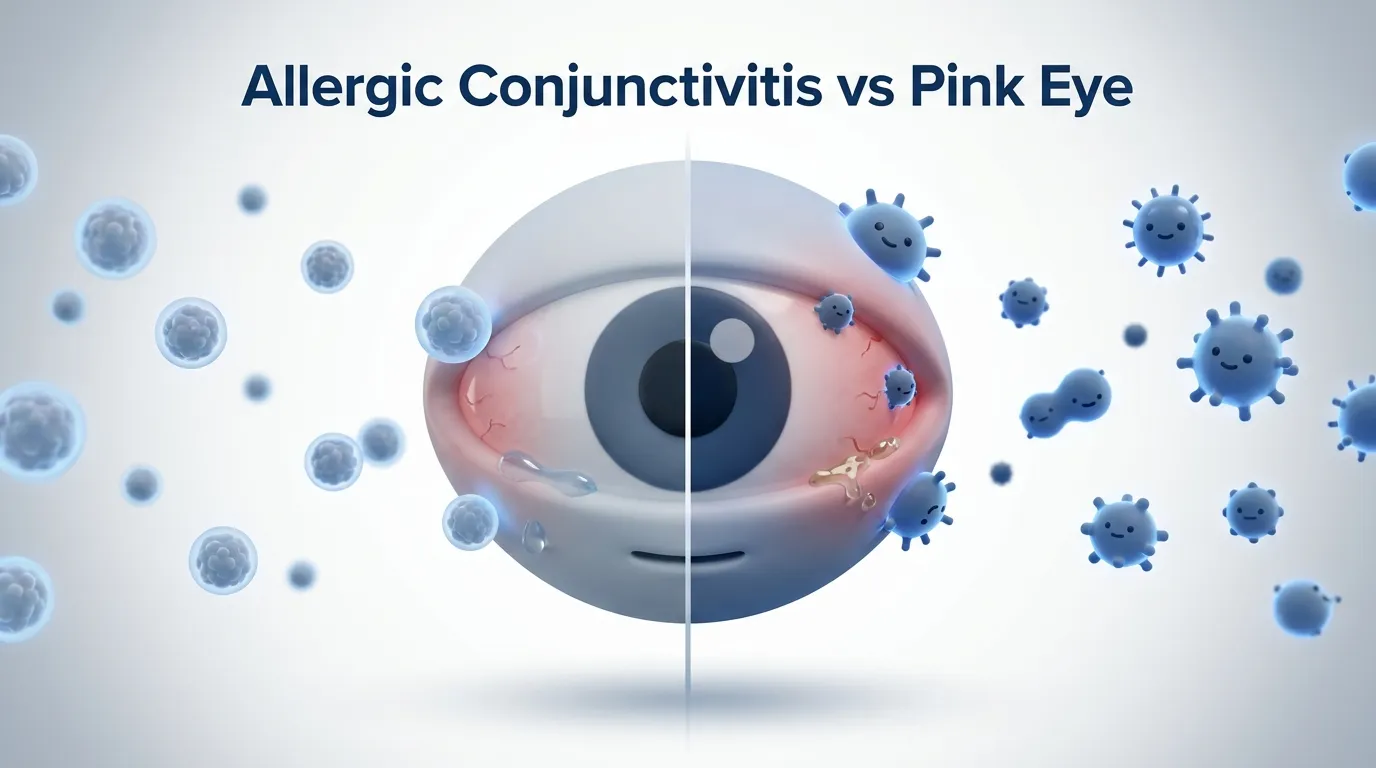
Allergic Conjunctivitis vs Pink Eye: Key Differences and How to Tell Them Apart
Red, irritated eyes can be frustrating—especially when you’re trying to figure out whether it’s allergies or an infectious “pink eye.” The tricky part is that several conditions can look similar at first glance: redness of the eye (conjunctival injection), watery eyes, and a “something’s in my eye” feeling can happen with more than one cause.
This guide breaks down allergic conjunctivitis vs pink eye in a simple, patient-friendly way. We’ll cover the most common symptom patterns, what different types of discharge typically look like, and when the condition is likely to spread to others.
This article is for general education and isn’t a diagnosis. If symptoms are severe, worsening, or concerning, an in-person evaluation can help clarify the cause. Sources used throughout include StatPearls, Mayo Clinic, OU Health, and Ophthalmology Advisor.
References: StatPearls: https://www.ncbi.nlm.nih.gov/books/NBK541034/; Mayo Clinic: https://www.mayoclinic.org/diseases-conditions/pink-eye/symptoms-causes/syc-20376355; OU Health: https://www.ouhealth.com/blog/2026/july/the-three-main-types-of-conjunctivitis/; Ophthalmology Advisor: https://www.ophthalmologyadvisor.com/features/allergies-vs-pink-eye-infection/
Quick Answer: Allergic Conjunctivitis vs Pink Eye (At-a-Glance)
- Allergies tend to cause itching + watery/stringy discharge + both eyes
- Viral pink eye tends to cause watery discharge + gritty/burning feeling + spreads easily
- Bacterial pink eye tends to cause thick yellow/green discharge + crusting
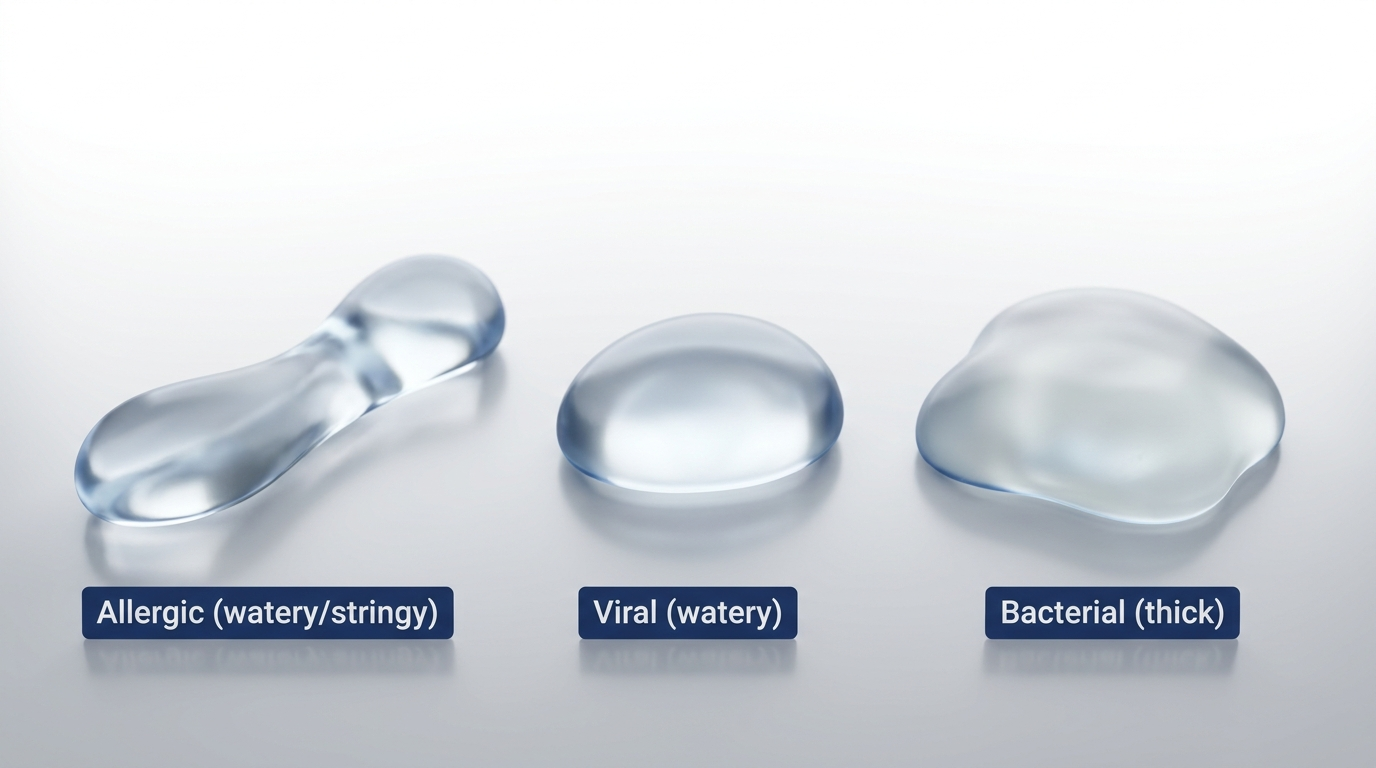
At-a-Glance by Type (Symptoms, Discharge, Spread, What Helps)
Allergic conjunctivitis
- Most typical symptoms: intense itching, redness, watery eyes; often with sneezing/runny nose
- Discharge: clear, watery, or stringy (not thick pus)
- Usually affects: both eyes
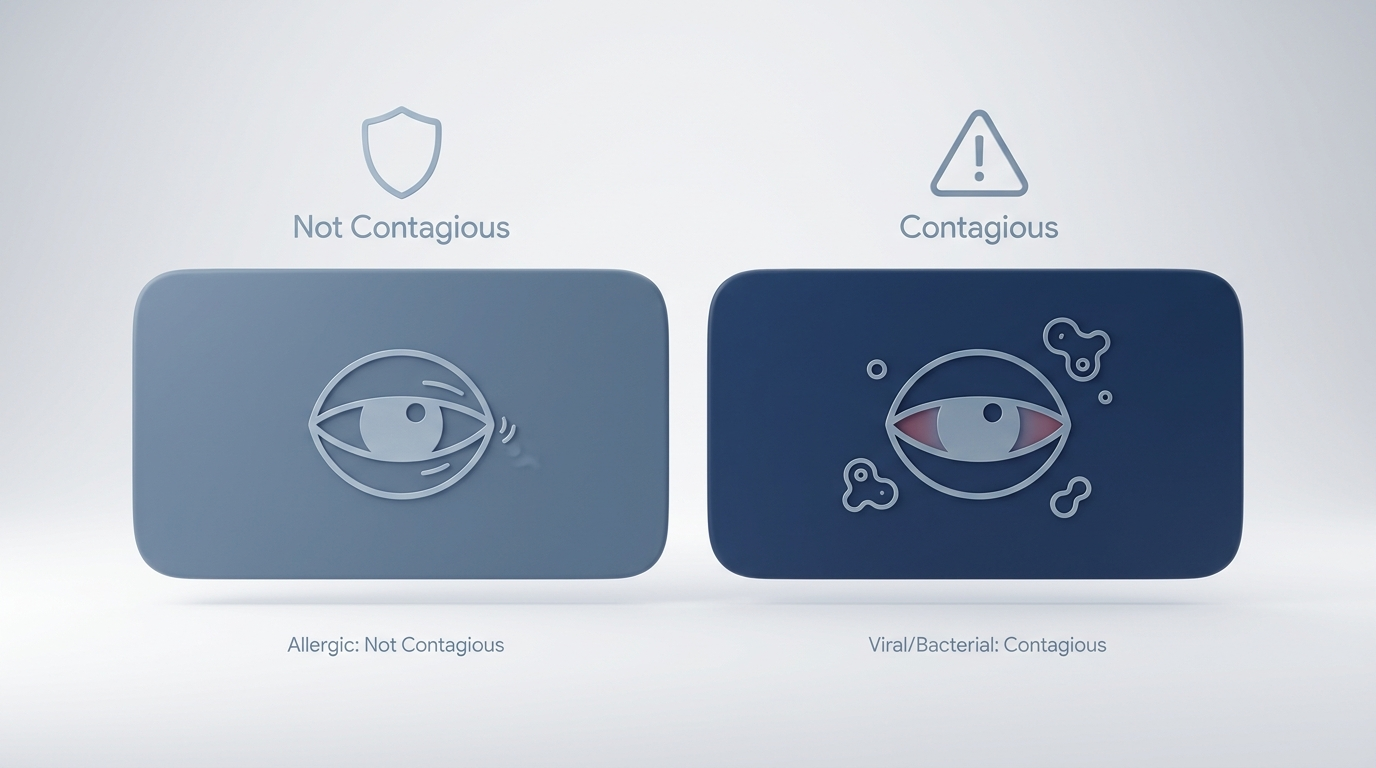
- Contagious? No
- What helps: allergen avoidance, cool compresses, over-the-counter antihistamine eye drops and/or oral antihistamines when appropriate
(References: StatPearls; Ophthalmology Advisor)
Viral conjunctivitis
- Most typical symptoms: watery eyes, gritty/burning feeling, redness; may follow a cold
- Discharge: watery/clear
- Usually affects: often starts in one eye, may spread to the other
- Contagious? Yes—spreads easily
- What helps: supportive care (artificial tears, cool compresses); antibiotics don’t help viral cases
(References: Mayo Clinic; OU Health)
Bacterial conjunctivitis
- Most typical symptoms: red eye, irritation, swollen lids
- Discharge: thick yellow/green pus with crusting; lids may stick shut in the morning
- Usually affects: one or both eyes
- Contagious? Yes
- What helps: may require prescription antibiotic drops in some cases; avoid using someone else’s drops
(References: StatPearls; OU Health)
What Counts as “Pink Eye”?
“Pink eye” is the common name for conjunctivitis, meaning inflammation of the conjunctiva (the thin tissue covering the white of the eye and inner eyelids). Conjunctivitis can be caused by allergies, viruses, or bacteria—and all three can lead to redness and discomfort, which is why confusion is so common.
(References: StatPearls; Mayo Clinic)
Bottom line: the same visible “pink eye” can come from different causes, and the right care depends on which cause is most likely.
Why Getting the Type Right Matters
- It can reduce unnecessary antibiotic use (viral and allergic cases typically don’t improve from antibiotics).
- It helps limit spread when the cause is infectious (viral/bacterial).
- It can lead to faster relief by matching treatment to the cause (allergy-focused care vs supportive care vs antibiotics).
(References: StatPearls; Mayo Clinic)
Right type, right plan: matching treatment to the likely cause saves time and avoids unnecessary meds.
A quick “real-life” example
If your child wakes up with one sticky, crusted eye that’s producing thick discharge, that pattern can fit bacterial conjunctivitis more than allergies. On the other hand, if you step outside on a high-pollen day and both eyes immediately start itching and watering, that’s a classic allergy pattern.
Use patterns as clues—but not as a substitute for an exam when symptoms are severe or unclear.
Symptoms That Point to Allergic Conjunctivitis
Hallmark signs
Classic allergic conjunctivitis symptoms tend to include:
- Intense itching (often the strongest clue)
- Clear, watery, or stringy discharge (not thick pus)
- Both eyes involved more commonly than just one
- Other allergy symptoms: sneezing, runny or stuffy nose (allergic rhinitis)
(References: Ophthalmology Advisor; StatPearls)
A common clinical rule of thumb is that intense itching points toward an allergic cause—though this is a general pattern, not a diagnosis.
If you want a deeper overview of triggers and why allergies affect multiple systems (eyes, nose, sinuses), see: What Are Allergies? https://sleepandsinuscenters.com/what-are-allergies
Common triggers
- Pollen (trees, grass, weeds)
- Pet dander
- Dust mites
- Mold
Many people notice worse symptoms on high-pollen or windy days, after outdoor activities, or when cleaning dusty indoor spaces. Repeat timing every year can also be a clue.
(References: StatPearls; Ophthalmology Advisor)
What “stringy” discharge can look like
Allergy discharge is often described as watery, but it can also be clear and slightly stretchy, especially after rubbing. It’s not the thick, opaque pus seen with bacterial infections.
(References: StatPearls)
If itching dominates and both eyes are watery, allergies move higher on the list.
Symptoms That Point to Infectious Pink Eye (Viral or Bacterial)
Viral conjunctivitis (most common infectious type)
Clues that help separate viral vs allergic:
- Persistent watery tearing
- Gritty, burning sensation
- May occur with or after a cold
- Very contagious—spreads via hands, surfaces, and close contact
(References: Mayo Clinic; OU Health)
A common scenario: one person in a household has a cold, then a red, watery eye develops—and soon another family member has the same watery redness.
(References: Mayo Clinic)
Bacterial conjunctivitis
A key sign is the discharge pattern:
- Thick yellow or green discharge
- Crusting on the lashes
- Eyelids that may feel stuck shut in the morning
- More “goopy” than watery
(References: StatPearls; OU Health)
If you wipe discharge away and it quickly reappears—or you’re repeatedly cleaning crusting off the lashes—that “pus + crust” pattern is a common reason bacterial conjunctivitis is suspected.
(References: StatPearls)
Can you have more than one type?
Yes. Symptoms can overlap—especially early—and irritation from rubbing can blur the picture. That’s why single-symptom self-diagnosis is often unreliable.
(Reference: StatPearls)
Infections tend to be watery-and-spreading (viral) or thick-and-crusting (bacterial), but overlaps can occur.
The “How to Tell” Checklist (Patient-Friendly)
This checklist is meant to help you describe symptoms to a provider—not to self-diagnose or self-treat.
- If itching is the main complaint → consider allergies
- Especially if both eyes are involved and you also have sneezing, congestion, or a runny nose
(References: Ophthalmology Advisor; StatPearls)
- If thick pus or eyelids stuck shut → consider bacterial
- Yellow/green discharge with crusting is a strong clue
(References: StatPearls; OU Health)
- If watery discharge + exposure to someone with pink eye → consider viral
- Viral pink eye often spreads quickly through homes, schools, and workplaces
(References: Mayo Clinic; OU Health)
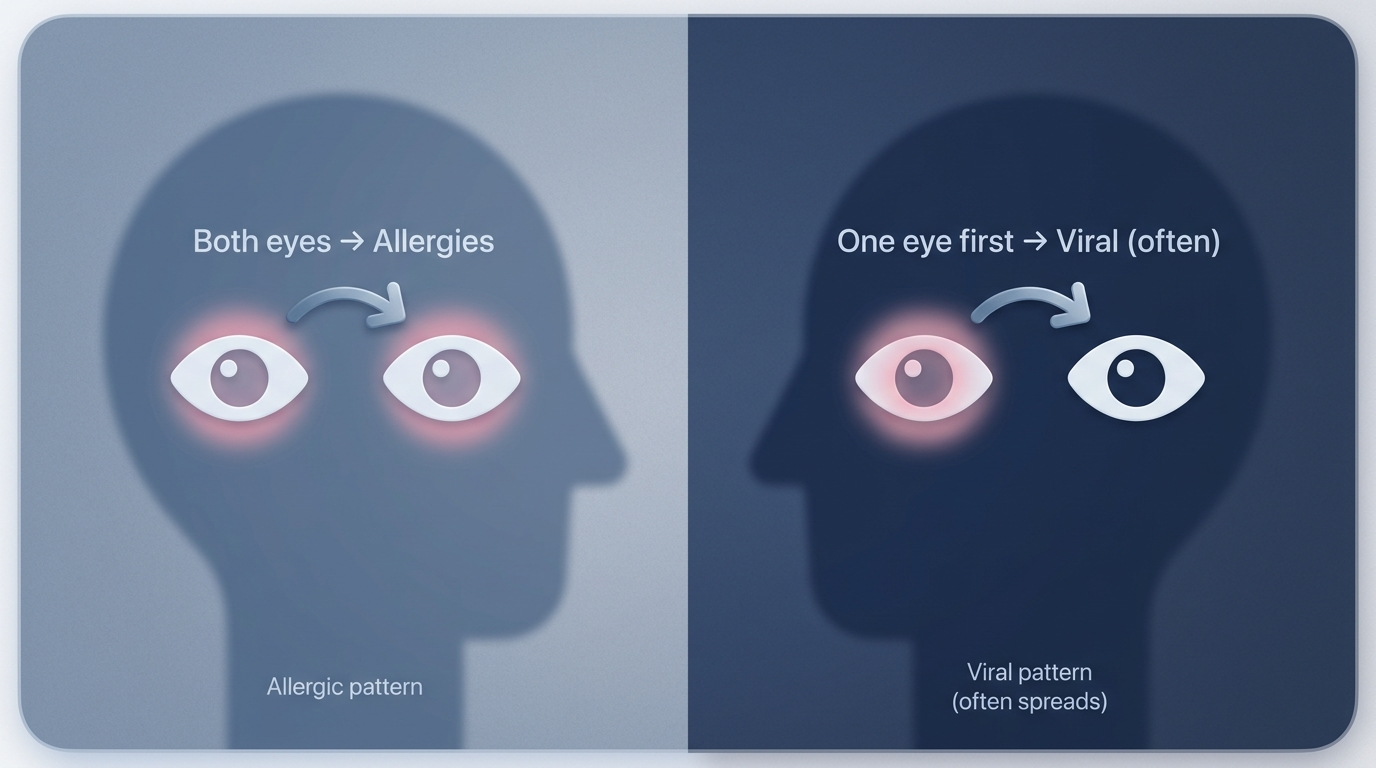
Bonus clue: “both eyes at once” vs “one eye first”
Allergies often irritate both eyes because both are exposed to the same allergens. Viral conjunctivitis commonly starts in one eye and then appears in the other after spread (for example, by hand-to-eye contact). These are patterns—not rules.
(References: StatPearls; Mayo Clinic)
Use the checklist to organize what you’re noticing, then share the details with your clinician.
Causes and Risk Factors
Allergic conjunctivitis causes
The immune system reacts to allergens like pollen, dust mites, pet dander, or mold. It commonly appears alongside allergic rhinitis.
(References: StatPearls; Ophthalmology Advisor)
Viral conjunctivitis causes
Often caused by common respiratory viruses and can spread through:
- Hand-to-eye contact
- Contaminated surfaces
- Close personal contact
(References: Mayo Clinic; OU Health)
Bacterial conjunctivitis causes
Bacteria may spread via:
- Shared towels, pillowcases, or makeup
- Touching eyes with unwashed hands
- Poor contact lens hygiene
(References: StatPearls; Mayo Clinic)
Knowing the likely cause helps guide both treatment and prevention steps.
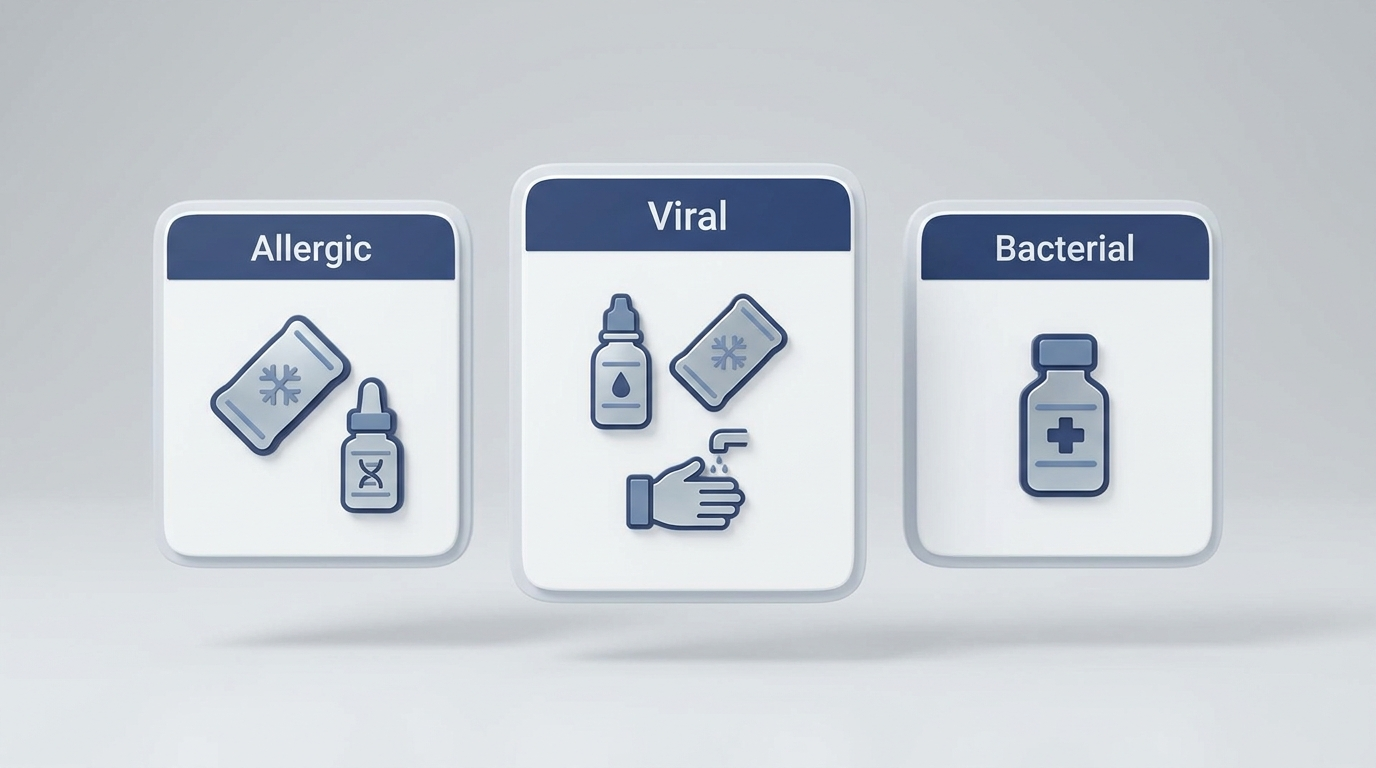
Treatment Options (What Helps and What to Avoid)
Allergic conjunctivitis treatment
Because allergies are triggered by exposure—not germs—approaches often include:
- Reducing exposure to triggers
- Cool compresses
- Over-the-counter antihistamine eye drops and/or oral antihistamines when appropriate
If symptoms keep returning or seem tied to specific triggers, an evaluation and allergy testing can help identify what’s driving the reaction: https://sleepandsinuscenters.com/allergy-testing
(References: StatPearls; Ophthalmology Advisor)
Viral pink eye treatment
Viral conjunctivitis generally improves with supportive care:
- Artificial tears
- Cool compresses
- Careful hygiene to prevent spread
Antibiotics typically aren’t useful for viral causes.
(References: Mayo Clinic; StatPearls)
Bacterial pink eye treatment
May require prescription antibiotic drops or ointment depending on severity and clinical judgment. It’s safer not to use leftover prescriptions or someone else’s eye drops.
(References: StatPearls; Mayo Clinic)
What not to do (all types)
- Don’t share towels, eye makeup, eye drops, or pillowcases
- Try not to rub your eyes (can worsen irritation and spread germs)
- Avoid wearing contact lenses until symptoms resolve and you’re cleared to resume
(References: Mayo Clinic; StatPearls)
Treat what’s likely, protect others, and avoid passing around products that touch the eye.

Lifestyle Tips to Prevent Recurrence and Spread
If it’s allergies
- Track patterns (season changes, yardwork, pets, dust)
- Shower or wash your face after outdoor exposure
- Change pillowcases more often during peak seasons
For more practical ways to handle peak allergy months: Seasonal Allergies and Sinuses: Surviving Spring https://sleepandsinuscenters.com/blog/seasonal-allergies-and-sinuses-surviving-spring
If it’s viral/bacterial (contagious)
Helpful prevention steps include:
- Frequent handwashing
- Avoid touching your eyes
- Disinfect high-touch surfaces
- Avoid close contact when symptoms are active, especially with heavy discharge
If multiple people share a bathroom, consider using separate hand towels until symptoms resolve.
(References: Mayo Clinic; OU Health)
Small hygiene steps go a long way in stopping contagious conjunctivitis from making the rounds.
When to See a Doctor Urgently
Red flags (same-day evaluation)
Consider prompt evaluation for:
- Eye pain (not just irritation)
- Light sensitivity
- Vision changes
- Severe swelling or worsening redness
- Contact lens wearers with symptoms (higher risk of more serious infection)
- Symptoms that aren’t improving as expected or are getting worse
(References: Mayo Clinic; StatPearls)
Who to call
Many people start with primary care or urgent care; others may be referred to an eye specialist depending on symptoms and risk factors. If your symptoms seem allergy-driven and recurring, Sleep and Sinus Centers of Georgia can help connect eye symptoms to broader allergy triggers and management.
Appointment note / CTA: If you’re dealing with recurring itchy, watery eyes—or you’re not sure whether it’s allergies or an infection—consider booking an appointment to review symptoms, triggers, and next steps: https://www.sleepandsinuscenters.com/
Transparency note: Educational content above is general information; the appointment link is provided for convenience if you’re seeking care with our clinic.
If you notice pain, light sensitivity, or vision changes, don’t wait—get seen promptly.
FAQs
Is allergic conjunctivitis contagious?
No. Allergic conjunctivitis is triggered by allergens, not an infection, so it doesn’t spread person-to-person.
(References: Ophthalmology Advisor; StatPearls)
What color discharge means bacterial pink eye?
Thick yellow or green discharge—especially with crusting—can be more suggestive of bacterial conjunctivitis.
(References: StatPearls; OU Health)
Can pink eye go away on its own?
Viral conjunctivitis often resolves with supportive care; allergic conjunctivitis may improve with allergy-focused treatment and trigger avoidance; bacterial cases may need antibiotics depending on severity.
(References: Mayo Clinic; StatPearls)
Why do my eyes itch and my nose is running at the same time?
That combination commonly fits an allergy pattern (allergic rhinitis plus allergic conjunctivitis).
(References: Ophthalmology Advisor; StatPearls)
Do I need antibiotics for pink eye?
Not always. Antibiotics may be used for bacterial conjunctivitis, but they typically aren’t helpful for viral conjunctivitis or allergic conjunctivitis.
(References: StatPearls; Mayo Clinic)
When in doubt, ask a clinician—especially if symptoms are severe, worsening, or affecting vision.
Key Takeaways
- Itching + both eyes + allergy symptoms often points to allergic conjunctivitis (not contagious).
- Watery discharge + quick spread through contacts often fits viral conjunctivitis.
- Thick yellow/green discharge + crusting suggests bacterial conjunctivitis.
- When it’s hard to tell—especially with pain, vision changes, or contact lenses—an evaluation is the safest way to clarify the cause.
(References: StatPearls; Mayo Clinic)
This article is for educational purposes only and is not medical advice. Please consult a qualified healthcare provider for diagnosis and treatment.
Don’t let allergies slow you down. Schedule a comprehensive ENT and allergy evaluation at Sleep and Sinus Centers of Georgia. We’re here to find your triggers and guide you toward lasting relief.