Adult Tonsillectomy Recovery Timeline: Day-by-Day Healing Guide
Recovering from tonsil surgery as an adult can feel surprisingly intense—especially in the first week. This adult tonsillectomy recovery timeline walks through what many adults experience day by day for the first 10–14 days, including pain patterns, scab changes, diet progression, activity limits, and bleeding warning signs.
It’s educational (not a substitute for your surgeon’s instructions), but it can help you feel more prepared and less caught off guard by common “normal but unpleasant” symptoms.
If you’re here because repeated infections led to surgery (or you’re still deciding), you may also find these helpful:
- Recurrent strep throat vs. tonsillectomy: https://sleepandsinuscenters.com/blog/recurrent-strep-throat-vs-tonsillectomy-when-surgery-is-necessary
- What is tonsillitis?: https://sleepandsinuscenters.com/blog/what-is-tonsillitis-symptoms-causes-and-when-to-see-a-doctor
- Tonsil stones (causes + removal tips): https://sleepandsinuscenters.com/blog/tonsil-stones-causes-symptoms-and-effective-removal-tips
Quick Take: How long is adult tonsillectomy recovery?
Typical recovery window (10–14 days). Most adults feel like they’ve “turned a corner” by about 10–14 days, but it’s common to need roughly 10 days away from work/school and to have activity limits for 1–2 weeks, depending on your surgeon’s guidance. Pain can last 1–2 weeks and often peaks in the middle of the first week. Sources: Cleveland Clinic (https://my.clevelandclinic.org/health/treatments/15605-tonsillectomy), Kaiser (https://healthy.kaiserpermanente.org/health-wellness/health-encyclopedia/he.tonsillectomy-what-to-expect-at-home.ud2585), UW Health (https://patient.uwhealth.org/healthfacts/4486)
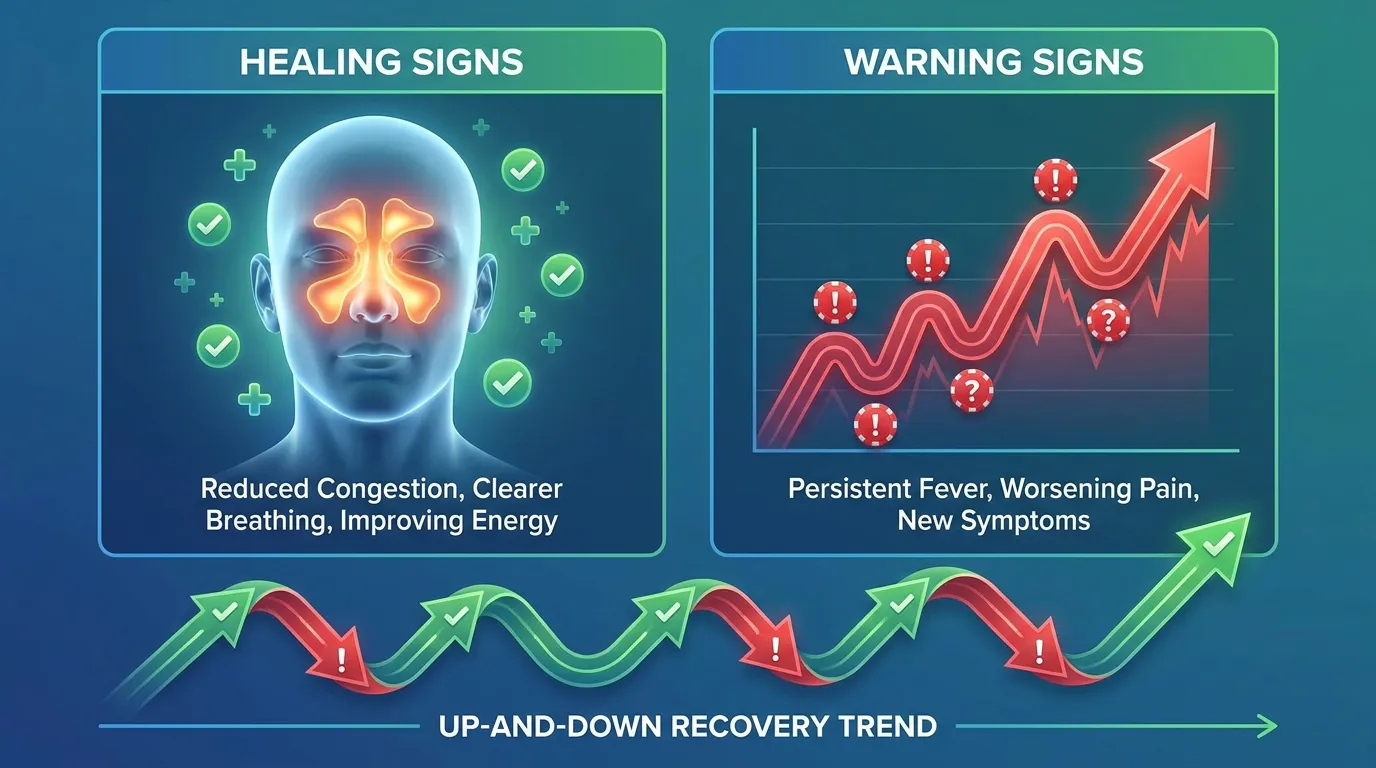
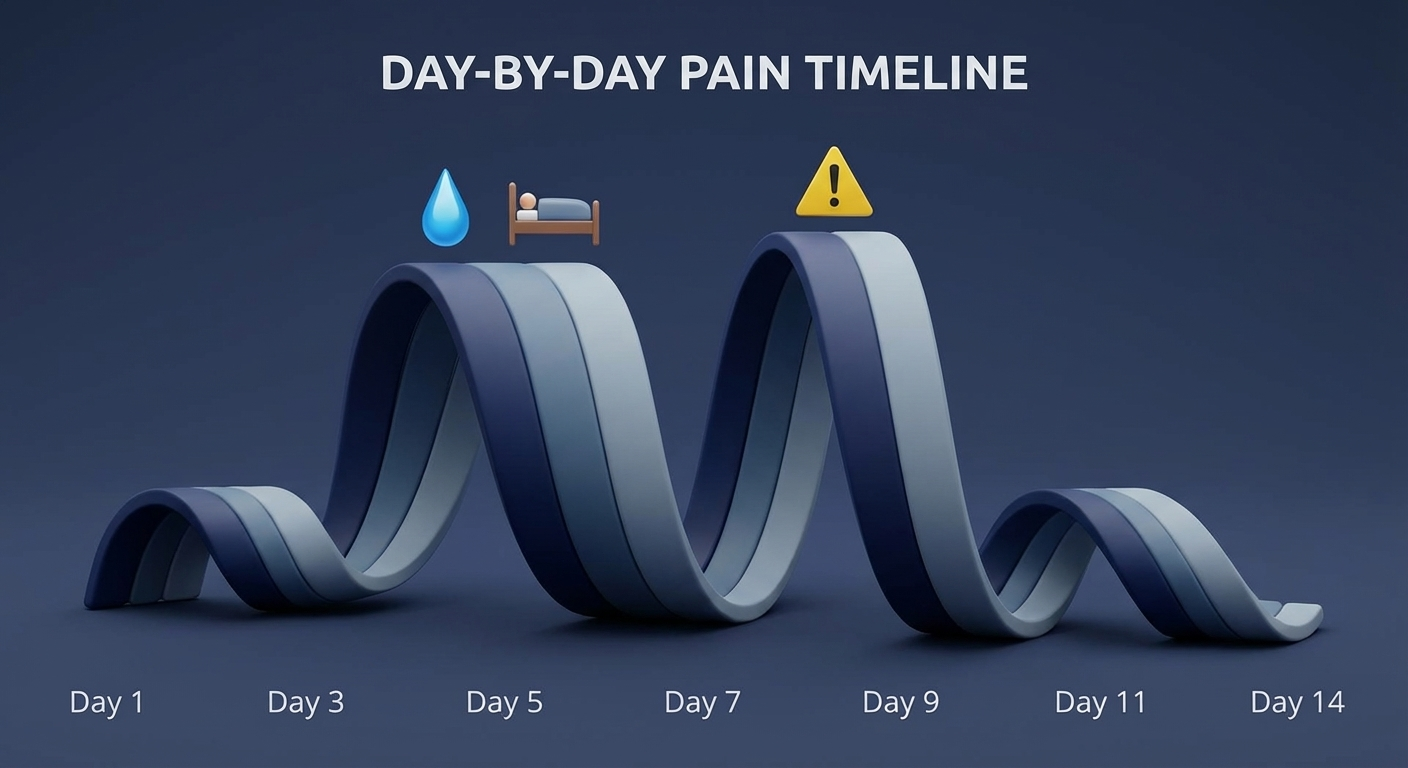
A helpful way to plan: assume you’ll have a few “better days” mixed with a couple of “why does this hurt again?” days—especially around the scab-shedding window.
Why adult recovery can feel tougher than childhood recovery
Adults often report more intense pain and a higher bleeding risk compared with younger children. That doesn’t mean complications will happen—just that careful hydration, rest, and following discharge instructions matter. Sources: CHEER RDC (https://pmc.ncbi.nlm.nih.gov/articles/PMC5322801/), McLean 2022 (https://pubmed.ncbi.nlm.nih.gov/34473351/)
Clinicians often frame it simply: adults tend to have a more uncomfortable recovery, so your job is to protect healing tissue and avoid dehydration while your throat repairs itself.
Plan for two demanding weeks, then a steady return to normal.
What’s happening in your throat after surgery (simple healing explanation)
The “white scabs” are normal
Many people notice a white or off-white coating where the tonsils used to be. This is typically a fibrin healing layer (commonly called “scabs”), which is a normal part of healing and should not be mistaken for pus. Sources: UW Health (https://patient.uwhealth.org/healthfacts/4486), Kaiser (https://healthy.kaiserpermanente.org/health-wellness/health-encyclopedia/he.tonsillectomy-what-to-expect-at-home.ud2585)
Think of it like a protective “bandage” your body makes. It’s supposed to be there while the tissue underneath closes and strengthens.
Why ear pain happens (referred pain)
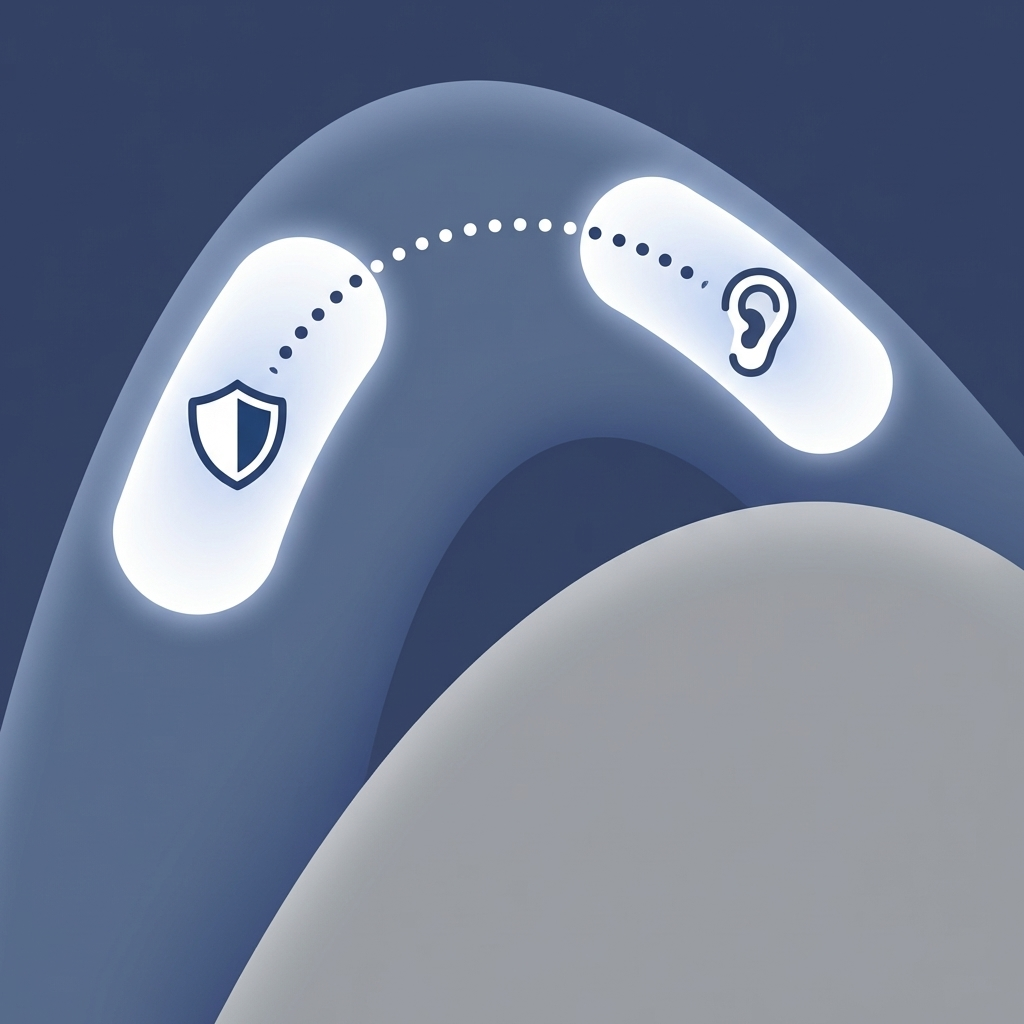
Ear pain after tonsil surgery is common—even if your ears are perfectly fine. Shared nerve pathways can cause referred pain from the throat to the ears, especially during week one. Sources: Cleveland Clinic (https://my.clevelandclinic.org/health/treatments/15605-tonsillectomy), UW Health (https://patient.uwhealth.org/healthfacts/4486)
A common scenario: you swallow, your throat hurts, and suddenly it feels like an earache. That pattern is classic referred pain.
The scab-sloughing window (days 5–10)
A key milestone in any adult tonsillectomy recovery timeline is when scabs start loosening and shedding—often around days 5–10. This can come with a temporary pain spike and sometimes mild blood-tinged mucus. Sources: UW Health (https://patient.uwhealth.org/healthfacts/4486), Kaiser (https://healthy.kaiserpermanente.org/health-wellness/health-encyclopedia/he.tonsillectomy-what-to-expect-at-home.ud2585)
This is also why people can feel “worse again” after they briefly felt better—your throat is doing normal maintenance work, not necessarily heading in the wrong direction.
If it looks white and sore, it can still be healthy healing.
Day-by-Day Adult Tonsillectomy Recovery Timeline (Days 0–14)
Below is an “at-a-glance” view, followed by details. (Everyone heals differently—your experience may shift by a day or two.)
At-a-glance
Day 0 — What you may feel: groggy, sore throat, mild blood-tinged saliva, nausea; What helps: early, steady hydration, rest, head elevation, take meds as directed; Red flags: active bleeding, trouble breathing.
Days 1–2 — What you may feel: rising throat pain, hard swallowing, low appetite; What helps: scheduled pain plan, cold/soft foods, steady hydration, bowel regimen if using opioids; Red flags: can’t keep fluids down, dehydration signs.
Days 3–4 — What you may feel: pain ramps up, ear pain, bad breath; What helps: keep sipping, humidifier, ice chips; Red flags: fever that concerns you, worsening symptoms.
Days 5–7 — What you may feel: scabs thicken, pain may peak, sleep disruption, possible low-grade fever; What helps: gentle diet, consistent fluids; Red flags: bright red bleeding, repeated vomiting blood.
Days 8–10 — What you may feel: scabs loosen/fall, pain flare, possible streaks of blood; What helps: avoid scratchy foods, hydrate; Red flags: persistent bleeding/clots.
Days 11–14 — What you may feel: gradual relief, energy returns; What helps: expand diet slowly; Red flags: ongoing worsening pain/fever/dehydration.
14+ — What you may feel: mild scratchiness can linger; What helps: normal routines as cleared; Red flags: any new bleeding.
Day 0 (surgery day)
It’s common to feel groggy, have a very sore throat, notice mild blood-tinged saliva, and experience nausea from anesthesia. Many discharge instructions emphasize beginning hydration early and maintaining it throughout the day. Sources: Kaiser (https://healthy.kaiserpermanente.org/health-wellness/health-encyclopedia/he.tonsillectomy-what-to-expect-at-home.ud2585), Cleveland Clinic (https://my.clevelandclinic.org/health/treatments/15605-tonsillectomy)
If swallowing is difficult at first, try tiny, frequent sips rather than a full cup at once. Some people do well with ice chips or chilled water because cold can feel soothing.
Days 1–2
Pain usually becomes more noticeable, and swallowing can feel sharp or “burning.” Appetite tends to be low. If opioid pain medicine is used, constipation can become an issue—ask your care team about a bowel regimen (stool softener, fiber, fluids) to prevent or treat it. Many adults do better when pain control is scheduled (rather than waiting until pain is severe) and when fluids are kept consistent throughout the day. Sources: UW Health (https://patient.uwhealth.org/healthfacts/4486), Kaiser (https://healthy.kaiserpermanente.org/health-wellness/health-encyclopedia/he.tonsillectomy-what-to-expect-at-home.ud2585)
Days 3–4 (pain often ramps up)
This window is a common “why do I feel worse?” phase in the tonsillectomy pain timeline adults report. Ear pain often becomes more obvious, and bad breath is very common as the healing layer thickens. Sources: Cleveland Clinic (https://my.clevelandclinic.org/health/treatments/15605-tonsillectomy), UW Health (https://patient.uwhealth.org/healthfacts/4486)
Continuing to drink—even in small, frequent sips—tends to be a major factor in comfort. If your throat feels “tight” or your saliva feels thick, that can be a clue you need more fluids.
Days 5–7 (scabs + higher risk window begins)
Many adults describe days 5–7 as the toughest part of the adult tonsillectomy recovery day by day experience: scabs look thicker, sleep can be disrupted, and pain may peak. Some people also notice a low-grade fever. This period also matters for safety: secondary bleeding (bleeding that happens more than 24 hours after surgery) becomes more likely as scabs begin loosening. Sources: UW Health (https://patient.uwhealth.org/healthfacts/4486), CHEER RDC (https://pmc.ncbi.nlm.nih.gov/articles/PMC5322801/), McLean 2022 (https://pubmed.ncbi.nlm.nih.gov/34473351/)
Days 8–10 (common scab sloughing window)
This is the classic scabs after tonsillectomy days 5–10 phase. Scabs may begin to fall off, sometimes causing a temporary pain spike. Mild blood-tinged saliva can occur. Sources: UW Health (https://patient.uwhealth.org/healthfacts/4486), Kaiser (https://healthy.kaiserpermanente.org/health-wellness/health-encyclopedia/he.tonsillectomy-what-to-expect-at-home.ud2585)
During this time, many people do best keeping foods gentle and avoiding anything sharp, crunchy, spicy, or acidic that could irritate healing tissue. Because many secondary bleeds are reported around days 5–10, it’s also the time to be extra familiar with your discharge plan and what “not normal” bleeding looks like. Sources: UW Health (https://patient.uwhealth.org/healthfacts/4486), CHEER RDC (https://pmc.ncbi.nlm.nih.gov/articles/PMC5322801/)
Days 11–14 (turning the corner)
Most adults notice steady improvement here: less pain, better sleep, and more energy. Diet often broadens gradually. Return-to-work timing varies, but many people can resume more typical routines around this point, while heavy exercise may still be restricted until cleared. Sources: Cleveland Clinic (https://my.clevelandclinic.org/health/treatments/15605-tonsillectomy), Kaiser (https://healthy.kaiserpermanente.org/health-wellness/health-encyclopedia/he.tonsillectomy-what-to-expect-at-home.ud2585)
Even if you feel mostly better, it’s smart to “earn your way back” to normal eating and workouts instead of jumping straight to spicy foods, crunchy snacks, or intense training.
After 2 weeks: what’s still “normal” vs not
It’s not unusual to have mild scratchiness or occasional discomfort (like with yawning) after two weeks. What’s not typical is pain that continues to worsen, signs of dehydration, ongoing fever, or any bleeding concerns—those merit a call to your surgical team.
Expect ups and downs—consistency beats intensity during recovery.
Symptoms to expect (and how to tell what’s normal)
Normal/expected symptoms
Common, expected symptoms include throat pain, referred ear pain, bad breath, a white healing coating/scabs, fatigue, and low appetite. It can also be normal for pain to feel different at different times of day (often worse in the morning if you’ve gone hours without sipping fluids overnight). Sources: Cleveland Clinic (https://my.clevelandclinic.org/health/treatments/15605-tonsillectomy), UW Health (https://patient.uwhealth.org/healthfacts/4486)
Less common but usually manageable
Some adults experience nausea, uvula swelling, temporary voice changes, or jaw stiffness. These can be unpleasant but often improve as inflammation calms. If nausea is significant, ask your care team about anti-nausea options. If nausea is an issue, many people tolerate small sips of electrolyte drinks and bland soft foods better than large meals.
Red-flag symptoms (seek urgent care)
Educationally, these are widely treated as “don’t wait and see” concerns:
- Active bleeding (bright red blood, clots, or bleeding that doesn’t stop)
- Trouble breathing
- Repeated vomiting blood
- Signs of dehydration (very dark urine, dizziness, confusion, not urinating)
Follow the escalation steps in your discharge paperwork (surgeon call line vs ER), since protocols vary. Sources: Kaiser (https://healthy.kaiserpermanente.org/health-wellness/health-encyclopedia/he.tonsillectomy-what-to-expect-at-home.ud2585), UW Health (https://patient.uwhealth.org/healthfacts/4486)
Unpleasant does not always mean unsafe—know the red flags.
Causes of setbacks during recovery (why you might feel worse again)
Dehydration → more pain and thicker secretions
A common pattern is the pain–dehydration cycle: pain makes drinking harder; less drinking leads to thicker secretions and more irritation, which can increase pain. Hydration is often described as part of comfort care in post-op instructions. Sources: UW Health (https://patient.uwhealth.org/healthfacts/4486), Kaiser (https://healthy.kaiserpermanente.org/health-wellness/health-encyclopedia/he.tonsillectomy-what-to-expect-at-home.ud2585)
If you need a simple reminder system, set a timer for a few sips every 10–15 minutes while awake.
Scab sloughing
When healing tissue sheds, it can trigger a short-lived pain flare and occasional small blood streaks. Source: UW Health (https://patient.uwhealth.org/healthfacts/4486)
Overactivity too soon
Strenuous activity, heavy lifting, and straining may increase bleeding risk and swelling early on, which is why many post-op plans restrict them for 1–2 weeks. Sources: Cleveland Clinic (https://my.clevelandclinic.org/health/treatments/15605-tonsillectomy), Kaiser (https://healthy.kaiserpermanente.org/health-wellness/health-encyclopedia/he.tonsillectomy-what-to-expect-at-home.ud2585)
Medication side effects
Prescription pain medicines can cause constipation, nausea, and drowsiness. Many discharge packets discuss planning ahead (timing with food, bowel regimen if needed, and avoiding alcohol/sedatives unless specifically approved). Source: Kaiser (https://healthy.kaiserpermanente.org/health-wellness/health-encyclopedia/he.tonsillectomy-what-to-expect-at-home.ud2585)
Hydration and pacing prevent most setbacks.
Treatments and home care that support healing (patient-friendly checklist)
Pain control (what most plans include)
Many post-op plans include scheduled acetaminophen and prescription medication as directed. If you’re struggling despite taking medication as prescribed, don’t just “tough it out”—call your surgeon’s office. Sometimes the fix is a timing adjustment, nausea control, or a hydration plan.
NSAIDs (ibuprofen/naproxen): mixed guidance
Some instructions advise avoiding NSAIDs early due to bleeding concerns, while at least one adult study did not find a significant association between prescribed NSAIDs and bleeding. The practical takeaway: follow the plan your surgeon gave you. Sources: UW Health (https://patient.uwhealth.org/healthfacts/4486), McLean 2022 (https://pubmed.ncbi.nlm.nih.gov/34473351/)
Hydration targets (make it practical)
A simple strategy many people use: sip every 10–15 minutes while awake rather than trying to “catch up” later. Water, electrolyte drinks, and diluted juice are common go-tos; alcohol is typically avoided during early healing. Sources: Kaiser (https://healthy.kaiserpermanente.org/health-wellness/health-encyclopedia/he.tonsillectomy-what-to-expect-at-home.ud2585), UW Health (https://patient.uwhealth.org/healthfacts/4486)
If plain water stings, chilled fluids or diluted options may go down more comfortably. A general sign you’re hydrated is pale yellow urine.
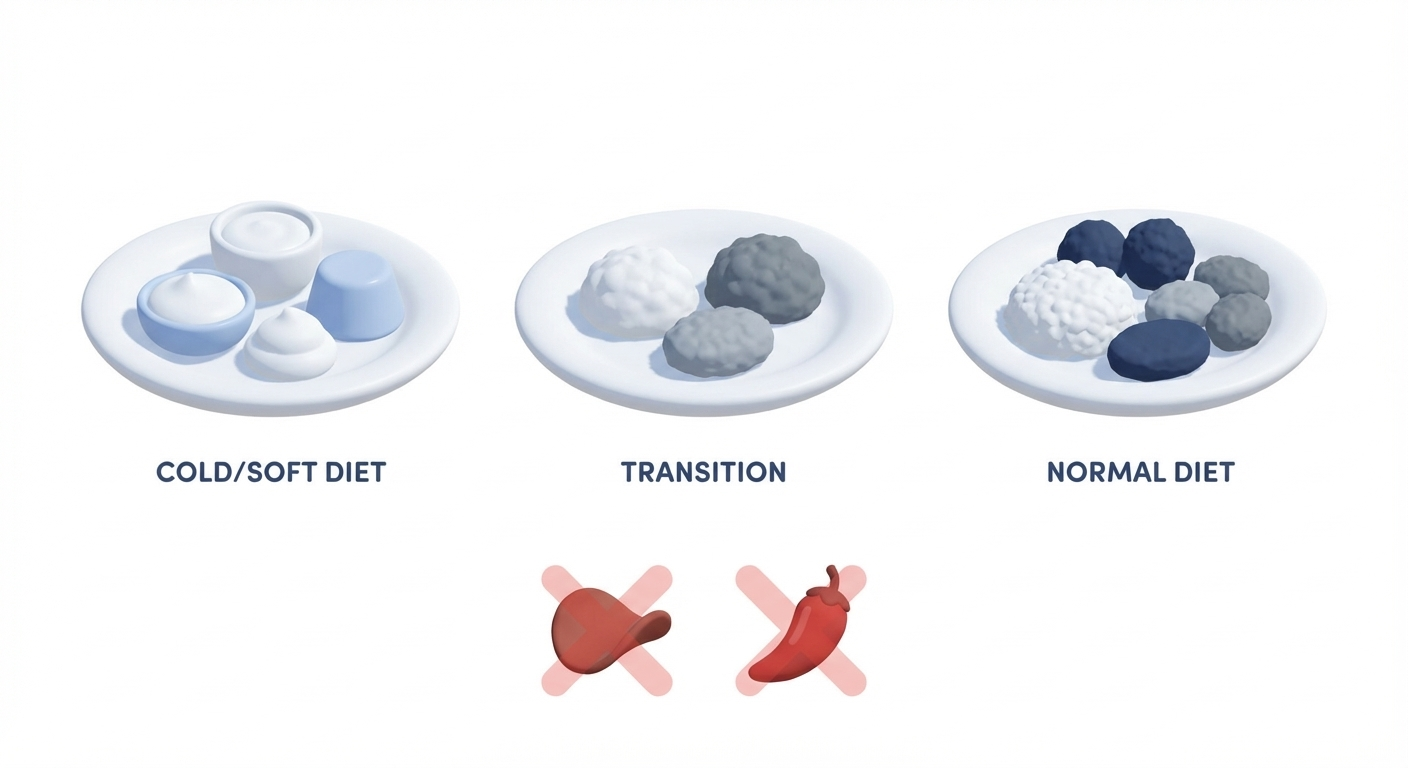
Diet stages (what to eat each phase)
If you’re searching what to eat after tonsillectomy adult, these are typical stages many instructions describe:
- Days 0–3: cold/soft (ice chips, smoothies, yogurt, applesauce)
- Days 4–10: soft/warm as tolerated (scrambled eggs, mashed potatoes, soups that aren’t hot)
- Days 11–14: gradual return; avoid sharp/crunchy until cleared
Often-avoided early foods include chips, toast, spicy items, and acidic foods/drinks that sting. Sources: Cleveland Clinic (https://my.clevelandclinic.org/health/treatments/15605-tonsillectomy), Kaiser (https://healthy.kaiserpermanente.org/health-wellness/health-encyclopedia/he.tonsillectomy-what-to-expect-at-home.ud2585), UW Health (https://patient.uwhealth.org/healthfacts/4486)
Activity restrictions (reduce bleeding risk)
Many plans limit heavy lifting and strenuous exercise for 1–2 weeks, with personalization based on your health and surgeon preference. A good checkpoint is whether an activity makes you feel your heart pounding, winded, or strained—if so, it’s probably too much too soon. Sources: Cleveland Clinic (https://my.clevelandclinic.org/health/treatments/15605-tonsillectomy), Kaiser (https://healthy.kaiserpermanente.org/health-wellness/health-encyclopedia/he.tonsillectomy-what-to-expect-at-home.ud2585)
Sleep and comfort hacks
Common comfort supports include head elevation, a cool-mist humidifier, and timing medications so sleep isn’t interrupted by severe pain. Gentle oral care is usually encouraged, while aggressive gargling is often avoided unless specifically instructed. Sources: UW Health (https://patient.uwhealth.org/healthfacts/4486), Kaiser (https://healthy.kaiserpermanente.org/health-wellness/health-encyclopedia/he.tonsillectomy-what-to-expect-at-home.ud2585)
Some adults also find it helpful to keep water at the bedside to reduce morning dryness. Avoid smoking or vaping while healing, since both can irritate tissue.
Follow your surgeon’s plan and call early if pain control isn’t working.
Bleeding after adult tonsillectomy: what to know (without panic)
Primary vs secondary hemorrhage
Bleeding risk is often discussed in two timeframes: primary hemorrhage (within 24 hours) and secondary hemorrhage (after 24 hours, commonly in the days 5–10 range). Sources: CHEER RDC (https://pmc.ncbi.nlm.nih.gov/articles/PMC5322801/), McLean 2022 (https://pubmed.ncbi.nlm.nih.gov/34473351/)
This is a major reason the post-tonsillectomy bleeding risk adults read about is emphasized during the first two weeks.
How common is bleeding in adults? (why numbers vary)
Rates vary by study design and patient mix. One large network analysis reported overall bleeding rates around ~1–3% depending on age grouping, while a single-center adult cohort reported a higher rate (~11.9%). Sources: CHEER RDC (https://pmc.ncbi.nlm.nih.gov/articles/PMC5322801/), McLean 2022 (https://pubmed.ncbi.nlm.nih.gov/34473351/)
Different definitions (minor vs ER-level bleeding) and different patient groups can produce different-looking numbers—so your best guide is still your surgeon’s specific instructions and your own symptoms.
What to do if you see blood
Educationally, many discharge instructions distinguish between small streaks/tinge in saliva (sometimes seen during scab changes) versus active bright red bleeding, clots, or bleeding that persists. Because response steps differ by situation and by surgeon protocol, following your discharge instructions (including who to call and when to go to the ER) is essential. Sources: Kaiser (https://healthy.kaiserpermanente.org/health-wellness/health-encyclopedia/he.tonsillectomy-what-to-expect-at-home.ud2585), UW Health (https://patient.uwhealth.org/healthfacts/4486)
Know the plan before you need it.
Lifestyle tips to speed recovery (and avoid complications)

Set up your “recovery station”
Many adults find it helpful to keep water, a humidifier, soft foods, a thermometer, and a written medication schedule in one place. Also consider keeping a small trash can nearby (for tissues/spit) and stocking easy options you can tolerate even when appetite is low.
Keep a medication + fluid log
Tracking doses and fluids can reduce accidental missed doses and help you notice dehydration early—especially during days when sleep is disrupted. A notes app or paper checklist works fine; the goal is consistency, not perfection.
Mouth care basics
Gentle toothbrushing is typically fine, while forceful gargling or scraping the throat is generally avoided unless your surgeon instructs otherwise. If you’re unsure what’s allowed (saltwater rinses, mouthwash, etc.), use your discharge plan as the source of truth. Sources: UW Health (https://patient.uwhealth.org/healthfacts/4486), Kaiser (https://healthy.kaiserpermanente.org/health-wellness/health-encyclopedia/he.tonsillectomy-what-to-expect-at-home.ud2585)
When to return to work, gym, and travel
A common planning estimate is about 10 days off work and 1–2 weeks before strenuous exercise, with individualized guidance from your surgeon. For travel, it’s reasonable to be extra cautious during the days 5–10 window when secondary bleeding risk is more emphasized. If you must travel, confirm your surgeon’s recommendations first. Sources: Cleveland Clinic (https://my.clevelandclinic.org/health/treatments/15605-tonsillectomy), Kaiser (https://healthy.kaiserpermanente.org/health-wellness/health-encyclopedia/he.tonsillectomy-what-to-expect-at-home.ud2585)
Small preparations make recovery days smoother.
FAQs
When does adult tonsillectomy pain peak?
Pain is often worst in the first week, commonly peaking around days 3–8, and can flare again during scab shedding. Sources: UW Health (https://patient.uwhealth.org/healthfacts/4486), Kaiser (https://healthy.kaiserpermanente.org/health-wellness/health-encyclopedia/he.tonsillectomy-what-to-expect-at-home.ud2585)
When do scabs fall off after tonsillectomy in adults?
Commonly days 5–10, though timing varies. Source: UW Health (https://patient.uwhealth.org/healthfacts/4486)
Is ear pain normal after tonsillectomy?
Yes. Referred ear pain is common during week one. Sources: Cleveland Clinic (https://my.clevelandclinic.org/health/treatments/15605-tonsillectomy), UW Health (https://patient.uwhealth.org/healthfacts/4486)
What foods should I avoid after surgery?
Typically avoided early: crunchy/sharp foods, spicy foods, acidic foods, and alcohol. Sources: Kaiser (https://healthy.kaiserpermanente.org/health-wellness/health-encyclopedia/he.tonsillectomy-what-to-expect-at-home.ud2585), UW Health (https://patient.uwhealth.org/healthfacts/4486)
When can I exercise again?
Many plans avoid strenuous activity for 1–2 weeks, but clearance is surgeon-specific. Sources: Cleveland Clinic (https://my.clevelandclinic.org/health/treatments/15605-tonsillectomy), Kaiser (https://healthy.kaiserpermanente.org/health-wellness/health-encyclopedia/he.tonsillectomy-what-to-expect-at-home.ud2585)
Can I take ibuprofen after tonsillectomy?
Guidance varies by practice and patient factors. Some instructions avoid NSAIDs early; at least one adult cohort study did not find a significant association with bleeding. Follow your surgeon’s plan. Sources: UW Health (https://patient.uwhealth.org/healthfacts/4486), McLean 2022 (https://pubmed.ncbi.nlm.nih.gov/34473351/)
What does an emergency bleed look like?
Bright red bleeding, clots, bleeding that won’t stop, or vomiting blood are commonly treated as urgent/emergent concerns in post-op instructions. Follow your discharge plan and seek urgent care as directed. Sources: Kaiser (https://healthy.kaiserpermanente.org/health-wellness/health-encyclopedia/he.tonsillectomy-what-to-expect-at-home.ud2585), UW Health (https://patient.uwhealth.org/healthfacts/4486)
When to contact an ENT (and how we can help)
If you’re concerned about worsening pain, dehydration, fever, or any bleeding, it’s appropriate to contact your surgeon’s office using the pathway in your discharge paperwork.
If you’re dealing with recurring tonsil problems and want an evaluation or a second opinion, Sleep and Sinus Centers of Georgia can help you understand options and next steps—especially if you’ve had recurrent infections, tonsillitis, or tonsil-related symptoms over time. You can also explore:
- Recurrent strep throat vs. tonsillectomy: https://sleepandsinuscenters.com/blog/recurrent-strep-throat-vs-tonsillectomy-when-surgery-is-necessary
- What tonsillitis is: https://sleepandsinuscenters.com/blog/what-is-tonsillitis-symptoms-causes-and-when-to-see-a-doctor
- Tonsil stones (tonsilloliths): https://sleepandsinuscenters.com/blog/tonsil-stones-causes-symptoms-and-effective-removal-tips
To schedule care, you can book an appointment directly through our website: https://www.sleepandsinuscenters.com/
References
- Cleveland Clinic: https://my.clevelandclinic.org/health/treatments/15605-tonsillectomy
- UW Health: https://patient.uwhealth.org/healthfacts/4486
- Kaiser: https://healthy.kaiserpermanente.org/health-wellness/health-encyclopedia/he.tonsillectomy-what-to-expect-at-home.ud2585
- McLean 2022: https://pubmed.ncbi.nlm.nih.gov/34473351/
- CHEER RDC: https://pmc.ncbi.nlm.nih.gov/articles/PMC5322801/
FAQ Schema (JSON-LD)
{ "@context": "https://schema.org", "@type": "FAQPage", "mainEntity": [ { "@type": "Question", "name": "When does adult tonsillectomy pain peak?", "acceptedAnswer": { "@type": "Answer", "text": "Pain is often worst in the first week, commonly peaking around days 3–8, and may flare again during scab shedding." } }, { "@type": "Question", "name": "When do scabs fall off after tonsillectomy in adults?", "acceptedAnswer": { "@type": "Answer", "text": "Scabs commonly begin to loosen and fall off around days 5–10, though timing varies by person." } }, { "@type": "Question", "name": "Is ear pain normal after tonsillectomy?", "acceptedAnswer": { "@type": "Answer", "text": "Yes. Referred pain from the throat to the ears is common during recovery, especially in the first week." } }, { "@type": "Question", "name": "What foods should I avoid after surgery?", "acceptedAnswer": { "@type": "Answer", "text": "Many post-op instructions recommend avoiding sharp/crunchy foods, spicy foods, acidic foods, and alcohol early in recovery." } }, { "@type": "Question", "name": "When can I exercise again?", "acceptedAnswer": { "@type": "Answer", "text": "Many plans restrict strenuous activity for 1–2 weeks, but the exact timeline should be confirmed with your surgeon." } }, { "@type": "Question", "name": "Can I take ibuprofen after tonsillectomy?", "acceptedAnswer": { "@type": "Answer", "text": "Guidance varies. Some instructions avoid NSAIDs early due to bleeding concerns, while some research has not shown a clear association. Follow your surgeon’s instructions." } }, { "@type": "Question", "name": "What does an emergency bleed look like?", "acceptedAnswer": { "@type": "Answer", "text": "Bright red bleeding, clots, persistent bleeding, or vomiting blood are commonly treated as urgent/emergent concerns in post-op instructions; follow your discharge plan and seek urgent care as directed." } } ] }
Disclaimer: This article is for educational purposes only and is not medical advice. Please consult a qualified healthcare provider for diagnosis and treatment.
Talk with a Georgia ENT
If you're dealing with ongoing throat or voice symptoms, the board-certified ENT team at Sleep and Sinus Centers of Georgia can help — with offices in Lawrenceville, Athens, and Braselton. Learn more about our ENT specialists, or request an appointment.
Don’t let allergies slow you down. Schedule a comprehensive ENT and allergy evaluation at Sleep and Sinus Centers of Georgia. We’re here to find your triggers and guide you toward lasting relief.