Why Allergies Get Worse at Night: Causes and Relief Tips
If your nose clogs up the moment you lie down, you’re not imagining it. For many people, nighttime allergy symptoms ramp up after dark—even if daytime symptoms feel manageable.
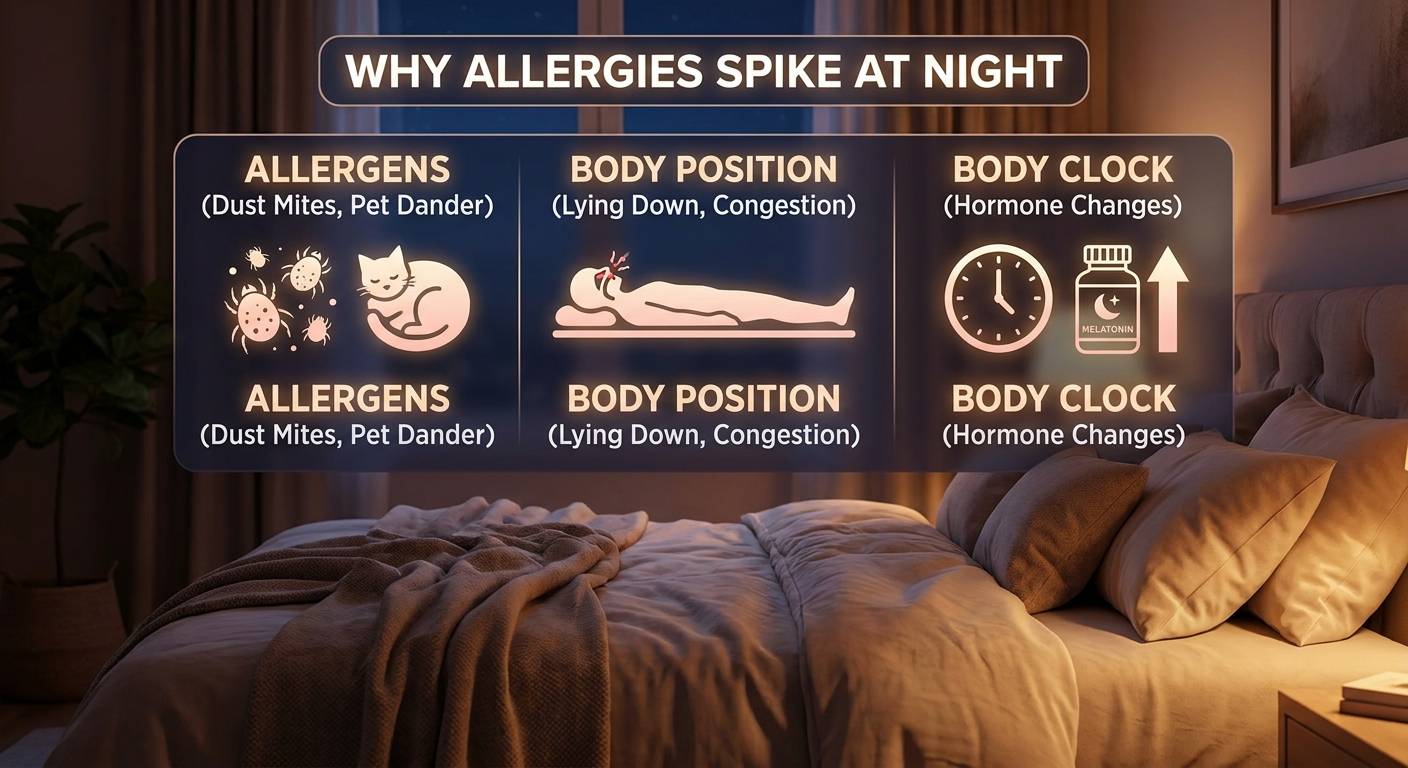
There are a few common reasons allergies are worse at night: you’re exposed to bedroom allergens for hours at a time, lying flat changes airflow and drainage, and your body clock (circadian rhythm) shifts immune activity overnight. Some research suggests that nighttime changes in histamine and cortisol may contribute to worse symptoms. Medication timing—and simply noticing symptoms more when it’s quiet—can play a role too. Reviews of allergic rhinitis and sleep describe these “nocturnal rhinitis” patterns and their impact on sleep quality. [1][2][3]
As one clinician informally puts it: “Night symptoms are usually not mysterious—it’s exposure + position + timing.” That’s good news, because it means there are practical levers you can pull.
Below, we’ll cover what people notice most, the key causes, practical fixes you can try, and when it’s worth seeing a specialist.
Common Nighttime Allergy Symptoms (What People Notice Most)
Nasal symptoms:
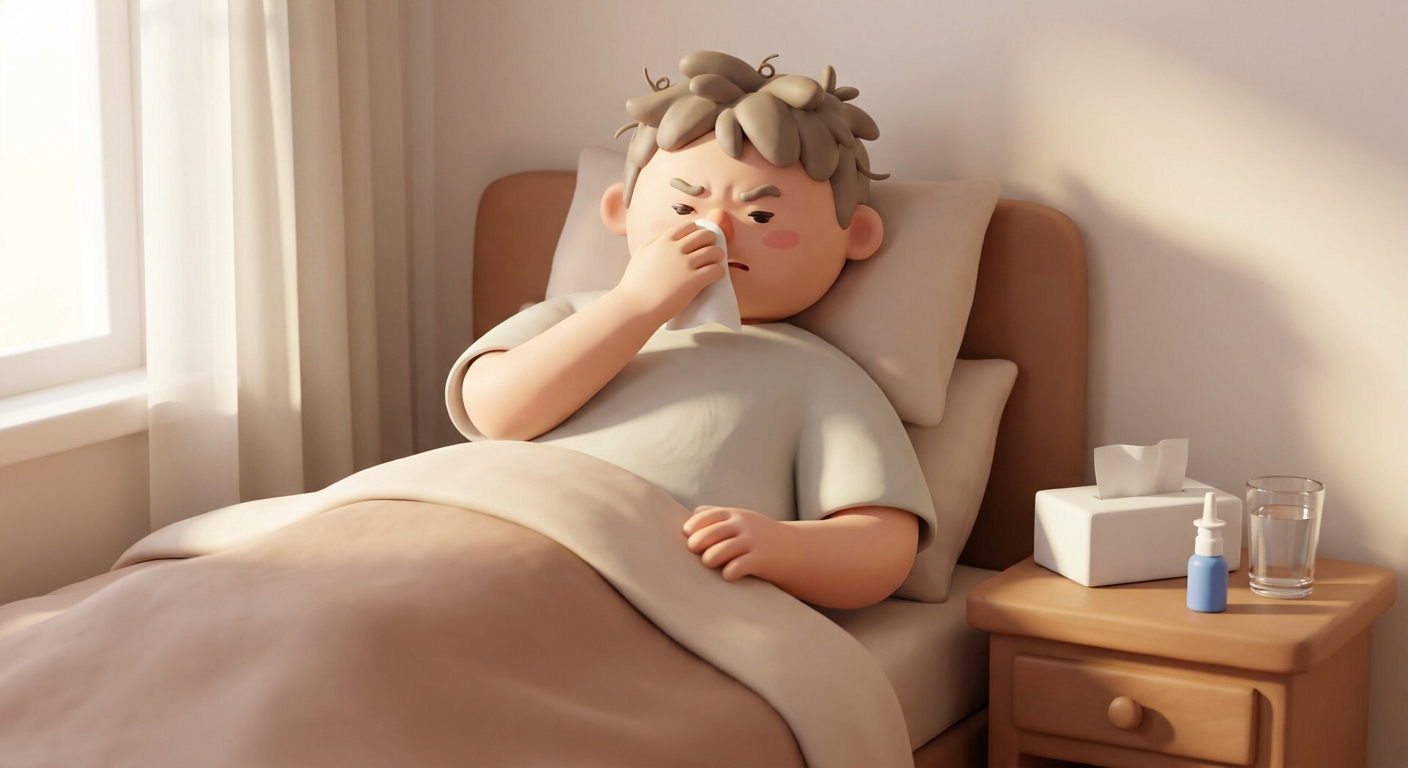
- A stuffy nose that worsens when lying down
- Sneezing fits at bedtime or that wake you up overnight
- A clear runny and itchy nose
A common pattern is feeling mostly fine all evening, then suddenly congested the minute your head hits the pillow.
Throat and breathing symptoms:
- Postnasal drip at night leading to throat clearing, a nagging cough, or a sore throat in the morning
- Mouth breathing and dry mouth (often because of congestion)
If you have allergic asthma, nighttime cough or wheeze can also flare. Breathing symptoms—especially wheeze or chest tightness—are a good reason to seek medical guidance promptly.
Sleep-related symptoms:
- Trouble falling asleep
- Frequent awakenings
- Poor sleep quality and daytime fatigue
Many patients describe it as a frustrating loop: congestion wakes them up, poor sleep makes them feel more sensitive to symptoms, and then the next night feels even harder.
Allergic rhinitis is strongly linked with sleep disturbance and higher symptom burden at night. [1][2][3]
Summary: Even mild rhinitis can unsettle sleep when congestion and drip spike after lights out.
Why Allergies Get Worse at Night (The Key Causes)
Usually it’s not one cause—it’s a stack of two to four things happening at once.
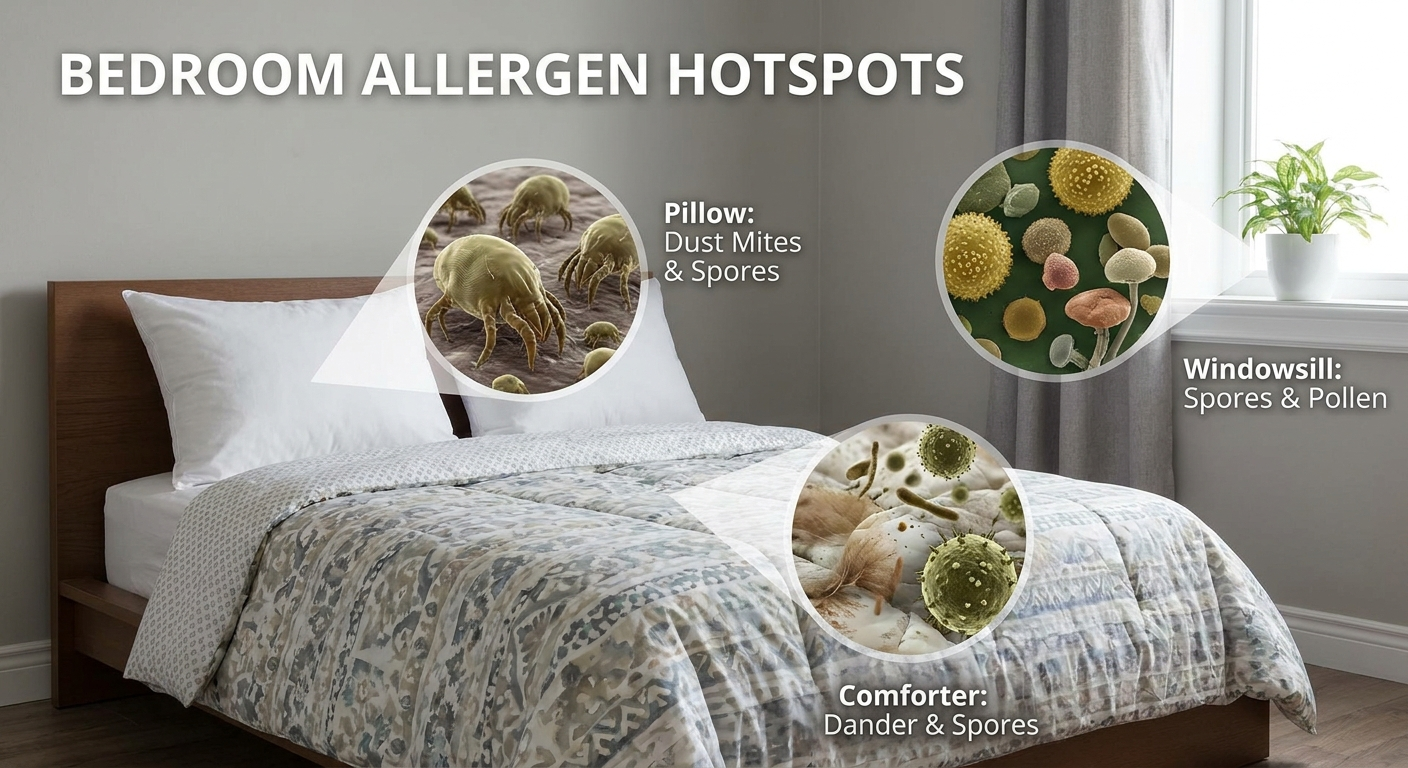
Bedroom allergens are concentrated where you sleep (dust mites, pets, mold):
- You spend 6–9 hours in the same enclosed environment, breathing the same air close to your bedding—almost like holding your face near a “reservoir” of whatever is in the fabric and dust.
- Dust mites thrive in mattresses, pillows, and comforters; pet dander clings to fabrics; mold spores rise with humidity and poor ventilation. [2][3]
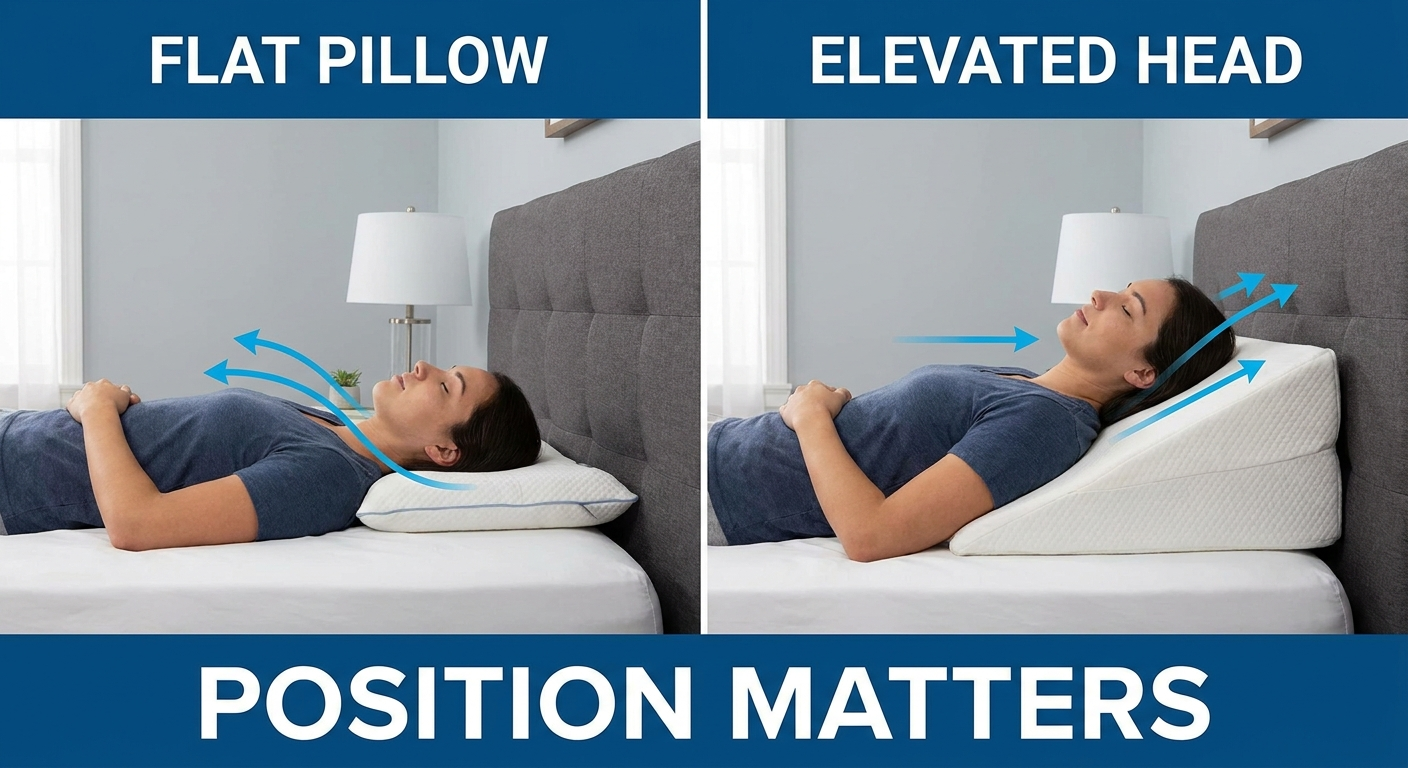
Lying flat increases nasal resistance and promotes mucus pooling:
- Blood flow shifts can swell nasal tissues
- Nasal passages narrow, increasing airflow resistance
- Drainage slows, worsening throat symptoms and postnasal drip at night [2]
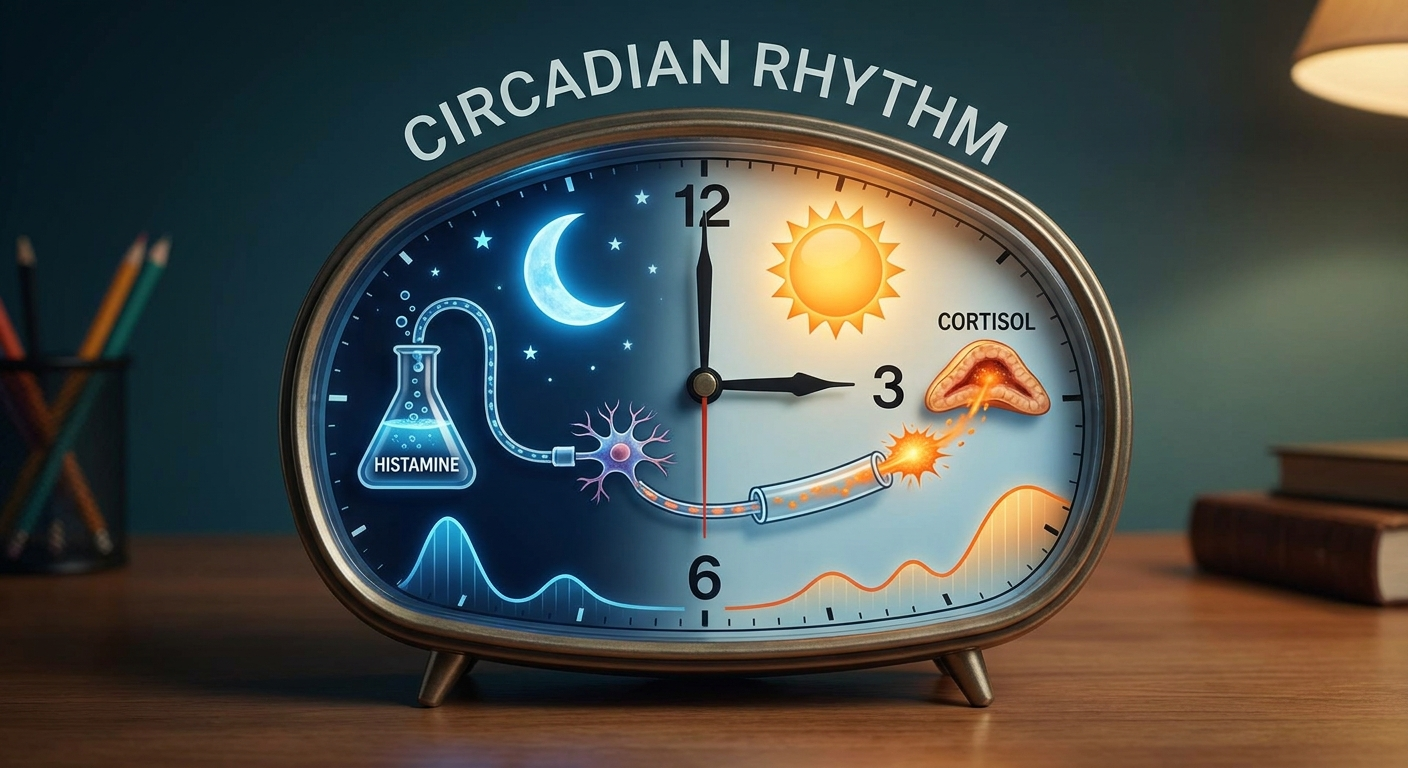
Your circadian rhythm changes immune activity at night:
- Overnight shifts in histamine and cortisol may tilt toward more inflammation, amplifying symptoms. [1][2]
Medication effects can wear off by bedtime (or timing may not match your pattern):
- Morning dosing may not fully cover nighttime
- Some decongestants are short-acting and can disturb sleep
Discuss timing with a clinician or follow label directions. Background guide: https://sleepandsinuscenters.com/blog/best-times-to-take-allergy-medicine-morning-vs-night. Major guidance emphasizes tailoring therapy. [3][4][5]
At night, you notice symptoms more (sleep perception effect):
- Less distraction makes congestion and drip feel louder
- Poor sleep lowers tolerance, amplifying awareness [1][2]
Summary: Most people experience a stack of exposure, body-position effects, and timing—not just one culprit.
The Most Common Bedroom Triggers (And How to Tell Which One You Have)
Dust mites (classic “worse at night/in the morning” pattern):
- Congestion and sneezing on waking
- Year-round symptoms (not just seasonal)
- Strongest symptoms in bed
Risk factors include older mattresses/pillows, plush bedding, and stuffed animals. Bedding protection guide: https://sleepandsinuscenters.com/blog/dust-mite-covers-explained-ultimate-guide-to-allergy-protection
Pet dander (even if you “aren’t allergic to your pet”):
- Worse in carpeted bedrooms
- Flares after lying on bedding or upholstered furniture
- Flares after close contact
Mold (humidity-driven, can be sneaky):
- Musty odor or symptoms clustered in one room
- Visible mold or water damage; worse in rainy/humid seasons
Summary: Zeroing in on your primary bedroom trigger makes every other step more effective.
Relief Tips That Help Tonight (Fast, Practical Steps)
Change your sleep setup (position and airflow):
- Slight head/upper torso elevation (e.g., wedge pillow)
- Side-sleep if postnasal drip is prominent
- Keep the bedroom door closed if focusing filtration on that room
More on positioning: https://sleepandsinuscenters.com/blog/sleeping-positions-that-help-sinus-drainage
Reduce allergen load in the bed (often the highest ROI):
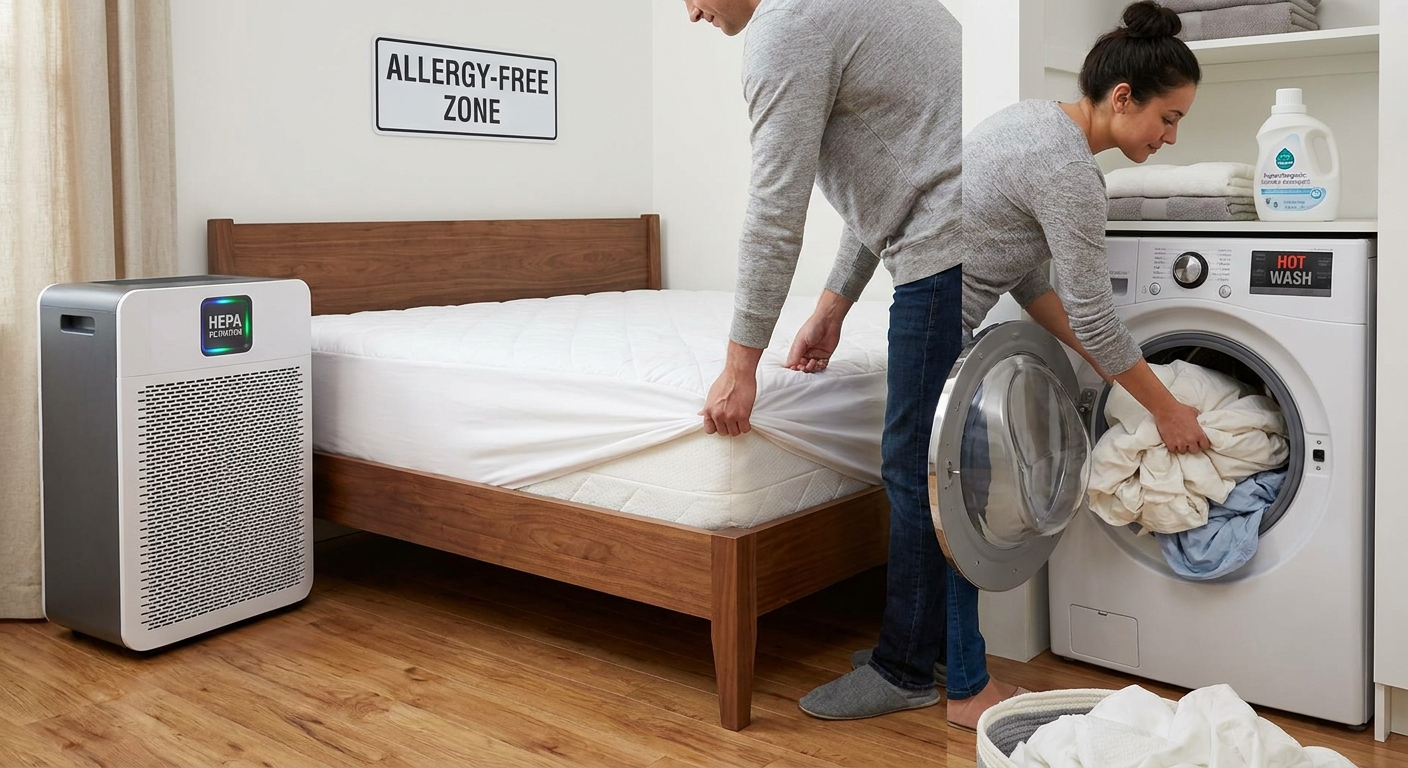
- Wash sheets weekly (hot water if fabric allows)
- Use mite-proof encasements for pillow(s) and mattress
- Clean or replace pillows per manufacturer guidance
- Keep stuffed animals out of bed (or wash regularly)
Use HEPA filtration strategically:
- Run a true HEPA air purifier in the bedroom (appropriately sized)
- Change HVAC filters regularly; consider higher MERV if supported
- Keep windows closed during high pollen periods
Saline rinse/shower routines to reduce what you bring to bed:
- Shower and wash hair in the evening during high pollen seasons
- Consider a saline nasal rinse before bed (use sterile/distilled/boiled-then-cooled water and follow instructions)
These environmental and supportive steps are common recommendations. [3][4][5]
Summary: A few targeted changes tonight can make sleep easier while you work on longer-term control.
Treatments That Target the Root Cause (Not Just “Temporary Relief”)
Educational note: This is general education, not personal medical advice. OTC and prescription options have different side effects and precautions. Use extra care for children, pregnancy, high blood pressure, glaucoma, prostate issues, or if you take sedating medications—and follow label directions or clinician guidance.
Intranasal corticosteroids (often the foundation): Reduce nasal lining inflammation and improve congestion over time. Consistency matters more than “rescue” use; improvement builds over several days to about two weeks. Discuss timing if nights are worst. First-line therapy in guidance. [3][4][5]
Antihistamines (especially for sneezing/itching/runny nose): Helpful for histamine-driven symptoms. Sedation varies by product, so timing may matter; follow labels and discuss with a clinician. [3][4][5]
Decongestants—use carefully: Can relieve stuffiness but may raise blood pressure, affect cardiovascular conditions, or disrupt sleep. Nasal sprays can cause rebound if overused; follow limits and guidance.
Allergy immunotherapy (shots or drops): For persistent symptoms with clear triggers (e.g., dust mites, pet dander). Allergy testing helps target treatment. [3]
Summary: Consistent anti-inflammatory treatment plus trigger control usually beats “as-needed” quick fixes.
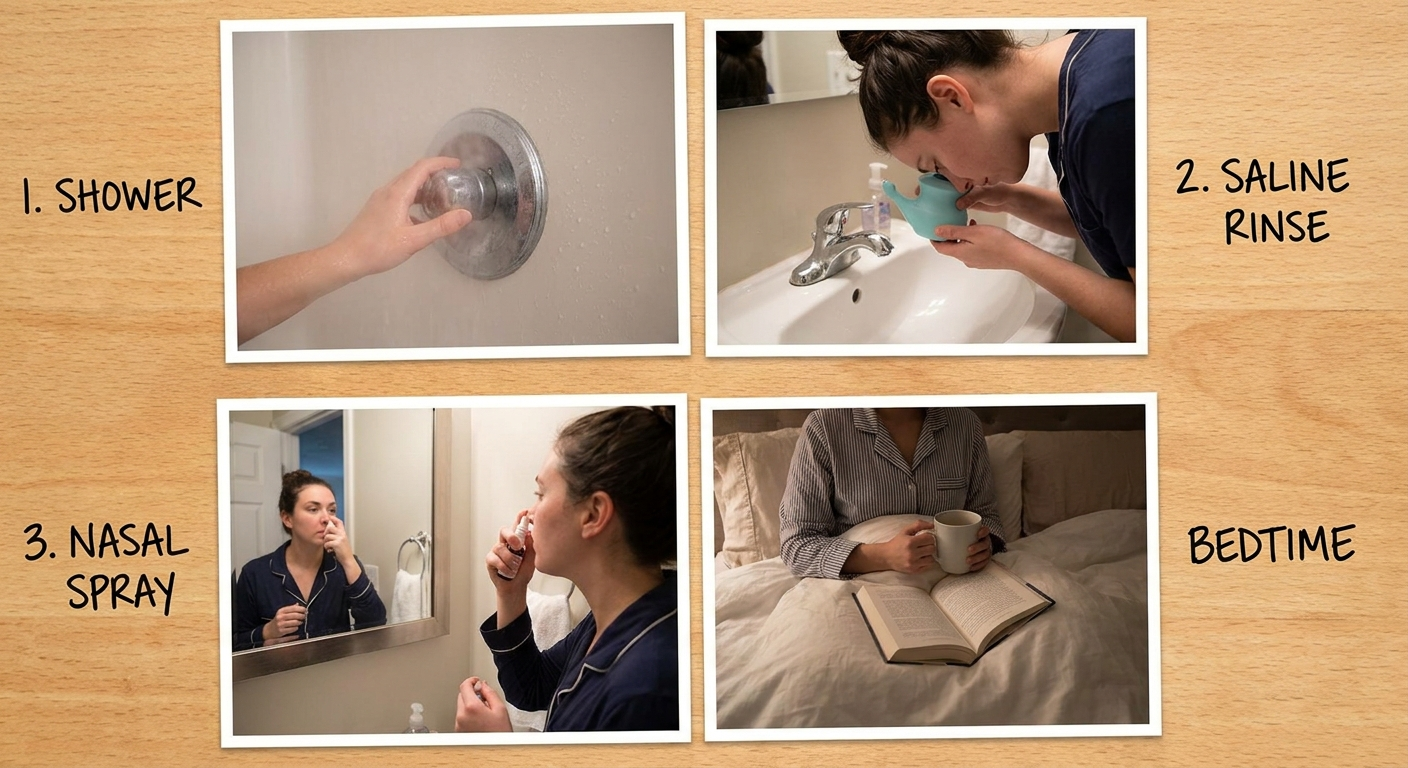
A Simple “Nighttime Allergy Action Plan” (Checklist)
10-minute bedtime routine:
- Shower (especially hair) during pollen season
- Saline rinse if helpful/tolerated
- Use medications as directed, with timing tailored to your symptom pattern when possible
Weekly routine:
- Wash bedding
- Vacuum with HEPA filtration (or damp dust to avoid kicking particles into the air)
- Replace/clean purifier filters per schedule
Monthly/seasonal routine:
- Replace HVAC filters
- Check humidity and aim for a comfortable, mold-resistant range
Summary: Small, repeatable routines are what turn better nights into a new normal.
When Nighttime Allergies Might Be Something Else
Cold vs allergies vs sinus infection (quick distinctions):
- Allergies: itching, clear runny nose, repeatable triggers/patterns
- Viral cold: may include body aches and sometimes fever; usually resolves over time
- Possible sinus infection: persistent/worsening facial pain or pressure, fever, or thick/discolored drainage (color alone isn’t diagnostic)
Consider non-allergic causes if symptoms persist: Nonallergic rhinitis, reflux contributing to throat symptoms, structural nasal blockage, or overlap with sleep apnea can mimic allergy patterns.
Summary: If the pattern doesn’t fit allergies, it’s worth ruling out other causes.
When to See a Doctor (and What an ENT/Allergy Workup May Include)
Red flags / urgent concerns: Seek urgent evaluation for trouble breathing, uncontrolled wheezing, swelling of lips/tongue, severe shortness of breath, high fever with severe facial swelling, or vision changes.
Reasons to book a visit:
- Night symptoms disrupt sleep more than 2–3 nights per week
- Symptoms last longer than 4 weeks despite OTC steps
- You suspect dust mite/pet/mold triggers
- Frequent sinus infections or persistent postnasal drip
What evaluation may involve: Symptom and trigger history, medication review, and nasal exam (sometimes endoscopy). Allergy testing helps identify triggers and guide a targeted plan. Book a personalized visit: https://www.sleepandsinuscenters.com/ (learn more about allergy testing: https://sleepandsinuscenters.com/allergy-testing). [3]
Summary: If nighttime symptoms keep stealing sleep, a tailored plan can make a big difference.
FAQs
“Why do my allergies only bother me at night?” The most common explanations are concentrated bedroom allergens, the effects of lying flat on congestion/drainage, and circadian changes that may promote inflammation. [1][2][3]
“Can dust mites really cause nighttime congestion?” Yes. Bedding is a prime reservoir, and exposure often peaks during sleep—one reason dust mite allergy at night is such a classic pattern. [2][3]
“Is it better to take antihistamines in the morning or at night?” It depends on the medication, your symptom timing, and drowsiness risk. If you’re unsure, discuss timing and side effects with a clinician.
“What’s the best thing to do for allergies before bed?” Many people benefit from reducing what gets into the bedroom (shower, rinse), reducing what’s in the bed (encasements, hot washing), and treating inflammation consistently (often with intranasal steroid sprays). [3][4][5]
“Do HEPA air purifiers help with nighttime allergies?” They can reduce airborne particles, but best results usually come from combining filtration with bedding controls. [3][4]
“When should I suspect mold?” A musty odor, humidity issues, water damage, or symptoms that cluster in one room/season are common clues.
Conclusion
Nighttime worsening is common—and there are clear reasons allergies are worse at night. To improve sleep, focus on the “big 3”:
1) Control bedroom allergens (especially bedding)
2) Optimize positioning and airflow
3) Use the right medications with consistent timing
If symptoms keep interfering with rest, allergy testing and a tailored plan can help identify the real driver behind your nighttime allergy symptoms. To get help narrowing your triggers and building a plan you can stick with, book an appointment at https://www.sleepandsinuscenters.com/.
Summary: Better sleep starts with reducing exposure, adjusting position, and treating inflammation consistently.
References
[1] Narrative review on allergic rhinitis and sleep (2024). https://pmc.ncbi.nlm.nih.gov/articles/PMC11420902/
[2] Nocturnal allergic rhinitis review (J Allergy Clin Immunol, 2004). https://www.jacionline.org/article/S0091-6749(04)02300-0/fulltext
[3] AAAAI: Allergic rhinitis overview. https://www.aaaai.org/conditions-and-treatments/library/allergy-library/allergic-rhinitis
[4] Mayo Clinic: Allergies—symptoms/causes and treatment. https://www.mayoclinic.org/diseases-conditions/allergies/symptoms-causes/syc-20351497
[5] NHS: Allergic rhinitis guidance. https://www.nhs.uk/conditions/allergic-rhinitis/
This article is for educational purposes only and is not medical advice. Please consult a qualified healthcare provider for diagnosis and treatment.
Don’t let allergies slow you down. Schedule a comprehensive ENT and allergy evaluation at Sleep and Sinus Centers of Georgia. We’re here to find your triggers and guide you toward lasting relief.