Blocked Nose Relief: Best Humidifier Tips to Clear Nasal Congestion
Nasal congestion can feel deceptively simple—just a “stuffy nose”—until it interrupts sleep, causes mouth breathing, and leaves you waking up dry and exhausted. If you’re looking for blocked nose relief at home, a humidifier may help relieve discomfort—especially when indoor air is dry.
Think of your nasal lining like skin: when it dries out, it gets irritated more easily. Dry, irritated tissues can swell, and swelling makes airflow feel tight—even if there isn’t much mucus.
Below is a practical, patient-friendly guide to when humidifiers may help, which type to choose, what humidity level to aim for, and how to use and clean your unit safely. (This is educational information, not medical advice.)
Quick Take: Can a Humidifier Help a Blocked Nose?
A “blocked nose” (nasal congestion) often involves swollen nasal tissues and/or mucus that isn’t draining well. Many people notice it’s worse at night because you’re lying down, breathing the same bedroom air for hours, and your nose may dry out while you sleep.
Humidifiers can support blocked nose relief by adding moisture to dry indoor air. That extra moisture may reduce irritation in the nasal lining and help you feel more comfortable—particularly in winter when heating systems lower indoor humidity. MedlinePlus notes humidifiers can be helpful for relieving dryness affecting the nose and throat, and provides important safety guidance as well. Source: MedlinePlus – Humidifiers (uses + safety) https://medlineplus.gov/ency/article/002104.htm
People who may find symptom relief include those dealing with:
- Common colds/viral upper respiratory infections
- Sinusitis symptoms
- Allergies (especially if indoor air is dry)
- Winter heating dryness
- Dry skin flares that worsen when humidity drops (See MedlinePlus link above.)
Takeaway: Humidifiers may ease dryness-related discomfort but won’t treat the root cause of congestion.
Symptoms: Signs Your Nasal Congestion May Improve With Added Humidity
Common symptoms linked to dry air + congestion:
- A stuffy nose that’s worse in the morning
- A dry, crusty nose or minor nosebleeds
- Scratchy throat, mouth breathing, or poor sleep quality
- Dry skin flares when indoor air is dry (Source: MedlinePlus https://medlineplus.gov/ency/article/002104.htm)
A familiar example: you wake up “plugged up,” drink water, blow your nose a little, and things slowly improve over the next hour. This pattern may suggest overnight dryness is contributing.
Symptoms that suggest you may need more than a humidifier:
- Significant facial pressure, tooth pain, or thick discolored mucus
- Fever, or symptoms that worsen after initially improving
- Symptoms lasting more than 10 days or frequently recurring (possible sinusitis or allergies)
If you’re repeatedly congested despite good home care, it’s a sign the “why” matters as much as the “how.” If symptoms persist or worsen, consider getting evaluated so the underlying cause can be addressed.
Causes: Why Your Nose Gets Blocked (and Where Humidifiers Fit In)
Dry air and irritated nasal lining: Indoor heat can pull moisture from the air. When nasal tissues dry out, they may become irritated and swell, which can make you feel more obstructed. Humidifying the room may reduce dryness and irritation for some people. Source: MedlinePlus https://medlineplus.gov/ency/article/002104.htm
A helpful analogy: dry air is like a steady fan blowing on your eyes—eventually they sting and water. Your nose can react similarly: dryness → irritation → swelling → “blocked” feeling.
Thick mucus and poor drainage: When mucus thickens, it doesn’t move as easily. Some people find warm moisture soothing and feel it helps loosen mucus, though results vary. Source: GoodRx – Cool mist vs warm mist humidifier https://www.goodrx.com/health-topic/respiratory/cool-vs-warm-mist-humidifier
Common medical triggers (humidity helps comfort, not the root cause):
- Viral colds
- Acute sinusitis and chronic sinusitis
- Allergic rhinitis (pollen, dust mites, pet dander)
- Non-allergic rhinitis (irritants, weather changes, strong scents)
- Structural contributors (deviated septum, turbinate swelling)
Helpful background on sinus conditions: https://sleepandsinuscenters.com/chronic-sinusitis
Bottom line: Humidity can reduce irritation, but lasting relief usually requires addressing the specific cause of congestion.
Treatments Overview: Where a Humidifier Helps (and Where It Doesn’t)
What humidifiers may do well:
- Reduce dryness that irritates nasal tissues
- Improve comfort during colds and sinus congestion by keeping nasal passages moist
- Help with dry throat irritation and dry skin when indoor humidity is low (Source: MedlinePlus https://medlineplus.gov/ency/article/002104.htm)
One practical way to think about it: a humidifier is a “comfort amplifier.” It won’t remove the cause, but it may make rest and sleep easier while you treat the trigger (or wait out a virus).
What humidifiers don’t do:
- Kill viruses or bacteria
- Replace allergy management
- Treat structural blockage
- Prevent sinusitis on their own
Also, too much humidity can worsen dust mites and mold—so settings matter.
Think of humidifiers as supportive care that works best alongside targeted treatment for the underlying issue.
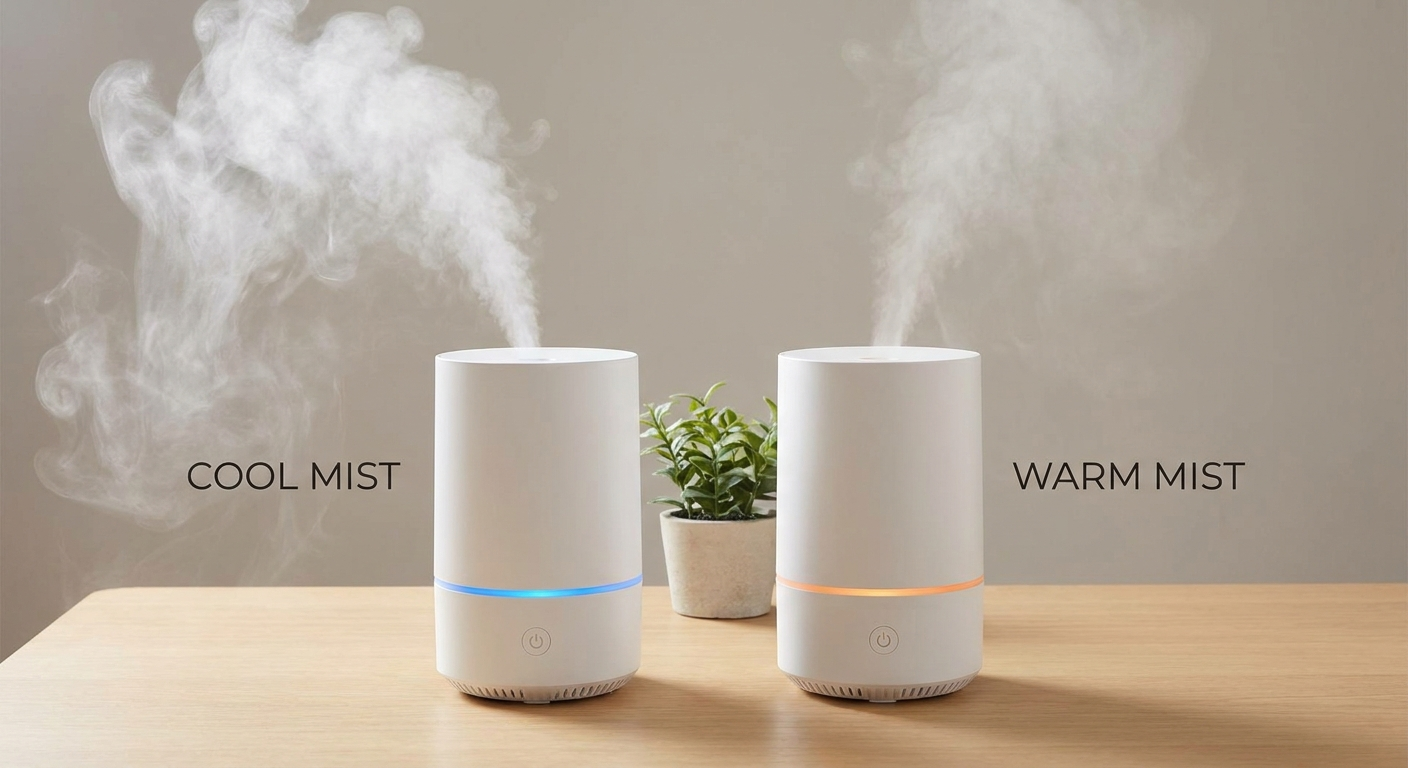
Cool Mist vs Warm Mist: Which Humidifier Is Better for a Blocked Nose?
Choosing a humidifier for nasal congestion often comes down to safety, comfort preference, and cleaning habits.
Cool mist humidifiers (pros):
- Often feels soothing for irritated airways
- Generally safer around children because there’s no hot water reservoir or heating element
Cool mist humidifiers (cons):
- Requires consistent cleaning to avoid buildup
- Some people feel it’s less “instantly decongesting,” especially with thick mucus (Source: GoodRx https://www.goodrx.com/health-topic/respiratory/cool-vs-warm-mist-humidifier)
Warm mist humidifiers (pros):
- Warm moisture may feel especially comforting with thick congestion
Warm mist humidifiers (cons):
- Burn risk from hot water/steam (extra caution with kids/pets)
- Still requires regular cleaning (Source: GoodRx https://www.goodrx.com/health-topic/respiratory/cool-vs-warm-mist-humidifier)
Practical decision guide:
- If you have young kids at home → cool mist is often preferred for safety.
- If nighttime congestion feels “stuck” with thick mucus → warm mist may feel more comforting, as long as you can use it safely.
Choose the option you’ll clean consistently and can use safely in your space.
The Typical Comfort Humidity Range for Blocked Nose Relief (Avoid Over-Humidifying)
Common target range: For many homes, a common comfort target is about 30–50% indoor humidity. This range may reduce dryness without creating a “too damp” environment. A small hygrometer (humidity monitor) helps you avoid guessing—and helps you dial in the best humidity for sleep.
For readers comparing moisture strategies (especially with allergies), see: https://sleepandsinuscenters.com/blog/humidifier-vs-dehumidifier-for-allergies-which-is-better
Signs your humidity is too low:
- Static shocks
- Dry/itchy skin
- Waking with dry mouth
- Nasal crusting
Signs your humidity is too high:
- Condensation on windows
- Musty smell
- Worsening allergy symptoms (dust mites and mold thrive in higher humidity)
Aim for balanced humidity—enough to ease dryness, not so much that your room feels damp.

Best Humidifier Tips for Clearing Nasal Congestion (Step-by-Step)
If you’re using a humidifier for blocked nose relief, small setup details can make a big difference.
Placement tips:
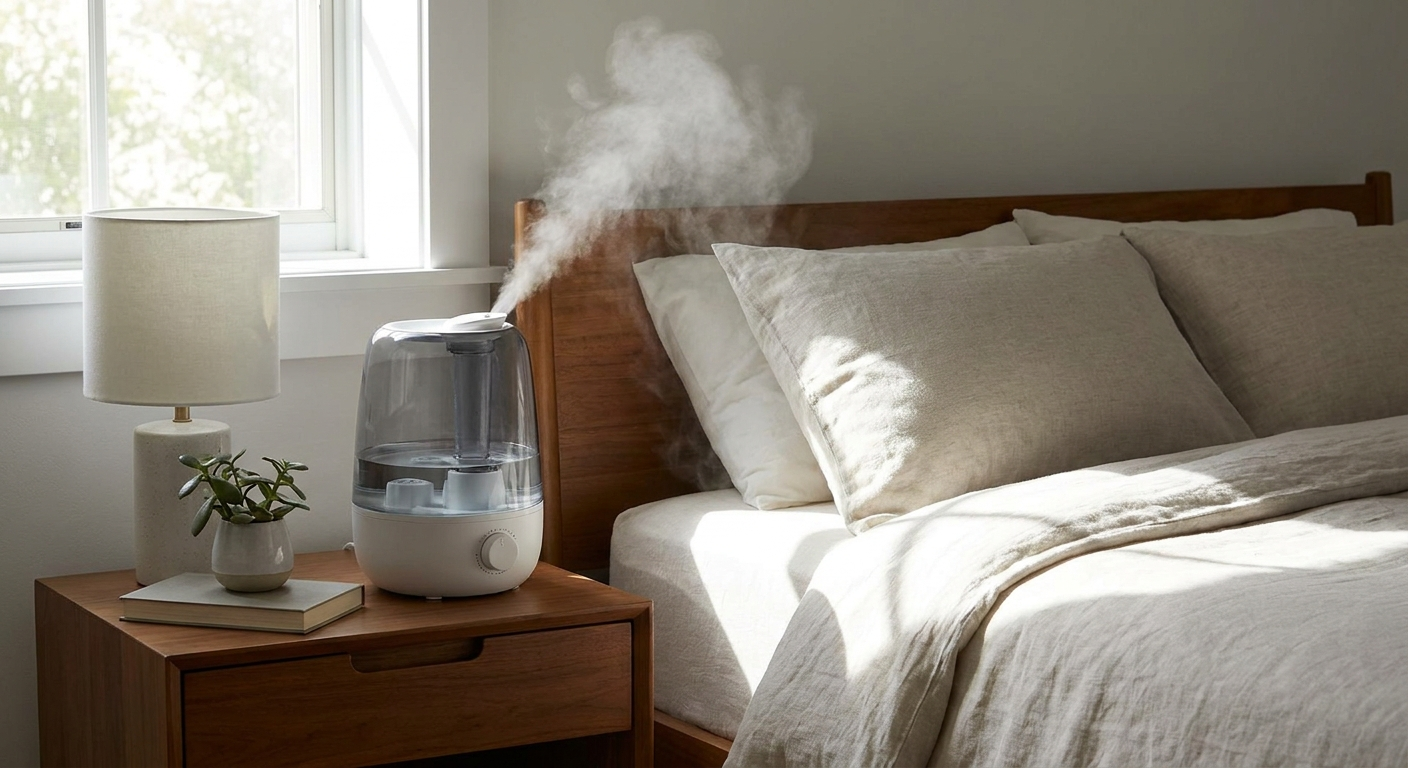
- Place it near the bed, but not blasting directly at your face.
- Use a stable, elevated surface; protect wood furniture with a tray or towel.
- Humidifiers work best in smaller spaces, so keeping doors mostly closed can help.
If your bedding feels damp in the morning or mist is visibly hitting your pillow, it’s too close or too strong.
Water quality tips: Using distilled or demineralized water can reduce mineral buildup and “white dust,” particularly in ultrasonic cool mist units.
Timing tips:
- If nighttime congestion is the main issue: consider running it 1–2 hours before bed and overnight.
- If you’re resting with a cold: running it in the room you spend time in may improve comfort.
A simple approach is to “time it to symptoms”—use it when your nose feels dry and tight, not necessarily 24/7.
Add-ons: should you use essential oils or vapor pads? Fragrances can irritate sensitive noses. Only use pads or oils if your device is designed for them and follow manufacturer instructions.
Small setup choices—placement, water type, and timing—often determine how much comfort you feel.
Humidifier Safety + Cleaning (Prevents Making Symptoms Worse)
This is the part people skip—and it matters. Humidifier safety and cleaning help prevent the unit from circulating irritants that may aggravate congestion, especially for people prone to allergies or asthma. Source: MedlinePlus https://medlineplus.gov/ency/article/002104.htm
Why cleaning matters: A dirty humidifier can disperse particles or microorganisms into the air. If you notice a musty smell or worsening symptoms, reassess cleaning frequency and humidity level. Source: MedlinePlus https://medlineplus.gov/ency/article/002104.htm
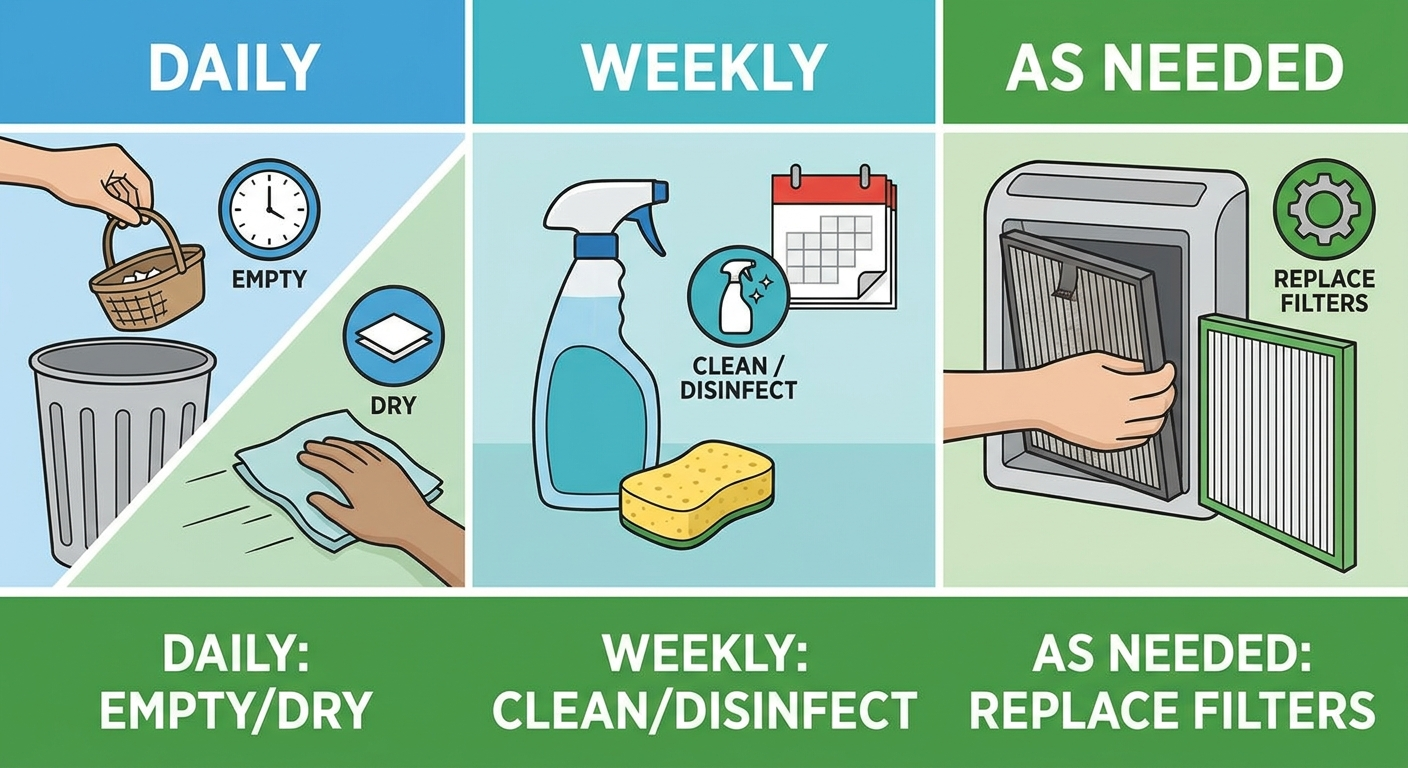
Simple, patient-friendly cleaning routine:
- Daily: Empty the tank, rinse if needed, and let it air-dry.
- Weekly: Clean/descale and disinfect per the manufacturer (often vinegar for scale plus a disinfecting step).
- As needed: Replace filters (if your model uses them) on schedule.
Deeper guide: https://sleepandsinuscenters.com/blog/humidifier-cleaning-schedule-ultimate-guide-for-better-air-quality
Safety checklist (especially for warm mist):
- Keep warm mist units out of reach of children.
- Secure cords to reduce tip-over hazards.
- Pause use if you see visible slime, notice a musty odor, or symptoms worsen.
Clean, well-maintained devices are more likely to help—and less likely to irritate your airways.
Pair a Humidifier With Other At-Home Blocked Nose Relief Strategies
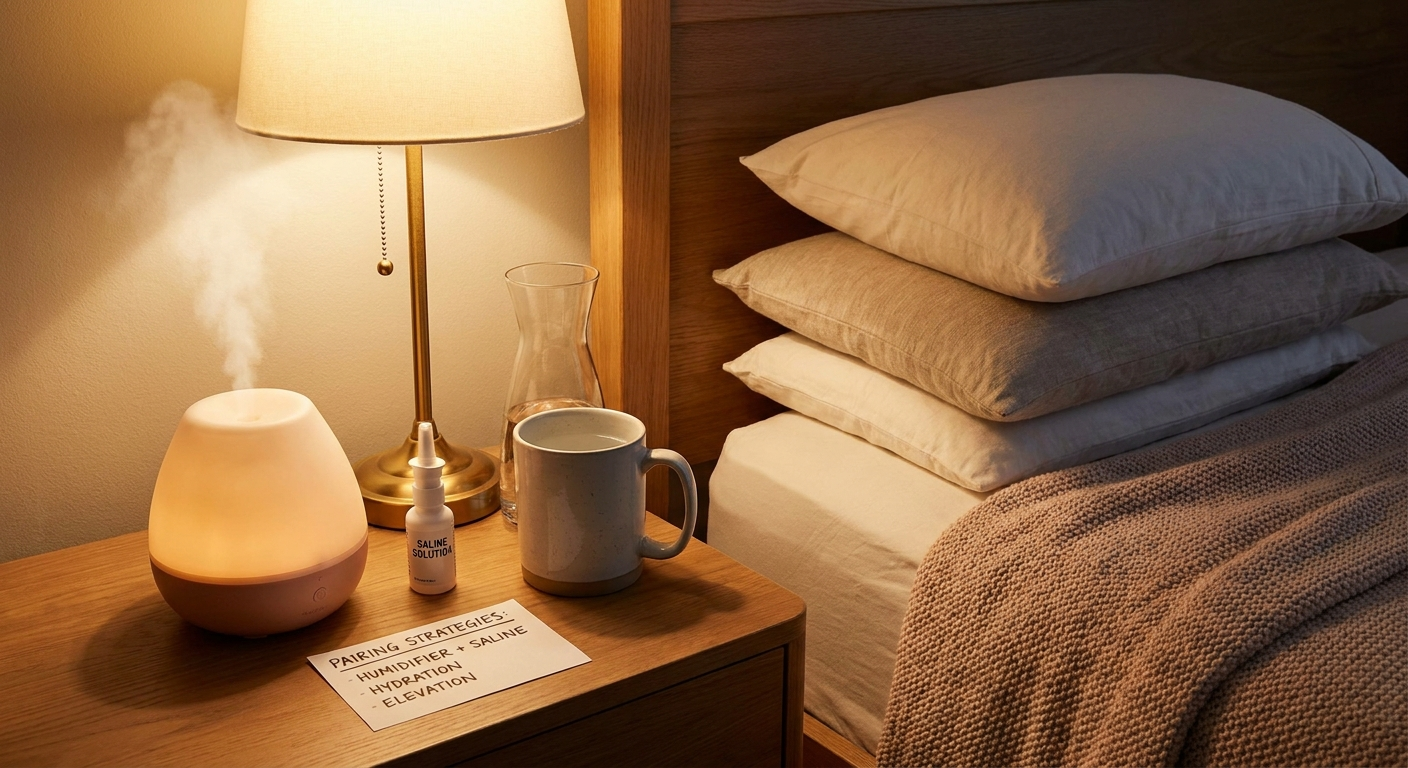
A humidifier often works best as part of a simple routine, not as a stand-alone fix.
Saline options:
- Saline spray can add moisture directly to nasal passages.
- Saline rinse can help flush mucus/allergens (use sterile/distilled/previously boiled water and follow directions).
More on saline: https://sleepandsinuscenters.com/blog/when-to-use-saline-sprays-for-nasal-relief
Warm shower/steam and hydration:
- Shower steam may offer short-term relief by loosening mucus.
- Fluids help keep mucus from becoming overly thick and sticky.
Sleep-position and bedroom tips:
- Slight head elevation may reduce nighttime post-nasal drip sensations.
- Reduce bedroom allergens: wash bedding regularly; consider dust-mite covers if allergies are suspected.
Layering humidity with saline, hydration, and smart sleep setup often yields the best comfort.
When to See a Doctor or ENT for a Blocked Nose
Seek urgent care now if:
- Trouble breathing or bluish lips/face
- Severe headache with neck stiffness or confusion
- Swelling around the eyes or vision changes
Book an evaluation if:
- Congestion lasts more than 10 days, keeps recurring, or disrupts sleep/work
- You suspect chronic sinusitis, allergies, nasal polyps, or a deviated septum
- You’re relying on topical nasal decongestant sprays frequently (rebound congestion is a risk)
Checklist of symptoms/timing: https://sleepandsinuscenters.com/blog/when-should-i-see-an-ent
Book with Sleep and Sinus Centers of Georgia: https://www.sleepandsinuscenters.com/
If congestion lingers or keeps returning, a focused evaluation can help identify targeted treatments.
FAQs: Humidifiers for Nasal Congestion (Patient-Friendly Answers)
Is a cool mist or warm mist humidifier better for sinus congestion? For many households, cool mist is preferred for safety (especially with kids). Warm mist may feel more soothing when mucus is thick. Source: GoodRx https://www.goodrx.com/health-topic/respiratory/cool-vs-warm-mist-humidifier
How long does it take for a humidifier to help a blocked nose? Some people notice comfort improvement the same night—especially if dryness is the main driver. If symptoms are driven by allergies or sinus disease, longer-term relief often requires addressing the root trigger.
Can a humidifier make congestion worse? Yes—if humidity is too high (encouraging mold/dust mites) or if the unit isn’t cleaned regularly. Source: MedlinePlus https://medlineplus.gov/ency/article/002104.htm
What humidity is best for sleeping with congestion? A moderate range—often around 30–50%—is a common target for comfort. Using a hygrometer helps prevent over-humidifying.
Should I use a humidifier if I have allergies? It may help if your home is dry, but humidity control and careful cleaning are key to avoiding allergen growth.
Use a humidifier thoughtfully—balance humidity, clean regularly, and seek care if symptoms persist.
Lifestyle Tips: Keep Nasal Passages Clear All Season
Build a “nighttime nasal routine”: saline (spray or rinse if appropriate) → humidifier on → slight head elevation. Keep it consistent for a few nights to tell what’s helping.
Keep indoor air balanced:
- Use bathroom/kitchen fans to prevent excess moisture buildup.
- Change HVAC filters regularly.
- Address leaks and visible mold quickly.
Small, consistent habits can make day-to-day congestion easier to manage.
Conclusion: The Best Humidifier Plan for Blocked Nose Relief
A humidifier may support blocked nose relief by reducing dry-air irritation and improving comfort—especially at night. Start by choosing the right device (cool mist vs warm mist), aim for a reasonable humidity level (often ~30–50%), and prioritize consistent cleaning. For the best results, pair humidity with basics like saline and smart sleep setup—and consider an ENT evaluation when symptoms persist or keep returning.
Use humidity as a comfort tool, and partner with your clinician for lasting relief.
Sources
- MedlinePlus. “Humidifiers.” https://medlineplus.gov/ency/article/002104.htm
- GoodRx. “Cool Mist vs. Warm Mist Humidifier.” https://www.goodrx.com/health-topic/respiratory/cool-vs-warm-mist-humidifier
This article is for educational purposes only and is not medical advice. Please consult a qualified healthcare provider for diagnosis and treatment.
Don’t let allergies slow you down. Schedule a comprehensive ENT and allergy evaluation at Sleep and Sinus Centers of Georgia. We’re here to find your triggers and guide you toward lasting relief.