
Snoring Treatment Without Surgery: Effective Non-Surgical Alternatives to Stop Snoring
Snoring is extremely common—often viewed as “just noise”—but in some cases, it can signal more serious breathing difficulties during sleep. The good news: there are several evidence-based ways to reduce snoring without an operation.
This guide walks through practical “what should I try first?” steps and proven options for snoring treatment without surgery, including lifestyle changes, oral appliances, positional therapy, myofunctional therapy, and newer daytime tongue stimulation (eXciteOSA). The key takeaway is simple: the most effective plan usually depends on what’s causing the snoring—nose vs throat/tongue vs sleep position vs obstructive sleep apnea.
One sleep-clinic way of framing it: snoring results from vibration of upper airway tissues, but the underlying reason for that vibration differs from person to person—much like two squeaky doors can squeak for completely different reasons.
Snoring vs. Sleep Apnea: Why the Difference Matters
What “primary snoring” means
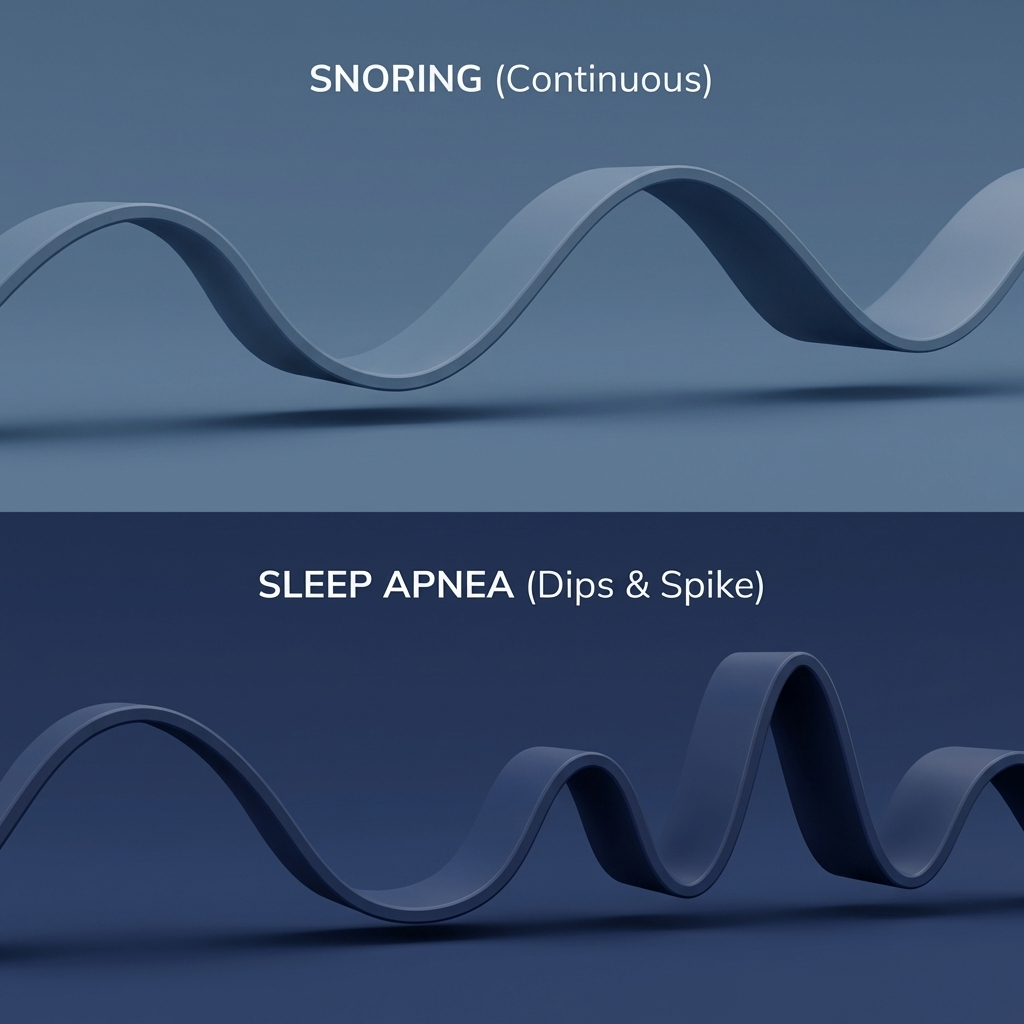
Primary snoring is the sound of tissues in the upper airway vibrating during sleep—without repeated breathing pauses. It can still affect sleep quality (for you and your partner), but it doesn’t always carry the same health risks as obstructive sleep apnea.
A helpful analogy: primary snoring can be like a rattling vent cover—annoying and disruptive—but not necessarily a sign the whole HVAC system is failing. With sleep apnea, the airflow itself repeatedly drops or stops.
Signs your snoring may be obstructive sleep apnea (OSA)
- Loud, habitual snoring (most nights)
- Choking or gasping during sleep
- Witnessed breathing pauses
- Morning headaches
- Waking with dry mouth
- High daytime sleepiness or dozing off easily
Why this matters: untreated OSA is linked with health and safety risks (including drowsy driving). NHS guidance emphasizes evaluation and treatment pathways when symptoms suggest OSA. [5]
A “partner clue” clinicians often hear: “They get quiet, then suddenly snort or gasp.” That pattern can be a reason to test rather than guess.
When CPAP is still the best option
If OSA is confirmed—especially moderate to severe—CPAP is often considered the “gold standard” because it reliably keeps the airway open. Other CPAP alternatives can still be helpful in selected situations (for example, mild disease or when CPAP can’t be tolerated), but the goal in OSA is not just “less noise”—it’s improving breathing metrics and symptoms. [5]
In short: if OSA is suspected, prioritize evaluation and treatments that stabilize breathing, not just ones that quiet snoring.
Common Snoring Symptoms to Pay Attention To (Patient-Friendly Checklist)
If you’re trying to figure out whether your snoring pattern is changing—or needs evaluation—watch for:
- Snoring that’s getting louder or happening more nights per week
- Frequent mouth-breathing or waking with a very dry mouth
- Restless sleep or frequent awakenings
- A partner noticing a “quiet-then-snort” pattern, pauses, or gasps
- Daytime fatigue, sleepiness, or concentration problems
These clues can help guide which non-surgical snoring treatment options are most likely to help. They’re also useful notes to bring to an appointment—because your “sleep story” (and your partner’s observations) often points toward the most likely cause.
In short: track patterns over a couple of weeks—simple notes often reveal what to try first.
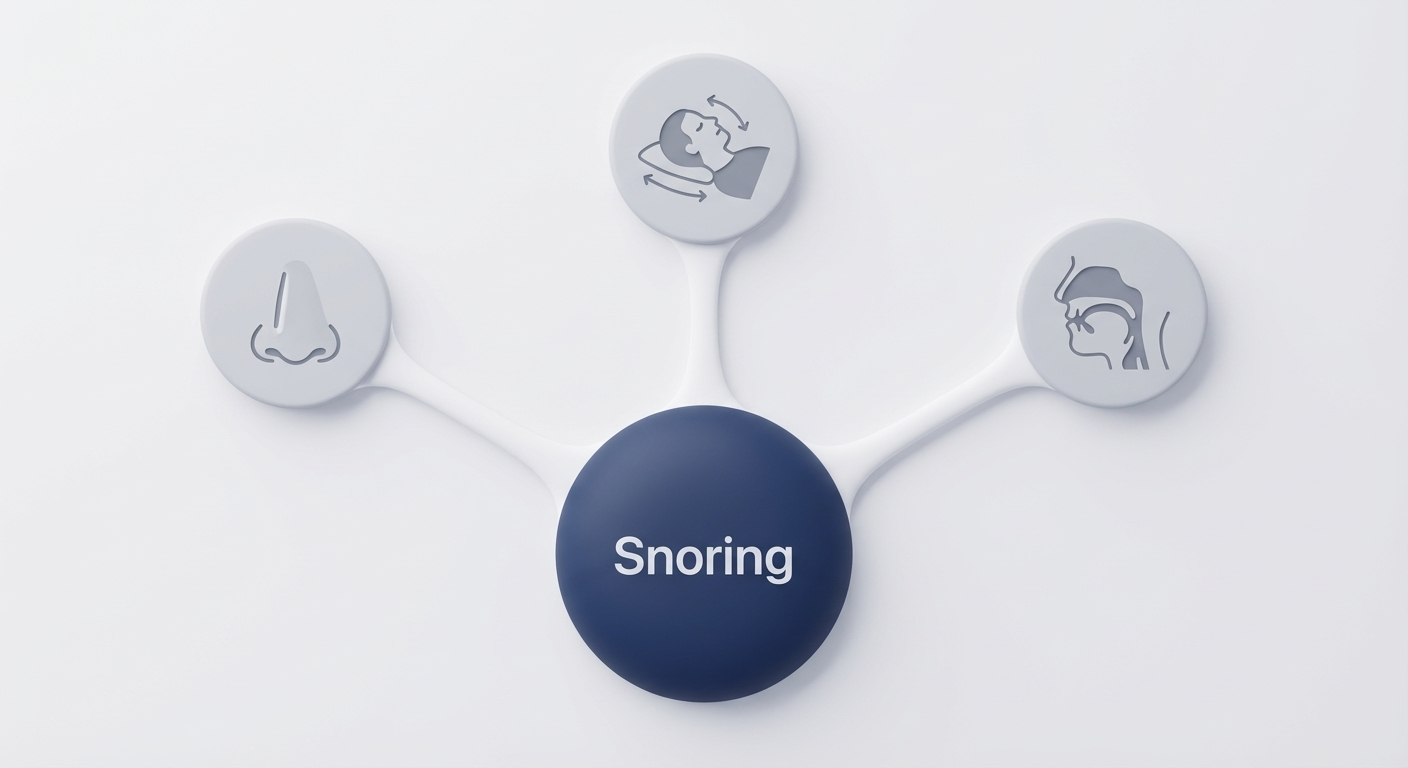
What Causes Snoring? (And Which Causes Respond Best to Non-Surgical Care)
Airway relaxation during sleep (soft palate/tongue)
As you fall asleep, muscle tone decreases. For some people, the tongue and soft palate relax backward enough to narrow the airway and vibrate. Alcohol and sedatives can worsen this by further relaxing airway muscles.
Think of it like a soft garden hose: when it’s firm, water flows easily; when it’s floppy, it can kink. Many non-surgical options aim to reduce “kinking” (collapse) or reduce vibration.
Body weight and neck/airway anatomy
Weight changes can affect snoring intensity because fatty tissue around the airway can narrow the breathing space. Even modest changes may make a noticeable difference for some people.
This doesn’t mean weight is the cause for everyone—but if snoring started or worsened after weight gain, weight management becomes a logical, low-risk part of the plan.
Nasal blockage and mouth breathing
If the nose is blocked, many people switch to mouth breathing, which can increase vibration in the throat. Common contributors include congestion, allergies, or structural narrowing. Opening the nose can be a meaningful snoring remedy when nasal resistance is the primary driver—but if the main issue is throat/tongue collapse, nasal-only fixes may not be enough.
A practical example: if snoring is dramatically worse during allergy season or when you have a cold, a nasal component is more likely.
Sleep position (back sleeping)
Sleeping on your back (supine) often worsens snoring because gravity allows the tongue and soft tissues to fall backward. This is especially relevant for positional therapy for snoring and positional OSA.
If you’re quiet on your side but loud on your back, that’s a strong hint your snoring is position-driven.
In short: match your fix to the driver—nose, tongue/throat, or position.
Start Here: Lifestyle Changes That Can Reduce Snoring (Low Risk, Often Helpful)
For many people, “first-line” steps are worth trying before moving to devices—especially if symptoms are mild and there are no red flags for OSA.
Weight management (if applicable)
Weight loss isn’t a quick fix, but gradual, sustainable changes may improve airflow and reduce snoring for some people. Consistency tends to matter more than intensity: regular activity, steady routines, and realistic goals.
If you want a simple way to track whether it’s helping, consider keeping a short “snore log” for 2–3 weeks (nights you snored, sleep position, alcohol, congestion). Patterns often show up faster than expected.
Avoid alcohol close to bedtime
A practical rule many clinicians use is limiting alcohol within 3–4 hours before bedtime, since it can increase upper-airway relaxation and worsen snoring.
Concrete example: if snoring noticeably spikes after evening drinks—even if you don’t feel “drunk”—that timing effect is worth taking seriously.
Side-sleeping strategies (positional habits)
If you mainly snore on your back, changing sleep position may help quickly. Options include supportive pillows, positional “backpack” methods, or other comfort-focused tools. For more detail, see Sleep and Sinus Centers of Georgia’s guide on the best sleeping position for snoring: https://sleepandsinuscenters.com/blog/best-sleeping-position-for-snoring-mild-apnea
A useful mindset here is “make the right position the easy position.” The best positional tool is the one you can actually tolerate all night.
Sleep hygiene that supports better airway tone
Sleep deprivation can worsen snoring for some people. A consistent schedule, adequate sleep time, and addressing insomnia can be surprisingly helpful background steps.
If you’re routinely sleeping 5–6 hours, improving sleep opportunity may reduce the “deeper, floppier” sleep that can amplify snoring for some patients.
In short: start with low-risk habits first—many people see quick wins with timing, position, and congestion control.
Non-Surgical Treatments That Work (Evidence-Based Options)
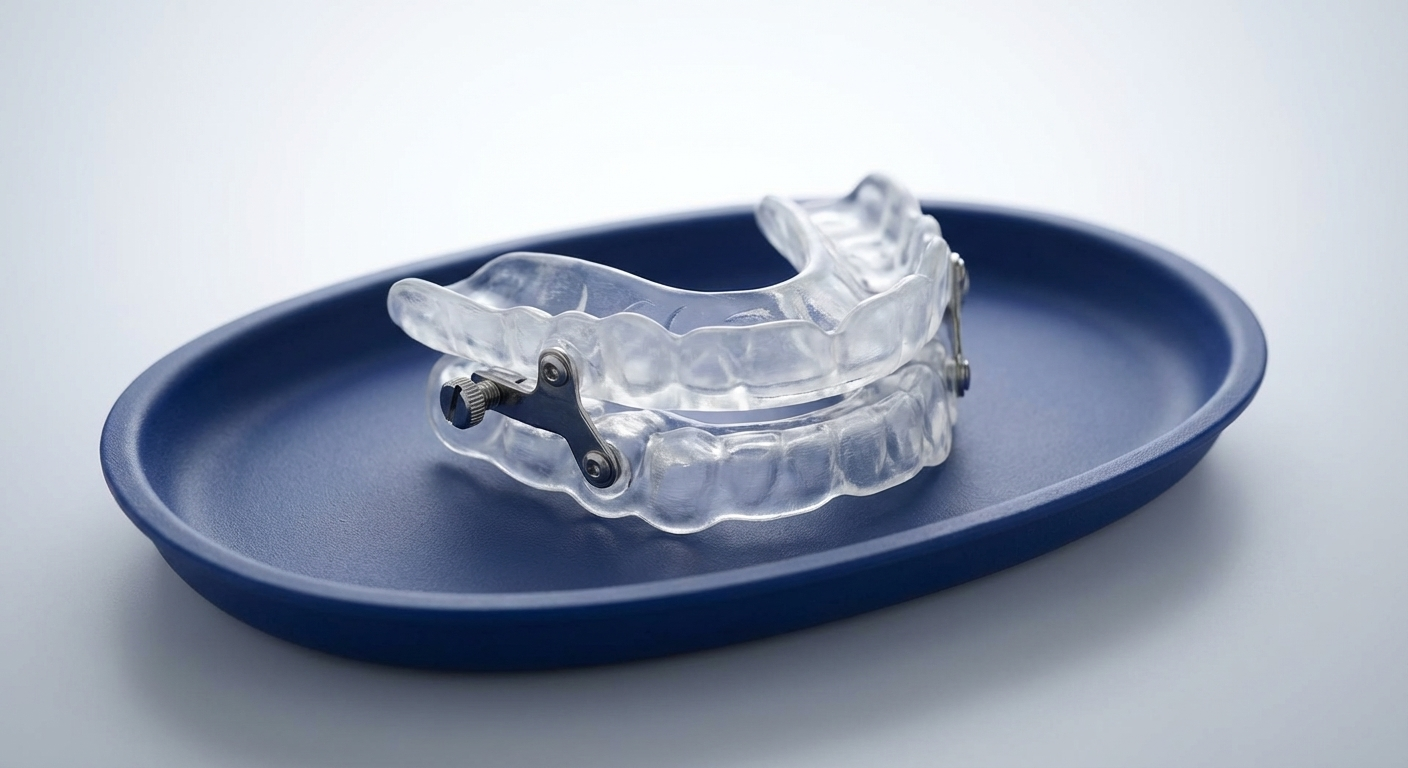
Mandibular Advancement Devices (MADs) / Oral Appliances
What it is
A custom-fitted mouthpiece that gently holds the lower jaw forward to keep the airway more open.
Who it helps most
Primary snoring and mild–moderate OSA, particularly when CPAP isn’t suitable.
What the evidence says
Systematic reviews support oral appliance therapy as an evidence-based option that can significantly improve breathing measures (like AHI) and reduce snoring compared with baseline—especially in mild–moderate OSA when CPAP is not tolerated. [3,4]
What to expect
Fitting, gradual titration (adjustments that move the jaw forward), and follow-up. If OSA is part of the picture, follow-up sleep testing may be used to confirm effectiveness.
Common side effects
Temporary jaw soreness, tooth discomfort, dry mouth, and (less commonly) bite changes—one reason professional fitting and monitoring matter.
If cost is on your mind, this overview can help set expectations: https://sleepandsinuscenters.com/blog/mandibular-advancement-device-cost-what-to-expect
This is often one of the most practical paths for snoring treatment without surgery when the main driver is tongue/throat narrowing.
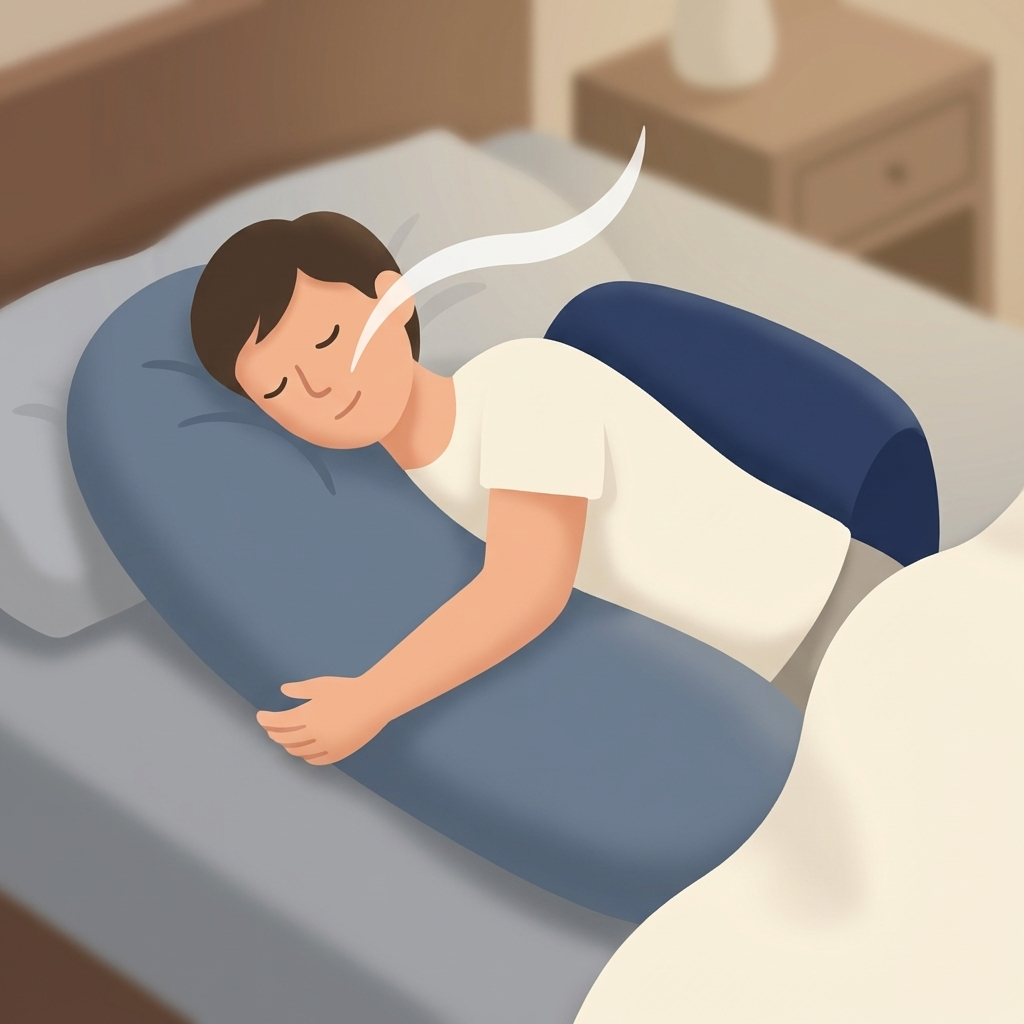
Positional Therapy (for “positional snorers”)
What it is
Tools (wearables, belts, vibration trainers, pillows) designed to discourage back sleeping.
Best for
People whose snoring or OSA is clearly worse on their back.
How effective
Positional therapy can work well for position-driven snoring and positional OSA, though long-term adherence varies. Some studies suggest outcomes can be comparable to oral appliances in selected patients, but consistency matters.
Practical next step
If you suspect back-sleeping is the trigger, revisit the position guide: https://sleepandsinuscenters.com/blog/best-sleeping-position-for-snoring-mild-apnea
Myofunctional (Oropharyngeal) Therapy: “Exercises for the Tongue and Throat”
What it is
A structured program of exercises for the tongue, soft palate, lips, and facial muscles—aimed at improving muscle tone and coordination.
Who may benefit
Primary snoring, mild OSA, mouth-breathers, and those with low tongue tone.
Evidence summary
A major systematic review suggests myofunctional therapy probably reduces daytime sleepiness and may slightly reduce subjective snoring intensity, while effects on objective snoring and AHI are less certain. [2]
Set yourself up for success
This option typically requires consistent practice for weeks to months and often works best with coaching and clear expectations.
Clinician-style framing that helps: it’s physical therapy for the upper airway—small daily work that can add up, but it isn’t an overnight “switch.”
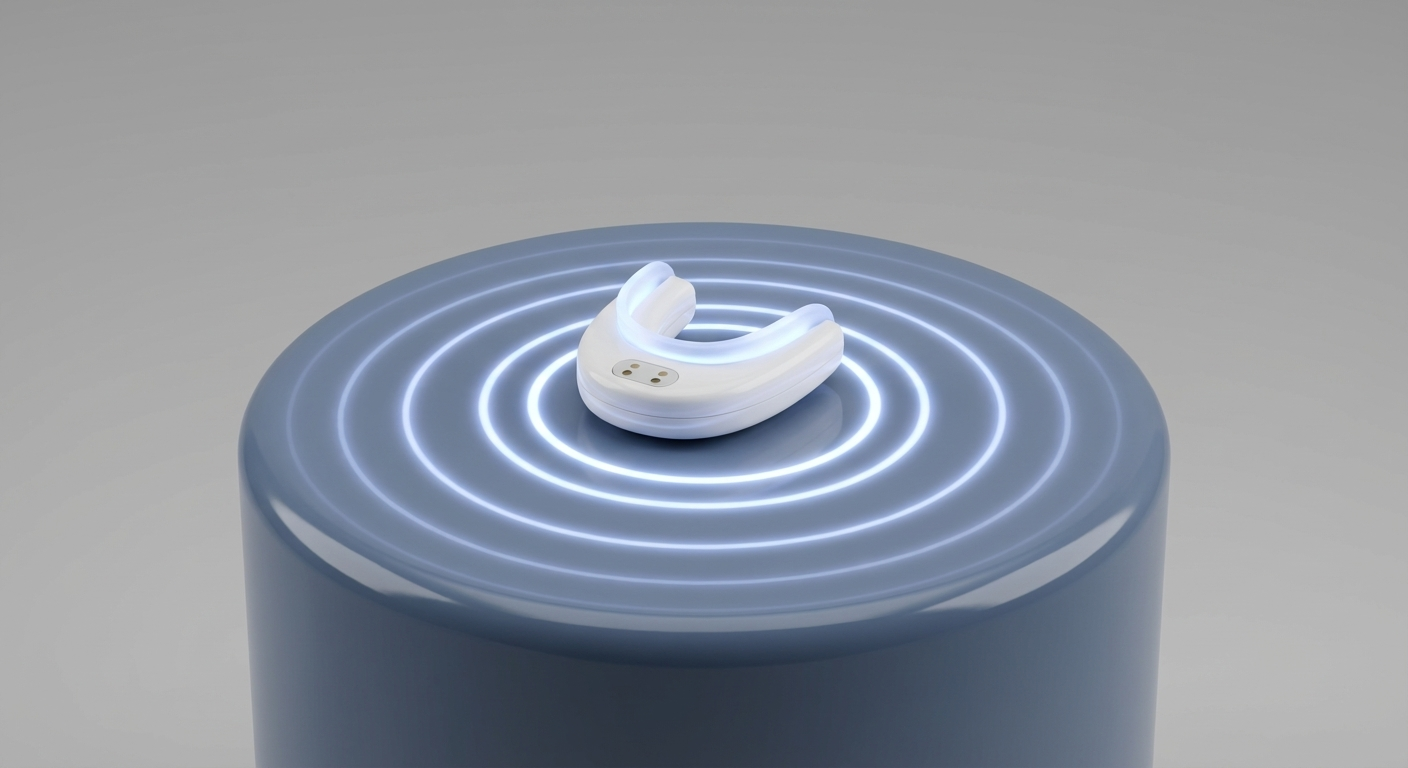
Daytime Neuromuscular Electrical Stimulation (NMES) – eXciteOSA
What it is
A daytime therapy that stimulates the tongue muscles to improve tone—so it’s not worn while sleeping.
Who it’s for
Commonly considered for adults with snoring and selected mild OSA cases (based on evaluation).
What the research shows
In a trial including 115 participants, eXciteOSA reduced objective snoring by ~41% and improved partner-reported snoring and daytime sleepiness. [1] While promising, NMES devices represent a newer therapy and may not be suitable or effective for everyone; they should be considered alongside professional evaluation and follow-up.
What to discuss
Candidacy, time commitment, potential side effects, and how response is measured.
If you like tangible targets, ask how your response will be tracked—partner report, phone recordings, or follow-up sleep testing (when appropriate).
CPAP Alternatives vs “CPAP Adjuncts”
Many options above can reduce snoring, but it’s important to separate:
- Snoring reduction (sound)
- OSA control (breathing stability, AHI, oxygen levels, symptoms)
If OSA is confirmed, NHS guidance emphasizes evidence-based treatment pathways—often starting with CPAP, then considering alternatives when appropriate. [5]
In short: choose tools that fit your cause—and, if OSA is present, prioritize therapies proven to stabilize breathing.
Over-the-Counter Tools: What Helps (and What’s Mostly Hype)
Nasal strips, internal nasal dilators, and nasal breathing aids
These may help if nasal resistance is the key issue (especially if you snore more during allergies or colds). Evidence is mixed overall, so many people use these as a trial rather than a permanent solution.
A simple way to trial: use the aid on nights when you’re otherwise doing “normal life,” then compare (partner report or recordings) with similar nights without it.
Saline rinses and allergy control (when congestion is a trigger)
If congestion is a recurring problem, saline rinses and consistent allergy control can reduce mouth-breathing and may help some people. If symptoms are chronic, an evaluation can clarify whether allergies, inflammation, or structural issues are playing a role.
Mouth tape / chin straps (use caution)
Mouth tape has become a popular social-media snoring remedy, but it isn’t right for everyone—especially if you can’t breathe freely through your nose or if OSA is a possibility. For a safety-focused overview, see: https://sleepandsinuscenters.com/blog/mouth-tape-risks-safer-alternatives-for-better-sleep
In short: OTC aids can be good trials—just make sure they match the problem you’re trying to solve.
How to Choose the Right Non-Surgical Snoring Treatment (Simple Decision Tree)
Step 1 — Screen for sleep apnea risk
If there are red flags (pauses, gasping, high sleepiness), testing matters because the plan may need to prioritize OSA control—not just quieter sleep. [5]
Step 2 — Identify your dominant “snoring driver”
- Mostly nasal (congestion, mouth-breathing)?
- Mostly positional (worse on your back)?
- Mostly jaw/tongue/throat relaxation?
Step 3 — Match the treatment
- Nasal driver → congestion/allergy plan + nasal aids (trial)
- Positional driver → positional therapy tools + habit changes
- Jaw/tongue driver → oral appliance for snoring, myofunctional therapy, or daytime NMES
- Confirmed OSA → CPAP first-line for many; alternatives when appropriate [5]
This “match the mechanism” approach is the most reliable way to find a snoring treatment without surgery that actually sticks.
In short: let symptoms point to the likely cause, then choose the tool that targets it.
When to See a Doctor About Snoring (Safety + Next Steps)
Seek evaluation soon if you notice:
- Witnessed breathing pauses, gasping, or choking
- High daytime sleepiness or drowsy driving risk
- High blood pressure, heart disease risk factors, or steadily worsening symptoms
What an ENT/sleep evaluation may include
A visit commonly includes a history, nasal/throat exam, and discussion of sleep testing (home or in-lab). From there, options may include CPAP, oral appliances, positional therapy, and other targeted non-surgical pathways.
In short: if red flags are present—or home trials haven’t helped—get evaluated to choose the safest, most effective plan.
FAQs (Patient-Friendly)
What is the best snoring treatment without surgery?
“Best” depends on the cause. Common effective options include lifestyle changes, oral appliances, positional therapy, and (for selected people) daytime NMES like eXciteOSA—after appropriate screening for OSA. [1,3–5]
Do snoring mouthguards work?
Many do—especially custom mandibular advancement devices, which have strong evidence for reducing snoring and helping mild–moderate OSA when CPAP isn’t suitable. [3,4]
Are tongue/throat exercises proven to stop snoring?
Evidence suggests modest improvements in sleepiness and subjective snoring for some people, but results vary and require consistency over time. [2]
If I stop snoring, does that mean I don’t have sleep apnea?
Not always. Some people with OSA don’t snore loudly, and snoring volume alone doesn’t confirm or rule out OSA. Symptoms and testing matter. [5]
How long does it take to see results?
- Lifestyle changes: days to weeks
- Positional therapy: often immediate if position-driven
- Oral appliance: weeks (fitting + titration)
- Myofunctional therapy: typically weeks to months [2]
- Daytime NMES (eXciteOSA): improvements are typically assessed after completing the protocol [1]
Key Takeaways
- A well-matched snoring treatment without surgery can meaningfully reduce snoring—often without major disruption.
- The most effective plan depends on the driver: nasal blockage, back sleeping, or tongue/throat relaxation.
- Don’t ignore apnea warning signs; snoring can be a health signal, not just a nuisance.
If you want help choosing a starting point, book an appointment with Sleep and Sinus Centers of Georgia to review symptoms, consider sleep testing when appropriate, and build a non-surgical plan that fits your goals: https://www.sleepandsinuscenters.com/
Medical Disclaimer
This article is for general educational purposes and is not a substitute for medical advice, diagnosis, or treatment. If you have symptoms of obstructive sleep apnea (such as gasping, witnessed pauses in breathing, or severe daytime sleepiness), seek evaluation from a qualified clinician.
References
1. Daytime NMES (eXciteOSA) trial (PMCID: PMC8123870): https://pmc.ncbi.nlm.nih.gov/articles/PMC8123870/
2. Myofunctional/oropharyngeal therapy systematic review (PMCID: PMC8094400): https://pmc.ncbi.nlm.nih.gov/articles/PMC8094400/
3. Oral appliance therapy evidence (PMCID: PMC10695854): https://pmc.ncbi.nlm.nih.gov/articles/PMC10695854/
4. Additional oral appliance evidence/review (PMCID: PMC11161918): https://pmc.ncbi.nlm.nih.gov/articles/PMC11161918/
5. NHS guidance on OSA/snoring (2024): https://www.nhsinform.scot/illnesses-and-conditions/lungs-and-airways/obstructive-sleep-apnoea/
Disclaimer: This article is for educational purposes only and is not medical advice. Please consult a qualified healthcare provider for diagnosis and treatment.
Don’t let allergies slow you down. Schedule a comprehensive ENT and allergy evaluation at Sleep and Sinus Centers of Georgia. We’re here to find your triggers and guide you toward lasting relief.