Snoring Surgery Options: Best Procedures to Stop Snoring
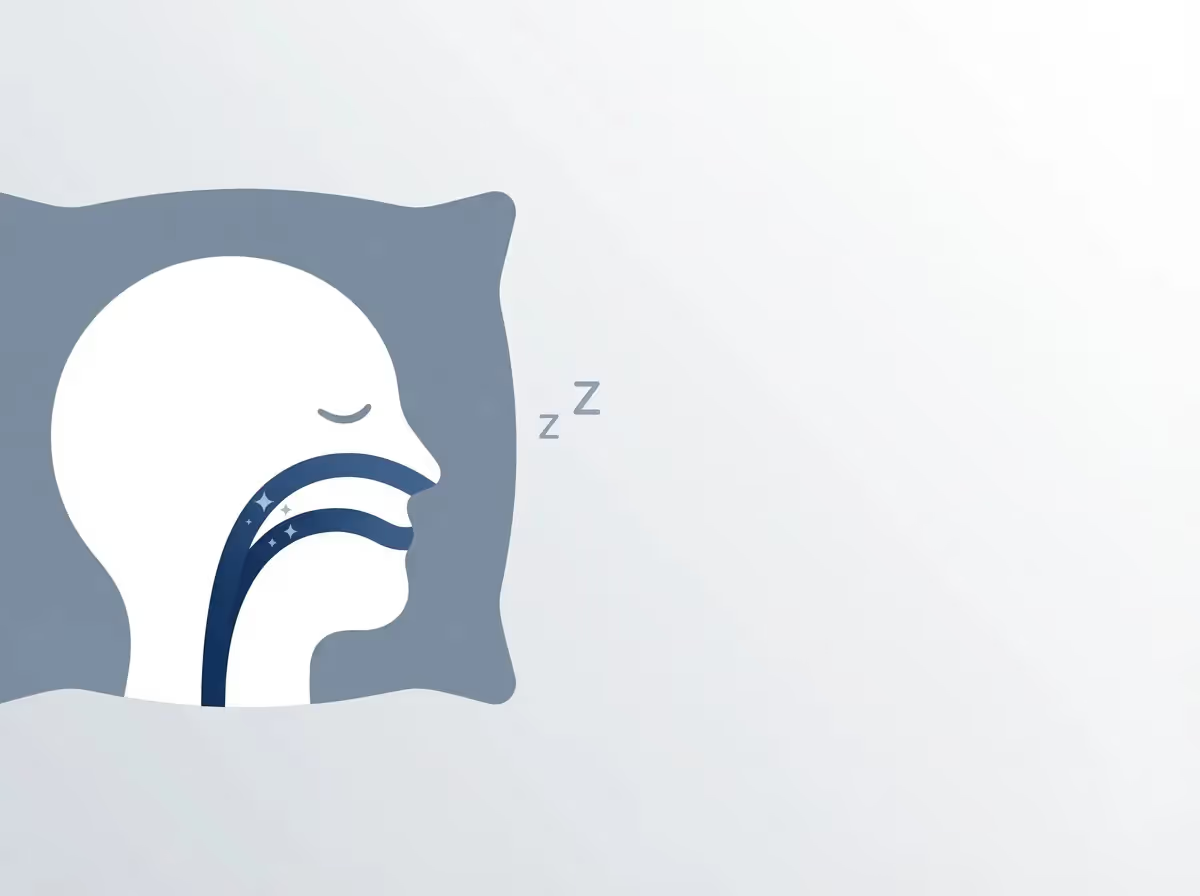
If you’re researching snoring surgery options, you’ve probably noticed there isn’t one clear “winner.” That’s because snoring isn’t a single problem—it’s a sound created when airflow makes relaxed tissues vibrate, and the location of that vibration matters. Think of it like a loose flag in the wind: quieting the noise means finding which “fabric” is fluttering (nose, soft palate, tonsils, tongue base—or more than one area).
Add in the possibility of obstructive sleep apnea (OSA), and choosing the right procedure becomes much more about precision than popularity. A surgery that reduces palatal flutter may make a bedroom quieter, but it won’t necessarily fix breathing interruptions.
Below is a patient-friendly guide to common procedures, who they’re for, what recovery can look like, and what the evidence actually suggests.
Quick Take: Is There a “Best” Surgery to Stop Snoring?
There’s no single best surgery to stop snoring for everyone. The right choice depends on:
- Where the vibration/collapse happens: nose, soft palate, tonsils, tongue base, or multiple levels
- Whether obstructive sleep apnea (OSA) is present
- Patient factors like BMI, neck size, and airway anatomy
A useful way to frame this with your clinician is: “Are we treating noise (snoring), obstruction (OSA), or both?”
Evidence snapshot (what studies suggest):
- Minimally invasive soft-palate procedures (like radiofrequency and implants) often show short-term snoring reduction with lower pain and morbidity than more invasive palate resections. (Stuck et al., 2019; Back et al., 2009)
- Overall, evidence quality is low-to-moderate, often limited by small studies, subjective snoring ratings, and short follow-up. (Cochrane Review)
Clinical safety note: If OSA is suspected, treating snoring alone can miss the bigger issue—snoring and breathing interruptions are not the same target. Always ensure OSA is evaluated before pursuing snoring surgery.
Bottom line: Matching the procedure to the anatomy—and confirming whether OSA is present—is more important than picking the “most popular” surgery.
What Snoring Can Mean (and When It’s More Than “Just Snoring”)
Common symptoms that suggest a medical evaluation
Snoring may be worth a closer look when it’s paired with symptoms such as:
- Loud, frequent snoring (often worse on the back)
- Choking/gasping sounds or witnessed pauses in breathing
- Excessive daytime sleepiness, morning headaches, dry mouth
- Poor concentration, irritability
- High blood pressure or other cardiovascular risk factors (your clinician may screen for these)
Real-world example: If a partner reports, “It’s not just loud—there are quiet pauses and then a snort,” that description often prompts a formal OSA evaluation.
Snoring vs. obstructive sleep apnea (OSA)
Snoring = noise from vibration of relaxed tissues
OSA = repeated airway obstruction that can reduce oxygen levels and fragment sleep
Why it matters: Procedures that reduce palatal flutter may quiet snoring, but they may not adequately address multi-level collapse seen in OSA. To understand how OSA is graded, see our guide to the AHI score explained: https://sleepandsinuscenters.com/blog/ahi-score-explained-understanding-your-sleep-apnea-severity
Takeaway: If symptoms point to OSA, get tested first—quiet snoring doesn’t always mean safe sleep.

What Causes Snoring? (The Anatomy Behind the Noise)
Soft palate and uvula vibration (most common target)
This is the classic “palatal flutter” problem—an elongated uvula or lax soft palate tissue vibrates with airflow. Many soft palate snoring surgery techniques aim to stiffen, reposition, or reduce vibrating tissue. Analogy: If your snoring is mainly from the palate, it’s like tightening a loose drumhead—less flapping, less sound.
Nasal blockage increasing airflow turbulence
A narrow or inflamed nasal airway can increase resistance and turbulence:
- Deviated septum
- Enlarged turbinates
- Chronic rhinitis/allergies
When congestion is a major driver, procedures like septoplasty for snoring and turbinate reduction may help—especially if obstruction is clearly present. For more on septal symptoms and solutions, see: https://sleepandsinuscenters.com/blog/is-septoplasty-right-for-your-deviated-septum
Tonsils/adenoids (more common in children, sometimes adults)
Large tonsils can narrow the throat airway and contribute to snoring and/or OSA. In adults, tonsil size can be an underappreciated factor—especially if you’ve always been a “mouth breather” at night.
Tongue base and lower airway collapse (often overlaps with OSA)
In some people, the tongue base falls backward during sleep (often worse when supine). This pattern is more commonly associated with OSA and may require a different strategy than palate-only procedures. These strategies typically require specialized evaluation and may include different procedures or non-surgical treatments.
Risk factors that affect results (including surgery outcomes)
- Higher BMI and neck circumference
- Alcohol/sedatives near bedtime
- Back-sleeping
- Nasal inflammation (allergies, chronic congestion)
Key idea: Pinpointing whether sound comes from the nose, palate, or deeper throat is the first step toward the right (and least invasive) fix.

Before You Choose Surgery: The Workup That Predicts Success
Step 1 — Rule out (or confirm) sleep apnea
A sleep study clarifies whether you’re dealing with primary snoring, OSA, or both. Testing may include home testing or in-lab studies depending on your history and risk factors. Learn more about home sleep test vs. lab study: https://sleepandsinuscenters.com/blog/home-sleep-test-vs-lab-study-which-sleep-test-is-best-for-you
Clinician-style reality check: “If we don’t know whether apnea is present, we can’t reliably match the procedure to the problem.”
Step 2 — Identify the main vibration/collapse site
A thorough ENT exam may include: nasal exam and endoscopy; oral/throat exam (soft palate, uvula, tonsils); sometimes DISE (drug-induced sleep endoscopy) to observe collapse patterns during a sleep-like state.
DISE can be especially helpful when multi-level involvement is suspected—because “palate snoring” and “tongue-base obstruction” can sound similar at home. Note: DISE is not universally available and may require referral to a specialty center.
Step 3 — Try non-surgical options first (when appropriate)
Depending on your anatomy and goals, non-surgical strategies may be discussed before moving to snoring surgery options, such as:
- Weight management
- Positional therapy
- Nasal optimization (saline, allergy control)
- Oral appliances (for selected patients)
Practical rule: Confirm the diagnosis, find the main collapse site, and consider the least invasive option that fits your anatomy and goals.

Minimally Invasive Soft Palate Procedures (Often First-Line Surgical Options)
For many people with primary snoring driven by palatal flutter, a minimally invasive snoring procedure targeting the soft palate is often considered before more aggressive surgery. Evidence suggests consistent short-term improvement with generally lower pain and morbidity than major palate resections. (Stuck et al., 2019; Back et al., 2009)
Expectation-setting: Many studies rely on partner- or patient-reported scales (often similar to a 0–10 “how bad is it?” rating). “Success” often means quieter and less frequent, not always completely gone. Complete elimination of snoring is rare, and durability varies by anatomy and risk factors.
Radiofrequency ablation (RFA) of the soft palate
What it is: Controlled energy creates small areas of healing that can stiffen the soft palate over time.
Who it may help: People with primary snoring and mild palatal collapse patterns.
Pros: Less invasive than UPPP; typically less discomfort and quicker recovery than larger resections.
Cons/limits: May require multiple sessions; long-term durability varies.
Evidence: Controlled studies commonly show short-term reductions in snoring intensity, though outcomes are often based on subjective scales. (Back et al., 2009; Stuck et al., 2019)
Palatal implants (“pillars”)
What it is: Small implants placed in the soft palate to reduce vibration.
Best candidates: Selected patients with palatal flutter who do not have significant OSA.
Pros: Often office-based/minimally invasive; can reduce palatal flutter in appropriately selected patients.
Cons: Foreign-body sensation for some; risk of extrusion; variable long-term durability.
Evidence: Short-term improvement is reported in controlled trials, but follow-up is often limited. (Stuck et al., 2019)
Who should NOT choose palate-only procedures
- Moderate–severe OSA is suspected or confirmed
- There is significant tongue-base collapse
- Higher BMI suggests multi-level airway collapse (individualized discussion is important)
If the palate is the main “noisemaker,” minimally invasive approaches can help—just plan for realistic goals and the possibility of touch-ups over time.

UPPP (Uvulopalatopharyngoplasty): The Most Well-Known—Not Always the “Best”
What UPPP is and what it treats
UPPP for snoring involves removing and/or reshaping tissue in the uvula/soft palate and may include tonsil treatment. It can reduce snoring and may improve AHI in selected OSA patients.
Why selection criteria matter
UPPP outcomes vary significantly depending on airway anatomy, level(s) of collapse, and presence/severity of OSA. Because it’s more invasive, many guidelines emphasize careful patient selection.
Pros, cons, and recovery expectations
Pros: Can be effective in appropriately selected patients; may address more substantial palatal obstruction than office procedures.
Cons: Typically more pain and longer recovery than minimally invasive options (Stuck et al., 2019); higher risk of complications than office-based soft-palate procedures.
Potential risks (procedure-dependent): Bleeding, infection, swallowing changes, voice changes, velopharyngeal insufficiency (difficulty closing the soft palate, which may cause air or food to leak between the nose and mouth during speech or swallowing), scarring.
Evidence quality and expectations
Studies show potential benefits, but many rely on subjective snoring scores and have short follow-up; long-term durability is less certain. (Cochrane Review; Stuck et al., 2019)
UPPP can help the right patient, but it’s a bigger operation that demands careful selection and realistic expectations.

Nasal Surgery for Snoring (Best When Nasal Obstruction Is the Driver)
Nasal procedures can be important when obstruction is clearly present—especially for comfort, nasal breathing, and tolerance of other therapies.
Septoplasty
Septoplasty corrects a deviated septum that causes chronic blockage. If you’re exploring whether this fits your symptoms, see: https://sleepandsinuscenters.com/blog/is-septoplasty-right-for-your-deviated-septum
Turbinate reduction
Turbinate reduction decreases the size of enlarged nasal tissues to improve airflow.
What patients should know about results
- Subjective improvement in breathing and sleep comfort is common when nasal obstruction is a major factor.
- Objective changes in snoring sound can be inconsistent across studies, so expectations should be realistic. (Stuck et al., 2019)
Fixing nasal blockage often improves comfort and sleep quality—even if snoring loudness doesn’t change dramatically.
Other Surgical Options You Might Hear About (Usually for OSA or Specific Anatomy)
Tonsillectomy (adults with large tonsils)
When tonsils are a major source of narrowing, removal can meaningfully open the throat airway.
Tongue-base procedures (selected cases)
There are multiple techniques aimed at tongue-base collapse; these are typically considered when evaluation suggests the tongue is a primary site of obstruction and may be paired with non-surgical treatments depending on anatomy and OSA severity.
Hypoglossal nerve stimulation (Inspire) for OSA (not simple snoring)
This is an option for diagnosed OSA in patients who meet specific eligibility criteria. It’s not typically positioned as a primary snoring-only treatment, but it may reduce snoring when OSA is addressed.
These options are usually reserved for specific anatomy or confirmed OSA—selection and comprehensive planning are key.
Comparing Snoring Surgeries: What to Expect
Soft palate radiofrequency ablation (RFA)
Best for: Palatal flutter/mild palatal collapse
Invasiveness: Low
Pain/recovery: Often milder; recovery usually shorter than resection procedures
Setting: Office-based for many, OR for some depending on practice and patient factors
Common risks: Soreness, need for repeat sessions
Evidence strength: Short-term benefit supported, based largely on subjective measures; long-term durability variable
Palatal implants
Best for: Selected palatal flutter without significant OSA
Invasiveness: Low
Pain/recovery: Often short
Setting: Office-based for many, OR possible
Common risks: Extrusion, foreign-body sensation
Evidence strength: Short-term improvement reported, based largely on subjective measures; limited durability data
UPPP
Best for: Selected palatal obstruction ± tonsils; sometimes OSA
Invasiveness: Higher
Pain/recovery: Longer, more painful than office procedures
Setting: Operating room
Common risks: Bleeding, swallow/voice changes, velopharyngeal insufficiency, scarring
Evidence strength: Mixed and selection-dependent; many studies subjective with short follow-up
Septoplasty
Best for: Deviated septum with obstruction
Invasiveness: Moderate
Pain/recovery: Usually days to weeks
Setting: Operating room
Common risks: Bleeding, infection, persistent obstruction
Evidence strength: Improves obstruction; snoring impact variable and often subjective
Turbinate reduction
Best for: Enlarged turbinates/congestion
Invasiveness: Low–moderate
Pain/recovery: Usually days to weeks
Setting: Office or operating room depending on technique
Common risks: Dryness, crusting, bleeding
Evidence strength: Improves obstruction; snoring impact variable and often subjective
Think of each procedure as a tool for a specific problem—results improve when the tool matches the anatomy.
Lifestyle Tips That Improve Surgical Results (and Sometimes Avoid Surgery)
Weight, alcohol, and sleep position
- Weight changes can influence airway collapse and snoring intensity
- Alcohol and sedatives near bedtime can worsen tissue relaxation
- Side-sleeping can reduce snoring in some people; see best sleeping position for snoring & mild apnea: https://sleepandsinuscenters.com/blog/best-sleeping-position-for-snoring-mild-apnea
Fix nasal inflammation first
Nasal breathing matters. Managing congestion (saline rinses, allergy control, chronic rhinitis treatment) may reduce “snoring load” and can improve comfort whether you choose surgery or not.
Small habit changes—especially weight, alcohol timing, and position—can meaningfully amplify surgical results or make surgery unnecessary.
FAQs About Surgery to Stop Snoring
What’s the best surgery to stop snoring permanently?
There isn’t a universal best. The most effective snoring surgery options depend on anatomy and whether OSA is present. Minimally invasive palate procedures often show good short-term improvement, but durability varies. (Stuck et al., 2019; Cochrane Review)
Will snoring surgery cure sleep apnea?
Some surgeries can improve AHI in selected patients, but OSA often requires a broader plan (and some patients still need CPAP or an oral appliance). Surgery is one part of OSA management; other treatments may be necessary. (Cochrane Review)
Is UPPP worth it?
UPPP can help carefully selected patients, but it generally involves more pain, longer recovery, and higher complication risk than minimally invasive options. (Stuck et al., 2019)
Does septoplasty or turbinate reduction stop snoring?
These are most helpful when nasal obstruction is a key driver. Studies show subjective improvement is common, but objective snoring changes are inconsistent. (Stuck et al., 2019)
How long is recovery?
Recovery varies widely by procedure. Minimally invasive palate approaches are often shorter than UPPP, while nasal surgery recovery commonly spans days to weeks depending on the exact technique and individual healing.
What are the risks?
Risks depend on the procedure and your health history, but may include bleeding, infection, pain, and (for palate surgeries) possible voice or swallowing changes. A personalized review with your clinician matters.
Use FAQs to set realistic expectations—most people get “quieter and better,” not “perfect and permanent.”
How to Choose the Right Procedure (Shared Decision-Making Checklist)
Questions to ask your ENT/sleep specialist
- Do I need a sleep study before considering surgery to stop snoring?
- Where is my snoring coming from—nose, palate, tongue, or multiple sites?
- What is the least invasive option likely to help?
- How will we measure success beyond “louder/softer” (sleep quality, partner report, and AHI if apnea is present)?
- If OSA is found, how will surgery fit with other therapies?
Red flags that should prompt formal sleep apnea testing
- Witnessed pauses in breathing, choking/gasping
- High daytime sleepiness
- Resistant hypertension or significant cardiometabolic risk factors
Best next step: Partner with a clinician who will confirm (or rule out) OSA, localize the problem, and start with the least invasive plan.
Conclusion: The “Best” Snoring Surgery Is the One Matched to Your Anatomy
- No one procedure is best for everyone
- Minimally invasive soft-palate approaches often show consistent short-term benefit with lower morbidity (Stuck et al., 2019; Back et al., 2009)
- UPPP can work for selected patients but typically carries more recovery burden and risk (Stuck et al., 2019)
- Nasal surgery helps most when obstruction is present, but snoring outcomes vary (Stuck et al., 2019)
- Because evidence has limitations, careful evaluation and shared decision-making are essential (Cochrane Review)
If you’d like a structured evaluation that considers both snoring and OSA risk, explore snoring and sleep apnea treatment at Sleep and Sinus Centers of Georgia: https://sleepandsinuscenters.com/snoring-sleep-apnea-treatment — and book an appointment at https://www.sleepandsinuscenters.com/ to review your anatomy, testing options, and least-invasive next steps.
Final word: Accurate diagnosis + targeted, least-invasive treatment = your highest odds of quieter, healthier sleep.
References
Stuck BA, et al. (2019). Review of evidence on surgical therapies for snoring/OSA; notes short-term benefit for minimally invasive palate procedures and limited long-term data. https://pmc.ncbi.nlm.nih.gov/articles/PMC6947688/
Back LJ, et al. (2009). Randomized/controlled evidence supporting short-term improvement for minimally invasive palate approaches (e.g., RFA; palatal stiffening), as summarized in reviews.
Cochrane Review: Surgery for obstructive sleep apnoea in adults—overall evidence limitations, small studies, variable outcomes. https://www.ncbi.nlm.nih.gov/books/NBK77143/ and https://www.cochranelibrary.com/cdsr/doi/10.1002/14651858.CD001004.pub2/references
Disclaimer
This article is for educational purposes only and is not medical advice. Please consult a qualified healthcare provider for diagnosis and treatment.
Don’t let allergies slow you down. Schedule a comprehensive ENT and allergy evaluation at Sleep and Sinus Centers of Georgia. We’re here to find your triggers and guide you toward lasting relief.