Sinus Surgery vs Long-Term Medication Cost Comparison: Which Is More Expensive?
Note for readers: In this article, “cost” generally refers to the overall healthcare or insurer perspective (total medical spend), which can be different from your personal out-of-pocket costs. Your own expenses depend on your specific insurance benefits, deductibles, and network status.
If you are weighing ongoing prescriptions and repeat visits against a one-time procedure, you are asking the right question: how does the total cost add up over time? This guide breaks down the sinus surgery vs long-term medication cost question in a patient-friendly way using published research, typical cost ranges, and plain-English value concepts.
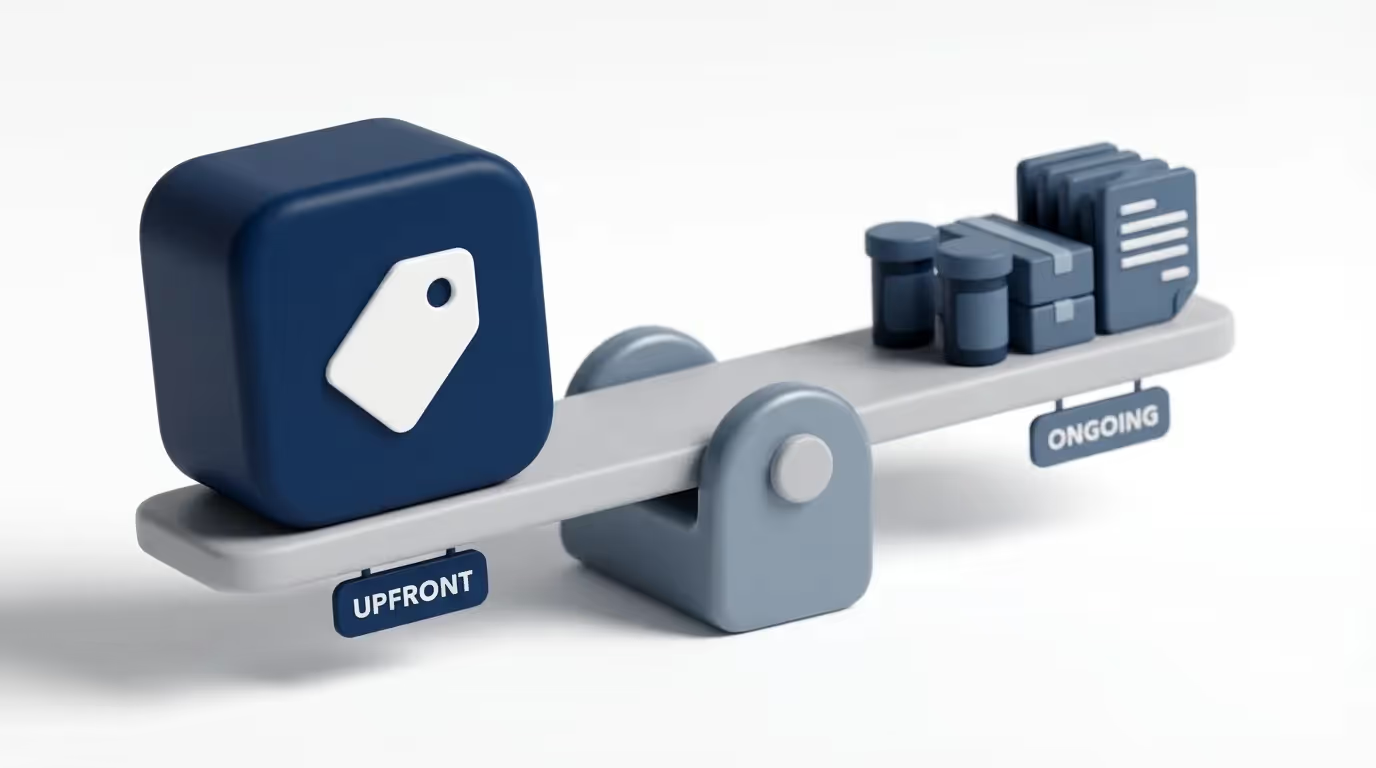
A helpful way to think about it is the upfront vs ongoing tradeoff. Surgery can look like a big bill on day one, while medical therapy can feel like smaller monthly expenses. But when symptoms keep returning, those smaller costs can quietly stack up, especially over a 2 to 10 year time horizon.
Quick Answer (TL;DR)
In many studies, surgery costs more upfront but less over time. For refractory chronic rhinosinusitis (CRS), endoscopic sinus surgery (ESS) usually has a bigger Year 1 price tag but can reduce downstream spending on repeat visits, imaging, antibiotics, oral steroids, and ongoing prescriptions. Multiple economic models have found ESS cost-effective compared with continued medical therapy, with low ICERs well below common value thresholds. Cost-effective means favorable value per unit of health gained; it does not necessarily mean the cheapest option or the best clinical choice for every individual. Source: https://pmc.ncbi.nlm.nih.gov/articles/PMC4280303/
Biologics such as dupilumab can be far more expensive long-term. In a 10-year model focused on CRS with nasal polyps, one analysis estimated dupilumab total costs around $195,164 vs ESS around $20,549. Source: https://onlinelibrary.wiley.com/doi/10.1002/alr.22936
Cost perspective reminder: Most figures are from a system or insurer perspective. Your out-of-pocket costs depend on your coverage, deductible, coinsurance, and network status.
Bottom line: Over longer time horizons, ESS often provides favorable value; biologics can accumulate much higher total costs at current prices.
Who This Comparison Is For (and Why It Matters)
This comparison is most useful if you have CRS symptoms lasting 12 or more weeks, have tried consistent medical therapy and still feel stuck, are considering endoscopic sinus surgery vs staying on medications, or have nasal polyps and are hearing about biologics such as dupilumab. When people say cost, they might mean the copay at the pharmacy or the bill from a visit, but the more meaningful comparison is the cumulative total over several years, including flare-ups, imaging, and repeated prescriptions. For a broader overview of care pathways, see Sleep and Sinus Centers of Georgia’s chronic sinusitis treatment options: https://sleepandsinuscenters.com/chronic-sinusitis-treatment
Bottom line: Think about the total, multi-year spend, not just this month’s bill.
Chronic Sinusitis Basics (Patient-Friendly Overview)
Common symptoms that drive ongoing costs include nasal congestion or obstruction, facial pressure or pain, thick drainage or post-nasal drip, reduced sense of smell, and poor sleep and fatigue. Many patients describe a cycle that becomes expensive: symptoms flare, you seek care, you get another course of medication, symptoms improve briefly, then return.
Common causes and contributors include allergies and chronic inflammation, nasal polyps, structural blockage such as deviated septum or turbinate hypertrophy, and overlapping conditions like asthma or AERD. Cost is important, but disease subtype, severity, and response to therapy also matter.
Bottom line: What drives your symptoms—polyps, anatomy, allergy—helps determine the most efficient path to control.
What Counts as Long-Term Medication for Sinus Disease?
Typical long-term or repeated therapies can include daily nasal steroid sprays, saline irrigations, and, when allergy-driven, antihistamines or leukotriene modifiers. Repeated antibiotics for suspected infections and repeated oral steroids for flare-ups, especially with polyps, are common. Even low-cost daily therapies can add up when paired with periodic flare treatments and multiple visits.
Spending can rise with steroid irrigations, office procedures and repeated endoscopy follow-ups, repeat imaging such as CT scans, and biologic therapy for CRS with nasal polyps. Maintenance therapy is often affordable month to month, but add-on treatments and frequent flares can shift costs substantially over a few years.
Bottom line: Maintenance care is often modest, but flares, procedures, imaging, and specialty add-ons can move long-run costs.

What Sinus Surgery Usually Means in Cost Studies
Most research compares medical therapy with endoscopic sinus surgery (ESS), an outpatient procedure that improves sinus drainage and ventilation and helps topical treatments reach inflamed areas more effectively. Studies report sustained quality-of-life improvement in patients who do not respond well to medical therapy. Source: https://pmc.ncbi.nlm.nih.gov/articles/PMC4280303/
For a plain-language overview, see Endoscopic sinus surgery (ESS): what patients should know: https://sleepandsinuscenters.com/blog/endoscopic-sinus-surgery-what-patients-should-know
Many cost-effectiveness papers model ESS rather than balloon-only cases, and costs vary with anatomy, disease severity, and setting. For comparison, see balloon sinuplasty cost and insurance coverage: https://sleepandsinuscenters.com/blog/balloon-sinuplasty-cost-in-atlanta-insurance-cover-20260121021130
Bottom line: ESS aims to restore ventilation and drainage so inflammation is easier to control and topical care can work better.
Upfront Costs: Surgery vs Medications (What Patients Commonly See)
Across models and claims-based estimates, commonly used one-time ESS cost inputs for uncomplicated cases are often in the roughly $7,700 to $10,500 range, varying by region, setting, and complexity. Some summaries cite day-of-procedure around $10,565 and a total episode, including approximately 45-day follow-up, around $13,772. Real-world totals differ based on facility fees, anesthesia, surgical complexity, and insurance design. Depending on your benefit structure and plan year timing, your out-of-pocket cost for surgery may or may not exceed your medication spend in that same year.
Consumer pricing summaries show wide variation by geography and coverage. Source: https://www.goodrx.com/conditions/sinus-infection/sinus-surgery-cost
Bottom line: Surgery often looks pricier in Year 1, but insurance details and timing can make out-of-pocket higher or lower than expected.
Long-Term Costs: Why Time Horizon Changes the Answer
The key idea is that ESS can pay off over time. When comparing sinus surgery vs long-term medication cost, the timeline matters. Benefits from ESS can persist, while medical utilization often decreases. Long-horizon analyses suggest ESS may become the cost-effective option by about year 2 to 3 in modeled scenarios, with value improving over longer horizons. Source: https://pmc.ncbi.nlm.nih.gov/articles/PMC12913747/
Downstream costs with ongoing medical therapy can include repeat primary care or urgent care visits, more antibiotic and oral steroid courses, repeat imaging and endoscopy, and indirect costs like missed work. If persistent symptoms drive repeated visits and several medication courses across a couple of years, the total can be much higher than it looked in month one.
Bottom line: Over several years, lower flare frequency and fewer rescue treatments can make ESS the more economical path for many with refractory CRS.

Cost-Effectiveness in Plain English: What ICER and QALY Mean
QALY, or quality-adjusted life year, combines length and quality of life into a single measure. If a treatment helps people function and feel better over time, it can gain QALYs. ICER, or incremental cost-effectiveness ratio, is the added cost required to gain added benefit, often measured in QALYs. Lower ICER means better value. In one evaluation, ESS vs continued medical therapy produced ICERs in the low thousands per QALY, far below commonly referenced thresholds. Source: https://pmc.ncbi.nlm.nih.gov/articles/PMC4280303/
Bottom line: Cost-effective means good value for health gained, not automatically cheapest or best for every individual.

Biologics (Dupilumab) vs ESS: Why Biologics Often Cost More
Dupilumab is a biologic sometimes used for CRS with nasal polyps, particularly in more severe or difficult-to-control inflammatory disease. Surgery is generally episodic, while biologics are ongoing, so cost accumulation is central. In a 10-year model, dupilumab strategy cost was approximately $195,164 and ESS strategy cost approximately $20,549. Source: https://onlinelibrary.wiley.com/doi/10.1002/alr.22936
Out-of-pocket costs vary widely depending on prior authorization, copay assistance programs, and plan details. Manufacturer information: https://www.dupixent.com/archive/cost-insurance
Bottom line: At current prices, ongoing biologics can dominate long-run spending compared with surgery in many modeled scenarios.

A Practical 2–3 Year and 10-Year Cost Story
ESS: Year 1 brings a higher upfront procedure and early follow-ups. Years 2 to 3 often see lower ongoing utilization depending on disease control and adherence. Years 4 to 10 frequently show lower cumulative costs in models, with benefits that can persist.
Conventional medical therapy: Year 1 can look manageable month to month, but flares can add up. Years 2 to 3 bring accumulating spend on visits, medications, and occasional imaging. Years 4 to 10 can become costly if symptoms persist.
Dupilumab or biologic therapy: Year 1 includes ongoing high drug cost. Years 2 to 3 continue accrual of drug and monitoring costs. Years 4 to 10 often show far higher total spend, for example around $195,000 at 10 years in one model. Source: Parasher et al., 2022.
Bottom line: If symptoms persist over years, cumulative spending, not just month-to-month costs, usually determines which path is more expensive.
Treatments Compared (Beyond Cost): What Each Path Looks Like
Continued medical therapy, optimized: Daily anti-inflammatory nasal care, trigger control, and selective short courses of other medications when appropriate; some patients need intermittent not continuous rescue therapy after stabilizing.
ESS: Typically includes a pre-op evaluation with imaging, the procedure, and early follow-ups. Many people still use maintenance topical therapy, but the goal is fewer and milder flares and better response to daily treatments.
Biologics: Usually ongoing injections and monitoring for more severe polyp disease and certain coexisting conditions, often after other therapies have been tried.
Bottom line: Each path can help; ESS and biologics are usually considered after optimized medical therapy, based on disease type, severity, and response.
Lifestyle and Self-Care Tips That Can Reduce Flare Costs
Educational reminders that may help reduce flare frequency and unplanned visits include consistent saline irrigation routines with safe water practices, proper nasal spray technique, trigger management such as allergies and irritants like smoke and strong fragrances, and knowing urgent red flags such as vision changes, severe swelling, high fever, or worsening one-sided symptoms. These steps support professional care but do not replace it. For care pathway context, see: https://sleepandsinuscenters.com/chronic-sinusitis-treatment
Bottom line: Good daily habits complement professional care and can help prevent surprise costs from flares.

FAQs (Cost and Decision-Making)
Is sinus surgery always more expensive than medication?
Not necessarily. It is commonly more expensive upfront, but many models find the longer-term picture favors ESS due to lower downstream utilization and good value per QALY. Sources: https://pmc.ncbi.nlm.nih.gov/articles/PMC4280303/ and https://pmc.ncbi.nlm.nih.gov/articles/PMC12913747/
When does surgery become worth it?
Economic models often show ESS becomes cost-effective around 2 to 3 years in refractory CRS scenarios, with value improving over longer horizons. Source: https://pmc.ncbi.nlm.nih.gov/articles/PMC12913747/
What if I need revision surgery later?
Revision risk can affect long-term totals. Individualized planning based on disease type, polyp status, and comorbidities matters when comparing ESS against ongoing therapy.
Will I still need medications after ESS?
Often yes, especially ongoing topical therapy. Many patients pursue ESS to improve control and reduce repeated flare treatments, not necessarily to eliminate all medications.
Why is dupilumab so expensive over time?
It is an ongoing therapy, so costs accumulate year after year. In the 10-year model cited, totals were far higher than an ESS strategy. Source: https://onlinelibrary.wiley.com/doi/10.1002/alr.22936
Does insurance cover ESS or biologics?
Coverage commonly exists, but criteria and out-of-pocket costs vary by plan. Ask about deductible, coinsurance, prior authorization, and in-network status.
Bottom line: Your insurance details often have more impact on your wallet than headline cost numbers in studies.
Conclusion: Which Is More Expensive?
For many patients with refractory CRS, evidence suggests ESS has higher upfront cost but often lower long-run cost and strong economic value versus prolonged conventional therapy. Sources: https://pmc.ncbi.nlm.nih.gov/articles/PMC4280303/ and https://pmc.ncbi.nlm.nih.gov/articles/PMC12913747/
Long-term biologics frequently show far higher total costs at current pricing, for example dupilumab roughly $195,000 over 10 years vs ESS about $20,500 in one analysis. Source: https://onlinelibrary.wiley.com/doi/10.1002/alr.22936
If you are deciding what makes sense clinically and financially, pair the medical conversation about fit with the insurance conversation about what you will actually pay. External links are for information only and are not endorsements.
Bottom line: The best choice balances clinical fit, long-term value, and your real out-of-pocket costs.
Book an Appointment
To review your symptoms, prior treatments, and likely next steps—including what to ask your insurer—schedule a visit with Sleep and Sinus Centers of Georgia: https://www.sleepandsinuscenters.com/
Sources
Rudmik et al. 2015 (economic evaluation of ESS vs medical therapy): https://pmc.ncbi.nlm.nih.gov/articles/PMC4280303/
Long-horizon cost utility analysis: https://pmc.ncbi.nlm.nih.gov/articles/PMC12913747/
Parasher et al. 2022 (dupilumab vs ESS 10-year model): https://onlinelibrary.wiley.com/doi/10.1002/alr.22936
DUPIXENT cost and insurance information: https://www.dupixent.com/archive/cost-insurance
GoodRx cost overview (consumer pricing context): https://www.goodrx.com/conditions/sinus-infection/sinus-surgery-cost
Medical Disclaimer
This article is for general educational purposes only and does not provide medical advice. Diagnosis and treatment choices for chronic rhinosinusitis should be made with a qualified clinician who can evaluate your specific history, exam, and imaging, and consider your insurance and cost situation.
This article is for educational purposes only and is not medical advice. Please consult a qualified healthcare provider for diagnosis and treatment.
Don’t let allergies slow you down. Schedule a comprehensive ENT and allergy evaluation at Sleep and Sinus Centers of Georgia. We’re here to find your triggers and guide you toward lasting relief.