Septoplasty with Turbinate Reduction: Combined Nasal Surgery Guide
Introduction: Why Nasal Breathing Matters (More Than You Think)
When your nose remains blocked for weeks or months, it’s more than just an annoyance. Chronic nasal congestion can disrupt sleep, contribute to snoring and nighttime mouth breathing, and leave you waking up tired—even after a full night in bed. It can also make exercise feel more difficult than expected, since comfortable nasal airflow influences pacing, perceived exertion, and recovery.
Septoplasty with turbinate reduction is a combined approach that treats two common structural causes of nasal obstruction: a deviated septum and enlarged turbinates. When both are narrowing airflow, addressing them together can offer a more complete path to nasal obstruction treatment—rather than fixing one bottleneck and leaving the other behind. (Sources: https://drmatorin.com/the-patients-guide-to-septoplasty-and-turbinate-reduction-surgery/ , https://drbrettlevin.com.au/procedures/nose/septoplasty-and-turbinate-reduction-surgery)
Bottom line: If both the septum and turbinates are contributing to blockage, a combined procedure may provide the most noticeable breathing improvement.

Quick Anatomy Refresher (What’s Being Fixed?)
What is the nasal septum?
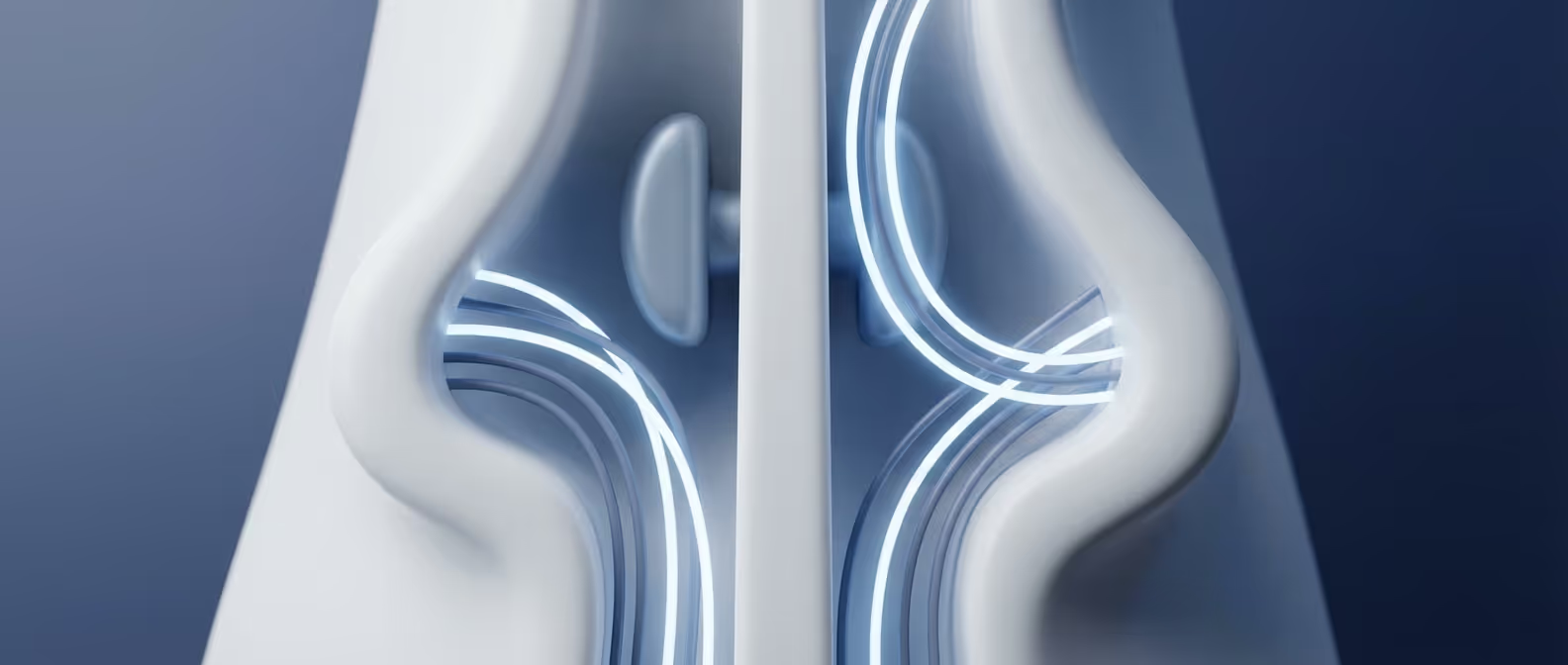
The nasal septum is the wall inside the nose that separates the left and right nasal passages. Think of it like the divider in a two-lane tunnel: if the divider shifts off-center, one lane gets cramped.
If it’s deviated (shifted), it can narrow airflow on one side—or sometimes both—making breathing uneven or consistently difficult. Some people notice they always experience blockage on the same side; others experience alternating blockage but never a consistently open nose. (Source: https://stamfordentcenter.com/septoplasty-deviated-septum/)
What are turbinates and what do they do?
Turbinates are structures along the sidewalls inside your nose. They help warm, humidify, and filter the air you breathe—like built-in climate control and air filtration.
Turbinates can become enlarged (hypertrophied) due to allergies, irritants, or chronic inflammation. That extra tissue can reduce airflow—especially when you’re lying down at night, when nasal swelling often feels more noticeable. (Sources: https://preferredmd.com/health_library/septoplasty_turbinate_reduction , https://www.drangelasturm.com/blog/pros-and-cons-turbinate-reduction-with-septoplasty/)
Key takeaway: Septal deviation narrows the passage; enlarged turbinates crowd the space—together they can significantly limit airflow.
Symptoms That May Point to Septum + Turbinate Problems
Common symptoms patients notice
People who may benefit from deviated septum surgery and turbinate treatment often report:
- Chronic nasal congestion, often worse on one side
- Mouth breathing, especially at night
- Snoring or disrupted sleep
- Reduced exercise tolerance
- A persistent “I can’t breathe through my nose” feeling even without a cold
A practical example: if you can breathe “okay” sitting upright but feel much more blocked as soon as you lie down, turbinates and swelling may be playing a role—sometimes along with a septal deviation. (Sources: https://stamfordentcenter.com/septoplasty-deviated-septum/ , https://preferredmd.com/health_library/septoplasty_turbinate_reduction)
When symptoms are more likely structural vs. “just allergies”
Allergies can absolutely cause congestion—but structural issues are more likely when:
- Symptoms persist despite consistent medical therapy (such as saline, nasal steroid sprays, and an allergy plan)
- Blockage feels constant year-round or is clearly one-sided
- There’s a history of nasal injury or a known septal deviation
Many clinicians explain it this way: allergies tend to fluctuate with triggers; structural narrowing tends to feel stubborn and predictable. (Source: https://preferredmd.com/health_library/septoplasty_turbinate_reduction)
If medical therapy only helps a little or symptoms are one-sided and persistent, structural causes may be the main driver.

Causes: Why Septoplasty and Turbinate Reduction Are Often Done Together
Deviated septum causes
A deviated septum can be present from birth or develop after trauma (sports injuries, falls, accidents). In many cases, people adapt over time and don’t realize how limited their airflow is until congestion becomes persistent—or until they try to treat it like allergies and don’t get relief. (Source: https://stamfordentcenter.com/septoplasty-deviated-septum/)
Turbinate hypertrophy causes
Turbinates can enlarge due to:
- Seasonal or perennial allergies
- Irritants (smoke, pollution, workplace exposures)
- Chronic rhinitis/inflammation
When inflammation is ongoing, turbinate tissue may stay “puffed up,” shrinking the nasal airway the way swollen gums can crowd a tooth space. (Sources: https://preferredmd.com/health_library/septoplasty_turbinate_reduction , https://www.drangelasturm.com/blog/pros-and-cons-turbinate-reduction-with-septoplasty/)
The “double blockage” problem
In many patients, obstruction isn’t caused by just one issue. Even if the septum is corrected, enlarged turbinates may still narrow the airway. Likewise, shrinking turbinates without addressing a significant septal deviation may leave airflow limited.
That’s why septoplasty with turbinate reduction is commonly recommended when both are contributing to symptoms—one outpatient plan to address multiple pinch points. (Source: https://drmatorin.com/the-patients-guide-to-septoplasty-and-turbinate-reduction-surgery/)
If you’re exploring septum correction specifically, you may find this overview helpful: deviated septum surgery. https://sleepandsinuscenters.com/blog/deviated-septum-surgery-at-sleep-sinus-centers-of-georgia
Treating both the septum and turbinates can relieve more than one bottleneck in a single procedure.

Diagnosis and Evaluation: How ENTs Decide If You’re a Candidate
History and symptom review (what your clinician asks)
Evaluation typically starts with questions about:
- How long you’ve had symptoms
- Whether congestion is one-sided or alternating
- Triggers (seasonal patterns, irritants, lying down)
- Your response to medications
- Sleep quality, snoring, and daytime fatigue
It’s also common to discuss what “success” means to you—better sleep, less mouth breathing, easier workouts, or simply feeling like you can breathe normally again.
Nasal exam and nasal endoscopy (what to expect)
A nasal exam may include looking deeper inside the nose to identify where airflow is being restricted—septum, turbinates, swelling, or other issues. This step helps clarify whether the problem appears structural, inflammatory, or both.
Some patients describe endoscopy as odd but quick. Clinicians often reassure patients with something like: “My goal is to pinpoint the blockage, not just confirm you feel blocked.”
Imaging (CT) — when it’s used
A CT scan is not always needed for septum/turbinate concerns alone, but it may be used when sinus disease is suspected or when additional detail is helpful for planning.
The goal of this workup is clarity and confidence—so you understand why a specific plan is recommended.
A thorough evaluation identifies where the blockage is and which treatments are most likely to help.
Non-Surgical Treatments to Try First (and When They’re Not Enough)
Medical management options
Many patients start with:
- Saline rinses or sprays
- Intranasal steroid sprays
- Allergy management (avoidance strategies, testing, and immunotherapy when appropriate)
- Short-term decongestants (used cautiously)
Important caution: Overuse of nasal decongestant sprays can cause rebound congestion (rhinitis medicamentosa), worsening symptoms if used for more than a few days.
When these help, great. When they only take the edge off, that can be a clue a structural issue is limiting how much improvement medication can provide.
Signs it may be time to consider surgery
Surgery may be discussed when:
- Obstruction is persistent and affecting sleep or quality of life
- Symptoms don’t improve with appropriate medical therapy
(Sources: https://preferredmd.com/health_library/septoplasty_turbinate_reduction , https://www.drangelasturm.com/blog/pros-and-cons-turbinate-reduction-with-septoplasty/)
If medications aren’t enough and blockage limits daily life, surgical options may be appropriate.
What Is Septoplasty with Turbinate Reduction?
Septoplasty (what it does)
Septoplasty repositions or reshapes portions of the septal cartilage and/or bone to improve airflow through the nasal passages. The goal is functional breathing improvement—creating more balanced space inside the nose. (Sources: https://preferredmd.com/health_library/septoplasty_turbinate_reduction , https://drmatorin.com/the-patients-guide-to-septoplasty-and-turbinate-reduction-surgery/)
Turbinate reduction (what it does)
Turbinate reduction decreases turbinate size to create more space for airflow—while aiming to preserve the turbinate’s important job of conditioning inhaled air. In other words, it’s about making room without removing what you need. (Sources: https://www.drangelasturm.com/blog/pros-and-cons-turbinate-reduction-with-septoplasty/ , https://preferredmd.com/health_library/septoplasty_turbinate_reduction)
For a deeper explainer, see: everything you need to know about turbinate reduction. https://sleepandsinuscenters.com/blog/everything-you-need-to-know-about-turbinate-reduction
Why combining procedures can improve results
When both a deviated septum and enlarged turbinates are present, combining them can address multiple bottlenecks in one outpatient nasal surgery, supporting a more noticeable improvement in breathing than treating only one contributor. (Sources: https://drmatorin.com/the-patients-guide-to-septoplasty-and-turbinate-reduction-surgery/ , https://drbrettlevin.com.au/procedures/nose/septoplasty-and-turbinate-reduction-surgery)
Together, septoplasty and turbinate reduction aim to open the airway while preserving normal nasal function.

Step-by-Step: What Happens on Surgery Day (Patient-Friendly Walkthrough)
Before surgery
Patients typically receive instructions about:
- When to stop eating and drinking before anesthesia
- Which medications to pause or continue (based on surgeon guidance)
- Arranging a ride home and help for the first night
A helpful mindset is to treat the day like any procedure with anesthesia: plan to rest, keep your schedule light, and set up recovery essentials (saline, tissues, easy meals) ahead of time.
During the procedure (high-level overview)
This is usually performed as an outpatient procedure. Time varies by anatomy and complexity, but many cases fall in the 30–90 minute range. (Sources: https://drmatorin.com/the-patients-guide-to-septoplasty-and-turbinate-reduction-surgery/ , https://drbrettlevin.com.au/procedures/nose/septoplasty-and-turbinate-reduction-surgery)
After surgery (recovery room and going home)
It’s common to feel congested and tired, with mild oozing or blood-tinged drainage early on. Patients typically go home the same day with written instructions and a follow-up plan.
Many patients report that, instead of sharp pain, they feel pressure, congestion, and tiredness early on—though pain experiences vary from person to person. (Source: https://drmatorin.com/the-patients-guide-to-septoplasty-and-turbinate-reduction-surgery/)
Plan ahead for a low-key day and expect early congestion and fatigue rather than sharp pain.
Benefits Patients Commonly Report
Breathing and airflow improvement
The main goal of septoplasty with turbinate reduction is more open, comfortable nasal breathing—often reducing the constant “blocked nose” sensation.
A concrete example: patients who used to switch sides all night looking for a clearer nostril often report they can finally lie down without immediately feeling sealed off.
Sleep-related benefits
When nasal obstruction is a major contributor, improved airflow may support better sleep quality and may reduce snoring in some patients. (Sources: https://drbrettlevin.com.au/procedures/nose/septoplasty-and-turbinate-reduction-surgery , https://preferredmd.com/health_library/septoplasty_turbinate_reduction)
Quality-of-life benefits
Patients often describe less day-to-day frustration, better comfort during exercise, and fewer stuffy-nose days when structural blockage was a key driver. (Source: https://preferredmd.com/health_library/septoplasty_turbinate_reduction)
When structural problems are the main cause, treating them can improve daily comfort, sleep, and exercise tolerance.
Risks and Potential Downsides (Balanced and Reassuring)
Common temporary effects
Temporary symptoms can include swelling, congestion, mild bleeding, and dryness/crusting during healing. It’s normal for the nose to feel “worse before better” during the early swelling phase. (Source: https://www.nationaljewish.org/conditions/tests-procedures/adult-surgery-procedures/endoscopic-septoplasty-and-turbinate-reduction-postoperative-care)
Less common risks to understand
As with many surgeries, less common risks can include infection, persistent obstruction, septal perforation, changes in smell, or the need for revision surgery. It’s important to approach these risks with awareness and planning rather than fear.
Turbinate reduction-specific concern: “empty nose syndrome” (rare)
Some patients worry about “empty nose syndrome,” a rare condition associated with overly aggressive turbinate reduction. Modern techniques are generally designed to be conservative and preserve function, which is why technique and surgeon experience matter. (Source: https://www.drangelasturm.com/blog/pros-and-cons-turbinate-reduction-with-septoplasty/)
Discuss benefits and risks with an experienced surgeon so your plan balances airflow and function.
Recovery Timeline: What to Expect Week by Week
Every recovery is individual, but a general septoplasty recovery timeline often looks like this.
First 24–72 hours
- Congestion is expected, and drainage may be blood-tinged
- Rest is a priority; many people feel groggy or “run down” at first
Simple comfort steps—hydration, head elevation, and keeping activity gentle—often make a noticeable difference in these first days.
Week 1 (most patients return to light routine)
Many patients can return to non-strenuous work in about a week, depending on job demands and how they feel. (Source: https://drmatorin.com/the-patients-guide-to-septoplasty-and-turbinate-reduction-surgery/)
If your job involves heavy lifting or a lot of bending, your timeline may look different—your surgeon can tailor advice to your routine.
Weeks 2–4
- Swelling gradually improves
- Saline rinses are often continued
- Follow-ups may include gentle cleaning and progress checks
This is often the “turning the corner” period—still some ups and downs, but steadily easier breathing as healing progresses.
When you’ll feel the “final” breathing result
Some airflow improvement can be noticed early, but breathing often continues to improve over several weeks as internal swelling settles and the nose heals. (Sources: https://drbrettlevin.com.au/procedures/nose/septoplasty-and-turbinate-reduction-surgery , https://www.nationaljewish.org/conditions/tests-procedures/adult-surgery-procedures/endoscopic-septoplasty-and-turbinate-reduction-postoperative-care)
For more detail on timelines and activity, see: how long does nasal surgery recovery take. https://sleepandsinuscenters.com/blog/how-long-does-nasal-surgery-recovery-take
Expect gradual, steady improvement over weeks, with the biggest gains as swelling resolves.

Post-Op Care Checklist (Do’s and Don’ts)
Saline rinses (why they matter and how often)
Saline rinses are commonly recommended to reduce crusting and support comfortable healing. Many patients find rinses also make the nose feel less tight and irritated as swelling settles. (Source: https://www.nationaljewish.org/conditions/tests-procedures/adult-surgery-procedures/endoscopic-septoplasty-and-turbinate-reduction-postoperative-care)
What to avoid (to reduce bleeding and complications)
Common restrictions include:
- Avoiding nose blowing for about 1 week (or based on your surgeon’s plan)
- Avoiding heavy lifting or strenuous exercise for at least 2 weeks in many cases
- Avoiding overuse of nasal decongestant sprays to prevent rebound congestion (rhinitis medicamentosa)
These restrictions protect delicate healing tissue from pressure and bleeding. (Source: https://www.nationaljewish.org/conditions/tests-procedures/adult-surgery-procedures/endoscopic-septoplasty-and-turbinate-reduction-postoperative-care)
Sleep and comfort tips
- Sleep with the head elevated
- Stay well hydrated
- Keep activity gentle early on
When to call your surgeon urgently
Seek prompt guidance if there is:
- Heavy bleeding that doesn’t stop
- Fever, worsening pain, or concerning drainage
- Breathing that suddenly worsens instead of gradually improving
(Source: https://www.nationaljewish.org/conditions/tests-procedures/adult-surgery-procedures/endoscopic-septoplasty-and-turbinate-reduction-postoperative-care)
A few simple habits and precautions can make recovery smoother and safer.
Lifestyle Tips to Protect Your Results Long-Term
Manage allergies and irritants
Because turbinate tissue can swell in response to inflammation, long-term allergy and irritant control can help protect results and support easier breathing. This might include staying consistent with an allergy plan during peak seasons and reducing exposure to smoke and strong irritants. (Sources: https://preferredmd.com/health_library/septoplasty_turbinate_reduction , https://www.drangelasturm.com/blog/pros-and-cons-turbinate-reduction-with-septoplasty/)
Build a “nasal hygiene” routine
Many patients use saline during flares and avoid overusing topical decongestant sprays, which can cause rebound congestion (rhinitis medicamentosa) when used too frequently.
Sleep optimization for nasal breathers
If nighttime congestion is a major issue, strategies like side sleeping, controlling bedroom triggers, and balancing humidity may help support nasal breathing.
Protecting nasal health with allergy control and smart habits helps preserve long-term results.
FAQs
Is septoplasty with turbinate reduction painful?
Most patients describe more pressure and congestion than sharp pain. Discomfort levels vary, and your surgeon typically provides a plan to keep you comfortable during early healing.
How long does septoplasty with turbinate reduction take?
It’s commonly an outpatient procedure and often takes about 30–90 minutes, depending on complexity. (Sources: https://drmatorin.com/the-patients-guide-to-septoplasty-and-turbinate-reduction-surgery/ , https://drbrettlevin.com.au/procedures/nose/septoplasty-and-turbinate-reduction-surgery)
Will I have packing or splints?
Some surgeons use internal splints or packing, while others don’t. This depends on anatomy, technique, and bleeding risk—so it’s a good question to ask during your pre-op visit.
How soon can I exercise again?
Many post-op instructions include avoiding strenuous activity for at least two weeks, though timelines vary. (Source: https://www.nationaljewish.org/conditions/tests-procedures/adult-surgery-procedures/endoscopic-septoplasty-and-turbinate-reduction-postoperative-care)
Will this help my snoring or sleep apnea?
While improved nasal airflow may reduce snoring if it is primarily due to nasal blockage, septoplasty with turbinate reduction is generally not a standalone treatment for obstructive sleep apnea (OSA), which often has multiple contributing factors. If you suspect you have sleep apnea, a formal sleep evaluation is important to determine appropriate treatment.
Can turbinates grow back after reduction?
Turbinates don’t typically “grow back” like bone, but swelling can recur if allergies or chronic inflammation persist. Depending on technique and individual healing, some tissue regrowth is possible but uncommon. (Sources: https://www.drangelasturm.com/blog/pros-and-cons-turbinate-reduction-with-septoplasty/ , https://preferredmd.com/health_library/septoplasty_turbinate_reduction)
Improved nasal airflow can support sleep and daily comfort, but OSA usually requires additional, targeted treatments.
Conclusion: A Combined Approach for a Clearer Airway
For people dealing with chronic nasal congestion that doesn’t respond to medication—or for those with clear structural blockage—septoplasty with turbinate reduction can be an effective, streamlined option. By addressing both the septum and turbinates, this approach targets multiple contributors to obstruction in one outpatient setting.
If you’re still struggling to breathe through your nose, snore due to nasal blockage, or feel like your sleep is suffering, Sleep & Sinus Centers of Georgia can help you get a clear diagnosis and a personalized treatment plan. Book an appointment: https://www.sleepandsinuscenters.com/
If structural issues limit your airflow, a combined surgical plan may help you breathe—and sleep—better.
Sources
- https://drmatorin.com/the-patients-guide-to-septoplasty-and-turbinate-reduction-surgery/
- https://www.drangelasturm.com/blog/pros-and-cons-turbinate-reduction-with-septoplasty/
- https://stamfordentcenter.com/septoplasty-deviated-septum/
- https://www.nationaljewish.org/conditions/tests-procedures/adult-surgery-procedures/endoscopic-septoplasty-and-turbinate-reduction-postoperative-care
- https://drbrettlevin.com.au/procedures/nose/septoplasty-and-turbinate-reduction-surgery
- https://preferredmd.com/health_library/septoplasty_turbinate_reduction
Disclaimer
This article is for educational purposes only and is not medical advice. Please consult a qualified healthcare provider for diagnosis and treatment.
Don’t let allergies slow you down. Schedule a comprehensive ENT and allergy evaluation at Sleep and Sinus Centers of Georgia. We’re here to find your triggers and guide you toward lasting relief.