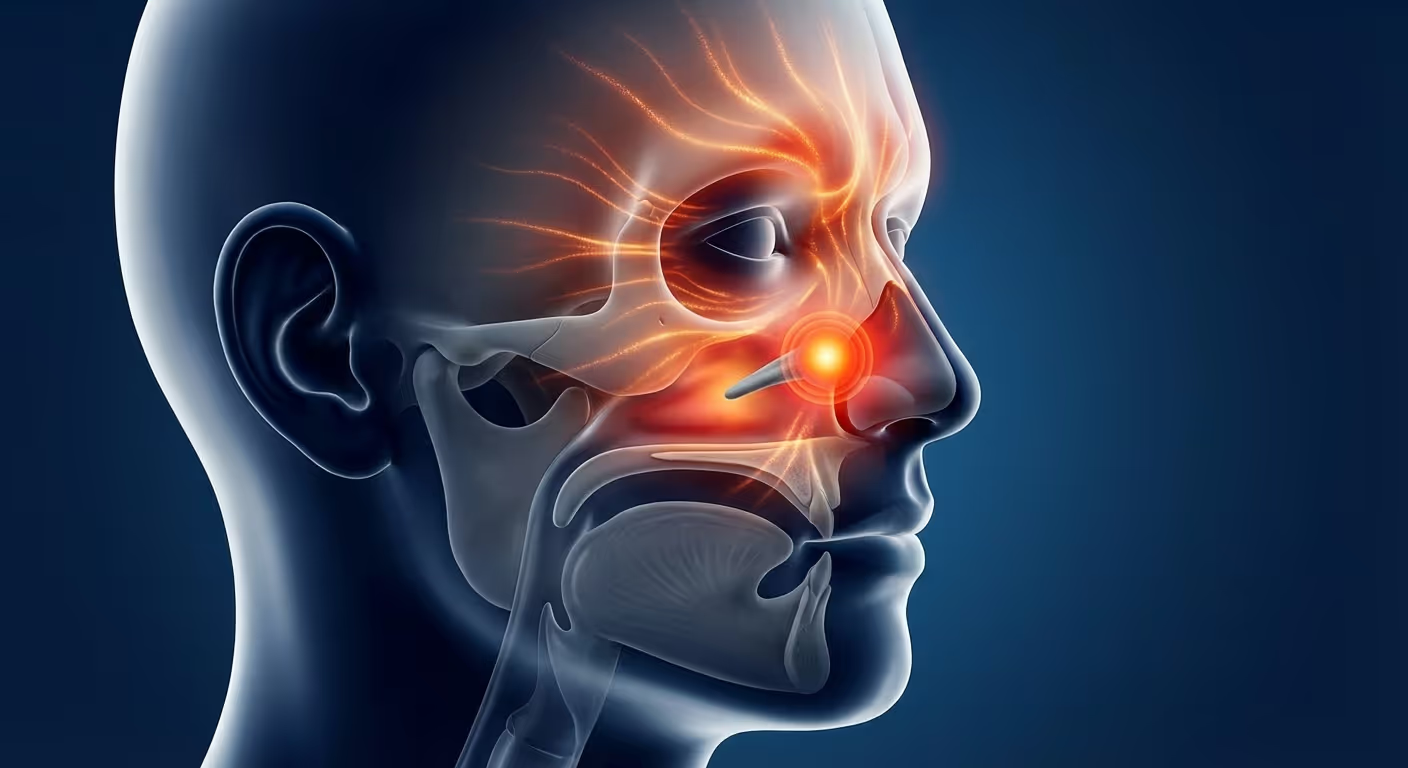
Septal Spur Headache: Causes, Symptoms, and Treatment Options
Headaches that feel like “sinus pressure” are common—but not all of them come from an infection or inflamed sinuses. In some patients, pain may be associated with contact inside the nose itself: a septal spur creating a contact point against nearby nasal structures.
This is sometimes discussed under the umbrella of rhinogenic contact point headache, a debated diagnosis recognized in the International Classification of Headache Disorders (ICHD) appendix as “mucosal contact point headache.” [3]
Below is a patient-friendly overview of what a septal spur is, how it may contribute to head pain, how ENTs may evaluate it at Sleep and Sinus Centers of Georgia, and what treatment paths could be considered.
Medical disclaimer: This article is for general education and does not replace personalized medical advice, diagnosis, or treatment. If you have severe or concerning symptoms, seek urgent care.
What Is a Septal Spur (and Why It Can Matter)
Quick anatomy: the nasal septum and “spurs.” The nasal septum is the wall that separates the left and right nasal passages; it is made of cartilage in the front and bone farther back. A septal spur is a pointed bony or cartilaginous projection that extends from the septum into the nasal airway. Spurs commonly occur alongside a deviated septum—when the septum is shifted off-center.
Many people with a spur have no symptoms at all. But when a spur presses against (or repeatedly touches) nearby structures—like a turbinate or the lateral nasal wall—it can create a “contact point” that may contribute to pain in certain patients. A helpful analogy: think of it like a spot in a shoe that rubs every time you walk; persistent friction can still cause discomfort.

Septal Spur Headache vs. “Sinus Headache” vs. Migraine
A lot of people use the term “sinus headache” to describe facial pressure, forehead pain, or pain around the eyes. The challenge is that migraine and other headache types often mimic sinus symptoms, including pressure and congestion.
Three helpful categories: 1) True sinus-related pain (sinusitis) often appears with signs of infection or inflammation (for example, thick drainage, fever, significant worsening with illness), and imaging may show sinus disease. 2) Migraine can present with facial pressure, nasal symptoms, light or sound sensitivity, nausea, and episodic attacks; see our guide on migraine vs. sinus headache: https://sleepandsinuscenters.com/blog/migraine-vs-sinus-headache-key-differences-and-symptoms-explained. 3) Rhinogenic/contact-point headache: pain proposed to come from non-inflammatory mucosal contact inside the nose—such as a septal spur touching a turbinate. [1][3]
In short: a septal spur can exist quietly; symptoms are more likely when it creates a consistent contact point that aligns with your pain pattern.
Can a Septal Spur Really Cause Headaches?
The rhinogenic contact-point headache mechanism (simple explanation): discomfort may occur when nasal tissues touch each other in a persistent pressure or contact pattern, even without infection or generalized sinus inflammation. Examples include a spur contacting the middle turbinate, inferior turbinate, or lateral wall. [1][3] The anatomy may be constant, but symptoms can wax and wane with swelling (for example, allergies or irritants). Not all septal spurs cause symptoms, and headache has many potential causes.
How nasal contact may contribute to head pain: researchers have proposed that contact points can irritate branches of the trigeminal nerve, which carries sensation from the face and nasal cavity. Local pressure may also contribute to the release of neuropeptides (such as substance P) involved in pain signaling. [1][2] These are plausible mechanisms rather than definitive proof for every patient.
What the research says (honest evidence summary): Clinical reports and case series suggest that in carefully selected patients (compatible symptoms, documented contact point, supportive testing), some experience improvement after surgery to remove the contact point (often septoplasty and/or spur correction). [1] A large 10-year cohort study found septal deviation was associated with a modestly higher future headache risk (adjusted hazard ratio ~1.37). [2] Important limitation: high-quality randomized trials are limited, and many people with facial pain and a spur do not have a spur-driven headache. Diagnosis and selection are key. [1][2]
Bottom line: in selected patients, intranasal contact may contribute to facial pain, but careful evaluation is essential before attributing headaches to a spur.
Septal Spur Headache Symptoms (What Patients Commonly Notice)
Headache patterns that can fit contact-point headache: facial pain or pressure around the nose, eyes, or forehead; pain that is one-sided (often on the side of the spur or contact) or occasionally more diffuse; recurrent discomfort that doesn’t follow a typical infection pattern; symptoms that track with nasal congestion or airflow changes rather than “getting sick.” A common description is: “It feels like sinus pressure, but antibiotics never really fix it.” Because overlap is common, a contact-point pattern can be mistaken for migraine, tension-type headache, dental pain, or other causes.
Nasal symptoms that may come with it: nasal blockage (often more noticeable on one side), a sensation of postnasal drip (not always present), reduced airflow during sleep or mouth breathing.
Related ear symptoms (less common but reported): some cases note ear pain, fullness, or tinnitus alongside nasal findings. [1] These symptoms can have many causes, so they’re interpreted in the full clinical context.
Red flags (seek urgent care): sudden “worst headache,” new neurologic symptoms (weakness, confusion), fever with stiff neck, significant vision changes, or headache after head injury. This is general safety information, not a diagnosis.
In short: patterns that align with a reproducible intranasal contact point raise suspicion, but overlapping headache disorders must be considered.
Causes and Risk Factors
Structural contributors: a septal spur may become symptomatic when it creates a repeated contact point, especially against the middle turbinate, inferior turbinate, or lateral nasal wall. [1][3] These contact points may be visible on endoscopy and can be mapped on CT imaging.
Factors that can worsen contact (and symptoms): seasonal or perennial allergies; nonallergic rhinitis (irritants, temperature shifts, strong odors); dry air and dehydration (which can affect nasal lining comfort). Structure sets the stage; swelling and irritants can “turn up the volume” on contact.

How ENTs Diagnose Septal Spur–Related Headaches
Step 1 — Detailed history: where the pain is felt, how often it occurs, triggers, migraine history, and what has or hasn’t helped.
Step 2 — Nasal exam and nasal endoscopy: helps identify a spur, deviation, turbinate swelling, and a possible contact point.
Step 3 — Imaging when appropriate (usually CT): clarifies anatomy and helps identify suspected contact points, with clinical correlation. [1] For more, see sinus CT scan (what it shows and why it’s used): https://sleepandsinuscenters.com/blog/sinus-ct-scan-what-it-shows-and-how-it-helps-diagnose-sinus-issues
Step 4 — The topical anesthetic (lidocaine) test: anesthetic applied at the suspected contact site; temporary pain relief can support a rhinogenic/contact-point source. [1][3] A positive response may help with patient selection but is not definitive by itself.
Why ruling out other headache diagnoses is essential: ENTs consider migraine, cluster headache, tension-type headache, TMJ disorders, dental pain, neuralgias, and true sinusitis alongside nasal anatomy. Correct classification helps avoid unnecessary procedures. For more background: https://sleepandsinuscenters.com/blog/contact-point-headache-in-nose-causes-symptoms-treatment
In sum: diagnosis relies on history, endoscopy, imaging when appropriate, and selective testing—together with exclusion of more common headache disorders.

In-Office Diagnostic/Therapeutic Options
Lidocaine test as a decision aid: beyond diagnosis, a positive lidocaine response may support the idea that a contact point is contributing and may help inform which patients are more likely to benefit from procedures aimed at relieving contact. [1][3] It is one data point among several. In short: targeted numbing that temporarily eases pain points toward the nose as a contributor—but it isn’t the whole story.

Treatment Options (From Least to Most Invasive)
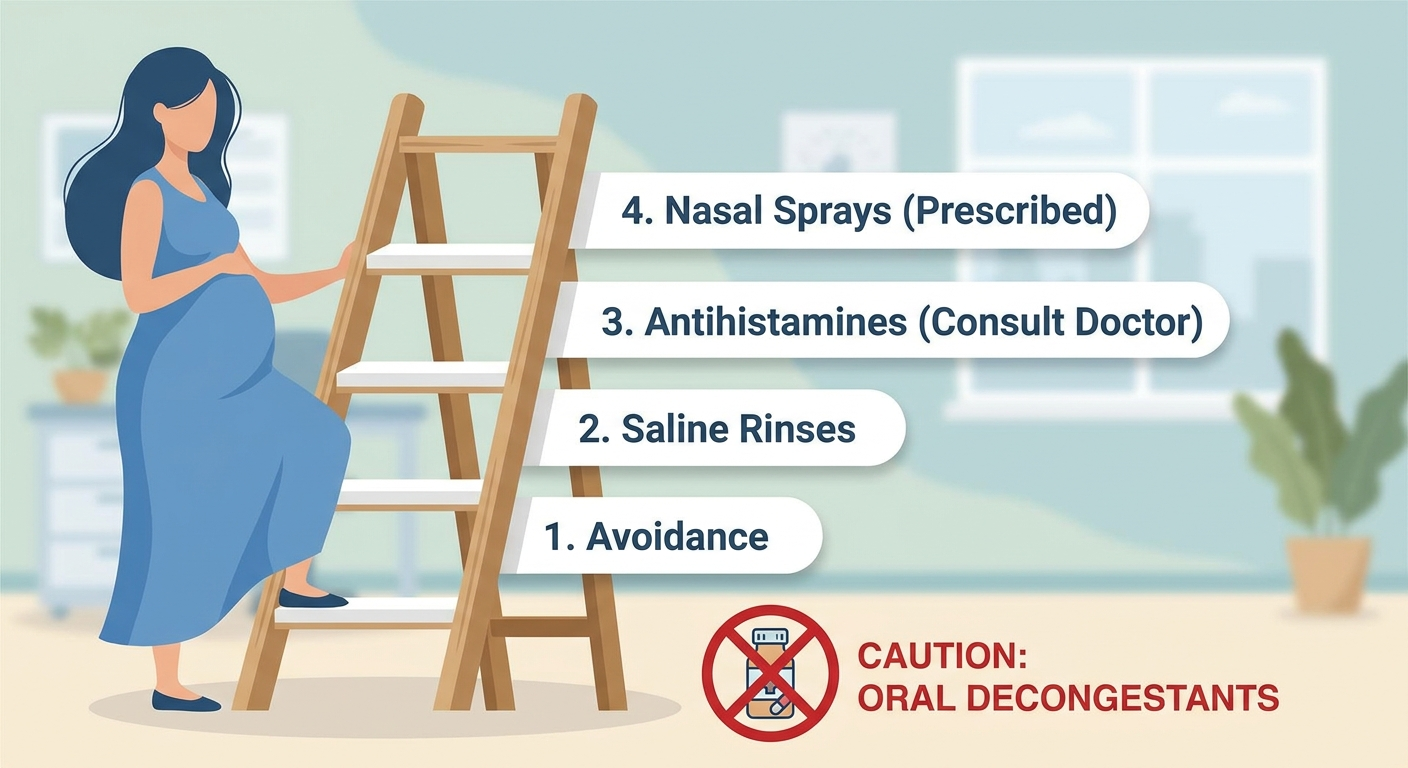
Conservative or non-surgical treatments (often first-line): when symptoms seem tied to congestion or rhinitis, reduce turbinate swelling and minimize contact. Examples include saline irrigation, nasal steroid sprays (when appropriate), and allergy management strategies. Goal: reduce mucosal swelling so a potential contact point is less likely to be activated.
Medication considerations: over-the-counter pain relievers may ease discomfort but do not change the underlying anatomy. Frequent use can contribute to medication-overuse headache in some people.
When conservative care helps most: mild symptoms or those strongly associated with allergy seasons, irritant exposure, or intermittent swelling. Bottom line: start with the least invasive steps—many patients improve when swelling and triggers are well controlled.
Surgical treatment (septoplasty or contact-point surgery): generally discussed for patients with a clearly identified contact point on endoscopy and/or CT; symptoms consistent with contact-point pain; supportive testing such as a positive topical anesthetic response; and persistent symptoms despite appropriate medical management. [1]
What surgery aims to do: eliminate mucosal contact by straightening the septum and removing or reshaping the spur. Turbinate reduction may be considered if turbinate enlargement contributes to contact and obstruction.
Effectiveness: reports describe meaningful improvement (and sometimes complete resolution) for some carefully selected patients after contact-point correction, though outcomes vary and high-quality randomized trials are limited. Proper diagnosis and patient selection are critical. [1][3]
Risks and recovery (high level): potential bleeding, infection, persistent nasal obstruction, septal perforation, persistent symptoms, or need for revision surgery. Recovery commonly involves a period of congestion and follow-up care. Considering surgery? See: Is septoplasty right for your deviated septum? https://sleepandsinuscenters.com/blog/is-septoplasty-right-for-your-deviated-septum
Takeaway: surgery aims to remove the contact; selecting the right patients is key to better outcomes.

Lifestyle Tips to Reduce Flare-Ups (Even Before a Procedure)
Track triggers and timing: a simple symptom diary can help—note weather changes, allergens, irritants (smoke or fragrances), sleep quality, and nasal congestion; patterns can help your ENT distinguish migraine trends from a more consistent contact-point pattern.
Reduce nasal irritation and swelling: minimize common nasal irritants and keep indoor air comfortable (including maintaining clean humidification when used). Hydration and consistent routines can support nasal comfort.
Allergy support: if you have seasonal flares, plan ahead and use therapies consistently when prescribed to reduce swelling that worsens contact. In brief: small daily habits that limit nasal swelling can reduce how often a contact point becomes symptomatic.
FAQs
Can a septal spur cause headaches even without a sinus infection? Yes—rhinogenic/contact-point headache is typically described as non-infectious mucosal contact pain in selected patients. Evidence is mixed, and careful evaluation is needed. [1][3]
How do I know if it’s a septal spur–related headache or a migraine? Migraine commonly includes light or sound sensitivity, nausea, and episodic attacks. Contact-point patterns are often described as pressure or pain linked to nasal obstruction or a reproducible contact site. Because overlap is common, an evaluation is important to sort out the most likely cause.
What is the lidocaine test and what does a “positive” test mean? The topical lidocaine test involves placing anesthetic at a suspected contact point. Temporary pain relief can support a nasal contact source and may help inform patient selection, but it is not definitive. [1][3]
Will septoplasty cure my headaches? Some carefully selected patients improve significantly after surgery, but outcomes vary and high-quality randomized trials are limited. [1] A thorough evaluation helps determine whether a headache is likely to be rhinogenic/contact-point–driven.
Is a deviated septum linked to future headaches? A large cohort study found a modest association between septal deviation and future headache incidence (adjusted HR ~1.37). [2] Association does not prove causation.
When should I see an ENT? Consider an ENT evaluation if you have persistent facial pain or headaches with nasal obstruction, suspected structural blockage, or “sinus headache” symptoms that don’t match infection findings or don’t improve with typical approaches.
Short answer: the right diagnosis comes first; targeted treatment follows from that diagnosis.
When to Book an Evaluation
At Sleep and Sinus Centers of Georgia, an evaluation may be especially helpful for recurrent “sinus headaches” despite normal infection workups; one-sided obstruction with facial pain or pressure; headaches that correlate with nasal congestion or airflow limitation. A typical workup may include history, nasal endoscopy, CT imaging when appropriate, and sometimes a topical anesthetic (lidocaine) test to evaluate for a contact-point source. [1] Next step: for a personalized evaluation, book an ENT appointment: https://sleepandsinuscenters.com/appointments
References
1. Perić A. Nasal Septal Spur Associated with Rhinogenic Contact Point Otalgia and Tinnitus (2018). https://pmc.ncbi.nlm.nih.gov/articles/PMC6391278/
2. Kwon SH, et al. Is septal deviation associated with headache? A nationwide 10-year follow-up cohort study. (2020). https://pmc.ncbi.nlm.nih.gov/articles/PMC7253539/
3. International Classification of Headache Disorders (ICHD). Appendix entry: “Mucosal contact point headache” (use most current ICHD version available at publication).
This article is for educational purposes only and is not medical advice. Please consult a qualified healthcare provider for diagnosis and treatment.
Don’t let allergies slow you down. Schedule a comprehensive ENT and allergy evaluation at Sleep and Sinus Centers of Georgia. We’re here to find your triggers and guide you toward lasting relief.