Occupational Hearing Loss: When Noise at Work Causes Permanent Hearing Damage
If you often need people to repeat themselves after a shift—or your ears ring on the drive home—it’s easy to assume it will “clear up by tomorrow.” Sometimes it does. But repeated exposure to hazardous workplace noise can quietly add up over time, increasing the risk of occupational hearing loss.
A common pattern sounds like this: you leave work feeling “plugged up,” the tinnitus fades overnight, and you tell yourself it’s no big deal. Then it happens again next week. Over months or years, those “small” episodes can stack into a real, measurable change in how you hear—especially in the sound ranges that help you understand speech clearly.
The key takeaway: When the inner ear’s sensory cells and nerve connections are damaged by noise, they generally do not regenerate in mammals—which is why prevention matters most (Natarajan et al., 2023; Ryan et al., 2016).
Protecting your hearing today is far easier than trying to regain clarity later.
Why work noise can cause permanent hearing loss (and why it often sneaks up on you)
Noise-related damage usually isn’t painful. Unlike a cut or burn, there may be no obvious injury to “warn” you in the moment. Many people also adapt without realizing it—turning up the TV, reading lips more, or avoiding busy restaurants because conversation feels exhausting.
One clinician-friendly way to think about it: if your ears regularly feel “spent” after work, your auditory system may be working overtime to recover. The challenge with noise-induced hearing loss is that it can begin subtly (often in pitch ranges important for speech clarity) and then progress with continued exposure. Once “temporary” changes begin happening frequently, they can be a sign that the auditory system is under strain (Ryan et al., 2016).
Because noise damage is often painless and gradual, it’s easy to miss until communication gets harder.
What is occupational (noise-induced) hearing loss?
The simple definition
Occupational hearing loss is hearing loss caused by hazardous noise exposure on the job, typically developing gradually—though it can also happen suddenly after a single intense event (CDC/NIOSH: https://www.cdc.gov/niosh/noise/about/index.html).
In other words, it’s not just “getting older” or “bad luck.” It’s a dose-related injury: the louder the sound and the longer you’re around it, the more risk accumulates over time.
Common jobs and workplaces at higher risk
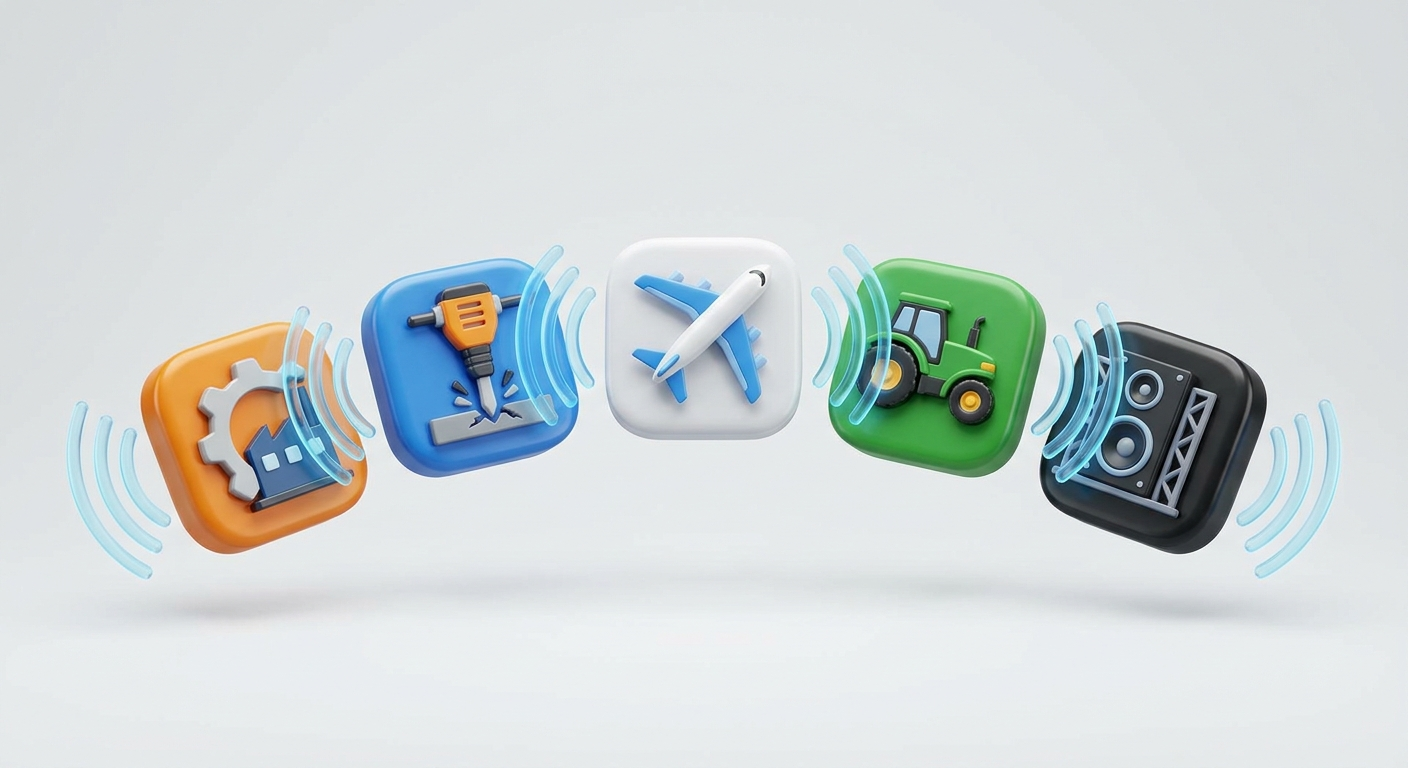
According to CDC/NIOSH, higher-risk settings include workplaces with loud tools, engines, alarms, or amplified music—such as:
- Manufacturing and industrial work
- Construction and demolition
- Aviation and ground crew operations
- Agriculture and landscaping (mowers, tractors, blowers)
- Mining and heavy equipment
- First responders and military settings
- Entertainment venues and production crews
(CDC/NIOSH: https://www.cdc.gov/niosh/noise/about/index.html)
Even within these industries, risk can vary by task. For example, two workers may share a job title, but one spends more time near a compressor, in a mechanical room, or using impact tools—so their “noise dose” is very different.
If your job is loud or uses impact tools, your personal noise dose may be higher than coworkers with the same title.
Temporary vs. permanent hearing damage: TTS vs. PTS (the terms your hearing test may mention)
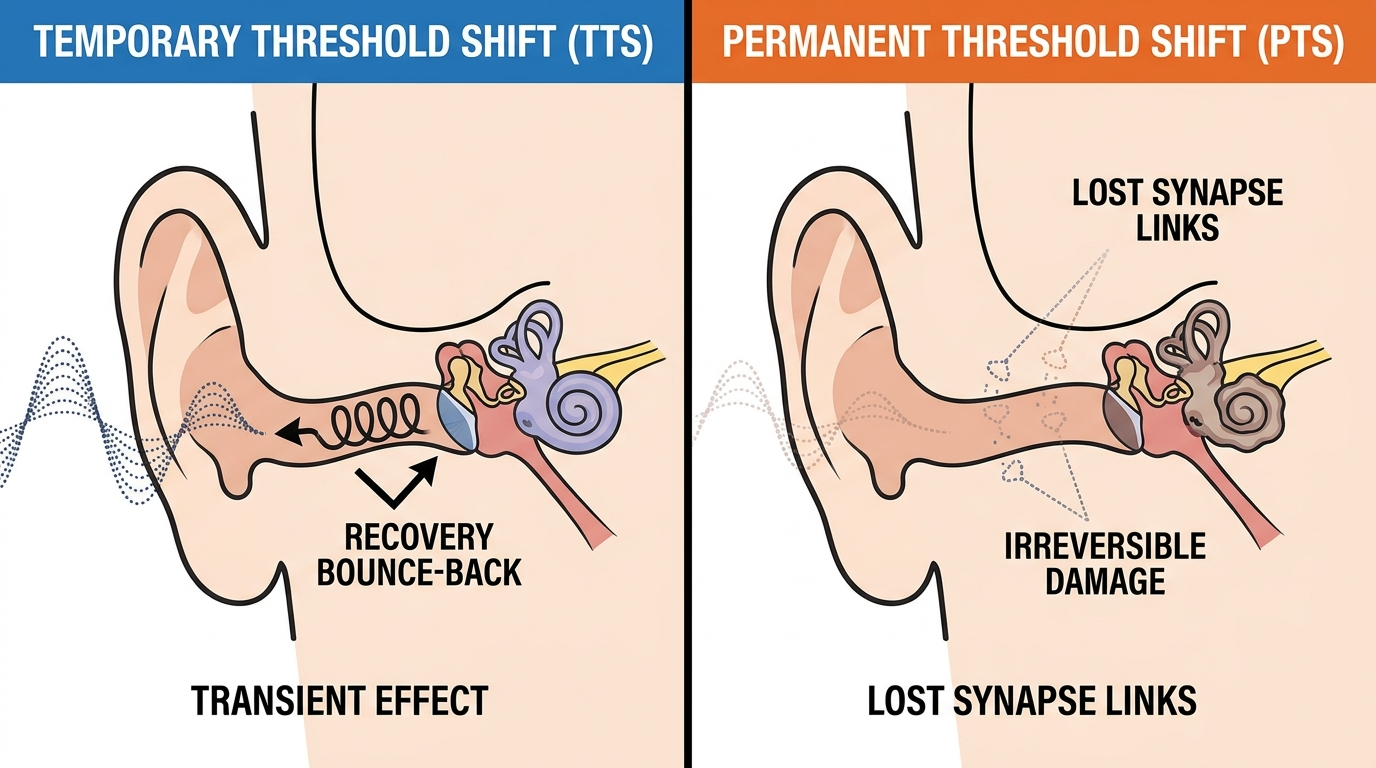
Temporary Threshold Shift (TTS): “My hearing comes back… right?”
A temporary threshold shift (TTS) is when hearing feels muffled or “dull” after noise exposure, then improves over hours or days. People may notice:
- Needing higher volume right after work
- Ringing or buzzing that fades later
- Sounds seeming less sharp or clear
A simple analogy: TTS can feel like your ears got “fatigued,” similar to how your eyes may feel strained after hours of staring at a screen. You can recover—but repeated fatigue is still a warning signal. TTS may recover, but repeated TTS episodes can still signal harmful exposure and may be associated with underlying injury (Ryan et al., 2016).
Permanent Threshold Shift (PTS): when the damage doesn’t recover
A permanent threshold shift (PTS) occurs when noise exposure leads to irreversible cochlear injury—such as hair-cell loss and/or damage to synapses that connect hair cells to the auditory nerve (Natarajan et al., 2023; Ryan et al., 2016).
In research settings, thresholds that remain elevated for several weeks are often considered more likely to represent permanent change, though there is no single universal cutoff (Ryan et al., 2016). Practically, that’s why “watchful waiting” after a loud exposure has limits: if symptoms linger, it’s worth getting evaluated rather than assuming time alone will fix it.
Can one loud event cause permanent hearing loss?
Yes. A single intense event—like a blast, explosion, or impulse noise exposure—can cause acoustic trauma and may lead to immediate or partially recovering hearing loss with lasting damage (Ryan et al., 2016; Natarajan et al., 2023). For a deeper look at single-event injuries, see acoustic trauma vs. long-term noise exposure: https://sleepandsinuscenters.com/blog/acoustic-trauma-and-its-impact-on-ear-health-causes-and-prevention
Temporary “bounce-backs” after noise don’t guarantee safety; repeated or intense exposures can still lead to lasting change.
What actually gets damaged in the ear (plain-English explanation)
Hair-cell injury and why “it won’t grow back”
Inside the cochlea (the hearing organ in the inner ear) are specialized sensory cells called hair cells. Excessive noise can stress, injure, or kill these cells. Because mammalian hair cells generally do not regenerate, damage can be permanent (Natarajan et al., 2023).
If you like analogies: hair cells are a bit like the tiny, delicate sensors in a high-end microphone. If the microphone gets blasted repeatedly, the sensor can degrade—and turning up the volume later doesn’t restore the original clarity.
“Hidden hearing loss” (synaptopathy): when the audiogram looks “fine,” but you struggle
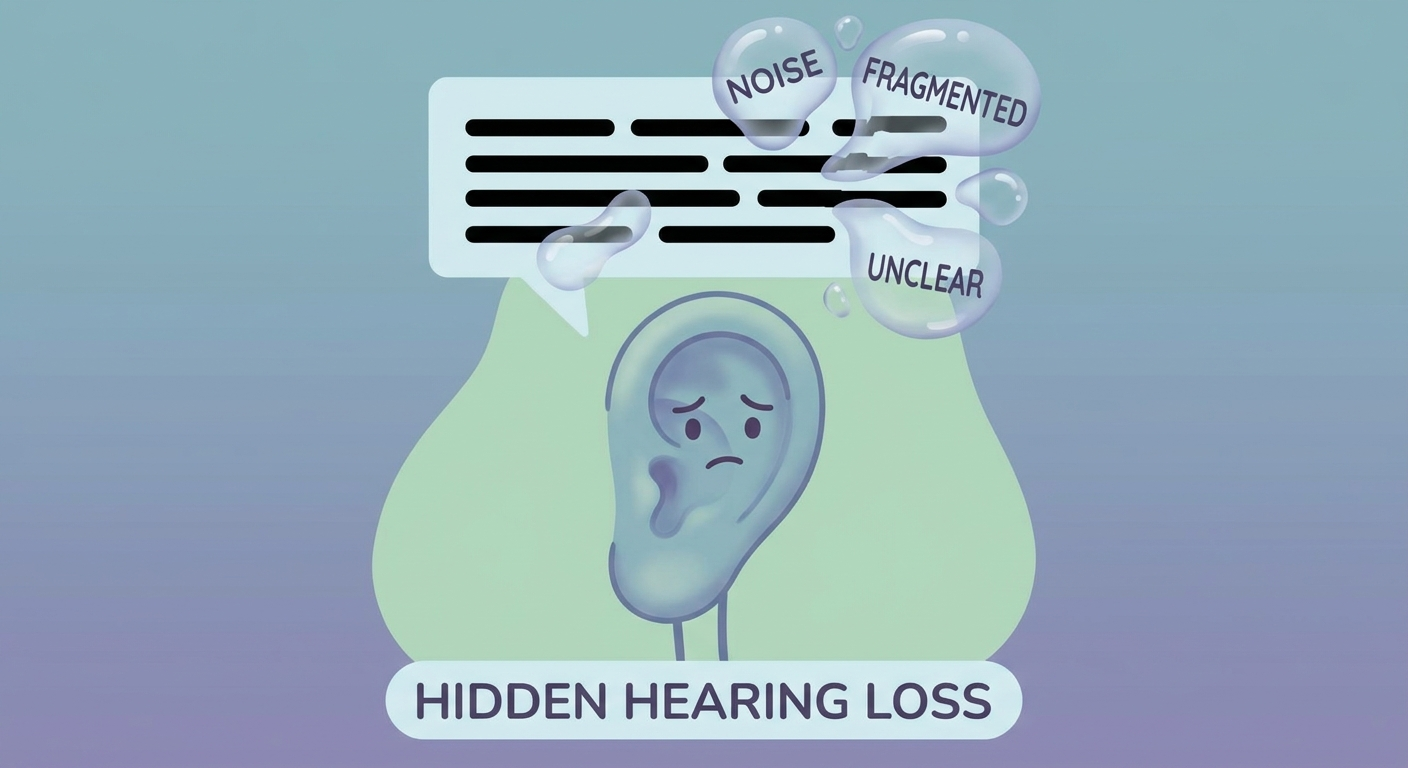
Noise can also damage the synapses—the tiny connections—between inner hair cells and the auditory nerve. This pattern is often referred to as hidden hearing loss (synaptopathy). It may show up as:
- Difficulty understanding speech in background noise
- Tinnitus (ringing)
- Sound sensitivity
A common real-world example is the person who says, “I can hear people talking, but I can’t understand them when there’s equipment running or when the breakroom is loud.” A standard hearing test may not fully capture speech-in-noise difficulty or other functional effects associated with synaptopathy, because typical thresholds don’t measure how the auditory system handles complex listening environments (Natarajan et al., 2023).
Other contributors to permanent injury
Noise-related injury is complex. Research describes multiple pathways, including:
- Oxidative stress and metabolic “overload”
- Excitotoxicity (overstimulation at nerve connections)
- Mechanical damage to delicate structures in the cochlea
(Natarajan et al., 2023; Ryan et al., 2016)
Noise can harm both the ear’s sensory cells and the nerve connections that support clarity, especially in complex listening situations.
Symptoms of occupational hearing loss (and related problems)
Early warning signs people often ignore
Early symptoms of occupational hearing loss can be easy to dismiss, such as:
- Ringing or buzzing (tinnitus)
- Muffled hearing after work
- Feeling like “everyone mumbles”
- Turning up TV/phone volume more than others prefer
- Struggling to understand speech in restaurants, meetings, or on job sites
If you notice you’re relying more on context clues (“I can follow the topic, but I miss details”), that can also be a hint that clarity—not just loudness—is changing.
Symptoms that can suggest more urgent injury
Some symptoms after a loud exposure may warrant prompt evaluation in a medical setting as soon as possible, especially when they are sudden or severe:
- Sudden hearing drop in one or both ears
- Ear pain or fullness after a blast/very loud event
- New, intense tinnitus after exposure
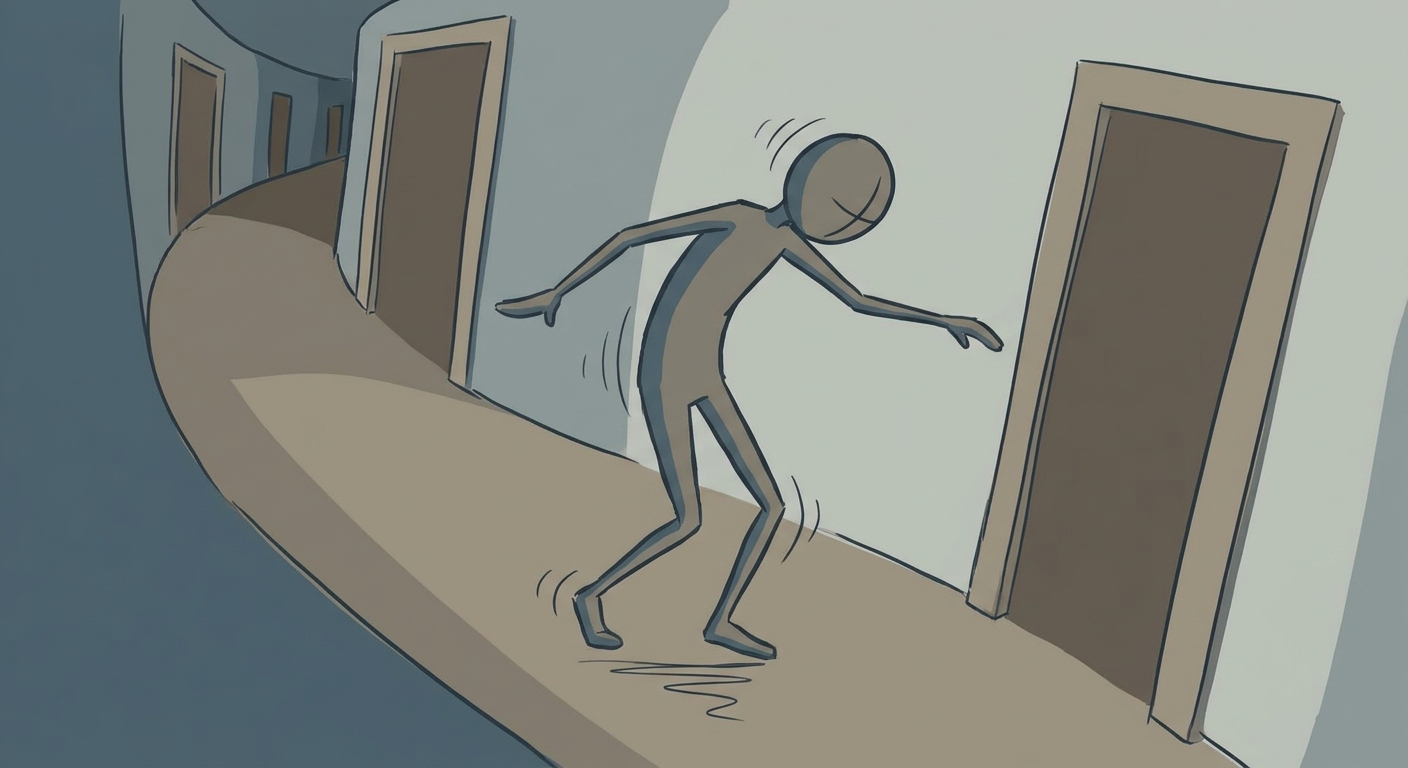
- Dizziness or imbalance
If symptoms are sudden, severe, or one-sided, seek timely medical evaluation.
Causes and risk factors at work (what raises the odds of permanent damage)
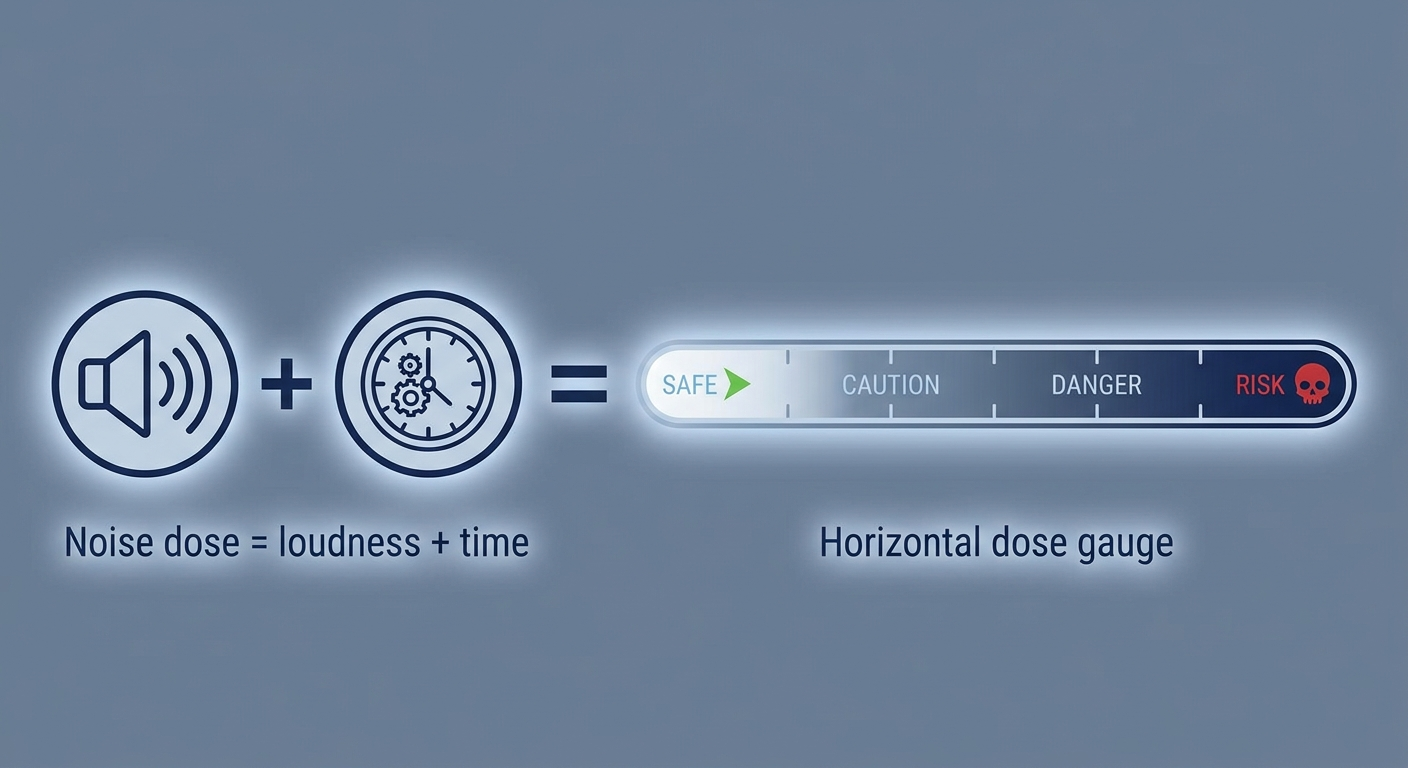
Noise dose: loudness + time
Risk isn’t just about how loud something is—it’s also how long you’re exposed. Short exposures to very loud sound and longer exposures to moderately loud sound can both be hazardous, and repeated “doses” add up over time (CDC/NIOSH: https://www.cdc.gov/niosh/noise/about/index.html).
A practical way to think about dose: one extremely loud task can matter, but so can “moderately loud all day, every day.” The ear doesn’t get unlimited resets between shifts.
Impulse noise vs continuous noise
- Impulse noise (impact tools, blasts, firearms) can be especially hazardous because peak levels can be extreme, even if brief (Ryan et al., 2016).
- Continuous noise (engines, compressors, fans, saws) can cause gradual damage through sustained exposure.
Many jobs involve both—steady background machinery plus sudden impacts—so protection and exposure control need to fit the real environment, not just the average day.
Individual factors that may worsen outcomes
A few factors can increase vulnerability:
- Hearing protection that doesn’t fit well or isn’t worn consistently
- Past noise exposure (prior jobs, military service, concerts, power tools)
- Certain medications or chemical exposures that may be ototoxic (reviewed case-by-case with a clinician)
Consistency matters because “some protection some of the time” can still leave you unprotected during the exact moments that do the most damage.
Your total noise dose—on and off the job—determines risk over time.
How hearing loss is measured at work (and what OSHA/NIOSH rules do—and don’t—catch)
OSHA “Standard Threshold Shift” (STS) definition (surveillance trigger)
In many workplaces, hearing checks are tied to the OSHA hearing standard. OSHA defines a Standard Threshold Shift (STS) as a 10 dB average shift at 2, 3, and 4 kHz (age-correction rules may apply) (OSHA 29 CFR 1910.95: https://www.osha.gov/laws-regs/regulations/standardnumber/1910/1910.95).
This is a useful surveillance tool—especially when you have a baseline test—because it can flag meaningful change and trigger follow-up steps in a hearing conservation program.
NIOSH guidance (more protective approach)
NIOSH guidance is often referenced in hearing conservation programs and uses different surveillance recommendations than OSHA, including more protective exposure limits (for example, an 85 dBA 8-hour recommended exposure limit with a 3-dB exchange rate) and encouragement of more comprehensive follow-up when changes are detected (CDC/NIOSH: https://www.cdc.gov/niosh/noise/about/index.html).
Why “no reportable shift” doesn’t always mean “no injury”
Workplace screening is valuable, but it may miss:
- Functional problems like speech-in-noise difficulty potentially associated with synaptopathy
- Very high-frequency early changes above typical screening emphasis
(Natarajan et al., 2023)
So if your test is “within normal limits,” but you’re struggling at work or have ongoing tinnitus, it’s still reasonable to ask what additional evaluation (or prevention steps) makes sense.
Surveillance rules are great for catching big changes, but they don’t capture every kind of noise-related difficulty.
Diagnosis: what to expect at a hearing evaluation
Occupational history questions your clinician may ask
A thorough evaluation often starts with understanding exposure patterns:
- Job roles and years in noise
- Tools/machines used and typical shift duration
- Hearing protection type, fit, and consistency
- Any single “big” noise events (possible acoustic trauma)
You’re not expected to know exact sound levels. What helps most is describing the typical environment (steady roar vs sharp impacts), how close you are to the source, and whether hearing protection is practical for your tasks.
Hearing tests commonly used
Many evaluations include:
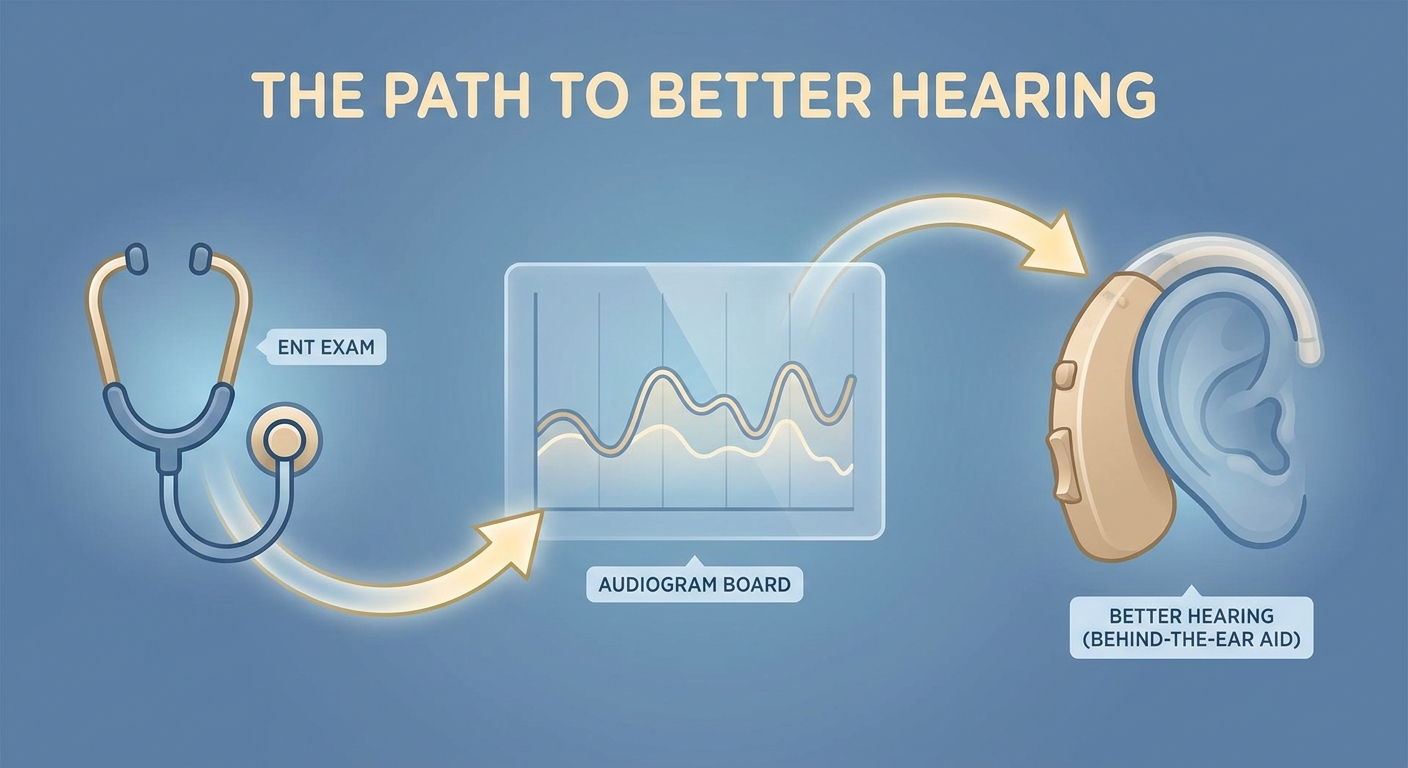
- An audiogram (air and bone conduction thresholds)
- Speech testing
- Sometimes tympanometry (middle-ear function)
If you want a primer, see how to read an audiogram: https://sleepandsinuscenters.com/blog/audiogram-basics-explained-a-patients-guide-to-hearing-tests
When additional testing may be considered
Further testing may be considered when there’s asymmetry, sudden change, persistent one-sided tinnitus, or other concerning findings.
A clear occupational history plus appropriate testing helps distinguish temporary changes from more lasting ones.
What to do after a loud exposure at work (practical next steps)
Same-day steps (first aid for your ears)
Educationally, many hearing conservation resources emphasize simple immediate steps:
- Move away from the noise source when possible
- Avoid adding more loud sound exposure (“testing” hearing with loud music)
- Use properly fitted hearing protection if you must re-enter a noisy area
If you’re supervising a team, this is also a moment to think “systems,” not blame: was there a missed barrier, a maintenance issue, a protection supply problem, or a task that needs a different process?
When to seek urgent care
Sudden hearing loss, severe tinnitus, ear pain after a blast, or dizziness after intense noise exposure are commonly listed as reasons to seek timely medical evaluation as soon as possible.
Document the exposure (for workplace safety + medical care)
It may help to write down:
- Time and location
- Noise source/equipment
- Approximate duration
- Hearing protection used
- Witnesses
That documentation can support both medical decision-making and workplace prevention—so the same exposure doesn’t happen again.
Quick action and good documentation help protect both your hearing and your team.
Treatment options: what helps—and what doesn’t (yet)
Can permanent occupational hearing loss be reversed?
In general, established PTS from noise exposure is not reliably reversible, so care focuses on improving communication, function, and quality of life (Natarajan et al., 2023; Ryan et al., 2016).
In clinic, a common (and understandable) question is: “Can you fix what’s been damaged?” The honest answer is that we can often improve how you function day-to-day, but preventing additional damage is still the most powerful tool.
Early/acute interventions (time-sensitive)
In some situations, a clinician may consider time-sensitive treatment after a significant exposure; however, the appropriate approach depends on the specific circumstances and clinical evaluation.
Long-term management for confirmed permanent loss
Common management options include:
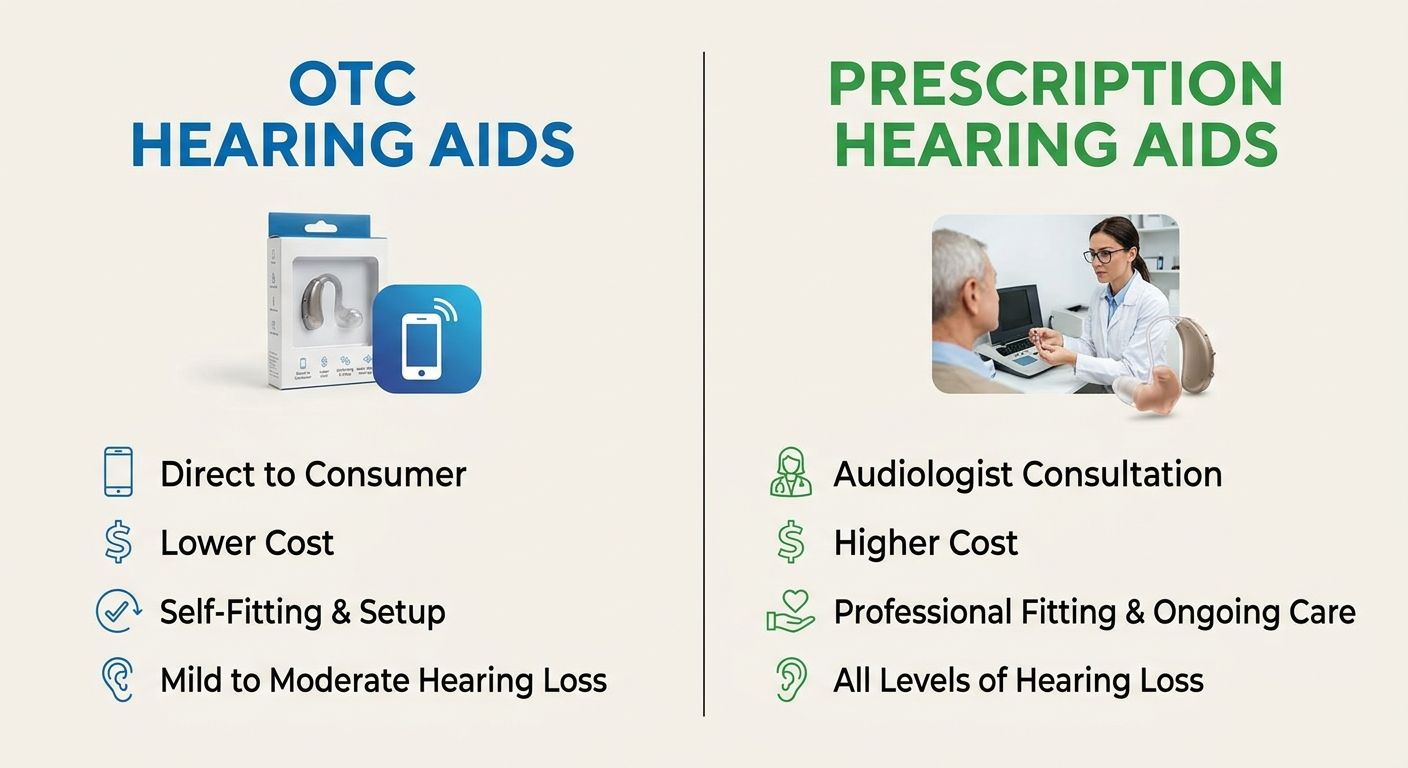
- Hearing aids and assistive listening devices
- Communication strategies (reducing background noise, facing speakers, captions)
Many people are surprised by how much listening effort drops when clarity is improved—even modestly—especially in meetings, on job sites, or while driving with road noise.
Tinnitus and sound sensitivity care
Tinnitus and sound sensitivity often accompany noise damage. Education, sound-based strategies, and evaluation for contributing ear conditions may help many people. Related reading: tinnitus relief options: https://sleepandsinuscenters.com/blog/ent-care-for-tinnitus-relief-effective-treatments-and-tips
While we can’t reliably reverse established PTS, we can often reduce listening effort and improve day-to-day communication.
Prevention & lifestyle/workplace tips (the most important “treatment”)
Because hair-cell injury can be permanent, prevention is central to reducing occupational hearing loss risk.
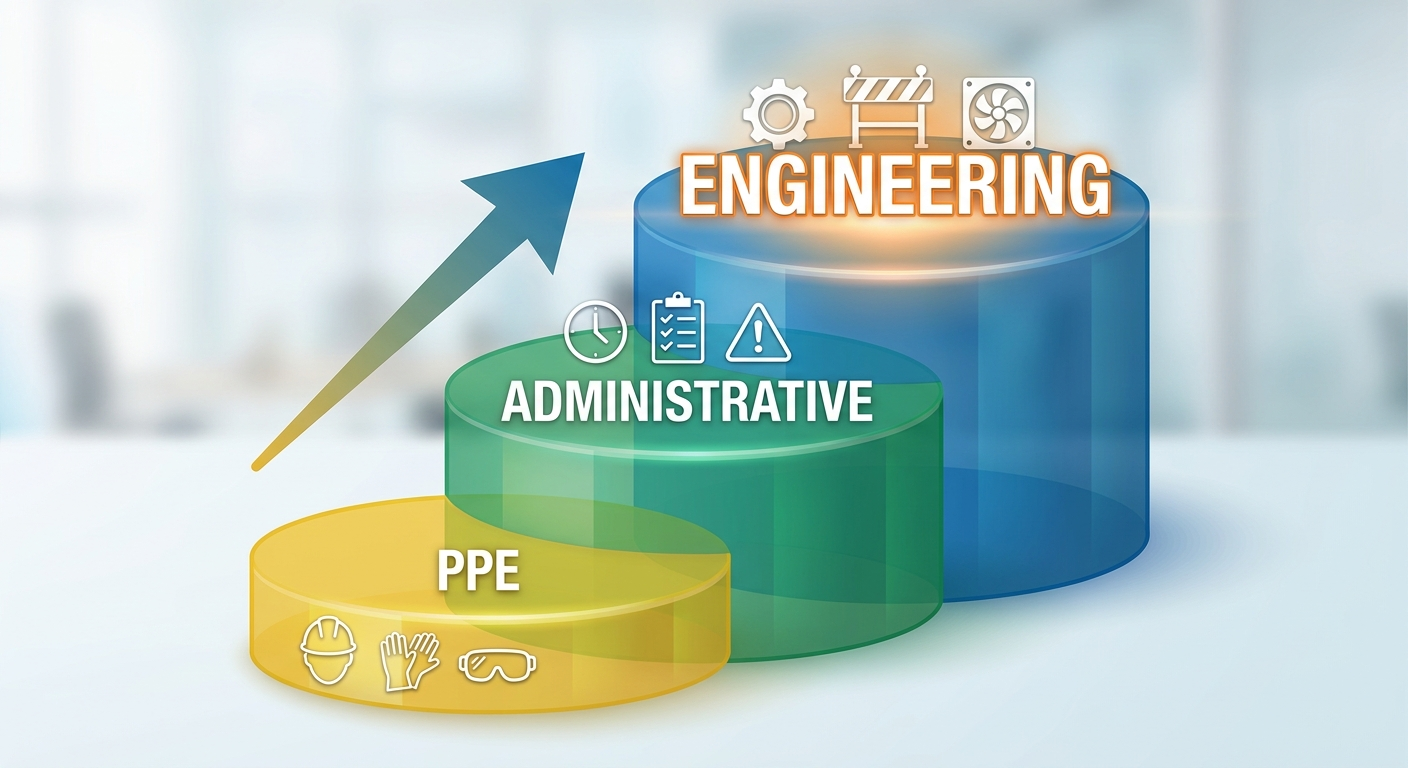
The hierarchy of controls (how workplaces reduce noise exposure)
CDC/NIOSH emphasizes a layered approach:
1. Engineering controls: quieter equipment, barriers/enclosures, maintenance
2. Administrative controls: rotating tasks, increasing distance, scheduling
3. PPE: earplugs/earmuffs as the last line of defense
(CDC/NIOSH: https://www.cdc.gov/niosh/noise/about/index.html)
This matters because PPE is only as good as real-world wear time and fit. When noise is reduced at the source, everyone benefits—including visitors and workers who can’t wear hearing protection continuously.
How to choose and use hearing protection correctly
Protection works best when it’s comfortable, correctly fitted, and worn every time:
- Foam plugs must be inserted deeply enough to seal
- Earmuffs need a good cushion seal (hair, glasses, or hats can interfere)
- Very loud environments may require double protection (plugs + muffs)
For a practical comparison, see custom earplugs vs foam earplugs: https://sleepandsinuscenters.com/blog/custom-earplugs-vs-foam-plugs-which-is-better-for-ear-protection
Hearing conservation programs: what workers should expect
A hearing conservation program commonly includes baseline testing, annual monitoring, training, and access to hearing protection—especially in workplaces covered by the OSHA hearing standard (OSHA 29 CFR 1910.95).
If you’re a worker, it’s reasonable to ask: “Do I have a baseline audiogram on file?” and “What happens if my hearing changes?” Those questions are part of a safety culture, not a complaint.
Off-the-job habits that protect recovery and reduce cumulative risk
Occupational exposure is only part of the picture. Risk can rise with additional noise from:
- Power tools and yard equipment
- Firearms and hunting
- Concerts and sporting events
- High-volume earbuds/headphones
Reducing total lifetime noise “dose” supports long-term hearing health—especially if your job already uses up a lot of your weekly exposure budget.
The best “treatment” for noise injury is preventing the next dose of damage.
Frequently Asked Questions (FAQs)
How long does it take to know if hearing loss is permanent after noise exposure?
Many sources use persistence beyond roughly 14–30 days in research as a sign that a threshold shift may be permanent, but there is no single universal cutoff (Ryan et al., 2016).
If my hearing “returns,” does that mean I’m safe?
Not always. A temporary threshold shift (TTS) can still be associated with underlying cochlear or neural injury, including synaptopathy (Ryan et al., 2016; Natarajan et al., 2023).
What decibel level is “too loud” at work?
Rather than a single “magic number,” risk depends on loudness plus time and whether exposure is repeated (CDC/NIOSH: https://www.cdc.gov/niosh/noise/about/index.html).
Do earplugs fully prevent occupational hearing loss?
They can reduce risk substantially when correctly fitted and consistently worn, but real-world protection varies—especially with poor fit and impulse noise exposures.
Can an OSHA threshold shift miss early damage?
Yes. OSHA STS metrics are useful for surveillance, but they can miss functional issues like speech-in-noise difficulty potentially related to synaptopathy or very high-frequency early changes (Natarajan et al., 2023).
Should I get a hearing test even if I’m young?
Baseline testing can be helpful in noisy jobs because it makes it easier to detect changes over time (OSHA 29 CFR 1910.95).
When to schedule an appointment
Consider scheduling a hearing evaluation if you notice persistent muffled hearing, tinnitus, increasing difficulty understanding speech (especially in noise), or any sudden change after loud sound exposure—particularly if symptoms affect safety at work.
At Sleep and Sinus Centers of Georgia, hearing evaluations can help document baseline hearing, identify changes consistent with occupational hearing loss, and discuss prevention and symptom-management options tailored to your situation.
To get started, book an appointment through our website: https://www.sleepandsinuscenters.com/
Early evaluation can help you protect the hearing you have and reduce listening effort at work and home.
References
- Natarajan et al. “Noise-Induced Hearing Loss” (2023). https://pmc.ncbi.nlm.nih.gov/articles/PMC10059082/
- Ryan et al. “Temporary and Permanent Noise-Induced Threshold Shifts” (2016). https://pmc.ncbi.nlm.nih.gov/articles/PMC4988324/
- CDC/NIOSH. “About Occupational Hearing Loss.” https://www.cdc.gov/niosh/noise/about/index.html
- OSHA. 29 CFR 1910.95 Occupational Noise Exposure. https://www.osha.gov/laws-regs/regulations/standardnumber/1910/1910.95
Medical disclaimer: This article is for general education and is not a substitute for personalized medical advice, diagnosis, or treatment. If you have sudden hearing loss, severe symptoms after a loud event, or dizziness/imbalance, seek urgent medical evaluation.
This article is for educational purposes only and is not medical advice. Please consult a qualified healthcare provider for diagnosis and treatment.
Don’t let allergies slow you down. Schedule a comprehensive ENT and allergy evaluation at Sleep and Sinus Centers of Georgia. We’re here to find your triggers and guide you toward lasting relief.