Nasal Scabs: Causes, Treatment, and When to See a Doctor
Finding nasal scabs can be unsettling—especially if they keep coming back, bleed easily, or feel sore every time you touch your nose. The good news is that, in many people, scabs inside the nose are simply the result of dryness or minor irritation and improve with basic, moisture-focused care.
That said, persistent crusting can also happen when the front of the nose becomes inflamed or infected. One common example is an infection near the nostril opening called nasal vestibulitis, which may need medical attention—particularly if pain, swelling, or pus shows up.
Below is an educational guide to what typically causes scabs, what symptoms to watch for, what home care often helps, and how to know when it’s time to consider an evaluation.
Small problems often improve with moisture and gentle care; escalating pain, redness, or pus warrants medical evaluation.
What Are Nasal Scabs (and Why Do They Form)?
Nasal scabs are usually dried blood, mucus, and crusted secretions that form when the lining of the nose becomes irritated and then starts to heal. Think of a scab as the body’s “patch” over a small area of injury—similar to what happens on a scraped knee, just in a tighter, drier space.
The nose is especially prone to crusting because:
- The tissue near the nostril opening is delicate.
- Airflow constantly dries the lining.
- Everyday habits—blowing your nose, rubbing, or picking—can re-irritate the same area.
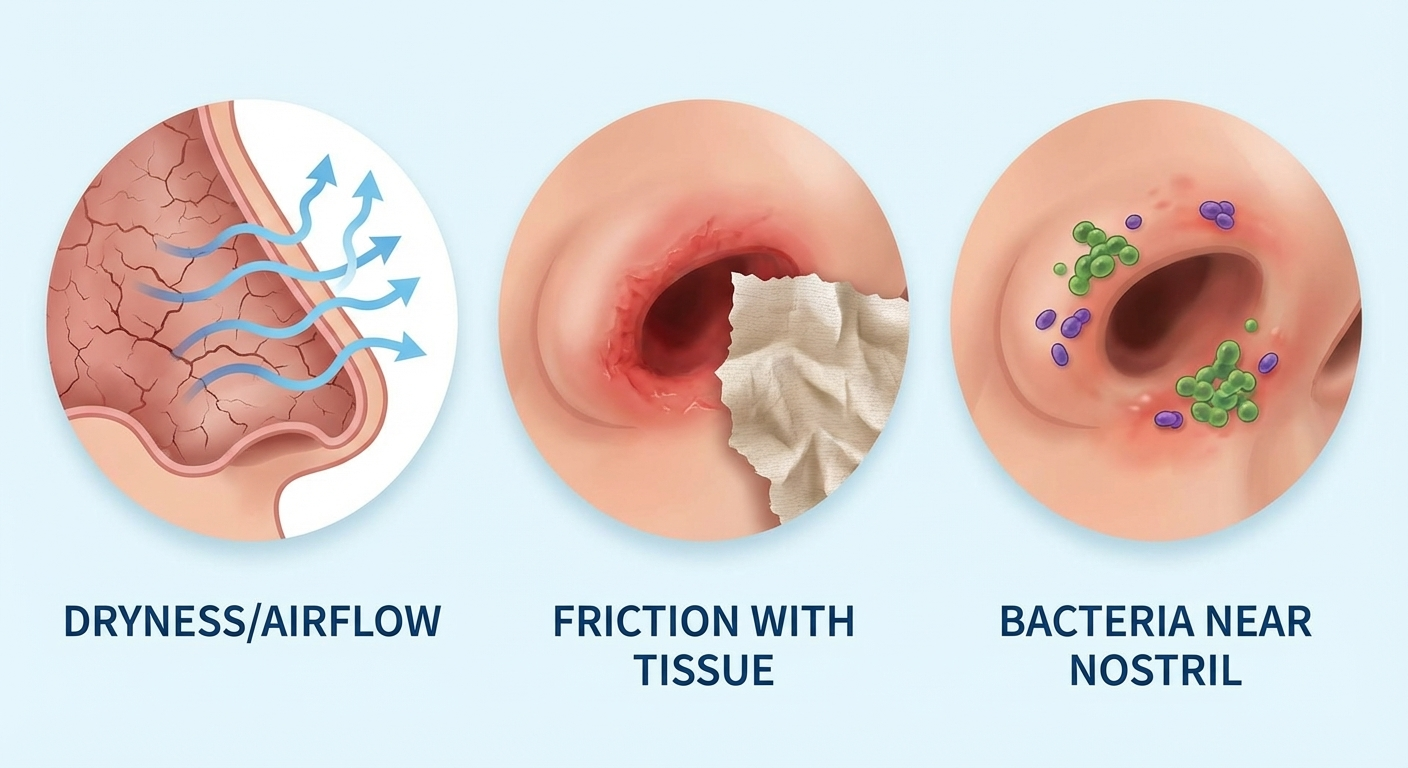
A helpful way to picture it: if the skin at the front of the nostril gets a tiny crack, every breath is like a light “fan” blowing over it. That ongoing airflow can slow healing unless the tissue stays moist and protected.
Healthline provides a helpful overview of common causes and treatments for scabs in the nose. (Healthline, “Scabs in Nose: Causes, Treatments, and More”)
Most nasal scabs form where airflow and friction repeatedly dry and irritate the front of the nostrils.
Common Symptoms That Go Along With Nasal Scabs
Typical, mild symptoms (often safe for home care)
Many cases of nasal scabs are mild and may come with:
- Dryness or a tight feeling inside the nostrils
- Mild soreness or tenderness
- Crusting at the very front of the nose (the nasal vestibule)
- A small amount of blood when blowing the nose
- Itching or irritation
A common “everyday” pattern is noticing crusting in the morning (after hours of dry airflow overnight), then seeing a little blood after you blow your nose. If dryness and bleeding tend to go together for you, this may also be useful: https://sleepandsinuscenters.com/blog/dry-nose-causing-nosebleeds-ent-causes-and-care
Symptoms that suggest infection or worsening inflammation
Symptoms that may point to infection (or more intense inflammation) include:
- Increasing pain or tenderness at the nostril opening
- Redness, swelling, or warmth at the rim of the nostril
- A pimple-like bump, boil, pus, or rapidly reforming crust may suggest nasal vestibulitis or a furuncle
- Foul smell, thicker drainage, or recurrent nosebleeds
Clinicians often listen for this kind of “escalation story”: “It started as dryness, but now it hurts, looks red, and keeps crusting over within hours.” These patterns are commonly described in patient resources on nasal vestibulitis and bacterial nasal infections. (Cleveland Clinic; Merck Manual—Professional)
Mild dryness and light bleeding can be self-managed, but spreading redness, swelling, pus, or fever should prompt a medical evaluation.

Causes of Nasal Scabs (Most to Least Common)
1) Dry air / dehydration / low humidity (most common)
Dry indoor heat in winter, air conditioning, travel, or living in low-humidity climates can dry the nasal lining. Mouth breathing at night may make it worse, because airflow bypasses the nose’s normal humidifying “system” and can leave tissues drier overall.
When the lining dries out, tiny cracks can form—leading to irritation, small bleeds, and crusting. Some people describe this as a “paper-cut feeling” in one nostril, especially first thing in the morning.
2) Minor trauma to the nasal lining
The most common “injury” is everyday friction. Examples include:
- Nose picking or frequent rubbing
- Aggressive nose blowing during a cold
- Ongoing irritation after an upper respiratory infection
- Intranasal devices or airflow (CPAP, nasal cannula, nasal dilators)
Even if trauma is minor, it’s easy to get stuck in a loop: irritation leads to scabbing, the scab feels annoying, it gets disturbed, and then the area bleeds and crusts again. When the same spot gets disrupted repeatedly, scabs may recur in the exact same location.
3) Chronic inflammation (rhinitis)
Allergic rhinitis and nonallergic rhinitis can keep the nasal lining inflamed, making it more likely to crust and bleed. Postnasal drip may also irritate the front of the nostrils over time, especially if you’re frequently wiping or rubbing the nose.
If recurring irritation seems linked to long-term congestion, seasonal triggers, or exposure patterns, addressing the underlying inflammation may help reduce repeat episodes. See: https://sleepandsinuscenters.com/treating-chronic-rhinitis
4) Local bacterial infection: nasal vestibulitis (often Staphylococcus aureus)
Nasal vestibulitis is an infection of the front part of the nasal cavity. One common bacterium involved is Staphylococcus aureus, which commonly colonizes the nose (nasal colonization with S. aureus can increase infection risk when the skin barrier is disrupted).
Why it matters: while many cases stay localized, vestibulitis can sometimes progress to a more painful boil (furuncle) or spread into surrounding skin (cellulitis). (Cleveland Clinic; Merck Manual—Professional)
For a deeper explanation, see: https://sleepandsinuscenters.com/blog/nasal-vestibulitis-causes-care-complete-guide-for-treatment
5) Less common / needs medical evaluation sooner
Less common causes aren’t the most likely explanation for routine crusting, but they’re important to consider when symptoms are severe, persistent, or unusual:
- Fungal disease (more likely in people who are immunocompromised)
- Autoimmune or inflammatory disorders
- Structural issues or septal injury that contributes to chronic dryness and crusting
In other words, if you’re doing the right basics—saline, moisture, gentle care—and it still won’t settle, it’s reasonable to ask whether there’s something additional keeping the tissue inflamed or fragile. Rare pathways to septal damage are discussed in the medical literature. (PMC, 2012)
Common causes include dryness and friction, while infection, chronic inflammation, or rare conditions deserve earlier evaluation.
At-Home Treatment for Nasal Scabs (First-Line, Patient-Friendly)
For many people, the most effective dry nose treatment is consistent moisture plus avoiding re-injury. You can think of this as creating a “healing-friendly environment” so the lining can repair itself without being repeatedly dried out or scraped. Healthline includes similar conservative options such as saline and moisturizers. (Healthline)
Step 1 — Add moisture (the foundation)
Options that may help soften crusts and support healing:
- Saline spray as needed (often several times per day)
- Saline irrigation (squeeze bottle/Neti-style) on a schedule that’s comfortable and appropriate for you
For guidance, see: https://sleepandsinuscenters.com/blog/nasal-rinses-how-often-should-you-use-them
If crusts are painful, many people find it helpful to start with saline first, wait a few minutes, and then gently blow—rather than trying to remove a dry crust all at once.
Water safety note: If you irrigate, it’s important to use distilled or previously boiled water to reduce infection risk: https://sleepandsinuscenters.com/blog/neti-pot-water-safety-why-boiled-or-distilled-water-is-essential-a906d
Step 2 — Protect the healing tissue (stop re-injury)
Scabs are easy to disrupt, and restarting bleeding can prolong irritation.
- Avoid picking or scraping crusts whenever possible
- Blow gently; consider softer tissues
- If you use a CPAP or oxygen cannula, dryness can be part of the picture—moisture strategies may be especially useful
If you catch yourself rubbing the same nostril repeatedly (often during allergy seasons or stressful days), that habit alone can keep a small sore from healing.
Step 3 — Consider a topical moisturizer (thin layer)
A thin coating of an emollient can reduce friction and slow moisture loss.
- Some clinicians advise a thin layer of petroleum jelly or a nasal moisturizer sparingly
- If advised by a healthcare provider, a thin layer after saline—especially before bed—may be reasonable
- Practical tip: use a cotton swab only at the front of the nostril—avoid inserting deep
For more detail: https://sleepandsinuscenters.com/blog/is-petroleum-jelly-safe-for-nose-use-benefits-and-risks-explained
Step 4 — Optimize your environment
Small environmental changes can reduce nasal crusting:
- Use a bedroom humidifier and keep it clean
- Stay hydrated
- Avoid smoke exposure and other drying irritants
A simple, concrete example: if scabs reliably worsen every winter when the heat turns on, adding a clean humidifier in the bedroom and using saline before bed may reduce flare-ups for many people.
Moisture plus gentle habits helps break the cycle of dryness, bleeding, and re-injury for most people.


When Nasal Scabs Need Medication (Possible Infection)
If symptoms suggest infection—especially increasing pain, redness, swelling, or pus—seek medical evaluation for possible nasal vestibulitis. (Cleveland Clinic)
How clinicians treat suspected nasal vestibulitis
A typical medical approach may include an exam and, when appropriate, a topical antibiotic for localized infection. Common topical options include mupirocin nasal ointment or bacitracin. Topical therapy is often chosen first because the infection is frequently superficial.
At an office visit, a clinician may look for a focal tender area, a boil, spreading redness, or crusting that reforms quickly. They’ll also consider what set it off (recent cold, frequent blowing, allergy flare, nose picking, device-related dryness).
Mupirocin: what patients should know
Mupirocin is an antibiotic that can target common bacteria, including Staphylococcus aureus. When prescribed for nasal use, it’s applied inside the nostril in a specific way for a set duration. (Mayo Clinic)
Because scabbing can come from several causes (dryness, irritation, allergy, infection), it’s generally not ideal to self-start leftover antibiotics—using the wrong medication can delay the right diagnosis and the right plan.
When oral antibiotics or ENT procedures may be needed
More extensive treatment is sometimes considered when there are signs the infection is spreading or deepening, such as:
- Spreading redness/swelling (possible cellulitis)
- A very painful boil (furuncle)
- Fever, immune compromise, or frequent recurrence
- Need for drainage or culture-guided therapy
These escalation points are discussed in standard references on bacterial nasal infections. (Merck Manual—Professional)
If you notice worsening pain, redness, swelling, pus, or fever, see a clinician rather than self-treating.
Complications (Uncommon, but Important)
Short-term complications
Most people don’t develop complications, but they can include:
- Recurrent nosebleeds if scabs keep getting disrupted
- Spread of infection into surrounding skin (cellulitis) (Merck Manual—Professional)
The main reason to take worsening symptoms seriously is not to create alarm—it’s to prevent a small, localized problem from becoming harder to treat.
Rare but serious complications
In severe or untreated cases—or when there’s an unusual underlying cause—septal tissue can be affected. Rarely, this may contribute to septal perforation (a hole in the nasal septum). (PMC, 2012)
Complications are uncommon, but early care prevents small issues from becoming bigger problems.
When to See a Doctor (or ENT) for Nasal Scabs
If you’re trying to decide whether to seek care, this section is meant as “triage education,” not a diagnosis.
Make an appointment soon if you have:
- Nasal scabs persisting despite 1–2 weeks of consistent saline + moisturizing care
- Severe or worsening pain
- Increasing redness, swelling, or warmth at the nostril
- Recurrent or persistent bleeding
- Frequent recurrences (it keeps coming back)
If you’ve been stuck in a cycle for weeks—brief improvement, then immediate relapse—an exam can help clarify whether you’re dealing with ongoing dryness/trauma, uncontrolled inflammation, or a localized infection.
You may also find this helpful: https://sleepandsinuscenters.com/blog/when-should-i-see-an-ent
Seek urgent care same day if you have:
- Fever
- Rapidly spreading facial redness/swelling
- A very tender nasal tip/vestibule with a boil
- Signs of deeper infection, or you’re immunocompromised
Cleveland Clinic and the Merck Manual describe similar warning signs for complicated nasal infections. (Cleveland Clinic; Merck Manual—Professional)
Persistent, worsening, or severe symptoms are a signal to seek timely medical care.

Lifestyle & Prevention Tips to Reduce Recurrence
Daily habits that help
- Use saline spray during dry seasons or when indoor heating is running
- Keep humidifiers clean and maintained
- Practice gentle nose-blowing (avoid “forceful” blowing)
- Manage underlying rhinitis when present: https://sleepandsinuscenters.com/treating-chronic-rhinitis
Consistency matters more than intensity. A small amount of moisture support done daily often works better than occasional “big” efforts after the nose is already irritated.
Avoid common irritants
- Smoke or vaping exposure
- Overuse of decongestant sprays (can trigger rebound irritation in some people)
- Picking—even “just a little”—which can restart the irritation cycle
If you need a practical substitute for picking, try saline first and let crusts soften. That one change can reduce repeat micro-injury for many people.
Gentle, consistent moisture care and avoidance of irritants reduce flare-ups over time.
FAQs About Nasal Scabs (Patient-Friendly)
“Are nasal scabs serious?” Usually not. Many cases come from dryness or minor irritation and improve with moisture and avoiding re-injury. More concerning signs include worsening pain, spreading redness, fever, frequent bleeding, or persistence.
“Why do I keep getting scabs in the same spot?” This often happens when dryness and micro-trauma repeat in a cycle. In some cases, a localized infection like nasal vestibulitis can contribute. If it keeps recurring despite prevention steps, an evaluation can help clarify the cause and rule out less common issues.
“Can a staph infection cause scabs in the nose?” Yes. Staphylococcus aureus, which commonly colonizes the nose, is associated with nasal vestibulitis, and topical antibiotics are often used when a clinician suspects bacterial infection. (Cleveland Clinic; Merck Manual—Professional)
“Is petroleum jelly safe to put in your nose?” Some clinicians advise a thin layer placed only at the front of the nostril for dryness; avoid deep insertion and frequent heavy use. People with certain health risks may be advised to use alternative moisturizers—this is a good topic to review with a clinician. For more detail: https://sleepandsinuscenters.com/blog/is-petroleum-jelly-safe-for-nose-use-benefits-and-risks-explained
“Should I remove the scab to help it heal?” Often, no. Removing crusts can restart bleeding and may increase irritation or introduce bacteria. Softening crusts with saline and moisture is typically gentler.
When in doubt, ask a clinician—especially if symptoms are severe, persistent, or keep returning.
Related Reading (Sleep and Sinus Centers of Georgia)
- Nasal vestibulitis: causes and treatment guide: https://sleepandsinuscenters.com/blog/nasal-vestibulitis-causes-care-complete-guide-for-treatment
- Dry nose and nosebleeds: causes and care: https://sleepandsinuscenters.com/blog/dry-nose-causing-nosebleeds-ent-causes-and-care
- Is petroleum jelly safe for nasal dryness?: https://sleepandsinuscenters.com/blog/is-petroleum-jelly-safe-for-nose-use-benefits-and-risks-explained
- How often should you use nasal rinses?: https://sleepandsinuscenters.com/blog/nasal-rinses-how-often-should-you-use-them
- Neti pot and irrigation water safety: https://sleepandsinuscenters.com/blog/neti-pot-water-safety-why-boiled-or-distilled-water-is-essential-a906d
- When should I see an ENT?: https://sleepandsinuscenters.com/blog/when-should-i-see-an-ent
Medical disclaimer
This article is for general education and is not a substitute for personalized medical advice, diagnosis, or treatment. If you have severe symptoms, rapidly worsening redness/swelling, fever, significant bleeding, or you’re immunocompromised, seek urgent medical care.
Book an appointment
If nasal scabs are persistent, painful, frequently bleeding, or keep recurring, an in-person evaluation can help identify the cause and the most effective treatment plan. You can book an appointment with Sleep and Sinus Centers of Georgia at https://www.sleepandsinuscenters.com/.
Sources
- Cleveland Clinic. Nasal Vestibulitis. https://www.clevelandclinic.org/health/diseases/24928-nasal-vestibulitis
- Merck Manual (Professional). Bacterial Nasal Infections. https://www.merckmanuals.com/professional/ear-nose-and-throat-disorders/nose-and-paranasal-sinus-disorders/bacterial-nasal-infections
- Mayo Clinic. Mupirocin (nasal route). https://www.mayoclinic.org/drugs-supplements/mupirocin-nasal-route/description/drg-20064917
- Healthline. Scabs in Nose: Causes, Treatments, and More. https://www.healthline.com/health/scabs-in-nose
- PubMed Central (PMC). A Rare Case of Nasal Septal Perforation… (2012). https://pmc.ncbi.nlm.nih.gov/articles/PMC3649030/
This article is for educational purposes only and is not medical advice. Please consult a qualified healthcare provider for diagnosis and treatment.
Don’t let allergies slow you down. Schedule a comprehensive ENT and allergy evaluation at Sleep and Sinus Centers of Georgia. We’re here to find your triggers and guide you toward lasting relief.