Nasal Irrigation for Deviated Septum: Benefits, Risks, and How to Do It Safely
Quick Answer (TL;DR)
Nasal irrigation for deviated septum symptoms can help reduce congestion, thick mucus, and post-nasal drip—but it cannot straighten a deviated septum. If the main problem is structural blockage, the definitive correction is septoplasty, not home nasal irrigation. Septoplasty is a surgical procedure that should only be considered after consultation with an ENT specialist. Evidence-based guidelines support saline irrigation (often high-volume, isotonic saline) for chronic sinus symptoms and post-procedure care, and public health agencies stress safe-water rules to prevent rare but serious infections. Sources: AAO-HNS guideline summary (2022); CDC (2025); FDA (2025). AAO-HNS/PMC 2022: https://pmc.ncbi.nlm.nih.gov/articles/PMC8901942/; CDC 2025: https://www.cdc.gov/naegleria/prevention/sinus-rinsing.html; FDA 2025: https://www.fda.gov/consumers/consumer-updates/rinsing-your-sinuses-neti-pots-safe
— Italic takeaway: Nasal irrigation eases symptoms from a deviated septum, but only surgery can correct the structure. —

What a Deviated Septum Is (and Why It Can Make You Feel Congested)
The septum’s job in breathing and drainage
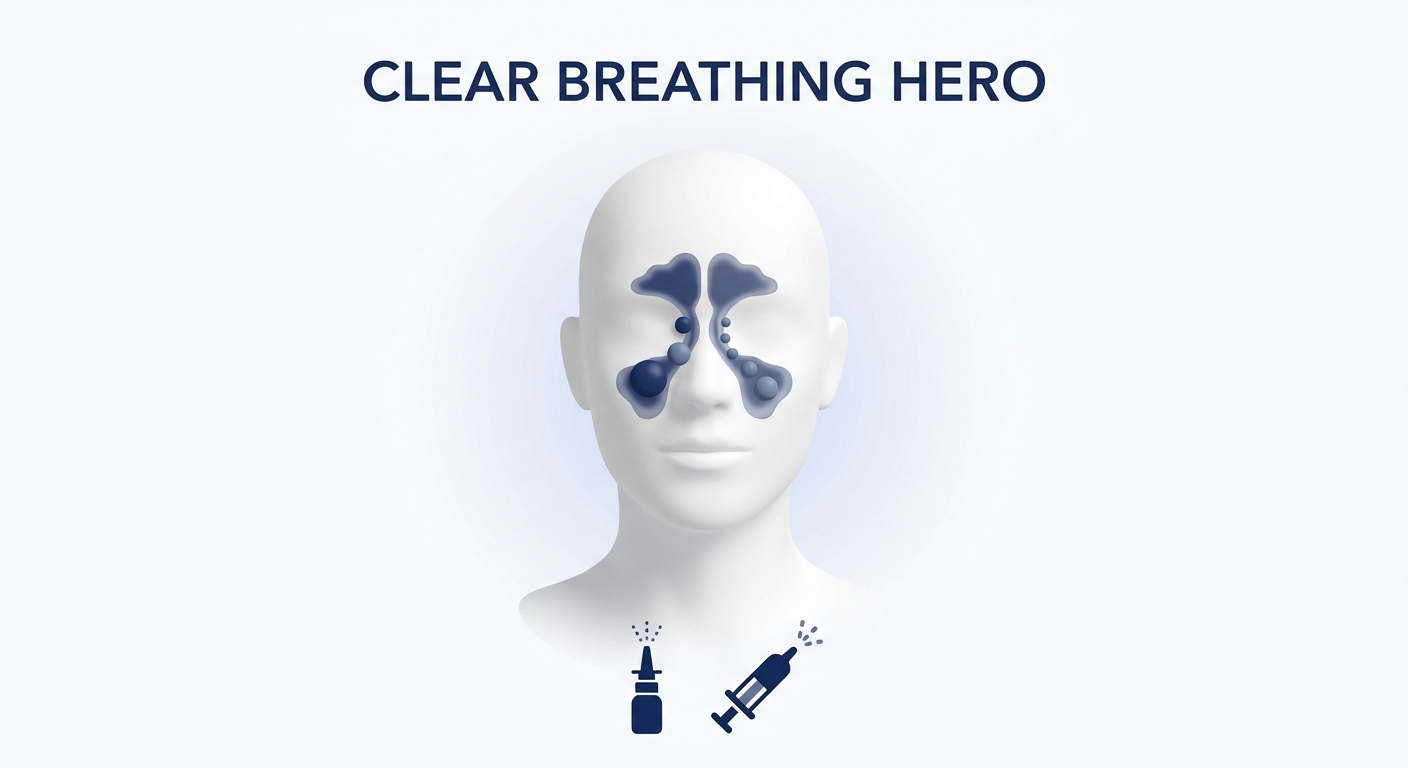
Your nasal septum is the thin wall of cartilage and bone that separates the left and right nasal passages. When it’s significantly off-center, airflow can become uneven—often creating a narrower side that feels blocked.
Think of it like breathing through two hallway doors: if one door is partly closed, traffic backs up there. The other side may feel “fine,” but the tight side still sets the tone for how well you breathe overall—especially at night or during exercise.
A tight passage can also contribute to:
- Turbulent airflow, which may feel more “stuffy” than a wide, smooth airflow path
- Dryness and irritation, which can contribute to swelling and crusting
- Mucus “traffic jams,” where thick mucus is more likely to linger instead of moving out efficiently
Common symptoms people try to relieve with irrigation
Many people explore a saline nasal irrigation routine for deviated septum–related discomfort because symptoms often cluster around mucus and swelling, such as:
- Unilateral (one-sided) or alternating nasal blockage
- Thick mucus that feels “stuck,” frequent nose blowing
- Post-nasal drip, throat clearing, cough
- Facial pressure or recurring sinus-type symptoms
- Sleep disruption from mouth breathing or snoring (common, though not universal)
Important reality check: Irrigation may help relieve symptoms related to mucus, crusting, irritants, and swelling around the deviation, but it does not alter the structural deviation itself.
For a broader overview of treatment paths, see our page on deviated septum relief options: https://sleepandsinuscenters.com/deviated-septum-relief
— Italic takeaway: A deviated septum narrows airflow and traps mucus; irrigation eases these effects without changing the structure. —
Why Nasal Irrigation Helps When You Have a Deviated Septum
Symptom relief mechanisms (plain-English version)
Even when anatomy is a factor, nasal irrigation can still support comfort and airflow by helping to:
- Wash out irritants like dust, pollen, and indoor allergens
- Loosen and flush thick mucus and crusting that narrows passages further
- Moisturize the nasal lining, supporting normal mucus movement
- Reduce post-nasal drip by clearing excess secretions before they trickle backward
Waking up with one side feeling “glued shut” is often due to a combination of thicker mucus and swollen tissue narrowing the nasal passage, not solely the deviated septum. Nasal irrigation cannot widen the space permanently, but it can clear what’s crowding it today.
This is why nasal irrigation often feels most helpful during allergy season, in dry winter air, or whenever mucus thickens.
What the evidence and guidelines say
Clinical practice guidance supports saline irrigation as part of care for chronic sinus issues and after certain nasal/sinus procedures, with common recommendations favoring isotonic saline and higher-volume delivery methods. Source: AAO-HNS/PMC 2022: https://pmc.ncbi.nlm.nih.gov/articles/PMC8901942/
Major health systems also describe nasal irrigation as generally low-risk when done correctly—especially when you follow safe-water rules and clean the device well. See: https://my.clevelandclinic.org/health/treatments/24286-nasal-irrigation
Realistic expectations (so you don’t get disappointed)
You might notice:
- Less day-to-day blockage
- Fewer “gunk” days with thick mucus
- Less throat clearing from post-nasal drip
You will not get:
- A straightened septum
- A permanent fix if the main problem is structural narrowing (that’s the septoplasty vs home treatment distinction)
A helpful way to frame it: nasal irrigation is like cleaning and humidifying the airway you have, not remodeling it.
— Italic takeaway: Irrigation improves mucus flow and comfort, but anatomy-driven blockage may still need specialist care. —
Benefits of Nasal Irrigation for Deviated Septum Symptoms
Benefits you can feel day-to-day
When done correctly, a saline nasal irrigation routine may help with:
- Less congestion and stuffiness
- Less thick mucus (and fewer large clumps)
- Reduced post-nasal drip and throat irritation
Many people describe the difference as “less pressure to constantly sniff,” or “I can breathe through my nose long enough to fall asleep.” Those are symptom wins—even if one side still feels narrower.
Benefits in common related conditions
- Allergy season: irrigation can physically remove allergens that settle in the nose.
- Recurrent sinus symptoms: clearing mucus may reduce “stagnation,” though it’s not a substitute for evaluation if symptoms are frequent or severe.
NYU Langone also lists saline-based approaches among non-surgical symptom strategies for deviated septum–related complaints: https://nyulangone.org/conditions/deviated-septum/treatments/medication-for-deviated-septum
Post-procedure support (when applicable)
Clinicians commonly use saline irrigation as supportive care after certain nasal/sinus procedures because it helps clear debris and supports healing. Source: AAO-HNS/PMC 2022: https://pmc.ncbi.nlm.nih.gov/articles/PMC8901942/
— Italic takeaway: Consistent, gentle nasal irrigation can reduce daily congestion and support healing after procedures. —
Risks, Side Effects, and Who Should Ask a Clinician First
Common, usually mild side effects
These are typically technique- or solution-related:
- Brief burning/stinging (often from the wrong salt ratio or temperature)
- Ear pressure/fullness (more likely if flow is forceful or you’re very congested)
- Mild nosebleeds if the lining is already dry or irritated
If burning happens, the fix is often practical: switch to isotonic saline, keep it room temperature, and reduce pressure. Many clinicians summarize it this way: “Gentle flow beats force.”
Serious (rare) risks—water safety matters
The primary safety concern is the water used for irrigation, not the saline solution itself. Untreated tap water may contain microorganisms that are harmless if swallowed but potentially dangerous if introduced into the nasal passages, including rare pathogens like Naegleria fowleri and Acanthamoeba that can cause serious infections. Sources: CDC 2025: https://www.cdc.gov/naegleria/prevention/sinus-rinsing.html; FDA 2025: https://www.fda.gov/consumers/consumer-updates/rinsing-your-sinuses-neti-pots-safe
These infections are rare, but prevention steps are straightforward—so it’s worth being strict about them.
People who should check with a clinician before starting
It’s reasonable to be extra cautious if you:
- Are immunocompromised or taking immune-suppressing medications
- Have frequent nosebleeds, recent nasal trauma, or significant ear problems
- Recently had nasal/sinus surgery and need individualized instructions
- Have chronic sinus infections or are unsure about your symptoms
For more on neti pot and irrigation safety, see: https://sleepandsinuscenters.com/blog/neti-pot-safety-tips-essential-steps-for-safe-nasal-irrigation
— Italic takeaway: Most side effects are mild and technique-related; the key safety issue is using properly treated water. —

What You Need to Irrigate Safely (Checklist)
The right water (non-negotiable)
For proper sinus rinse water safety, use:
- Distilled or sterile water, or
- Boiled and cooled water (boil per public health guidance, then cool to room temperature)
CDC and FDA guidance endorse distilled/sterile/boiled-and-cooled approaches. Sources: CDC 2025: https://www.cdc.gov/naegleria/prevention/sinus-rinsing.html; FDA 2025: https://www.fda.gov/consumers/consumer-updates/rinsing-your-sinuses-neti-pots-safe
The right saline concentration and temperature
Most people tolerate isotonic saline best (close to the body’s natural salt level). Use room-temperature solution—too hot or too cold can be uncomfortable. Source: AAO-HNS/PMC 2022: https://pmc.ncbi.nlm.nih.gov/articles/PMC8901942/
- Compare comfort options: buffered vs isotonic saline overview: https://sleepandsinuscenters.com/blog/buffered-vs-isotonic-saline-rinse-key-differences-and-benefits

Choosing a device (what works best for most people)
For deviated septum symptoms, many do well with high-volume, low-pressure tools:
- Squeeze bottle (gentle squeeze)
- Gravity neti pot
Powered irrigators can be useful for some, but it’s still best to aim for low pressure and meticulous cleaning—especially if one side is narrow and prone to feeling “backed up.”
— Italic takeaway: Safe water, isotonic solution, and low-pressure delivery are the cornerstones of comfortable, effective irrigation. —
Step-by-Step: How to Do Nasal Irrigation Safely (With a Deviated Septum)
Before you start
- Wash your hands
- Mix saline using safe water
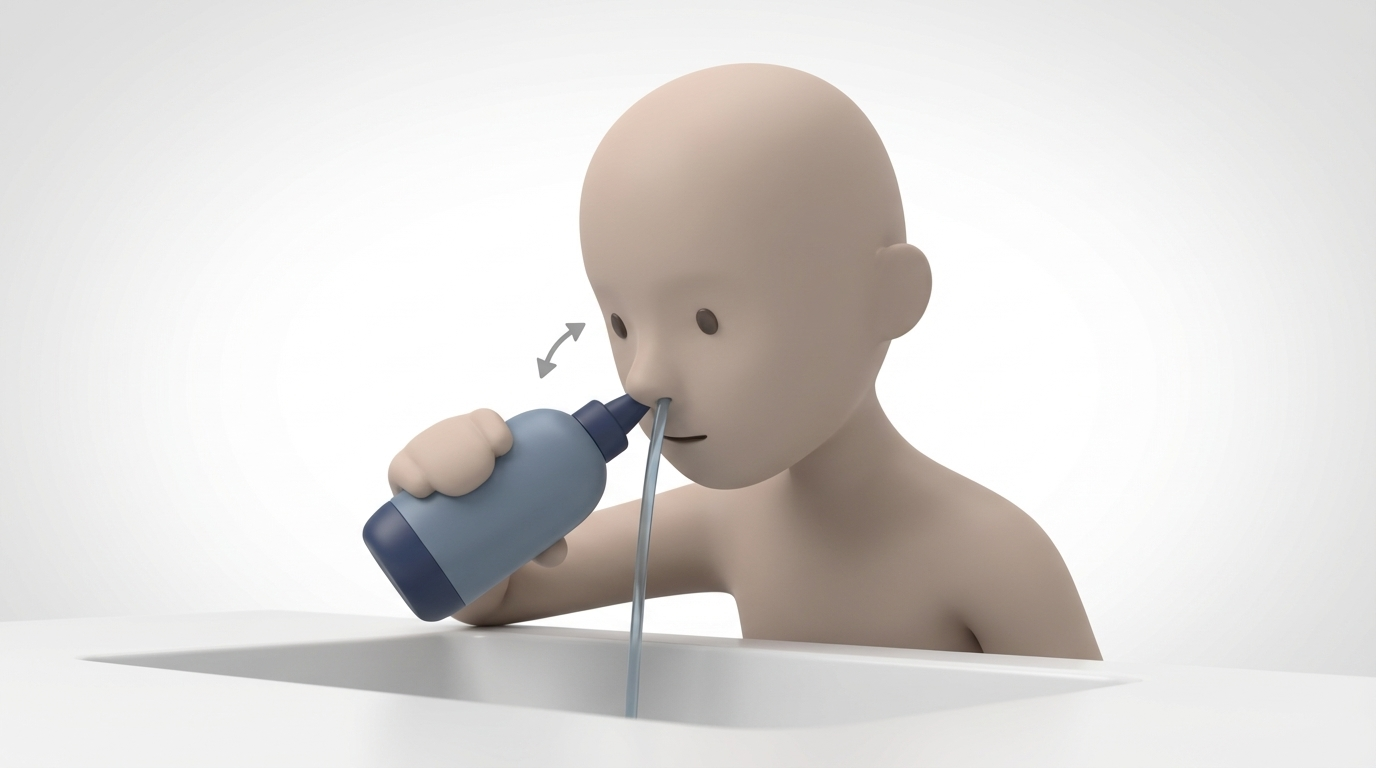
- Lean over a sink, keep your mouth open, and breathe normally
If you’re very congested, a calm setup helps. Have tissues ready, and plan to take your time—rushing often leads to forceful squeezing, which can increase discomfort.
Best head position and pour angle (especially with a deviated septum)
- Lean slightly forward
- Gently tilt your head to one side (avoid tipping your head back)
- If one side is very blocked, consider starting on the more open side to establish flow—keep pressure gentle
With a deviation, the irrigation may not travel “textbook style.” It might come out the other nostril, the same nostril, or partly through the mouth. That variation can be normal—focus on gentle flow and comfort.
The irrigation itself (simple steps)
1) Place the spout at the nostril opening (avoid inserting the spout too deeply)
2) Apply gentle flow (gravity or light squeeze)
3) Let solution drain out the opposite nostril (or sometimes the same side—deviations can change the path)
4) Switch sides
5) Gently blow your nose afterward (avoid forceful “blasting”)
Tip: If you feel ear pressure, pause, reset your head tilt slightly forward, and resume with less pressure.
Aftercare
- If solution drips later, bend forward and gently blow again
- If you feel fluid “trapped,” avoid lying flat immediately
- Consider waiting a few minutes before yoga, stretching, or bedtime to reduce late drips
— Italic takeaway: Gentle technique and patient positioning matter more than force; adjust angles and pressure for comfort. —

Cleaning and Replacing Your Irrigation Device (Prevents Contamination)
Daily cleaning basics
- Wash the device after each use, following manufacturer instructions
- Let it air-dry completely (moisture encourages microbial growth)
A good rule: treat your irrigation device like a reusable water bottle—if it stays damp and unwashed, microbes have more opportunity to grow.
Sterilizing and replacement schedule
- Replace bottles/tips as directed or sooner if they look worn, cloudy, or damaged
- Do not share devices
Source: FDA 2025: https://www.fda.gov/consumers/consumer-updates/rinsing-your-sinuses-neti-pots-safe
— Italic takeaway: Clean, dry, and replace your device regularly to keep irrigation low-risk. —
How Often Should You Irrigate If You Have a Deviated Septum?
A practical starting plan
Frequency depends on symptom patterns, but many people explore:
- Once daily for 1–2 weeks during active symptoms
- Then a few times per week as maintenance if it’s helpful
For a deeper discussion, see: https://sleepandsinuscenters.com/blog/nasal-rinses-how-often-should-you-use-them
Signs you may be overdoing it
- Increasing dryness or burning
- More frequent nosebleeds
- More ear pressure after irrigation
If any of these show up, dialing back frequency and double-checking the salt ratio/temperature often helps.
When to stop and get checked
Seek evaluation if you notice worsening facial pain, fever, significant bleeding, or persistent one-sided symptoms.
— Italic takeaway: Start daily during flare-ups, then taper; pull back if dryness or bleeding develops. —
When Irrigation Isn’t Enough: Other Treatments for Deviated Septum Symptoms
Medical options (symptom control)
Depending on what’s driving symptoms, supportive options can include:
- Saline spray (lighter moisture) vs. nasal irrigation (more mucus-clearing volume)
- Steroid nasal sprays to reduce inflammation/swelling (still does not change structure)
- Allergy management when relevant (testing, trigger reduction, and symptom-control strategies)
A common pattern is “stacking” low-risk habits: nasal irrigation to clear mucus + anti-inflammatory spray (if appropriate) + allergen control.
Procedural/surgical options (structural correction)
If anatomy is the main driver of obstruction, septoplasty is the procedure that corrects the deviated septum. This is the key septoplasty vs home treatment difference: nasal irrigation may reduce congestion, but it cannot change the underlying shape. Septoplasty should be considered after consultation with an ENT specialist.
When to see an ENT
Consider an evaluation if there’s persistent one-sided blockage, sleep disruption, recurrent sinus infections, or symptoms that don’t improve with reasonable home and medical approaches.
— Italic takeaway: Medications and irrigation manage symptoms; only septoplasty corrects structural obstruction. —
Lifestyle Tips That Pair Well With Nasal Irrigation
Reduce triggers that thicken mucus
- Manage indoor allergens (dust, pet dander)
- Avoid smoke or vaping exposure
Support nasal lining health
- Use a humidifier if air is dry (and clean it regularly)
- Stay hydrated
- Be cautious with petroleum-based products inside the nose (avoid deep application)
Sleep-position strategies
- Slight head elevation may reduce nighttime congestion and post-nasal drip
- Some people find side-sleeping preferences based on which side feels more open, recognizing that swelling patterns can vary
— Italic takeaway: Pair irrigation with allergen control, humidity, and smart sleep posture for better results. —
FAQs
Can nasal irrigation fix a deviated septum?
No. Nasal irrigation can relieve mucus and congestion symptoms associated with a deviated septum, but it cannot correct the structure. Septoplasty is the structural fix and should be discussed with an ENT specialist.
Is it safe to use tap water if my city water is “clean”?
No. For sinus rinse water safety, use distilled, sterile, or boiled-and-cooled water. Sources: CDC 2025: https://www.cdc.gov/naegleria/prevention/sinus-rinsing.html; FDA 2025: https://www.fda.gov/consumers/consumer-updates/rinsing-your-sinuses-neti-pots-safe
What’s better for a deviated septum: neti pot or squeeze bottle?
Many people prefer high-volume, low-pressure delivery. The “best” device is the one you can use gently and clean consistently. Source: AAO-HNS/PMC 2022: https://pmc.ncbi.nlm.nih.gov/articles/PMC8901942/
Why does it burn when I irrigate?
Common causes include an off salt ratio, water that’s too hot/cold, or an irritated nasal lining. Switching to an isotonic saline irrigation and room-temperature solution often improves comfort.
Can irrigation cause ear pressure?
It can cause temporary fullness/pressure, especially with forceful flow or forceful nose blowing. If ear pressure is persistent or painful, seek medical evaluation.
Can I do nasal irrigation after septoplasty or sinus surgery?
Often, saline irrigation is used post-procedure—but follow the exact instructions given by your surgeon. Source: AAO-HNS/PMC 2022: https://pmc.ncbi.nlm.nih.gov/articles/PMC8901942/
Conclusion + Next Step
Nasal irrigation for deviated septum symptoms is a practical, evidence-supported way to reduce congestion, mucus buildup, and post-nasal drip—as long as you follow safe-water rules and keep the device clean. It’s symptom relief, not structural correction.
If congestion is persistent (especially one-sided), infections are recurring, or sleep is being disrupted, it may be time for a targeted evaluation. You can book an appointment with Sleep and Sinus Centers of Georgia to discuss whether ongoing medical management—or a structural option like septoplasty—may be appropriate: https://www.sleepandsinuscenters.com/
Disclaimer
This article is for educational purposes only and is not medical advice. Please consult a qualified healthcare provider for diagnosis and treatment.
Don’t let allergies slow you down. Schedule a comprehensive ENT and allergy evaluation at Sleep and Sinus Centers of Georgia. We’re here to find your triggers and guide you toward lasting relief.