

How to Relieve Allergies: Effective Allergy Relief Tips for Fast Symptom Control
Allergies can be surprisingly disruptive—poor sleep, brain fog at work, constant sniffles, and that “why won’t my nose stop?” feeling. The good news is that fast symptom control is often possible for many people, though results vary depending on the trigger and treatment used. There are also longer-term strategies that can reduce how often symptoms flare up.
This guide focuses on allergic rhinitis (hay fever)—the classic seasonal or indoor allergies that cause sneezing, congestion, and itchy eyes—but it also covers when symptoms might be something else. The goal is to give you clear, patient-friendly options for how to relieve allergies today and how to think about longer-term relief approaches backed by evidence. (Mayo Clinic, 2026)
If your symptoms keep returning, you’re waking up congested, or you’re unsure what’s triggering them, a medical evaluation can help identify likely triggers and next steps. At Sleep and Sinus Centers of Georgia, we can help with targeted testing and an evidence-based plan so you’re not guessing or switching products every week.
What Are Allergies (and Why Symptoms Happen)?
Allergic rhinitis in plain language
In allergic rhinitis, your immune system overreacts to everyday particles that are usually harmless—like pollen, dust mites, pet dander, and mold. That immune reaction releases chemicals (including histamine) and sparks inflammation in the nose and eyes.
A helpful analogy: it’s like a smoke alarm that’s set too sensitive—it goes off even when there isn’t a real “fire.” The result can look like:
- Sneezing and itching
- Runny nose (often clear)
- Nasal congestion and pressure
- Watery, itchy eyes
Some people notice patterns that point to common triggers—for example, symptoms that spike after mowing the lawn (pollen) or congestion that’s worst first thing in the morning (often an indoor exposure like dust mites).
For a deeper overview, see: allergic rhinitis (hay fever).
Allergies vs. cold vs. nonallergic rhinitis (quick comparison)
Many people search how to relieve allergies when they actually have a cold—or a nonallergic trigger. Getting this right matters because treatments differ.
- Allergies: itching, sneezing, clear drainage; often seasonal or predictable; no fever is typical
- Cold: may include sore throat, body aches, sometimes fever; usually improves in ~7–10 days
- Nonallergic rhinitis: congestion/runny nose triggered by irritants, weather shifts, or strong smells; treatment strategy can differ (Mayo Clinic, 2026)
A quick real-life clue: if you feel sick and run-down, a virus may be more likely; if you mostly feel itchy and sneezy and the pattern repeats, allergies move up the list.
- In short: identifying whether symptoms are allergic, viral, or irritant-driven helps you choose treatments that work faster and more reliably. -

Common Allergy Symptoms (So You Can Treat the Right Problem)
Nose and sinus symptoms
- Sneezing
- Runny nose and postnasal drip
- Nasal congestion/pressure
- Reduced sense of smell
Congestion can also create a “stuffy head” feeling that people describe as pressure around the cheeks or forehead. That doesn’t automatically mean an infection—swollen nasal tissue alone can cause it.
Eye and throat symptoms
- Itchy, watery, red eyes
- Throat irritation/clearing
- Cough that’s often related to postnasal drip
Postnasal drip can be especially annoying at night. Many patients describe a loop: drip → cough/throat-clearing → worse sleep → more inflammation → worse congestion.
When to seek urgent care
Allergy symptoms are usually uncomfortable—not dangerous—but it’s important to recognize red flags. Seek urgent evaluation for:
- Trouble breathing, wheezing, or chest tightness
- Swelling of the face/lips/tongue
- Severe eye pain or sudden vision changes
- High fever, severe headache, neck stiffness, or rapidly worsening symptoms
High fever, severe headache, neck stiffness, or rapidly worsening symptoms may suggest another condition and should be evaluated urgently.
- Bottom line: most allergy symptoms can be managed at home, but breathing issues, swelling, or systemic symptoms deserve prompt medical attention. -

What Causes Allergies? (Triggers + Risk Factors)
Top environmental triggers
Common allergic rhinitis triggers include:
- Pollen (trees, grasses, weeds)
- Mold spores
- Dust mites
- Pets (dander/saliva proteins)
- Cockroach allergens (AAAI, 2020)
Triggers can be seasonal (like pollen) or year-round (like dust mites). Many people have a mix, which can make symptoms feel “constant” rather than clearly seasonal.
Why some people get worse symptoms
Symptoms can feel more intense when there’s:
- Family history of allergies/asthma
- High ongoing exposure (especially indoors)
- Poor sleep (inflammation + congestion can become a cycle)
- Multiple triggers at once (for example, pollen season plus indoor dust mites)
People often notice their usual routine stops working when two things stack—like a high-pollen week plus a dusty indoor environment.
- Key takeaway: knowing your biggest triggers—and how they stack—helps you target the right mix of avoidance and treatment. -
Fast Allergy Relief Tips (What to Do Today)
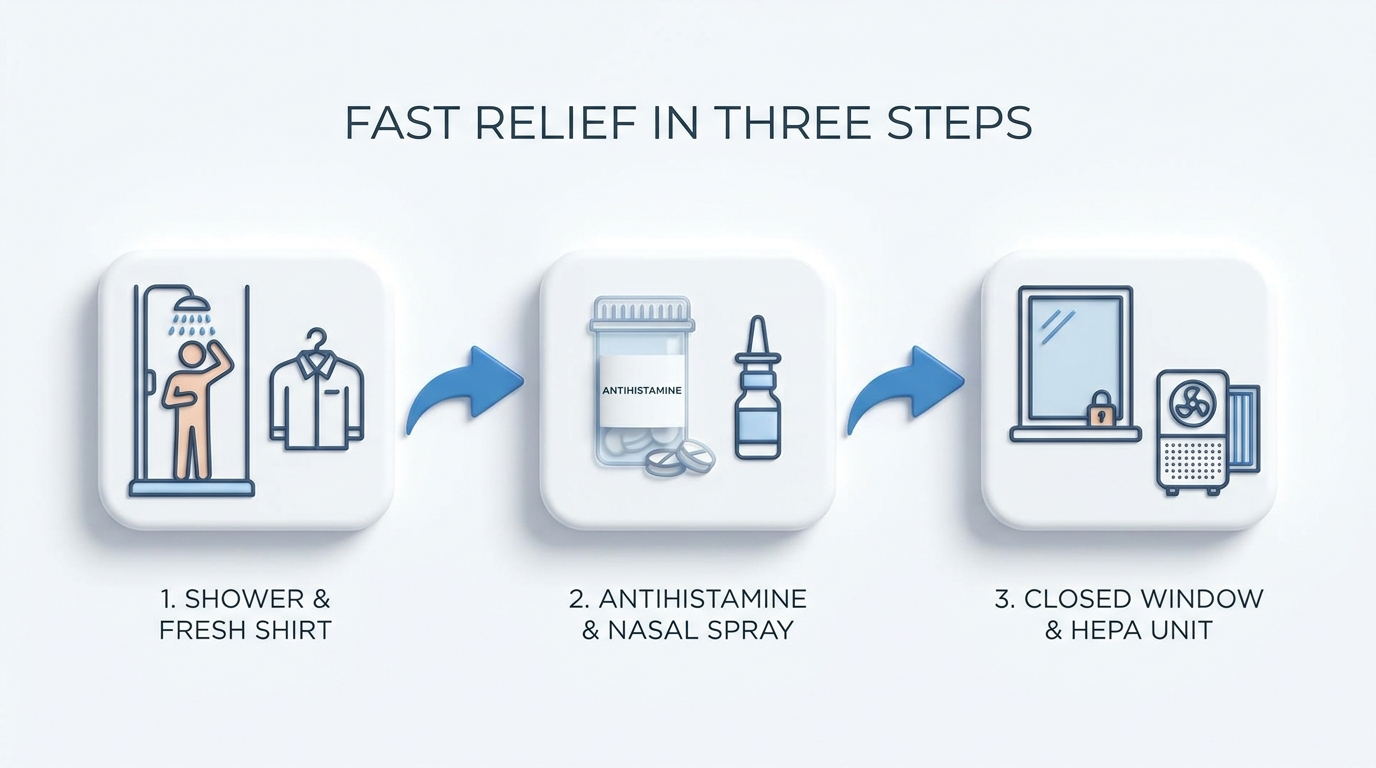
When people ask how to relieve allergies quickly, the best approach is usually a combination: reduce exposure, then match treatments to symptoms.
A simple way to think about fast relief
Many evidence-based strategies fall into two buckets:
1) Lower the allergen load (so your immune system has less to react to)
2) Calm the inflammation/histamine response (so symptoms settle faster)
Doing both is often more effective than doing either one alone.
Step 1 — Reduce exposure immediately
These allergy relief tips aim to lower the allergen load your body is reacting to:
- After being outdoors, many people get relief from showering and changing clothes (pollen clings to hair, skin, and fabric).
- Keep windows closed during high-pollen periods; consider HVAC filtration or HEPA options when feasible.
- Saline nasal rinse can help flush allergens and mucus from the nose after exposure (often helpful after yardwork or outdoor exercise).
Concrete example: if you walk the dog at dusk and wake up congested, try a quick rinse and a clothes change on those high-exposure days. Small routines can make symptoms more predictable.
Step 2 — Choose the right OTC medication for your symptoms
There isn’t one best allergy medicine for everyone—what works best depends on whether your main issue is sneezing/itching, congestion, or drip/cough.
A helpful companion read: decongestant vs. antihistamine.
If you’re deciding where to start, one practical approach is to name your top two symptoms (for example, itching + sneezing vs. congestion + pressure) and choose treatments that best match those.
Step 3 — Use nasal sprays correctly (technique matters)
If you use a nasal spray for allergies, technique can make a big difference in comfort and results:
- Aim the nozzle slightly outward (away from the center septum)
- Use a gentle sniff, not a hard inhale
- Many treatments work best with consistent use during your allergy season or ongoing exposure period, not only when miserable (Mayo Clinic, 2026)
A quick clinician-style tip: if you taste the spray in the back of your throat, you may be sniffing too hard—gentle is usually better.
For a walkthrough, see: how to use a steroid nasal spray correctly.
- Quick recap: wash off allergens, match medicines to your top symptoms, and use nasal sprays with good technique for faster, steadier relief. -

Evidence-Based Treatments for Allergy Relief (Short-Term + Long-Term)
Many people get the best control from a combo of exposure reduction plus targeted medication options (AAAI, 2020). If you’ve tried one thing at a time without much success, it may be less about willpower and more about needing the right pairing.
Oral antihistamines (first-line for quick symptom relief)
Common non-sedating options include loratadine, cetirizine, and fexofenadine. They tend to help most with:
- Sneezing
- Itching
- Runny nose
Older antihistamines can cause more drowsiness and side effects, so reading labels and discussing safety considerations with a clinician or pharmacist can matter. (Mayo Clinic, 2026; AAAAI, 2020)
A practical note: if your main complaint is blocked airflow, antihistamines alone may not feel like enough—because congestion is often driven by inflammation, not just histamine.
Intranasal corticosteroids (strong control for nasal inflammation)
Intranasal corticosteroids are among the most effective single treatments for allergic rhinitis relief—especially when congestion is a major symptom. They target inflammation broadly, so they may improve multiple nasal complaints over time. (Mayo Clinic, 2026; AAAAI, 2020)
They typically work best when used regularly during your allergy season or ongoing exposure period, rather than only on the worst days.
Antihistamine nasal sprays (fast local symptom control)
Antihistamine sprays can provide relatively fast, targeted relief for sneezing and runny nose, and may help some people with congestion. In tougher cases, clinicians sometimes combine them with steroid sprays. (AAAI, 2020)
Montelukast (leukotriene receptor antagonist)
Montelukast may be considered for selected patients—especially when allergic rhinitis and asthma overlap—but its risks and benefits should be reviewed carefully with a clinician because of possible neuropsychiatric side effects (boxed warning), such as agitation, sleep changes, mood changes, or suicidal thoughts. (AAAI, 2020; Wiley, 2025)
Decongestants (use carefully)
Decongestants can provide short-term relief for some people, but they may not be appropriate for those with high blood pressure, heart disease, certain eye conditions (such as glaucoma), pregnancy, thyroid disease, prostate/urinary issues, or sleep/anxiety concerns. Topical decongestant sprays can cause rebound congestion if used longer than directed. (Mayo Clinic, 2026)
If you’ve ever felt more congested than before after stopping a decongestant spray, rebound congestion may be the reason—another situation where following label directions is important.
- If quick fixes aren’t cutting it, combine smart exposure reduction with targeted medicines—and ask about adding a nasal steroid when congestion leads the list. -
When Symptoms Won’t Quit: Allergy Immunotherapy (Shots or Drops)
When medications and avoidance aren’t enough—or when someone wants to reduce long-term medication reliance—immunotherapy can be an option worth learning about.
Who is a good candidate?
People often explore immunotherapy when they have:
- Persistent symptoms despite reasonable treatment
- Noticeable sleep disruption or quality-of-life impact
- Clear triggers (often identified with allergy testing)
Learn more: Allergy Testing.
Allergy shots (SCIT) vs. sublingual immunotherapy (SLIT)
In the allergy shots vs drops conversation, both approaches aim to retrain the immune response over time:
- Shots (SCIT): given in a medical setting on a schedule that typically includes a build-up phase and maintenance phase
- SLIT: may be offered as tablets in some regions and as drops in others; availability, approval status, and the allergens treated can vary. In the U.S., certain SLIT tablets are FDA-approved for specific allergens, while SLIT drops are typically an off-label, specialist-guided approach. (AAAI, 2020; Wiley, 2025)
Helpful comparisons:
- Allergy Drops vs Allergy Shots
- Sublingual immunotherapy (SLIT): basics and complete guide
What results to expect (realistic timeline)
Immunotherapy isn’t instant. Symptom improvement may take months, and full courses are often measured in years. The key difference is that immunotherapy aims to reduce the underlying sensitivity, not just mask symptoms.
- Think of medications as turning down the symptom volume today, while immunotherapy works on the volume knob itself over time. -
Newer/Advanced Options for Severe Allergic Rhinitis (Specialist Care)
For more severe or complex allergic disease, specialists may discuss advanced therapies.
Biologics as adjuncts (emerging role)
In specialist settings, omalizumab has been studied as an adjunct to allergen immunotherapy in selected patients, but it is not a routine treatment for typical allergic rhinitis. (Annals of Allergy, 2024)
Dupilumab + immunotherapy (early evidence)
Early research suggests dupilumab may be well tolerated alongside short-term subcutaneous immunotherapy in selected study settings, but this approach is still investigational for many patients. (Cochrane Library, 2025)
When to ask your doctor about these treatments
These options are generally considered when symptoms are severe, persistent, or overlapping with other allergic conditions—and when standard approaches haven’t provided enough control.
- If your allergies keep you up at night or limit daily life despite standard care, a specialist can help you explore advanced, individualized options. -

Lifestyle Tips to Reduce Allergy Symptoms Over Time
Bedroom allergy-proofing (high ROI)
Because you spend many hours in bed, this is one of the most impactful areas to optimize:
- Dust-mite covers for pillows/mattress
- Wash bedding hot weekly (as fabric allows)
- Reduce humidity where feasible
- Minimize dust-collecting clutter and heavy textiles
If you’re not sure where to start, start with what’s easiest to maintain. A good-enough routine done consistently usually beats a perfect routine you abandon after a week.
Pollen season routines
- Track local pollen counts
- Consider timing outdoor activity when counts are lower
- Saline rinse after outdoor chores can reduce lingering allergens
Many people also find it helpful to keep pollen-season habits simple: a quick rinse, a quick change of clothes, and consistent meds when needed.
Work and travel tips
- Keep core meds accessible during commutes/travel
- Use car cabin air filters consistently
- Change clothes after heavy exposure days when practical
If you travel for work, consider packing the basics even when you feel fine—because allergy flares often show up after a new exposure rather than on day one.
- Small, repeatable habits—especially in the bedroom—can meaningfully lower your daily allergen load. -
FAQs
What is the fastest way to relieve allergies?
For many people, the fastest path combines exposure reduction (like changing clothes after outdoor time) with symptom-matched medication—often an antihistamine plus an anti-inflammatory nasal approach when congestion is prominent. (Mayo Clinic, 2026)
What’s better for congestion—antihistamine or steroid nasal spray?
Antihistamines are often best for itching/sneezing/runny nose, while intranasal corticosteroids are frequently more effective for congestion and broader nasal inflammation control. (Mayo Clinic, 2026; AAAAI, 2020)
Can I take an oral antihistamine and a nasal steroid together?
This is a common combination strategy in allergic rhinitis management. The right regimen depends on symptoms, age, and other conditions—so follow product labeling and clinician guidance.
Are allergy drops as effective as allergy shots?
Both can work. SLIT is generally considered safe and effective for appropriate allergens, but availability, approval status, and allergens treated vary by region, and tablets and drops are not the same product. (AAAI, 2020; Wiley, 2025)
When should I see a specialist for allergies?
Consider an evaluation if symptoms last longer than ~4 weeks, disrupt sleep, don’t respond as expected to OTC options, or you have frequent “sinus infections,” wheeze, or asthma symptoms.
Conclusion: A Practical Plan for Fast Relief + Long-Term Control
If you’re looking for how to relieve allergies, start with two tracks:
- Fast symptom control: reduce exposure + choose symptom-matched meds + use nasal sprays correctly
- Long-term control: identify triggers (often through testing) and consider immunotherapy if symptoms persist or medication needs keep rising
To explore longer-term strategies, see: Long-Term Relief From Allergy Pain.
If your symptoms are persistent, severe, or unclear, scheduling an allergy evaluation with Sleep and Sinus Centers of Georgia can help clarify triggers and map out an evidence-based plan. To get started, visit https://www.sleepandsinuscenters.com/ and book an appointment.
Medical disclaimer: This article is for general education and is not a substitute for personalized medical advice, diagnosis, or treatment. For medication questions and safety (including use with other conditions or prescriptions), follow product labeling and consult a qualified clinician.
References
- Mayo Clinic (2026). Hay fever (allergic rhinitis) — Diagnosis & treatment. https://www.mayoclinic.org/diseases-conditions/hay-fever/diagnosis-treatment/drc-20373045
- Mayo Clinic (2026). Allergy medications. https://www.mayoclinic.org/diseases-conditions/allergies/in-depth/allergy-medications/art-20047403
- Mayo Clinic (2026). Nonallergic rhinitis — Diagnosis & treatment. https://www.mayoclinic.org/diseases-conditions/nonallergic-rhinitis/diagnosis-treatment/drc-20351235
- American Academy of Allergy, Asthma & Immunology (AAAAI) (2020). Rhinitis 2020: A practice parameter update. https://www.aaaai.org/Aaaai/media/Media-Library-PDFs/Allergist%20Resources/Statements%20and%20Practice%20Parameters/Rhinitis-2020-A-practice-parameter-update.pdf
- Wiley Online Library (2025). Allergic rhinitis review. https://onlinelibrary.wiley.com/doi/10.1002/alr.23090
- Annals of Allergy (2024). Omalizumab + allergen immunotherapy study. https://www.annallergy.org/article/S1081-1206%25252824%25252900365-X/fulltext
- Cochrane Library (2025). Dupilumab + immunotherapy trial record. https://www.cochranelibrary.com/content?templateType=related&urlTitle=/central/doi/10.1002/central/CN-02212863&doi=10.1002/central/CN-02212863
This article is for educational purposes only and is not medical advice. Please consult a qualified healthcare provider for diagnosis and treatment.
Don’t let allergies slow you down. Schedule a comprehensive ENT and allergy evaluation at Sleep and Sinus Centers of Georgia. We’re here to find your triggers and guide you toward lasting relief.