How to Get Water Out of Your Ear That Won’t Drain: Safe, Effective Remedies
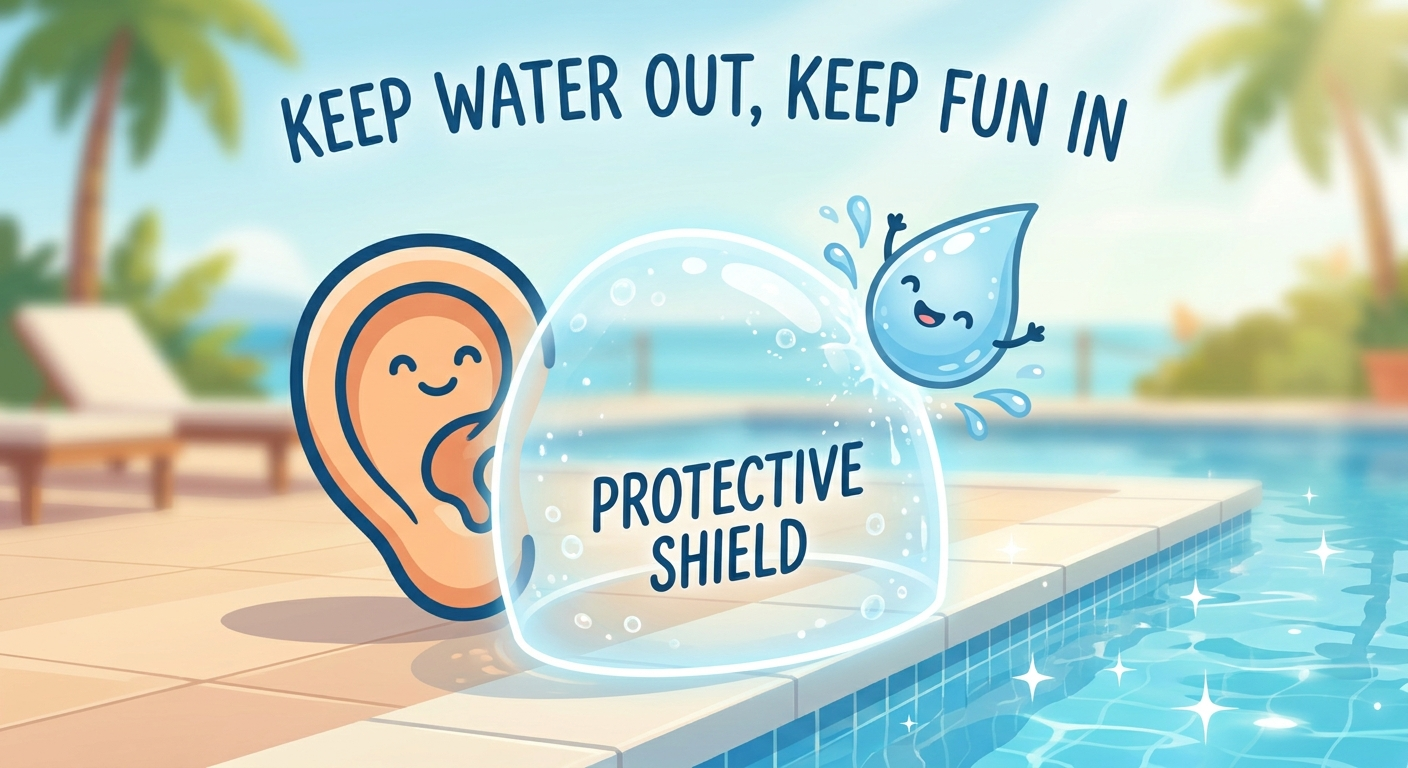
That “full,” muffled feeling after a swim, bath, or shower is common. In most cases, water stuck in the ear after swimming or showering clears with simple, gentle steps—no digging, no tools, no panic.
This guide explains how to get water out of your ear that won’t drain using safe, at-home techniques—plus what to avoid and when to get checked. The goal is to reduce irritation and lower the risk of swimmer’s ear (otitis externa)—an outer ear canal infection that’s more likely when moisture stays trapped too long (Mayo Clinic; WebMD). For more background, see our overview of swimmer’s ear (otitis externa): https://sleepandsinuscenters.com/blog/what-is-otitis-externa
Quick reassurance—most trapped ear water is fixable at home
When water gets into the ear canal, it can create:
- Fullness or pressure
- Muffled hearing
- Popping or crackling
- A “sloshing” sensation when you tilt your head
It often drains within minutes to hours. Think of it like a droplet stuck to the side of a glass: it’s not “blocked”; it’s just clinging due to surface tension. The key is to help it out gently rather than forcing it.
Forcing (like poking with a swab) can irritate the canal, push wax deeper, and raise infection risk—especially if the ear stays wet (Mayo Clinic). For a deeper look at why moisture matters, read our swimmer’s ear basics: https://sleepandsinuscenters.com/blog/what-is-otitis-externa
Most cases improve quickly with gentle, noninvasive steps.
Symptoms of water stuck in the ear (and what’s normal vs. not)
Common, usually mild symptoms
These often improve as the water drains or evaporates:
- Sloshing when you move your head
- Muffled hearing or temporary “plugged” hearing
- Ear feels blocked or full
- Mild popping or clicking
A helpful reality check: mild muffling after swimming is often just water altering how sound travels through the canal—similar to how a wet earbud sounds duller until it dries.
Symptoms that may signal irritation or infection
Moisture plus irritated skin can contribute to swimmer’s ear (Mayo Clinic). Consider extra caution if you notice:
- Increasing itchiness, redness, or swelling near the ear opening
- Drainage (clear, cloudy, or pus-like)
- Worsening pain, especially when touching or pulling the outer ear
- Fever or significant tenderness
If pain ramps up quickly—or the outer ear hurts when you gently tug it—that’s a classic clue that it may be more than just trapped water.
If symptoms intensify or spread, pause home care and consider an evaluation.
Why water won’t drain—common causes
Ear canal shape and surface tension
Ear canals aren’t straight pipes. Water can cling to the canal walls and be held by surface tension, so changing head position or angle often helps it drain.
Earwax buildup can block drainage
A small amount of earwax is normal and protective, but if wax is thick or impacted, water may pool behind it—making the ear feel plugged. This can also explain why it happens repeatedly in the same ear (WebMD).
Swelling or irritation after swimming
Frequent swimming, hot tubs, or even repeated moisture from showers can irritate the canal skin. Irritated skin plus trapped moisture increases the chance of swimmer’s ear (Mayo Clinic).
Most lingering water issues trace back to canal shape, surface tension, or excess wax.
First: What NOT to do (to avoid injury or making it worse)
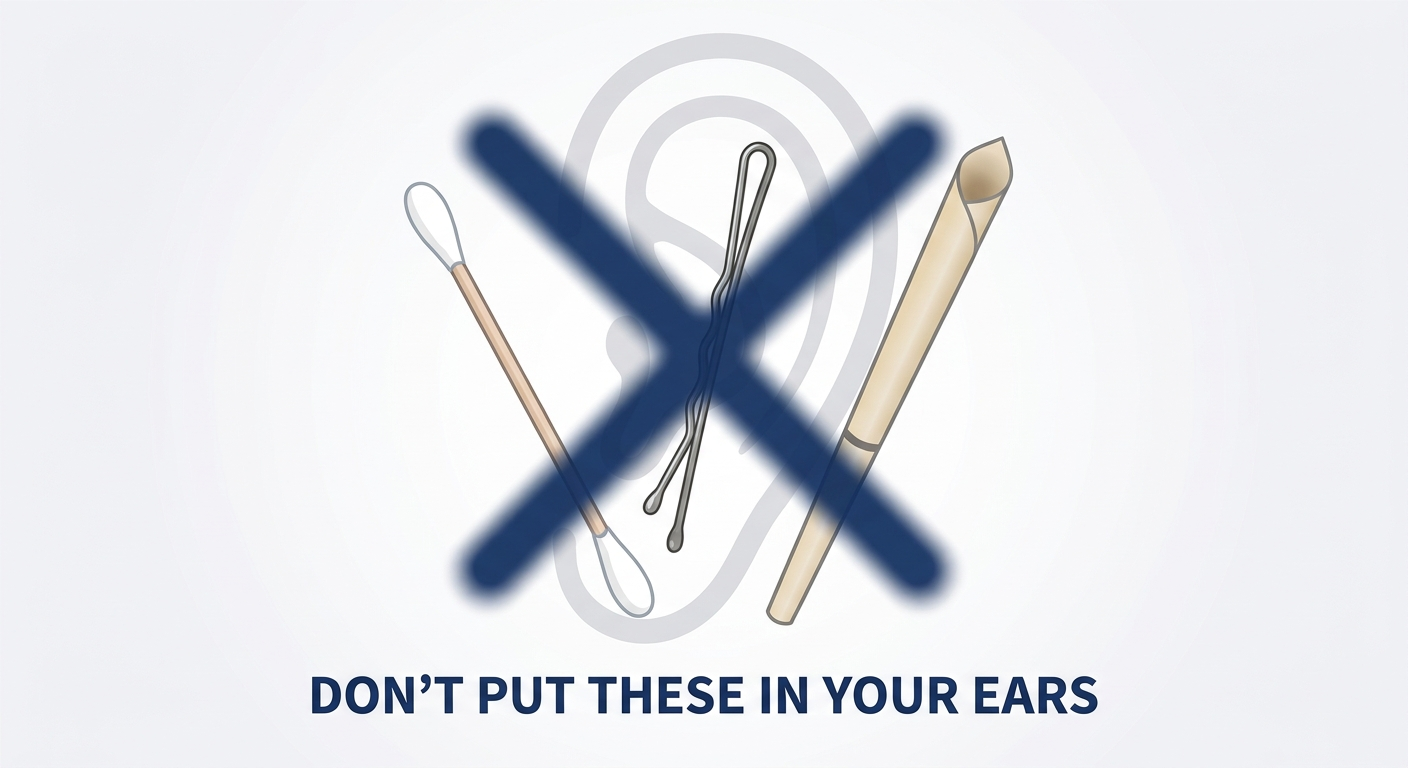
Don’t use cotton swabs (Q-tips), fingers, keys, bobby pins, or ear candles
It’s tempting—but inserting anything into the ear canal can:
- Scratch delicate skin
- Push water and wax deeper
- Increase swelling and irritation
- Raise infection risk
Even a “quick swipe” can turn a minor nuisance into days of soreness. If you feel an itch, it may be the skin reacting to moisture—not a sign you need to clean it out. Learn more about Q-tip risks and safe alternatives: https://sleepandsinuscenters.com/blog/q-tip-ear-cleaning-risks-dangers-and-safe-alternatives-explained
Don’t “dig” even if it itches
Moisture plus micro-scratches can make swimmer’s ear more likely (Mayo Clinic). If you catch yourself wanting to scratch inside the canal, pause and switch to a drying method instead.
Avoid putting anything into the ear canal—dry, don’t dig.
Safe, effective at-home remedies (step-by-step)
These trapped water in ear home remedies are commonly recommended in consumer-medical guidance and are generally low risk when done gently (WebMD). They’re not guarantees, but they help in many routine cases.
A simple first sequence (about 1–2 minutes)
1) Gravity and positioning
2) Jaw movements
3) Gentle palm “vacuum” (optional)
Then move on to drying (towel or low-heat dryer) if needed.
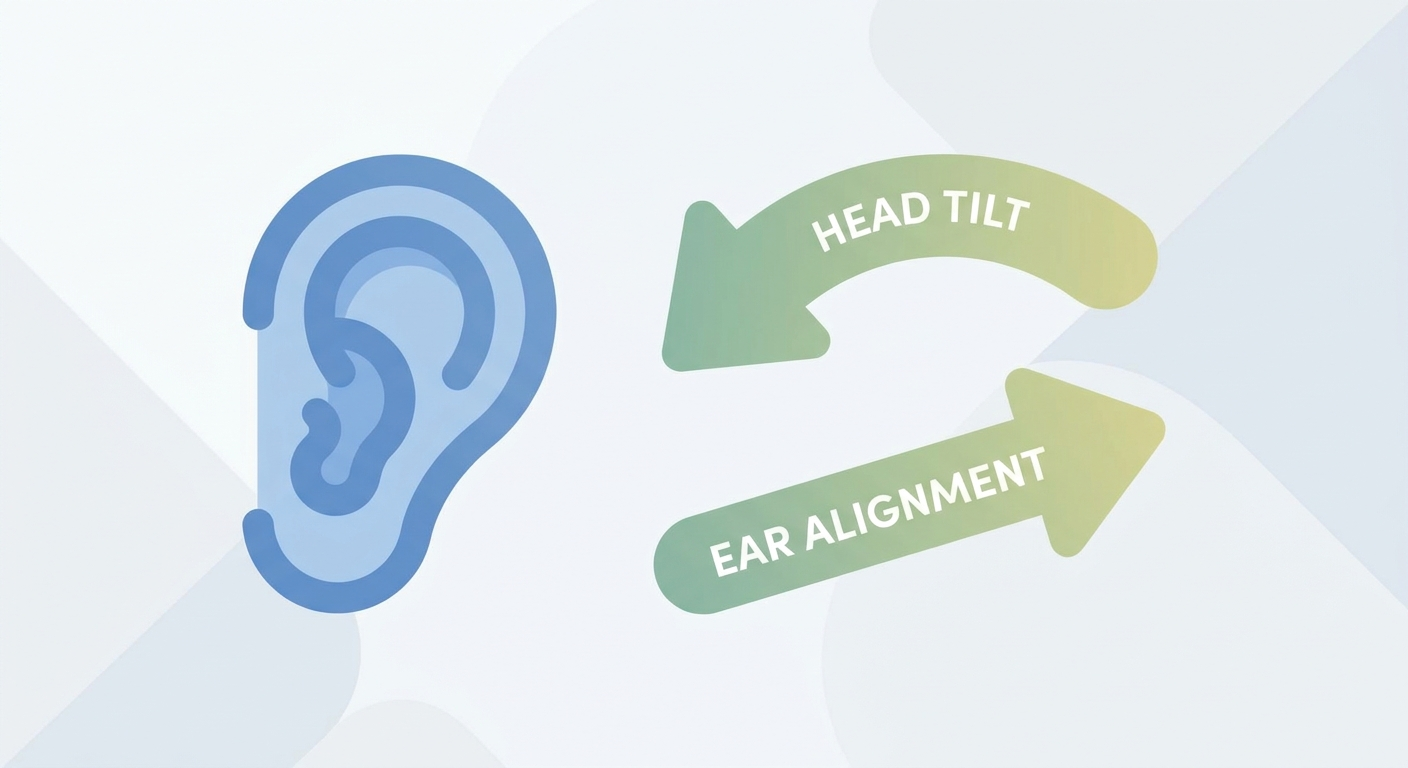
1) Gravity and positioning
Try this for 30–60 seconds:
- Tilt your head toward the affected ear.
- Gently pull the earlobe (for adults, often up and back) to help straighten the canal.
- You can also lie on your side with the affected ear facing down for a few minutes.
Why it may help: It encourages natural drainage without irritating the canal (WebMD).
2) Jaw movements
Try this for 30–60 seconds:
- Yawn a few times
- Chew gum
- Open and close your mouth widely several times
Why it may help: Jaw motion can change pressure and subtly shift tissues around the ear, which sometimes helps dislodge trapped water (WebMD).
3) Create a gentle vacuum with the palm (optional)
Try this for 10–20 seconds:
- Place your palm over your ear to make a light seal (don’t insert anything).
- Press gently, then release.
Stop if you feel pain, dizziness, or discomfort. The goal is a mild pressure change—not force.
4) Dry the outer ear safely (towel technique)
Try this for 30 seconds:
- Use a soft towel to dry the outer ear only.
- Avoid twisting tissue or cotton and putting it into the canal.
- Dry what you can see, and let the ear canal do the rest.
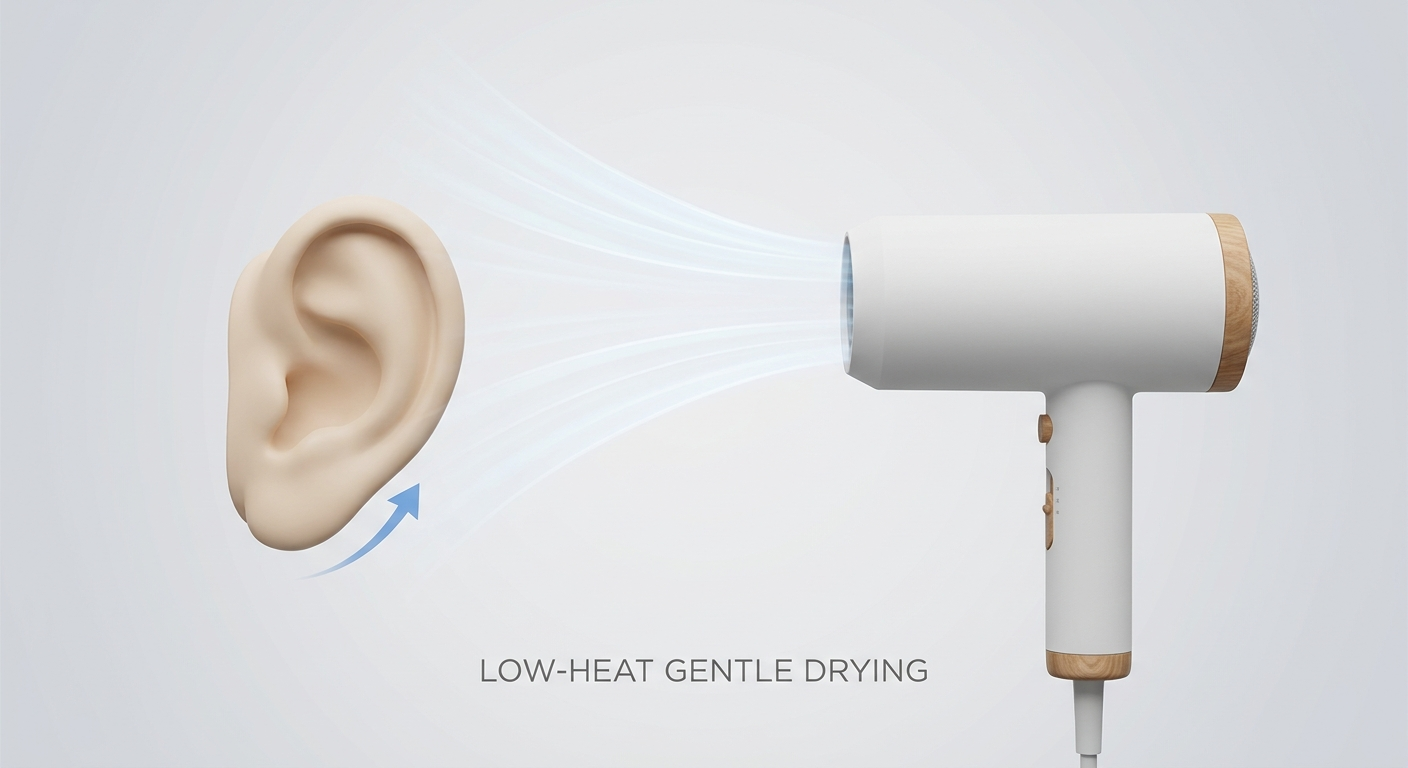
5) Blow dryer on low heat/low airflow
Try this for 30–60 seconds:
- Set a hair dryer to low heat and low airflow.
- Hold it several inches away from the ear.
- Gently pull the earlobe while directing warm air toward (not directly into) the ear.
Why it may help: It encourages evaporation without inserting anything (WebMD).
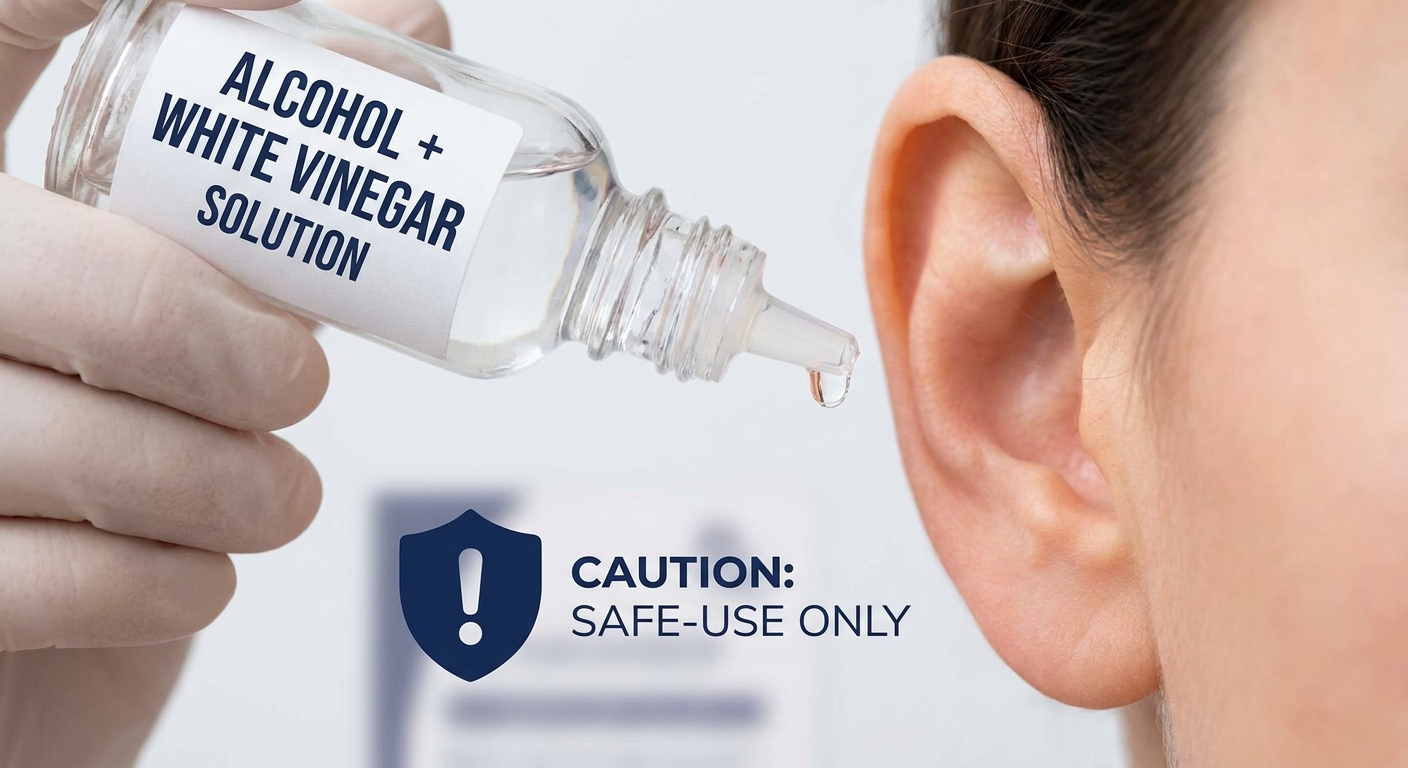
6) Alcohol and white vinegar ear-drying drops (only if safe for you)
Some clinicians may recommend drying drops in certain cases, but they are not appropriate for everyone.
Who should avoid this approach:
- Known or suspected perforated eardrum
- Ear tubes
- Current ear drainage, significant pain, or a diagnosed ear infection
- Recent ear surgery
How it works (in plain terms):
- Alcohol can help water evaporate (drying effect).
- Vinegar may make the canal less friendly to germs (Healthline).
High-level use:
- People typically use a few drops, then let it drain out.
- If there’s burning, pain, or worsening symptoms, stop and seek guidance.
- For clinic-specific education on drying drops, see: https://sleepandsinuscenters.com/patient-resources/alcohol-ear-drops
Important safety note: Avoid drops if there’s any concern for eardrum injury or tubes—liquid entering the middle ear can cause complications. When unsure, it’s safer to get checked.
Start with simple positioning and gentle drying; reserve drops only when clearly safe.
If the water still won’t drain—what to do next
A 24–48 hour decision guide
- If symptoms are improving: Continue gentle drying and keep the ear as dry as possible.
- If symptoms aren’t improving or are worsening: Consider an evaluation to confirm whether it’s trapped water, wax blockage, irritation, or infection (WebMD).
A practical tip: If hearing is still notably muffled the next day—or the fullness is unchanged—wax plus trapped moisture is worth considering.
When to see a doctor or ENT (red flags)
Seek medical care if any of the following are present:
- Moderate to severe ear pain
- Drainage (especially pus or blood)
- Fever
- Significant hearing loss that doesn’t quickly improve
- Dizziness or vertigo
- Symptoms that persist beyond 24–48 hours or worsen
- Higher-risk health situations (for example, diabetes or a weakened immune system)
If symptoms persist beyond 24–48 hours or worsen, get evaluated.
Treatment options in the clinic (what an ENT may do)
Safe ear canal inspection and drying
A clinician may:
- Look in the ear with an otoscope (to distinguish water vs. wax vs. inflammation)
- Use safe, medical methods to remove blockage or dry the canal when needed
If swimmer’s ear is suspected
Treatment commonly involves medicated ear drops and instructions to keep the ear dry during healing (Cleveland Clinic; Mayo Clinic).
An in-office exam can quickly clarify whether it’s water, wax, or infection.
Prevention tips (so it doesn’t keep happening)
After swimming or showering
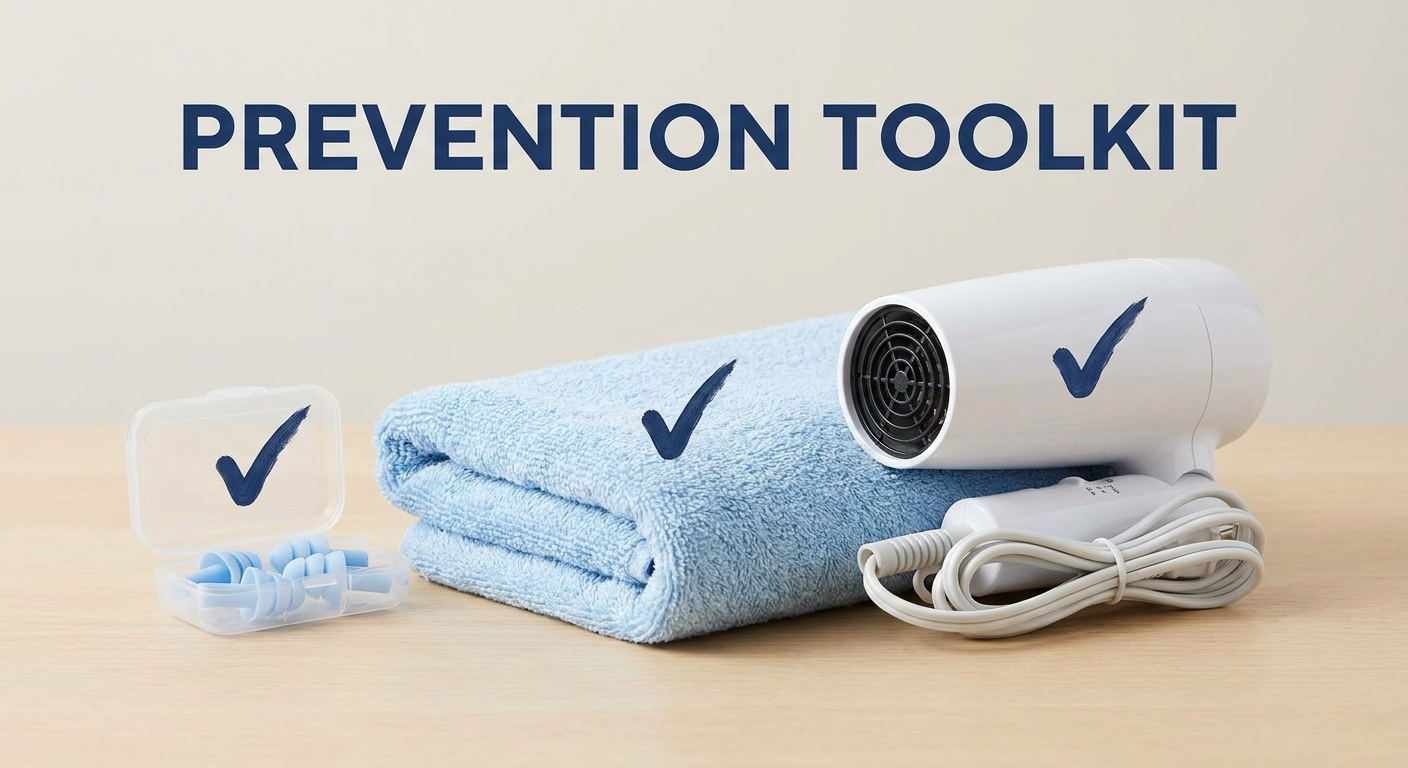
- Tilt and drain each ear for a few seconds
- Dry the outer ear with a towel
- Consider a brief low-heat hair-dryer routine
- Consider preventive drying drops only if appropriate and safe for you (Healthline)
Gear and environment tips
- Consider swim earplugs with a proper fit
- Keep earbuds or hearing aids clean and let ears dry
- Avoid aggressive ear cleaning that irritates the canal—irritation plus moisture increases risk (Mayo Clinic)
- Learn more about safe ear care and Q-tip risks: https://sleepandsinuscenters.com/blog/q-tip-ear-cleaning-risks-dangers-and-safe-alternatives-explained
Simple after-swim habits and gentle care reduce repeat episodes.
FAQs
How long is too long for water to stay in your ear?
If it hasn’t improved within 24–48 hours, or if pain develops, it’s reasonable to get evaluated—prolonged moisture can increase swimmer’s ear risk (Mayo Clinic; WebMD).
Can trapped water cause an ear infection?
Persistently trapped moisture can increase the risk of outer ear infection (swimmer’s ear) (Mayo Clinic).
Is it safe to sleep with water in your ear?
It’s often not dangerous short term, but if the ear becomes painful, drains, or worsens overnight, seek care (WebMD).
Should I use hydrogen peroxide to get water out?
Hydrogen peroxide is more commonly discussed for earwax and can irritate some ear canals. For simple trapped-water situations, gentler first-line options (gravity, jaw movement, low-heat drying) are typically preferred. If wax or irritation seems likely, an exam can guide next steps.
Can I use rubbing alcohol alone?
Some people use rubbing alcohol to help dry the canal, but it isn’t appropriate for everyone—especially with ear tubes, possible eardrum perforation, drainage, or significant pain. Safety guidance matters here (Healthline).
Why does it keep happening in the same ear?
Repeat issues can relate to wax buildup, narrow canal anatomy, frequent swimming, or chronic irritation. If it’s recurrent, an evaluation can help identify the pattern and reduce future episodes.
Closing: Safe steps first, and don’t wait on red flags
To recap how to get water out of your ear that won’t drain:
1) Start with gravity and positioning
2) Add jaw movements
3) Use gentle drying (towel outside only, low-heat dryer)
4) Consider drying drops only when clearly safe
5) Avoid inserting anything into the ear canal
If symptoms persist beyond 24–48 hours or you develop pain, drainage, fever, dizziness, or notable hearing loss, get evaluated. Need help with persistent trapped water, ear discomfort, or possible swimmer’s ear? You can book an appointment with Sleep and Sinus Centers of Georgia for an exam and guidance: https://www.sleepandsinuscenters.com/
This article is for educational purposes only and is not medical advice. Please consult a qualified healthcare provider for diagnosis and treatment.
Don’t let allergies slow you down. Schedule a comprehensive ENT and allergy evaluation at Sleep and Sinus Centers of Georgia. We’re here to find your triggers and guide you toward lasting relief.