How to Drain Sinuses at Home: Safe, Effective Techniques That Work
Feeling "stopped up" can be miserable—especially when sinus pressure, postnasal drip, and headaches pile on. The good news is that several evidence-informed, low-risk home strategies can support sinus drainage and help you feel more like yourself again.
Medical note: At-home techniques can relieve symptoms, but they are not a substitute for medical evaluation. Seek care if symptoms last more than 10 days, worsen after initially improving, or are severe.
If you're searching for ways to relieve sinus pressure and support nasal drainage at home, focus on methods that (1) gently clear mucus, (2) add moisture, (3) reduce facial discomfort, and (4) support your body's natural drainage pathways. Think of it less like "forcing" drainage and more like making it easier for mucus to move naturally.
Quick Take—What Actually Helps Sinus Drainage?
Commonly recommended at-home strategies include:
- Saline nasal irrigation (with correct water safety) to help flush out mucus and irritants. (FDA, 2025; Healthline, 2025)
- Steam or humidification, which may add moisture and help loosen thick mucus for some people. (Medical News Today; Allina Health, 2024)
- Warm compresses to ease facial pain and pressure. (Allina Health, 2024; Mayo Clinic, 2019)
- Staying hydrated, which may help thin secretions so they are easier to clear. (Mayo Clinic, 2019; Allina Health, 2024)
Goal of "draining your sinuses" (simple explanation):
- Reduce swelling in the nasal passages
- Thin mucus so it moves more easily
- Improve comfort (pressure, headache, postnasal drip)
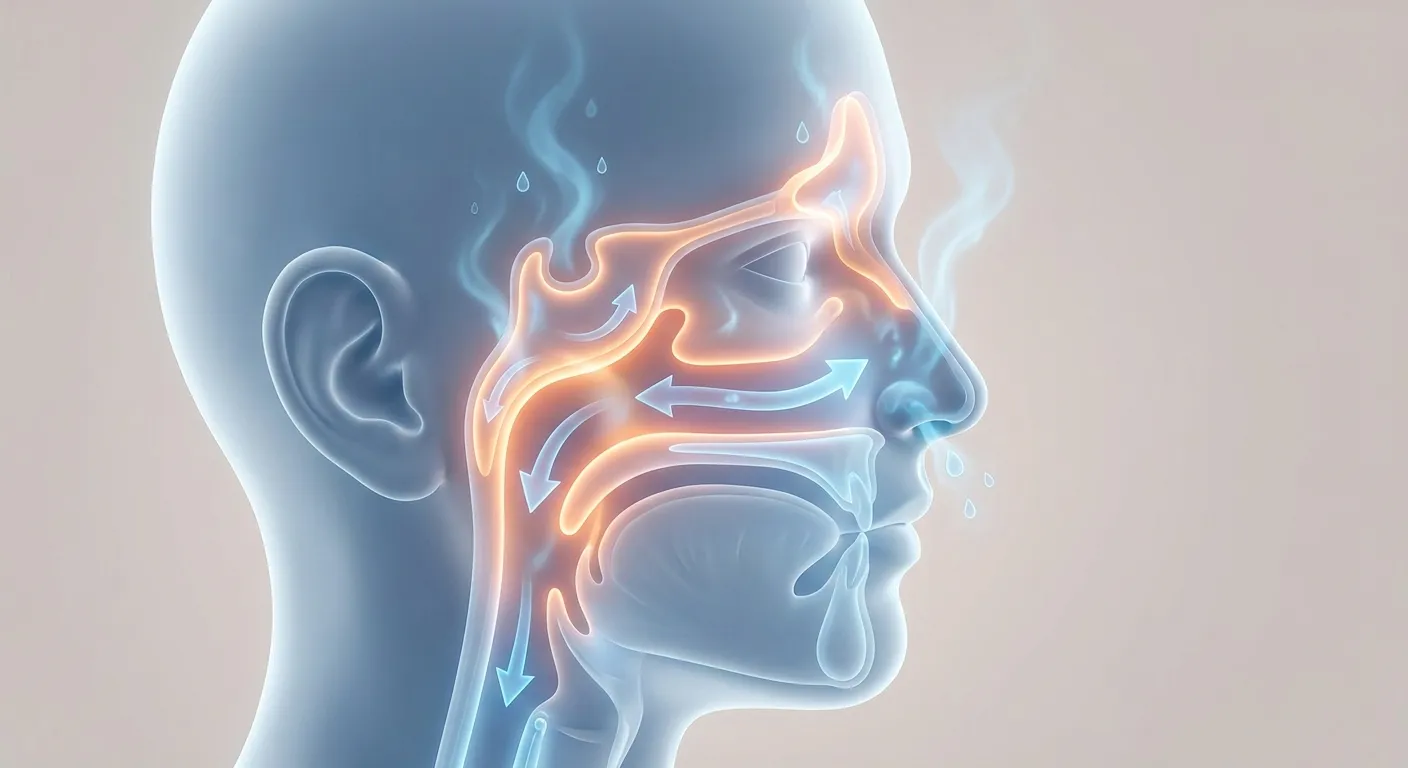
A helpful analogy: if your sinuses are like small "hallways," inflammation narrows the space and thick mucus clogs traffic. The strategies below either open up the hallway, thin what's blocking it, or gently rinse it clear.
Summary: You're aiming to gently clear, soothe, and moisturize rather than force drainage.
Common Symptoms That Suggest Your Sinuses Aren't Draining Well
Symptoms often linked with slowed or blocked drainage include:
- Nasal congestion or a stuffy nose
- Facial pressure/pain (cheeks, forehead, between the eyes)
- Thick nasal discharge and/or postnasal drip
- Reduced smell or taste
- Headache and cough (often worse at night)
Some people notice pressure most when they lean forward (like tying shoes) or wake up with a "full" feeling in the face and throat. Others mainly feel the effects as a nagging nighttime cough from postnasal drip.
If you're trying to sort out what you're feeling, you may also find this helpful: symptoms of sinus problems: https://sleepandsinuscenters.com/symptoms-of-sinus-problems
When symptoms may point to more than simple congestion:
- Seek medical care if symptoms last more than 10 days, worsen after initially improving, or are severe.
- Red flags include high fever, significant facial swelling, severe headache, vision changes, swelling around the eyes, confusion, stiff neck, or neurologic symptoms. (Mayo Clinic, 2019)
Summary: If symptoms drag on, worsen, or feel severe, it's safer to get checked.
What Causes Poor Sinus Drainage?
Several everyday issues can slow sinus drainage—often temporarily.
Viral colds and upper respiratory infections: Colds can trigger swelling in the nose and sinuses, narrowing normal drainage pathways and making mucus thicker and harder to move. (Mayo Clinic, 2019)
Allergies and irritant exposure: Allergies and irritants (like smoke or strong fragrances) can inflame nasal tissues and increase mucus production, contributing to congestion and sinus pressure. (Healthline, 2025; Mayo Clinic, 2019)
Dry air and dehydration: Dry environments and not drinking enough fluids can contribute to thicker mucus that doesn't flow as easily. (Allina Health, 2024; Mayo Clinic, 2019)
Structural or chronic issues (when drainage keeps coming back): For some people, recurring problems can be linked to factors like a deviated septum, nasal polyps, or chronic rhinosinusitis. If symptoms are frequent or persistent, it may be worth discussing an evaluation with a clinician or ENT.
Summary: Temporary congestion is common, but frequent or persistent problems may need a closer look.
The Safest, Most Effective At-Home Techniques to Drain Sinuses
Below are practical options often used for sinus pressure relief and improved sinus or nasal drainage. These are educational techniques—not individualized medical advice.
1) Saline Nasal Irrigation (Neti Pot / Squeeze Bottle / Bulb Syringe)
Why it may help: A saline rinse can help flush out mucus, allergens, and debris. Many people find it reduces congestion and supports comfort. (Healthline, 2025; Mayo Clinic, 2019)
Best devices for beginners:
- Squeeze bottle: often easier to control the flow
- Neti pot: often gentler flow and simple design
Step-by-step (general technique):
1) Wash hands well.
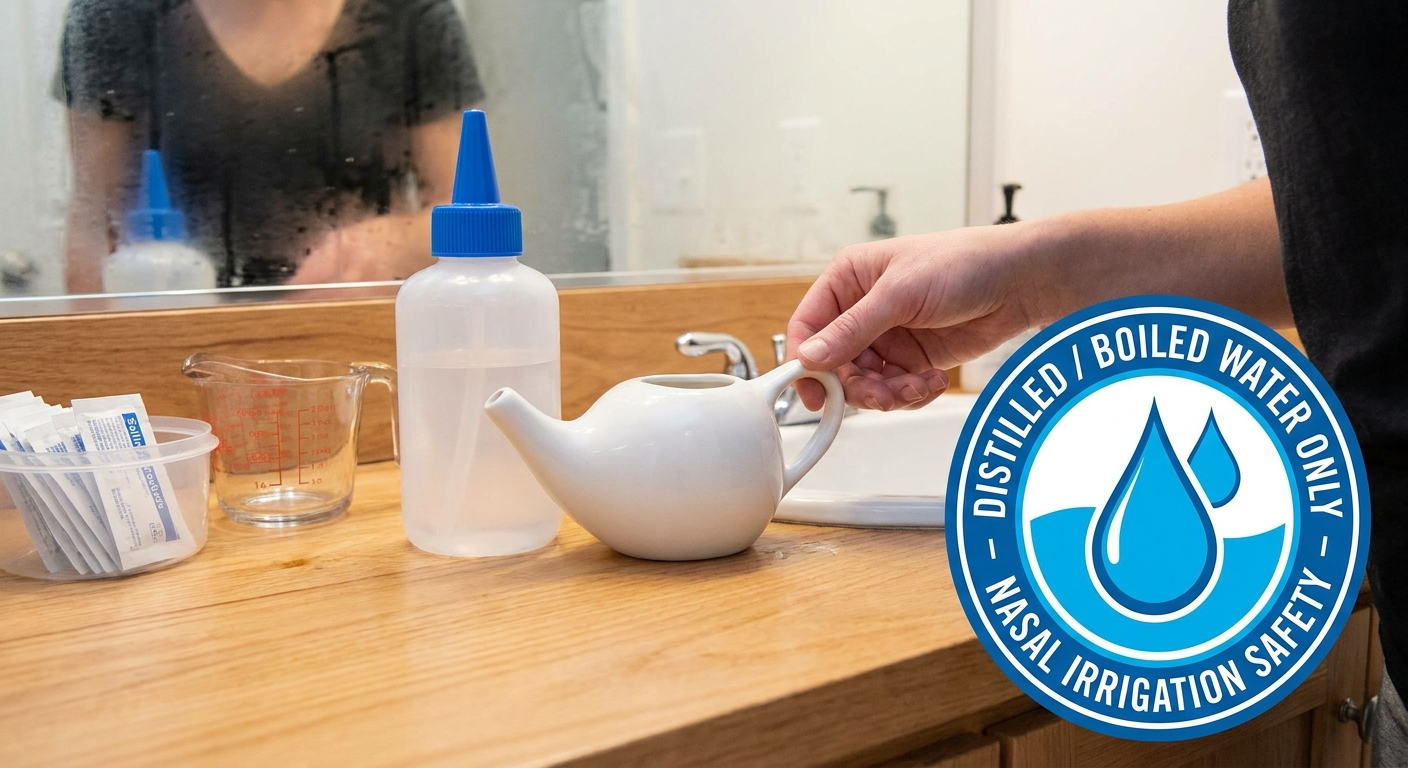
2) Prepare saline using premixed packets or a properly measured saline recipe.
3) Lean over a sink and tilt your head to one side.
4) Breathe through your mouth and gently rinse one nostril so solution flows through and out the other side (or out the same side, depending on anatomy and device).
5) Repeat on the other side.
6) Blow your nose gently afterward.
Critical safety: Water choice:
- Use distilled, sterile, or previously boiled and cooled water—do not use tap water unless it has been boiled and then cooled. (FDA, 2025)
- Learn more: distilled or boiled water for neti pot safety: https://sleepandsinuscenters.com/blog/neti-pot-water-safety-why-boiled-or-distilled-water-is-essential-a906d
How often?
- Frequency varies. Many people reserve irrigation for flare-ups, while others use it more routinely under clinician guidance. Learn more: how often should you use nasal rinses: https://sleepandsinuscenters.com/blog/nasal-rinses-how-often-should-you-use-them
Neti pot safety checklist (quick):
- Use only distilled/sterile/boiled-and-cooled water. (FDA, 2025)
- Clean the device after each use and let it dry completely. (FDA, 2025)
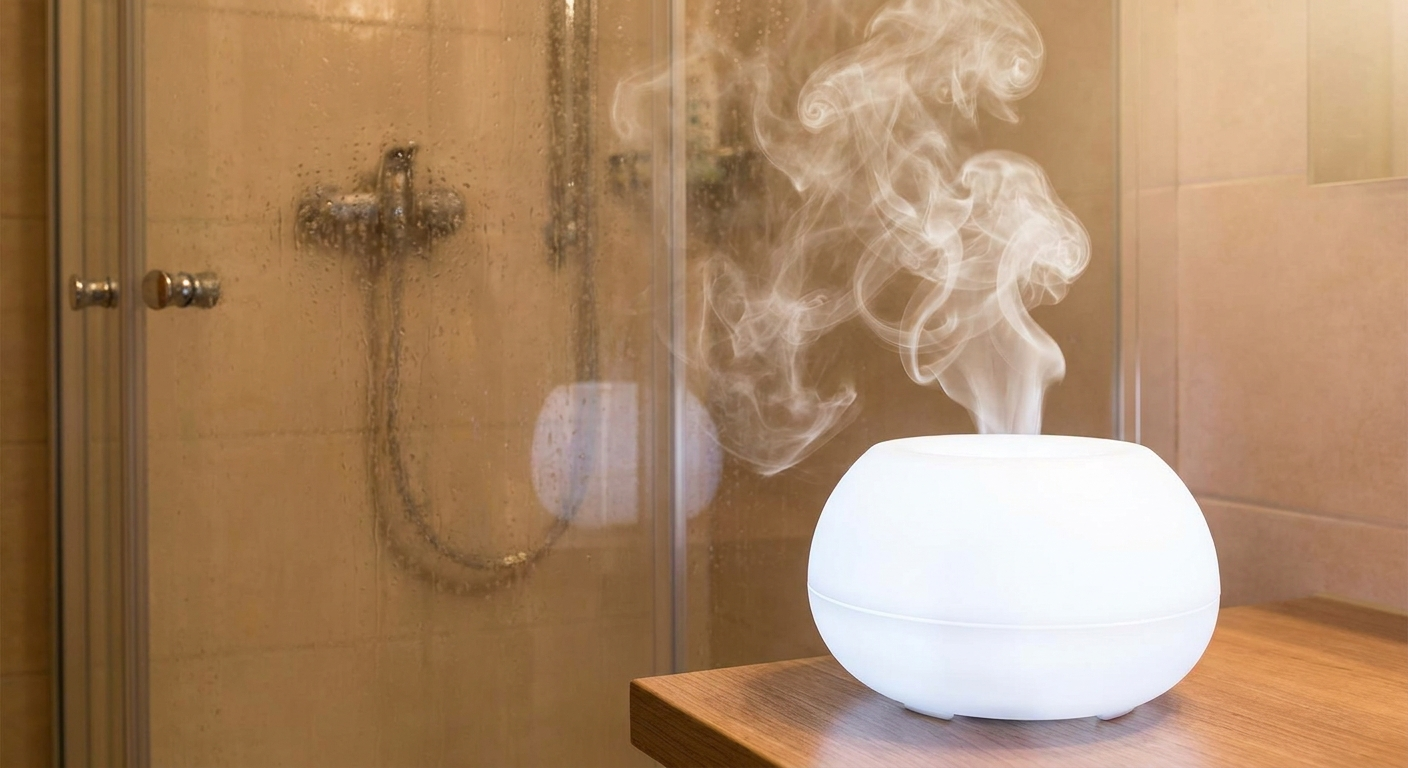
2) Steam Inhalation or Humidifiers (Loosen Thick Mucus)
Why it may help: Moisture may soothe irritated nasal passages and help loosen thick mucus, making it easier to clear for some people. (Medical News Today; Allina Health, 2024)
Options to try:
- A steamy shower
- Sitting in a bathroom with the shower running hot (without being in the water)
- A bowl of warm steam (use caution)
- A bedroom humidifier overnight
Safety tips:
- Avoid burns—keep a comfortable distance from hot water and steam, and use extra caution with children.
- Keep humidifiers clean and well maintained to reduce microbial buildup.

3) Warm, Wet Compresses (Pressure and Pain Relief)
Why it may help: A warm compress can ease facial discomfort and may help you feel less tight through the cheeks and forehead. (Allina Health, 2024; Mayo Clinic, 2019)
How to do it:
- Use a warm (not hot) damp cloth over the cheeks, forehead, or bridge of the nose for about 10–15 minutes.
- Repeat as needed for comfort.
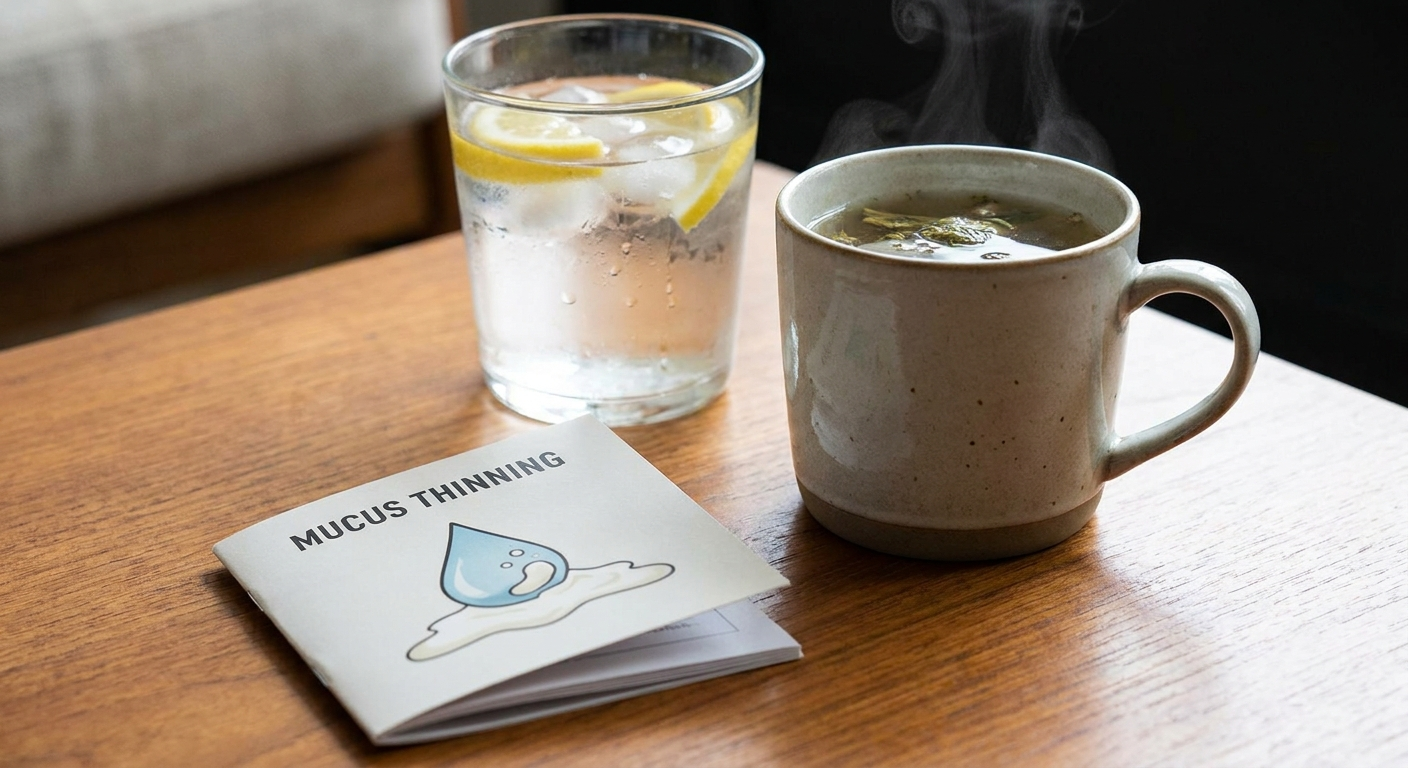
4) Hydration (Thin Mucus from the Inside)
Why it may help: Staying hydrated may help thin secretions, which can make them easier to clear. (Mayo Clinic, 2019; Allina Health, 2024)
What to drink:
- Water
- Broth
- Herbal tea
Practical note:
- Pale-yellow urine is sometimes used as a rough sign of hydration, but it is not a perfect measure and individual needs vary.
5) Combine Techniques for Better Results (A Simple Daily Routine)
Many people find the combination—and consistency—helps most:
- Morning: saline rinse → warm compress
- Evening: steamy shower or humidifier → hydration focus
Keeping it gentle and repeatable often works better than doing any single method aggressively. (Mayo Clinic, 2019)
Summary: Pair one method that clears (saline), one that soothes (warm compress), and one that moisturizes (steam or humidification), with steady hydration.
What NOT to Do (Common Mistakes That Can Backfire)
- Don't use tap water in a neti pot unless it has been boiled and then cooled. (FDA, 2025)
- Don't skip cleaning and drying irrigation devices; a dirty device can reintroduce germs or irritants. (FDA, 2025)
- Avoid overly forceful blowing or aggressive rinsing; gentle technique is typically better tolerated.
Summary: Safer technique and clean tools go a long way toward better results.
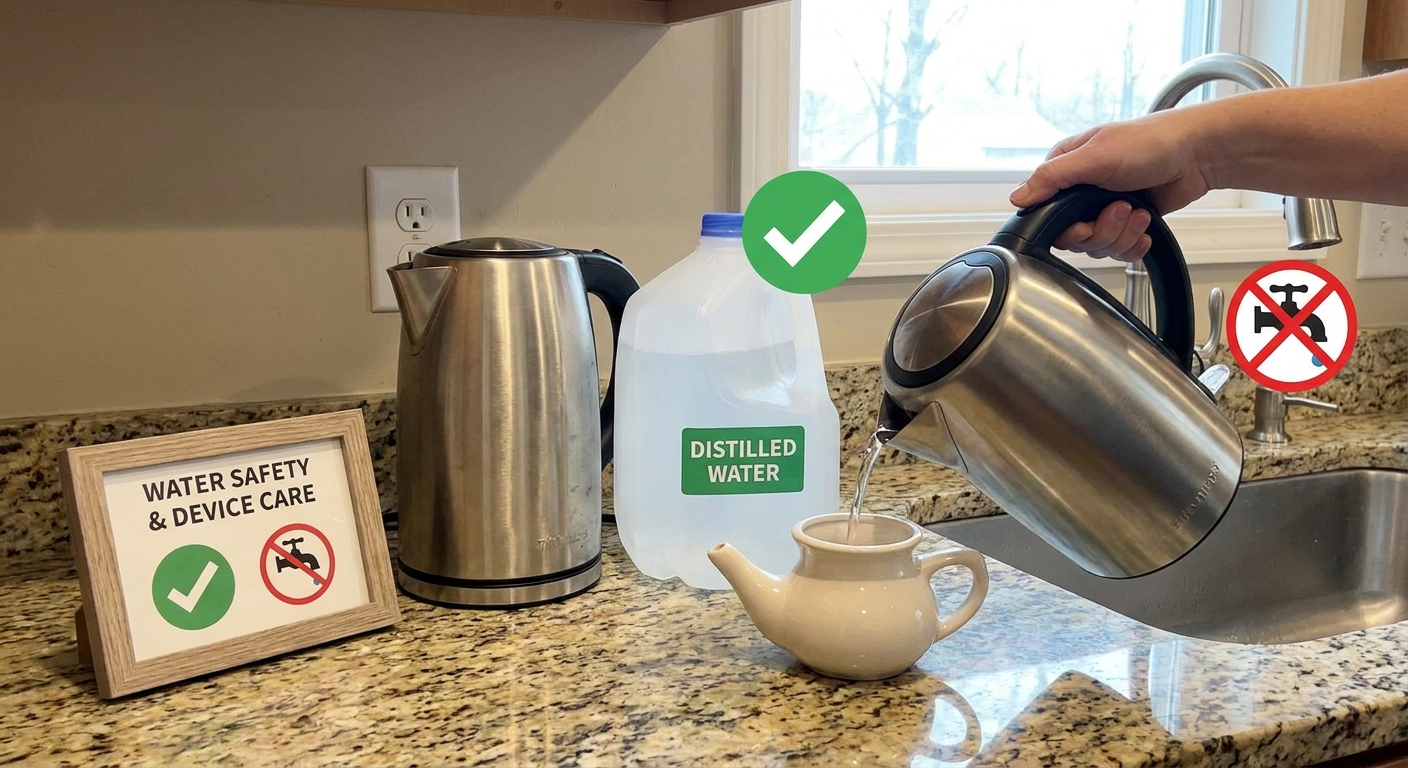
Device Care and Hygiene (Prevents Secondary Problems)
How to clean and store irrigation tools:
- Wash or rinse the device after each use.
- Allow it to dry completely.
- Store it in a clean, dry place. (FDA, 2025)
Replace parts on schedule:
- Follow manufacturer guidance and replace the device or parts if you notice cracks, damage, persistent odor, or buildup you can't fully remove.
Summary: Clean, dry, and replace—simple habits that keep rinsing safer.
When Home Drainage Isn't Enough—When to See a Doctor
Home care can be helpful, but it has limits. Contact your primary care clinician or an ENT if you notice:
- Symptoms lasting longer than 10 days
- Symptoms that worsen after initially improving
- Severe or worsening facial pain/pressure
- High fever, vision changes, swelling around the eyes
- Confusion, stiff neck, or neurologic symptoms (Mayo Clinic, 2019; Medical News Today)
What a clinician may recommend next (brief overview):
- Review allergy triggers and environmental exposures
- Evaluate for chronic inflammation (such as chronic rhinosinusitis) or structural blockage
- Discuss appropriate medical therapies or next steps if indicated
For readers in Georgia who want specialized evaluation, Sleep and Sinus Centers of Georgia can be a resource for understanding ongoing or recurrent concerns.
Summary: If symptoms persist, worsen, or raise red flags, professional evaluation is the safer next step.
Lifestyle Tips to Support Ongoing Sinus Drainage (Prevention)
Keep indoor air comfortably humid (not excessive): Balanced humidity can support comfort; clean humidifiers regularly.
Reduce triggers (simple checklist):
- Smoke
- Strong fragrances and harsh cleaning sprays
- Dust and pet dander (as applicable)
Sleep positioning for easier nighttime drainage: Some people feel better with the head slightly elevated at night. Learn more: https://sleepandsinuscenters.com/blog/sleeping-positions-that-help-sinus-drainage
Summary: Tuning your environment and habits can make daily symptoms less likely to flare.
FAQs About Draining Sinuses at Home
Is a neti pot actually safe?
- Yes—when used correctly, especially with safe water and good device hygiene. (FDA, 2025; Healthline, 2025)
What water is safe for sinus rinsing?
- Use distilled, sterile, or boiled then cooled water. Do not use tap water unless it has been boiled and cooled. (FDA, 2025)
Can steam cure a sinus infection?
- Steam may help with comfort and mucus looseness, but it does not treat the underlying cause of a sinus infection and does not replace medical evaluation. (Medical News Today; Mayo Clinic, 2019)
How long should sinus congestion last?
- Many cases improve within several days. If symptoms last more than 10 days or worsen after improving, seek medical guidance. (Mayo Clinic, 2019)
What's the fastest combination for relief?
- People commonly report the best support from combining a saline rinse, steam or humidification, hydration, and warm compresses—though response varies. (Healthline, 2025; Allina Health, 2024)
Summary: Use safe water, clean tools, and combine clearing, soothing, and moisturizing methods for best comfort.
Conclusion—Safe Sinus Drainage Comes Down to the Basics
If you're looking for how to drain sinuses at home, the most helpful approach is often the "big four":
1) Saline nasal irrigation (with safe water)
2) Steam or humidification
3) Warm compresses
4) Hydration (FDA, 2025; Mayo Clinic, 2019; Healthline, 2025; Allina Health, 2024)
The most important reminder: if symptoms last more than 10 days, worsen, or feel severe, getting medical guidance is the safer next step. (Mayo Clinic, 2019)
If sinus symptoms keep returning—or you're not sure whether you're dealing with congestion, chronic rhinosinusitis, or something structural—you can book an appointment to discuss next steps at Sleep and Sinus Centers of Georgia: https://www.sleepandsinuscenters.com/
Summary: Gentle, consistent basics help most—seek care if symptoms persist or raise red flags.
References
- FDA. (2025). Rinsing your sinuses: Neti pot safety — https://www.fda.gov/consumers/consumer-updates/rinsing-your-sinuses-neti-pots-safe
- Healthline. (2025). Sinus flush / saline irrigation overview — https://www.healthline.com/health/sinus-flush
- Mayo Clinic. (2019). Home remedies and steps to help relieve sinusitis — https://newsnetwork.mayoclinic.org/discussion/home-remedies-steps-to-help-relieve-sinusitis/
- Medical News Today. Home remedies for sinus congestion/pressure — https://www.medicalnewstoday.com/articles/323834
- Allina Health. (2024). Home remedies to relieve sinus pain and pressure — https://www.allinahealth.org/healthysetgo/heal/ten-home-remedies-to-relieve-sinus-pain-and-pressure
This article is for educational purposes only and is not medical advice. Please consult a qualified healthcare provider for diagnosis and treatment.
Don’t let allergies slow you down. Schedule a comprehensive ENT and allergy evaluation at Sleep and Sinus Centers of Georgia. We’re here to find your triggers and guide you toward lasting relief.