
How Long Does Congestion Last After Sinus Surgery? Recovery Timeline & Tips
Feeling “stuffy” after sinus surgery is one of the most common (and most frustrating) parts of recovery. Even when surgery goes smoothly, it’s normal for your nose to feel blocked for a while as the inside of the nose heals.
A helpful way to think about it: surgery creates healing surfaces inside the nose. Just like a scrape on your skin can swell and form a scab, the nasal lining can swell, ooze a bit, and form crusts as it repairs itself. That “internal scab” phase is often what makes breathing feel tight or uneven.
In many cases, congestion improves gradually as swelling, crusting, and postoperative drainage settle down. The key is to watch the overall trend: day-to-day ups and downs are common, but week-by-week you will often notice progress.
Recovery varies by procedure and by person, so it’s important to follow your surgeon’s specific instructions and keep your follow-up visits.
Quick Answer: Typical Congestion Duration After Sinus Surgery
If you are wondering how long congestion lasts after sinus surgery, many people notice congestion for several days to a few weeks. The worst blockage is often in the first 24–72 hours, and congestion is commonly still noticeable for about a week. Many patients begin to notice meaningful improvement around 2–3 weeks, though timing varies. Some sensory changes (like smell/taste changes or numbness) may take weeks to months to improve. [1][2][3][4][5]
A simple rule of thumb many clinicians use is: the first few days can feel like a bad cold, the first week can feel persistently stuffy, and then the nose often starts to open up over the next couple of weeks—especially with consistent aftercare and follow-ups.
Why the timeline varies
- Type/extent of surgery: one sinus vs. multiple sinuses; presence of nasal polyps; whether septoplasty or turbinate reduction was also done
- Baseline inflammation: chronic sinusitis, allergies, or ongoing irritation can prolong swelling
- Environmental exposures and aftercare: smoke/vaping, irritants, and consistency with rinses and follow-ups can affect how blocked you feel [1][3]
If you’d like a refresher on what the procedure involves, see our endoscopic sinus surgery overview: https://sleepandsinuscenters.com/blog/endoscopic-sinus-surgery-what-patients-should-know
Bottom line: many patients feel stuffiest early on, with gradual improvement over the next few weeks.

What “Congestion” Can Feel Like After Surgery (Common Symptoms)
People often describe congestion after endoscopic sinus surgery as more than a simple stuffy nose. It can feel like pressure, reduced airflow, or a head-cold sensation—even when infection isn’t the cause.
It’s also common for congestion to feel uneven, such as one side feeling blocked while the other is clearer, and then switching later. That can happen as swelling shifts and drainage moves.
Common/expected symptoms
- Stuffy, head cold sensation
- Reduced airflow from swelling inside the nose
- Thick mucus and/or post-nasal drip
- Mild bleeding or blood-tinged mucus early on
- Crusting and dryness inside the nose [3][4]
One patient-friendly way to frame it: you’re not just dealing with mucus—your nose is healing, and healing tissue can temporarily take up space, making airflow feel smaller.
Sensory changes (often slower to resolve)
- Temporary reduction in smell and taste
- Numbness or odd sensations around the nose, upper teeth, or face (procedure-dependent) [1][5]
Many surgeons reassure patients that these sensory changes can lag behind breathing improvement—so it is possible to feel less blocked while still noticing smell/taste changes for a while.
If symptoms feel uneven or fluctuate day-to-day, that can be part of typical healing.

What Causes Congestion After Sinus Surgery?
Understanding the why can make postoperative symptoms feel less alarming. In many cases, nasal blockage after sinus surgery is caused by normal healing processes—not a setback.
A clinician might put it simply: Your nose isn’t failing to heal—it’s healing loudly. That loud healing is usually swelling, crusting, and drainage.
Swelling (inflammation from healing)
After surgery, tissues swell as part of inflammation and repair. That swelling can narrow nasal passages, especially in the first few days. [1][3]
Crusting and dried blood
As the lining heals, it can form crusts, and small amounts of dried blood may collect. Even small crusts can make breathing feel dramatically worse than expected. [3][4] Crusting can be especially noticeable when you wake up, because the nose is drier overnight and mucus can thicken.
Postoperative drainage and mucus
Mucus and discharge are common during healing. Drainage can create a plugged sensation or make congestion feel like it shifts from side to side. [2][4]
Nasal packing/splints (if used)
If packing or splints were used, they can cause significant temporary obstruction until removed (and may change how soon you feel open airflow). [3][4] Many people notice a clear improvement in airflow after packing/splints are removed and the nose is cleaned, though swelling may still contribute for a time.
Most early blockage reflects normal healing, not a complication.

Recovery Timeline: What to Expect Day-by-Day and Week-by-Week
Below is a general guide for how long congestion may last after sinus surgery. Your surgeon’s plan and your specific procedure matter most.
Days 1–3 (first 24–72 hours): often the most blocked
What it may feel like: very stuffy; mouth breathing and sleep disruption are common.
What drives it: peak swelling plus residual blood/mucus. [3][5]
Tip: focus on rest, head elevation, and following your postoperative plan.
Days 4–7: still congested, but starting to shift
What it may feel like: persistent stuffiness; a sense of fullness, especially at night.
What drives it: swelling begins to settle; crusting can increase. [2][4]
Tip: gentle saline care and follow-ups (if scheduled) can help reduce debris.
Weeks 2–3: airflow often improves noticeably
What it may feel like: easier breathing and lighter congestion most days.
What drives it: less swelling/crusting; consistent rinses and in-office care help. [1][5]
Tip: keep up with your routine even as you feel better.
Weeks 4–12+: lingering but improving changes
What it may feel like: occasional dryness or mild congestion, especially with allergies/irritants.
What drives it: ongoing remodeling of tissue; smell/taste may continue improving. [1][5]
Tip: manage triggers like dry air and seasonal allergens.
A note on different procedures (set expectations)
Endoscopic sinus surgery (ESS): may involve more internal healing surfaces, so congestion and crusting can be more noticeable early on.
Balloon sinus dilation (sometimes called balloon sinuplasty): can be less disruptive to tissue for select patients, which may change early congestion patterns. Learn more: https://sleepandsinuscenters.com/balloon-sinuplasty
Combined procedures (ESS + septoplasty/turbinates): can change the shape of congestion—some blockage is swelling, while other changes reflect structural healing. For a broader comparison, see our nasal surgery recovery timeline: https://sleepandsinuscenters.com/blog/how-long-does-nasal-surgery-recovery-take
Expect ups and downs day-by-day, but look for steady week-by-week progress.
Tips to Relieve Congestion Safely After Sinus Surgery (At Home)
Always follow your surgeon’s instructions first. The ideas below are general education commonly included in postoperative care resources.
A good goal is support healing, don’t fight the nose. Gentle measures that reduce crusting and irritation often help more than forcing airflow.
Saline rinses/irrigation (often a cornerstone of aftercare)
Saline irrigation is commonly used to help loosen mucus and reduce crusting. Many instructions emphasize using sterile/distilled water (or previously boiled and cooled water), plus good device cleaning habits. [3][4] For technique and frequency tips, read: https://sleepandsinuscenters.com/blog/nasal-rinses-how-often-should-you-use-them
Moisture and environment tweaks
- Using a humidifier (kept clean)
- Gentle steam from a warm shower (if allowed)
- Avoiding smoke, strong scents, dust, and other irritants that can increase swelling [1][3]
Sleep and positioning
Many aftercare guides suggest sleeping with your head elevated early on to reduce swelling and encourage drainage. Rest also supports healing. [3]
Activity and habits to avoid (common surgeon instructions)
- Nose blowing until your surgeon clears it
- Heavy lifting/straining soon after surgery [2][3]
If you accidentally sneeze, try to do so with your mouth open to reduce pressure through the nose.
Gentle, moisture-focused care usually helps more than forceful measures.

Treatment Options Your Surgeon May Use (and Why)
Postoperative care doesn’t always end the day of surgery. Your surgeon may recommend supportive steps to improve comfort and healing.
In-office debridement/cleaning (when recommended)
Some surgeons schedule follow-up visits to remove crusts and assess healing. This can make airflow feel more open and help the nose heal in a healthier pattern. [3][4] Patients often describe this as a turning point.
Medications (only as prescribed)
Depending on your case, your surgeon may prescribe medications to support healing and comfort (for example, pain control and—when appropriate—anti-inflammatory or antimicrobial medications). Postoperative resources also commonly caution against using decongestant nasal sprays unless specifically approved. [1][2][3]
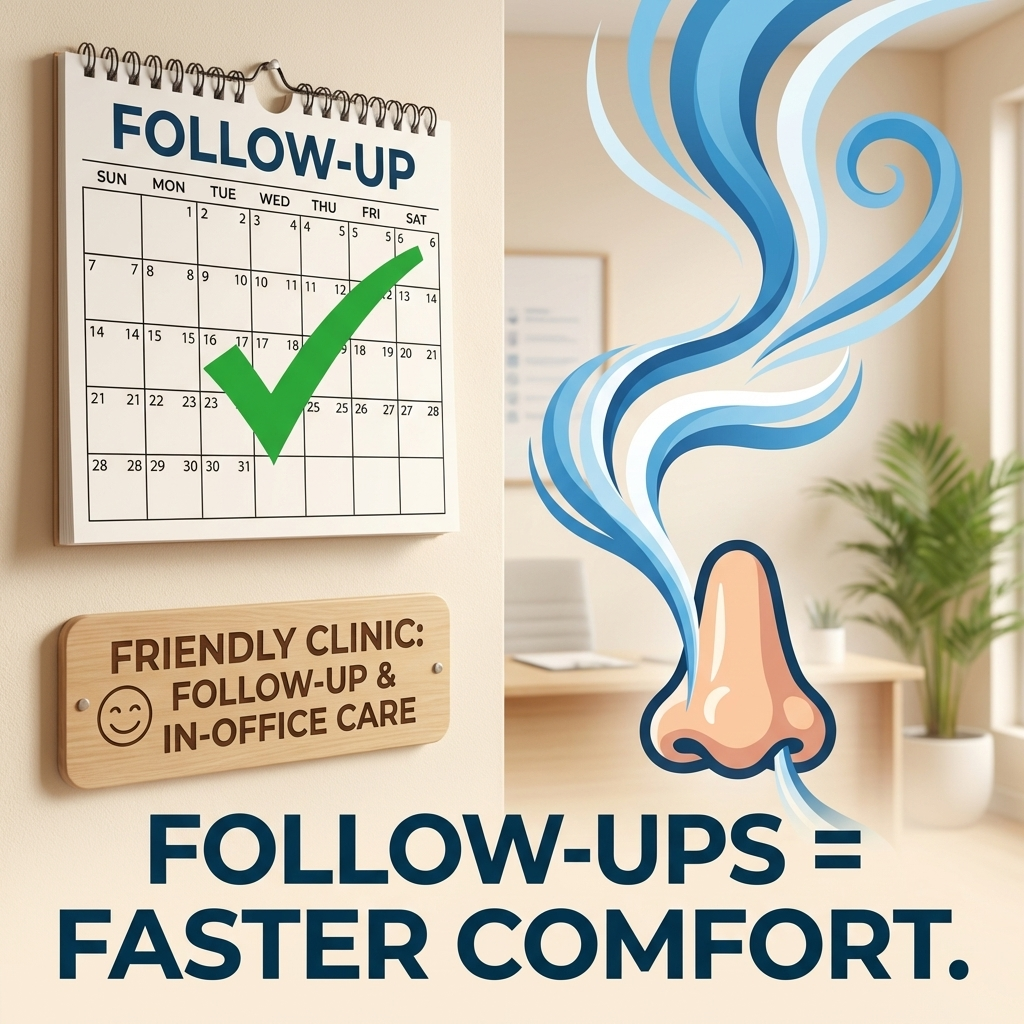
Think of follow-up care as part of healing—it can accelerate comfort and outcomes.
When Is Post-Surgery Congestion Not Normal? (Call Your Surgeon)
Some congestion is expected—but worsening symptoms or a lack of improvement deserves a check-in.
A useful self-check is: Am I slowly trending better overall? If the answer is no, you are not bothering your surgeon by asking.
Contact your surgeon if:
- Your congestion is getting worse instead of gradually improving after the first couple of weeks
- You have persistent, severe nasal blockage beyond the expected window (often more than 3 weeks) without improvement
- You develop increasing facial pain/pressure, fever, foul-smelling drainage, or significant bleeding [1][2][3]
Seek urgent care/emergency help if:
- There is heavy bleeding that won’t stop
- You have trouble breathing, severe swelling, or concerning vision/neurological symptoms
When in doubt, follow the emergency instructions your surgical team provided. [2][3]
Lifestyle Tips to Support Faster Healing (and Better Breathing Long-Term)
Hydration and gentle nutrition
Staying well-hydrated can help keep mucus thinner and may improve comfort while your nose is healing. Warm fluids and softer foods can also be easier in the first few days.
Allergy control matters (especially in weeks 2–8)
Allergies and chronic inflammation often overlap with sinus problems. If allergy symptoms ramp up during recovery, it may be worth discussing an allergy plan at a follow-up visit. [1] Allergy-driven swelling can mimic still not healed congestion—even when surgical sites are recovering normally.
Keep follow-up appointments
Follow-ups help your surgeon confirm healing is on track and address issues (like crusting) that can prolong congestion. [3][4] If you are feeling stuck at the same level of blockage, a follow-up exam is often the fastest way to clarify the cause.
Small daily habits can meaningfully support recovery.
FAQs: Congestion After Sinus Surgery
How long will my nose feel completely blocked after sinus surgery?
For many patients, the most intense blockage is in the first 1–3 days, then it improves gradually over 1–3 weeks. Timelines vary. [1][2][3][5]
Is it normal to feel more congested at night?
Yes. Lying flat can increase swelling and make drainage feel worse; elevation is commonly suggested in aftercare guidance. [3]
When can I breathe normally again after endoscopic sinus surgery?
Many people notice meaningful improvement by 2–3 weeks, though full healing can take longer. [1][5]
Why does my congestion come and go during recovery?
Swelling and crusting can fluctuate from day to day. Rinses and follow-up care often influence how open you feel. [3][4]
Is loss of smell after surgery normal—and how long does it last?
Temporary smell changes can occur and may take weeks to months to improve. [1][5]
What if I’m still congested after 3–4 weeks?
If you’re not improving—or you’re worsening—contact your surgeon for an evaluation. [1][2][3]
Conclusion + Next Step
In many cases, how long congestion lasts after sinus surgery comes down to normal healing: swelling, crusting, and drainage. The stuffiest period is often the first few days, and many people feel noticeably better by 2–3 weeks—even though full healing can take longer.
If your symptoms aren’t trending in the right direction, or if you’re worried about what you’re experiencing, it’s reasonable to reach out to your surgical team.
If you’d like personalized guidance, you can book an appointment with Sleep and Sinus Centers of Georgia here: https://www.sleepandsinuscenters.com/
Most patients improve steadily with good postoperative care and follow-up.
References
[1] https://www.hopkinsmedicine.org/health/treatment-tests-and-therapies/endoscopic-sinus-surgery
[2] https://myhealth.alberta.ca/Health/aftercareinformation/pages/conditions.aspx?hwid=ug3524
[3] https://www.mountsinai.org/care/ent/services/nasal-sinus-allergy/after-surgery-care
[4] http://www.otodocs.com/sinus-surgery/
[5] https://www.sinusdoctor.com/recovery-timeline-for-various-sinus-surgeries/
This article is for educational purposes only and is not medical advice. Please consult a qualified healthcare provider for diagnosis and treatment.
Don’t let allergies slow you down. Schedule a comprehensive ENT and allergy evaluation at Sleep and Sinus Centers of Georgia. We’re here to find your triggers and guide you toward lasting relief.