
Heat or Ice for Sinus Infection: Which Works Best for Sinus Pain Relief?
Sinus pressure can make your whole face feel sore—cheeks, forehead, even your teeth. When that heavy, “full” feeling turns into a headache, it’s natural to wonder whether a warm compress or an ice pack will help most.
Compresses won’t treat the underlying cause of sinusitis by themselves, but they can add day-to-day comfort while your body recovers and other treatments take effect. In many everyday cases of congestion and pressure, guidance generally favors gentle heat—especially warm, moist heat.
Quick answer: For most people deciding on heat or ice for sinus infection discomfort, warm (preferably moist) heat is a reasonable first choice because it may help loosen mucus and make drainage feel easier. Ice can help briefly by “numbing” certain headache sensations, but it’s usually secondary to heat.
*When in doubt, start with gentle warmth for pressure and congestion, and consider brief cooling only if headache-type pain persists.*
Quick Answer—Gentle Heat Is Usually More Helpful Than Ice for Sinus Pressure
Why heat is the go-to home remedy
When symptoms feel like pressure, fullness, and congestion, heat—especially a warm, moist compress—often matches the problem. Congestion commonly involves thick, sticky mucus. Warmth may make mucus feel less thick and easier to clear. Warmth may also:
- Improve local circulation
- Help loosen and thin mucus
- Encourage sinus drainage pathways to feel more open
That combination is why many educational resources describe warm compresses as a commonly recommended comfort strategy for sinus pressure relief.
*For pressure and congestion, warm, moist heat is a simple, low-risk place to start.*
When ice might help (but usually not alone)
A cool or cold compress may temporarily reduce pain sensation, which some people find useful if their main issue feels like a throbbing headache with sinus symptoms. Still, for most people comparing heat or ice for sinus infection symptoms—especially when thick congestion is front and center—cold is not the primary approach because it does not support drainage the way warmth can.
*Use cool compresses briefly and gently if needed for pain, but don’t rely on cold to ease congestion.*
Sinus Infection Symptoms That Make People Try Heat or Ice
Common symptoms of sinus-related inflammation include:
- Facial pressure or pain (cheeks, forehead, between the eyes)
- Headache or headache with sinus-like symptoms
- Stuffy nose/congestion
- Thick nasal drainage or postnasal drip
- Reduced smell/taste
- Ear pressure/fullness
- Cough (often from postnasal drip)
A common scenario: you lean forward and feel a sudden increase in facial pressure, or you wake up with a “tight mask” sensation across your cheeks and brow. Those are the moments people often reach for a compress. For a fuller overview, see Symptoms of sinus problems: https://sleepandsinuscenters.com/symptoms-of-sinus-problems
*If facial pressure and thick congestion are your main symptoms, gentle warmth is often the most comfortable match.*
What Causes Sinus Pressure and Pain During an Infection?
Inflammation and narrowed drainage pathways
Your sinuses are air-filled spaces that normally drain through small openings into the nasal passages. When inflammation occurs—from a virus, allergies, or other triggers—those openings can narrow so mucus backs up more easily, creating pressure and discomfort.
Thick mucus and poor clearance
When mucus becomes thicker and stickier, it’s harder to clear. That can increase the feeling of fullness, facial pain, and headache. Strategies that help loosen or thin mucus often make days feel more manageable, even if they don’t cure the underlying problem.
Not all “sinus infections” are bacterial
Many cases are viral or inflammation-related rather than bacterial, which is why symptom relief strategies and careful use of medications matter. If you’re unsure what’s driving your symptoms (or they keep returning), an evaluation can clarify the cause and best next steps.
*Pressure often reflects narrowed drainage plus thicker mucus—relief usually improves when mucus moves more easily.*
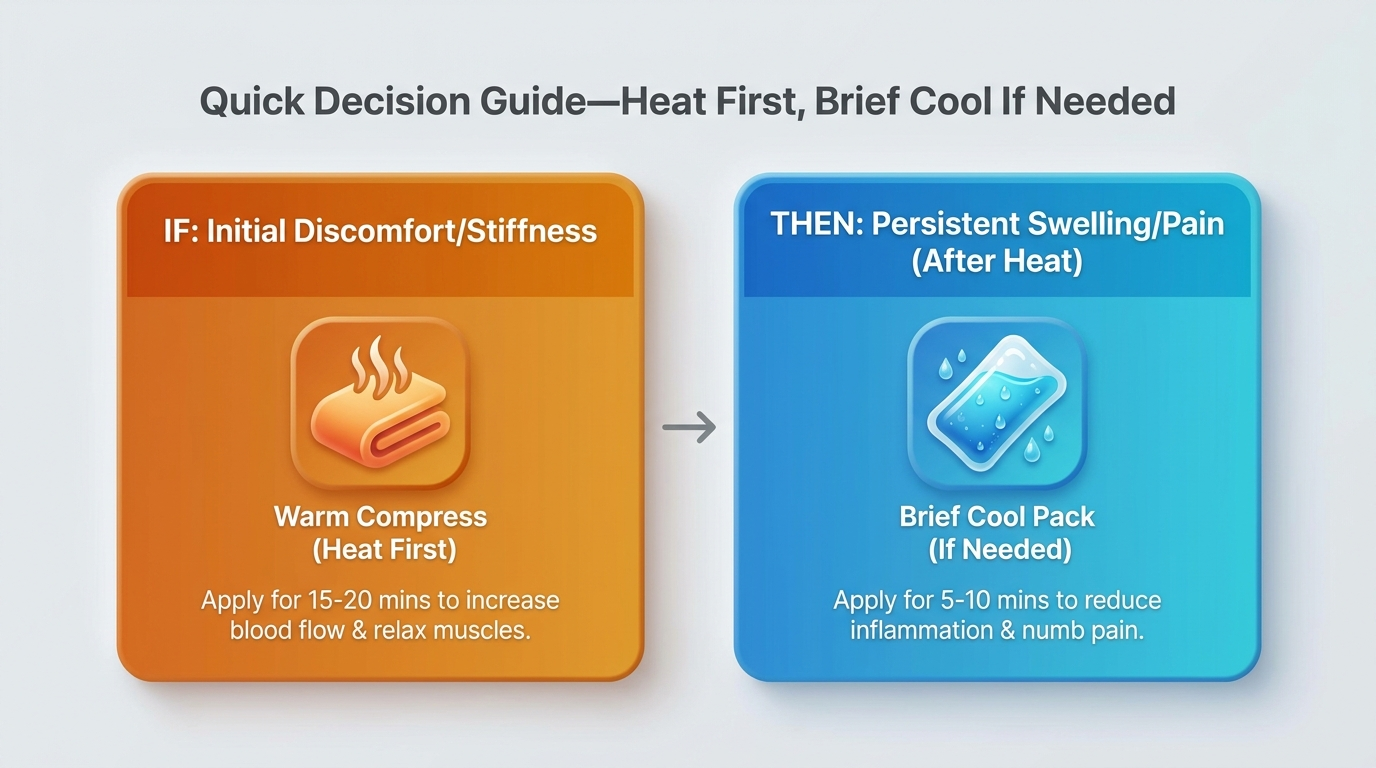
Heat vs. Ice—How Each One Works (and What Each Is Best For)
Warm compress benefits (best for congestion and pressure)
Warm, ideally moist, heat may:
- Increase blood flow to the area
- Help loosen and thin mucus
- Support natural drainage and ease pressure
If your main complaint is “my face feels full and blocked,” heat typically fits best. Moist heat often feels more soothing on facial tissues than dry heat, and a warm, damp washcloth is a simple starting point.
Cold compress benefits (best for brief pain “numbing”)
Cold may:
- Temporarily reduce pain sensation
- Offer short-lived relief for some headache patterns
This can be useful if your dominant symptom is headache-type pain rather than congestion. Keep it brief and gentle—aim for “cooling,” not deep icing.
Simple decision guide
- If you feel congested, heavy, full, or notice thick mucus: try heat first.
- If a throbbing headache sensation lingers after heat: consider a short, gentle cool compress.
- If you have numbness, very sensitive skin, or circulation/nerve issues: avoid temperature extremes and prioritize safety.
*Match the compress to your main symptom: warmth for congestion and pressure, brief cooling only for lingering headache pain.*

How to Use a Warm Compress for Sinus Symptom Relief
Best method: moist heat
Options include:
- A warm, damp washcloth (simple and effective)
- A microwaveable moist heat pack (follow package directions carefully)
- A warm shower to add steam, followed by a compress
Example: Wet a clean washcloth, wring it out, then warm it with hot tap water. Re-warm as it cools. Aim for “pleasantly warm,” not “too hot to touch.”
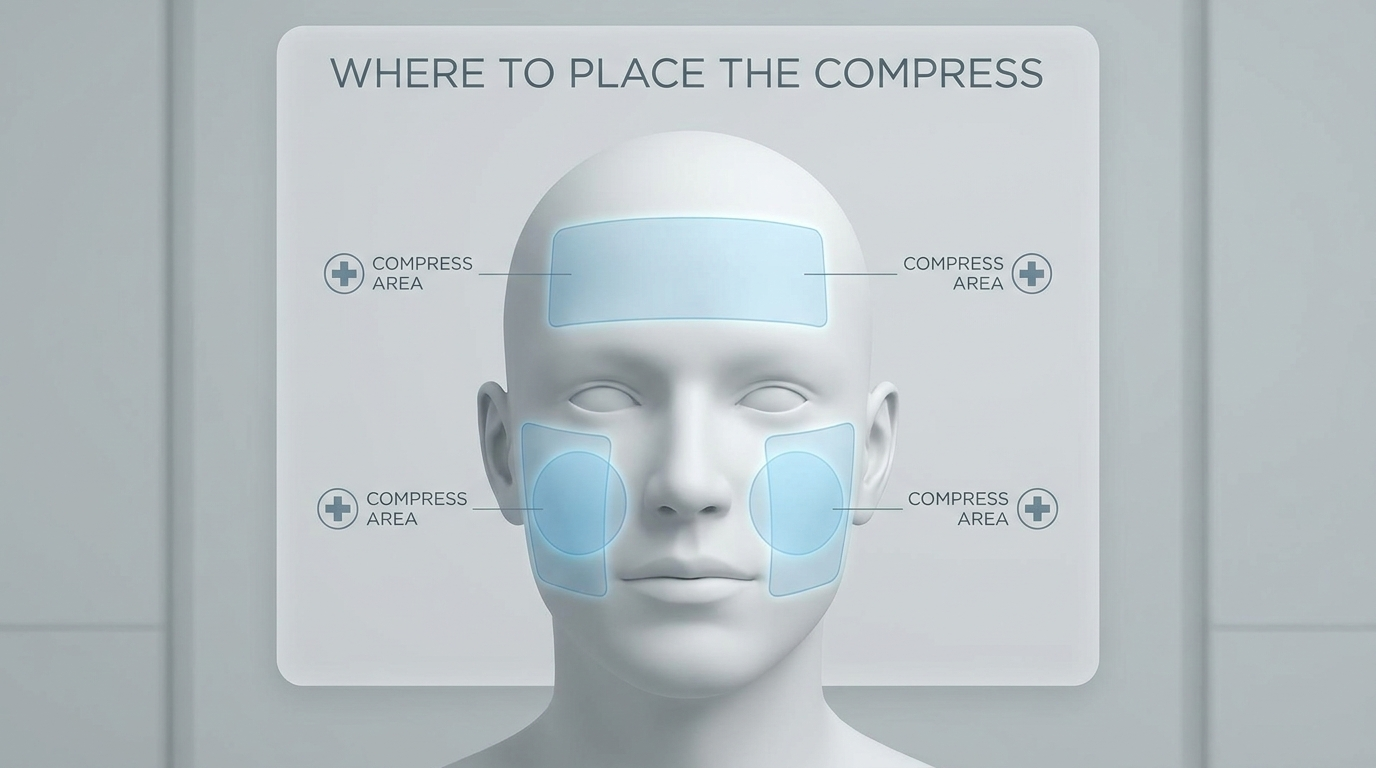
Where to place it
Place the compress over areas where pressure is commonly felt:
- Cheeks and around the nose
- Forehead
If one side feels worse, you can focus there first, then switch sides.
How long and how often
Many people find relief with:
- About 10–15 minutes at a time
- Re-warm as needed
- Repeat a few times daily, based on comfort and skin tolerance
Safety tips
- Use warm, not hot; test temperature on your inner wrist first
- Keep a protective layer between very warm packs and your skin
- Avoid falling asleep with a heating device on your face
- Stop if skin becomes very red, painful, or blistered
- Be extra cautious if you have reduced facial sensation; skin can burn even when it doesn’t feel hot
*Short, frequent sessions of comfortably warm, moist heat on the cheeks and forehead are often the most soothing and safest.*
Can You Alternate Heat and Ice for a Sinus Headache?
What to know
Some people try brief alternating warm and cool compresses for headache-type discomfort, but there is no standard regimen and evidence is limited. Alternating is discussed more for pain signals than for clearing congestion.
Who should (and shouldn’t) try alternating
This approach may be worth a cautious try if headache pressure is your main symptom. It may be less suitable if you:
- Are unsure whether your headache is related to sinus symptoms
- Have cold sensitivity or nerve pain
- Have circulation disorders that make cold exposure risky
A gentler approach to try first
- Start with heat alone for about 10 minutes
- If head pain lingers, add a short, gentle cool compress afterward
If cold reliably makes your facial pain sharper—or discomfort lingers after removing the cold—skip it and stick with gentle warmth. If headaches are frequent or severe, learn the differences between migraine and sinus-related symptoms here: https://sleepandsinuscenters.com/blog/migraine-vs-sinus-headache-key-differences-and-symptoms-explained
*Begin with warmth; consider a brief cool-down only if headache-type pain persists and you tolerate cold well.*

Best Results: Combine Heat with Proven Sinus Symptom Strategies
Saline rinses to flush mucus and irritants
A saline rinse is a mechanical way to clear thick mucus and irritants so your nose and sinuses can drain more effectively. Many people find that pairing a warm compress with saline rinsing works better than either alone. Use distilled or sterile water, or water that has been boiled and cooled, and keep devices clean between uses. Learn more about frequency and routine here: https://sleepandsinuscenters.com/blog/nasal-rinses-how-often-should-you-use-them
Over-the-counter options (use responsibly)
Depending on your symptoms and health history, some OTC choices may help:
- Decongestants (oral or nasal): some over-the-counter decongestants may help relieve congestion for some people when used as directed; nasal sprays can cause rebound congestion if overused
- Pain relievers (such as acetaminophen or ibuprofen, when appropriate)
- If allergies contribute, certain allergy medications may help in that context
For details, safety notes, and when to get checked, see: https://sleepandsinuscenters.com/blog/best-otc-medicine-for-sinus-infection-when-to-see-a-doctor
Hydration and humidified air
Fluids can help keep mucus thinner. Humidified air may reduce irritation—just be sure humidifiers are cleaned regularly to avoid buildup of unwanted microbes.
Rest and sleep positioning for drainage
Rest supports recovery. Many people feel less pressure sleeping with the head slightly elevated. Practical positioning ideas: https://sleepandsinuscenters.com/blog/sleeping-positions-that-help-sinus-drainage
*Pair gentle heat with saline rinses, smart OTC choices, hydration, humidity, and good sleep positioning for the biggest comfort gains.*

When Heat (or Ice) Could Be a Bad Idea
Avoid heat if you have:
- A facial skin infection, rash, open wounds, or a recent facial procedure
- Significant swelling with marked tenderness (especially if worsening)
Avoid ice if you have:
- Cold urticaria, Raynaud’s phenomenon, or significant cold sensitivity
- Nerve sensitivity where cold triggers sharp or lingering pain
General safety
- Don’t place ice directly on skin; always use a cloth barrier and keep exposure brief
- Consider medical advice if you’re uncertain, especially after procedures
Seek urgent care for red flags
- High fever, severe headache with stiff neck, confusion
- Swelling around the eyes or vision changes
- Severe facial swelling or rapidly worsening pain
- Symptoms that don’t improve, or infections that keep recurring
*If symptoms are severe, rapidly worsening, or keep coming back, seek care promptly.*
FAQs
Is heat or ice better for a sinus infection?
For most people with sinus pressure and congestion, gentle heat is usually preferred because it may help loosen mucus and make drainage feel easier. Ice may help briefly with headache-type discomfort but is less commonly recommended as the main approach.
Can heat make a sinus infection worse?
Used properly, a warm compress is intended for comfort. Problems are more likely if heat is too hot, used too long, or applied over irritated or infected skin.
How many times a day can I use a warm compress on my sinuses?
Many people use a warm compress for 10–15 minutes a few times per day, adjusting based on comfort and skin sensitivity. If your skin becomes very red or sore, back off.
Should I use a warm compress before or after a saline rinse?
A common sequence is heat first (to loosen mucus), then a saline rinse (to help clear it). If reversing the order feels better for you, that can be reasonable—comfort and gentle technique matter.
What if my “sinus headache” is actually a migraine?
Migraine and sinus symptoms can overlap. If headaches are frequent, severe, or come with nausea or light sensitivity, review key differences and discuss patterns with a clinician: https://sleepandsinuscenters.com/blog/migraine-vs-sinus-headache-key-differences-and-symptoms-explained
Does alternating hot and cold really work?
Some people try alternating warm and cool compresses for headache-type discomfort, but evidence is limited and there’s no standard regimen. A heat-first, short-cool-second approach is a gentler place to start if needed.
*For most questions, a heat-first approach with sensible safety steps is a practical default.*
Summary and Next Steps
- Warm, moist heat is usually most helpful for facial pressure and congestion because it may help loosen mucus and make drainage feel easier.
- Ice is less commonly recommended, but a brief cool compress may help some people with headache-type sensations.
- The best comfort often comes from combining heat with a saline rinse, appropriate OTC choices used as directed, hydration, humidity, and smart sleep positioning.
- If symptoms are severe, persistent, or keep returning, schedule an evaluation with Sleep and Sinus Centers of Georgia to clarify what’s driving the problem and what treatments fit your situation.
To get started, book an appointment: https://www.sleepandsinuscenters.com/
*Start with gentle warmth, add supportive measures, and seek care if symptoms are severe or won’t let up.*
Medical disclaimer
Medical disclaimer: This article is for general education and comfort strategies and is not a substitute for personalized medical advice, diagnosis, or treatment.
This article is for educational purposes only and is not medical advice. Please consult a qualified healthcare provider for diagnosis and treatment.
Don’t let allergies slow you down. Schedule a comprehensive ENT and allergy evaluation at Sleep and Sinus Centers of Georgia. We’re here to find your triggers and guide you toward lasting relief.