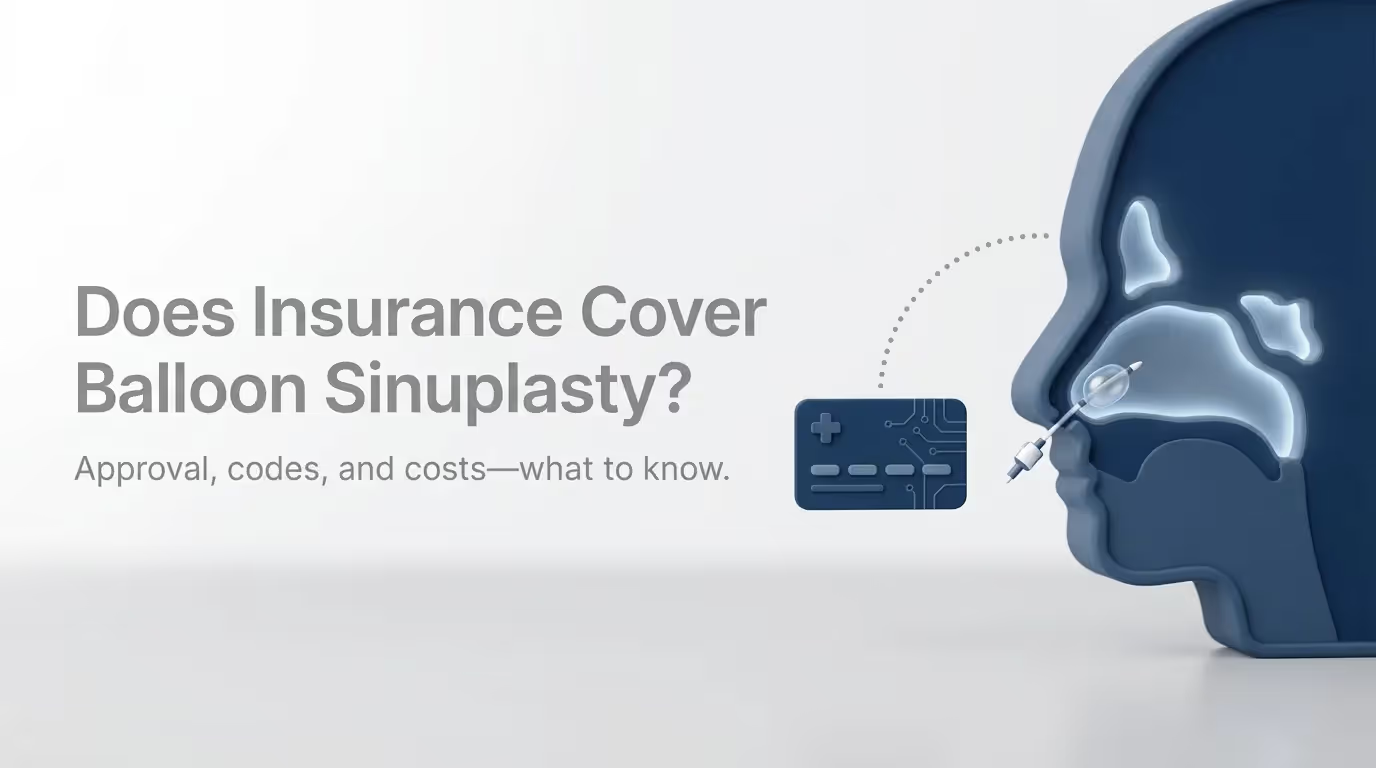
Does Insurance Cover Balloon Sinuplasty? Insurance Coverage Guide for Balloon Sinuplasty
If you’re researching does insurance cover balloon sinuplasty, you’re usually trying to answer two practical questions: (1) Will my plan pay for it? and (2) What do I need to do to improve the odds it gets approved? This guide breaks down how coverage commonly works, what insurers look for, which codes matter, and how to verify benefits before you schedule.
A helpful way to think about insurance approval: the procedure itself may be “covered,” but your plan typically still expects your ENT to show why it’s needed for you, which sinus(es) are involved, and that the requested code(s) match the documented findings.
Quick Answer — Is Balloon Sinuplasty Covered by Insurance?
The short version
In many cases, balloon sinuplasty insurance coverage is available through major commercial insurers when the procedure is considered medically necessary and the medical record supports the plan’s criteria, depending on individual plan policies. Many plans also require prior authorization (pre-approval) before the procedure is scheduled.
Coverage policies vary by insurer and by plan. Examples of how payers describe criteria can be found in policies from Cigna, BCBSM/BCN, and Fallon Health.
Sources: Cigna policy, BCBSM/BCN policy, Fallon Health policy
Why coverage varies
Even when the answer to does insurance cover balloon sinuplasty is “yes,” your out-of-pocket cost and approval steps can differ based on:
- Plan type (HMO vs PPO vs EPO)
- In-network vs out-of-network ENT and facility
- Site of service (office vs ambulatory surgery center vs hospital outpatient)
- Whether balloon dilation is done alone or alongside other sinus procedures
Concrete example: Two patients can have the same diagnosis and procedure, but different bills if one has an unmet deductible or uses an out-of-network facility.
In short: coverage is often available when criteria are met, but your exact approval steps and costs depend on your specific plan and network status.
What Is Balloon Sinuplasty (and Why Would You Need It)?
Plain-language definition
Balloon sinuplasty (also called balloon sinus ostial dilation) is a minimally invasive procedure that uses a small balloon catheter to gently widen a blocked sinus drainage pathway, aiming to improve ventilation and drainage.
For a patient-friendly overview of the procedure itself, see our Balloon Sinuplasty page. For general information about sinus conditions, you can also review the AAO-HNS patient resources.
Conditions it’s commonly used for
- Chronic rhinosinusitis (persistent symptoms over time)
- Recurrent acute sinusitis (repeated episodes) in selected cases
Chronic sinusitis is also one of the most common diagnoses connected to insurance approval pathways—learn more on our chronic sinusitis page.
What it’s not
It’s not a cosmetic treatment. Payers evaluate it as a medical/surgical treatment for sinus disease—and they usually require “objective evidence” that sinus outflow is affected. Only a qualified clinician can determine whether this procedure is appropriate for your specific anatomy and diagnosis.
Bottom line: balloon sinuplasty is a minimally invasive way to open blocked sinus pathways, but a clinician’s evaluation determines if it fits your condition.
Symptoms That Often Lead Patients to Seek Balloon Sinuplasty
Common chronic sinus symptoms
People often start asking does insurance cover balloon sinuplasty after dealing with symptoms such as:
- Nasal congestion or obstruction
- Facial pressure or pain
- Thick nasal drainage or post-nasal drip
- Reduced sense of smell or taste
- Fatigue or sleep disruption related to chronic congestion
Many patients describe it in everyday terms like: “I can’t breathe through my nose,” or “I’m always dealing with pressure and drainage.” That kind of symptom detail—how often, how severe, and for how long—often becomes important later for authorization.
“Red flag” symptoms to evaluate promptly
Some symptoms (for example, significant swelling around the eye, vision changes, severe headache, confusion, or high fever) can signal problems that should be assessed urgently. This article is educational; if you’re concerned about severe symptoms, seek timely medical evaluation.
If persistent or severe symptoms are present, don’t self-diagnose—see a qualified clinician for evaluation and guidance.
What Causes Chronic or Recurrent Sinus Problems (and Why Insurers Care)
Common contributing causes
- Inflammation from allergies or non-allergic rhinitis
- Structural narrowing (like a deviated septum or turbinate enlargement)
- Nasal polyps (coverage rules and procedure selection may differ)
- Recurrent infections or persistent inflammation
Why this matters for coverage
Insurance approval often hinges on whether your clinician can document that symptoms correlate with sinus outflow obstruction/inflammation—and not a different condition that can mimic sinus complaints.
A simple analogy: insurers want to see that the “plumbing problem” is truly in the sinus drainage pathway (supported by imaging and/or endoscopy), not primarily from a different issue that would call for a different treatment plan. Only a licensed clinician can make this determination based on your exam and studies.
In essence, coverage is more likely when a clinician can show objective sinus outflow disease that matches your symptoms and imaging.
“Medical Necessity” — The #1 Factor That Determines Coverage
What “medically necessary” usually means
While each plan differs, many policies describe medical necessity in a similar pattern: symptoms are persistent or recurrent despite appropriate medical therapy, and there is objective evidence supporting sinus disease (often CT and/or nasal endoscopy).
Sources: Cigna policy, BCBSM/BCN policy, Fallon Health policy
Common documentation insurers look for (patient-friendly checklist)
- Symptom duration, severity, and frequency (what’s happening and how long it’s been going on)
- Treatments already tried (examples may include saline rinses, topical nasal steroids, and other therapies as appropriate)
- CT report and/or nasal endoscopy findings showing which sinus(es) are affected
- A clinical rationale for why balloon dilation fits the anatomy and disease pattern
Practical tip: Bring (or upload) a brief timeline to your visit—when symptoms started, what you tried, and what helped or didn’t. That can make the chart note stronger and more consistent.
Criteria tools payers may use
Some prior authorization teams apply tools such as InterQual or plan-specific criteria frameworks—meaning the “rules” can feel standardized even when your case is unique.
Put simply, strong, clinician-documented evidence that aligns with your plan’s policy is the single biggest driver of approval.
Prior Authorization (Pre-Approval): What to Expect
When prior authorization is typically required
For many commercial plans, prior authorization for balloon sinuplasty is common—even if your ENT is in-network. Think of prior authorization like a permission slip: the insurer often wants to review the diagnosis, the imaging, and the requested CPT codes before the procedure happens.
What your ENT office usually submits
- Clinic notes supporting diagnosis and symptom history
- Imaging results (CT report) and/or endoscopy documentation
- Requested procedure codes (CPT) and site of service
- Diagnosis codes (ICD-10)
How long it can take (and what slows it down)
Timeframes vary—from several business days to a few weeks. Common delays include missing imaging reports, unclear documentation, or mismatched codes/site-of-service details.
A common “snag” example: the authorization request lists one site of service (office), but scheduling later changes to an ASC. Some plans require the authorization to match the final location.
What you can do to help
You can often speed things up by confirming your insurance details are correct, ensuring outside imaging is sent over, and asking whether your plan uses pre-determination (“pred”) for cost/coverage clarity.
In short, pre-approval is common, and complete, consistent documentation (including the correct site of service) helps prevent delays.
Commercial Insurance Coverage (Employer Plans, ACA Plans, Individual Plans)
Typical coverage pattern
Many plans cover balloon sinus dilation when criteria are met and authorization is approved. This is why the best answer to does insurance cover balloon sinuplasty is often: “It depends on your plan’s criteria—and whether your documentation matches it.”
Sources: Cigna policy, BCBSM/BCN policy, Fallon Health policy
Common reasons for denial
- “Not medically necessary” due to limited documentation of medical therapy attempts
- Imaging that doesn’t show qualifying disease in the sinus being treated
- Out-of-network provider or facility
- Coding/bundling conflicts (especially when multiple sinus procedures are performed)
If your plan says “investigational”
Some plans may label balloon dilation “investigational” in limited scenarios or for specific indications. In other cases, the denial is more about missing documentation than about the procedure itself. If denied, an appeal with additional records is often the next step, but outcomes vary and are not guaranteed.
Bottom line: if your clinical picture matches the policy, approval is more likely; if not, expect denials or requests for more documentation.
Medicare Coverage (and Why It’s Not One Simple Yes/No)
No national Medicare coverage determination
Medicare balloon sinuplasty coverage isn’t governed by one universal national rule for every situation. Coverage can depend on your local Medicare Administrative Contractor (MAC) guidance or the specific policies used by your plan.
Medicare Advantage vs Original Medicare
- Medicare Advantage plans often use prior authorization and plan-specific medical policies.
- Original Medicare coverage can vary by region and documentation.
What Medicare patients should do
Before scheduling, verify benefits and ask what documentation and approvals your specific plan requires. Always confirm requirements directly with your Medicare Advantage plan or local MAC.
Practical takeaway: Medicare coverage exists in many cases, but you should verify with your specific plan or MAC before moving forward.
Understanding the CPT Codes (So Billing Matches What Was Done)
The main balloon dilation CPT codes
Balloon sinus ostial dilation is commonly billed with CPT 31295–31298, with the specific code determined by which sinus is treated.
Coding source: ENTNet CPT guidance
Important bundling rule when combined with other sinus surgery (FESS)
If balloon dilation is performed on the same sinus where an endoscopic sinus surgery tissue-removal procedure is also performed, balloon dilation may be considered bundled and not separately reportable for that same sinus. This can affect how a claim processes and why the bill may not list balloon dilation the way patients expect.
Source: ENTNet CPT guidance
Balloon supply costs
In many reimbursement structures, the balloon catheter supply is typically included in the procedure reimbursement (rather than paid separately).
Source: Cigna policy
In short, accurate coding aligned with documentation—and awareness of bundling rules—helps claims process correctly.
What Balloon Sinuplasty Costs With Insurance (and What You Might Still Owe)
Typical out-of-pocket cost drivers
- Whether your deductible is met
- Your coinsurance percentage (or copay structure)
- In-network vs out-of-network status (often the biggest swing)
- Office vs facility setting (facility fees can be significant)
Other charges that may appear
Depending on your care plan, statements may include:
- Specialist visits, nasal endoscopy, and CT imaging
- Anesthesia services (if used)
- Facility fees (ASC/hospital outpatient)
- Post-procedure visits and medications
How to get a more accurate estimate
Ask for a written estimate and call your insurer with the planned CPT codes and diagnosis. If you are considering self-pay, confirm in writing whether the quote is all-inclusive (physician fee, facility fee, anesthesia, device, and follow-up) to avoid surprise bills. This is one of the most reliable ways to move from “does insurance cover balloon sinuplasty” to a real-world cost expectation.
Bottom line: your costs hinge on deductible status, network, and site of service—get a written, all-inclusive estimate before scheduling.
Step-by-Step: How to Verify Your Balloon Sinuplasty Benefits
Questions to ask your insurance company
- Is balloon sinus ostial dilation covered for my diagnosis?
- Is prior authorization required?
- Is step therapy required (specific medications first)?
- What are my deductible/coinsurance responsibilities for: Office-based outpatient vs ASC/hospital outpatient?
- Are my ENT and the procedure location in-network?
Codes to request from your provider
Ask which CPT code(s) apply (31295–31298) and whether any additional procedures are planned that could change billing.
Mini script you can use on the phone
“I’m calling to verify benefits for CPT 3129X (as applicable) for chronic/recurrent sinusitis. Is prior authorization required, and what will my cost-share be in an office setting versus an outpatient facility?”
Document everything
Write down the reference number, date/time, representative name, and a summary of what was stated.
A quick verification call with the correct CPT codes can prevent billing surprises later.
If Insurance Denies Balloon Sinuplasty: Next Steps
Common denial reasons (plain English)
- “Not medically necessary” due to missing documentation
- Imaging doesn’t support treatment of the requested sinus
- Prior authorization not obtained
- Out-of-network or site-of-service not approved
What an appeal typically includes
Appeals often include:
- A letter of medical necessity
- Records of prior treatments
- CT/endoscopy findings
- A rationale mapped to the insurer’s published criteria
Your ENT office usually leads this process with supporting documentation. While many denials are overturned with clearer documentation, success is not guaranteed and depends on the insurer and case specifics.
Peer-to-peer review
A peer-to-peer is a clinician-to-clinician discussion with the insurer’s medical reviewer and can be useful when the denial stems from interpretation of criteria.
If you choose to self-pay
Ask what a cash-pay quote includes (procedure, facility, device, anesthesia if applicable, and follow-ups) and whether payment plans are available. Confirm what is not included to avoid unexpected charges.
In essence, appeals can help when documentation gaps exist—but outcomes vary, and it’s wise to confirm options before rescheduling.
FAQs — Balloon Sinuplasty Insurance Coverage
Does insurance cover balloon sinuplasty for chronic sinusitis?
Often, yes—if documentation supports medical necessity (symptoms plus objective findings, and appropriate treatment history), and if required prior authorization is approved. Policies vary by plan.
Sources: Cigna, BCBSM/BCN, Fallon Health
Is balloon sinuplasty covered by Medicare?
Medicare balloon sinuplasty coverage can vary by local contractor guidance and by Medicare Advantage plan rules. Verification with your plan or local MAC before scheduling is key.
Why does my plan require prior authorization?
Because insurers often want to confirm medical necessity, diagnosis, imaging, and the exact planned CPT codes and site of service before approving payment.
What CPT codes are used for balloon sinuplasty?
Common codes are 31295–31298, selected based on which sinus is treated.
Source: ENTNet CPT guidance
If I have balloon dilation and FESS together, will insurance pay for both?
Insurance may pay for both in certain combinations, but balloon dilation is typically not separately reported for the same sinus if a tissue-removal endoscopic sinus surgery procedure is performed on that same sinus (bundling rules).
Source: ENTNet CPT guidance
Is the balloon device/supply billed separately?
Often, the balloon supply is considered included in the procedure reimbursement (separate pass-through payments are generally not used).
Source: Cigna policy
What if my insurance says balloon sinuplasty is “not medically necessary”?
That denial commonly means the plan didn’t see enough supporting documentation (treatment history, CT/endoscopy findings, symptom duration) or didn’t agree the criteria were met. An appeal may focus on aligning documentation to the plan’s policy language; results vary by plan and case.
Can balloon sinuplasty be done in-office, and does that change coverage?
It can be performed in different settings depending on the care plan. Coverage and out-of-pocket costs may change based on site-of-service benefits and facility fees.
How can I lower my out-of-pocket costs?
Common strategies include staying in-network, confirming prior authorization, requesting a pre-procedure estimate, and reviewing timing relative to your deductible year.
Call to Action (Patient-Friendly)
If you’re still trying to pin down does insurance cover balloon sinuplasty for your specific plan, the fastest path is an evaluation plus benefits verification. Sleep and Sinus Centers of Georgia can help confirm requirements (like prior authorization) and gather the documentation insurers typically request.
Note: If you’re ready to move from research mode to real answers for your plan, it’s a good time to book an appointment so your symptoms, imaging, and next steps can be reviewed in one place.
Schedule an appointment
Sources
- Cigna Medical Coverage Policy: Balloon Sinus Ostial Dilation (effective 05/15/2025) https://static.cigna.com/assets/chcp/pdf/coveragePolicies/medical/mm_0480_coveragepositioncriteria_balloon_sinuplasty.pdf
- BCBSM/BCN Joint Medical Policy (updates through 2025) https://www.bcbsm.com/amslibs/content/dam/public/mpr/mprsearch/pdf/103327.pdf
- Fallon Health Clinical Coverage Criteria: Balloon Sinus Ostial Dilation (effective 05/01/2025) https://fallonhealth.org/-/media/Files/ProviderPDFs/MedicalPolicies/BalloonSinusOstialDilation.ashx
- AAO-HNS / ENTNet: CPT for ENT Balloon Sinus Dilation (coding and bundling) https://www.entnet.org/resource/cpt-for-ent-balloon-sinus-dilation-2/
This article is for educational purposes only and is not medical advice. Please consult a qualified healthcare provider for diagnosis and treatment.
Don’t let allergies slow you down. Schedule a comprehensive ENT and allergy evaluation at Sleep and Sinus Centers of Georgia. We’re here to find your triggers and guide you toward lasting relief.