Does Balloon Sinuplasty Hurt? Pain Levels and Pain Management Guide
If you’re considering balloon sinuplasty, it’s completely normal for your first question to be: does balloon sinuplasty hurt? Many people worry about pain during the procedure—and just as much about what recovery will feel like afterward, especially if you’ve lived through years of sinus pressure or headaches.
The reassuring news: balloon sinuplasty is designed to be minimally invasive, and many patients describe the experience as pressure and congestion rather than sharp pain in most cases. It’s also typically performed with anesthesia to reduce discomfort. The Cleveland Clinic notes balloon sinuplasty is minimally invasive and commonly done with anesthesia to help keep you comfortable (source: https://my.clevelandclinic.org/health/treatments/21977-balloon-sinuplasty).
This guide covers what you may feel during the procedure, what’s normal afterward, what symptoms are worth a call to your provider, and practical ways people commonly manage balloon sinuplasty recovery discomfort.

Quick Answer — Does Balloon Sinuplasty Hurt?
For many people, balloon sinuplasty pain levels are generally low, and many report the experience as virtually pain-free. Instead of sharp pain, the most common sensations are:
- Pressure or fullness in the cheeks, forehead, or around the nose
- Brief discomfort at certain moments (often tied to numbing medicine or sinus pressure changes)
- Congestion-like heaviness similar to a sinus flare
A useful way to picture it: many patients say it feels less like “pain” and more like the uncomfortable pressure you might feel during a bad sinus day—or even the “tight” sensation you get during a quick altitude change.
Discomfort may be more noticeable if you have significant inflammation on the day of treatment, if multiple sinuses are treated, or if anxiety/tension makes you brace your face and jaw (which can make pressure sensations feel stronger). Cleveland Clinic’s overview describes anesthesia use and what to expect with the procedure (source: https://my.clevelandclinic.org/health/treatments/21977-balloon-sinuplasty).
What Balloon Sinuplasty Is (and Why It’s Usually Less Painful)
How the procedure works (simple explanation)
Balloon sinuplasty is a sinus-opening procedure that uses a small balloon to widen blocked sinus drainage pathways. In simple terms:
1. A thin catheter is guided to the blocked sinus opening
2. A small balloon is gently inflated to widen the passage
3. The balloon is deflated and removed, leaving the pathway more open to help improve sinus drainage over time
If you want a deeper overview of the approach and candidacy, visit Sleep and Sinus Centers of Georgia’s page on the balloon sinuplasty procedure: https://sleepandsinuscenters.com/balloon-sinuplasty.

Why “minimally invasive” matters for pain
One reason many patients find balloon sinuplasty less painful than they expected is that the procedure typically involves less tissue disruption than more extensive sinus operations. Minimally invasive approaches often mean:
- Less swelling and irritation afterward
- Less “surgical soreness” compared with procedures that remove more tissue
- Faster return to normal routines for many patients (depending on the individual plan)
Cleveland Clinic describes balloon sinuplasty as a minimally invasive technique (source: https://my.clevelandclinic.org/health/treatments/21977-balloon-sinuplasty).
— Because it gently widens drainage pathways without cutting or removing tissue, many people experience pressure more than pain.
What You’ll Feel During the Procedure (Realistic Sensations)
Local anesthesia — what it does and what you may still feel
Many in-office balloon sinuplasty procedures use local anesthesia, sometimes with additional medication aimed at relaxation. In some cases, sedation or general anesthesia may be used, depending on your needs and your clinician’s approach. Local anesthesia is intended to reduce pain signals, but it doesn’t always eliminate sensation completely—so you may still feel:
- Pressure
- Tugging or movement
- Brief stinging/burning from numbing sprays or injections
This is one reason people often describe the experience as “weird” or “intense pressure,” but not necessarily painful. Clinicians commonly report that patients don’t describe sharp pain so much as pressure and a strange fullness that passes quickly. Cleveland Clinic discusses anesthesia and the minimally invasive nature of the treatment (source: https://my.clevelandclinic.org/health/treatments/21977-balloon-sinuplasty).
Common sensations (not usually “pain”)
During balloon dilation, patients commonly notice:
- Pressure or tightness in the forehead/cheek area
- Crackling or popping sounds (from pressure changes in the sinus area)
- Watery eyes
- A sensation similar to changing altitude (ears/facial pressure)
Knowing ahead of time that “pressure” is a normal theme can help you stay relaxed—which often makes the whole experience feel easier.
When discomfort may be higher
Balloon sinuplasty discomfort can feel stronger if:
- Sinus tissue is very inflamed that day
- Several sinus pathways are treated in one session
- Anxiety causes muscle tension in the face, scalp, or jaw
- Postnasal drip or throat sensitivity increases gagging/coughing sensations
If you’re someone who clenches your jaw when nervous, consider practicing a simple “drop the shoulders, unclench the teeth” relaxation cue before the appointment. Small changes in tension can change how intense pressure feels.
— Expect pressure rather than sharp pain, and speak up during the procedure so your team can keep you comfortable.
Pain After Balloon Sinuplasty — What’s Normal vs. Not Normal
Typical pain level (first 24–72 hours)
Most people describe balloon sinuplasty recovery discomfort as mild to moderate, often more like:
- Sinus pressure
- Tenderness around the nose
- A “sinus headache-like” feeling
- Congestion and drainage
- Mild fatigue
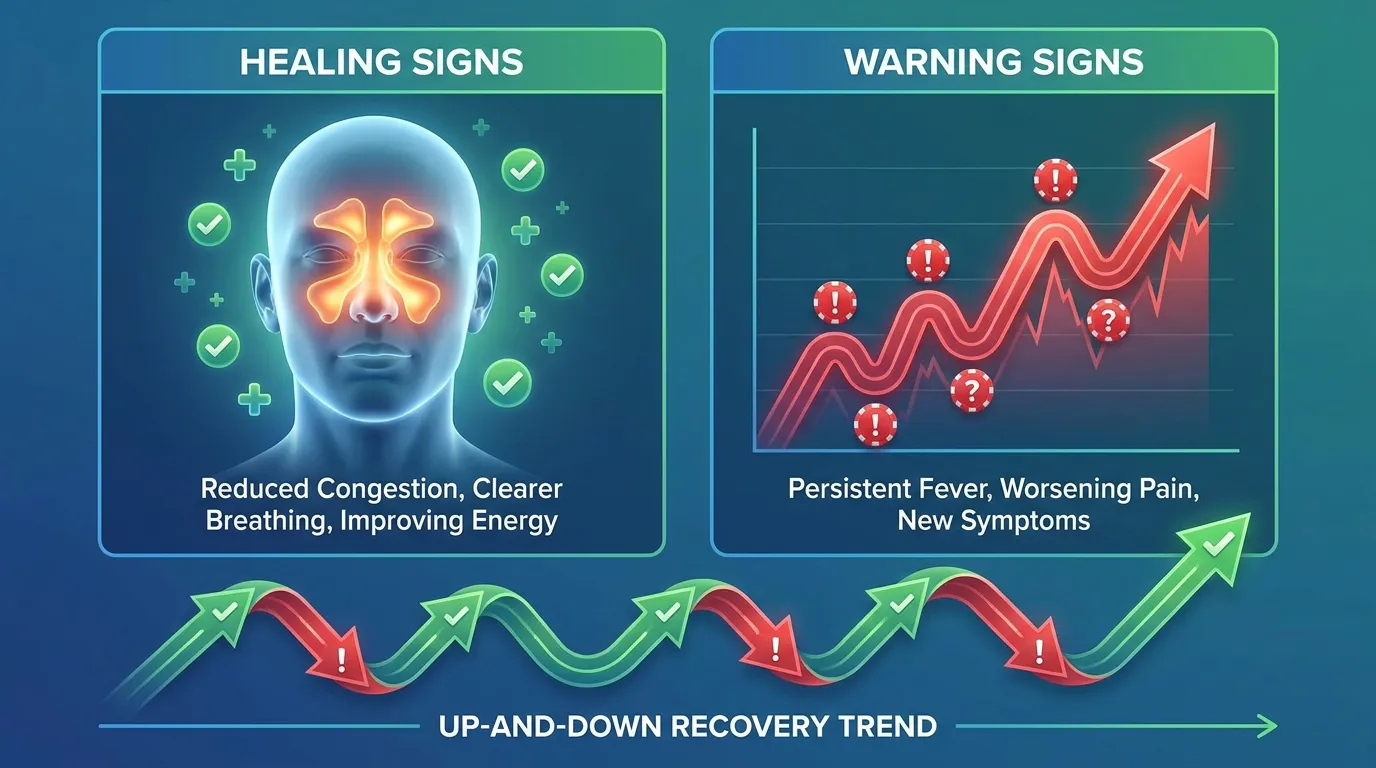
Importantly, the “pressure” can come and go. Some hours may feel clearer, while others feel stuffier as swelling fluctuates. That up-and-down pattern can be normal—even when you’re healing well.
Normal symptoms that can feel uncomfortable (but usually aren’t serious)
In the first few days, it’s common to notice:
- Congestion/fullness from swelling
- Small amounts of blood-tinged drainage
- Facial pressure that improves gradually day by day
Even when these symptoms are expected, they can still be uncomfortable—especially if you’re prone to headaches during sinus flares. Some people also notice that pressure feels worse when they lie flat, which is why head elevation is often recommended.

Red flags — contact your provider promptly
Because every patient’s situation is different, your surgical team should tell you what to watch for. In general, reach out promptly if you experience:
- Severe or worsening pain that isn’t improving over time
- Heavy bleeding or bleeding that doesn’t slow down
- Fever or chills
- Vision changes, severe headache, or neck stiffness
- Foul-smelling drainage that’s getting worse
If you experience these or other concerning symptoms, contact your healthcare provider promptly.
— For many patients, early recovery feels like sinus-pressure discomfort that steadily eases; anything severe or worsening deserves a call to your provider.
Pain Management Guide (During + After)
This section is educational—your own plan should come from your treating clinician, since medication choices and restrictions can vary.
Before your procedure — set yourself up for less discomfort
Helpful prep steps often include:
- Asking what type of anesthesia is planned (for example, balloon sinuplasty with local anesthesia, and whether any additional calming medication or sedation is expected)
- Following your clinic’s instructions about eating/drinking and medication adjustments
- Asking: “What should I feel during the procedure, and what would be unusual?”
If you’re in the research stage, you may also want to read about outcomes and expectations in Balloon Sinuplasty: Quick Relief for Chronic Sinusitis: https://sleepandsinuscenters.com/blog/balloon-sinuplasty-quick-relief-for-chronic-sinusitis.

Immediately after — your first-day comfort checklist
Many people find these basics make the first day easier:
- Rest (plan for a lighter schedule)
- Head elevation when lying down, which may reduce swelling/pressure
- Hydration and simple foods
- Expecting congestion/pressure to fluctuate rather than improve in a straight line
A concrete example: if you feel noticeably more “full” at night than you did mid-day, that can happen with swelling and positioning. It’s often frustrating—but not automatically a sign something went wrong.
Medications — what’s commonly used (and what to ask about)
Pain management after balloon sinuplasty often starts with simple options. Many patients report doing well with over-the-counter medication such as acetaminophen, but medication choices should be confirmed with your clinician, especially if you take other medications or have health conditions.
It’s also smart to ask your provider:
- Whether you should avoid aspirin or NSAIDs for a period of time (some practices limit them early due to bleeding risk)
- Whether you’ll be using a steroid nasal spray, antibiotic, or other post-procedure medications
- What to do if pain or pressure spikes at night
What to avoid (to reduce pressure and bleeding risk)
Your clinician’s instructions should come first, but commonly restricted activities include:
- Strenuous exercise or heavy lifting for a set timeframe
- Forceful nose blowing
- Repeated bending over (which can increase facial pressure)
- Hot tubs, steam rooms, or very hot showers early on (if you’re told to avoid heat)
Think of it as “avoiding pressure surges.” Anything that sharply increases pressure in the nose/sinuses (like forceful blowing) can make you more uncomfortable—and may increase bleeding risk.
Comfort-focused lifestyle tips (simple but effective)
Patients often find relief with supportive habits such as:
- Using a humidifier if recommended
- Using saline spray/rinse only if your clinician approves and provides timing instructions
- Sleeping with the head elevated
- Using calming breathing/relaxation techniques to reduce tension-related pressure
— Simple strategies and clear guidance from your clinician usually keep discomfort manageable for many patients.

Recovery Timeline — When Does the Discomfort Usually Improve?
Everyone heals differently, but many patients notice improvement in phases:
First 24 hours
- Pressure and congestion are often most noticeable
- Rest, hydration, and head elevation can be especially helpful
- You may feel “stuffy” or heavy in the face
Days 2–7
- Swelling and pressure typically improve
- Many return to normal daily activities, depending on their job and their surgeon’s guidance
- Drainage may continue as the sinuses clear
A real-life comparison: this phase can feel like the tail end of a sinus flare—less intense each day, but not always perfectly linear.
Weeks 2–6
- Internal healing continues even if you feel mostly normal
- Follow-up visits may be used to check healing and symptom progress
— Most people feel significantly better within a week, while internal healing continues for several weeks.
Symptoms & Causes — Why Patients Get Balloon Sinuplasty in the First Place
Balloon sinuplasty is commonly considered when sinus drainage pathways are repeatedly blocked and symptoms don’t improve enough with medical therapy.
Symptoms that may point to chronic sinus blockage
- Facial pressure or fullness
- Thick nasal drainage or postnasal drip
- Nasal congestion
- Reduced sense of smell
- Recurrent sinus infections
To learn more about diagnosis and symptom patterns, see Sleep and Sinus Centers of Georgia’s overview of chronic sinusitis: https://sleepandsinuscenters.com/chronic-sinusitis.
Common underlying causes
- Chronic sinus inflammation
- Narrow drainage pathways
- Allergies contributing to swelling
- Structural issues (evaluated by an ENT specialist)
Cleveland Clinic includes balloon sinuplasty as a treatment option for certain chronic sinus issues (source: https://my.clevelandclinic.org/health/treatments/21977-balloon-sinuplasty).
— If symptoms keep returning despite medical therapy, minimally invasive options like balloon sinuplasty may help restore natural drainage.
Treatment Options Comparison — Is Balloon Sinuplasty the Least Painful Choice?
Balloon sinuplasty vs. traditional endoscopic sinus surgery
Balloon dilation often involves less tissue removal, which is one reason many patients anticipate (and experience) a smoother recovery. That said, the “best” procedure depends on anatomy, severity, and goals—some cases require different approaches.
When non-surgical treatment might be tried first
Depending on your history, clinicians often consider or optimize:
- Saline irrigation routines
- Steroid nasal sprays
- Allergy evaluation and treatment plans
- Antibiotics only when appropriate (since not all sinus symptoms are caused by bacterial infection)
— The right plan balances symptom relief, your anatomy, and recovery goals—balloon dilation is often the gentlest option when appropriate.
FAQs
Does balloon sinuplasty hurt during the procedure?
Many people report pressure and brief discomfort rather than sharp pain, especially when local anesthesia is used (source: https://my.clevelandclinic.org/health/treatments/21977-balloon-sinuplasty).
How long does pain last after balloon sinuplasty?
For many patients, discomfort is most noticeable in the first few days and gradually improves. Internal healing can continue for weeks even after you feel better.
Can I take ibuprofen after balloon sinuplasty?
Some clinicians recommend avoiding NSAIDs or aspirin for a period of time due to bleeding risk. Medication guidance varies, so it’s best to follow the instructions you’re given by your treating team.
Is it normal to have pressure or a headache after balloon sinuplasty?
Yes. Pressure and congestion are among the most common post-procedure sensations, especially early in recovery.
When can I go back to work or exercise?
Many people return to work relatively quickly, but strenuous exercise is often delayed until you’re cleared by your provider and bleeding/swelling risk is lower.
Conclusion: What to Remember (and Your Next Step)
So—does balloon sinuplasty hurt? For most patients, balloon sinuplasty is better described as pressure and congestion rather than significant pain, and recovery discomfort is often mild and manageable for many patients with a thoughtful comfort plan and good post-procedure habits.
If you’re considering treatment, a helpful next step is scheduling an evaluation to discuss candidacy, anesthesia options, and what your personal recovery expectations may look like. You can review practical details on our balloon sinuplasty page: https://sleepandsinuscenters.com/balloon-sinuplasty. If cost is on your mind, read “Is balloon sinuplasty covered by insurance?” here: https://sleepandsinuscenters.com/blog/is-balloon-sinuplasty-covered-by-insurance. When you’re ready to talk with a specialist, book an appointment at https://www.sleepandsinuscenters.com/.
— Most people experience pressure more than pain—and a clear plan with your care team makes recovery smoother.
Medical disclaimer: This article is for general educational purposes only and is not medical advice. Your symptoms, procedure plan, and recovery instructions should come from your licensed healthcare provider.
Don’t let allergies slow you down. Schedule a comprehensive ENT and allergy evaluation at Sleep and Sinus Centers of Georgia. We’re here to find your triggers and guide you toward lasting relief.