Chronic Sinusitis Biofilms: Causes, Symptoms, and Effective Treatment Options
Chronic rhinosinusitis (CRS) can feel like a “never-ending sinus infection”—congestion, pressure, drainage, and a reduced sense of smell that keeps returning. A common frustration I hear described is: “I feel better for a week… then I’m right back where I started.” One reason symptoms can persist is something called a biofilm, a protective layer that some bacteria build on the sinus lining.
Research suggests chronic sinusitis biofilms are associated with harder-to-treat disease and, in some patients, higher recurrence even after treatment or sinus surgery. Below is a clear, patient-friendly guide to what biofilms are, why they matter, and how ENTs approach evaluation and care.
Quick Takeaways (for skimmers)
- Biofilms are “sticky communities” of germs that can make chronic rhinosinusitis (CRS) more persistent and more resistant to treatment.
- Common biofilm bacteria in CRS include Staphylococcus aureus and Pseudomonas aeruginosa.
- Treatment often works best as a combination approach: daily nasal care plus anti-inflammatory therapies, antibiotics only when appropriate, and sometimes in-office procedures or surgery.
- Biofilms can be present in healthy people; however, in CRS patients they are more strongly associated with ongoing inflammation and symptoms.
For background reading on CRS biofilms, see reviews such as PMC5698538, PMC9220248, and classic evidence including PMID:16730544.
What Is Chronic Rhinosinusitis (CRS)?

CRS vs. “a sinus infection”
A typical short-term sinus infection (often viral) usually improves within days to a couple of weeks. CRS is different. It’s generally defined as sinus-related symptoms lasting 12 weeks or longer, often with ongoing inflammation and impaired drainage.
In other words, CRS is frequently less about a single bug that needs to be “killed,” and more about a cycle of:
- swollen sinus tissue,
- trapped mucus,
- poor ventilation and drainage,
- and ongoing inflammation that may be worsened by microbes.
A helpful mental image: think of your sinuses like small rooms that need open doors and working ventilation. If the “doors” (drainage pathways) are swollen shut, mucus stagnates—and that environment can support ongoing irritation and microbial persistence.
Many short-term sinus infections are viral, not bacterial; antibiotics do not treat viruses, which is one reason acute symptoms often improve with time and supportive care. When bacterial infection occurs, it’s typically a subset of cases, and treatment decisions are based on symptom pattern, duration, and exam findings. For a timeline-focused overview, see: https://sleepandsinuscenters.com/blog/acute-vs-chronic-sinusitis-key-differences-and-treatment-options.
CRS with nasal polyps vs. without polyps (briefly)
- CRS with nasal polyps (CRSwNP): soft, inflamed growths that can block airflow and worsen smell loss.
- CRS without nasal polyps (CRSsNP): inflammation and blockage without polyp growth.
This distinction matters because it can influence treatment strategy, expected outcomes, and whether options like advanced anti-inflammatory therapies may be considered. In clinic, an ENT may phrase it simply: “Polyps change the playing field—especially for smell and long-term inflammation control.”
Summary: CRS lasts 12 weeks or longer and is driven by inflammation and poor drainage; understanding your subtype helps tailor care.

What Are Biofilms (and Why Do They Matter in Chronic Sinusitis)?
Biofilms explained in plain language
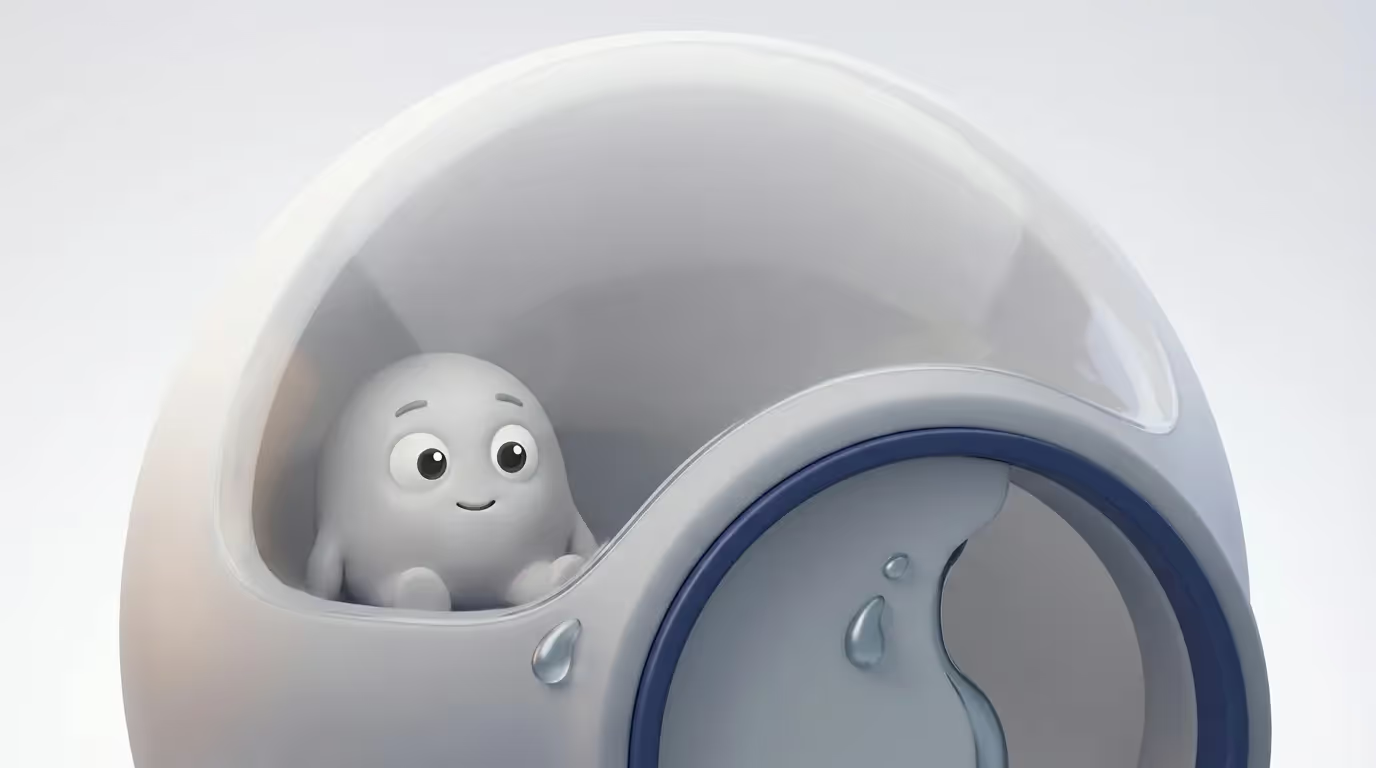
A biofilm is a thin, protective “slime layer” that microbes create when they attach to a surface—like the lining of the nose or sinuses. Instead of floating around individually, they live in a structured community.
An everyday analogy: it’s a bit like plaque on teeth. You can’t always fix it with a quick rinse—it often takes consistent, mechanical disruption (and sometimes professional help) because the structure protects what’s inside.
This is why chronic sinusitis biofilms are a big topic in modern rhinology: bacteria in a biofilm can behave very differently than “free-floating” bacteria.
How biofilms protect bacteria
Biofilms may help microbes survive by:
- reducing antibiotic penetration into the deeper layers of the biofilm,
- supporting slow-growing “persistent” cells that are harder to eradicate,
- shielding bacteria from immune responses, which can contribute to ongoing inflammation (discussed in CRS biofilm reviews such as PMC5698538).
This doesn’t mean antibiotics never help. It means the same antibiotic that works well for a one-time acute infection may be less reliable when symptoms are driven by a mix of inflammation, blockage, and microbes living in a protected community.
Which bacteria are commonly found?
Many studies evaluating CRS biofilms frequently identify:
- Staphylococcus aureus in more severe or difficult-to-treat CRS,
- Pseudomonas aeruginosa in certain stubborn or recurrent cases (often in specific patient groups).
These organisms don’t explain every case of CRS, but they are repeatedly highlighted in the biofilm literature. It’s also why your ENT may sometimes recommend targeted testing (rather than guessing) when symptoms are persistent.
Biofilms and “why it keeps coming back”
Multiple studies and reviews associate biofilms with:
- recalcitrant chronic sinusitis (symptoms that persist despite typical therapy),
- poorer overall outcomes,
- increased likelihood of sinus surgery recurrence in some patients.
Important nuance: biofilms are not exclusive to CRS—they can also appear in healthy individuals—but in CRS populations they are more strongly linked with persistent inflammation and symptoms.
Summary: Biofilms are protective communities that can make symptoms harder to control, which is why consistent, targeted care matters.
Causes & Risk Factors: Why Do Biofilms Form in Some People?
Biofilms tend to flourish when the sinus environment is repeatedly inflamed or stagnant. The core theme is opportunity: inflammation narrows drainage, mucus lingers, and microbes have more time and surface area to settle in.
Common contributors
- Narrow or blocked drainage pathways (mucus can’t clear well)
- Ongoing inflammation (allergies, irritant exposure, asthma and other inflammatory patterns)
- Repeated antibiotic exposure over time, which can shift microbial communities and increase selection pressure (a concern discussed broadly in CRS literature)
A common scenario is someone who gets partial relief from multiple antibiotic courses—but the baseline congestion and swelling never fully resolves. That ongoing inflammation can keep the cycle going.
Structural or mechanical issues that trap mucus
Anatomy can contribute to impaired drainage, such as:
- a deviated septum,
- turbinate swelling,
- other nasal passage narrowing.
In some cases, scarring after prior surgery can also contribute to ongoing blockage.
When mucus can’t move out efficiently, topical therapies may also struggle to reach the areas that need treatment most—another reason ENTs focus so much on “access” and airflow.
Immune and medical factors (when applicable)
Some patients have contributing medical factors (for example, certain immune deficiencies or severe inflammatory syndromes). These are individualized issues that an ENT may consider during a workup—especially when CRS is unusually frequent, severe, or hard to treat.
Learn more:
- Chronic sinusitis overview: https://sleepandsinuscenters.com/chronic-sinusitis
- Allergy testing (when allergic triggers are suspected): https://sleepandsinuscenters.com/allergy-testing
Summary: Anything that narrows drainage or fuels inflammation can create a setting where biofilms and symptoms persist.
Symptoms of Chronic Sinusitis Biofilms (What Patients Notice)
Biofilms don’t create a single “signature symptom,” but they’re often discussed when symptoms persist despite appropriate care.
Common CRS symptoms (with or without biofilms)
- Nasal congestion or obstruction
- Thick nasal drainage or post-nasal drip
- Facial pressure or fullness
- Reduced sense of smell
- Fatigue and sleep disruption
Many people describe CRS as a quality-of-life problem as much as a “nose problem”—especially when sleep and energy are consistently affected.
Signs your CRS may be “recalcitrant” (hard to treat)
ENTs may think about chronic sinusitis biofilms when there’s a pattern like:
- symptoms improve briefly with antibiotics, then return,
- symptoms persist despite guideline-based therapy (such as saline irrigation and nasal steroids),
- frequent flares or ongoing inflammation even after procedures.
A clinician might summarize it as: “If we keep treating and you keep bouncing back, we have to ask what’s maintaining the inflammation—and whether something like a biofilm is contributing.”
When to seek urgent care (red flags)
CRS is usually not an emergency, but urgent evaluation is important for red-flag symptoms such as:
- vision changes,
- severe swelling around the eye,
- severe headache with fever,
- neck stiffness, confusion,
- rapidly worsening facial swelling or severe pain.
More on symptom patterns: https://sleepandsinuscenters.com/symptoms-of-sinus-problems
Summary: Persistent, bounce-back symptoms—especially after standard care—can hint that biofilms and chronic inflammation are part of the picture.

How ENTs Diagnose CRS and Evaluate for Biofilm-Related Disease
History and symptom pattern (what your ENT listens for)
A detailed history helps clarify CRS drivers:
- symptom duration and flare patterns,
- prior antibiotics and response,
- allergy or asthma history,
- aspirin sensitivity,
- prior sinus surgery and recurrence patterns.
Nasal endoscopy (in-office scope)
Nasal endoscopy allows an ENT to look for:
- swelling and inflammation,
- polyps,
- thick mucus or pus,
- drainage pathways that look blocked.
It can also help guide whether cultures might be useful. What to expect: https://sleepandsinuscenters.com/blog/what-is-nasal-endoscopy----and-is-it-painful
CT scan of the sinuses
A CT scan shows anatomy, blockage, and the extent of inflammation. It cannot directly “see” a biofilm, but it helps explain why symptoms persist (for example, narrow drainage pathways or widespread mucosal thickening). Learn more: https://sleepandsinuscenters.com/blog/sinus-ct-scan-what-it-shows-and-how-it-helps-diagnose-sinus-issues
Cultures and targeted testing
In certain situations—persistent drainage, post-surgery symptoms, or repeated treatment failures—an ENT may take a culture to identify bacteria and guide sinus biofilm treatment decisions. A key limitation: cultures may not perfectly represent the full biofilm community, but they can still be helpful in select cases—especially when choosing (or avoiding) antibiotics.
Summary: Diagnosis focuses on patterns, endoscopic findings, and imaging to reveal why symptoms persist and to tailor next steps.

Effective Treatment Options (What Actually Helps)
Because CRS is often inflammation-driven, treatment commonly focuses on reducing swelling and restoring drainage—while addressing infection when it’s truly present. Patients should not start, stop, or change medications without clinician guidance.
Treatment goal #1 — Restore drainage and reduce inflammation
This is the foundation of many topical therapy plans for CRS.
Daily saline irrigation (cornerstone)
High-volume saline irrigation is commonly recommended to help:
- mechanically clear mucus, allergens, and irritants,
- improve the ability of topical medications to reach inflamed areas.
Many ENT treatment plans also emphasize water safety for rinses (for example, using sterile or distilled or properly prepared water). If rinses “don’t work,” it’s often about technique, consistency, or needing a more tailored plan—not that rinses are pointless.
Helpful reads:
- Steroid rinses: https://sleepandsinuscenters.com/blog/steroid-rinses-a-modern-approach-to-sinus-relief
- How often to rinse: https://sleepandsinuscenters.com/blog/nasal-rinses-how-often-should-you-use-them
Topical steroid sprays or steroid rinses
Topical steroids are commonly used to reduce inflammation over time. Technique and consistency matter, and an ENT can recommend an approach tailored to symptoms, anatomy, and whether polyps are present.
Treatment goal #2 — Address infection appropriately (not always antibiotics)
Antibiotics may be used selectively, typically during suspected bacterial flares—especially with purulent drainage, systemic symptoms, or culture guidance. Because CRS symptoms often involve inflammation and blockage rather than active infection alone, antibiotics are not always necessary or effective. If your clinician prescribes antibiotics, take them exactly as directed and do not discontinue early unless advised by your provider.
Related explainer: https://sleepandsinuscenters.com/blog/do-i-always-need-antibiotics-for-a-sinus-infection
Anti-biofilm strategies (what’s used and what’s emerging)
Mechanical disruption and topical delivery (most practical)
- High-volume rinses help flush mucus and irritants.
- After sinus procedures or surgery, improved access to sinus spaces can make topical treatments more effective—one reason post-procedure maintenance plans are often emphasized.
Topical antimicrobials (ENT-directed, case-dependent)
In select recalcitrant cases—often after surgery and with culture guidance—ENTs may consider topical antimicrobial options. These are not one-size-fits-all and should be supervised due to potential irritation and the need for appropriate dosing and selection.
Adjunct approaches under study
Surfactants, mucolytics, and newer antibiofilm agents are active research areas in CRS (discussed broadly in biofilm reviews, including PMC5698538). Evidence and best practices continue to evolve, so it’s reasonable to ask your ENT what’s most supported—and safest—for your specific situation.

Treatment goal #3 — Procedures and surgery (when medical therapy isn’t enough)
Balloon sinuplasty (select patients)
Balloon sinuplasty is designed to open narrowed sinus drainage pathways in carefully selected patients. Learn more: https://sleepandsinuscenters.com/balloon-sinuplasty
Endoscopic sinus surgery (ESS)
Endoscopic sinus surgery may be recommended when symptoms persist despite appropriate medical therapy. It can help by:
- removing obstructive tissue and/or polyps,
- improving ventilation,
- improving access for ongoing topical therapy.
Because biofilms are associated with higher recurrence risk in some studies, ongoing inflammation control and follow-up still matter even after surgery. Patient guide: https://sleepandsinuscenters.com/blog/endoscopic-sinus-surgery-what-patients-should-know
More options overview: https://sleepandsinuscenters.com/chronic-sinusitis-treatment
Summary: The most effective care restores drainage, reduces inflammation, and treats infection when present—often combining daily rinses, topical steroids, and, when needed, targeted procedures.
Lifestyle & Home-Care Tips to Support Recovery (Day-to-Day Plan)
Reduce inflammation triggers
- Identifying and managing allergies (when present) can reduce the “baseline” inflammatory load.
- Avoiding smoke or vaping and strong irritants or fragrances may help reduce nasal lining irritation.
- In some people, reflux management may matter because upper-airway irritation can overlap with nasal symptoms.
Build a “sinus routine” you can stick to
Consistency tends to matter more than perfection. Many care plans focus on regular nasal hygiene plus prescribed anti-inflammatory therapies, adjusted over time based on response. If you’re not sure what “consistent” means, ask your clinician to clarify your daily plan versus your flare plan.
Sleep and hydration support
Comfort measures—like keeping indoor air from becoming overly dry—may help some people feel better day to day. (It’s also important not to create overly humid conditions that can encourage mold growth.)
Summary: Small, consistent habits plus trigger management can make medical therapy work better over time.
FAQs
Can you “test” for sinus biofilms?
Not usually with a simple office swab. Biofilms are often identified in research settings (special microscopy techniques) or inferred clinically when CRS behaves in a recalcitrant pattern. Overview concepts are discussed in PMC5698538.
Why do antibiotics stop working for my chronic sinus symptoms?
CRS may be driven primarily by inflammation and blockage rather than infection. And when biofilms are involved, bacteria can be more tolerant to antibiotics and immune defenses, which can contribute to incomplete response (discussed in PMC5698538). Always follow your clinician’s guidance on when antibiotics are needed.
Are Staphylococcus aureus and Pseudomonas dangerous?
These bacteria can contribute to persistent symptoms in some people and may sometimes be resistant to standard antibiotics; however, colonization does not always equal active infection. Significance depends on individual health, sinus anatomy, and inflammatory patterns—your ENT will interpret results in context.
If I had sinus surgery, why did my symptoms return?
CRS can recur due to ongoing inflammation, allergies, polyp regrowth, anatomy, and—in some patients—biofilm-associated persistence. Associations are discussed across CRS reviews such as PMC5698538 and PMC9220248.
What’s the best rinse or spray for biofilms?
There isn’t one best option for everyone. Many patients benefit from saline irrigation plus anti-inflammatory therapy, with add-ons guided by ENT findings and sometimes cultures—especially in recalcitrant chronic sinusitis.
When should I see an ENT for chronic sinusitis?
Common reasons include symptoms lasting more than 12 weeks, frequent flares, reduced sense of smell, poor response to over-the-counter measures, or any red-flag symptoms.
When to Book an Appointment
If you’ve had 12 or more weeks of symptoms, repeated antibiotic courses, or symptoms returning after treatment or surgery, a targeted evaluation can help clarify whether inflammation, anatomy, infection, or chronic sinusitis biofilms may be contributing—and what next steps make sense.
Ready for a personalized plan? Book a sinus evaluation: https://sleepandsinuscenters.com/appointments
Optional: Take our sinus symptom quiz: https://sleepandsinuscenters.com/sinus-symptom-quiz
Citations / Further Reading
- Chronic rhinosinusitis and biofilms (review): PMC5698538 — https://pmc.ncbi.nlm.nih.gov/articles/PMC5698538/
- CRS-related review content: PMC9220248 — https://pmc.ncbi.nlm.nih.gov/articles/PMC9220248/
- Early evidence of bacterial biofilms in CRS (classic paper): PMID:16730544 — https://pubmed.ncbi.nlm.nih.gov/16730544/
- Additional background sources:
- https://www.rhinologyjournal.com/Rhinology_issues/598.pdf
- https://link.springer.com/article/10.1007/s11882-015-0591-4
- https://karger.com/orl/article/66/3/155/261023/Evidence-of-Bacterial-Biofilms-in-Human-Chronic
Disclaimer
This article is for educational purposes only and is not medical advice. Please consult a qualified healthcare provider for diagnosis and treatment.
Don’t let allergies slow you down. Schedule a comprehensive ENT and allergy evaluation at Sleep and Sinus Centers of Georgia. We’re here to find your triggers and guide you toward lasting relief.