Balloon Sinuplasty Recovery Timeline: Day-by-Day Healing and What to Expect
If you’re planning (or just had) balloon sinuplasty, it’s normal to wonder two things: How will I feel afterward? and How soon can I get back to regular life? This guide walks through a realistic balloon sinuplasty recovery timeline, including common symptoms, typical “downtime,” aftercare basics, and when it makes sense to call your ENT.
Because every patient—and every set of sinuses—is different, think of this as an educational roadmap, not a rigid calendar. Your surgeon’s post-op instructions should always take priority, especially if you had additional procedures done at the same time.
If you’re still exploring whether the procedure is right for you, you can learn more about balloon sinuplasty at Sleep and Sinus Centers of Georgia: https://sleepandsinuscenters.com/balloon-sinuplasty
Quick take—how long is balloon sinuplasty recovery?
Typical downtime
Balloon sinuplasty is generally a same-day procedure, so most people go home shortly after. Many patients plan to rest for 24–48 hours, since that’s when fatigue, stuffiness, and mild drainage are often most noticeable. A practical way to plan: if you can, treat it like recovering from a rough cold for a day or two—quiet schedule, easy meals, and no big obligations.
When most people feel “back to normal”
For many patients, recovery starts to feel easier after the first few days. A return to light daily activities and non-strenuous routines is common around one week, though short-term restrictions (especially around heavy exercise) may still apply. This aligns with typical guidance shared by major health systems (for example, Cleveland Clinic: https://my.clevelandclinic.org/health/treatments/21977-balloon-sinuplasty). Individual recovery varies.
When you’ll notice the biggest symptom improvement
Relief often shows up gradually, not all at once. Many people notice a bigger shift within 2–4 weeks, while full healing commonly continues over 1–2 months as the sinus lining settles and inflammation calms down (see also: https://entgasouth.com/blog/what-is-the-recovery-time-for-a-balloon-sinuplasty). Results and timing vary by person.
Bottom line: expect the first 48 hours to be the slowest, a return to light routines in about a week, and continued improvements over 1–2 months.
What is balloon sinuplasty (and why recovery is usually faster)?
The “balloon” concept in simple terms
Balloon sinuplasty (also called balloon dilation or balloon sinus surgery) is a minimally invasive technique that widens blocked sinus drainage pathways using a small balloon. The balloon is positioned in the narrowed opening, gently inflated to open the passage, and then removed—helping the sinus drain more normally. Think of a sinus opening like a pinched straw; the balloon gently widens the pinch to improve flow. This is a simplification meant to illustrate the concept.
Balloon sinuplasty vs. traditional sinus surgery
One reason many people experience less downtime is that balloon dilation typically involves less tissue disruption than more traditional sinus procedures. Less disruption often correlates with:
- Less bleeding
- Less post-procedure soreness
- A shorter “back to routine” window for many patients
That doesn’t mean you’ll feel nothing—just that the recovery tends to be more manageable for many people (additional reading: https://texassinusandsnoring.com/blog/post-balloon-sinuplasty-recovery/).
Who has a longer or more complex recovery?
Some factors that can make what to expect after balloon sinuplasty feel more variable include:
- Multiple sinus areas treated at once
- Additional procedures performed at the same time
- Significant chronic inflammation
- Nasal polyps
- Smoking exposure (including secondhand smoke)
- Poorly controlled allergies or chronic rhinitis
Two people can have the “same” procedure and still experience different recovery curves—often because their baseline inflammation and triggers aren’t the same.
In short, balloon sinuplasty is designed to open drainage pathways with minimal disruption, but recovery still varies person to person.

Normal symptoms after balloon sinuplasty (what’s expected vs. concerning)
Common/normal symptoms
During balloon sinuplasty recovery day by day, these are commonly reported:
- Mild facial pressure or tenderness
- Nasal congestion or “stuffy nose”
- Bloody-tinged mucus or light drainage
- Postnasal drip and mild sore throat
- Fatigue (especially in the first day or two)
A concrete example: many patients notice they’re using more tissues than usual, and the mucus may look pink or rust-colored early on. That can be normal as long as it’s light and improving.
Why these symptoms happen
Most short-term symptoms relate to:
- Temporary swelling of the sinus lining
- Normal drainage as mucus starts moving more freely
- Irritation from instruments and suction during the procedure
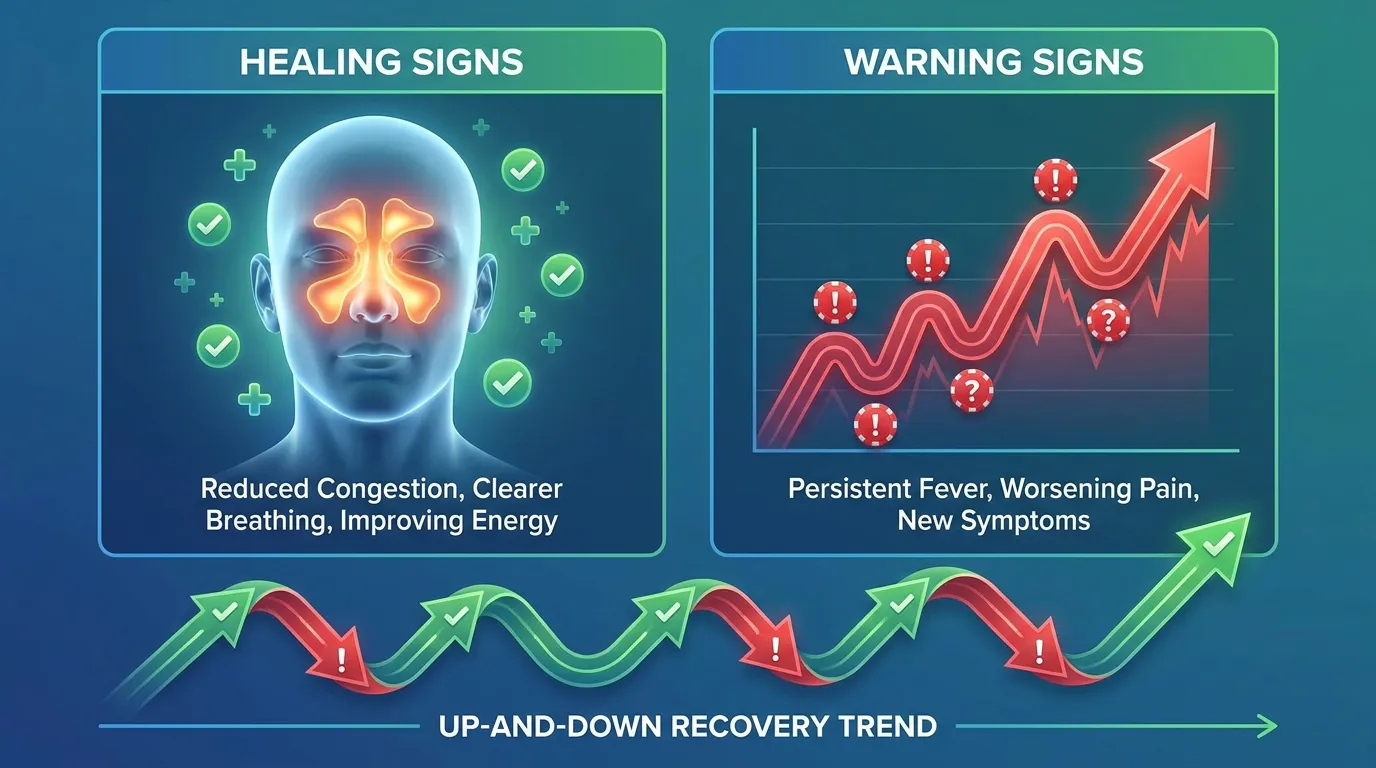
Red flags—when to contact your ENT urgently
Contact your ENT team promptly if you notice:
- Heavy bleeding that doesn’t slow down (for example, soaking through a folded gauze pad in under 15 minutes, or continuous bright red bleeding for more than 30 minutes despite head elevation and gentle pressure)
- Fever or facial pain that worsens after initial improvement
- Vision changes or significant swelling around the eye
- Severe headache, stiff neck, confusion, or other sudden neurologic symptoms
If bleeding becomes heavy or persists, or if any symptom seems unusual for you, seek care.
Normal recovery includes mild congestion, pressure, and light blood-tinged drainage that improves; escalating pain, fever, vision changes, or heavy bleeding are not typical.

Balloon sinuplasty recovery timeline (day-by-day)
Timelines vary based on your anatomy, inflammation level, and whether other treatments were performed. Use this as a general guide.
Day 0 (procedure day): The first 6–12 hours
What you may feel:
- Grogginess if you had sedation
- Pressure or fullness in the face/nose
- Congestion, like a “blocked” nose
What’s normal:
- Light bleeding or blood-tinged drainage
- Mild headache or sinus pressure
What to do:
- Arrange a ride home (most patients are not cleared to drive themselves)
- Rest, hydrate, and choose easy-to-eat foods if your throat feels irritated
- Set up a small “recovery station” at home with water, tissues, prescribed meds, and an extra pillow
Days 1–2: Peak congestion + rest window
What to expect:
- Congestion often feels most noticeable here
- Drainage may continue (sometimes thicker at first)
- Mild facial pressure/headache can come and go
- Fatigue is common
Aftercare priorities:
- Rest for the first 24–48 hours
- Sleep with your head elevated to help swelling
- Many post-op instructions recommend avoiding nose blowing for 24–48 hours (or longer, depending on your surgeon)
Comfort measures (educational, not prescriptive):
- Some patients are instructed to use saline spray or rinses during this phase
- Take medications only as directed by your clinician (pain relief, nasal sprays, antibiotics if prescribed). Always follow your healthcare provider’s instructions on medications.
Days 3–4: Swelling starts to settle
What improves:
- Facial pressure often starts to ease
- Drainage may become lighter/clearer
- Energy may begin to return
What you can often do:
- Light activity around the house
- Many people can return to desk work if they feel up to it

Days 5–7: Transition back to routine
Typical progress:
- Less congestion overall
- Breathing feels more open in short intervals that gradually last longer
- Less need to rest during the day
What to avoid:
- Strenuous exercise and heavy lifting until your ENT clears you (commonly around the one-week mark, but individualized)
Hygiene & recovery support:
- Continue any saline routine and nasal care your clinician recommended—consistency matters
Expect the first 48 hours to be the most congested, with a gradual return to light, non-strenuous routines by about a week.
Week-by-week healing (weeks 2–8)
Week 2: Breathing improvements become noticeable
By week two, many patients describe:
- Less “blocked” feeling
- Easier breathing at night
- Less postnasal drip and pressure compared to week one
Your follow-up visit (if scheduled) may focus on how well swelling is improving and whether inflammation control needs adjustments.
Weeks 3–4: Major symptom relief window
This is a common window for more meaningful changes—especially for people whose main issue was chronic congestion and poor drainage. If symptoms are lingering, your ENT may discuss related contributors such as:
- Allergies
- Non-allergic rhinitis
- Reflux triggers
- Environmental irritants
It can help to think of balloon sinuplasty as improving the “plumbing,” while allergies/irritants affect the “water quality.” Both can matter for how you feel long-term (more general recovery overviews: https://www.americansinus.com/blog/balloon-sinuplasty-recovery-what-to-expect).
Weeks 5–8 (month 2): Full healing and best results
Even when you feel “normal,” healing can still be happening internally. Many patients reach their most stable improvement by 1–2 months (see also: https://www.memorialvillagesinushearing.com/blog/heres-what-to-expect-in-the-days-and-weeks-following-your-balloon-sinuplasty-procedure).
For ongoing care tips like nasal irrigation frequency and technique, see our guide: https://sleepandsinuscenters.com/blog/nasal-rinses-how-often-should-you-use-them
Improvements often build through weeks 2–4, with the most stable results by about 1–2 months for many patients.

Post-op care checklist (treatments & aftercare that help most)
Below are common elements of balloon sinuplasty aftercare you may see in post-op instructions. Always follow your surgeon’s specific plan.
Saline rinses
- Why they’re commonly used: to flush mucus, reduce crusting, and support a healthier healing environment
- Safety basics often emphasized: use sterile or distilled water (or properly cooled boiled water), and clean/air-dry the bottle to reduce contamination risk
- How-to and frequency tips: https://sleepandsinuscenters.com/blog/nasal-rinses-how-often-should-you-use-them
Head elevation
- Often most helpful during the first 2–3 nights, when swelling and pressure sensations can feel more prominent
Nose-blowing rules
- Many care plans limit nose blowing for 24–48 hours; some patients are advised to wait longer. Follow your written instructions.
Activity restrictions
- Even if you feel good quickly, increased blood pressure from heavy exertion can sometimes worsen swelling or bleeding early on. Many patients resume normal routines within a week, but higher-intensity workouts may wait until clearance.
Medication reminders
- You may receive prescriptions (pain control, antibiotics, steroid sprays, etc.). Do not self-start leftover medications or add new over-the-counter products without checking first. Always follow your healthcare provider’s instructions on medications.
Consistent, gentle care—saline, elevation, and following your medication plan—often supports a smoother recovery.

Lifestyle tips to speed recovery (and help results last)
Sleep & positioning
- If pressure builds when you lie flat, head elevation or a supportive wedge pillow may make sleep more comfortable.
Hydration and humidity
- Staying hydrated and using a humidifier (if your air is dry) may help reduce dryness and irritation, which can make congestion feel worse.
What to avoid
- Smoke/vaping exposure and secondhand smoke
- Dusty environments and strong fragrances
- Alcohol excess, which can worsen swelling for some people
Returning to work, travel, and exercise
- Desk work: often possible within several days if symptoms are mild
- Physical jobs: may require more downtime depending on lifting and exertion
- Flying: if you’re sensitive to pressure changes, ask your ENT about timing
Prioritize clean air, hydration, and gentle activity while you ramp back up to your routine.
When to call your doctor (a simple decision guide)
Call within 24 hours if
- Symptoms are getting worse instead of better after day 3–4
- Pain becomes severe, sharply one-sided, or unusual for you
- Drainage becomes significantly foul-smelling or you’re concerned about infection
Seek urgent care/emergency care if
- Heavy, uncontrolled bleeding (for example, soaking through gauze in under 15 minutes, or continuous bright red bleeding for more than 30 minutes despite head elevation and gentle pressure)
- Vision changes, significant swelling around the eye
- Severe headache, stiff neck, confusion, or other sudden severe symptoms
If something feels off—especially worsening pain, fever, vision changes, or heavy bleeding—contact your clinician promptly.
FAQs about balloon sinuplasty recovery
How painful is balloon sinuplasty recovery?
Many patients describe discomfort or pressure more than sharp pain. Pain experience varies based on inflammation level and any additional procedures.
How long will I have congestion after balloon sinuplasty?
Congestion is common early on and often improves over the first week, with continued improvement in the weeks that follow.
When can I blow my nose again?
Many instructions limit nose blowing for 24–48 hours, but the best answer is: follow your surgeon’s written plan.
When can I exercise again?
Light walking may be fine earlier for some people, but strenuous exercise and heavy lifting often wait about a week (individualized).
When will I breathe better?
Some notice small changes within days, but more noticeable improvement often occurs in 2–4 weeks, with best results commonly by 1–2 months.
Is drainage after balloon sinuplasty normal?
Light drainage—sometimes blood-tinged at first—can be normal. If bleeding becomes heavy or persists, or if you’re unsure, contact your clinician.
What if my symptoms don’t improve?
Not all congestion is caused by blocked sinus openings alone. Allergies, chronic rhinitis, ongoing inflammation, and irritant exposure can all influence results. A follow-up visit is the right time to sort out the “why.”
Most people experience pressure and congestion early, then gradual improvements in breathing and drainage over the next several weeks.
Conclusion + next step
Most patients can expect this general balloon sinuplasty recovery timeline:
- Rest and take it easy for 24–48 hours
- Transition back toward light, non-strenuous routines in about one week
- Notice major improvements in 2–4 weeks
- Reach fuller healing and best results by 1–2 months
If you’re considering treatment—or you want personalized guidance on what recovery could look like for your specific symptoms—you can schedule an appointment with Sleep and Sinus Centers of Georgia: https://sleepandsinuscenters.com/appointments
Plan for short downtime, steady progress, and a gradual return to your best breathing.
Disclaimer: This article is for educational purposes only and is not medical advice. Please consult a qualified healthcare provider for diagnosis and treatment.
Don’t let allergies slow you down. Schedule a comprehensive ENT and allergy evaluation at Sleep and Sinus Centers of Georgia. We’re here to find your triggers and guide you toward lasting relief.